Author: GizNews

  • Google Ends Free Service Youve Had Since 2013

    Google Ends Free Service Youve Had Since 2013

    Key Takeaway

    – Google is testing 5 GB default storage for some new Gmail accounts, down from the traditional 15 GB.
    – The change aims to preserve service quality and push users toward stronger security and data recovery practices, while curbing multi-account storage abuse.
    – Existing accounts are unaffected during the test; the rollout could be regional or someday global depending on results.
    – The move aligns with comparable offerings from others (e.g., Microsoft) and follows subtle shifts in Google’s storage messaging.

    For nearly two decades, signing up for a Google account has meant walking away with 15 gigs of free cloud storage. That number, which was shared across Gmail, Drive, and Photos, has been one of the more reliable constants in consumer tech over the years. It may not stay that way for much longer.

    Update on storage policy

    Google has confirmed it is currently testing a reduced storage allocation for newly created Gmail accounts in certain regions, where some users will receive just 5 GB by default instead of the standard 15 GB. The test was first flagged by user reports on Reddit before Google acknowledged the experiment directly to Android Authority. The company added that it is evaluating the new policy to maintain service quality — at the same time, it will also push users toward better account security and data recovery practices.

    Regions and rollout

    As of writing, Google has not disclosed which regions are part of the trial. However, early reports hint that the rollout has been concentrated in parts of Africa. Existing accounts are unaffected for now.

    Background to the change

    This move does appear to be at least partly geared towards curbing the practice of creating multiple accounts to stack free storage. If that wasn’t clear already, Google’s own support page has been quietly updated since February to describe storage as up to 15GB. It’s not hard to discern that the company had been laying the groundwork for this change for some time.

    Why it matters

    Whether the 5 GB stays regional or eventually becomes the global default for new sign-ups will depend on how the test plays out. For reference, other providers like Microsoft Outlook also bundle 5 GB of free storage with new accounts.


  • Casio MTG-B4000 Carbon Fiber Watch with Triple G Resist

    Casio MTG-B4000 Carbon Fiber Watch with Triple G Resist

    Key Takeaway

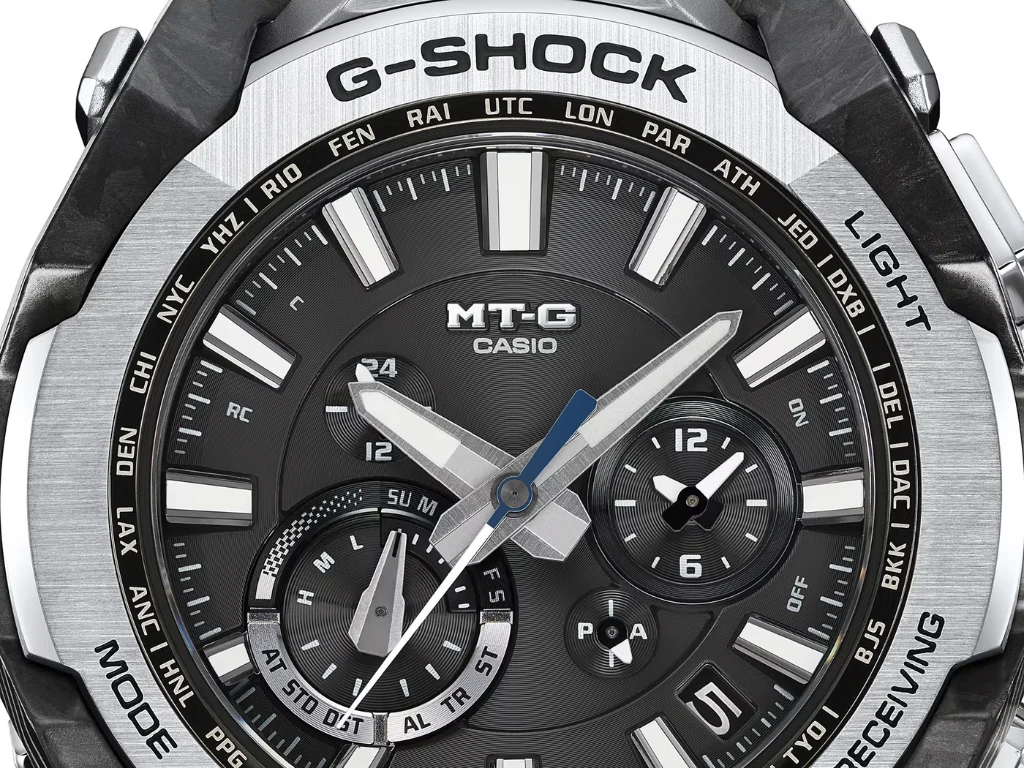
    – Casio expands MT-G with two new models (MTG-B4000B-1AJF and MTG-B4000BD-1AJF) featuring a carbon laminate frame and AI-assisted Dual Core Guard design with Triple G Resist.
    – Distinct bands: MTG-B4000B-1AJF uses a resin band with red accents; MTG-B4000BD-1AJF uses a Layer Composite Band (stainless steel + carbon fiber) and is heavier.
    – Shared tech: MultiBand 6, Bluetooth with the Casio Watches app, world time for ~300 cities (38 zones + UTC standalone), Tough Solar, 20 BAR water resistance, and sapphire glass.
    – Availability and pricing: launched May 15, 2026 in Japan; MTG-B4000B-1AJF at ¥176,000 (~$1,110) and MTG-B4000BD-1AJF at ¥203,500 (~$1,284).

    Alongside the new GBX-H5600 lineup, Casio has also launched two new additions to its premium MT-G line in Japan — the MTG-B4000B-1AJF and MTG-B4000BD-1AJF. Previously announced earlier this year, both are now available to purchase, with a new construction aproach that utilizes both carbon fiber and stainless steel with AI-assisted engineering.

    Construction & AI

    The centerpiece of both models is the carbon laminate frame — layers of carbon fiber sheet and fiberglass pressed into complex three-dimensional shapes that practically define the watch’s entire profile. You also get a stainless-steel bezel finished with a mix of hairline and mirror polishing, then treated with Black IP coating. The back cover is formed using MIM (Metal Injection Moulding) for precise, protective shaping. The case/bezel material on both variants is carbon fiber reinforced resin, paired with stainless steel.

    Casio also adds that the underlying Dual Core Guard structure was developed with the help of AI, making use of accumulated shock resistance data to optimize the design. Both watches carry Triple G Resist certification, covering shock, centrifugal gravity, and vibration resistance.

    Band Variants

    The two variants can be easily differntiated by their bands. The MTG-B4000B-1AJF uses a resin band with vivid red accents woven through the carbon frame and dial, while the MTG-B4000BD-1AJF steps up to a Layer Composite Band — alternating layers of stainless-steel and carbon fiber reinforced resin — with Black IP treatment on the band as well. The BD variant is heavier for this reason, coming in at 178 g vs 112 g for the B variant.

    Both share the same case dimensions of 56.6 × 45.3 × 14.4 mm, anti-reflective-coated sapphire glass, a screw-lock crown, and Neobrite luminous treatment.

    Tech & Features

    Both models feature MultiBand 6 radio wave reception covering Japan, North America, Europe, and China, alongside Bluetooth connectivity for automatic time syncing via the Casio Watches app. App pairing unlocks world time for around 300 cities, automatic time correction, Time & Place logging, watch status display, self-check, and phone finder. Standalone, the watches support 27 cities across 38 time zones plus UTC.

    Both run on Tough Solar, rated at approximately 5 months of operation from a full charge without solar generation, or up to 18 months in power-saving mode. Water resistance is rated at 20 BAR.

    Launch & Pricing

    Both models launched on May 15, 2026 in Japan, manufactured domestically. The MTG-B4000B-1AJF is priced at ¥176,000 (~$1,110) while the premium MTG-B4000BD-1AJF with its Layer Composite Band is priced at ¥203,500 (~$1,284).


    Sources

  • How Smart Is a Smart Irrigation Controller

    How Smart Is a Smart Irrigation Controller

    Key Takeaway

    – Most inexpensive devices offer basic schedule-based watering with no automatic weather or soil adaptation, risking overwatering and waste.

    – Truly intelligent irrigation uses data (weather, soil moisture, plant type, solar radiation/evapotranspiration) to adjust watering automatically.

    – Connectivity (Wi-Fi/Bluetooth/ZigBee) enables remote control, but the best systems automate in the background and respond to conditions rather than requiring constant manual tweaks.

    – Advanced options include open-source/OpenSprinkler for large multi-valve setups and flow-meter-equipped models (e.g., LinkTap G2S) that detect leaks/pump failures and shut off water with alerts.

    For many, an intelligent irrigation system probably needs to be able to do one single thing: water plants to an extent that provides them with sufficient moisture without any manual intervention, while at the same time not flooding the entire property. Not too difficult a task, you might think? Well…

    Overview

    Anyone who searches Google for “intelligent irrigation” receives suggestions for irrigation controllers in abundance. This includes particularly inexpensive models, such as the one that will be presented below as representative of this group.

    Budget options

    The “Insoma Automatic Water Timer Intelligent Irrigation System Sprinkler Timer” is by far the cheapest device that advertises “intelligent features,” costing around $20 on Aliexpress (as part of a welcome offer). It enables watering on a schedule (start time, duration, and frequency), manual watering for a specific time, and pausing irrigation during rainy periods.

    However, these settings must be made directly on the device; there is no automatic adjustment of the intensity depending on the season or weather. If, for example, you are away from home for a longer period of time (or if you neglect to take care of the irrigation controller for other reasons), it can certainly happen that the plants are watered much more heavily than would actually be necessary based on the weather conditions. Due to the power and water consumption, this is not only unnecessarily expensive but also a pointless burden on the environment.

    These devices are equipped with at least one wireless module and can thus usually be connected to your own network via Wi-Fi, Bluetooth, or ZigBee. They often have the same functions as classic irrigation timers (irrigation on a schedule), but allow you to change them on the go via smartphone. This is practical, for example, for adjusting the watering intensity while on vacation. But who really wants to monitor the weather at home while on vacation and then manually change the schedule?

    Connectivity and control

    Wouldn’t it be much nicer if the irrigation system could do this independently based on weather or moisture data? Truly intelligent systems go even one step further: They also take into account parameters such as soil conditions, plant type, and solar radiation (and thus evapotranspiration). The algorithm then knows whether thirsty tomatoes in sandy soil or an undemanding lawn on clay soil needs to be watered right now.

    Depending on your own preferences (e.g., local control and true integration into the smart home vs. a closed ecosystem), a wide variety of solutions can be found. Be it irrigation controllers for large systems with multiple valves (the open-source solution OpenSprinkler should be mentioned here) or devices for direct mounting on the tap, such as the LinkTap G2S.

    The latter in particular shows what really justifies the term “smart”. It not only has the functions mentioned above but also a built-in flow meter. If the garden hose bursts or the pump suddenly stops delivering water, this anomaly is detected by the system, the valve is immediately closed, and a warning is sent to the smartphone, instead of flooding the garden in the first case, for example. Such systems not only water on demand instead of rigidly according to a schedule, but also offer additional protection against unpleasant surprises.


    Sources

  • Casio GBX-H5600 Fitness Tracking Watch Now Available to Buy

    Casio GBX-H5600 Fitness Tracking Watch Now Available to Buy

    Key Takeaway

    – Casio’s GBX-H5600 is the first G-LIDE model with an optical heart rate sensor, launching in Japan at ¥44,000; blue variant is sold out, black still available.
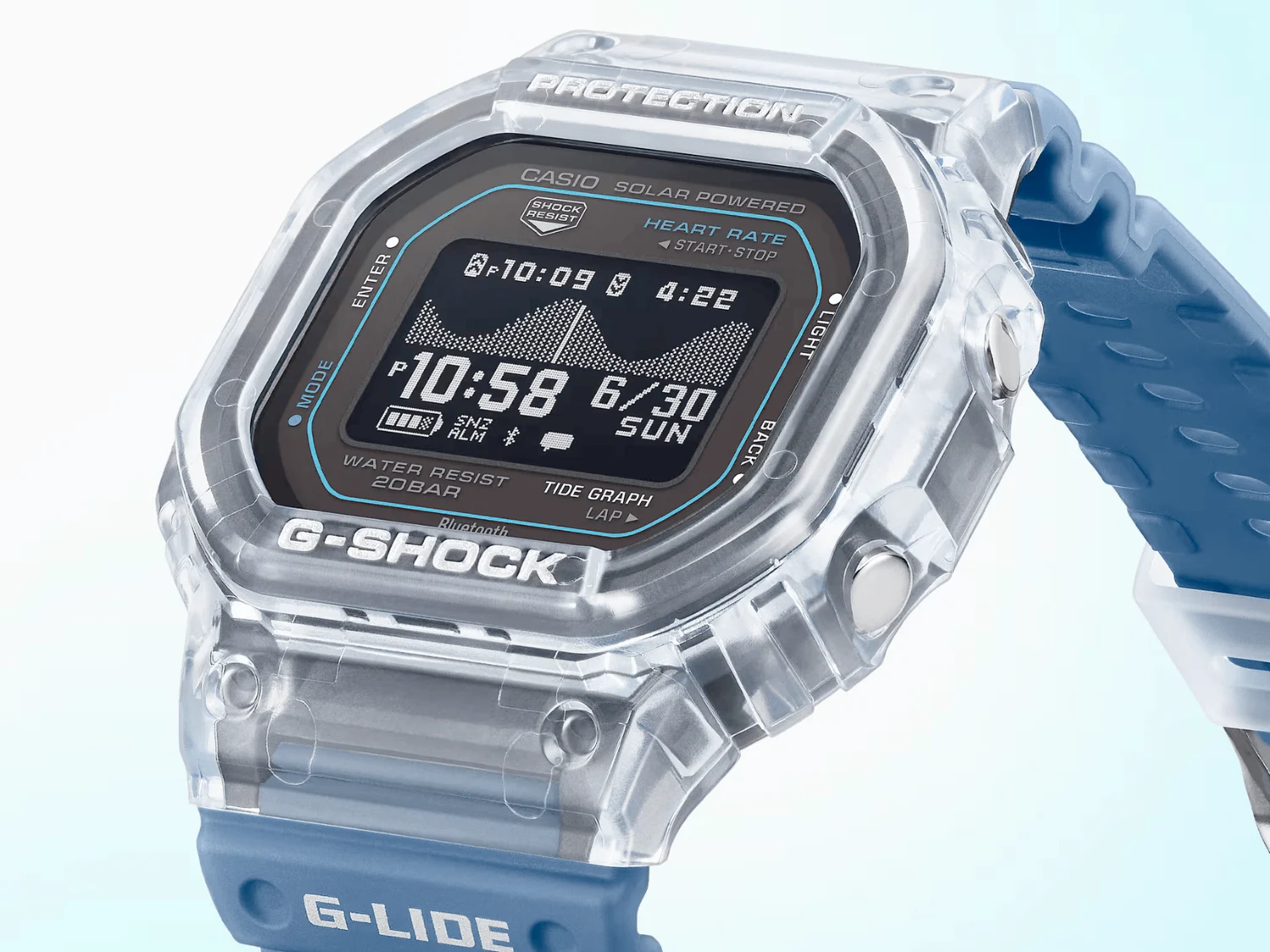
    – Design/tech: semi-transparent bezel with carbon fiber reinforced center, 47 g weight, 51.1 × 44.5 × 17.3 mm, high-res MIP LCD with full-dot display and tide graph imagery.
    – Health/features: optical HR (30–220 bpm), sleep recovery analysis, SpO2, steps, breathing, and activity logging (running/walking/gym); tide graph supports up to 3,300 points when paired.
    – Connectivity/power: Bluetooth to Casio Watches app for notifications, GPS-assisted distance correction, training analysis, world time; hybrid USB/solar charging, 35 hours HR-active to 11 months power-saving.
    – Specs/water resistance: 20 BAR water resistance; sunrise/sunset and moon phase data; available now on Casio Japan site.

    Casio has now officially made the G-Shock GBX-H5600 series available to buy in Japan — this is a major launch too, since it’s the first G-LIDE model in the brand’s surf-oriented sub-line to feature an optical heart rate monitor. The two variants, the GBX-H5600-1JR and GBX-H5600-2JR, are priced at ¥44,000 (tax included) each. However, demand has already outpaced supply: the blue GBX-H5600-2JR is currently out of stock on Casio’s official online store, with only the black GBX-H5600-1JR still available to order.

    Availability in Japan

    Both variants feature a semi-transparent see-through bezel with a carbon fiber reinforced resin center case — the watch weighs just 47 g at 51.1 × 44.5 × 17.3 mm. It uses a high-resolution MIP (Memory In Pixel) LCD with wide viewing angles and a high-contrast full-dot display capable of rendering the tide graph wave imagery associated with the G-LIDE line.

    Display and Build

    The GBX-H5600 packs an optical heart rate sensor and a 3-axis accelerometer, which enables heart rate monitoring (30–220 bpm), sleep tracking with recovery analysis, blood oxygen measurement, step counting, breathing exercises, and detailed activity logging across running, walking, and gym workouts. Tide graph functionality covers up to 3,300 worldwide points when paired with a smartphone, alongside sunrise/sunset times and moon phase data.

    The watch connects via Bluetooth to the Casio Watches app. Doing so lets you access notifications, GPS-assisted distance correction, training analysis, and world time for around 300 cities. Power comes from a hybrid USB and solar charging system, and battery life ranges from 35 hours with heart rate active to up to 11 months in power-saving mode. Water resistance is rated at 20 BAR.

    The GBX-H5600 series is now live on Casio’s Japan website at ¥44,000 (approx. $277). As mentioned earlier, the blue variant is already sold out, with no restock date announced just yet.

    Casio continues to push the G-LIDE line with this model, signaling a global expansion may follows.


    Sources

  • Motorola to launch two new affordable smartphones in new markets

    Motorola to launch two new affordable smartphones in new markets

    Key Takeaway

    – Moto G37 and Moto G37 Power are set to launch in India on 19 May, following a Europe debut last month.
    – G37 specs: 6.67″ FHD+ LCD with 120 Hz, MediaTek Dimensity 6300, 4 GB RAM, up to 256 GB storage (expandable to 1 TB), 5,200 mAh battery, Android 16, 50 MP + 2-in-1 light sensor dual rear cameras, plus stereo speakers, Gorilla Glass 7i, MIL-STD-810H, 3.5 mm jack, and Pantone color options.
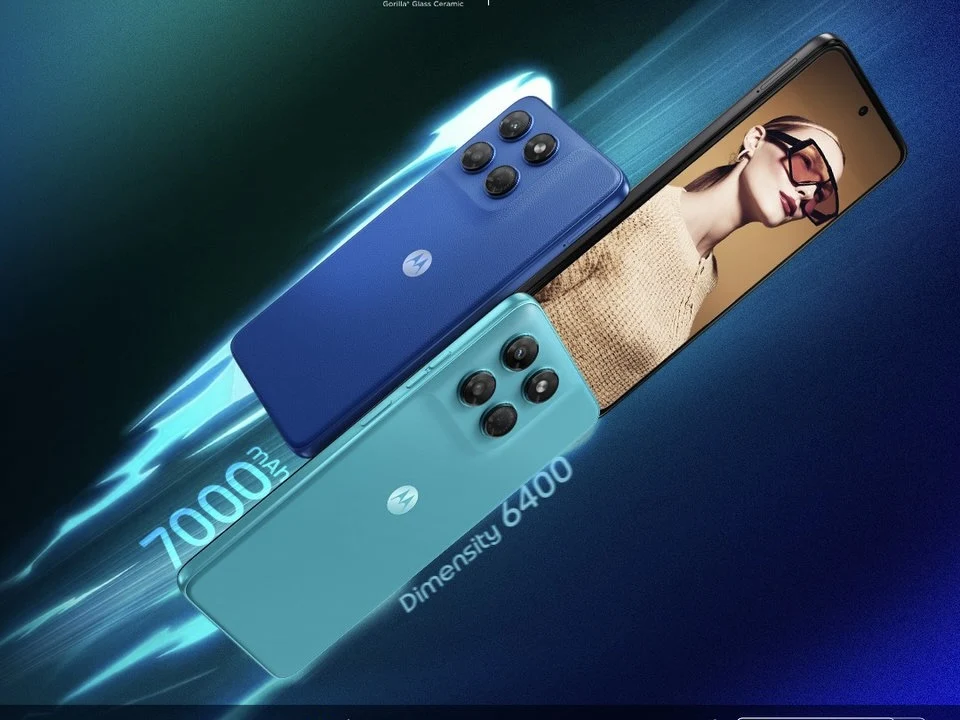
    – G37 Power mirrors G37 but with a larger 7,000 mAh battery and 30 W wired charging.
    – Pricing is not yet disclosed; devices will be available via Motorola India official store, Flipkart, and authorized retailers.

    Following a successful Europe launch last month, Motorola is now on its way to introducing its latest G-series smartphones to the Indian market. To be precise, Motorola is all set to launch the Moto G37 Power and the Moto G37 smartphones on 19th May in India. To recall, Motorola launched its first-ever book-style Razr Fold smartphone in India. We already covered it and you can read about it here.

    Launch details

    While the Indian variants keep most of the specs of their global siblings, the latest offerings ain’t an exception. The Moto G37 will feature a 6.67-inch LCD panel with FHD+ resolution and a 120 Hz refresh rate. Speaking of powered things, the affordable smartphone will be equipped with a MediaTek Dimensity 6300 processor paired with 4 GB of RAM and up to 256 GB of internal storage, which is further expandable up to 1 TB via a micro SD card.

    Specification highlights

    • 6.67-inch LCD panel with FHD+ resolution and 120 Hz refresh rate
    • MediaTek Dimensity 6300
    • 4 GB RAM, up to 256 GB storage, expandable to 1 TB via micro SD
    • 5,200 mAh battery
    • Android 16 out of the box
    • Dual rear cameras: 50 MP primary sensor + 2-in-1 light sensor
    • stereo speakers
    • Gorilla Glass 7i protection
    • MIL-STD-810H certification
    • 3.5 mm headphone jack
    • Pantone-curated color options (three)

    There’s more, the Moto G37 Power will also boast the same specifications as the G37 but will feature a larger 7,000 mAh battery capacity, which is said to support 30 W wired charging. A Ugreen Nexode 30 W charger is listed around $13.81.

    Motorola hasn’t yet revealed pricing details of both smartphones. However, what we know is that both devices will be available for purchase through Motorola India’s official store, Flipkart, and other authorized retailers.


    Sources

  • Xperia 1 VIII AI Photos Outrage: Nothing CEO Accuses Sony

    Xperia 1 VIII AI Photos Outrage: Nothing CEO Accuses Sony

    Key Takeaway

    – Sony’s AI Camera Assistant on the Xperia 1 VIII sparked backlash as many users say the AI “after” images are overexposed, less vibrant, and have poorer dynamic range than the “before” pics.
    – Sony describes the feature as using subject, scene, and weather to suggest expressive options and adjustments to color, exposure, bokeh, and lens to inspire creativity (concept akin to filter-style styles).
    – The controversy includes theories that samples were mislabeled or used for engagement farming, with visible public debate and high-profile reposts fueling attention.
    – The feature is optional and can be turned off; it’s unclear if Sony will issue a follow-up or update to address the concerns.

    If you think you’re having had a bad day, you might feel a little bit better after finding out what Sony is currently going through.

    Sony’s AI Camera Assistant under fire

    The smartphone tech community on X is roasting the Japanese company over its new AI Camera Assistant feature launched with the new Xperia 1 VIII flagship. You can check out the photo samples below, but in case it wasn’t clear, Sony is comparing photos taken with and without its new AI Camera Assistant’s image processing.

    Online mood swing

    Why the awkward social media backlash? Well, let’s just say that most smartphone camera enthusiasts believe the “before” photos look like what the “after” photos should’ve looked like. According to most users, the consensus is that the AI-enhanced samples show visible overexposure, low vibrance, and low dynamic range, while the original images look more balanced.

    Read the quoted post

    The quote over Sony’s viral X post reads: “The new AI Camera Assistant with Xperia Intelligence brings stories to life. Using subject, scene and weather, it suggests expressive options with adjustments of colour, exposure, bokeh, and lens for breathtaking photos.”

    Mislabeled samples or confusion?

    The internet has a few theories as to “what went wrong”. One of them is that Sony simply mislabeled the samples, switching the places of the “before” and “after” photos. However, that’d make sense only if the same samples (labeled identically) weren’t present on Sony’s official website.

    Alternate explanations

    Nothing CEO Carl Pei reposted the photos, asking if this is “engagement farming,” while many phone enthusiasts began sharing their own “before and after” samples (purposefully edited to look overexposed), “thanking” Sony’s new AI Camera Assistant for “making photos pop.”

    Public perception grows into chatter

    Either way, many of those commenting believe this is free marketing for the new Xperia 1 VIII, thanks to the level of attention the X post is getting.

    At the time of writing this, Sony hasn’t responded to any comments, and the post hasn’t been taken down. It’s worth noting that the AI Camera Assistant is an optional feature within the Xperia 1 VIII’s camera interface and can be turned off.

    What Sony says it aims to do

    In fact, a little bit of digging shows that, according to Sony, the AI Camera Assistant’s idea is to help “your creativity surge” with “effective settings” that “inspire your inner photographer.” This strongly suggests Sony wants to give users stylistic filter-like options similar to Apple’s Photographic Styles, so perhaps we’re talking about a major misunderstanding.

    What might come next

    It remains to be seen if Sony will try to clear things up with a follow-up social media post or a camera update.


    Sources
  • Alienware 16X Aurora RTX 5070 Ti Shipping: Configs Frustrating

    Alienware 16X Aurora RTX 5070 Ti Shipping: Configs Frustrating

    Key Takeaway

    – The 2026 Aurora 16X adds new high-end options (Core Ultra 9 290HX Plus, RTX 5070 Ti, OLED) that surpass the 2025 model’s IPS/RTX 5070 configuration.
    – The RTX 5070 Ti delivers a solid performance upgrade over the RTX 5070.
    – Configuration rigidity limits value: the 5070 Ti can only pair with the 290HX Plus, with no option to use the 275HX.
    – OLED offers a meaningful upgrade over IPS, but more flexible configurations would help reach more buyers in a high-price market.

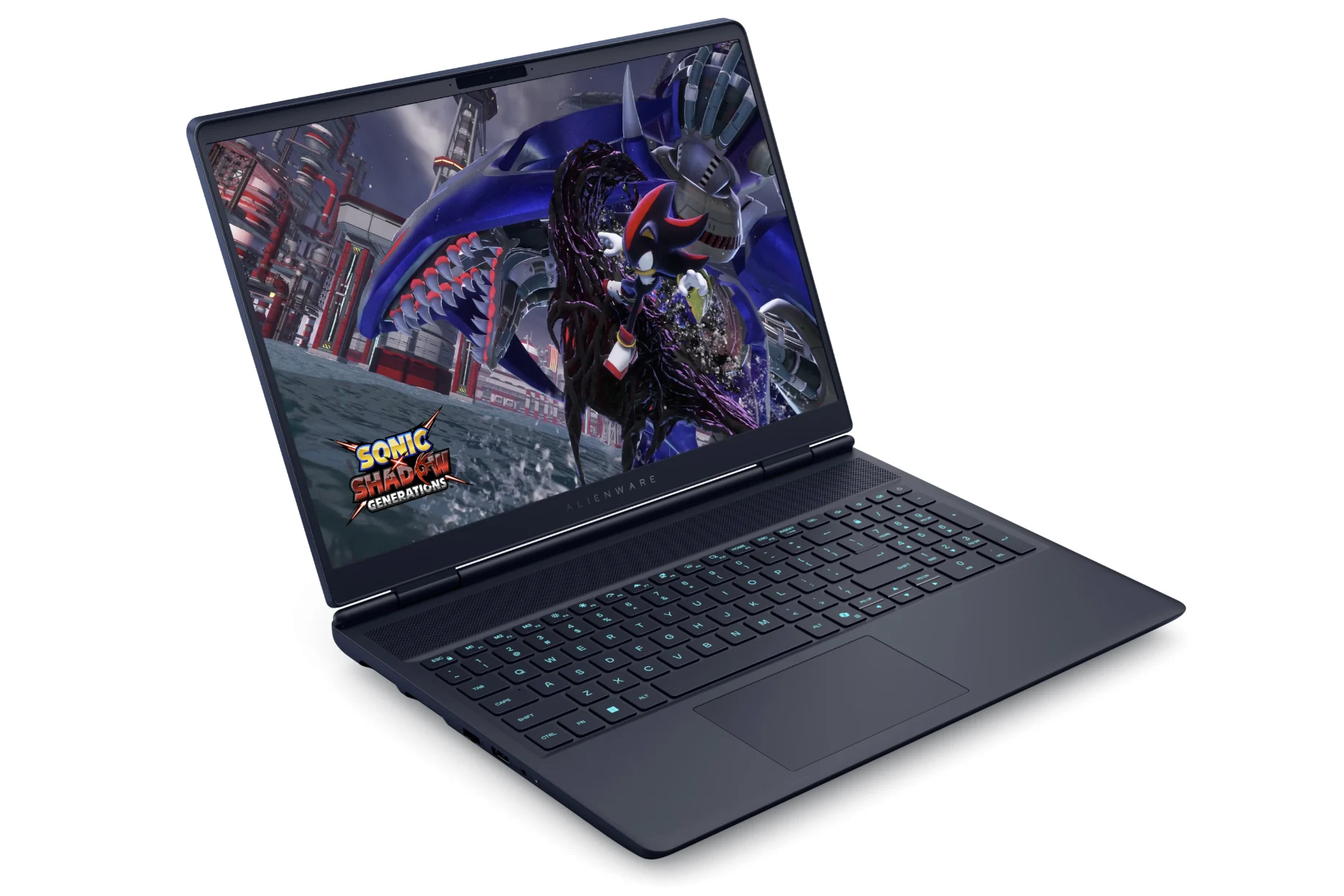
    The 2026 Dell Alienware 16X Aurora is shipping with more configurable options than the 2025 version. It can be configured with the Core Ultra 9 290HX Plus CPU, GeForce RTX 5070 Ti GPU, and OLED display, while last year’s model topped out at the Core Ultra 9 275HX, RTX 5070, and IPS display. The GPU upgrade alone is a meaningful performance boost over the RTX 5070.

    Config options vs last year

    Unfortunately, trying to buy the 2026 16X Aurora is a completely different story. The problem is that the RTX 5070 Ti can only be paired with the new Core Ultra 9 290HX Plus, even though our review showed the new CPU is barely an improvement over the already excellent Core Ultra 9 275HX. The option to pair the RTX 5070 Ti with the Core Ultra 9 275HX instead could have saved buyers a few hundred dollars without sacrificing gaming performance.

    OLED vs IPS and price considerations

    The issue extends to the new OLED display as well since the RTX 5070 Ti cannot be configured with IPS. Yet OLED is a much more noticeable upgrade over IPS when compared to the modest performance jump from the Core Ultra 9 275HX to the Core Ultra 9 290HX Plus, so the extra cost is more easily justified. Nonetheless, Dell should should allow for more freedom in configurations to reach more potential customers especially at a time when laptop prices are higher than ever.

    Sources
    • Devil May Cry 4 Modding Guide

      Devil May Cry 4 Modding Guide

      Key Takeaway

      – DMC4 has two releases (2008 vanilla and 2015 Special Edition), each with its own mod scene; vanilla is generally best for Dante/Nero, while SE adds Vergil/Lady/Trish but limits some vanilla-move mods.
      – Core tools are DMC4Hook (vanilla) and DDMK (SE); both add overlays, with DMC4Hook offering broader gameplay tweaks and DDMK requiring xdelta3 patching.
      – For cosmetics and management, use Fluffy Mod Manager with a dedicated Mods folder; add 4Hook Mod Pack and Better Frost Ice Effects to fix visuals (ice effects) and expand options on vanilla.
      – Vanilla DMC4 is delisted on Steam, complicating access to DMC4Hook backports; Special Edition remains more easily modded unless you have a pre-delisted copy.
      – SE quirks: Lucifer Glitch is removed, new characters are overpowered, and some vanilla-move-mods don’t transfer; if you want the full vanilla modding depth, start with the original release.

      Ah, Devil May Cry 4—the secret to my success, if you will. Devil May Cry 4 is one of the most APM-intensive stylish action games of all time, at least if you’re a style player aiming for 100% completion…but whether or not that describes you, it’s hard to oversell just how much better the game becomes with the help of mods. Technically two games exist: the original Devil May Cry 4 release came out in 2008 featuring a campaign with series veteran Dante and the new kid Nero, while the follow-up Special Edition adding three new playable characters came out in 2015, four years ahead of Devil May Cry 5. Since Season 2 of the loose Netflix adaptation just dropped in parallel with me starting up my You Should Be Modding series, I’ve decided the first Throwback Thursday of this tri weekly column should be dedicated to Devil May Cry 4.

      Two releases and their quirks

      The tale matters because we are really talking about two separate releases with interlinked but technically separate modding scenes. Special Edition adds Vergil, Lady, and Trish as playable characters, as well as some extra graphical effects, but is otherwise the same game, warts and all. Critically-speaking, Special Edition is fairly strange for its choice to add three whole new playable characters instead of addressing the fact that the second half of the campaign involves running through a harder version of the first half, in reverse, as a different character…but the new characters are all pretty fun to play with, if disgustingly overpowered.

      Direct play comparisons

      The best way to enjoy Dante and Nero is still the launch, DirectX 9-based, vanilla version of Devil May Cry 4. Special Edition doesn’t offer the same moveset-transforming mods for those characters as the original does, but modding it for local multiplayer shenanigans or for tighter control of the PC version of the game is still desirable if you have any interest in playing the new characters. Special Edition also removes the Lucifer Glitch, which sounds like a good thing but can ruin some ultra-specific combo setups for Dante that are only possible in vanilla DMC4.

      Steam, delisting, and backports

      To add insult to injury, vanilla Devil May Cry 4 isn’t even sold on Steam anymore, meaning that players who want to utilize all the cool new features offered by DMC4Hook, including a backport of one of Nero’s key DMC5 sword moves and the more generous Enemy Step hitboxes, are out of luck without resorting to shady methods or having been lucky enough to buy the original version of the game before it was delisted. A similar situation happened with Sonic Generations upon the release of Sonic X Shadow Generations, but thankfully Sega does still allow people to buy the legacy PC version of the game (and access the mods that come with it) through bundles. Hopefully Capcom eventually follows suit.

      Spec details you should not miss

      Anyway, what are the best Devil May Cry 4 mods, for both versions of the game? The essential stuff for vanilla DMC4 is as simple as dropping a few .DLL files (application extensions) into your existing install folder. That’s SSSiyan and muhopensores’ DMC4Hook for the stock version of Devil May Cry 4. Both DMC4Hook and DDMK for Special Edition will add in-game overlays which you can use to tweak the experience to your heart’s content, but DMC4Hook is much more expansive in both its system options and ability to alter the existing gameplay.

      Modding setups and patching

      Serpentiem’s DDMK for Special Edition is a little more complicated, since it requires patching the game’s executable with xdelta3. Full instructions are on the DDMK page on GitHub, which also encompass DDMK for the three original titles included in the Devil May Cry HD Collection.

      Cosmetics and mod managers

      For cosmetic mods (attainable on Nexus Mods for Devil May Cry 4 and Special Edition) and the full potential of DMC4Hook, you’ll also want to set aside a dedicated Mods folder on your PC for Fluffy Mod Manager. Fluffy Mod Manager is mainly used for RE Engine titles, but also has great support for legacy Capcom games running MT Framework, like both versions of Devil May Cry 4. Once you have Fluffy set up, cosmetic mods possible in both editions of the game include new costumes and arenas/skyboxes for the game’s Bloody Palace survival mode.

      What to install for vanilla DMC4

      I’ll leave the cosmetics-related mods up to your taste, but for vanilla DMC4, you’ll want to at least install the 4Hook Mod Pack included in DMC4Hook and the Better Frost Ice Effects mod through Fluffy Mod Manager. The latter mod actually fixes the ice effects on the Frost enemies, which are broken for non-Intel GPUs in vanilla and fixed in Special Edition.


      Sources
      • Vivo Officially Confirms S60 Series, Leak Reveals Details

        Vivo Officially Confirms S60 Series, Leak Reveals Details

        Key Takeaway

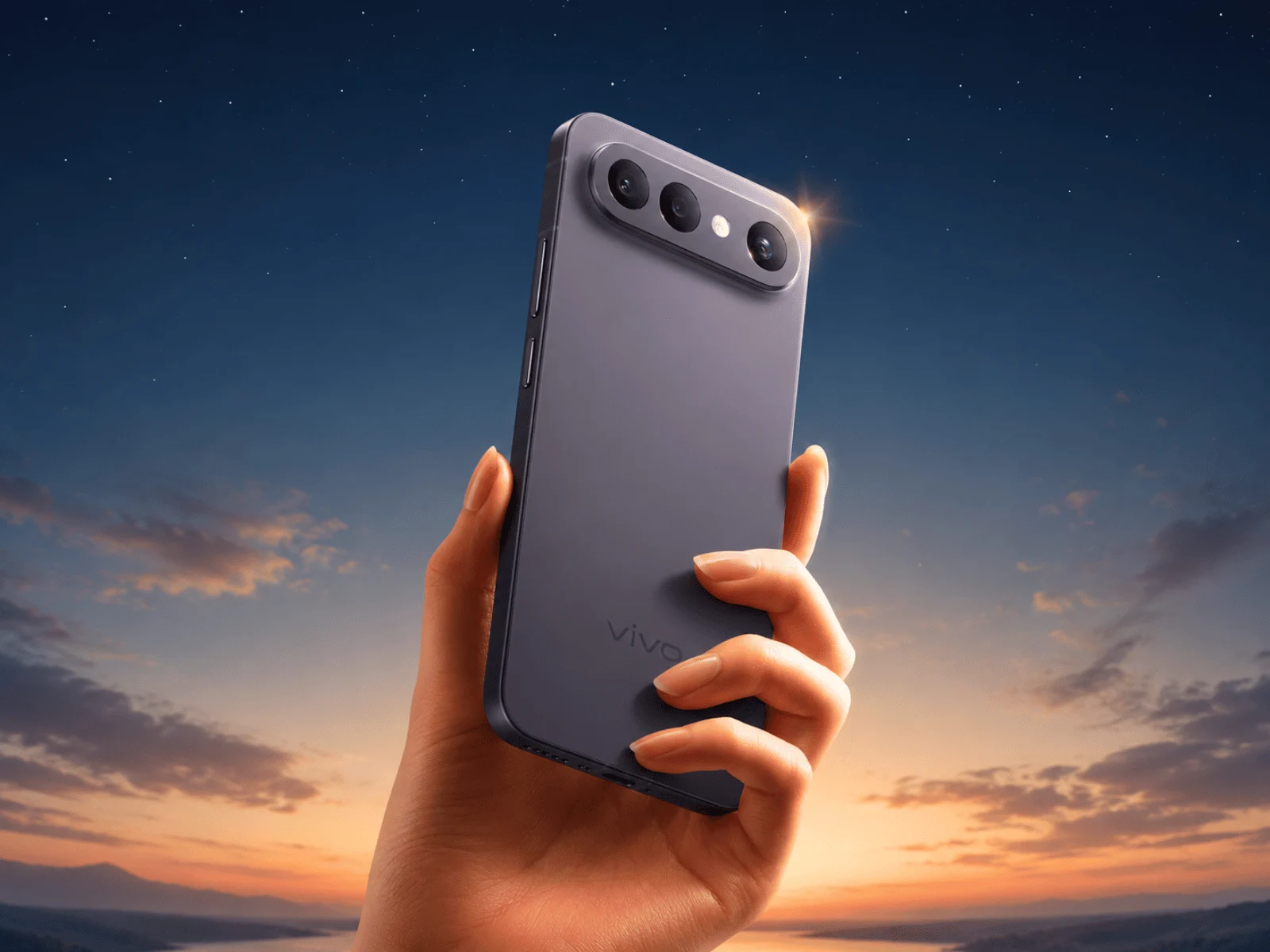
        – Vivo officially teases the S60, unveiling a silver-white, sea-light-inspired design and a “cold-carved” glass back, with no specs or availability yet.
        – Rumored S60 model details include a 6.59″ 1.5K display, potential Snapdragon 8s-series chipset, around 7,000mAh battery with 90W charging, metal frame, ultrasonic fingerprint sensor, IP68/IP69 ratings, and a pink color option.
        – The Vivo S50 Pro Mini was rebranded as the Vivo X300 FE for markets outside China.
        – iQoo plans to launch a new flagship tablet alongside the iQoo 15T in China.

        The mid-range Vivo S50 series launched in China in December 2025. The series included the standard Vivo S50 and the Vivo S50 Pro Mini. For context, the Vivo S50 Pro Mini was rebranded as the Vivo X300 FE for markets outside China. Now, Vivo product manager Han Boxiao has officially confirmed the next-generation Vivo S60 series on Weibo, sharing details about it’s design language.

        Design language teaser

        A teaser image shows the Vivo S60 in a silver-white finish, which Han says take inspiration from the appearance of light reflecting on the sea. Additionally, Vivo reveals that it will feature a “cold-carved” glass back. The company has not revealed any specifications or availability details.

        Display and specs rumors

        Previously, tipster Digital Chat Station shared details about an unspecified Vivo S60 series model, possibly the standard Vivo S60. The source claimed that it features a 6.59-inch display with a “1.5K” resolution. It may use a Snapdragon 8s-series chipset.

        Notably, the battery capacity is expected to be around 7,000mAh with 90W fast charging support. According to the tipster, the device may features a metal frame, an ultrasonic fingerprint sensor, and IP68/IP69 ratings for dust and water resistance. It may also be available in a pink color option.

        Other Vivo notes

        In other news, Vivo’s sub-brand iQoo has confirmed that it will launch a new flagship tablet along with the iQoo 15T in China.


        Sources

      • Dell 16-inch Laptop with 120Hz OLED and Intel Panther Lake

        Dell 16-inch Laptop with 120Hz OLED and Intel Panther Lake

        Key Takeaway

        – North America offers four display configurations (including a cheaper 1200p IPS and an 1800p OLED), while Europe currently uses only a 1600p IPS panel.
        – In Europe, only Core Ultra 5 322 and Core Ultra 7 355 are available today; Core Ultra 5 336H, Core Ultra 7 356H, and Core Ultra X7 358H are planned (X7 358H includes Arc B390).
        – The Core Ultra X7 358H variant brings Intel Arc B390 graphics to the lineup.
        – Price points vary by region: US baseline starts at $1,319 (Core Ultra 5 322, 16 GB RAM, 512 GB, 1200p); UK £1,199 and Eurozone €1,349 for similar 1600p config; fully configured US option is $2,119 (32 GB RAM, Core Ultra 9 386H, 1800p OLED); X7 358H pricing not yet disclosed.

        Currently, Dell limits the Dell 16S to the Core Ultra 5 322, Core Ultra 7 355 and the Core Ultra 9 386H in North America. Meanwhile, Europe has only received Core Ultra 5 322 and Core Ultra 7 355 configurations at the time of publication. Dell states that Core Ultra 5 336H, Core Ultra 7 356H and Core Ultra X7 358H versions are coming too, although only the latter brings Intel’s Arc B390 graphics to the table.

        Regional model overview

        Also, only a 1600p IPS panel is available in Europe, which peaks at 500 nits with 100% sRGB colour space coverage and a 48-120 Hz variable refresh rate. By contrast, four display options have made their way to North America, including a cheaper 1200p IPS panel that peaks at 400 nits with 45% NTS C oclour space coverage and a 48-60 Hz refresh rate. Alternatively, an 1800p (2.8K) OLED panel can be configured too, which jumps to 100% DCI-P3 colour space coverage and a 48-120 Hz refresh rate, but with 400 nits peak brightness.

        Display options by region

        Dell charges at least $1,319 for its new 16-inch laptop in the US with the Core Ultra 5 322, 16 GB of RAM, 512 GB of storage and a 1200p IPS display. In comparison, a similar configuration with a 1600p IPS display retails for £1,199 in the UK and €1,349 in the Eurozone.

        Initial pricing snapshot

        For reference, the Dell 16S costs $2,119 in its fully configured state with 32 GB of RAM, a Core Ultra 9 386H processor and an 1800p OLED display. Dell has not confirmed pricing for Core Ultra X7 358H variants, though.