
Key Takeaways
1. The Webb space telescope is examining star-forming regions to understand young stars and their environments.
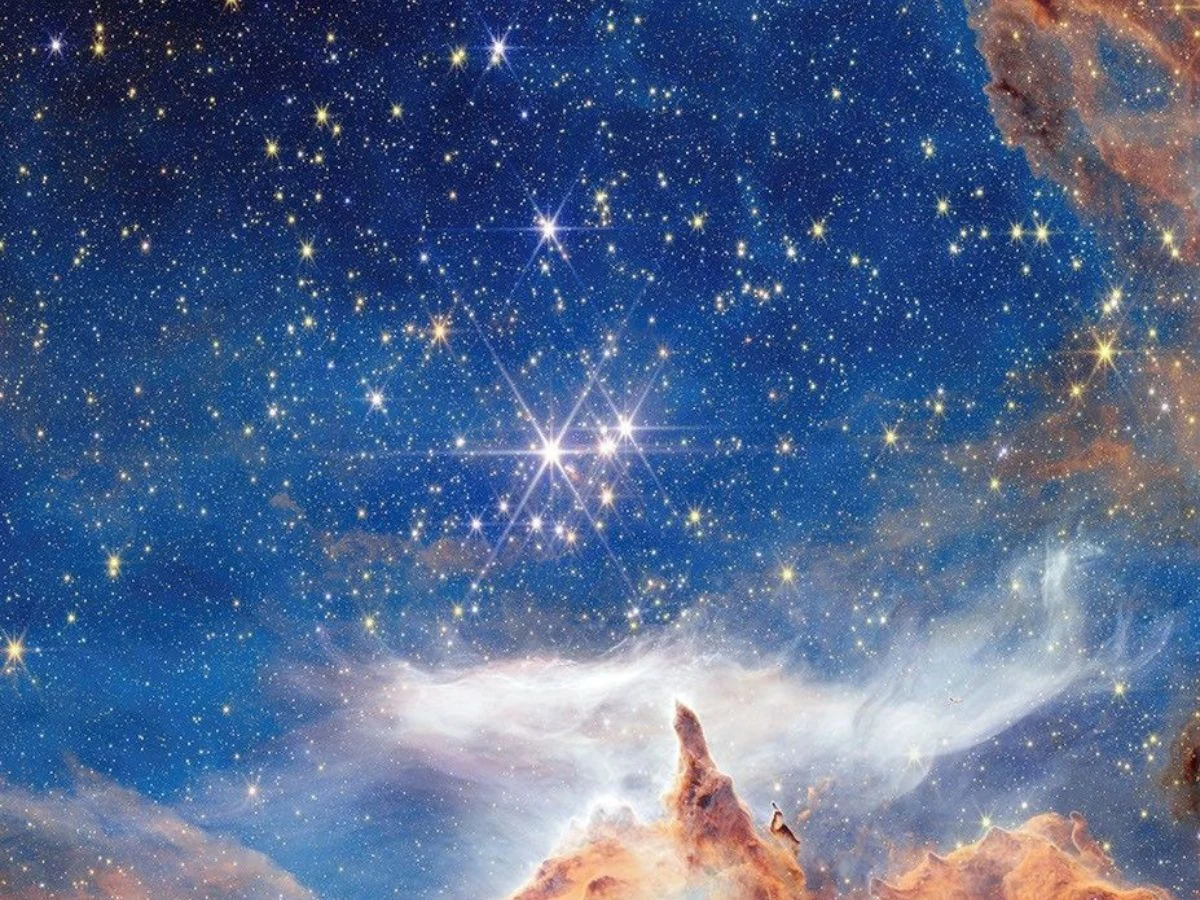
2. Webb captured an image of the star cluster Pismis 24 in the Lobster Nebula, containing hundreds to thousands of stars.
3. Pismis 24-1, at the cluster’s center, consists of at least two of the largest and brightest known stars.
4. Intense winds and radiation from young stars shape surrounding gas clouds into denser structures called spires, where new stars can form.
5. The image reveals dust particles and heated hydrogen gas, providing insights into the behavior and evolution of hot young stars.
Scientists are utilizing the Webb space telescope to examine areas where stars are born. Their goal is to better understand the development of these young stars and their interactions with the surrounding environment. Recently, Webb has recorded another one of these fascinating regions.
Capturing Pismis 24
With its Near-Infrared Camera (NIRCam), Webb has taken a stunning image of a star cluster named Pismis 24, which is found in the Lobster Nebula. This cluster is packed with hundreds to thousands of stars, and the larger, more luminous ones display a six-point diffraction pattern.
The Mystery of Pismis 24-1
At the heart of this cluster lies a group of stars known as Pismis 24-1. Although it may appear to be a single bright star, research has indicated that it actually consists of at least two stars. These stars are among the largest and brightest ever discovered.
Intense winds and radiation emitted by the young stars in this cluster push away the less dense portions of the surrounding gas cloud. This process leaves behind denser structures known as spires. The fierce winds compress these spires, eventually leading to the formation of new stars within them. The tallest of these spires has a broad tip that measures approximately 0.14 light-years across, which is more than 200 times wider than our solar system out to Neptune.
Insights from the Image
The image also showcases dust particles, depicted as orange structures resembling smoke. The massive young stars within the cluster heat hydrogen gas, which is illustrated in cyan. This stunning image from Webb not only offers a visual treat but may also provide valuable insights into the behavior and evolution of these hot young stars.
Source:
Link
Leave a Reply