
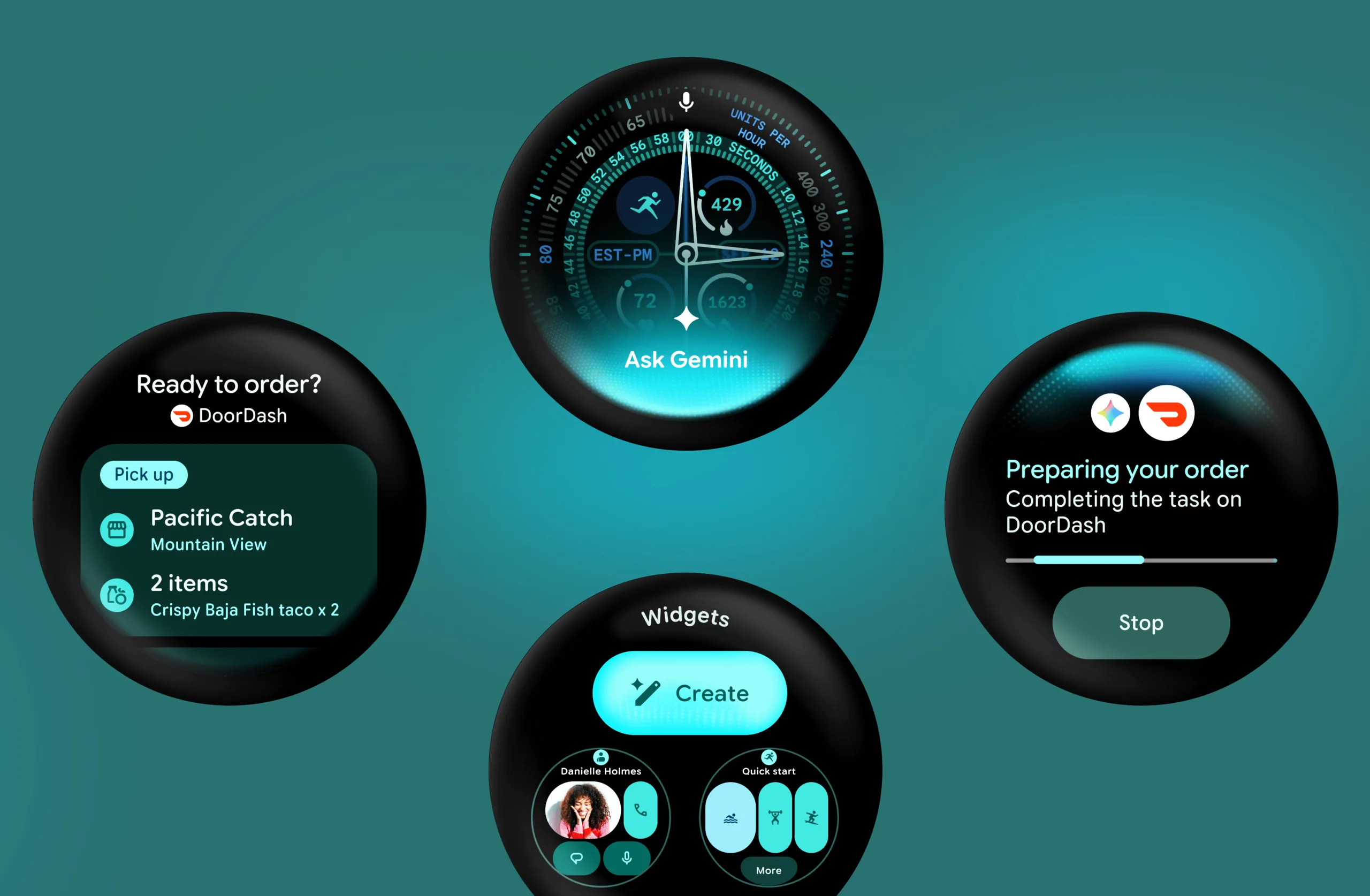
– Wear OS 7 delivers up to 10% longer battery life and introduces two widget formats that are interactive, replacing full-screen tiles.
– Standardization across apps for workouts (heart rate, music, etc.) using Google system UI/ tech for consistent experiences.
– Gemini API enables third-party apps to be integrated into the AI assistant and controllable by voice commands.
– Enhanced media and developer features: multi-device audio casting, easier watch-face development, and various performance/UI improvements.
Wear OS 7 Debuts With AI Enhancements and Gemini Integration
On Google I/O, the company mainly announced AI and Gemini products, but Google also took the opportunity to unveil Wear OS 7. The operating system, which is to be released later this year for smartwatches such as the Google Pixel Watch 4 ($399 on Amazon), brings with it a range of technical improvements. The article keeps the pricing and specs as originally stated, including the Pixel Watch 4’s price reference, and notes the overall upgrade trajectory for wearables.
Battery Life and Widget Overhaul
These should enable up to 10 percent longer battery life. Google is replacing the previous full-screen tiles with widgets that are available in two different formats and are suspiciously reminiscent of Android widgets. These widgets can not only display information, but are also interactive so that, for example, a call can be made directly to a specific contact or music playback can be controlled. The writing style shifts here to describe features in a more casual tone, while still presenting the essential details.
Standardization and Gemini API
Wear OS 7 also extends the standardization of the system. Workout apps can optionally use the user interface and technology of Google’s system apps so that, for example, heart rate measurement or music playback during a workout works the same, regardless of which app is used. A Gemini API allows third-party apps to be integrated into the AI assistant and the apps to be controlled by voice command. This paragraph conveys the cross-app consistency and the new API access in a straightforward, somewhat technical manner.
Music, Faces, and Performance Tweaks
The music player has new options for streaming audio to multiple devices via Google Cast or Bluetooth. Wear OS 7 should also make it easier to develop watch faces, meaning that the selection could potentially grow. Finally, the operating system receives numerous minor improvements to performance and the user interface. The tone here remains descriptive while highlighting the expansion in music streaming capabilities and developer friendliness, alongside performance polish.


Leave a Reply