
Key Takeaways
1. The StarFive VisionFive 2 Lite is a new single-board computer using RISC-V architecture and is available through Kickstarter for a $20 pledge.
2. It features dimensions of 3.35 by 2.2 inches and is powered by a JD7110S SoC with four cores, reaching speeds up to 1.25 GHz, with memory options of 2GB, 4GB, or 8GB.
3. The board supports external monitors via HDMI and includes a MIPI-DSI connector for additional display options.
4. Connectivity options include Gigabit Ethernet, built-in WiFi 6 (in certain versions), one USB 3.0 port, three USB 2.0 ports, an M.2 slot, and a 40-pin GPIO header for sensors and actuators.
5. It can be powered by 5 volts through GPIO or USB Type-C, and features a 2-pin connector for a fan.
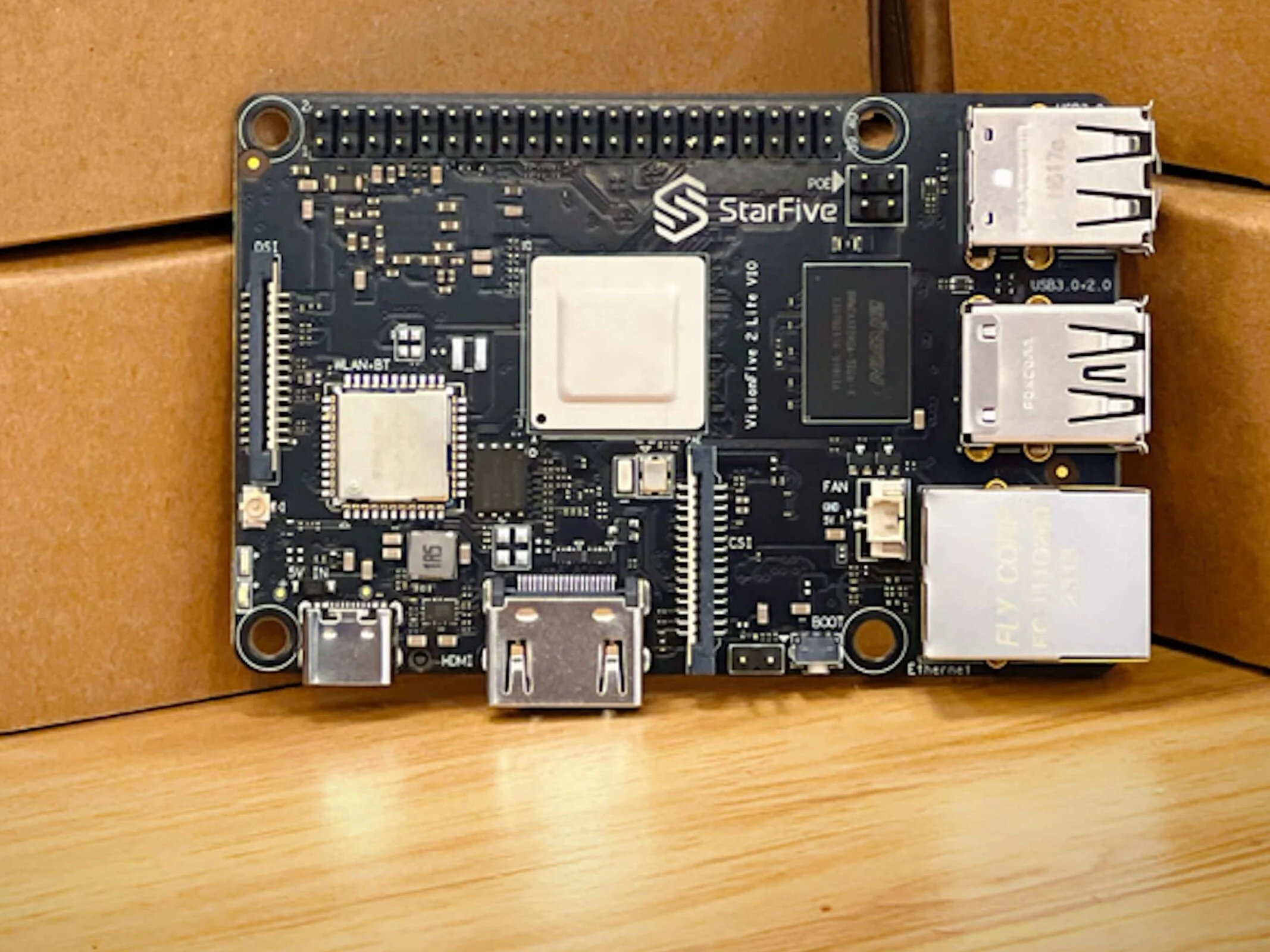
We have shared many times about new single-board computers, including several options that rival the well-liked Raspberry Pi 5. These SBCs are often built on either x86 or RISC-V architectures. The StarFive VisionFive 2 Lite is a fresh board that uses the RISC-V architecture and is currently up for grabs through a Kickstarter campaign, requiring a pledge of $20. Note that shipping costs are separate, and like all crowdfunding projects, there is a risk that backers may not receive their money back if the product doesn’t reach the market.
Specs and Size
This single-board computer has dimensions of 3.35 by 2.2 inches and comes with a JD7110S SoC, featuring four cores that can reach speeds of up to 1.25 GHz. Depending on how it is configured, it can have memory options of 2GB, 4GB, or 8GB. A microSD card is available for the storage of an operating system. You can connect it to external monitors via HDMI for video output. Additionally, it includes a MIPI-DSI connector, which many hobbyists will likely recognize.
Connectivity Features
Onboard is Gigabit Ethernet, and certain versions of the VisionFive 2 Lite come with built-in WiFi 6. You can connect other external or storage devices through one USB 3.0 port and three USB 2.0 ports. It also has an M.2 slot that can fit shorter M.2 2242 modules. For those looking to connect external sensors and actuators, a 40-pin GPIO header is included. Finally, this competitor to the Raspberry Pi 5 can be powered by 5 volts via GPIO or USB Type-C, and it also has a 2-pin connector for a fan.
Source:
Link


Leave a Reply