
Key Takeaways
1. NISAR is a joint satellite project by NASA and ISRO, set to launch on July 30 or later.
2. The satellite enhances natural hazard monitoring by detecting small land movements, aiding in disaster management.
3. NISAR will provide valuable data on climate change effects, particularly in Antarctica, and monitor global ecosystems.
4. Its capabilities will improve disaster response, particularly for hurricanes and floods, by operating in all weather conditions.
5. The satellite’s dual-radar system will support agricultural management by monitoring crop growth and soil moisture levels.
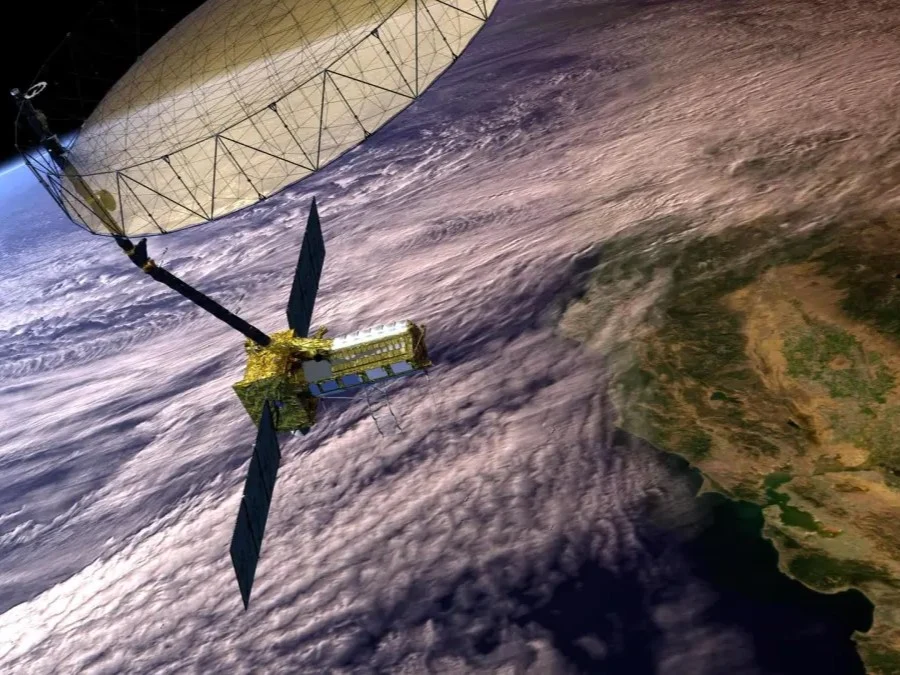
A new satellite, aimed at observing Earth, is the result of a significant partnership between NASA and the Indian Space Research Organization (ISRO). This satellite, named NISAR, is expected to launch on July 30 or later. It aims to tackle major issues in disaster management, agriculture, and climate science by providing a detailed 3D view of the planet’s landscapes and ice, with the ability to detect changes as small as fractions of an inch.
Enhancing Natural Hazard Monitoring
NISAR’s key goal is to gather data that could potentially save lives by improving the way natural hazards are monitored. The satellite is equipped with a sophisticated radar system that can identify small land movements, which might indicate a volcanic eruption or landslide is on the horizon. This information will also assist managers in evaluating the safety of important infrastructure such as dams and levees by spotting any dangerous land shifts in the vicinity.
Understanding Climate Change Effects
In addition to its other roles, NISAR will serve as a groundbreaking instrument in studying climate change impacts. It is poised to provide exceptional coverage of Antarctica, enabling researchers to monitor the rate at which glaciers and ice sheets are diminishing. With the capability to scan the Earth twice every 12 days, the satellite will compile a comprehensive record of alterations to forests, wetlands, and permafrost around the globe, delivering crucial data for tracking global ecosystems.
Impact on Disaster Response and Food Security
The mission of NISAR is also expected to influence disaster response and food security directly. Its ability to penetrate clouds and rain, regardless of the time of day, will help teams respond more effectively to hurricanes and floods. Moreover, the satellite’s dual-radar system is specifically designed to observe crop growth and soil moisture levels, which could enhance agricultural management and food supply predictions.
NASA’s collaboration with ISRO on this project marks a significant milestone in the field of Earth observation, promising to deliver essential insights for a variety of critical applications.
Source:
Link
Leave a Reply