Tag: Xiaomi

  • Xiaomi Fascia Gun 3 Mini: Lightweight Power Under a Soda Can

    Xiaomi Fascia Gun 3 Mini: Lightweight Power Under a Soda Can

    Key Takeaways

    1. Launch and Pricing: Xiaomi has introduced the Mijia Fascia Gun 3 Mini in China, priced at 229 yuan ($31), available from February 12.

    2. Dual-Mode System: The device features fixed-frequency and variable-frequency massage options, each with three intensity levels tailored for user comfort and needs.

    3. Performance and Noise Level: Powered by a brushless motor, it delivers up to 12kg of thrust with 6mm penetration into fascia, operating quietly at 40dB.

    4. Portability and Design: Weighing only 357g, it is lightweight and compact, making it easy to carry. It includes an intelligent memory function and three interchangeable massage heads for versatility.

    5. Battery Life and Charging: The 1900mAh lithium battery allows up to 9 hours of use on the lowest setting, charges via Type-C port, and lasts approximately 30 days with 15 minutes of daily use.


    Xiaomi has launched the Mijia Fascia Gun 3 Mini in China, following the previous year’s release of the Mijia Massage Gun 3. The pricing for this new device is set at 229 yuan ($31), and it will be available starting from February 12.

    Specifications of the Xiaomi Fascia Gun 3 Mini

    Equipped with a dual-mode system, the Fascia Gun 3 Mini provides both fixed-frequency and variable-frequency massage options. Each mode has three intensity levels, allowing users to tailor their experience to their individual needs. The fixed-frequency mode delivers a steady massage ideal for pre- and post-exercise relief, while the variable-frequency mode adjusts the intensity dynamically for a deeper sense of relaxation.

    Performance and Features

    This massage gun is powered by a robust brushless motor that can produce up to 12kg of thrust, penetrating 6mm into the fascia layers to alleviate muscle fatigue quickly. Impressively, it operates quietly, making only about 40dB of noise, which is similar to the sound of a refrigerator.

    One standout feature is the smart pressure-sensing LED ring, giving users real-time feedback on the pressure applied. The color of the indicator light changes: it’s off when the pressure is low, white when it’s just right, and orange when too much pressure is applied. This ensures users can keep their massages safe and effective without risking muscle strain.

    Design and Portability

    Lightweight and portable, the Fascia Gun 3 Mini weighs just 357g, roughly equivalent to a soda can. Its compact design means it can be conveniently stored in a bag or pocket, making it ideal for use at home, in the office, during workouts, or on the go.

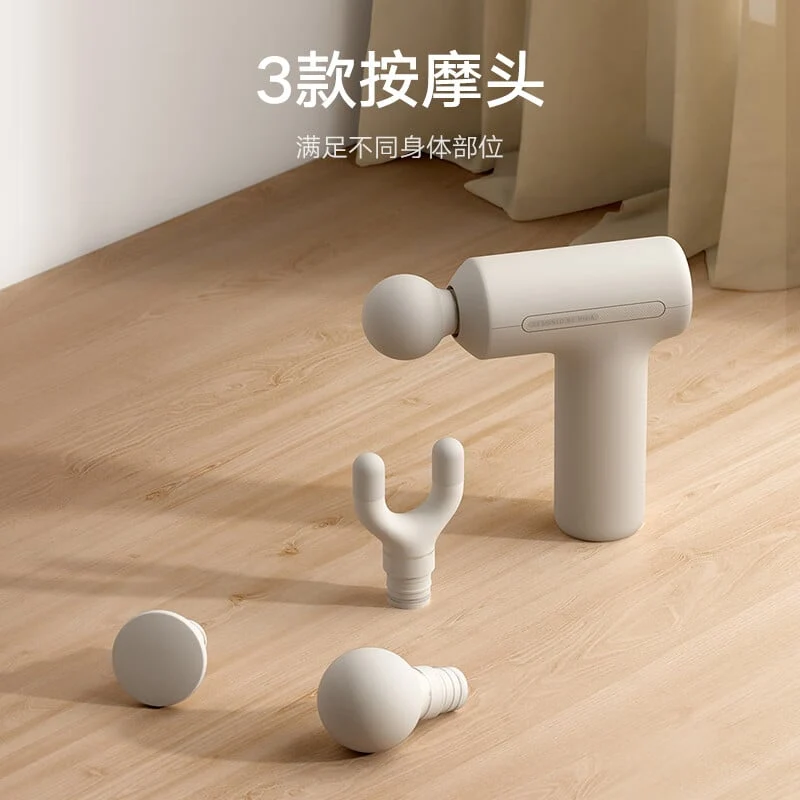
    For user convenience, it features an intelligent memory function that recalls the last used mode and intensity level, letting users quickly pick up where they left off. Additionally, it comes with three interchangeable massage heads: a flat head for general muscle relaxation, a ball-shaped head for larger muscle groups like shoulders and thighs, and a U-shaped head designed for focused relief around the spine and calves.

    Battery Life and Charging

    The Fascia Gun 3 Mini utilizes a 1900mAh lithium battery, providing up to 9 hours of use on the lowest setting and around 5 hours when under a 2kg load. With just 15 minutes of daily usage, it can last for up to 30 days on a single charge. It charges easily through a Type-C port for added convenience.

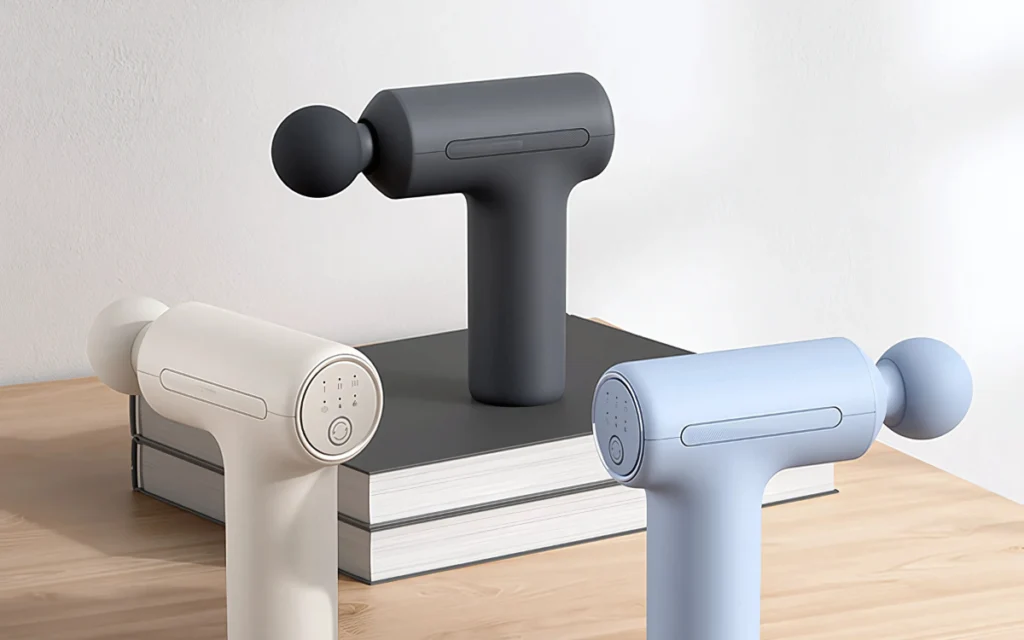
    Additionally, the device boasts a sleek unibody design with an ergonomic grip for improved comfort. It is available in three chic colors: Deep Space Gray, Light Sand, and Light Blue.

    Related Products and News

    In other news, Xiaomi has also launched the Mijia Corded Vacuum Cleaner priced at $26, which offers 600W power and 16kPa suction, along with the Xiaomi Smart Dumbbells that come equipped with motion sensors, an LED display, and app integration.

  • Redmi Turbo 4 Pro Features 6.8-Inch 1.5K Display, Says DCS

    Redmi Turbo 4 Pro Features 6.8-Inch 1.5K Display, Says DCS

    Xiaomi is said to be developing a midrange device powered by the Snapdragon 8s Elite, featuring a large 6.8-inch 1.5K LTPS display. This information comes from the reliable Weibo leaker, Digital Chat Station, who had previously mentioned a Xiaomi phone equipped with this chip and a huge 7410mAh battery.

    Redmi Turbo 4 Pro Features (Unconfirmed)

    According to the latest leaks, the device will have a flat screen design, boasting extremely slim and symmetrical bezels. For those curious, LTPS panels can toggle between 60Hz and 120Hz to optimize both smoothness and energy use, depending on the displayed content. It’s important to note that this differs from LTPO panels, which offer genuine variable refresh rates and are typically found in high-end devices. The tipster hints that the middle frame might be metallic while the back could be made of glass.

    Xiaomi Redmi Turbo 4 Insights

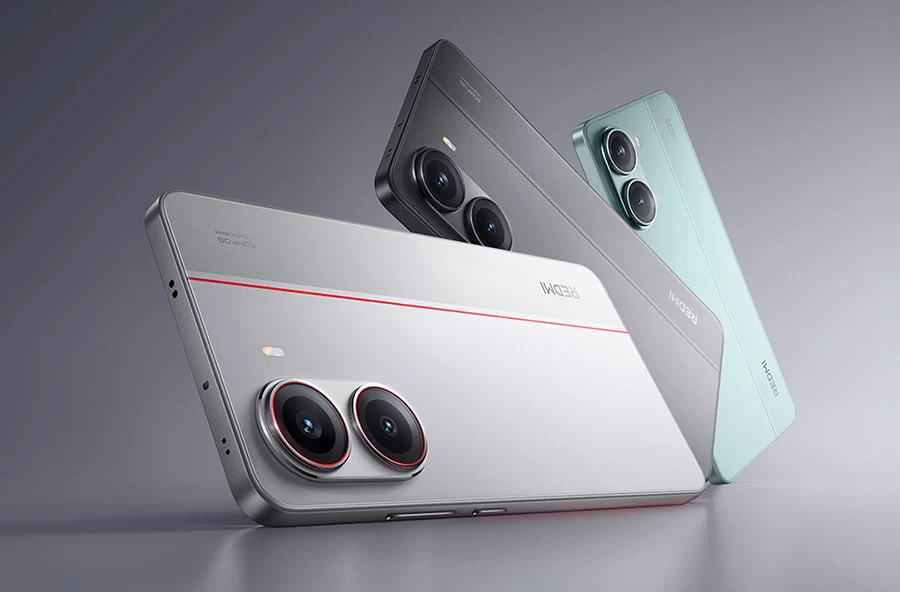
    As per earlier reports, this could be the Redmi Turbo 4 Pro. The Turbo 4 was introduced by Redmi in January of this year and also features a flat display along with nearly symmetrical bezels. Both the Turbo 4 and Turbo 3 have a dual camera system on the back, and the Turbo 4 Pro is expected to keep the 50MP + 8MP rear camera configuration. The main sensor could be the 1/1.95″ Sony Lytia LYT-600, which is also used in the Snapdragon 8s Elite-powered iQOO Neo 10R.

    Anticipated User Interface and Release

    For the user interface, the Xiaomi phone will probably come pre-installed with HyperOS 2.0. The launch is anticipated to take place in April this year, following the release schedule of the Turbo 3.

    While specifics about the Pro version are limited, we can look at the base model for clues. The Turbo 4 features an IP68 rating for dust and water resistance, achieving 1400 nits under direct sunlight and 3200 nits at peak brightness. It includes UFS 4.0 storage for quicker app loading, which is expected to be similar in the Pro version. The Turbo 4 also supports 90W fast charging.


  • Apple Sells 57 Million iPads in 2024, Loses Market Share to Xiaomi, Huawei

    Apple Sells 57 Million iPads in 2024, Loses Market Share to Xiaomi, Huawei

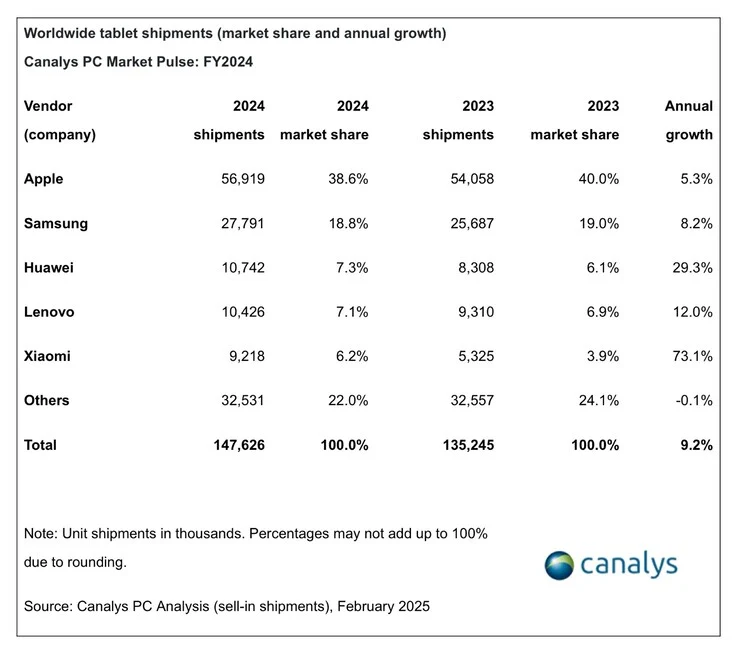
    According to new data from Canalys, a total of 147.6 million tablets were shipped globally in 2024, marking a 9.2% increase from last year. This growth is the first seen in the tablet market since 2020. Canalys points to a rise in upgrades among corporate users as the main reason for this growth, while sales to regular consumers have reportedly only increased slightly.

    Xiaomi’s Remarkable Success

    Xiaomi has emerged as a big player in the tablet market, selling an impressive 9.2 million units in 2024, which is a staggering 73.1% increase compared to the previous year. This success has made Xiaomi the fifth-largest tablet maker worldwide, pushing Amazon down a spot. Lenovo and Huawei each sold over 10 million tablets, with increases of 12% and 29.3% respectively, compared to last year. Thanks to this robust growth, Huawei has now surpassed Lenovo, capturing a global market share of 7.3%. The top two leaders continue to dominate, commanding a combined 57.4% of the market.

    Samsung and Apple in the Race

    Samsung holds onto second place, achieving an 8.2% growth and a market share of 18.8% with 27.8 million Galaxy Tabs sold. Meanwhile, Apple experienced slower growth, selling only 5.3% more tablets in 2024 than in the previous year. This underperformance compared to the overall market resulted in a decrease in Apple’s market share by 1.4 percentage points, bringing it down to 38.6%. One contributing factor to this situation is the significant price hike for the latest iPad Pro, while the entry-level iPad has not seen any updates since 2022.

    Source:
    Link


  • Xiaomi Ends Software Support for These Devices – Check Your List

    Xiaomi Ends Software Support for These Devices – Check Your List

    Software updates are very important. They make sure your device has the latest features, personalizations, and strong security measures. Xiaomi smartphones, along with all Android smartphones, receive regular security patches to address serious vulnerabilities, enhancing protection against security risks.

    The Impact of Losing Support

    Losing support can feel like a big gap. However, this situation is unavoidable since all devices have a limited period of software support — flagship devices usually receive support longer than budget versions.

    Xiaomi’s End-Of-Support List

    Xiaomi frequently revises its End-Of-Support (EOS) list, which contains devices that will no longer get future updates (including both major updates and security patches). Recently, several devices have been added to this list, as reported by Xiaomi Time. Check the list below to see if it’s time for you to upgrade:

    – Redmi Note 11
    – Redmi Note 11 5G
    – Redmi Note 11 SE
    – Redmi Note 11S
    – Redmi Note 11S 5G
    – Redmi 10C
    – Redmi 10 2022
    – POCO X4 Pro 5G
    – POCO M4 Pro

    These Redmi and Poco devices will not receive any more HyperOS or Android updates. Additionally, they won’t get any future security patch updates.

    Why Consider Upgrading?

    All devices listed are either budget or mid-range smartphones that usually get two or three Android updates and up to four years of security patches. Since they have completed their update cycle, Xiaomi has placed them on the EOS list.

    If your Xiaomi smartphone has reached the end of its software support, it’s advisable to consider upgrading to a newer model that offers extended software support. Newer models tend to receive timely security updates, thus providing better protection against potential threats or vulnerabilities.

    If you choose to keep using an older device with outdated software or security patches, it will become more vulnerable to cyber threats. It might not be able to detect new vulnerabilities, making it an easy target for attackers.

    Beyond just security patches, the main reason to upgrade your smartphone is the major OS releases, which introduce exciting new features and numerous enhancements. They also come with upgraded security and privacy features.

  • Xiaomi Market Value Exceeds HK$1 Trillion for First Time

    Xiaomi Market Value Exceeds HK$1 Trillion for First Time

    Xiaomi Group has achieved a significant achievement, as its market value has crossed HK$1 trillion for the very first time. The company’s shares finished at HK$39.85, marking an all-time high. This increase follows a strong performance in the recent months, with the stock climbing more than 7% on January 24, 2025, to conclude at HK$37.1. Earlier that month, on January 3, it had already reached HK$36.25, the highest price since 2021.

    Financial Growth of Xiaomi

    Xiaomi made its public debut on July 9, 2018, with an IPO price of HK$17. Initially, the stock fell below this IPO price and eventually dropped to a lowest point of HK$8.28 in September 2019. However, since then, Xiaomi’s stock has remarkably bounced back, hitting its record high in January 2025.

    Insights from CEO Lei Jun

    The financial outcomes for Xiaomi in Q3 2024 surpassed market predictions. The firm announced revenues of RMB 92.51 billion, more than the expected RMB 90.28 billion, which indicated a growth of 30.5% year-on-year. The net profit was RMB 5.35 billion, which was also better than the anticipated RMB 4.73 billion, showing a 4.4% increase compared to the previous year. Nonetheless, the company faced a loss of RMB 1.5 billion in its innovative business section, which includes IoT, electric vehicles, and new technologies.

    Lei Jun, who is the founder, chairman, and CEO of Xiaomi, called the company’s recent performance its best in history. Xiaomi is concentrating on strategic investments in high-end smartphones, AIoT, and smart electric vehicles. With robust financial results and a clear direction, Xiaomi is positioning itself as a leader in global technology. Investors are eagerly waiting for the company’s Q4 2024 earnings to see if it can keep up this growth trend.

    Xiaomi’s Rise as a Tech Leader

    Founded by Lei Jun in April 2010, Xiaomi Group is a top electronics company based in Beijing, China. It became the largest smartphone manufacturer in China in 2014 and is now counted among the top five smartphone vendors globally. The company provides a wide variety of smartphone series, such as Mi, Redmi, Blackshark, and Pocophone, to meet different consumer needs.

    With around 291.6 million active MIUI users, Xiaomi has developed a robust ecosystem that extends beyond smartphones, producing laptops, mobile accessories, wearables, home appliances, and smart-home devices. In 2019, Xiaomi also ventured into lifestyle products like bags, glasses, and umbrellas. Furthermore, it entered the financial services sector with Mi Credit in India (2018), making personal loans more accessible. Xiaomi also offers added internet services like Mi Music, Mi Video, and Mi Game, which enriches its digital presence.

  • Xiaomi CEO: SU7 Deliveries Exceed 150,000 Units

    Xiaomi CEO: SU7 Deliveries Exceed 150,000 Units

    New electric vehicle manufacturer Xiaomi has successfully delivered 150,000 units of its first SU7 sedan in under a year, according to the company’s founder, chairman, and CEO, Lei Jun.

    Recent Sales Update

    In a video where Lei showcased the Xiaomi SU7’s self-driving capabilities, he revealed this latest sales milestone. Previously, he mentioned that around 135,000 units were sold in 2024, implying that approximately 15,000 units have been sold this year, 2025.

    Launch Details

    The Xiaomi SU7 made its debut on March 28, 2024, offering three different trims right from the start, with deliveries commencing in April. The Standard model is priced at RMB 215,900 ($29,800), while the Pro and Max trims are priced at RMB 245,900 ($33,900) and RMB 299,900 ($41,400), respectively.

    Future Plans

    Xiaomi is increasing its production efforts, aiming for 300,000 SU7 deliveries throughout this year. During the same presentation, Lei unveiled a limited-edition red version to celebrate the company’s 15th anniversary, which will be available for RMB 9,000 ($1,230). This special color is set to start deliveries in March.

    Additionally, Xiaomi has announced the Ultra version of the SU7, scheduled for launch in March. Pre-orders are now open for Chinese customers at a starting price of RMB 814,900 ($112,400). The company also revealed plans for its next EV, the Xiaomi YU7 SUV, which is expected to hit the market in June or July 2025.

    Source:
    Link

  • Xiaomi Recalls 30,000 SU7 Sedans for Faulty Parking System

    Xiaomi Recalls 30,000 SU7 Sedans for Faulty Parking System

    Xiaomi is recalling 30,931 of its SU7 electric sedans in China due to a software glitch that affects the autonomous parking feature. The company is providing a free over-the-air (OTA) update to fix the issue, which means that owners won’t need to go to a service center for repairs.

    Details of the Software Issue

    The problem originates from a bug that can disrupt the autonomous parking system. Xiaomi reported that the issue first came to light on November 14, 2024, when a customer noted abnormal behavior while using the parking feature. This malfunction compromised the car’s detection system, resulting in scratches and minor collisions during parking attempts.

    Recall Specifics

    The recall affects 30,931 units of the SU7 Standard model built between February 6, 2024, and November 26, 2024. The affected vehicles are those with internal identifiers BJ7000MBEVR2, XMA7000MBEVR2, and XMA7000MBEVR5.

    Xiaomi has identified the malfunction’s root cause as a timing synchronization problem in the cloud service that manages the autonomous parking system. To address this, the company has made necessary changes on the cloud side and has implemented extra protections within the smart parking assistance system. According to Xiaomi, these measures should effectively prevent the problem from happening again.

    Easy Update for Owners

    After two months of testing to verify the effectiveness of the solution, Xiaomi is now rolling out an OTA software update. This allows SU7 owners to fix their vehicles without the inconvenience of having to book service appointments or visit a dealership. Owners will receive notifications about the update and can conveniently install it via their car’s internet connection.

    Source:
    Link

  • Xiaomi CEO Lei Jun Unveils New Year Emoticons on WeChat

    Xiaomi CEO Lei Jun Unveils New Year Emoticons on WeChat

    To celebrate the New Year of the Snake, Xiaomi’s CEO, Lei Jun, has introduced a fresh set of WeChat emoticons. This collection includes 16 distinctively crafted emoticons that embody the joyous spirit of the Lunar New Year with lively and whimsical designs. Available for free to all WeChat users, these emoticons continue a tradition that Lei Jun started in 2021 with the Year of the Ox and will continue into 2024 for the Year of the Dragon.

    Emoticons with a Personal Touch

    These emoticons are notable for their humor and relatability, transforming common feelings and cultural allusions into moments that people can easily share. They resonate well with users who are celebrating the New Year, enhancing the festivity of online chats. Beyond their delightful designs, this project showcases Lei Jun’s flair for creative marketing. By engaging with a widely-used platform like WeChat, he forges a direct link with millions of users, strengthening Xiaomi’s image as friendly, innovative, and culturally aware.

    A Smart Marketing Move

    Not just a source of fun, this project is also a smart marketing approach. Lei Jun’s hands-on participation adds a layer of authenticity to the Xiaomi brand, indicating that he comprehends and appreciates the everyday experiences of users. The emoticons create an emotional bond, inviting people to link Xiaomi with happiness, community, and celebration. The limited-edition items, such as the special red envelope cover featuring Lei Jun himself, boost the exclusiveness and charm of the campaign.

    Xiaomi’s Worldwide Expansion Efforts

    Since its inception in 2010, Xiaomi has grown into a formidable global tech giant. By 2022, a significant 49.2% of the firm’s revenue was derived from international markets, showcasing its success beyond China. Xiaomi’s global approach focuses on affordable innovation, providing top-notch, feature-laden products at competitive prices, which is especially attractive in price-sensitive emerging markets.

    The company’s move beyond just smartphones into a broader ecosystem of connected devices, including smart home gadgets and wearables, has further solidified its standing. Xiaomi’s strong branding, extensive online and offline networks, and dedication to localizing products and marketing for various cultures have been crucial to its achievements.

    By consistently investing in cutting-edge technologies like AI, IoT, and 5G, Xiaomi not only addresses current consumer needs but also prepares itself for future challenges. Campaigns like the emoticons from Lei Jun illustrate how the company merges cultural awareness with innovation, fostering loyalty and connection in both local and international markets.


  • Xiaomi’s Lei Jun Backs Subsidy Policies to Boost Sales 4x

    Xiaomi’s Lei Jun Backs Subsidy Policies to Boost Sales 4x

    Xiaomi is stepping up to take part in the government’s new subsidy program designed to make digital devices cheaper. This initiative, launched by China’s Ministry of Commerce, offers financial support on various items including smartphones, tablets, and smart wearables, thus reducing prices for buyers.

    Xiaomi’s Commitment to the Subsidy Efforts

    Lei Jun, the CEO of Xiaomi, shared on Weibo that the company is ready to fully support the subsidy policies. They plan to lower prices across their range of products to meet the subsidy criteria while still ensuring that products are readily available for consumers.

    The Xiaomi 14 Ultra has had its price slashed by 500 yuan ($69), bringing the starting price to a tempting 5,999 yuan ($825). This new pricing aligns it well with the subsidy program, allowing for an additional 15% discount that lowers the final consumer price to 5,499 yuan ($756).

    Positive Sales Surge Observed

    This move is already paying off. Lu Weibing, a significant figure at Xiaomi, disclosed that daily smartphone sales have jumped by a remarkable 400%, and foot traffic in Xiaomi stores has risen by 55% since the subsidy program’s launch. The Redmi K80 series has notably excelled, experiencing a significant boost in sales due to this policy.

    The subsidy covers a wide array of Xiaomi products, which includes the Xiaomi 15 and 14 series, the Xiaomi Mix Flip, along with models from the Redmi series like the Redmi K80 series and the Redmi Note 14 Pro.

    Extending Benefits to Tablets and Wearables

    Additionally, the subsidy reaches tablets and wearables, featuring the Xiaomi Pad 7 Pro and Xiaomi Watch S4. This broad inclusion guarantees that a number of Xiaomi’s latest devices are now more accessible to the general public.

    Moreover, Xiaomi has introduced a unique Spring Festival Gift edition of the Xiaomi 15 Custom Edition in Rouge Red. It comes with festive packaging and extra perks like double movie tickets. After a 500-yuan subsidy, this premium model, which boasts 16GB of RAM and 512GB of storage, is priced at 4,499 yuan ($618) and allows for extensive customization with 20 color choices and 40 combinations.

  • Redmi K80 Launches Limited Edition Table Tennis Case in China

    Redmi K80 Launches Limited Edition Table Tennis Case in China

    Xiaomi has recently revealed a new limited edition accessory for its well-liked Redmi K80 series in China. The brand has launched the Redmi K80 Table Tennis Special Edition case, showcasing a distinctive design. Below are all the specifics about its design, pricing, and additional information.

    Unique Design of the Case

    As the title indicates, the Chinese tech company has introduced a special edition protective case for the Redmi K80 series, featuring a design that draws inspiration from the beloved sport of table tennis. This limited edition case is a transparent cover displaying a table tennis table on the back. It also includes essential cutouts for features like the volume buttons, camera section, USB-C connector, microphone, and more.

    Pricing and Availability

    This special edition case is currently available for purchase at Xiaomi Mall. It carries an official price of 79 Yuan, which is a little over 10 US Dollars. Therefore, if you own a Redmi K80 model in China and have a passion for the sport, you might want to consider this product. Additionally, the company is set to host the Redmi New Year Live Interview with Wang Teng and Fan Zhendong on January 24.

    Special Event Details

    Wang Teng is the General Manager of Redmi, while Fan Zhendong is the current Redmi Brand Ambassador and a well-known table tennis player. Xiaomi also announced that it will be giving away a Redmi smartphone every ten minutes, with fortunate viewers also receiving 100 new tech items for tuning into the live stream. In related news, the POCO F7 Ultra could possibly launch globally as a rebranded version of the Redmi K80 Pro.