Tag: Xiaomi

  • Xiaomi WinPlay Engine Enables Local Windows Games on Android

    Xiaomi WinPlay Engine Enables Local Windows Games on Android

    Xiaomi has unveiled its new WinPlay Engine. According to their announcement, this tool features a three-layer virtualization system that enables Windows games to be played directly on compatible Android devices. Although the company has not provided many specifics, it appears to be a more straightforward option compared to Winlator.

    Powered by Xiaomi’s Technology

    The WinPlay Engine operates using the Xiaomi HyperCore kernel and is currently in the internal beta stage. Right now, it only works with the Pad 6S Pro, which is the only Android device confirmed to support it. This tablet is equipped with the Snapdragon 8 Gen 2, a chip recognized for its ability to handle Windows games through Winlator effectively.

    Future Compatibility and Performance

    Xiaomi hints that support for other flagship devices may be on the horizon. Regarding performance, the company claims the loss in GPU efficiency is just 2.9%, a figure that’s quite minor. While there was no demonstration of how well WinPlay Engine runs Windows games, Digital Chat Station shared a preview video that offers some insight.

    The shared video illustrates the easy process of starting Windows games on the Xiaomi Pad 6S Pro (which can be found on Amazon). Even though the gameplay footage lacked FPS indicators, it clearly shows the Android tablet running titles like Need for Speed: Most Wanted 2012 and Tomb Raider 2013 quite smoothly.

    Potential and User Experience

    In their official communication, Xiaomi also noted that Steam can be installed on WinPlay Engine. However, it remains uncertain if users will have a straightforward way to install Windows games through it. Nonetheless, this move is a positive step for gamers, and it will be fascinating to observe what features the final version will include.

    Source:
    Link

  • Xiaomi 2025 Bootloader Unlock Policy: Key Details Explained

    Xiaomi 2025 Bootloader Unlock Policy: Key Details Explained

    Xiaomi has made important updates to its Bootloader (BL) unlocking policy that will take effect starting January 1, 2025. These changes indicate a major shift in how the company deals with device customization, introducing stricter regulations to address security issues and prevent misuse. Below is a comprehensive summary of the new policy, its effects, and crucial information for users.

    Major Changes in the Policy

    New Unlocking Process:
    The unlocking procedure now requires that everything, from answering eligibility questions to applying, registering, linking the account to the device, unlocking it, and using it after unlocking, must be done on the same device. This change is designed to provide better integration and to stop unauthorized modifications to devices.

    Shortened Unlock Validity:
    After a user gets the approval to unlock, they have to finish the binding and unlocking within 336 hours (or 14 days). If they miss this deadline, the permission to unlock will no longer be valid and can’t be extended or given again.

    Limits on Unlocks

    One Device Per Year:
    In the past, users could unlock three devices each year. Now, this has been cut down to just one device annually, which will affect users in Xiaomi’s home market of China as well as those around the world. Users who have unlocked a device within the last year must wait for that one-year period to be over before they can unlock another.

    Real-Name Verification:
    Every step in the unlocking process has to be done by a verified holder of a Xiaomi account. If someone misuses the unlock eligibility for another person’s device, they will face serious consequences, which may include a permanent ban from their account and possible legal action.

  • Redmi A5 Poco C71 FCC Certification Reveals Memory and OS Details

    Redmi A5 Poco C71 FCC Certification Reveals Memory and OS Details

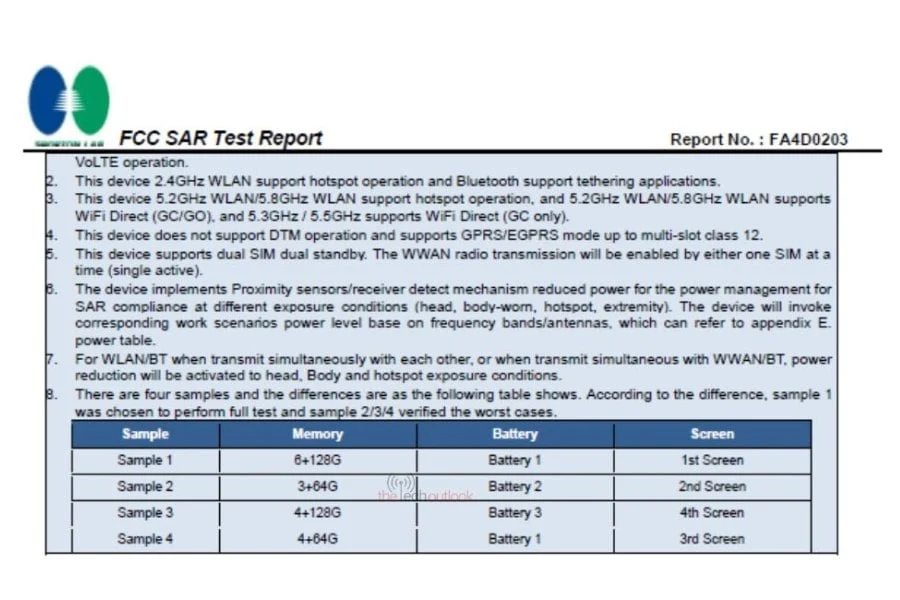
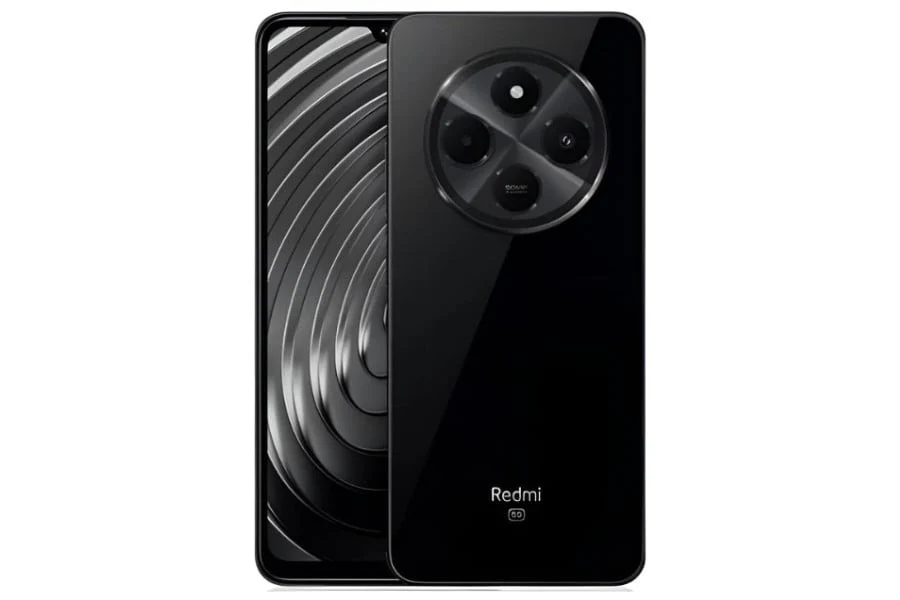
    Xiaomi appears to be preparing for the debut of a new affordable Redmi smartphone, which has recently completed the FCC certification. The model in question is the Redmi A5, identified by the codename 25028RN03L.

    Features and Specifications

    The FCC documentation for the Redmi A5 indicates that it will support 5G connectivity and feature dual-band Wi-Fi 5 along with Bluetooth. Additionally, it’s mentioned that the device will run on Android 15 OS, likely incorporating Xiaomi’s HyperOS 2.0 interface. In terms of storage, it looks like there will be several options: 3GB/64GB, 4GB/64GB, 4GB/128GB, and 6GB/128GB.

    Possible Rebranding as POCO C71

    A report from XiaomiTime suggests that the Redmi A5 may also be launched as a rebranded version named the POCO C71. Both smartphones, although positioned at the entry-level market, are anticipated to deliver satisfactory performance, good display quality, camera features, NFC support, and a compact design—all while being budget-friendly.

    Model Numbers Revealed

    The leak provides various model numbers for the Redmi A5 and POCO C71 across different regions:
    Redmi A5
    – 25028RN03G – Global Version
    – 25028RN03Y – Global NFC Version (found on IMEI database)
    – 25028RN03I – India Version
    – 25028RN03A – Latin America Version (identified on EEC)
    – 25028RN03L – FCC-Listed Variant

    POCO C71
    – 25028PC03G – Global Version (identified on EEC)
    – 25028PC03L – Global NFC Version
    – 25028PC03I – Indian Version
    – 25028PC03L – Latin America Version

    As you can observe, the devices share closely related model numbers. Given the numbering pattern (2502…), they might launch soon, possibly in February 2025. More information is likely to emerge soon, so keep an eye out for updates.

    Uncertainties Remain

    While the FCC listing gives us a glimpse into what to expect, there are still many unknowns regarding the Redmi A5 and POCO C71. Xiaomi has not officially acknowledged these devices, and particulars about pricing, exact launch dates, and comprehensive specifications are still not disclosed.

    We will keep you informed as new details about the Redmi A5 and POCO C71 are revealed.

    Source:
    Link


  • Xiaomi Enforces Stricter Policies for Bootloader Unlocking

    Xiaomi Enforces Stricter Policies for Bootloader Unlocking

    As anticipated, Xiaomi has updated its bootloader unlocking system for 2025, implementing stricter regulations to tackle increasing security issues and the falling interest in custom ROMs. Starting January 1, 2025, the new guidelines focus on tougher timelines, restrictions to a single device, and a more thorough approval process.

    Important Updates in the 2025 Guidelines

    With the revised structure, users are now required to finish the whole unlocking procedure—quiz, registration, application, binding, and unlocking on the same device. Moreover, once permission is granted, users have just 14 days (or 336 hours) to finalize the process. Failure to meet this deadline nullifies the permission, which cannot be renewed or reissued.

    Changes to Device Limits and Application Process

    Another significant alteration is the decrease in the number of devices that can be unlocked. In the past, users had the ability to unlock up to three devices during the validity term. Now, this is limited to only one device per Xiaomi account, emphasizing the company’s movement toward tighter management of post-unlock situations.

    The application procedure has also become more rigorous. Users are required to succeed in a tough quiz aimed at filtering out non-experts, ensuring that only those with sufficient experience continue. Additionally, identity verification has been improved, necessitating real-name authentication and strict compliance with account-device pairing. Misusing permissions, like unlocking devices for others, may result in permanent suspension of the account or even legal action.

    Security Concerns and Regional Restrictions

    Xiaomi stresses that unlocking the bootloader can make devices vulnerable to security risks and advises against it for casual users. It also points out that locked bootloaders are essential for receiving updates for Xiaomi HyperOS. Furthermore, to enhance the process, Xiaomi has limited unlocking permissions to devices sold in mainland China, with different policies for international markets.

    By adopting these regulations, Xiaomi is aligning with the industry’s careful stance on bootloader unlocking, prioritizing user security as it responds to the declining need for custom ROMs.

  • Organization Acts Against TikTok, Temu, Xiaomi for Data Privacy Risks

    Organization Acts Against TikTok, Temu, Xiaomi for Data Privacy Risks

    Companies are restricted in sending data from European customers to other nations unless certain strict conditions are met. For example, data transfers can only occur if the destination country respects the data privacy standards established by the European Union. This means that transferring customer data to authoritarian regimes like China is likely against the law.

    Data Practices of Tech Companies

    However, many tech companies continue to transfer customer data to China, especially global Chinese firms. Xiaomi, a well-known smartphone maker, has openly stated in its transparency report that Chinese authorities sometimes demand and gain unrestricted access to personal data. This raises serious concerns regarding the security of data belonging to Xiaomi users. In fact, companies like Temu must comply with requests from the Chinese government, as there is no independent authority in China to protect data privacy.

    NOYB’s Investigative Actions

    Because of these concerns, the data protection organization NOYB, which stands for “none of your business”, has sought access to data to determine whether the involved companies have indeed sent customer information to China or other nations outside the EU. Despite being legally required to do so, none of these companies have supplied the needed information.

    As a result, NOYB has officially lodged a complaint regarding data privacy against TikTok, Aliexpress, Shein, Temu, WeChat, and Xiaomi across five different EU nations. NOYB is pushing for an end to these unlawful data transfers and has suggested that EU authorities should impose hefty fines, potentially reaching 4% of the global revenue of these large corporations.

    Financial Implications of Non-Compliance

    To illustrate, AliExpress generates an annual revenue of €3.68 billion, which could lead to a fine of about €147 million. Meanwhile, Temu has an even larger annual revenue of €33.84 billion, meaning it could face a staggering fine of up to €1.35 billion under the strict data protection regulations of the EU.

    Source:
    Link

  • Tata Explores Partnerships with Chinese Brands to Compete with Apple

    Tata Explores Partnerships with Chinese Brands to Compete with Apple

    In a significant shift within the Indian smartphone production scene, Tata Electronics, part of the Tata Group, is said to be negotiating with well-known Chinese technology entities Xiaomi and Oppo for smartphone manufacturing. This initiative reflects Tata Electronics’ desire to broaden its customer base beyond Apple and establish itself as a significant player in the electronics manufacturing services (EMS) industry.

    Tata’s Ambitious Plans with Chinese Firms

    Until now, Tata Electronics has been a crucial supplier of enclosures for iPhones. The company is now aiming for more valuable components, such as camera and display modules, similar to the business strategy of Foxconn, the main manufacturing ally of Apple.

    Industry analysts think that this strategic move by Tata Electronics is motivated by the necessity to enhance its operations and skills. Collaborating with prominent Chinese smartphone makers will allow Tata Electronics to acquire essential knowledge and experience in producing a wider array of electronic products. This will make them a more appealing partner for a varied clientele in the worldwide tech market.

    Shifting Partnerships in the Smartphone Arena

    The discussions with Xiaomi and Oppo follow unsuccessful negotiations with Vivo, which recently partnered with Dixon Technologies. This new collaboration is likely to concentrate on manufacturing different electronic items, including smartphones, with Dixon holding a majority share.

    Tata Electronics’ entry into manufacturing for Xiaomi and Oppo could greatly change the competitive scene in the Indian smartphone industry. Xiaomi and Oppo are key players in this market, and their alliance with Tata Electronics might create pressure on current manufacturers like Dixon Technologies. As Tata Electronics broadens its supply chain and seeks more competitive pricing, Dixon and others may need to reevaluate their approaches.

    Expanding Horizons in the Tech Industry

    Additionally, the company is reportedly in discussions with tech giants such as Microsoft, Dell, and HP, reinforcing their aim to become a varied player in the EMS realm. This strategic growth is supported by the Tata Group’s substantial $18 billion investment in electronics and semiconductors, with plans to set up nine new factories in the next two years.

    With strong support, strategic collaborations, and a focus on high-value components, Tata Electronics is set to emerge as a significant influence in the global EMS landscape. This initiative could not only benefit Tata Electronics but also transform the dynamics of the Indian smartphone manufacturing industry.

    Source:
    Link

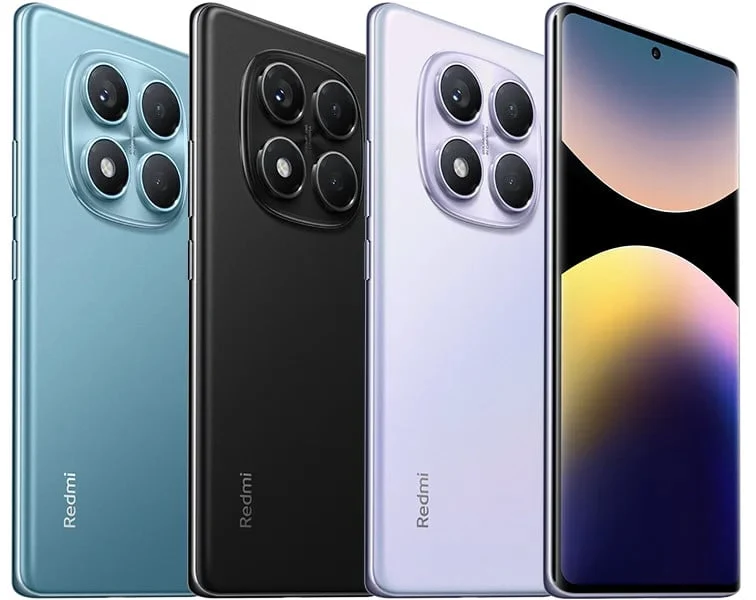
  • Redmi Note 14 and Note 14 Pro Launched Globally from $199

    Redmi Note 14 and Note 14 Pro Launched Globally from $199

    Xiaomi has recently launched its highly anticipated Redmi Note 14 series in the global market. A month prior, the Redmi Note 14 Pro series made its debut in India, and now, the basic Note 14 and Note 14 Pro have made their way to selected markets in Europe and Asia. Keep reading to learn about their pricing and specifications.

    Specs of Redmi Note 14 & Note 14 Pro

    The Redmi Note 14 series consist of two mid-range smartphones that deliver impressive specifications for their price range. However, the global versions differ from the ones that were introduced in India and China. The more advanced Redmi Note 14 Pro features a 6.67-inch curved AMOLED screen boasting a 120Hz refresh rate, FHD+ resolution, peak brightness of 1800 nits, PWM dimming, and protection from Gorilla Glass Victus 2.

    Global Model of Redmi Note 14 Pro

    Internally, the phone is powered by the MediaTek Dimensity 6100 Ultra SoC, in contrast to the Dimensity 7300 Ultra found in the Indian version. The camera layout is also altered, showcasing a 200MP triple camera system on the back. It also comes with a robust 5,500mAh battery that supports 45W wired fast charging.

    Pricing and Availability

    On the other hand, the standard Redmi Note 14 shows some slight variations. It features a 6.67-inch FHD+ AMOLED display with a 120Hz refresh rate, PWM dimming, and 1800 nits peak brightness. This model uses the MediaTek Helio G99 Ultra SoC, while the Chinese version was equipped with the Dimensity 7025 Ultra SoC. For photography enthusiasts, this smartphone includes a 108MP dual-camera setup. Notably, the global version of the Redmi Note 14 has a larger 5,500mAh battery compared to the 5110mAh in the Chinese variant.

    The Redmi Note 14 is available in four color choices: Mist Purple, Midnight Black, Ocean Blue, and Lime Green, with a starting price of 199 US Dollars. On the other hand, the Redmi Note 14 Pro, which comes in Aurora Purple, Ocean Blue, and Midnight Black, has a starting price of 299 US Dollars. It is now being rolled out in select regions in Europe and Asia.

  • Tipster Confirms No Telephoto Lens on Mix Flip 2: Details Inside

    Tipster Confirms No Telephoto Lens on Mix Flip 2: Details Inside

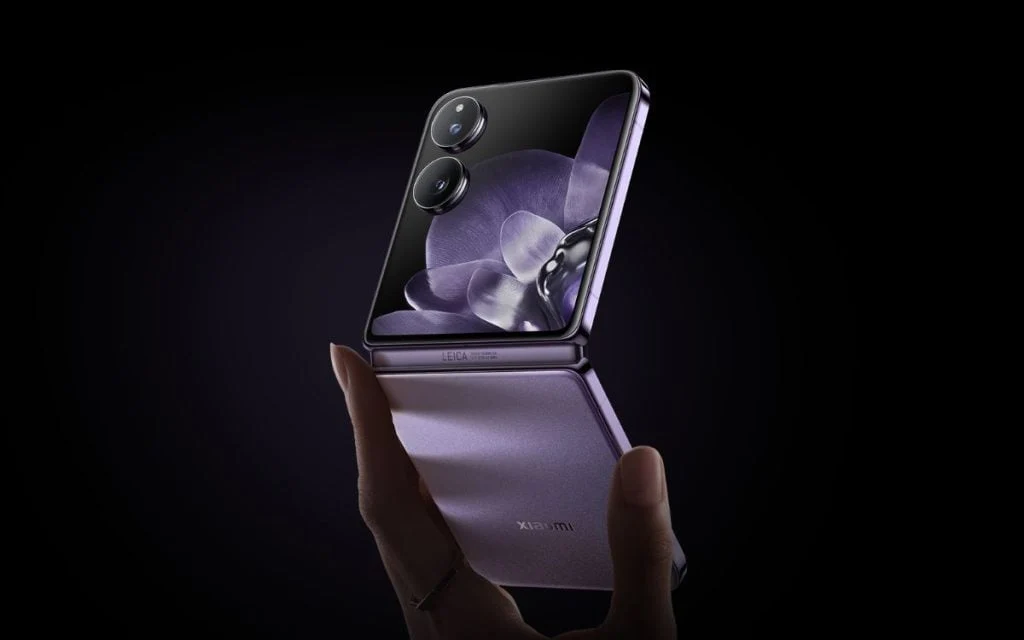
    Xiaomi is set to introduce its upcoming clamshell foldable phone, probably called the Flip 2, in late June this year. Although the release date is still a bit away, insider leaks have been coming out, showing various details about this new device.

    Design and Camera Changes

    The Flip 2 is rumored to come with a bigger battery and a lighter, sleeker design than the previous model. A recent report has also suggested significant camera modifications for this phone. Unlike its earlier version, the Flip 2 might not have a telephoto lens.

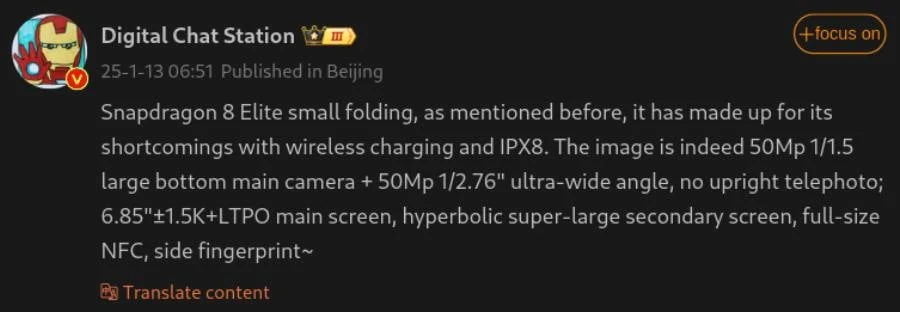
    Digital Chat Station, a trusted tipster, recently confirmed this information in a Weibo post and shared additional specs about the new device.

    Specs of the Xiaomi Mix Flip 2

    As per Digital Chat Station, the Mix Flip 2 will allegedly feature a 50MP main camera with a size of 1/1.5” and a 50MP ultrawide-angle camera measuring 1/2.76”, but it will lack a telephoto lens. The original Mix Flip had a dual-camera system, including a 50MP main lens and a telephoto lens. Skipping the telephoto lens in the new model appears to be a risky decision since many people might favor telephoto options over ultrawide ones.

    Even though this may be our viewpoint, Xiaomi likely has valid reasons for this choice, which will be clearer when the device is officially launched.

    Improvements and Features

    Despite this, the tipster indicates that the Flip 2 will fix some issues seen in the previous version, such as the absence of wireless charging and an official water resistance rating. The new version is expected to come with an IPX8 rating.

    Moreover, the Flip 2 is anticipated to sport a 6.85-inch LTPO AMOLED main display with a resolution of 1.5K. It will also support NFC and include a side-mounted fingerprint scanner.

    Additionally, earlier reports suggest that the smartphone will run on a Snapdragon 8 Elite processor and include a battery with a capacity of around 5,600mAh to 5,700mAh.

    Source:
    Link


    Image 1
  • Qualcomm Snapdragon 8s Elite: Key Details and Benchmark Leaks

    Qualcomm Snapdragon 8s Elite: Key Details and Benchmark Leaks

    Qualcomm is reportedly preparing to introduce the Snapdragon 8s Elite (SM8735), a new mid-range chipset aimed at closing the performance gap between high-end and budget-friendly smartphones. Leaks indicate that the 8s Elite will provide remarkable performance, competing with some Snapdragon 8 Gen 3 flagship devices, all the while keeping a more affordable price.

    Performance Insights

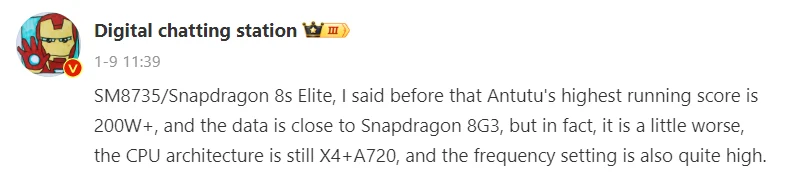
    Well-known leaker Digital Chat Station mentions that the 8s Elite is likely to achieve an AnTuTu score close to 2 million. This score puts it in a performance category similar to devices powered by Snapdragon 8 Gen 3, although it may lag slightly behind.

    Architecture Details

    Interestingly, the new chipset will not incorporate Qualcomm’s custom Oryon cores, introduced with the Snapdragon 8 Elite. Rather, it will utilize a more traditional CPU setup, featuring a Cortex-X4 prime core alongside A720 efficiency cores, resulting in performance akin to Snapdragon 8 Gen 3.

    It is also anticipated that the 8s Elite may experience a minor drop in GPU-heavy tasks when compared to the Snapdragon 8 Gen 3. This could be a strategic decision by Qualcomm, aiming to optimize power usage while keeping prices competitive in the mid-range market.

    Future Devices and Market Impact

    The SM8735 chipset was previously seen in Xiaomi’s HyperOS software earlier this year. Speculations suggest it may power future devices like the Redmi Turbo 4 Pro or the Redmi K90. DCS also notes that the Snapdragon 8s Elite is set to be widely adopted by prominent smartphone brands. Besides Xiaomi, companies like Honor, iQOO, and Oppo are expected to create slim photography-centric phones using this chipset. These smartphones are anticipated to launch around April, hinting at a possible reveal of the 8s Elite in March or April.

    With the introduction of the Snapdragon 8s Elite, competition in the mid-range market is likely to heat up, prompting manufacturers to provide even more powerful and feature-rich devices at appealing price points. Consumers can look forward to an expanded selection of high-performance options at lower costs, presenting an attractive alternative to flagship devices for those desiring a powerful smartphone experience without the hefty price tag.

    Source:


    Image 1
  • Xiaomi Surpasses Samsung and Apple as Fastest-Growing Smartphone Maker

    Xiaomi Surpasses Samsung and Apple as Fastest-Growing Smartphone Maker

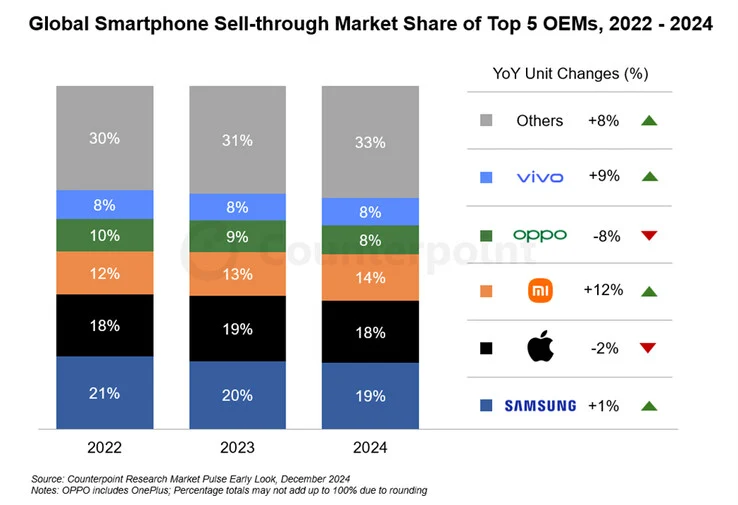
    The year 2024 has been quite exciting for smartphone manufacturers, especially when we look back at 2023, which recorded the lowest sales in a decade. Specifically, Counterpoint Research reports a 4% growth in the market this year, highlighting Xiaomi’s impressive performance, surpassing both Samsung and Apple.

    Xiaomi’s Growth

    Xiaomi has emerged as the fastest-growing smartphone manufacturer in 2024. The company’s year-on-year (YoY) market share has increased by 1%, enabling it to outpace both Samsung and Apple, which have experienced a decline in their market shares compared to last year.

    Unexpected Success

    What’s particularly noteworthy is Xiaomi’s achievement despite its limited presence in the United States, one of the largest smartphone markets. This growth suggests that Xiaomi’s strategic marketing efforts in regions such as Asia, Africa, and Europe are proving effective.

    Counterpoint Research also points out that Xiaomi’s venture into the premium market and its focus on creative marketing strategies have played significant roles in its success. In contrast, while Apple and Samsung did not see any growth in 2024, they still hold leading positions in the global smartphone arena.

    Market Share Insights

    Among these competitors, Samsung retained the largest global market share at 19% in 2024, while Apple followed closely with 18%. However, both brands experienced a 1% decline in their year-on-year growth.

    In addition to the sell-through market share analysis from 2022 to 2024, Counterpoint Research has also provided insights into upcoming mid-range smartphones. The firm anticipates that generative AI will become standard in these devices, predicting that by 2028, 9 out of 10 phones priced over $250 will feature hardware capable of supporting generative AI.

    Source:
    Link


    Image 1