Tag: Bootloader Unlocking

  • Samsung One UI 8 Update Limits Bootloader Access for Users

    Samsung One UI 8 Update Limits Bootloader Access for Users

    Key Takeaways

    1. Samsung is restricting bootloader unlocking with the One UI 8 update, affecting global users.
    2. The “OEM Unlocking” option has disappeared from developer settings in the latest software version.
    3. This change has been noted in beta versions of One UI 8 on devices like the Galaxy S25 Ultra and Galaxy Z Flip 7/Fold 7.
    4. The absence of bootloader unlocking may not impact average users, but it limits developers and enthusiasts seeking customization.
    5. The future of bootloader accessibility for older devices remains uncertain, as manufacturers increasingly restrict unlocking options.


    Samsung’s One UI 8 update seems to be changing the way users interact with their devices. New reports indicate that the ability to unlock the bootloader on Galaxy phones is being taken away.

    Changes in Bootloader Unlocking

    For quite a while, Samsung has restricted bootloader unlocking for users in the United States. However, people in various other areas have had the freedom to unlock their devices without issues.

    This situation looks to be shifting with the rollout of One UI 8.

    According to findings from SammyGuru, the “OEM Unlocking” option, which is a crucial setting in the developer options to start the unlocking process, has disappeared in this new software version.

    Impact on New Devices

    This has been observed in beta versions of One UI 8 on devices such as the Galaxy S25 Ultra and the latest Galaxy Z Flip 7 and Fold 7, which come with One UI 8 already installed.

    I can verify that the ‘OEM Unlocking’ toggle is also absent from my version of the Galaxy Z Fold 7 in East Africa.

    An XDA Developers contributor also discovered a line in the bootloader code: androidboot.other.locked=1.

    This line instructs the system to conceal the OEM Unlock option, effectively stopping users from beginning the unlocking process. The existence of this code in the latest One UI 8 firmware on devices outside the US suggests that this may now be a worldwide policy.

    Implications for Users

    For most smartphone users, this change probably won’t be noticed. The majority do not delve into advanced settings, and even fewer attempt tasks that necessitate an unlocked bootloader.

    However, for a passionate group of developers and enthusiasts, this is a notable development. Unlocking the bootloader is the first step toward installing custom ROMs, experimenting with different software kernels, or achieving root access for enhanced customization and features.

    If you are considering upgrading to One UI 8 or buying a new Samsung device running Android 16, keep in mind that this limitation may be in effect.

    It’s still unclear whether this change will be applied to older devices already available in the market through the One UI 8 update, but it is a possibility.

    Currently, bootloaders on existing Samsung devices that are not updated to One UI 8 should still be unlockable. Nevertheless, the trend of manufacturers restricting bootloader access is not a new phenomenon.

    For example, Xiaomi disabled bootloader unlocking in China some time ago. Samsung has not yet issued an official statement on this issue. For now, the community continues to watch these developments and contemplate the effects on the future of device customization.

    Source:
    Link

  • Xiaomi 2025 Bootloader Unlock Policy: Key Details Explained

    Xiaomi 2025 Bootloader Unlock Policy: Key Details Explained

    Xiaomi has made important updates to its Bootloader (BL) unlocking policy that will take effect starting January 1, 2025. These changes indicate a major shift in how the company deals with device customization, introducing stricter regulations to address security issues and prevent misuse. Below is a comprehensive summary of the new policy, its effects, and crucial information for users.

    Major Changes in the Policy

    New Unlocking Process:
    The unlocking procedure now requires that everything, from answering eligibility questions to applying, registering, linking the account to the device, unlocking it, and using it after unlocking, must be done on the same device. This change is designed to provide better integration and to stop unauthorized modifications to devices.

    Shortened Unlock Validity:
    After a user gets the approval to unlock, they have to finish the binding and unlocking within 336 hours (or 14 days). If they miss this deadline, the permission to unlock will no longer be valid and can’t be extended or given again.

    Limits on Unlocks

    One Device Per Year:
    In the past, users could unlock three devices each year. Now, this has been cut down to just one device annually, which will affect users in Xiaomi’s home market of China as well as those around the world. Users who have unlocked a device within the last year must wait for that one-year period to be over before they can unlock another.

    Real-Name Verification:
    Every step in the unlocking process has to be done by a verified holder of a Xiaomi account. If someone misuses the unlock eligibility for another person’s device, they will face serious consequences, which may include a permanent ban from their account and possible legal action.

  • Xiaomi Enforces Stricter Policies for Bootloader Unlocking

    Xiaomi Enforces Stricter Policies for Bootloader Unlocking

    As anticipated, Xiaomi has updated its bootloader unlocking system for 2025, implementing stricter regulations to tackle increasing security issues and the falling interest in custom ROMs. Starting January 1, 2025, the new guidelines focus on tougher timelines, restrictions to a single device, and a more thorough approval process.

    Important Updates in the 2025 Guidelines

    With the revised structure, users are now required to finish the whole unlocking procedure—quiz, registration, application, binding, and unlocking on the same device. Moreover, once permission is granted, users have just 14 days (or 336 hours) to finalize the process. Failure to meet this deadline nullifies the permission, which cannot be renewed or reissued.

    Changes to Device Limits and Application Process

    Another significant alteration is the decrease in the number of devices that can be unlocked. In the past, users had the ability to unlock up to three devices during the validity term. Now, this is limited to only one device per Xiaomi account, emphasizing the company’s movement toward tighter management of post-unlock situations.

    The application procedure has also become more rigorous. Users are required to succeed in a tough quiz aimed at filtering out non-experts, ensuring that only those with sufficient experience continue. Additionally, identity verification has been improved, necessitating real-name authentication and strict compliance with account-device pairing. Misusing permissions, like unlocking devices for others, may result in permanent suspension of the account or even legal action.

    Security Concerns and Regional Restrictions

    Xiaomi stresses that unlocking the bootloader can make devices vulnerable to security risks and advises against it for casual users. It also points out that locked bootloaders are essential for receiving updates for Xiaomi HyperOS. Furthermore, to enhance the process, Xiaomi has limited unlocking permissions to devices sold in mainland China, with different policies for international markets.

    By adopting these regulations, Xiaomi is aligning with the industry’s careful stance on bootloader unlocking, prioritizing user security as it responds to the declining need for custom ROMs.

  • Xiaomi Plans to End Global Bootloader Unlocking by 2025

    Xiaomi Plans to End Global Bootloader Unlocking by 2025

    Xiaomi, known for its smartphones, is said to be thinking about a big change in its software policies. Recent reports suggest that the company might stop allowing bootloader unlocking for users outside of China, following a similar action taken in the Chinese market. If this turns out to be true, it could significantly affect the Xiaomi community, which has always valued the ability to customize their devices.

    Effects on the User Experience

    Bootloader unlocking is an important feature that lets users install custom ROMs, root their devices, and take full control over their smartphones. This has been a key reason why many tech enthusiasts choose Xiaomi, as they enjoy the flexibility and customization choices available. However, since the company restricted bootloader unlocking in China, there are worries about what this means for its global users.

    If Xiaomi does go ahead with a worldwide ban on bootloader unlocking, it would greatly restrict the customization options for many users. A lot of people depend on custom ROMs for enhanced performance, security updates, and unique functionalities. Removing bootloader access would mean users would have to stick with Xiaomi’s official software, which could hinder their ability to adjust their devices to fit their needs.

    Changing Strategies in Software

    Xiaomi’s choice to end bootloader unlocking in China may show a change in their software strategy, possibly due to tougher regulations in China regarding user data and device security. The new HyperOS 2.0, set to be launched alongside the flagship Xiaomi 15 series, is likely to enforce this complete bootloader lock, confirming previous information.

    The Xiaomi community is observing these developments with a blend of worry and speculation. Although the company has not officially acknowledged or dismissed these reports, the potential effects on users are substantial. Many are hoping Xiaomi will rethink its stance and keep user freedom as a priority, even while dealing with changing regulations.

    As things progress, it is unclear whether Xiaomi will ultimately restrict bootloader unlocking for users globally. The company’s decision will greatly influence the future of customization and user freedom within the Android ecosystem.

  • Xiaomi Boosts Security Measures for Bootloader Unlocking

    Xiaomi Boosts Security Measures for Bootloader Unlocking

    Xiaomi's recent policies on bootloader unlocking have stirred up frustration among developers and users alike. The company, known for its diverse range of devices catering to various budgets, has faced criticism for imposing stringent restrictions on this crucial aspect of customization.

    Tightened Restrictions on Bootloader Unlocking

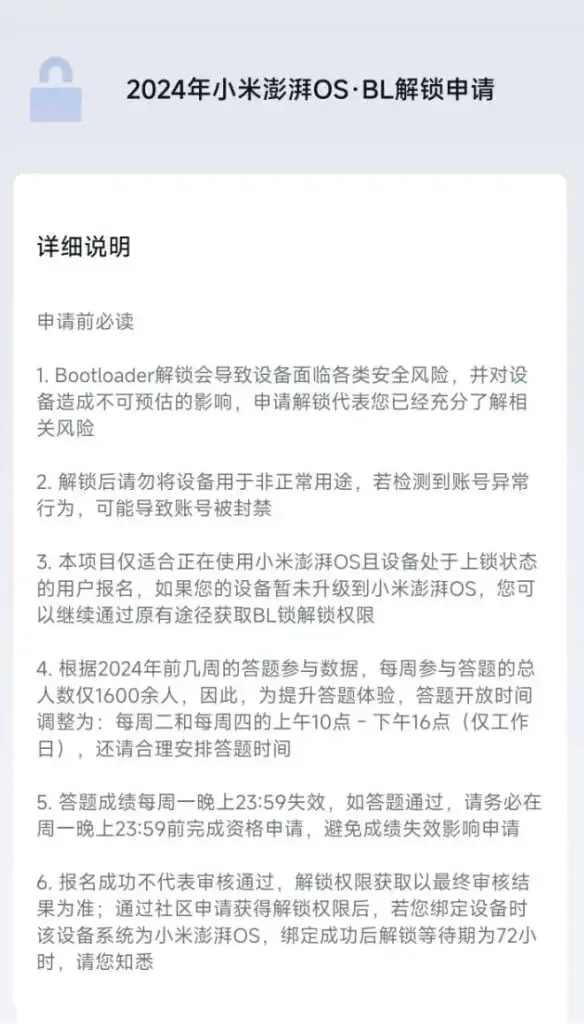
    With the release of numerous Xiaomi devices, the custom ROM community has actively engaged in developing alternative software for these smartphones. However, the process of unlocking the bootloader has become increasingly challenging due to Xiaomi's recent actions. The latest update reveals that users will now only be able to unlock their Xiaomi phone's bootloader on Tuesdays and Thursdays.

    New Policy Implementation

    Xiaomi has introduced a new policy that requires users to request the unlocking of their device's bootloader, a departure from the previous automatic process. These requests are then reviewed by Xiaomi employees, and if deemed appropriate, users can proceed with unlocking their device. The evaluation and approval process will now take place exclusively on Tuesdays and Thursdays between 10:00 and 16:00 every week.

    Impact on Users

    This change in policy is likely to frustrate developers and smartphone enthusiasts who rely on unlocked bootloaders for customization and system updates. Previously, Xiaomi phones with unlocked bootloaders could still receive over-the-air (OTA) updates. However, under the new policy, devices with unlocked bootloaders will no longer receive these updates. Users can regain access to OTA updates by relocking the bootloader, but this process adds an additional layer of complexity to an already cumbersome procedure.

    The stringent measures imposed by Xiaomi, including the limitation of unlocking only three devices per year and the specific time restrictions for bootloader unlocking requests, are bound to have a significant impact on the user experience. As the company continues to refine its policies, users are left to navigate the increasingly intricate process of customizing their Xiaomi devices.

    For those deeply invested in the customization and optimization of their devices, these restrictions pose challenges that may hinder the seamless user experience Xiaomi devices are known for providing.