Tag: Valve Index

  • Steam Frame Leak: First Look at Valve VR Headset Tutorial

    Key Takeaway

    – Steam Frame “Welcome Tour” footage appears authentic and matches backend files, though unconfirmed.
    – Software interface is based on SteamOS, resembling Big Picture Mode.
    – Prompt about PC connection suggests Steam Frame will support standalone mode.
    – Headset still uses old codename “Deckard” in software, indicating active development.
    – Community reaction is positive despite placeholder text and unfinished UI elements.


    New Steam Frame Footage Surfaces

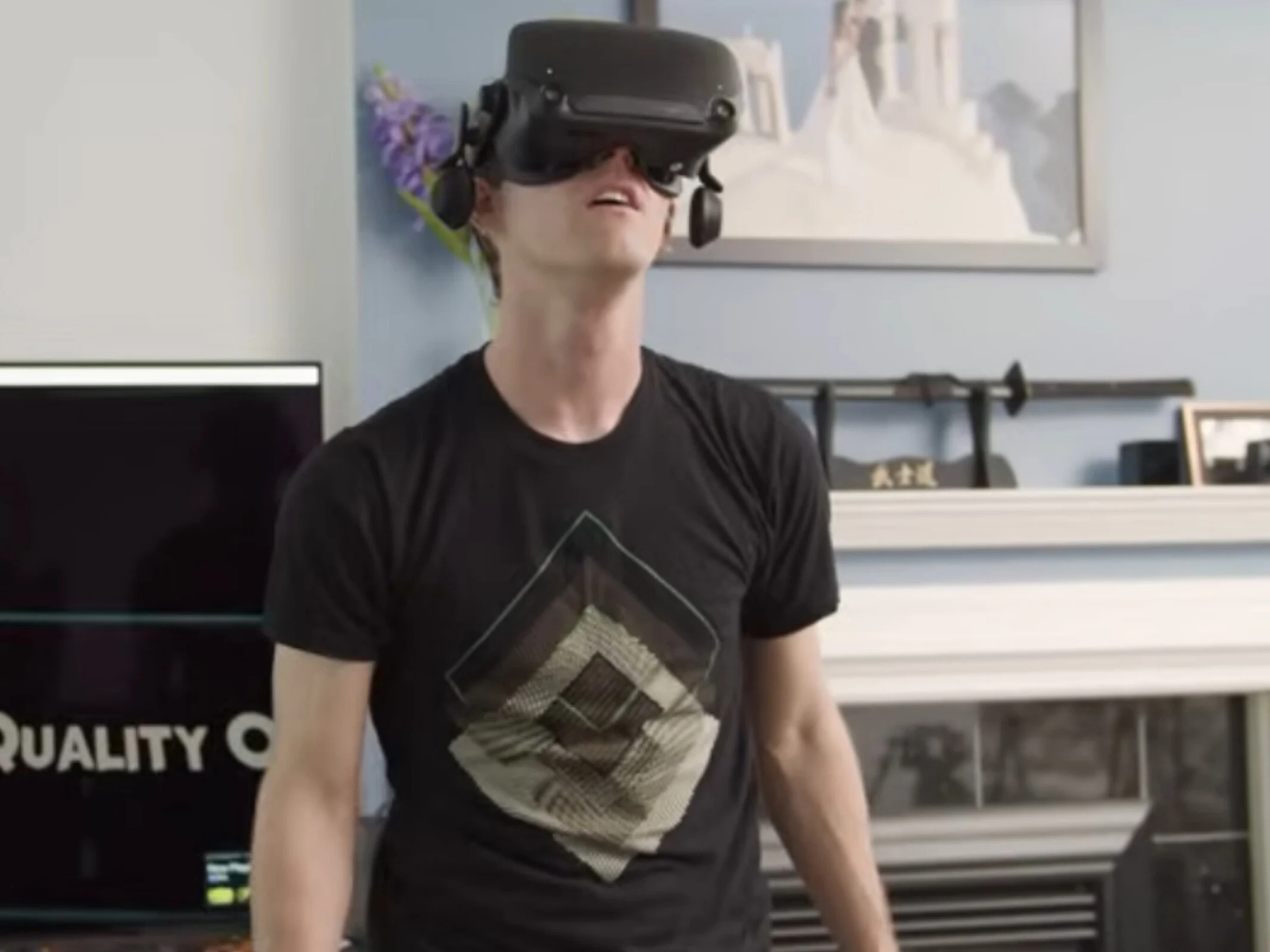
    Shortly after Valve confirmed that both the Steam Machine and Steam Frame are still planned for a summer launch, the first footage of the “Steam Frame Welcome Tour” appeared on Reddit. The video appears to show the initial setup tutorial users will see when setting up the headset for the first time. The authenticity of the footage has not been officially confirmed. According to thread creator u/Goggodboss, the video was captured using a Valve Index. However, since the material appears authentic and matches previously discovered Steam backend files, much of the community considers it genuine.

    A Detailed Look At The Software

    The footage provides the most detailed look yet at the headset’s software. The interface is clearly based on SteamOS and the Steam Deck experience, closely resembling Steam’s familiar Big Picture Mode. Part of the controller setup can be seen, followed by an explanation of how to open and dismiss the interface. One particularly notable detail is a prompt asking whether the VR headset should be connected to a PC. This supports the previous assumption that the Steam Frame will also work in standalone mode and will not require a computer at all times.

    Placeholder Details And Community Reaction

    It is also worth noting that the Steam Frame still appears in parts of the Welcome Tour under its old codename, “Deckard”, which has been circulating in leaks and datamines for years. Placeholder text and unfinished UI elements are visible as well, suggesting that the software is still in development. Even so, the community has reacted largely positively and seems pleased by the renewed interest surrounding the Steam Frame. The video does not reveal any major new information, but it does provide the clearest visual preview yet of Valve’s VR headset software.
    Sources

  • Steam Frame vs Other VR Headsets: YouTuber’s First Impressions

    Steam Frame vs Other VR Headsets: YouTuber’s First Impressions

    Key Takeaways

    1. The Steam Frame VR headset features impressive eye-tracking with foveated rendering for enhanced visual quality.
    2. It has a lighter weight, better ergonomics, and higher resolution compared to the Valve Index.
    3. The headset offers a more open platform and integrated eye tracking, making it a strong competitor against the Meta Quest 3.
    4. Competing headsets like Apple’s Vision Pro and Bigscreen Beyond 2 have their strengths but lack in comfort or have high prices and external dependencies.
    5. The PSVR2 is a cost-effective choice but feels more conventional due to its wired setup and basic ergonomics.


    Well-known tech YouTuber Linus Sebastian had the chance to visit Valve’s headquarters to experience the Steam Frame, the company’s latest VR headset. This headset aims to impress with features like cross-platform support, integrated eye tracking, and a completely wireless setup. For more in-depth specifications, check our previous report. Although Linus only had about two hours to test it, he was able to gather initial thoughts and make comparisons to existing models.

    Eye-Tracking Innovation

    Linus highlighted the Steam Frame’s impressive eye-tracking capabilities as one of its most notable aspects. Thanks to foveated rendering, the parts of the display that users are looking at become clearer, enhancing visual quality where it really counts. He also complimented the headset’s balanced design and its open platform, which he sees as significant advantages. However, he did express concern about the LCD screens, which he believes do not provide the best black levels.

    Comparison with Other Models

    When looking at the Valve Index, the Steam Frame really shines with its lighter weight, superior ergonomics, and higher resolution, as well as utilizing inside-out tracking with wide-angle cameras. Linus mentioned that the audio quality should be comparable to that of the Index, though he still has a few doubts. In a comparison with the Meta Quest 3, known for its excellent value, he pointed out that the Steam Frame offers a more open platform, is lighter, and includes eye tracking, which are significant benefits.

    Competing Headsets

    Apple’s Vision Pro excels in display quality, passthrough capabilities, and hand tracking but doesn’t match up when it comes to comfort and gaming appeal. The Bigscreen Beyond 2 remains superior to the Steam Frame in terms of weight and micro-OLED image quality, but it has its own downsides—no built-in sound, a hefty price tag, and reliance on external base stations. On the other hand, the PSVR2 is considered a good choice for its cost, but its wired setup, Fresnel lenses, and basic ergonomics make it seem more conventional and less high-tech overall.

    Source:
    Link


  • Valve Unveils Steam Frame: First Standalone VR Headset

    Valve Unveils Steam Frame: First Standalone VR Headset

    Key Takeaways

    1. The Steam Frame is an independent VR headset that can run games on its own and supports wireless streaming from other devices using a 6 GHz dongle.
    2. It features LCD technology with pancake lenses, offering a resolution of 2160 x 2160 pixels, a refresh rate of up to 144 Hz, and a 110-degree field of view.
    3. The headset is powered by a Snapdragon 8 Gen 3 processor, has 16 GB of RAM, and comes with storage options of 256 GB or 1 TB, running on SteamOS.
    4. The Steam Frame incorporates foveated streaming technology for efficient GPU usage by rendering only the areas users are looking at.
    5. The controllers include 6 degrees of freedom tracking, capacitive finger tracking, and weigh 130 grams, while the headset weighs 440 grams (185 grams without the battery pack).


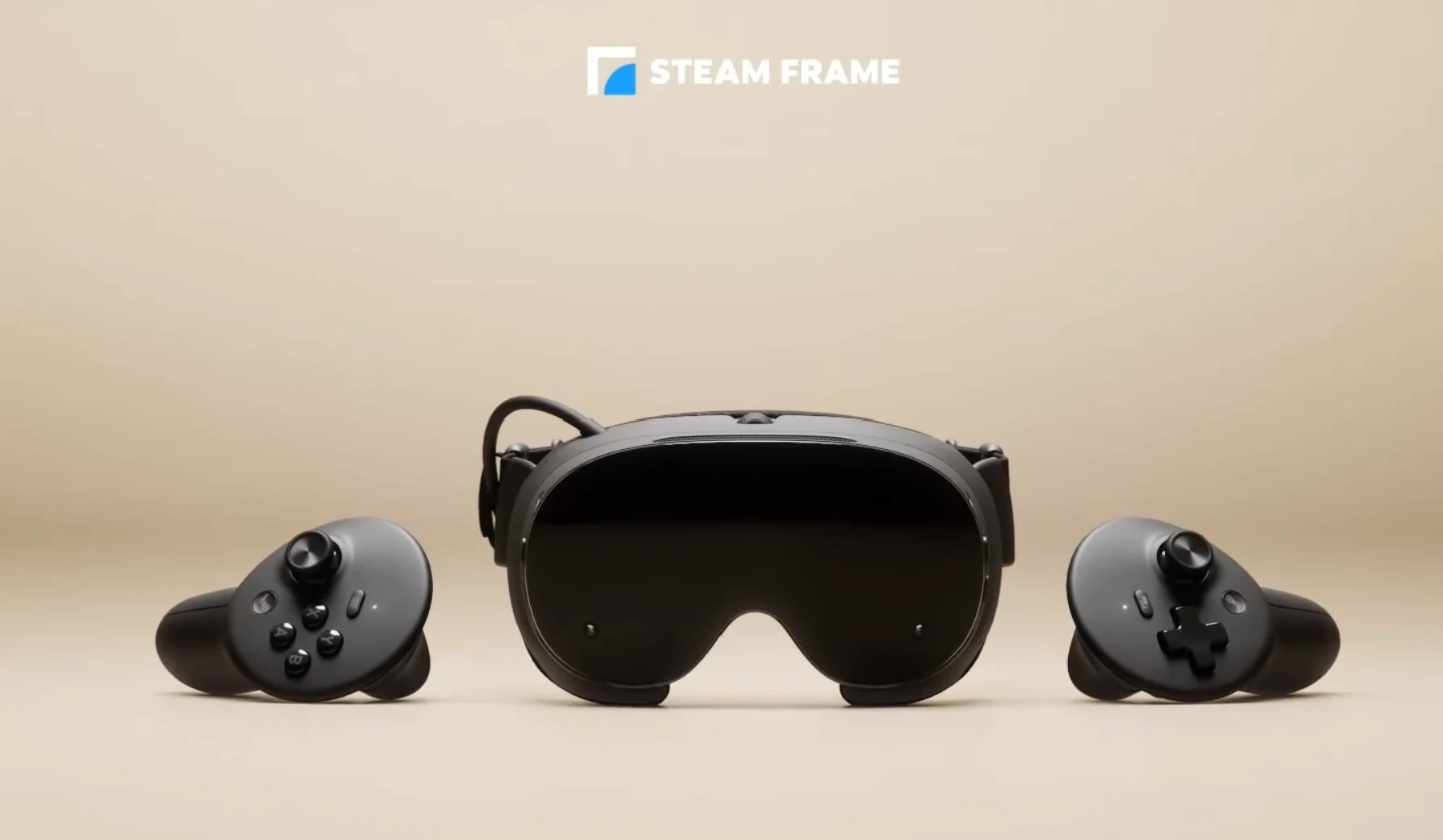
    Valve has just released its latest VR headset, previously referred to as Deckard. Although it serves as a successor to the Valve Index, the Steam Frame stands out as an independent device capable of running games on its own. Users also have the option to play games from another device, streaming them wirelessly to the headset using a 6 GHz dongle. Additionally, it features a battery pack that is cleverly mounted on the back of the headset.

    Display and Specifications

    In contrast to various VR headsets (such as the Apple Vision Pro) that utilize OLED screens, Valve has opted for LCD technology paired with pancake lenses. The lenses each boast a resolution of 2160 x 2160 pixels and support a refresh rate of up to 144 Hz. With a field of view of 110 degrees, these lenses can accommodate eyeglasses up to 140 mm in width.

    One standout element of the Steam Frame is its foveated streaming capability. This technology tracks your eye movements and only renders the areas you are currently looking at. This feature helps to save GPU power while providing enhanced visual fidelity in the areas that are being rendered.

    Performance and Features

    Beneath its sleek exterior, the Steam Frame is powered by a Snapdragon 8 Gen 3 processor, complemented by 16 GB of LPDDR5X RAM and storage options of either 256 GB or 1 TB. It runs on SteamOS right out of the box and employs a translation layer to allow for the running of mainly x86 Steam games on an Arm-based system-on-chip (SoC). The Snapdragon SoC theoretically enables users to access Arm-based VR titles as well.

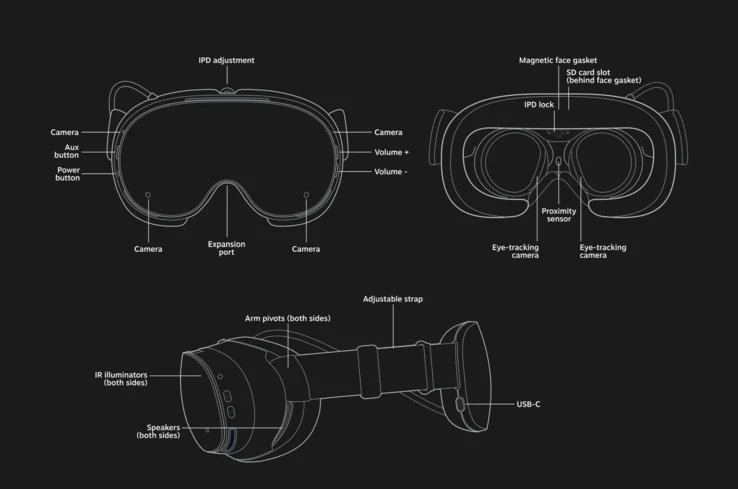
    The included battery has a capacity of 21.6 Wh and can charge at a rate of up to 45 Watts via USB-C. For tracking, Valve has equipped the headset with four outward-facing monochrome cameras for both the headset and controller, two internal cameras for eye tracking and foveated streaming, along with infrared illuminators for use in dimly lit spaces. A Wi-Fi 7 antenna allows the Steam Frame to connect directly to the internet.

    Controller Design and Weight

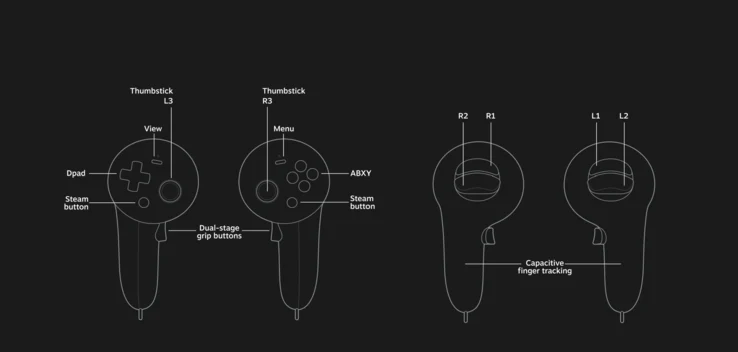
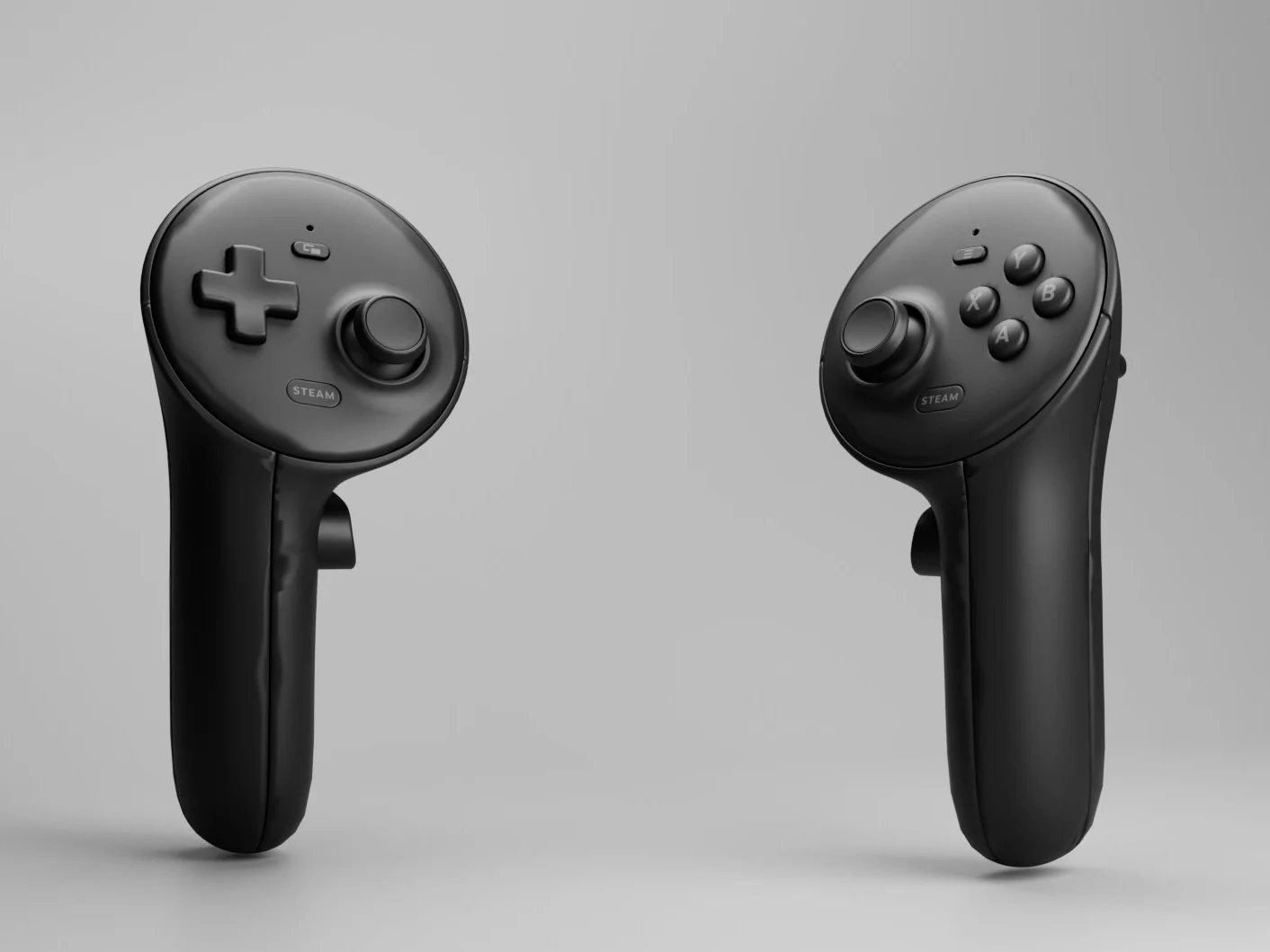
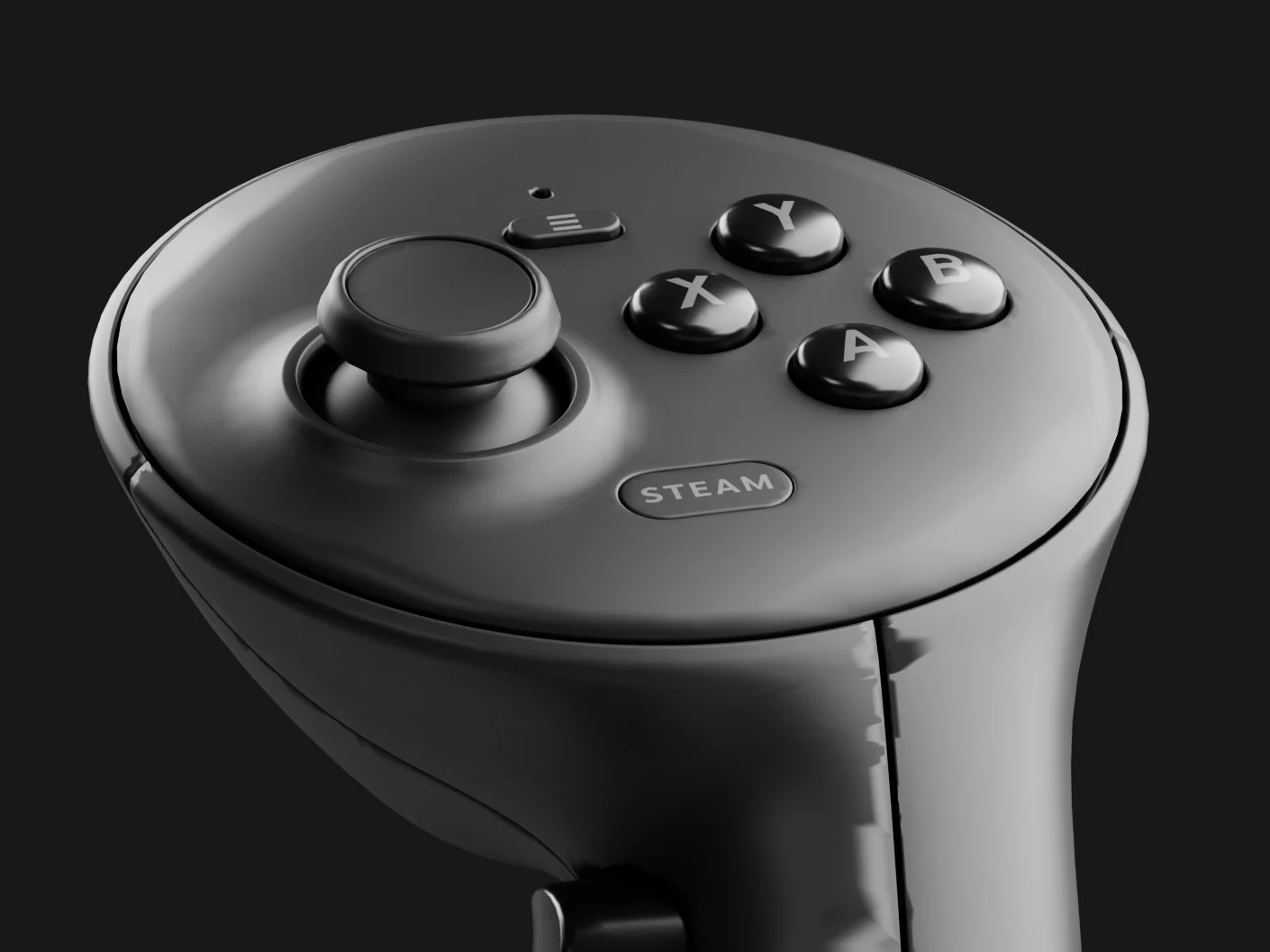
    When it comes to the controllers, the Steam Frame features a mostly conventional design that includes 6 degrees of freedom (DOF) tracking, capacitive finger tracking, and a standard layout of A B X Y/D-Pad on each controller. The thumbsticks are equipped with TMR modules, effectively removing the chance of stick drift. Weighing in at just 130 grams with a single AA battery, they are quite lightweight.

    The headset itself, however, is a bit heavier at 440 grams, although this drops to 185 grams when the battery pack is detached. The Steam Frame also includes an additional vertical head strap for extra support. Unfortunately, as it was with the Steam Machine, there is still no information on pricing or a release date.

    Source:
    Link


  • Valve Deckard Specs Leaked: Next-Gen Valve Index Details Inside

    Valve Deckard Specs Leaked: Next-Gen Valve Index Details Inside

    Key Takeaways

    1. Valve’s upcoming VR headset, Deckard, is seen as the successor to the Valve Index and may launch at a price of $1,200, up from the Index’s $999.

    2. Deckard is being developed on an ARM codebase, featuring a Snapdragon 8 Gen 3 chipset, which could improve performance and efficiency by 25% compared to the Snapdragon XR Gen 2.

    3. The prototype includes JDI-derived LCD screens with a refresh rate of 120 Hz and a resolution of 2,160 x 2,160 pixels per eye.

    4. Deckard reportedly supports tracking for controllers, the headset, and facial movements, but specifications are not finalized and may change in later prototypes.

    5. Valve is expected to unveil Deckard by the end of this year, with the current prototype being the final proof-of-concept before moving to engineering validation testing.


    Brad Lynch has uncovered some new info about the ongoing progress of Valve’s upcoming virtual reality (VR) headset. Up until now, Deckard has been seen as the long-anticipated follow-up to the Valve Index, which launched almost six months ago. A recent speculation suggested that Valve is aiming for a launch price of $1,200, which is an increase from the Index’s initial $999 MSRP.

    Development Insights

    Recent changes in the code indicate that Valve is building Deckard on an ARM codebase. In particular, a proof-of-concept (POC-F) prototype features a Snapdragon 8 Gen 3 (SM8650) chipset that is found in the latest flagship smartphones, such as the OnePlus 12, Xperia 1 VI, and Galaxy S24 Ultra. As noted by UploadVR, the Adreno 750 within the Snapdragon 8 Gen 3 could potentially give this Deckard prototype about 25% improved performance and efficiency compared to the Snapdragon XR Gen 2, which powers the Pico 4 Ultra, Quest 3, and Quest 3S (currently priced at $299 on Amazon).

    Technical Specifications

    This prototype is reported to utilize JDI-derived LCD screens that offer a refresh rate of 120 Hz and a resolution of 2,160 x 2,160 pixels for each eye over a 2.8-inch display. Additionally, it seems to support tracking for controllers, the headset, and facial movements. Lynch emphasizes that the specifications linked to POC-F are not final.

    As a result, later prototypes and retail versions are likely to feature newer or more advanced components. That said, POC-F appears to have been the final proof-of-concept before Valve transitioned to engineering validation testing (EVT). If this holds true, it wouldn’t surprise us if future prototypes eventually come with similar hardware features instead of a leap to a much more powerful chipset or entirely different lenses that would necessitate a complete redesign. At present, Valve is anticipated to unveil Deckard by the end of this year.

    Source:
    Link

  • Valve Deckard VR Headset: Pricing and Availability Leaked

    Valve Deckard VR Headset: Pricing and Availability Leaked

    Key Takeaways

    1. Valve is developing a new standalone VR headset called Deckard, priced around $1200, which is a significant upgrade from the Valve Index.
    2. Deckard’s controllers, named “Roy,” will feature a compact design without motion-tracking rings, resembling a traditional gamepad layout with enhanced buttons and triggers.
    3. The performance of Deckard is uncertain, with challenges expected in running games at 120Hz and 1440p on two screens, alongside concerns about battery life.
    4. There is speculation that Deckard may launch with a new Half-Life game to drive sales, similar to the promotion of Half-Life: Alyx with the Index.
    5. Ongoing leaks and code references suggest Valve is carefully preparing both hardware and software for Deckard’s launch, raising questions about its value compared to competitors.


    Valve is working on a new standalone VR headset called Deckard, which appears to be a significant upgrade from the Valve Index. Recent leaks from @gabefollower on X/Twitter suggest a price of $1200, alongside fresh information about its controllers and tracking technology. Earlier data mining has revealed mentions of Deckard’s controllers, known as “Roy,” in the SteamVR code.

    Changes in Controllers

    These controllers are set to undergo significant redesigns, eliminating the motion-tracking rings in favor of a more user-friendly and compact style. This change reflects current industry practices, similar to Meta’s move to ringless tracking with the Quest 3S, which is currently priced at $299.99 on Amazon. Initial prototype images indicate that Deckard’s controllers will feature a large D-pad, ABXY buttons, bigger triggers, and side-mounted triggers. This design hints at a more conventional gamepad-like experience, which could open the door for Steam Controller 2 compatibility.

    Performance and Features

    One of the biggest uncertainties surrounding Deckard is its performance. Running games at 120Hz and 1440p on two screens could challenge the capabilities of a standalone headset. Battery life will also be crucial. The absence of finger tracking—available in the Valve Index—might be seen as a drawback by some, leading to debates about whether this is a step back.

    Game Launch Speculations

    Another pressing question is whether Deckard will debut with a new Half-Life game. Valve used Half-Life: Alyx to promote the Index, and it’s possible they are planning another major VR release to boost sales of the new headset. However, if Deckard is Valve’s main focus right now, it could delay the launch of HLX, which has been in secret development.

    All these factors suggest that Valve is taking a careful approach to ensure both the hardware and the software are fully prepared for the launch. While the company has not revealed any official details, the growing number of leaks and code references is certainly encouraging. The real question lies in whether the hardware will be worth the price and stand up against other top competitors in the VR market.

    Source:
    Link