Tag: Starship 3

  • Musk Shifts Focus from Mars Colonization to Feasible Projects

    Musk Shifts Focus from Mars Colonization to Feasible Projects

    Key Takeaways

    1. Elon Musk has shifted his focus from Mars to creating a base on the Moon, deeming it more feasible in the near future.
    2. The change in priorities comes as SpaceX prepares for an initial public offering (IPO) to fund its projects, including the xAI initiative.
    3. A major $4 billion contract from NASA for the second manned Moon mission underscores the importance of this shift in focus.
    4. The Starship 3 rocket may not be ready for a Mars mission in 2026, prompting Musk to reconsider timelines for Mars colonization.
    5. Musk now suggests that a Moon base is a more realistic target compared to the ambitious goal of colonizing Mars within the next two decades.


    Last January, Elon Musk described returning to the Moon instead of heading straight to Mars as just a “distraction.” However, with the reality of a Mars mission set to kick off in 2026, he has reconsidered and reintroduced the Moon into his plans.

    Shifting Priorities

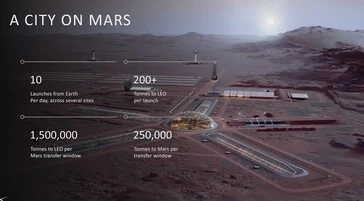
    Musk expressed that establishing a city on Mars won’t be feasible within the next two decades. Therefore, SpaceX’s focus will shift to creating a base on the Moon, which is now Musk’s priority for the future of space exploration. This change in direction is a significant turnaround for the SpaceX colonization plan, which has mostly been theoretical since the Starship 3 rocket hasn’t even completed its first flight.

    Financial Strategy

    This change comes at a time when an initial public offering (IPO) is expected, which Musk hopes to use to fund his costly xAI project. He recently combined SpaceX with xAI, pointing to potential but unrealized advantages such as orbital data centers. This merger consolidates his ownership and ties the financial fate of his struggling AI project to the more profitable SpaceX, which benefits from Starlink revenue and NASA contracts.

    One major contract includes the second manned mission to the Moon, for which NASA awarded SpaceX $4 billion. This might shed light on Musk’s sudden shift in focus towards something much nearer than Mars. Just a few months ago, he asserted that SpaceX could launch the first Starship 3 mission to Mars in 2026, as the optimal conditions for such a venture are rare and only occur about every two years, so he didn’t want to wait until 2028.

    Future Prospects

    However, the Starship 3 rocket may not be prepared in time for the initial cargo test to Mars in 2026. Even if the mission were possible, it would require a significant investment from SpaceX, which Musk might have realized could deter investors due to the uncertain return on investment. Thus, he likely sees the IPO funds as essential.

    Musk has mentioned that SpaceX might still aim to initiate the Mars project in “5 to 7 years,” but given his history of making bold promises and then changing timelines, a basic Moon base seems like a much more realistic target than the idea of colonizing Mars with Optimus robots.

    Source:
    Link


  • Starlink Network Speeds to Increase Drastically by 2025

    Starlink Network Speeds to Increase Drastically by 2025

    Key Takeaways

    1. Starlink’s download speeds increased over 50% in 2025, rising from 150 Mbps to over 200 Mbps, with some users experiencing speeds up to 400 Mbps.
    2. SpaceX launched 134 Starlink satellites in 2025, surpassing the previous year’s launches and improving network capacity.
    3. The new Starlink V2 mini satellites now constitute over 50% of the satellite constellation, enhancing overall performance.
    4. Significant firmware updates improved beam forming and ground station efficiency, leading to noticeable speed increases after fixing a major outage.
    5. Future Starlink V3 satellites, launching with the Starship 3 rocket, are expected to provide gigabit speeds by 2026, but currently, only the Performance dish can access these speeds.


    Starlink satellite Internet has seen a big boost in download speeds this year, thanks to a fast pace of satellite launches and ongoing software upgrades that enhance performance both in space and on the ground.

    Improved Speeds in 2025

    The download speeds for Starlink have jumped over 50% over the year, climbing from a median of around 150 Mbps in January to more than 200 Mbps as of now. Similarly, the upload speeds have also increased, moving from 20 Mbps at the start of the year to over 30 Mbps currently.

    Peak Performance

    These numbers reflect the “peak-hour network-wide” averages, but many users are actually experiencing download speeds that can reach up to 300 Mbps or even 400 Mbps at certain times.

    As of October 21, SpaceX has successfully launched 134 Starlink satellites using the Falcon rocket, surpassing the total number of launches from last year. Users are noticing this increase in capacity through their Starlink standard dish terminal, which is currently available at a discount of 20% on Amazon.

    Satellite Advancements

    With the rapid launch of Falcon rockets, the new Starlink V2 mini satellites now make up over 50% of the entire constellation, playing a key role in boosting both download and upload speeds. SpaceX has also rolled out important firmware updates that significantly enhance beam forming in space and improve the efficiency of ground stations. One of these updates caused a significant outage in Starlink’s history, but once the problem was fixed, users reported a noticeable increase in speeds.

    The updates to the Starlink ground station software are also being conducted in anticipation of the new Starlink V3 satellites, which are as big as a Boeing 737 when fully deployed. Each V3 satellite launch with the forthcoming Starship 3 rocket will add 20 times the capacity compared to the current V2 satellites. This additional 60 Tbps of capacity from each V3 launch is expected to deliver gigabit speeds for Starlink by 2026. However, currently, only the expensive Performance dish can utilize these speeds. It’s uncertain whether the Starlink Standard Kit will also be upgraded to support download speeds of 1 Gbps or more for those users who need it and are willing to invest in gigabit satellite Internet.

    Source:
    Link


  • Starlink to Launch Gigabit Satellite Internet Plans in 2026

    Starlink to Launch Gigabit Satellite Internet Plans in 2026

    Key Takeaways

    1. The upcoming Starship 3 rocket from SpaceX will launch the next generation of Starlink V3 satellites, capable of delivering ten times the bandwidth of the current V2 satellites.

    2. Starlink V3 satellites will provide gigabit Internet speeds, with uplink speeds potentially reaching 160 Gbps, expected to be available by 2026.

    3. The inaugural flight of Starship 3 is planned for later this year, with each rocket carrying 100 Starlink V3 satellites, significantly increasing downlink capacity.

    4. Only the expensive $2,000 Performance Kit dish will support gigabit speeds; cheaper kits like the Starlink Mini and Standard Kit will not be able to utilize these speeds.

    5. Starlink plans to implement service upgrades for gigabit speeds in 2026, likely at a premium cost, but no hardware changes will be needed for new Performance Kit users.


    During a recent talk titled “Making Life Interplanetary,” Elon Musk shared that the upcoming Starship 3 rocket from SpaceX will be capable of launching the next generation of Starlink V3 satellites.

    Satellite Capabilities

    The V3 satellites, which are as large as a Boeing 737 when their solar panels are opened, will deliver ten times the bandwidth compared to the existing V2 satellites, reaching speeds of up to 1 Tbps. This advancement means that Starlink is set to provide gigabit satellite Internet speeds once the new V3 satellite network begins to take shape next year.

    After a detailed post about the specifications of the existing Starlink kits, Elon Musk confirmed that Starlink plans to offer gigabit Internet speeds by 2026. He also implied that the uplink speeds for Starlink will see significant enhancements, as the V3 satellites can achieve 24 times the current upload speeds, potentially reaching 160 Gbps.

    Launch Plans

    The inaugural flight of the Starship 3 rocket is anticipated to occur later this year, with each rocket designed to transport 100 Starlink V3 satellites into space. This will result in a sudden increase of 100 Tbps in downlink capacity, allowing the gigabit-speed satellite network to develop rapidly.

    Sadly, budget-friendly kits like the Starlink Mini dish, which is priced at $349 on Amazon, or the Standard Kit, won’t be able to take advantage of the forthcoming gigabit satellite Internet speeds. For those looking for better options, Starlink has launched the Performance Kit, featuring a robust dish that promises a ten-year lifespan and resistance to vibrations from rocket landings. The costly $2,000 Performance dish is currently the only model that Starlink claims can support gigabit download speeds.

    Future Improvements

    “Starlink is working on network improvements that will enable gigabit speeds starting in the most isolated areas of the planet with the Performance Kit,” according to SpaceX. They also suggest “service plan upgrades” for 2026, which likely means that these gigabit satellite Internet speeds will come at a premium, even for commercial customers targeted by the Starlink Performance Kit.

    At the moment, the priciest option within Starlink’s business offerings is the 2 TB Global Priority plan, which costs $2,150 a month and provides coverage wherever Starlink is available. While this high price point includes download speeds of up to 400 Mbps, it remains uncertain whether the new gigabit Internet plans will be even more costly.

    Fortunately, Starlink assures that “no hardware changes will be necessary” for new Performance Kit users when gigabit speeds become available in 2026.

    Source:
    Link


  • Starlink V3: Boeing 737-Sized Satellite for 10x Faster Internet

    Starlink V3: Boeing 737-Sized Satellite for 10x Faster Internet

    Key Takeaways

    1. SpaceX will launch advanced Starlink V3 satellites, expected to enter a lower Earth orbit by early 2026.
    2. Each V3 satellite is nearly the size of a Boeing 737 and will be deployed using the new Mars-capable Starship 3 rocket.
    3. The satellites will be positioned at 350 km altitude, reducing latency to below 20 milliseconds, with potential for as low as 5 ms.
    4. V3 satellites will provide download speeds of 1 Tbps and upload speeds of 160 Gbps, significantly faster than current models.
    5. New Starlink satellite Internet equipment will be released, initially targeting enterprise customers for the enhanced gigabit speeds.


    SpaceX is set to begin the launch of its advanced Starlink V3 satellites, which are expected to enter a lower Earth orbit this year or by early 2026.

    Size and Design

    Elon Musk revealed during his keynote “Road to Making Life Multiplanetary” that each Starlink V3 satellite is nearing the dimensions of a Boeing 737. These substantial satellites will be deployed into orbit using the new, Mars-capable Starship 3 rocket, which is anticipated to be operational by the year’s end.

    Improved Performance

    The new satellites will be positioned at a lower altitude of 350 km, a reduction from the current orbit of 550 km. This adjustment will allow Starlink V3 to provide significantly lower latency, dipping below 20 milliseconds, which is ideal for gaming. Musk even hinted at playing Diablo while airborne, noting that the latency could potentially reach as low as 5 ms.

    In addition to the lower orbit benefits, the Starlink V3 satellites promise faster Internet connections and reduced latency. This is due to the laser beams transmitting data packets, which move 40% quicker than fiber optics in a vacuum.

    Enhanced Speed

    The V3 satellites, once fully deployed, will achieve download speeds of 1 Tbps, which is over ten times faster than the current V2 models. For uploads, the enhancements are even more impressive, offering speeds that are 24 times faster, reaching 160 Gbps.

    Furthermore, the new Starship 3 rockets, comparable in size to a 747, will enable SpaceX to launch twice the number of V3 satellites into orbit with each mission, despite each satellite weighing nearly two tons. This capability leads to projections of SpaceX potentially sending 5,000 Starlink satellites into orbit per year.

    Musk mentioned that the V3 satellites, which offer enhanced Internet speeds, reduced latency, and increased subscriber capacity, are set for launch within the next six to nine months, promising significant improvements in Starlink satellite Internet coverage by next year.

    Upcoming Equipment

    Additionally, SpaceX is gearing up to release new Starlink satellite Internet equipment designed to utilize these groundbreaking gigabit speeds, although these kits are likely to be available primarily for enterprise customers at first.

    Source:
    Link


  • Starship Mars Landing in 2027: Optimus Robots to Colonize

    Starship Mars Landing in 2027: Optimus Robots to Colonize

    Key Takeaways

    1. SpaceX plans to build the Mars-ready Starship 3 rocket by 2025, with five rockets set for launch to Mars in late 2026, aiming for a landing in 2027.

    2. The 2026 mission will not include humans but will deploy Optimus robots to demonstrate key technologies for Mars travel and landing.

    3. In 2028, SpaceX aims to launch up to 20 Starship rockets to establish infrastructure for future crewed missions to Mars, with missions planned every two years.

    4. Elon Musk envisions a fleet of Mars rockets operating like commercial airliners, with projections of up to 500 Starships landing by 2033 to support a Martian colony.

    5. Successful implementation of the new Raptor 3 engine is crucial for the Starship 3 rocket, but no specific timeline for human landings on Mars has been provided.


    SpaceX is gearing up to build a Mars-ready Starship 3 rocket in 2025, with plans to dispatch five of these rockets to the Red Planet in late 2026, aiming for a landing in 2027.

    Timelines and Launch Windows

    This aligns with the earlier schedule of 2026-2028 for Mars missions, which Elon Musk shared last year. The “transfer window,” which provides the best conditions for launching rockets to Mars, opens every two years.

    The 2026 mission will not carry humans but will include Optimus robots. SpaceX has stated that these robots will “showcase important technologies for Mars travel and landing.”

    Future Missions and Payloads

    In 2028, when conditions allow for another Mars mission, SpaceX intends to launch as many as 20 Starship rockets, each with a significantly larger payload. These rockets will establish the foundational infrastructure and equipment needed for the first crewed flight to Mars.

    After that, missions will occur every two years, with projections of up to 500 Starships landing by 2033. This is aimed at increasing “independence from Earth” by extracting and using Martian resources to support a colony.

    According to Elon Musk’s keynote, “The Road to Making Life Multiplanetary,” there is a vision for a fleet of Mars rockets that would operate like commercial airliners, comparable to Boeing and Airbus.

    Challenges Ahead

    However, this remains largely aspirational, as SpaceX must first successfully implement the new Raptor 3 engine, which is designed to save over a ton in vehicle mass. Musk indicated that the Starship 3 rocket will be equipped with 42 engines, emphasizing that this design is unavoidable.

    Interestingly, the presentation lacked a specific timeline for when humans might actually land on Mars, which had been mentioned in previous announcements.

    Source:
    Link