

Key Takeaways
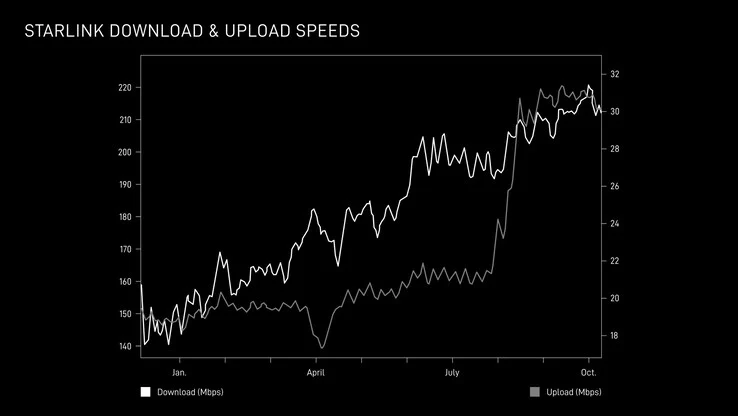
1. Starlink’s download speeds increased over 50% in 2025, rising from 150 Mbps to over 200 Mbps, with some users experiencing speeds up to 400 Mbps.
2. SpaceX launched 134 Starlink satellites in 2025, surpassing the previous year’s launches and improving network capacity.
3. The new Starlink V2 mini satellites now constitute over 50% of the satellite constellation, enhancing overall performance.
4. Significant firmware updates improved beam forming and ground station efficiency, leading to noticeable speed increases after fixing a major outage.
5. Future Starlink V3 satellites, launching with the Starship 3 rocket, are expected to provide gigabit speeds by 2026, but currently, only the Performance dish can access these speeds.
Starlink satellite Internet has seen a big boost in download speeds this year, thanks to a fast pace of satellite launches and ongoing software upgrades that enhance performance both in space and on the ground.
Improved Speeds in 2025
The download speeds for Starlink have jumped over 50% over the year, climbing from a median of around 150 Mbps in January to more than 200 Mbps as of now. Similarly, the upload speeds have also increased, moving from 20 Mbps at the start of the year to over 30 Mbps currently.
Peak Performance
These numbers reflect the “peak-hour network-wide” averages, but many users are actually experiencing download speeds that can reach up to 300 Mbps or even 400 Mbps at certain times.
As of October 21, SpaceX has successfully launched 134 Starlink satellites using the Falcon rocket, surpassing the total number of launches from last year. Users are noticing this increase in capacity through their Starlink standard dish terminal, which is currently available at a discount of 20% on Amazon.
Satellite Advancements
With the rapid launch of Falcon rockets, the new Starlink V2 mini satellites now make up over 50% of the entire constellation, playing a key role in boosting both download and upload speeds. SpaceX has also rolled out important firmware updates that significantly enhance beam forming in space and improve the efficiency of ground stations. One of these updates caused a significant outage in Starlink’s history, but once the problem was fixed, users reported a noticeable increase in speeds.
The updates to the Starlink ground station software are also being conducted in anticipation of the new Starlink V3 satellites, which are as big as a Boeing 737 when fully deployed. Each V3 satellite launch with the forthcoming Starship 3 rocket will add 20 times the capacity compared to the current V2 satellites. This additional 60 Tbps of capacity from each V3 launch is expected to deliver gigabit speeds for Starlink by 2026. However, currently, only the expensive Performance dish can utilize these speeds. It’s uncertain whether the Starlink Standard Kit will also be upgraded to support download speeds of 1 Gbps or more for those users who need it and are willing to invest in gigabit satellite Internet.
Source:
Link


Leave a Reply