Tag: RX 9070

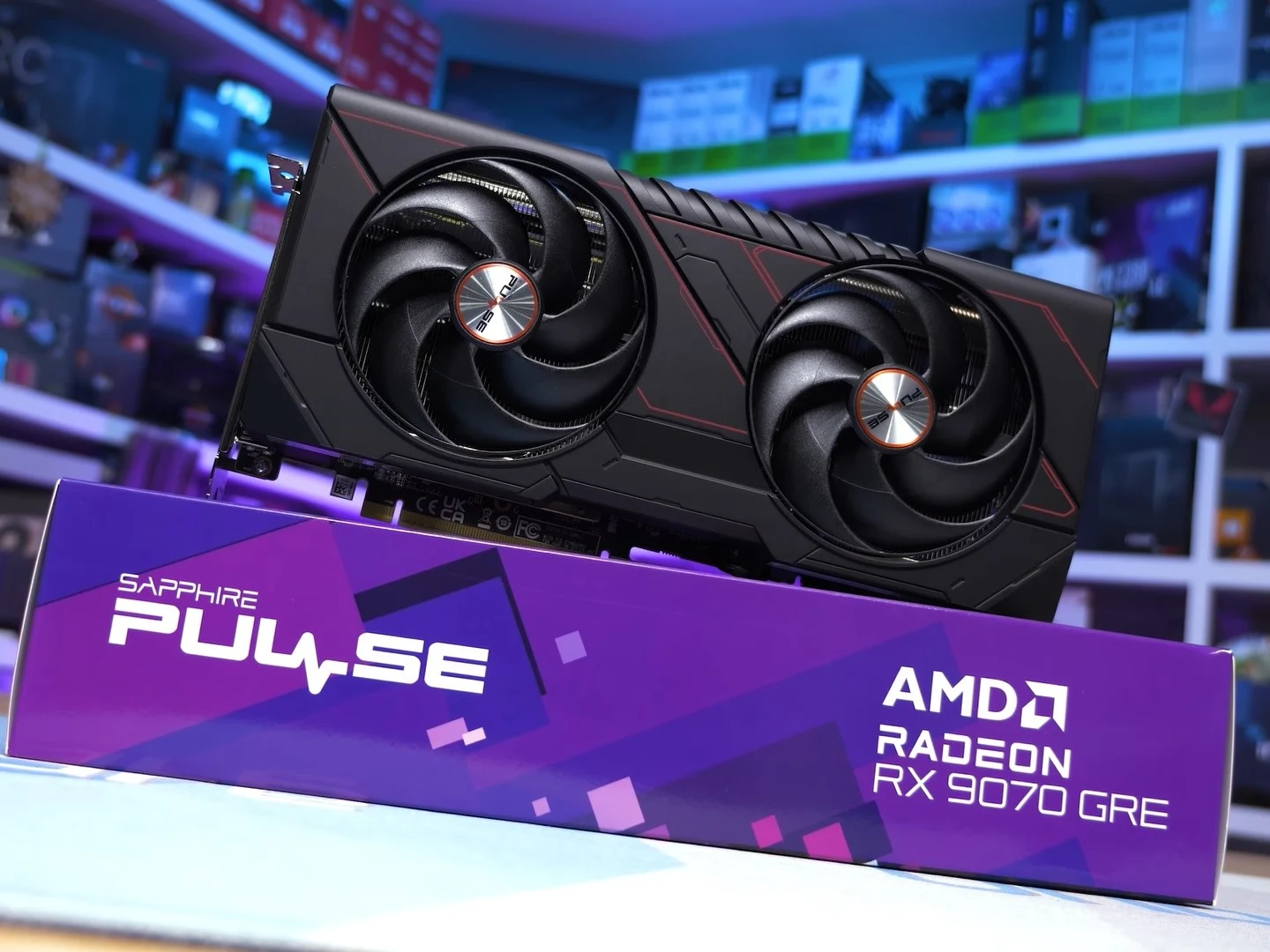
  • AMD RX 9070 GRE vs RX 9070: Same Price, 16% Worse

    AMD RX 9070 GRE vs RX 9070: Same Price, 16% Worse

    Key Takeaway

    – RX 9070 GRE essentially matches RX 7900 GRE performance, 16% behind RX 9070
    – 25% faster than RTX 5060 Ti 16 GB at 1440p, but 5% slower than RTX 5070
    – Poor value at $549 MSRP due to only $50 less than the superior RX 9070
    – 9% worse cost per frame than RX 9070, which offers 4GB more VRAM and 16% better raster
    – Makes more sense compared to overpriced Nvidia alternatives, but should have launched at $500 or less


    AMD’s New GPU Finally Hits Global Shelfs

    A year after its availability in China, AMD has brought the Radeon RX 9070 GRE to the US and other regions. The card is meant to be a cheaper alternative to the RX 9070 and a direct competitor to the RTX 5060 Ti 16 GB and the RTX 5070. However, the RX 9070 GRE fails to make a solid case for itself in Hardware Unboxed’s review.

    Benchmark and Performance Numbers

    Per HU’s testing of 15 games at 1440p, the RX 9070 GRE essentially matches the performance of the RX 7900 GRE and falls 16% behind the RX 9070. It is also 5% slower than the RTX 5070. However, the RX 9070 GRE is 25% faster than the RTX 5060 Ti 16 GB at 1440p. At 4K, the RX 9070 GRE shows a similar performance deficit to the RTX 5070 and the RX 9070.

    Ray Tracing and Power Draw

    Moving on to the average ray tracing performance in seven tested titles at 1440p, the RX 9070 GRE is not particularly impressive. It is 10% slower than the RTX 5070 and 17% slower than the RX 9070. The RX 9070 GRE’s only real advantage here is against the RTX 5060 Ti 16 GB, where the Radeon card is 17% faster. Power-consumption-wise, the RX 9070 GRE sits between the RX 9070 and the RTX 5070. It consumes much less than the RX 9070 but gets handily beaten by the RTX 5070.

    Value and Pricing Analysis

    In a vacuum, the RX 9070 GRE could be considered a pretty solid GPU. It is much faster than the RTX 5060 Ti 16 GB and only marginally behind the RTX 5070. However, AMD has priced the RX 9070 GRE too close to the RX 9070. HU calls the RX 9070 GRE “a waste of time” at the official $549 MSRP. HU notes that the RX 9070 GRE delivers a 9% worse cost per frame than the RX 9070. At $549, the RX 9070 GRE is only $50 less than the RX 9070, which you can currently find for $599 on Amazon. HU argues that the RX 9070 costing just $50 more for 4 GB extra VRAM and 16% better raster performance than the RX 9070 GRE has made the latter a pretty unremarkable option. It would’ve been much better if the RX 9070 GRE had launched at $500 or less.

    Comparisons to Nvidia’s Offerings

    The RX 9070 GRE makes much more sense when we compare it to the RTX 5070 and the RTX 5060 Ti 16 GB, as Nvidia GeForce GPUs have seen a worse price increase compared to AMD Radeon cards. For instance, the cheapest RTX 5070 on Amazon, at the time of writing, is a $607 MSI Ventus Black RTX 5070 that is on sale at a 7% discount. So, normally, you’d be looking at an RTX 5070 that is much more than $600. For the RTX 5060 Ti 16 GB, you’ll need to shell out $549.99 on Amazon to get an Asus Prime GeForce RTX 5060 Ti 16 GB. So, the RX 9070 GRE makes more sense here.

    • RX 9070 GRE: 1440p performance matches RX 7900 GRE, 16% behind RX 9070, 5% slower than RTX 5070
    • Ray tracing: 10% slower than RTX 5070, 17% slower than RX 9070, 17% faster than RTX 5060 Ti 16 GB
    • Power consumption: Between RX 9070 and RTX 5070, better than RX 9070 but worse than RTX 5070
    • Pricing: $549 MSRP, only $50 less than RX 9070 at $599
    • Competition: RTX 5070 starts at $607, RTX 5060 Ti 16 GB at $549.99

    Final Verdict from Reviewers

    Hardware Unboxed on YouTube provided all these insights, concluding the card is a waste of time at its current price. They emphasize the $50 savings does not justify the 16% performance loss and reduced VRAM compared to the RX 9070. The card would be more attractive at $500 or below.

    Sources

  • Thief Steals $11,000 in GPUs, Echoing COVID Chip Shortage Trends

    Thief Steals $11,000 in GPUs, Echoing COVID Chip Shortage Trends

    Key Takeaways

    1. A man stole desktop GPUs worth 16 million Won (around $11,171) from a store in Gyeonggi Province, Korea.
    2. The GPU market is currently struggling, with high prices due to increased memory costs and Nvidia’s supply cuts.
    3. Similar GPU thefts have occurred in the past, particularly during the COVID chip shortage and cryptocurrency boom.
    4. Rising GPU prices, especially for high-VRAM cards, are likely driving factors behind the recent theft.
    5. Consumers are advised to buy GPUs from reputable sellers to avoid scalpers, despite rising prices.


    We got Grand Theft GPU before Grand Theft Auto 6. A man has stolen desktop GPUs worth 16 million Won, or around $11,171, from a store in Korea’s Gyeonggi Province. The story, which may seem ordinary at first glance, has impeccable timing, as the GPU market is currently experiencing a rough phase. With inflated memory prices and Nvidia’s alleged supply cut, the prices of desktop GPUs like the RTX 5060 Ti 16 GB and the RTX 5070 Ti have gone considerably above MSRP.

    Similar Stories in the Past

    We saw similar stories unfold during the COVID era, when lockdowns and industrial shutdowns led to a debilitating chip shortage. The chip shortage made everything, from cars to desktop GPUs, quite expensive. The cryptocurrency price boom also made the situation even worse. And this was the perfect time for criminals to act.

    Rising Prices as a Catalyst

    Just like the 2021 GPU heist, it is reasonable to assume that the rising prices of GPUs, especially cards with 16 GB or more VRAM, served as the catalyst for the latest GPU theft. These stolen boards will surely end up in the hands of scalpers, who will then sell them on platforms like eBay at significant price premiums.

    Buying Tips for Consumers

    If you are in the process of buying a GPU, ensure that you get one from a well-established and reputable seller, rather than a random scalper. Sure, GPUs like the RTX 5070 Ti have gone up in price, but cheaper alternatives like the RX 9070 exist.

    Source:
    Link


  • RTX 5060 Ti Price Surge: Closer to RTX 5070 Cost

    RTX 5060 Ti Price Surge: Closer to RTX 5070 Cost

    Key Takeaways

    1. The RTX 5060 Ti 16 GB price in Germany has surged to €573, now closely rivaling the RTX 5070 at €619.
    2. The RTX 5060 Ti 16 GB’s price increased from €411 in mid-December to its current price, showing a significant shift.
    3. The rising prices of GPUs are influenced by a global memory shortage affecting both desktop and laptop graphics cards.
    4. The RX 9070’s lowest price has risen to $629.99, despite including a complimentary game, while the RTX 9070 XT remains at $729.99.
    5. There are still good GPU deals available in the US, such as the RX 9070 for under $600 if searching for Open-Box options.


    Last week, we talked about the unsatisfactory price rise of the RTX 5070 Ti in Australia. We also mentioned how the supposed slowdown in the production of the RTX 50 GPU is also impacting the pricing of the AMD Radeon RX 9000 GPUs. According to 3DCenter, like in Australia, the RTX 50 GPUs are also becoming significantly pricier in Germany.

    Price Surge in Germany

    Reports indicate that the price for the RTX 5060 Ti 16 GB has skyrocketed to €573 over the last few months. This GPU is now much closer in price to the RTX 5070, which is around €619. The RTX 5060 Ti 8 GB, while it has increased by €17 since mid-December 2025, is not nearly as inflated as its 16 GB counterpart or the RTX 5070.

    In mid-December, the RTX 5060 Ti 16 GB was priced at €411 compared to the RTX 5070’s €526. Now, the 16 GB RTX 5060 Ti is only €46 less than the RTX 5070, showing a significant price shift.

    Impact of Memory Shortages

    In summary, graphics cards with 16 GB of VRAM have seen a substantial increase in their prices. This is likely due to the ongoing global memory shortage that has also hit both desktop and laptop GPUs.

    That said, there are still some good GPU purchasing options available if you know where to search. For example, in the US, the RX 9070 with 16 GB of VRAM can be found for under $600 if you are willing to look for an Open-Box deal on Newegg.

    Changing Prices of RX 9070

    Sadly, the situation for the new RX 9070 has worsened since our previous update. The lowest price for the RX 9070 is now $629.99, which does include a complimentary copy of Crimson Desert. Luckily, the RTX 9070 XT appears to be maintaining its price at $729.99, which is still quite high compared to its original MSRP.

    Source:
    Link


  • RTX 5090 Founders Edition Priced at $1,999 May Sell Out Soon

    RTX 5090 Founders Edition Priced at $1,999 May Sell Out Soon

    Key Takeaways

    1. The RTX 5090 has reached its End of Life (EOL) status, making Q4 the last chance for fans to buy it at MSRP.
    2. Supply of the RTX 5090 is expected to dwindle significantly after the Holiday 2025 season, with prices likely rising.
    3. Gamers should consider purchasing the RTX 5090 now, as alternative models may not offer similar value in the near future.
    4. The RX 9000 series, especially the RX 9070, offers good performance and value, with prices dropping close to MSRP.
    5. The overall GPU market is healthier, with potential deals in the mid-range and entry-level categories during upcoming Holiday sales.


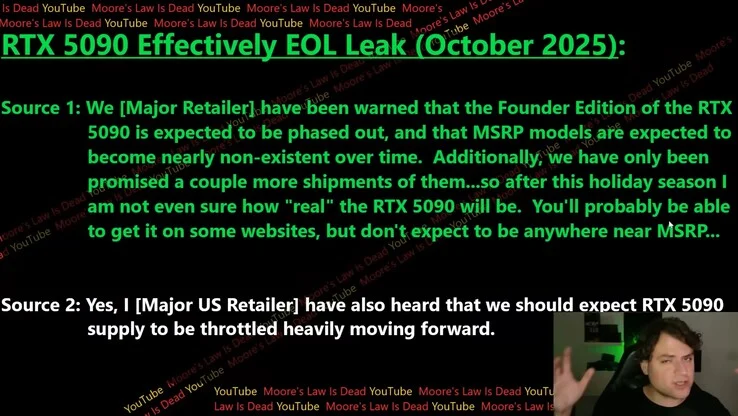
    Q4 might be the final opportunity for fans of the RTX 5090 to purchase the GPU. In a recent video, the well-known leaker Moore’s Law Is Dead mentioned that the GeForce RTX 5090 has reached its End of Life (EOL) status “effectively.” The leaker clarified that while you may still find an RTX 5090, acquiring one at the Manufacturer’s Suggested Retail Price (MSRP) will likely become nearly impossible by Q1 2026.

    Supply Issues Ahead

    According to a source from MLID who works at a “Major Retailer,” the RTX 5090 Founders Edition is likely to be “phased out.” The availability of other models at MSRP seems to be dwindling to almost nothing. The source cautioned that, after the Holiday 2025 season, reasonably priced RTX 5090 models, especially those near the MSRP, will probably no longer be available.

    Another “Major US Retailer source” echoed this sentiment, stating that the RTX 5090 supply is anticipated to be “throttled heavily moving forward.”

    Time to Buy

    In summary, gamers eyeing the RTX 5090 should consider buying it now. For those satisfied with a mid-range or high-end desktop GPU, MLID suggests in his latest video that the RX 9000 series cards will remain well-stocked.

    The prices for the RX 9070 and RX 9070 XT have dropped significantly since their debut. While the RX 9070 XT is still priced above its $599 MSRP, which hurts its value, the RX 9070 is now available at or very close to the $549 MSRP. Recent performance evaluations indicate that the RX 9070 is the best choice for mid-range GPUs if you’re looking for great value.

    Alternatives Available

    The RTX 5070 is also a solid choice if you can handle the 12 GB VRAM limit. However, the RTX 5070 Ti continues to be burdened by its $749 MSRP, whereas the RX 9070 XT provides roughly similar performance for a lower price.

    In conclusion, aside from the RTX 5090, the overall GPU market seems to be in a much healthier condition. It’s likely that the upcoming Holiday sales will present excellent deals in the upper mid-range, mid-range, and entry-level categories.

    Source:
    Link


  • RX 9070 vs RTX 5070 & 5070 Ti: Best Mid-Range GPU Showdown

    RX 9070 vs RTX 5070 & 5070 Ti: Best Mid-Range GPU Showdown

    Key Takeaways

    1. The RTX 5070 Ti outperforms the RX 9070 XT by about 5% at 1440p resolution using native settings, with a smaller gap when using image enhancements.
    2. The RTX 5070 Ti shows a significant performance advantage over the RX 9070, being 15% faster at native resolutions.
    3. The RX 9070 provides better value at $549 compared to the RTX 5070 Ti at $749, especially for those aiming to maximize performance without overspending.
    4. The RX 9070 XT struggles to impress compared to the RTX 5070 Ti, especially if not found at its MSRP of $599.
    5. Overall, the RX 9070 is recommended as the best mid-range GPU option based on current testing and pricing.


    After evaluating the performance of the RX 9070, RX 9070 XT, and RTX 5070 with the newest drivers and image enhancements, Hardware Unboxed has now added the RTX 5070 Ti to their comparison. The findings are quite revealing in terms of value, showing that the RX 9070 XT offers decent performance, but isn’t particularly impressive when compared to the RTX 5070 Ti.

    Performance Comparison

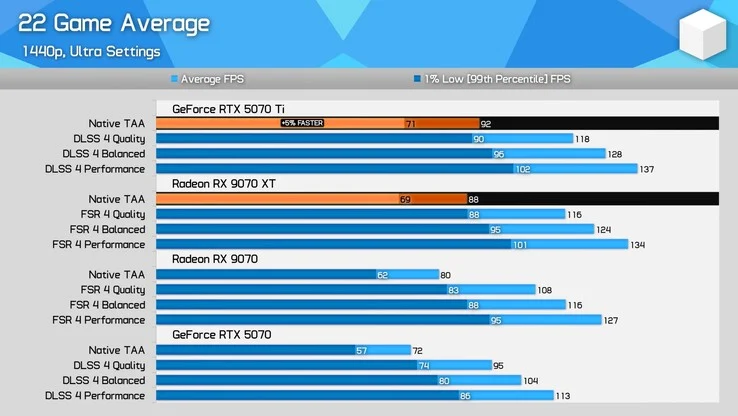
    In a test of 22 games at 1440p resolution, the RTX 5070 Ti outperformed the RX 9070 XT by about 5% when using native settings. However, this performance gap narrows to 2%, 3%, and 2% when utilizing DLSS 4 in Quality, Balanced, and Performance modes on the RTX 5070 Ti, alongside the corresponding FSR 4 modes on the RX 9070 XT. Essentially, both GPUs deliver similar performance, with a slight edge for the GeForce option.

    RX 9070 vs. RTX 5070 Ti

    When the RTX 5070 Ti is compared to the RX 9070, it shows a significant advantage. The GeForce GPU is 15% faster at native resolutions and 9% faster with DLSS 4 Quality. It’s important to note that to match the performance of the RTX 5070 Ti’s DLSS 4 Quality, one would need to employ FSR 4 Balanced on the RX 9070. Given AMD’s major enhancements in FSR 4 image quality, there shouldn’t be a noticeable difference between FSR 4 Balanced and DLSS 4 Quality.

    Price Considerations

    The RTX 5070 Ti, priced at $749, is 36% pricier than the RX 9070 at $549. Therefore, with a 15% performance advantage at native resolution, the RX 9070 becomes a more appealing choice for those looking to maximize value without overspending.

    Finding the RX 9070 XT at its MSRP of $599 is still a challenge. Until it becomes available at that price, the card lacks excitement compared to the RTX 5070 Ti.

    Ultimately, if you’re in the market for a GPU right now, the testing from Hardware Unboxed and the current pricing suggest that the RX 9070 stands out as the best mid-range option.

    Source:
    Link


  • RX 9070 vs RTX 5070: FSR 4 vs DLSS 4 Performance Comparison

    RX 9070 vs RTX 5070: FSR 4 vs DLSS 4 Performance Comparison

    Key Takeaways

    1. The RX 9070 has improved performance, now outpacing the RTX 5070 by approximately 13% at 1440p without FSR 4, compared to just a 4% lead at launch.
    2. The RX 9070 is now more appealing due to driver and game enhancements, especially as it is available near its $549 MSRP.
    3. DLSS 4 does not significantly boost the RTX 5070’s performance, as the RX 9070 maintains its 13% advantage even with FSR 4.
    4. The RTX 5070 excels in ray tracing performance, but the overall game mix tested favored the RX 9070.
    5. The RX 9070 features 16 GB of VRAM compared to the RTX 5070’s 12 GB, making it a better long-term investment as games require more VRAM.


    We’ve often come across the expression “fine wine” when discussing AMD’s GPU drivers, which generally provide extra performance boosts as new driver updates are released. Hardware Unboxed has evaluated the RX 9070 and the RTX 5070, utilizing AMD FSR 4 and Nvidia DLSS 4, respectively, along with the most recent drivers. The comparison indicates that the Radeon RX 9070 has matured remarkably well, as the performance gap between the GPUs is now greater than it was at the launch of the RX 9070.

    Performance Comparison

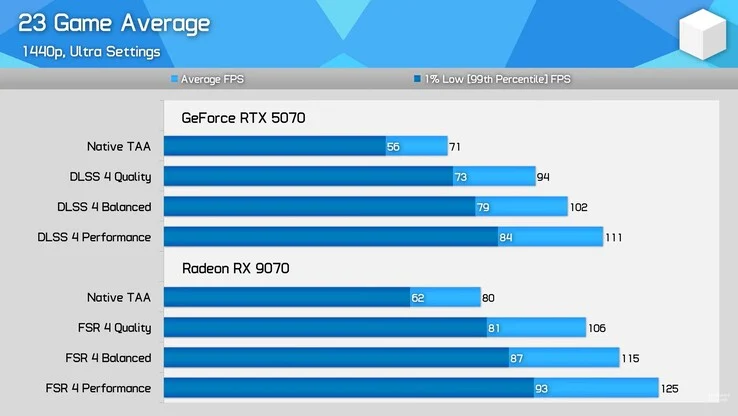
    According to HU, in the 23 games tested at 1440p, the RX 9070 outperformed the RTX 5070 by approximately 13% at native resolution, without employing FSR 4. This is quite fascinating since the RX 9070 was merely 4% ahead of the RTX 5070 on average in HU’s initial review. Our own testing also shows that the RX 9070 is just 7% faster than the RTX 5070.

    In other words, due to driver and game enhancements, the RX 9070 has proven to be an even more attractive option compared to the RTX 5070, especially now that you can find the GPU at or near the official $549 MSRP, similar to the RTX 5070.

    DLSS vs. FSR

    Additionally, it seems that DLSS does not significantly benefit the RTX 5070 in this analysis, as the RX 9070, with FSR 4, maintained the 13% performance advantage under similar conditions. For example, when using DLSS 4 and FSR 4 in “Quality” mode, the RX 9070 achieved an average FPS of 106, while the RTX 5070 reached 94 FPS. This 13% difference persisted across the Balanced and Performance FSR 4/DLSS 4 profiles.

    It’s worth noting that the game mix tested by HU included both rasterization and ray tracing titles. Had HU focused solely on ray tracing performance, the RTX 5070 would have outpaced the RX 9070. It’s also important to recognize that the number of games compatible with DLSS 4 is larger than that for FSR 4.

    Other Considerations

    Furthermore, DLSS 4 includes features like enhanced image quality and Multi-Frame Generation, which may be very appealing for certain gamers.

    Taking everything into account, if you’re seeking the best performance for your investment, the RX 9070, whether using FSR 4 or not, represents a superior choice. This is especially relevant considering the RX 9070’s 16 GB of VRAM compared to the RTX 5070’s 12 GB. As games increasingly demand more VRAM for budget and mid-range GPUs, the extra 4 GB will greatly enhance the longevity of your purchase.

    Source:
    Link


  • AMD FSR Redstone: Faster RDNA 4 Ray Tracing with ML Regeneration

    AMD FSR Redstone: Faster RDNA 4 Ray Tracing with ML Regeneration

    Key Takeaways

    1. AMD’s FSR 4 and FSR Redstone significantly improve image quality, competing closely with Nvidia’s DLSS.
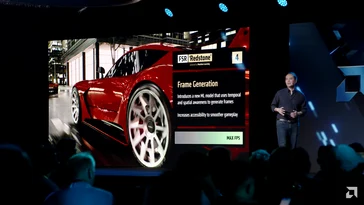
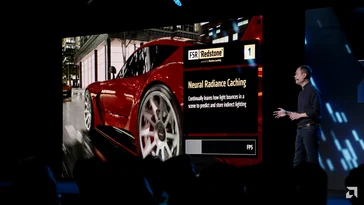
    2. FSR Redstone integrates three technologies: Frame Generation, Ray Regeneration, and Neural Radiance Caching (NRC) to enhance graphics performance.
    3. Neural Radiance Caching predicts indirect lighting behavior, improving efficiency and performance in path tracing tasks.
    4. Ray Regeneration uses machine learning to enhance ray tracing quality and speed, serving as AMD’s answer to Nvidia’s DLSS 3.5 Ray Reconstruction.
    5. FSR Redstone will launch in late 2025, exclusively for RDNA 4 GPUs, leaving older Radeon cards without access to this technology.


    Ever since the first generation of DLSS was launched, AMD has been in a race to keep up with Nvidia. Now, it seems that Team Red is making significant strides. With the introduction of FSR 4, AMD has achieved impressive improvements in image quality, and the output from FSR now competes directly with DLSS. At Computex 2025, AMD unveiled the new FSR Redstone, which further narrows the gap between FSR and DLSS features.

    A Blend of Technologies

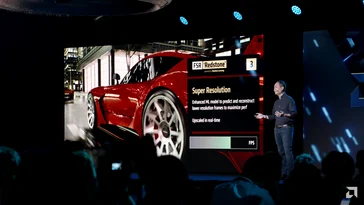
    FSR Redstone combines three primary technologies:

    AMD has already incorporated Frame Generation into FSR, but with the addition of Ray Regeneration and Neural Radiance Caching, Team Red is getting closer to matching the software features Nvidia provides on its RTX GeForce GPUs. For example, in January 2025, Nvidia launched its RTX Neural Radiance Cache to accelerate and enhance demanding techniques like full Path Tracing.

    Understanding Neural Radiance Caching

    Neural Radiance Caching (NRC) is designed to enhance indirect lighting efficiency. AMD asserts that NRC learns the behavior of indirect light bounces and, from these initial assessments, predicts additional bounces, storing this data. As a result, the hardware can avoid excessive workload when calculating indirect lighting for rays in a path tracing context, leading to significantly better performance.

    Path tracing, while delivering breathtaking visuals, is extremely resource-intensive. For instance, even the top-tier GPU, the RTX 5090, struggles to run games such as Cyberpunk 2077 smoothly at full Path tracing settings. However, by utilizing techniques like NRC, both AMD and Nvidia GPUs can achieve playable frame rates without sacrificing image and lighting quality.

    Enhancements in Ray Tracing

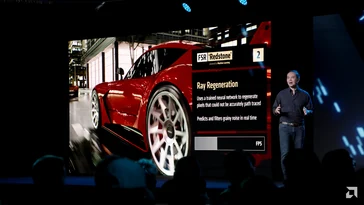
    FSR Redstone’s Ray Regeneration aims to boost both the speed and quality of ray tracing. This method serves as AMD’s response to Nvidia’s DLSS 3.5 Ray Reconstruction. Ray Regeneration replaces conventional hand-drawn denoisers with machine learning to denoise ray-traced pixels. This approach not only enhances the quality of ray/path-traced scenes but also improves performance, as traditional denoisers can be quite demanding.

    Similar to NRC, AMD hasn’t released many technical specifics about Ray Regeneration. However, if you’re curious about how Ray Regeneration functions, Nvidia has a video that explains DLSS 3.5 Ray Reconstruction. While the differences between Ray Regeneration and Ray Reconstruction remain unclear, the fundamental principles behind both methods are likely analogous.

    Exploring Quality and Performance

    If you’re interested in witnessing the impact of these machine-learning enhanced ray tracing technologies, Digital Foundry has a solid video on the topic (linked below).

    In addition to NRC and Ray Regeneration, AMD FSR Redstone introduces new Frame Generation powered by a fresh machine learning model. This model utilizes both spatial and temporal frame data to create new “fake” frames. Notably, AMD hasn’t clarified whether the new FSR Redstone Frame Generation supports Multi-Frame Generation (MFG), as seen in the existing versions of DLSS.

    Availability for Gamers

    FSR Redstone is set to launch in titles during the second half of 2025, but it will only be compatible with RDNA 4 GPUs. Gamers who own or can acquire the RX 9070/XT or RX 9060 XT will benefit from improved and quicker ray tracing. Unfortunately, Radeon gamers still using older generation cards will not have access to FSR Redstone, likely due to the slower AI performance of those GPUs.

    Source:
    Link


  • RX 9070 XT Offers 19% Better Value Over RTX 5070 Ti

    RX 9070 XT Offers 19% Better Value Over RTX 5070 Ti

    Key Takeaways

    1. The RX 9070 and RX 9070 XT were expected to improve GPU prices and supply, but initial stock is very limited due to high demand.
    2. Official prices for the RX 9070 ($549) and RX 9070 XT ($599) offer the best value, but real-world prices are significantly higher, making older models more appealing.
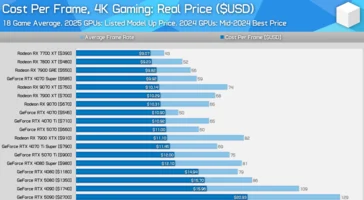
    3. The RX 9070 and RX 9070 XT have a competitive cost-per-frame of around $8.46 and $8.11 at 4K, outperforming Nvidia’s RTX 5070 and RTX 5070 Ti.
    4. With inflated street prices, the RX 9070 XT and RX 9070 are no longer the top value options, now compared to the RX 7700 XT and RX 7800 XT.
    5. High-end GPUs like the RTX 5090 have poor value, with a cost-per-frame of $20.93, indicating a challenging market for gamers looking to upgrade.


    Hopes were really high that the release of the RX 9070 and RX 9070 XT would help reduce the price issues and supply problems that have been troubling the GPU market. While the RX 9070 GPUs definitely added some competition for Nvidia, the massive demand from gamers who have been left waiting made the initial stock of these cards seem very small.

    Lack of Availability

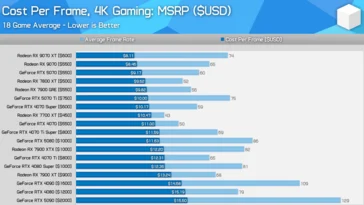
    Currently, it’s nearly impossible to find any RX 9070 cards at their official prices. Data from Hardware Unboxed (HU) shows that the RX 9070 and RX 9070 XT are considered the best value GPUs available, providing the lowest cost-per-frame across 18 games tested. However, this only holds true if we consider their official prices of $549 for the RX 9070 and $599 for the RX 9070 XT.

    Real-World Pricing

    When we take a look at the actual street prices for the RX 9070 and RX 9070 XT, the value starts to fade and older RX 7000 cards begin to look more appealing. HU indicates that if we use the MSRP of $549 and $599 for the RX 9070 and RX 9070 XT, respectively, they rank as the best value in the market, followed closely by the RTX 5070 and RX 7800 XT. The cost-per-frame for the RX 9070 and RX 9070 XT is around $8.46 and $8.11 at 4K. In contrast, Nvidia’s competitors, the RTX 5070 and RTX 5070 Ti, have cost-per-frame ratings of $9.17 and $10, making it clear why AMD has been selling a lot of GPUs and increasing its market presence.

    Bottom Performers

    Not surprisingly, the RTX 5090, which has a cost-per-frame of $15.50, the RTX 4080 at $15.19, and the RTX 4090 at $14.68, rank as the least favorable options in this analysis.

    However, as we all know, it’s very hard to find any next-gen GPUs at their listed prices. Therefore, any value comparison needs to consider street prices. Hardware Unboxed has also gathered data based on actual Newegg pricing for these cards.

    Changing Value Proposition

    Given the inflated prices of $750 for the RX 9070 XT and $670 for the RX 9070, RDNA 4 boards are no longer the top value cards, as they have been surpassed by the RX 7700 XT and the RX 7800 XT. In this situation, the RX 9070 XT costs $10.14 per frame and the RX 9070 costs $10.31 per frame. The RX 9070 XT gives a 15% better value compared to the RTX 5070 Ti, while the RX 9070 shows a modest 6% advantage over the RTX 5070.

    The Worst Offenders

    Looking at the least valuable GPUs, the RTX 5090 priced at $2,700 delivers a staggering cost of $20.93 per frame. Although the RTX 5080 offers better value at $15.70, it’s still not a great choice overall, especially since it loses to the RTX 4080 Super, which the RTX 5080 is supposed to replace.

    In addition to analyzing cost-per-frame at 4K in the US, Hardware Unboxed also reviews data for 1440p, premium AIB options, and markets outside of the US like the EU and Australia. Therefore, the entire video linked below is definitely worth watching if you are in the market for a new graphics card.

    Conclusion

    Ultimately, it’s pretty disheartening to see the current state of PC gaming. With so many exciting games like Doom: The Dark Ages on the horizon, gamers looking to upgrade have no choice but to be patient. We really don’t know how much longer it will take for prices and supply to return to normal.

    Source:
    Link


  • AMD Responds to RX 9070 Series MSRP Issues Amid Retail Stock Drop

    AMD Responds to RX 9070 Series MSRP Issues Amid Retail Stock Drop

    Key Takeaways

    1. AMD is working with partners to maintain MSRP prices for the RX 9070 series GPUs, despite rumors of potential price increases after initial stock sells out.

    2. The price of AMD Radeon RX 9070 and 9070 XT will be influenced by supply and demand, with AMD needing to ensure adequate stock to keep prices stable.

    3. AMD’s stock availability appears to be better than Nvidia’s during the RTX 5000 series launch, with more RX 9070 models available at retailers.

    4. A comparison showed that while AMD’s RX 9070 GPUs are in stock at Micro Center, Nvidia’s RTX 5070 Ti and 5080 models are sold out.

    5. Online demand for AMD cards remains high, with reports of order cancellations due to stock shortages, making platforms like Amazon a good option for mid-range gamers.


    Yesterday, after the introduction of the AMD Radeon RX 9070 and 9070 XT GPUs, which we have reviewed, rumors and leaks surfaced suggesting that AMD might raise the MSRP of the RDNA 4 GPUs once the initial retail stock was sold out. However, new details indicate this might not be true—though it doesn’t mean that prices won’t rise in the future.

    Stock Replenishment Efforts

    Frank Azor from AMD has stated that the company is collaborating with its add-in-board partners to restock retailers. Despite the high demand, he noted that “MSRP pricing (not including region specific tariffs and/or taxes) will continue to be encouraged,” even after the launch. This implies that the suggested prices for AMD’s RX 9070 series are likely to remain stable, yet there is still room for potential price hikes from retailers and AIBs.

    Supply and Demand Dynamics

    Currently, it appears that the price of the AMD Radeon RX 9070 and 9070 XT will be dictated by supply and demand. This suggests that the only way AMD can guarantee MSRP—or something close to it—is by ensuring there is a sufficient supply. In this aspect, AMD seems to be performing a bit better in keeping stores stocked compared to Nvidia during the launch of the RTX 5000 series.

    Stock Comparisons

    An amusing Reddit post highlighted that the Micro Center in Illinois had 170 RX 9070 GPUs and 440 RX 9070 XT units available, whereas Nvidia’s RTX 5070 Ti and 5080 were completely sold out, with only seven RTX 5090s and 10 RTX 5070s on the shelves. Conversely, online retailers have witnessed much greater demand, as many users in the r/PCMasterrace subreddit and on X have reported order cancellations due to a shortage of stock and increasing demand.

    Source:
    Link

  • RTX 5070 Launch Stock Leak Suggests Possible Supply Shortage

    RTX 5070 Launch Stock Leak Suggests Possible Supply Shortage

    Key Takeaways

    1. Next-gen desktop GPUs, RX 9070 and RTX 5070, will launch soon, priced below $600.
    2. Nvidia aims to address previous issues with the RTX 50 series by focusing on regular gamers with the RTX 5070.
    3. There are concerns about the availability of the RTX 5070, with potential supply issues similar to previous RTX launches.
    4. A major retailer has not received RTX 5070 stock ahead of its launch, raising doubts about its supply.
    5. The RX 9070 is a strong alternative for consumers, potentially outperforming the RX 7900 GRE at a competitive price.


    We will soon witness the arrival of the first next-gen desktop GPUs priced below $600, with the RX 9070 hitting the market on March 6 and the RTX 5070 coming on March 5. Nvidia sees this as a chance to fix the issues with the RTX 5090, RTX 5080, and RTX 5070 Ti by launching a GPU that resonates with regular gamers. To achieve this, it’s essential that the RTX 5070 is readily available at its $549 MSRP and does not suffer from the recent “missing ROPs” problem that hampers performance.

    Supply Issues Looming

    However, wishing for an RTX 50 GPU that is easy to purchase at the suggested retail price might be unrealistic. The unfortunate launches of the RTX 5090, RTX 5080, and RTX 5070 Ti suggest that the RTX 5070 could also face significant challenges at its debut.

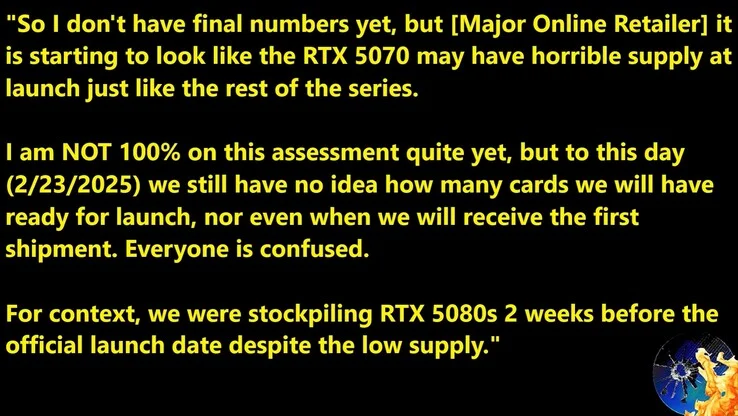
    Recent whispers from Moore’s Law Is Dead indicate that customers might struggle to get their hands on the RTX 5070, much like they did with previous RTX releases. According to a source from a “Major Online Retailer,” “the RTX 5070 may have a horrible supply at launch just like the rest of the series.” This source noted that as of February 23, the retailer had not received any RTX 5070 cards for the launch, nor did it have information on when any units would arrive.

    Comparisons to Past Launches

    Interestingly, the same source revealed to MLID that the retailer had been stockpiling the RTX 5080 two weeks prior to its official release. This is particularly noteworthy since the RTX 5080 faced a tight supply on launch day. The fact that a major retailer hadn’t received the first batch of RTX 5070 less than two weeks before its March 5 launch does not bode well for potential buyers.

    Thankfully, there’s a silver lining for consumers. If they miss out on the RTX 5070, they will have the RX 9070 as a strong alternative. AMD’s offering appears to be a serious competitor, showcasing performance that may surpass the RX 7900 GRE at an appealing price point.

    Source:
    Link