Tag: Robotics

  • 1X NEO Household Robot Launches by 2026 With Controversial Features

    1X NEO Household Robot Launches by 2026 With Controversial Features

    Key Takeaway

    1. 1X Technologies plans to deliver its humanoid household robot, NEO, to US customers by the end of 2026, priced at around $20,000 or available for rent.
    2. NEO is designed for household tasks like vacuuming and laundry but currently requires remote support and human assistance for some functions.
    3. The robot is seen as an experimental platform for learning and development, with ongoing efforts to enable full autonomy.
    4. The company aims to scale production significantly by 2027, producing over 100,000 units annually through increased automation and additional manufacturing facilities.

    Introduction to the NEO Household Robot

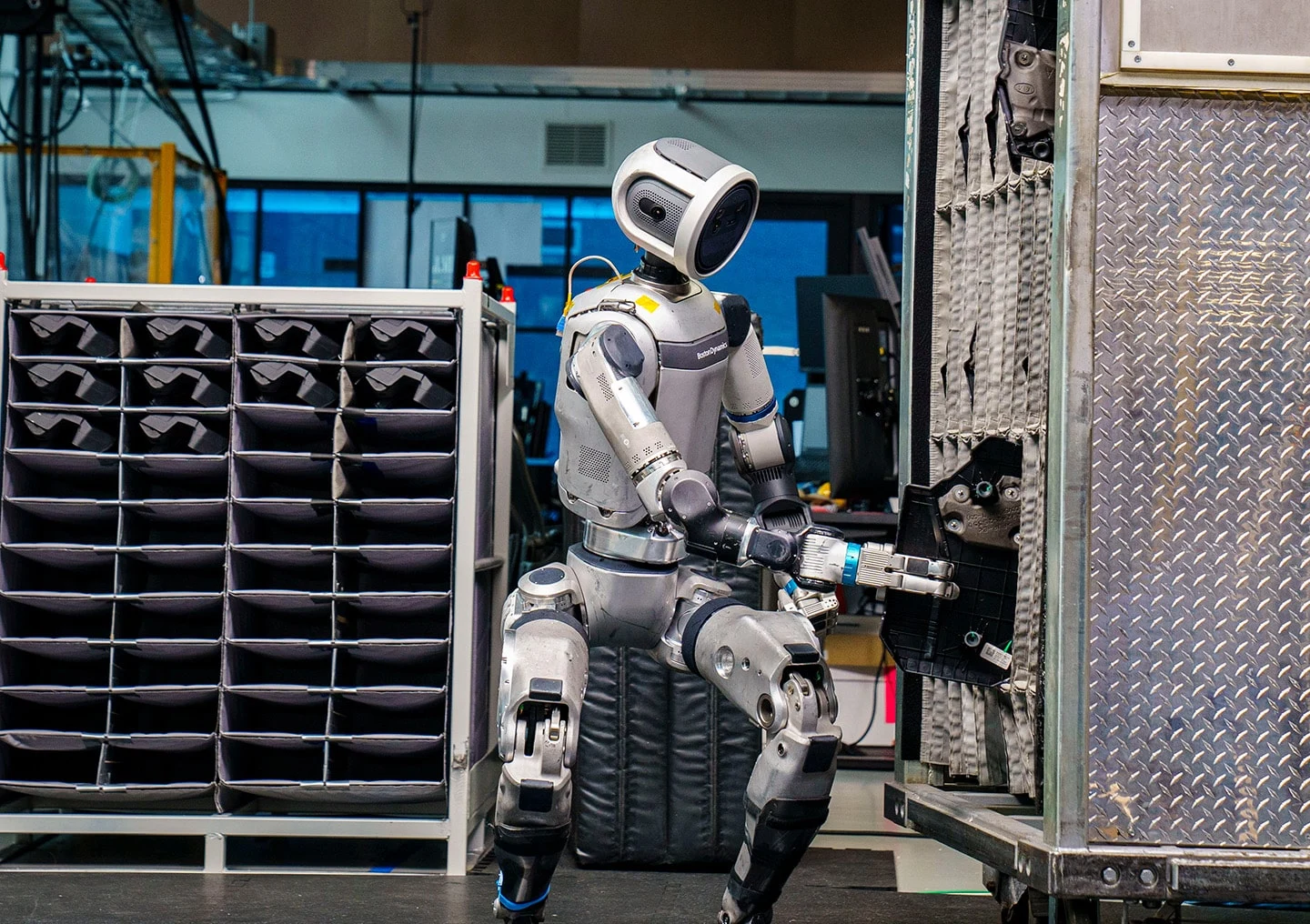
    Robotics company 1X Technologies has announced plans to launch its humanoid household robot called NEO, aiming to deliver it to the first private customers in the US by the end of 2026. The robot measures about 5 feet 5 inches tall, is just under 66 pounds in weight, and has impressive capabilities such as lifting up to 154 pounds and carrying roughly 55 pounds. Its pricing is set at a minimum of $20,000, but there’s also an option to rent it for approximately $500 monthly. But, for typical families, those prices might still be too high for everyday use.

    Capabilities and Tasks

    On the company’s website, NEO is shown performing chores like vacuuming, folding laundry, and unloading the dishwasher—tasks that most people would prefer to delegate to a household robot. Nonetheless, in reality, some jobs may still be completed by humans, especially during its initial phase. 1X explains that NEO can be remotely supported by experts in scheduled sessions for tasks it hasn’t been programmed to do on its own yet. Still, the company has not specified which functions will work completely independently at launch or if some will continue to need human aid.

    Public Reception and Concerns

    Many Reddit users see the NEO as more of a experimental platform than a fully functional household robot. The physical robot is present but the main challenge lies in it completing daily tasks autonomously. Also, the idea that someone might observe their home through cameras makes quite a few people uneasy, raising privacy concerns among potential users.

    Future Prospects and Development

    Nevertheless, 1X holds a vision where someday, NEO could operate entirely without human help. Currently, the first batch of NEO robots is secretly working at the company’s factory in Hayward, California, doing simple logistics like moving items around. These activities assist in collecting valuable real-world data which will aid the development of the robot’s capabilities. The company hopes that by late 2027, they will be able to manufacture over 100,000 robots per year, facilitated by increased automation and a new plant planned in San Carlos.

    Sources
  • Dobot Rover X1 Robot Dog: $1,000, Carries Bags & Guards Home

    Dobot Rover X1 Robot Dog: $1,000, Carries Bags & Guards Home

    Key Takeaways

    1. Price and Value: The Dobot Rover X1 is priced at around $1050, offering more versatility than many high-end robot vacuums and mops.

    2. Dual-Vision Tracking: It features a dual-vision tracking system that allows it to understand its environment and function as a mobile security camera.

    3. Multi-Functionality: The robot can carry small items, respond to voice commands, and act like an interactive pet.

    4. Customizable Movement: Its legs can be swapped for wheels for faster movement, enhancing its versatility.

    5. Programming Interface: The Rover X1 has a programming interface that allows third-party software to expand its capabilities.


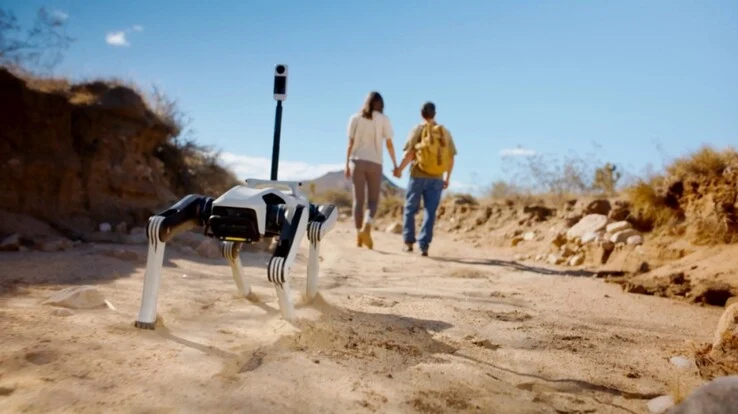
    Chinese robotics company Dobot has introduced an intriguing new product: the Rover X1. With a price tag of around $1050, the Rover X1 is only slightly more expensive than many high-end robot vacuums and mops, yet it offers much more versatility.

    Advanced Features

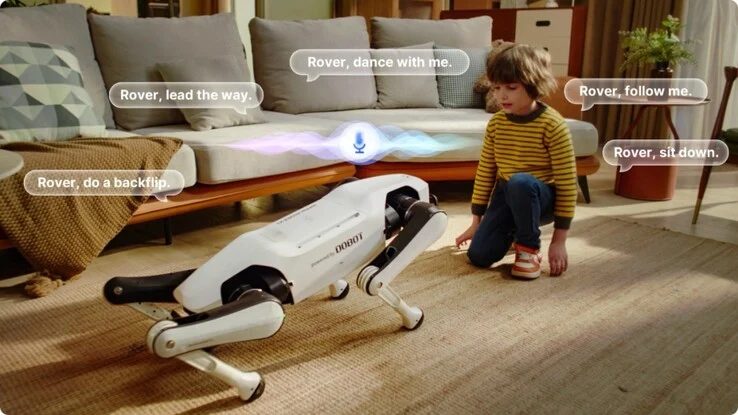
    The Rover X1 is equipped with a dual-vision tracking system that enables it to understand its environment and move around in the real world. This feature allows the robot to serve as a mobile security camera, keeping an eye on a home when no one is present. Additionally, with a gimbal on its back, it can hold an action camera and follow individuals to capture vlogging videos.

    Versatile Uses

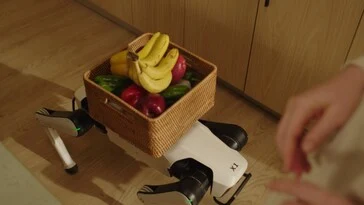
    Moreover, the robot is capable of carrying small items on its back, such as groceries to the kitchen or a backpack. It can be controlled through voice commands, which lets it act like an artificial pet that can interact with children. Its legs can be swapped for wheels, which allows for faster movement. The robot also has a programming interface, making it possible for third-party software to enhance its capabilities.

    The Dobot Rover X1 is set to be available in China for 7,499 yuan (about $1050); however, the company has yet to announce when deliveries will start or if users will need a paid subscription to access all of its features.

    Source:
    Link


  • Unitree G1: A Kung Fu Robot with Impressive Moves and Upgrades

    Unitree G1: A Kung Fu Robot with Impressive Moves and Upgrades

    Key Takeaways

    1. The Unitree G1 robot, known as “Kungfu Kid V6.0,” shows significant improvements in body control and movement compared to earlier models.
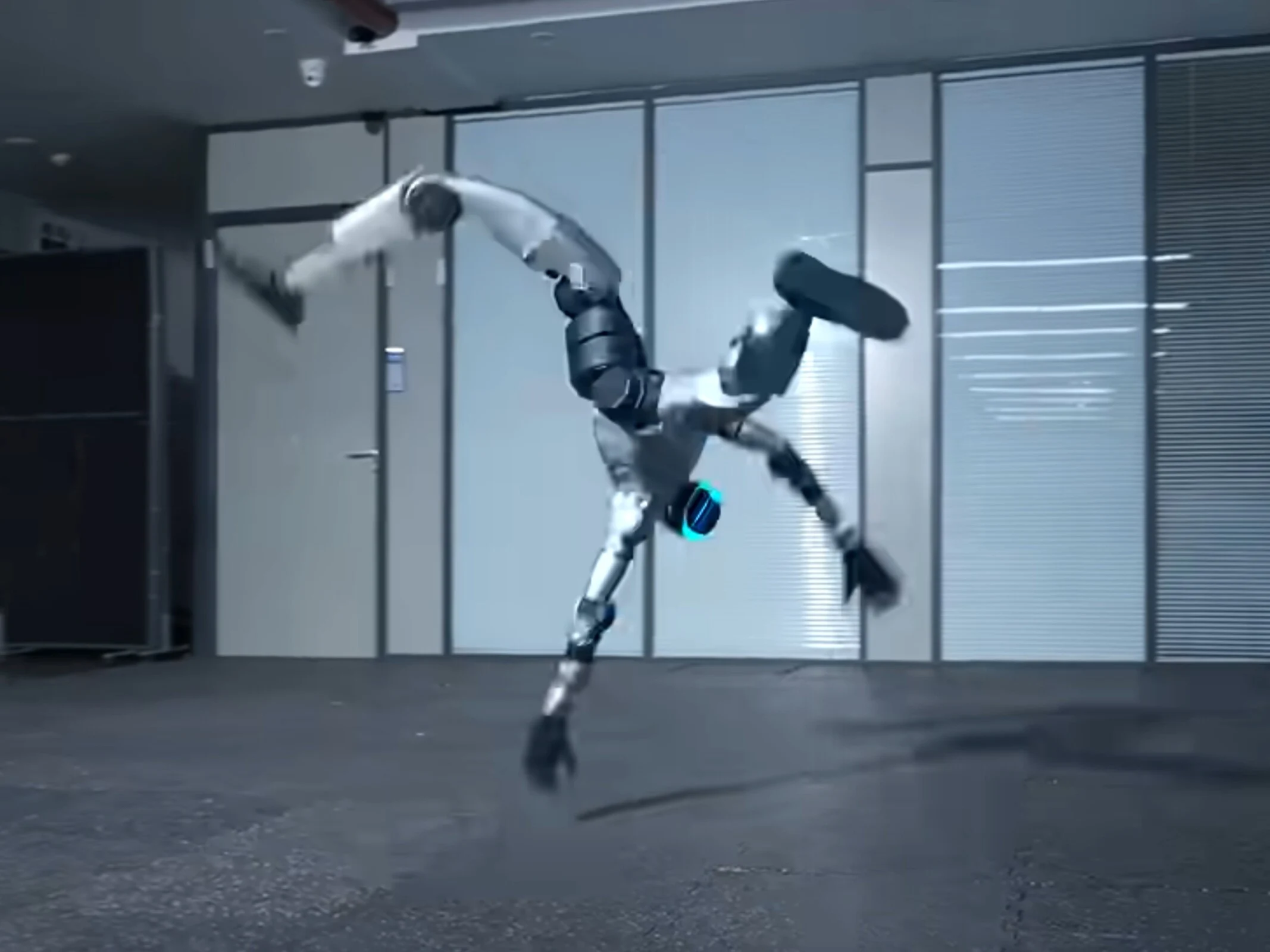
    2. The robot can now perform advanced maneuvers, including quick somersaults and precise spin kicks, demonstrating enhanced confidence and fluidity.
    3. Unitree achieved these advancements using real-time video footage and the open-source LAFAN1 dataset for motion capture data.
    4. The G1 features 31 degrees of freedom and a complete body sensor system that helps maintain balance, allowing for complex martial arts moves.
    5. Public reactions are mixed, with admiration for the technology and concerns about potential military applications and control issues.


    Back in the start of March 2025, we shared the remarkable kung fu skills of the Unitree G1. Recently, Unitree has taken things up a notch, revealing the newest version of its humanoid robot on YouTube, titled “Kungfu Kid V6.0.” The robot stands at 5 feet 5 inches (165 cm) tall and showcases a level of body control that is clearly better than what was shown before.

    Improved Motion and Skills

    When compared to the model presented in February 2025, the G1 now shows a much higher confidence, fluidity, and responsiveness in its movements. Whereas it previously could only do basic punches and spin kicks in March, it now performs more intricate movement patterns, incredibly quick somersaults, and much more precise spin kicks. In April 2025, the G1 even took part in a boxing match, and its physical control appears to have made significant advancements since that time.

    Rapid Advancements

    Unitree has clearly achieved impressive advancements with the G1 in a short period. The Chinese robotics firm stated that all video footage was captured in real-time without any added visual effects. The new motion models utilize the open-source dataset LAFAN1, which includes motion capture data of human actions. The G1 has 31 degrees of freedom (not counting the hands) and employs a complete body sensor system to help it keep its balance. Its high-performance actuators respond at a remarkable speed, allowing the robot to perform complicated martial arts moves with accuracy.

    Public Reaction

    In the comments section of the YouTube video and on Reddit, many viewers share their admiration. Yet, some express concerns about possible military uses or warn about the dangers of losing control over such technology. While the advancements are clear, many people are eager to see more practical, real-world applications. One humorous comment captured it well: “He’s passed his black belt exam – now all he needs is his vacuum cleaner license.”

    Source:
    Link


  • MIT Tech Enables Robots to See Through Walls Using Wi-Fi Signals

    MIT Tech Enables Robots to See Through Walls Using Wi-Fi Signals

    Key Takeaways

    1. MIT’s new imaging system, mmNorm, uses millimeter-wave signals to see through materials like cardboard and plastic, providing robots with ‘X-ray vision’.
    2. mmNorm represents a major advancement over traditional radar, allowing for detailed 3D reconstructions of hidden objects rather than just rough outlines.
    3. The system achieved 96% accuracy in reconstructing complex objects, significantly improving upon previous techniques.
    4. Potential applications include augmented reality for factory workers and improved airport security scanners for clearer imaging of concealed items.
    5. Ongoing research aims to enhance the system’s capabilities, particularly in seeing through metal and thick barriers.


    A new imaging system created at the Massachusetts Institute of Technology (MIT) might soon provide robots with a type of ‘X-ray vision’. This innovative technology, named mmNorm, uses millimeter-wave (mmWave) signals, which are similar to those found in Wi-Fi and 5G, to look through materials like cardboard, plastic, and even interior walls. It can accurately reconstruct the shapes of objects that are not visible.

    Advancements Beyond Traditional Radar

    This marks a significant advancement over conventional radar systems, which can identify where an object is but only gives rough outlines. The team at MIT made a breakthrough by examining how surfaces bounce back wireless signals, much like a mirror reflects light. By capturing these reflections from various angles, their system can deduce the shape and position of an object’s surface, piece by piece. It then assembles this data to create a detailed 3D representation.

    Excitement Over New Insights

    This project signifies a big change in how we view these signals and the 3D modeling process. “We’re thrilled to see how the knowledge we’ve gathered here can have a wide-ranging effect,” stated Laura Dodds, the lead author of the research paper.

    In experiments, mmNorm achieved a remarkable 96% accuracy in reconstructing a variety of complex objects, including silverware and power tools, greatly surpassing earlier techniques. This technology has the potential to change the field of robotics and automation by enabling machines to not only detect objects inside a container but also to determine what they are, their position, and if they are damaged, all without needing to open the box.

    Future Applications

    Other possible uses for this technology include providing factory workers with augmented reality glasses that can showcase the internal parts of machines or improving airport security scanners to deliver clearer images of hidden items. Although the system is unable to see through metal or very thick barriers at this time, researchers are actively working to enhance its functionality.

    Source:
    Link

  • Boston Dynamics Advances Atlas Robotics Development Progress

    Boston Dynamics Advances Atlas Robotics Development Progress

    Key Takeaways

    1. Boston Dynamics has introduced a new version of Atlas that does not use hydraulic power, addressing issues with leaks and maintenance costs from the previous model, Atlas HD.
    2. The new Atlas design allows for faster and more efficient movements, including 360-degree motion and the ability to walk backwards instead of turning around.
    3. Future applications for Atlas include roles in car manufacturing and other human workspaces, aiming to enhance productivity.
    4. Insights from practical uses of Atlas are helping to refine its functions as a working robot, similar to existing products like Spot and Stretch.
    5. Boston Dynamics is optimistic about integrating artificial intelligence to improve Atlas’ skill development in future applications.


    Almost one year since the introduction of the new Atlas, Boston Dynamics has shared a video showcasing significant advancements with the robot. In this latest update, the company elaborates on the capabilities of Atlas and discusses the benefits of shifting from the hydraulic-powered Atlas HD. Developers have described Atlas HD as “messy,” highlighting the high costs associated with the technology and its maintenance.

    New Features and Advantages

    The latest version of Atlas, which does not rely on hydraulics, has eliminated issues related to hydraulic fluid leaks that were common with Atlas HD. This new design allows the robot to operate more quickly and efficiently, thanks to its ability to perform numerous 360-degree movements without the limitations that come with human-like motion. For instance, instead of needing to turn around, the robot can simply walk backwards.

    Future Applications

    Boston Dynamics is committed to turning Atlas into a productive robot equipped with professional skills. In the future, Atlas is expected to assist in car manufacturing and will be implemented in workspaces that were originally meant for humans. It remains to be seen if Atlas will master the remarkable tasks that Atlas HD showcased over the years. Currently, there is a lack of a “fun video,” which has become a tradition for Boston Dynamics. Last year’s Halloween video featured Atlas sorting car parts for Hyundai, its owner.

    According to Boston Dynamics, insights from practical applications are aiding in refining Atlas’ function as a working robot. Products like Spot and Stretch are already available in the market. Additionally, the topic of artificial intelligence is addressed by Boston Dynamics, which expresses hope that AI will enhance Atlas’ skill development.

    Source:
    Link

  • NVIDIA CEO Jensen Huang Foresees Popular Adoption of Humanoid Robots

    NVIDIA CEO Jensen Huang Foresees Popular Adoption of Humanoid Robots

    In a recent conversation, NVIDIA CEO Jensen Huang discussed his forward-looking perspective on the future, foreseeing a scenario where humanoid robots will soon become ubiquitous across different sectors, bringing about a significant transformation.

    Vision for Mainstream Humanoid Robots

    Huang highlighted that the production costs associated with humanoid robots are poised to be remarkably affordable, comparable to the pricing brackets of budget-friendly automobiles. He suggested a price span of $10,000 to $20,000 for these robots, aiming to make them widely accessible to a diverse consumer base.

    Potential Impact on Industries

    Drawing an analogy to the automotive realm, Huang underscored the adaptability and versatility that robots could offer within specific human-created environments. These robots are envisioned to tackle hazardous, repetitive, or monotonous tasks, ultimately boosting efficiency and safety within workplaces.

    Supporting Huang's perspective, Tesla CEO Elon Musk also mentioned that the manufacturing outlay for the humanoid robot, Optimus, is merely half of what is needed for Tesla electric vehicles. Musk envisioned an initial pricing strategy for Optimus ranging from $25,000 to $30,000, with anticipated price reductions over time.

    Technological Advancements by NVIDIA

    In line with their futuristic outlook, NVIDIA introduced Project GR00T, a foundational model tailored for humanoid robots, and launched Jetson Thor, a robust computing system specially crafted for these robots. Leveraging NVIDIA's Thor system-on-a-chip (SoC), Jetson Thor offers cutting-edge performance, energy efficiency, and a compact form factor, propelling the evolution of humanoid robotics.

    Moreover, NVIDIA's collaborations with prominent humanoid robot firms like 1X Technologies, Agility Robotics, and Boston Dynamics signify a concerted endeavor to build comprehensive AI frameworks for robotics.

    Empowering Developers and Robotics Advancements

    NVIDIA's enhancements to the Isaac platform empower developers to design and deploy sophisticated robots across various settings. Tools such as Isaac Lab for reinforcement learning and OSMO for compute orchestration facilitate the rapid enhancement of robotic capabilities. Furthermore, offerings like Isaac Manipulator and Isaac Perceptor provide pre-trained models and advanced features for robotic arms and self-governing mobile robots.

    Huang's visionary outlook, combined with NVIDIA's technological progress, paints a picture of a future where humanoid robots seamlessly integrate into our daily routines, reshaping industries and augmenting human capabilities.

    (source: NVIDIA)