Tag: Qualcomm

  • Importance of the New Snapdragon X Chip for Windows Laptops

    Importance of the New Snapdragon X Chip for Windows Laptops

    Qualcomm is making significant strides in the Windows on ARM space with its Snapdragon X series chips. The company has previously introduced its high-end X Plus and X Elite system-on-chips (SoCs), but now they’ve rolled out a new option aimed at expanding access to Windows on ARM for more consumers.

    Fresh Innovations at CES 2025

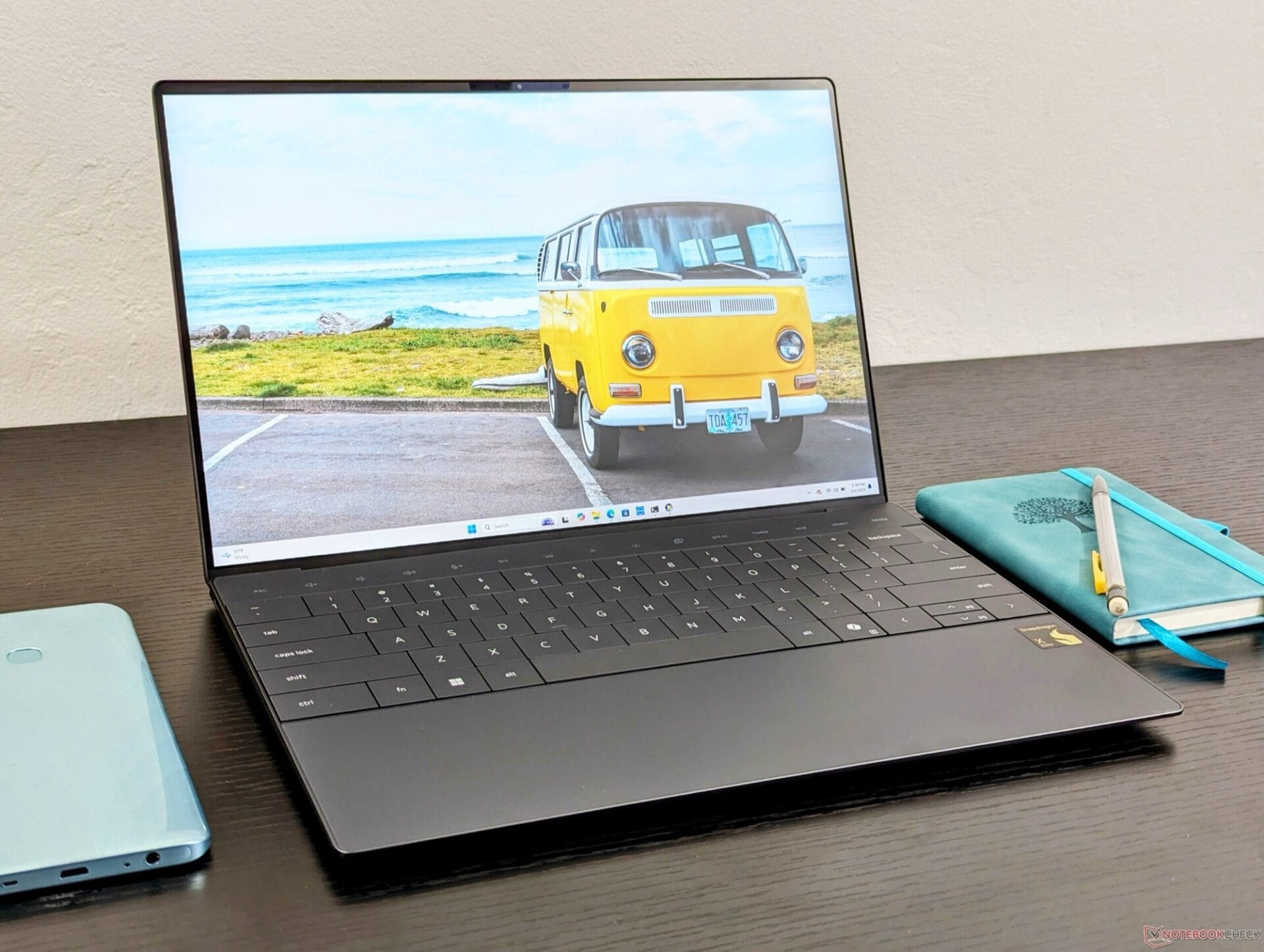
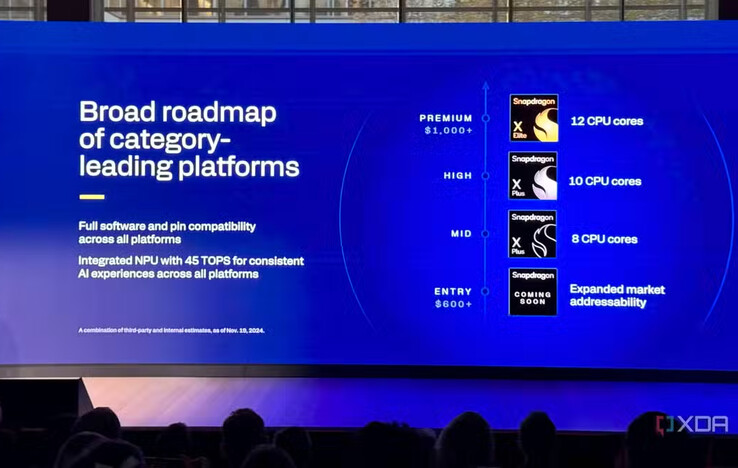
    At CES 2025, Qualcomm presented its latest ARM PC chip, simply called the Snapdragon X. This product is positioned as an economical choice, designed to run Windows laptops that are priced around $600. These laptops, featuring innovations like Copilot+PC, are set to compete with Intel and AMD in the budget-friendly laptop market.

    Why This Matters for Budget Laptops

    We believe this development is crucial for the budget Windows laptop sector. The Snapdragon X is categorized as the entry-level option in Qualcomm’s expanding lineup of processors for PCs. It joins the Snapdragon X Plus and Snapdragon X Elite, which are intended for more premium devices.

    In contrast to its more powerful counterparts, which can have up to 12 cores and clock speeds over 3GHz, the Snapdragon X has an eight-core structure, with a peak clock speed of 3GHz and 30MB of cache. Although these specifications may not rival the raw capabilities of its higher-tier siblings, they are well-suited for the needs of average users.

    Efficiency and Performance Highlights

    Manufactured using a 4-nanometer process, the Snapdragon X emphasizes Qualcomm’s commitment to efficiency. The company asserts that the Snapdragon X will surpass Intel’s Core 5 120U in terms of performance-per-watt and battery life. While this isn’t Qualcomm’s first attempt to highlight energy efficiency as a key selling point, they face the challenge of convincing consumers that Windows on ARM laptops have matured enough to serve as viable options against Intel or AMD devices.

    Moreover, the Snapdragon X is equipped with a Neural Processing Unit (NPU) that can achieve 45 TOPS (trillion operations per second).

  • CES 2025: Affordable Laptops Boosted by New Snapdragon X CPUs

    CES 2025: Affordable Laptops Boosted by New Snapdragon X CPUs

    We have recently expressed our disappointment over the decline of affordable laptop options equipped with modern CPU technology. It appears that Intel and AMD are focusing on marketing their older processors in budget devices while directing their attention towards pricier new models like Intel’s Lunar Lake and AMD’s Strix Point. As a result, purchasing an inexpensive laptop often means settling for outdated and less efficient tech.

    A New Direction from Qualcomm

    Qualcomm appears to have a different perspective on the matter. Last year, the leader in smartphone CPU technology launched the Qualcomm Snapdragon X Elite aimed at high-end laptops, followed by the Snapdragon X Plus for mid-tier devices. Now, a fresh CPU line simply known as “Snapdragon X” is on the horizon, designed specifically for budget laptops to help lower the price of ARM-based Windows machines. The goal is to create PCs that retail for under $600.

    High Performance Within Reach

    Even with the focus on budget pricing, users won’t have to sacrifice much with the Snapdragon X series CPU. This new chip uses the same Oryon CPU cores found in its more expensive counterparts. The core count remains the same, as the Snapdragon X boasts eight CPU cores, mirroring the Snapdragon X Plus. The main distinction lies in the clock frequency, with the Snapdragon X maxing out at 3.0 GHz. In contrast, the Snapdragon X Plus chips can achieve clock speeds between 3.2 and 3.4 GHz, while the X Elite can hit between 3.4 and 3.8 GHz on all cores.

    AI Performance Not Overlooked

    In addition, the Snapdragon X series keeps AI capabilities strong, offering up to 45 TOPS of NPU performance. Qualcomm highlights that CPUs from AMD and Intel in this price category usually lack an NPU altogether.

    The Qualcomm Snapdragon X series CPU is set to debut in the first PCs starting January 2025. If the Snapdragon X can provide similar levels of performance and efficiency as its higher-end Snapdragon counterparts, it could be a significant relief for a market segment that is truly in need of better processors.


    Image 1
    Image 1
  • Snapdragon 8 Elite 2 Launching October 2025 with Major Upgrades

    Snapdragon 8 Elite 2 Launching October 2025 with Major Upgrades

    Qualcomm is currently working on its new chipset, the Snapdragon 8 Elite 2, which will follow the Snapdragon 8 Elite. Recent information shared by Digital Chat Station sheds light on when we might expect its release and the manufacturing process behind it.

    Upcoming Release Timeline

    The Snapdragon 8 Elite 2 is anticipated to hit the market in early October 2025, which is earlier than Qualcomm’s usual schedule. This shift aims to allow smartphone makers ample time to incorporate the new chipset into their high-end devices just in time for the holiday shopping period.

    Advanced Manufacturing Process

    This new chipset is likely to utilize TSMC’s N3P technology, a cutting-edge 3nm production method. Such advancements are expected to enhance both performance and energy efficiency, rivaling Apple’s A19 chips that are also thought to be manufactured using this process.

    Performance Enhancements

    According to the leak, there will be significant upgrades to the GPU in the Snapdragon 8 Elite 2, in addition to a possible 20% boost in CPU performance. These enhancements should provide a substantial performance increase, building on the gains seen with the current Snapdragon 8 Elite.

    Nonetheless, the introduction of the Snapdragon 8 Elite 2 might encounter challenges, as it’s believed to be even pricier than its already costly predecessor. Qualcomm is reportedly making efforts to optimize its manufacturing and supply chain to offer a more competitive price for the new chipset.

    OnePlus Launch Plans

    In other updates, OnePlus has announced that it will unveil the OnePlus 13 and 13R smartphones globally on January 7, 2024. The OnePlus 13R will feature the Snapdragon 8 Gen 3 processor along with a 6,000mAh battery, while the flagship OnePlus 13 will come equipped with the Snapdragon 8 Elite chip, also backed by a 6,000mAh battery.

    Source: Link


    Image 1
  • Qualcomm Prevails in Arm Chip Licensing Legal Dispute

    Qualcomm Prevails in Arm Chip Licensing Legal Dispute

    Qualcomm has won an important court case against Arm Holdings, a British chip design company. The focus of the lawsuit was whether Qualcomm violated a licensing deal after purchasing the startup Nuvia in 2021. It was claimed that Nuvia’s chip designs were derived from Arm’s technology, and Arm contended that Qualcomm should pay a higher royalty after the acquisition.

    Jury Decision Favoring Qualcomm

    The jury ultimately decided in favor of Qualcomm on the key issue, determining that the company’s main processor chips were properly licensed under its agreement with Arm. This is a big win for Qualcomm, allowing it to keep selling its chips, including those that use Nuvia’s technology.

    Ongoing Uncertainties

    However, the decision wasn’t completely straightforward. The jury did not reach a unanimous conclusion on whether Nuvia violated its licensing terms with Arm prior to being acquired by Qualcomm. This leaves some unanswered questions about the case, and it’s possible that this part might be retried later on.

    Judge Maryellen Noreika, who oversaw the trial, suggested both sides attempt to mediate their disagreement to prevent another trial. “I don’t believe either party had a definitive win or would have had a clear win if this case is heard again,” Noreika commented.

    Stock Market Reactions

    Even with the mixed ruling, the result provides some relief for Qualcomm. The company’s stock went up by 1.8% in after-hours trading after the announcement. Conversely, Arm experienced a drop in its shares by 1.8% in extended trading.

    The legal conflict between Qualcomm and Arm has drawn significant attention from the tech sector, as it affects the wider chip market. Arm licenses its chip designs to many firms, including competitors of Qualcomm. The verdict from this case could influence future licensing agreements between Arm and its partners.

    Source: Link

  • Xiaomi’s New Smartphones to Feature In-House Chipset vs MediaTek, Qualcomm

    Xiaomi’s New Smartphones to Feature In-House Chipset vs MediaTek, Qualcomm

    Xiaomi has attempted to create its own mobile device processors to compete with rivals like Huawei and Apple in the past, but these efforts have not been very successful. A notable attempt was the Mi 5c, which used the Surge S1 processor; unfortunately, it didn’t perform well and was also not widely available compared to devices that used Qualcomm processors.

    Continued Development of Sub-Processors

    The company has kept making its own sub-processors for specific tasks, like power management and imaging. However, it has not gone as far as to produce full processors to rival Qualcomm’s Snapdragon or MediaTek’s Dimensity series. This indicates a cautious approach to entering the highly competitive processor market.

    Upcoming Processor Launch

    According to a recent report from Bloomberg, the long-awaited successor to the S1 is set to be unveiled in 2025. There’s no clear sign yet if it will be able to compete with the latest A18 Pro when its first smartphone launches. The goal seems to be to challenge the strong hold that MediaTek and Qualcomm have in the Chinese market.

    Furthermore, Xiaomi may have additional motivations to create its own chips. As the company has ventured into electric vehicles, it will likely need a variety of chips for its SU7-series successors, which will create a growing demand for silicon.

    Source: Link

  • Qualcomm Snapdragon X Elite Market Share Below 0.8%

    Qualcomm Snapdragon X Elite Market Share Below 0.8%

    Qualcomm had big ideas for the Snapdragon X Elite, with plans for it to capture 40 to 60% of the PC market by 2027. However, they recently changed their goals and are now aiming for a market share of 30 to 50% by 2029. What’s even more surprising is that this new target is focused solely on AI notebooks that aren’t based on x86 architecture; it seems Qualcomm has decided to exclude Intel and AMD from its notebook market calculations entirely.

    Market Analysis of Snapdragon X Laptops

    An analysis from Canalys helps to explain why Qualcomm’s goals have been significantly reduced. In the third quarter of 2024, which marked the first full quarter of Snapdragon X laptops being available, only 720,000 of these Qualcomm-powered devices were shipped. This results in a market share of less than 0.8%, meaning that only one in every 125 laptops sold was equipped with a Snapdragon X chip. Microsoft stands out as the top manufacturer of Snapdragon laptops, which is not surprising, as they exclusively provide products like the new Surface Pro featuring Snapdragon X chips.

    Other Manufacturers in the Field

    The rest of the market is filled with Dell, HP, Lenovo, Acer, and Asus. According to reports, a total of 13.3 million notebooks with AI accelerators were shipped in the third quarter, accounting for a 20% market share. However, the majority of these notebooks are powered by AMD’s Ryzen AI 300 and Intel’s Lunar Lake chips, leaving Qualcomm on the sidelines. Canalys also mentions that notebook makers aren’t too sure that Microsoft’s Copilot+ features will encourage buyers, as about two-thirds of retailers believe that less than 10% of computers sold next year will support Copilot+.

    Source: Link,Link


  • Qualcomm Unveils Next-Gen Snapdragon X Series Chipsets

    Qualcomm Unveils Next-Gen Snapdragon X Series Chipsets

    Qualcomm has launched a large number of Snapdragon X chipsets this year, and they have also rolled out the architecturally similar Snapdragon 8 Elite. Currently, Qualcomm provides the following chipsets to Windows OEMs:

    Interestingly, there might be even more SKUs on the way. While the company hasn’t made any public announcements yet, they hinted at this during Qualcomm Investor Day, where XDA Developers were present.

    New Chip Details

    Sadly, Qualcomm didn’t share much information during the event aside from the fact that these upcoming chips will have the same 45 TOPS NPU as the Snapdragon X Plus and Snapdragon X Elite variants. From what XDA Developers discovered, it seems there is a new, more entry-level chipset intended to be positioned beneath the Snapdragon X Plus 8-core. It’s probably going to be named Snapdragon X.

    Speculation on Future Chipsets

    Recent rumors suggest that Qualcomm is working on at least three ‘Snapdragon X’ chipsets. There’s particular evidence pointing towards the existence of the X1P-24-100, X1P-39-100, and X1P-40-100. However, it’s uncertain whether all these SKUs will actually hit the market. Additionally, there have been no updates on the rumored X1P-56-100 and X1P-62-100 so far. Regardless, these new Snapdragon X chipsets are expected to power laptops priced under $600, which would be a significant drop from the least expensive Surface Pro 11, currently priced at $800 on Amazon.

    Source: Link,Link,Link,Link,


    Image 1
  • Snapdragon 8 Elite 2 vs Dimensity 9500: 25% Performance Boost

    Snapdragon 8 Elite 2 vs Dimensity 9500: 25% Performance Boost

    The dust hasn’t even settled on Qualcomm’s latest flagship chip, the Snapdragon 8 Elite, and already there are rumors about its successor. The Snapdragon 8 Elite provides a significant performance boost compared to its predecessor, largely due to the transition to Oryon cores. Recently, a leak has emerged suggesting that Qualcomm might be looking to raise the bar even further with the Snapdragon 8 Elite 2.

    Performance Expectations

    As per leaker Jukanlosreve, who references sources from Korea, both the Snapdragon 8 Elite 2 and MediaTek’s forthcoming Dimensity 9500 could achieve single-core scores nearing 4,000 on Geekbench 6. To put things in perspective, the current Snapdragon 8 Elite scores around 3,200 on the same benchmark. If this leak is accurate, the Snapdragon 8 Elite 2 could see a performance improvement of 25%—a notable upgrade, especially considering the already exceptional performance of the 8 Elite.

    Thermal Management Challenges

    Yet, Qualcomm has a track record of balancing high performance with thermal management, and the 8 Elite is no different. While it excels in speed, it also tends to generate more heat than earlier models due to its clock speed of 4.32 GHz. Thus, an important question for the 8 Elite 2 is how Qualcomm plans to handle these expected performance increases while keeping temperatures in check.

    Manufacturing Insights

    Previous rumors indicated that the Snapdragon 8 Elite 2 might be produced by both TSMC and Samsung. However, another leak from Jukanlosreve asserts that TSMC will take on the role of the exclusive manufacturer for Qualcomm’s upcoming flagship SoC. The N3P process from TSMC is rumored to deliver enhanced performance and improved power efficiency compared to the N3 node utilized in the 8 Elite. Whether these enhancements will address the thermal challenges that typically come with a performance boost remains to be seen.

    It’s still quite early, and these are merely rumors for now. Given that the current generation is still recent in the market, it will likely be a while before we see more definitive information. We will keep you posted as new updates come to light.

  • Snapdragon 8 Elite 2 Leak: 20% CPU Boost for Galaxy S26 Chipset

    Snapdragon 8 Elite 2 Leak: 20% CPU Boost for Galaxy S26 Chipset

    The Snapdragon 8 Elite appears to be a fantastic improvement over the previous Snapdragon 8 Gen 3, with Qualcomm shifting from standard ARM cores to Oryon, leading to a 30% boost in CPU performance. Although it’s still early in the game, a recent leak has given us a glimpse of what the upcoming Snapdragon 8 Elite 2 might bring.

    Performance Expectations

    According to leaker Jukanlosreve, along with information from Korean sources, both the Snapdragon 8 Elite 2 and MediaTek’s Dimensity 9400 are projected to achieve single-core scores around 4000 on Geekbench 6. For context, the Snapdragon 8 Elite usually scores near 3200 on this benchmark, suggesting a possible 25% performance increase for its next iteration.

    Thermal Management Concerns

    It remains uncertain how Qualcomm will maintain acceptable temperatures while enhancing performance. Despite the Snapdragon 8 Elite’s impressive peak capabilities, it has not been highly regarded for its thermal management, as the chipset operates at higher temperatures than its predecessor due to a significant 4.32 GHz clock speed.

    Manufacturing Insights

    Interestingly, the leak indicates that the Snapdragon 8 Elite 2 will not be produced solely by TSMC. Qualcomm plans to collaborate with both TSMC and Samsung, with the chip being manufactured on the SF2 and N3P nodes. However, it’s wise to approach this information with some skepticism.

  • Realme Confirms Last-Minute Name Change to Snapdragon 8 Elite

    Realme Confirms Last-Minute Name Change to Snapdragon 8 Elite

    Realme is now distributing review units for its inaugural Snapdragon 8 Elite flagship device, the Realme GT 7 Pro. This latest System on Chip (SoC) is Qualcomm’s first high-end mobile product featuring its proprietary Oryon cores, though its current title came as a surprise to many.

    Surprise Name Change

    After the Snapdragon 8 Gen 3 from last year, this new 3 nm flagship SoC was initially expected to be called the Snapdragon 8 Gen 4. Realme also anticipated this naming convention, and the review unit of the GT 7 Pro that Android Authority obtained does not feature "Snapdragon 8 Elite" on the packaging at all.

    Android Authority reached out for clarification, and a representative from Realme explained that Qualcomm failed to inform them about the name change ahead of designing the GT 7 Pro’s packaging. The representative mentioned that they only received confirmation about the Snapdragon 8 Elite name a few days prior to the Snapdragon Summit. Interestingly, a well-known Weibo tipster, Digital Chat Station, had hinted at the name change in early October. However, it seems Qualcomm might not have been entirely certain about the new name until it was nearly time for the launch event.

    Timing Issues

    Due to the last-minute update regarding the name change, Realme was unable to reprint the boxes meant for reviewers before the official unveiling. Nevertheless, a company representative assured that the reference to Snapdragon 8 Gen 4 was taken out of the retail boxes that were mass-produced.

    It’s important to note that not every smartphone manufacturer may have faced the same issues with this sudden name alteration, as Realme possibly prepared its review unit packaging earlier than others. The company also indicated that the GT 7 Pro will be the first Snapdragon 8 Elite flagship phone available broadly, with plans for a release in India and Europe shortly after its launch in China.


    Image 1