Tag: Overclocking

  • Scalpers Sell MSI RTX 5090 Lightning Z GPU for Over $10,000

    Scalpers Sell MSI RTX 5090 Lightning Z GPU for Over $10,000

    Key Takeaways

    1. Scalpers are taking advantage of high demand and low supply for GPUs, making it hard for gamers and enthusiasts to buy them at retail prices.
    2. The MSI RTX 5090 Lightning Z is a high-performance GPU priced at $5,090, but it has been listed on eBay for as much as $14,900.
    3. Despite the high prices, other listings for the RTX 5090 Lightning Z range from $6,800 to $8,000, highlighting the variability in the market.
    4. The GPU has significant overclocking potential, with a modified BIOS allowing it to draw up to 2,500 watts, although this can lead to risks like damaging the card.
    5. For those seeking more affordable options, the RTX 5070 Windforce from Gigabyte is available for $629, providing a reasonable alternative to the extremely priced RTX 5090 Lightning Z.


    Scalpers have become a common sight at GPU launches throughout the 2020s. With poor supply and high demand for AI, exclusive high-value products often fall prey to price gouging. This situation frequently keeps these sought-after items out of the hands of genuine enthusiasts and gamers.

    MSI RTX 5090 Lightning Z: A Record-Breaking GPU

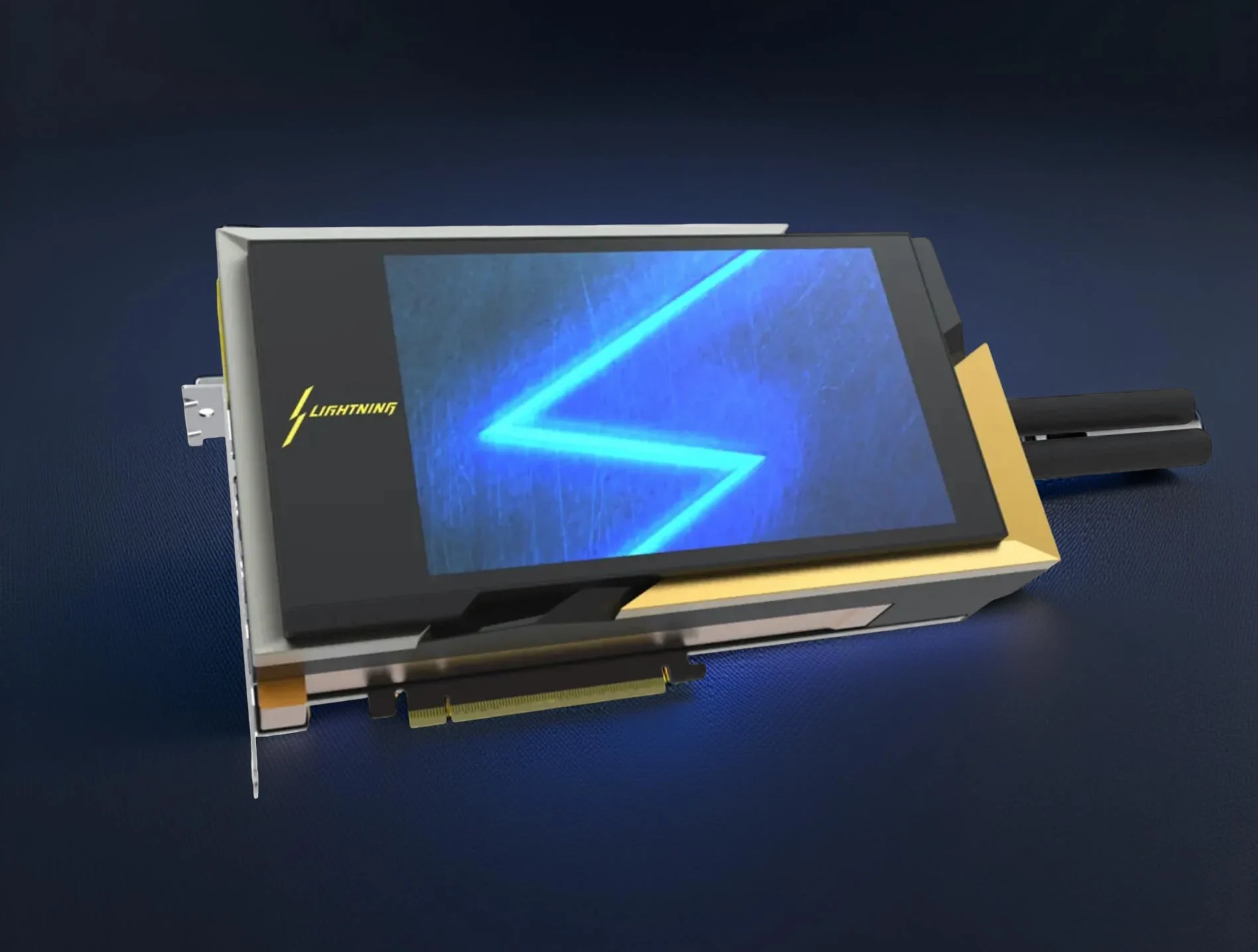
    The MSI RTX 5090 Lightning Z stands out as a truly impressive liquid-cooled GPU, having already shattered numerous world records. One of these records, however, ended tragically, resulting in the GPU being destroyed. With a price tag of $5,090, this massive GPU delivers about 10% more performance than the already powerful Nvidia GeForce RTX 5090.

    Listings and Prices

    Right now on eBay, there are several listings for the RTX 5090 Lightning Z at outrageous prices. The most absurd one we’ve seen is by e_spot61, who is asking for a staggering $14,900 for a GPU that retails for $5,090. At least the seller has a perfect 100% positive feedback rating.

    Interestingly, there are other RTX 5090 Lightning Zs available for much lower prices, ranging from $6,800 to $8,000. It’s puzzling why someone would pay double for the same card, but there are still several listings above $10,000 that remain active.

    Overclocking Potential

    Given the card’s attractiveness to overclockers, many enthusiasts might be willing to pay these high premiums. The GPU features a modified BIOS that enables it to draw up to a staggering 2,500 watts, creating significant overclocking potential—provided there’s sufficient cooling, of course.

    As previously noted, one overclocker managed to break a Geekbench 5 record using this BIOS setting but unfortunately ended up destroying the GPU in the process.

    For most people, it would probably be wise to consider something like the RTX 5070 Windforce from Gigabyte, which is available for $629 on Amazon. Ironically, the Lightning Z makes the already outrageous GPU prices seem somewhat reasonable.
     

  • Boost Raspberry Pi Performance: Top Overclocking Tips

    Boost Raspberry Pi Performance: Top Overclocking Tips

    Key Takeaways

    1. The RP2350 is an upgraded version of the RP2040 but is slower than modern AMD or Intel processors and not designed for desktop use or gaming.
    2. The RP2350 has overclocking capabilities, with an official clock speed of 150MHz that can exceed 500MHz without extra cooling.
    3. With additional cooling and increased voltage, the RP2350 can reach speeds beyond 600MHz.
    4. Extreme overclocking to over 800MHz is possible with a voltage of 3.05 V, achieving more than 5 times the base speed.
    5. Operating the RP2350 at high speeds for long periods may lead to increased wear and a shorter lifespan if proper cooling is not maintained.


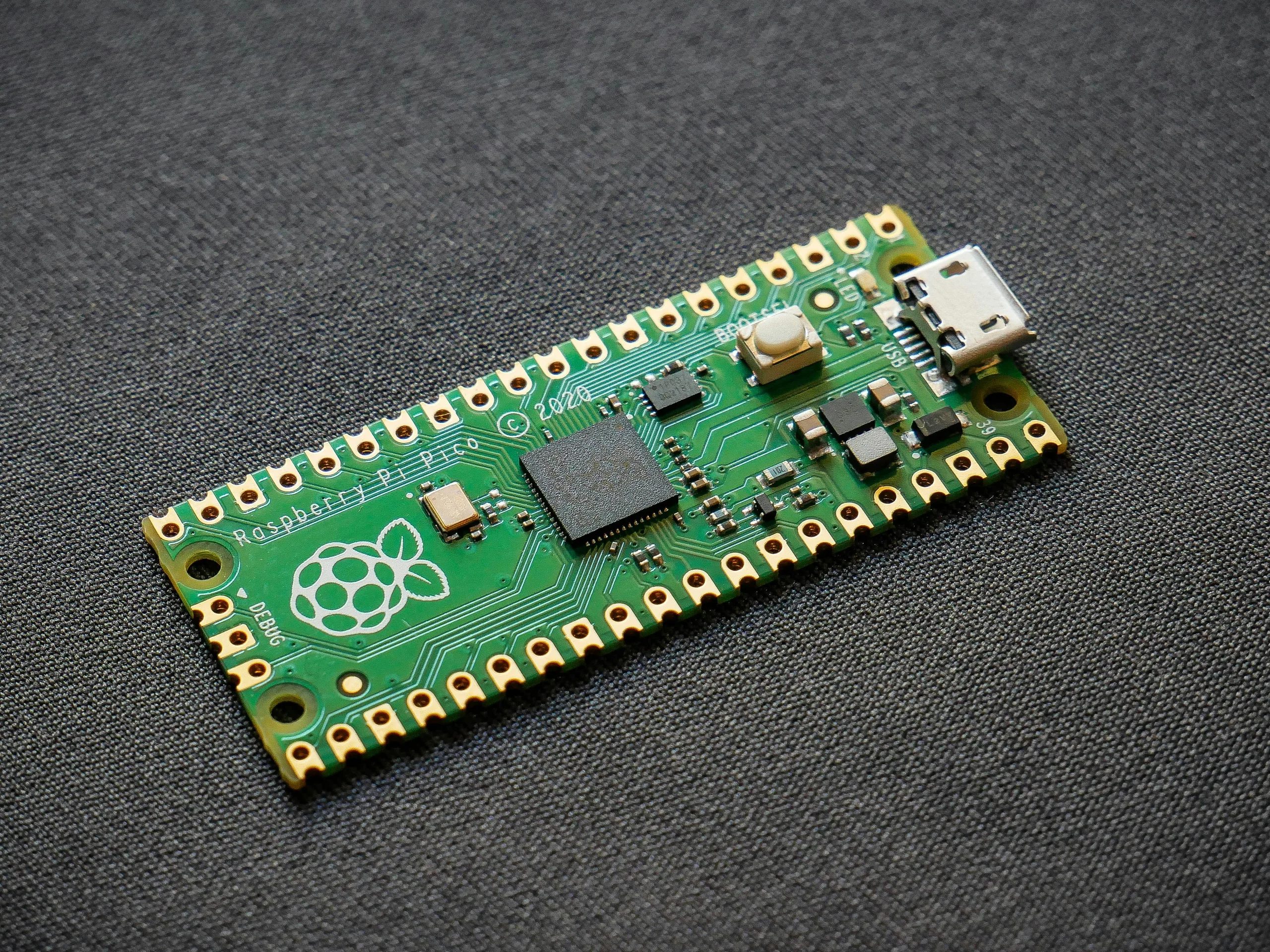
    The Raspberry Pi Foundation has a range of single-board computers and microcontrollers. The RP2350 is an upgraded version of the RP2040, but its computing power should be viewed in perspective. When compared to modern processors from AMD or Intel, this chipset is quite slow. It’s not built to handle full desktop operating systems, gaming, or even provide video output in most instances. Its primary purpose is to manage external sensors and actuators.

    Overclocking Capabilities

    Interestingly, Liliputing has reported that the RP2350 can be overclocked significantly, something that seems almost unthinkable for desktop CPUs. The official clock speed sits at 150MHz, but it seems to be capable of exceeding 500MHz without needing any extra cooling. If additional cooling is applied and the voltage is raised to 1.9 V, the Raspberry Pi chip can even reach speeds beyond 600MHz.

    Extreme Overclocking Potential

    Raising the voltage of the RP2350 that powers the Raspberry Pi Pico 2 to 3.05 V can allow clock speeds to go past 800MHz, achieving an overclock of over 5 times. However, it’s debatable whether running the processor at such high speeds for long periods is wise. Increased wear and a shorter lifespan would be expected, especially at higher temperatures, if the cooling system isn’t improved.

    Source:
    Link


  • MSI RTX 5090 Lightning Z Cracks Under 2,500W BIOS Test

    MSI RTX 5090 Lightning Z Cracks Under 2,500W BIOS Test

    Key Takeaways

    1. The MSI GeForce RTX 5090 Lightning Z is priced at $5,090, targeting serious collectors and extreme overclockers rather than average gamers.
    2. Early involvement in development allowed YouTuber Alva Jonathan to test the card with custom cooling and later liquid nitrogen for extreme performance.
    3. The card achieved impressive benchmarks, scoring 43,112 points in 3DMark Port Royal, but faced thermal issues that led to a GPU core crack during testing.
    4. Liquid nitrogen cooling presented challenges, with stable temperatures being crucial; exceeding safe limits caused system crashes.
    5. Despite achieving a world record in Geekbench 5, one GPU failed due to thermal shock, resulting in a significant financial loss, but Jonathan plans to continue testing with additional samples.


    MSI’s GeForce RTX 5090 Lightning Z is not made for the average gamer. Priced at a whopping $5,090, this graphics card is designed for either serious collectors or, more realistically, extreme overclockers aiming for benchmark highs. In the hands of YouTuber Alva Jonathan, it performed as expected until an aggressive BIOS, combined with sudden thermal issues, caused a crack in the GPU core, leading to the demise of one sample during testing.

    Early Involvement in Development

    Jonathan was involved with the RTX 5090 Lightning Z from the beginning. MSI Taiwan reached out to him in August 2025 to assist with the card’s creation, initially sending him two early PCB samples without coolers, later followed by three retail versions. For the first tests, he created a custom cooling solution before switching to liquid nitrogen (LN2) as the testing progressed.

    Unique Features and Initial Testing

    This graphics card is distinct from regular RTX 5090 models, both in terms of cost and design. It is clearly built for high-level overclocking. Some of its key specifications include:

    Jonathan started with what might be seen as a modest overclock for such powerful hardware: 3.25 GHz at 1.05V. Even at this point, the card was consuming over 700W.

    With a power limit of 800W in 3DMark Port Royal, the Lightning Z scored 43,112 points. For comparison, MSI’s RTX 5090 Suprim Liquid had previously reached the 40,000–41,000 range, while a standard RTX 5090 usually scores around 36,000–37,000 points. During this run, the GPU peaked at 772W, with power evenly shared across both 16-pin connectors.

    Transition to Liquid Nitrogen Cooling

    To push performance even further, Jonathan collaborated with ARX (arxidmedia) and moved to LN2 cooling. Even with liquid nitrogen, maintaining a stable temperature for the GPU was a challenge. The heatsink in contact with the core was at -40°C, but the GPU itself warmed up, reaching as high as 9°C under load. At 1.12V and 3.42 GHz, power usage soared past 1,000W.

    When using LN2, the safe operating temperature range appeared to be quite limited — around 0°C to 15°C. In one instance, temperatures hit 21°C, leading to an immediate system crash.

    Benchmark Success and Record-Breaking Performance

    Some benchmarks were easier to manage. In GPUPI, Jonathan briefly achieved 3.6 GHz at nearly 0°C. Ultimately, the team settled on 3.5 GHz as a stable operating frequency and set a new HWBot world record for GPU compute performance in Geekbench 5, achieving a score of 683,433, which still stands today.

    The critical moment occurred when they switched to the 2,500W XOC BIOS. Previously, they were using an older version thought to apply excessive voltage too quickly.

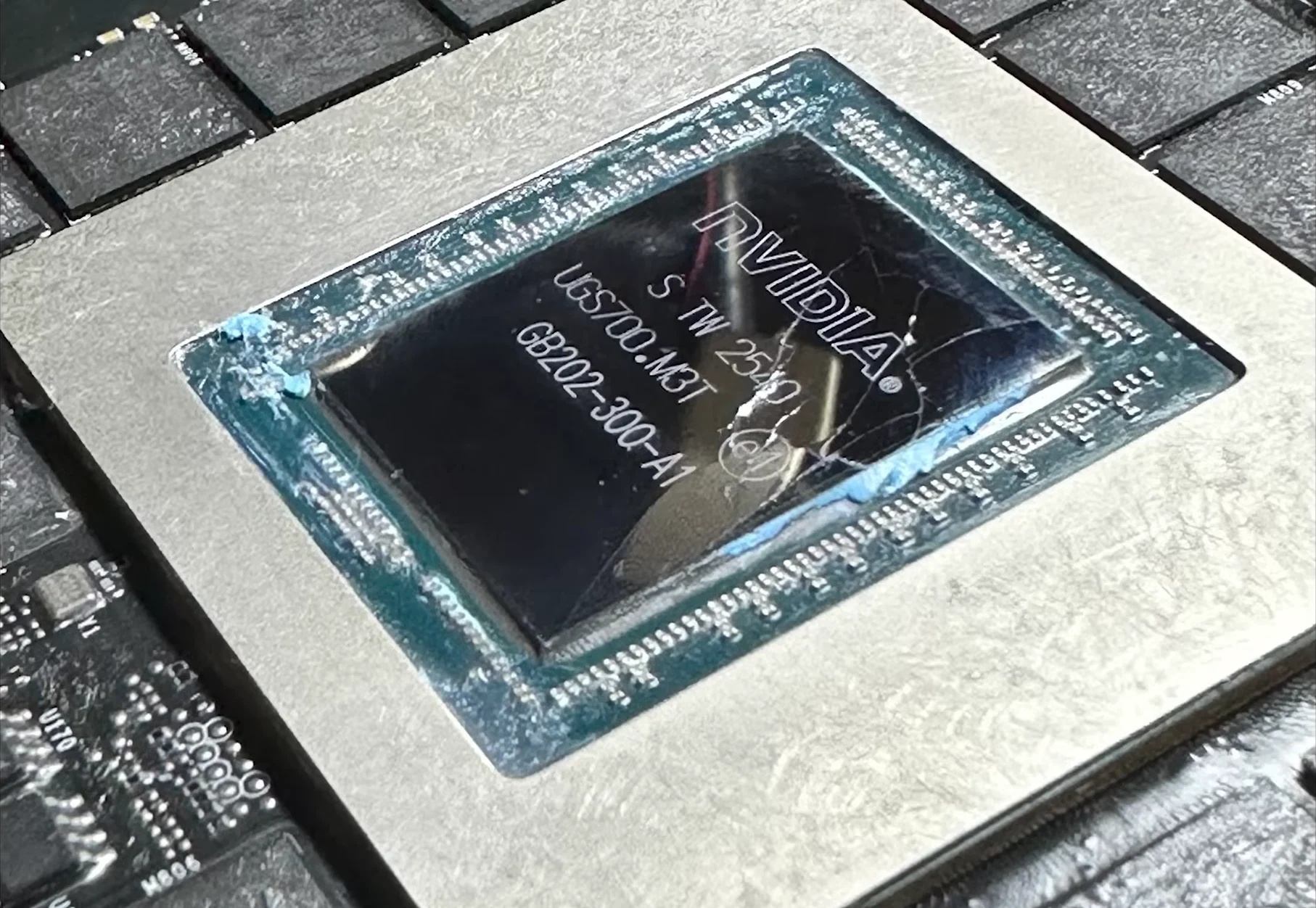
    At just 1.2V — which is manageable under LN2 but risky in ambient temperatures around 25°C — one GPU experienced catastrophic failure. The core visibly cracked, likely due to thermal shock, as one section of the die remained very cold while another heated up, creating an imbalance that the silicon couldn’t tolerate.

    Financial Impact and Future Plans

    In an instant, around $5,000 was lost. The other components on the board are still intact, so there is a possibility that the card could be revived with a replacement core.

    Although Jonathan achieved the Geekbench 5 world record, he was unable to meet other goals, including breaking the 3DMark Solar Bay Extreme record. He still possesses four additional samples for ongoing testing and intends to enhance the cooler mounting. He also hinted at the possibility of reverting to a more stable retail BIOS for future attempts.

  • MSI GeForce RTX 5090 Lightning Z: Powerful 2.5 kW Gaming GPU

    MSI GeForce RTX 5090 Lightning Z: Powerful 2.5 kW Gaming GPU

    Key Takeaways

    1. MSI is reviving the Lightning Z brand with the GeForce RTX 5090 Lightning Z GPU, producing only 1,300 units.
    2. The GPU features a built-in AIO cooling system with a 300 mm radiator and an 8-inch customizable display.
    3. It requires two 12v 2×6 connectors and has a power consumption limit of up to 1,600 watts.
    4. A BIOS option allows a power limit of 2,500 watts for maximum overclocking, with potential overclocking reaching 3.74 GHz using liquid nitrogen.
    5. The MSI GeForce RTX 5090 Lightning Z is set to launch next month.


    Around seven years have gone by, and MSI has decided it’s time to resurrect the Lightning Z brand. The GeForce RTX 5090 Lightning Z gaming GPU is nothing short of extraordinary and is sure to carry a price that matches its wild specs, especially since MSI intends to produce only 1,300 pieces.

    Impressive Features

    This colossal GPU comes equipped with a built-in AIO cooling system, which includes a 300 mm radiator and a striking 8-inch display on top. Users can personalize this display to show anything they want. As expected, the card uses two of the notorious 12v 2×6 connectors, allowing for power consumption of up to 1,600 watts. There have been significant power connector issues with the standard 600-watt RTX 5090 (Aorus Master ICE currently priced at $3,949 on Amazon), which may raise some concerns about the reliability of the Lightning Z.

    Overclocking Potential

    To add to its impressive capabilities, the MSI GeForce RTX 5090 Lightning Z will offer a BIOS option that allows for an outrageous 2,500 W power limit, enabling maximum overclocking. It’s no surprise that overclockers are already pushing this card to a staggering 3.74 GHz, with some help from liquid nitrogen, of course. Here are some more details and specs regarding the MSI RTX 5090 Lightning Z:

    The MSI GeForce RTX 5090 Lightning Z is set to launch next month, and as previously stated, only 1,300 units will be produced.

    Source:
    Link


  • Xiaomi May Allow Smartphone SoC Overclocking with Android 16

    Xiaomi May Allow Smartphone SoC Overclocking with Android 16

    Key Takeaways

    1. Xiaomi may introduce overclocking features for CPUs and GPUs in Android 16.
    2. Users can adjust parameters like voltage and frequency, but there’s a maximum limit for safety.
    3. A “Chip performance dashboard” will likely facilitate access to these features without needing a rooted phone.
    4. Users can optimize performance or underclock for better battery life, but caution is advised for inexperienced users.
    5. These features may debut with Xiaomi’s in-house SoC, potentially limiting Qualcomm’s influence on user modifications.


    While PCs and laptops allows users some flexibility in adjusting their hardware, doing the same on smartphones is much more complex. Xiaomi might change this with Android 16, if the latest information from Kacper Skrzypek is included in the final version.

    Potential Overclocking Features

    Xiaomi could allow users to overclock their CPU and GPU. It appears that some adjustable parameters may include voltage and frequency. However, you can’t just crank it up as much as you want because there’s a limit to how high you can go. After setting the parameters, the device will restart to check if it can actually handle the new settings.

    If it can’t, the settings will go back to the original defaults. These options are likely to be located in a new “Chip performance dashboard.” Until now, accessing these features generally needed a rooted phone, so it would be great if that requirement is removed.

    Fine-Tuning Performance

    This should ideally allow tech enthusiasts to optimize their smartphones even more and gain better performance when required. On the flip side, underclocking the SoC for enhanced battery life will also be available. But if you’re not experienced with over/underclocking, it’s wise to leave these settings alone.

    There’s a strong possibility that this feature could launch with Xiaomi’s long-anticipated in-house SoC, as Qualcomm may not be thrilled about users tinkering with clocks and possibly damaging their phones in the process.

  • AMD RX 9070 XT Leak Reveals Strong Overclocking with 25W TGP Boost

    AMD RX 9070 XT Leak Reveals Strong Overclocking with 25W TGP Boost

    Key Takeaways

    1. The AMD Radeon RX 9070 XT GPU is set to launch soon, with a maximum boost clock of 2,970 MHz.
    2. It has been successfully overclocked to 3,244 MHz, increasing its clock speed by 274 MHz and TGP by 25 W.
    3. Initial stability tests show the overclock was maintained for at least 10 seconds without crashing.
    4. The GPU’s temperature remained at a reasonable 50 °C during tests, suggesting potential for further performance improvements.
    5. The fastest overclocked AMD Radeon RX 7900 XT reached 3,230 MHz, indicating it has better overclocking capabilities than the RX 9070 XT in early tests.


    The AMD Radeon RX 9070 XT GPU is expected to be released later this month, and initial information suggests that the GPU core will reach a maximum boost clock of 2,970 MHz. Up until now, there hasn’t been much clarity regarding the overclocking capabilities of these new GPUs.

    Overclocking Success

    In an X post by well-known hardware leaker Thomasz Gawroński, it was revealed that an AMD Radeon RX 9070 XT was successfully overclocked from its standard boost clock of 2,970 MHz to an impressive 3,244 MHz, achieving a peak TGP of 329 W. This represents a notable increase of 274 MHz in clock speed and an additional 25 W in TGP compared to the stock configuration.

    Stability Tests

    The card underwent testing in Unigine Heaven, although there were no specifics about the stability of the overclock. However, it did manage to sustain that higher speed for a minimum of 10 seconds, suggesting it did not crash immediately after the test began. The GPU’s temperature was also monitored and remained quite reasonable at 50 °C, hinting that there could be more performance left to extract from the RDNA 4 architecture.

    Performance Comparison

    For context, the fastest air-cooled AMD Radeon RX 7900 XT recorded on HWBot, a site dedicated to overclocking rankings and discussions, achieved a GPU clock speed of 3,230 MHz. This is a 480 MHz increase over the stock settings. Given that these are preliminary testing results, likely using the default RX 9070 XT vBIOS configurations, it’s understandable to see the Radeon RX 7900 XT exhibiting superior overclocking capabilities.

    Source:
    Link

  • Overclocked Nintendo Switch Shows Better Performance in Tests

    Overclocked Nintendo Switch Shows Better Performance in Tests

    The Nintendo Switch has been around for more than seven years, and the company has not yet made an official announcement about its successor. Although a new version of the gaming handheld is expected to be revealed within this fiscal year, early speculations suggest that it may not be particularly powerful.

    Comparing Generations

    The original Switch’s hardware now feels quite outdated, especially when put next to modern gaming handhelds such as the ROG Ally and Legion Go, currently priced at $499 on Amazon. Nevertheless, the Nvidia Tegra X1 chip inside it still has the capacity to deliver a better experience. In previous tests where it was overclocked, YouTuber Naga demonstrated that the SoC could enhance gaming performance with just a little extra effort.

    Overclocking Results

    Naga has recently conducted another round of tests with the highly overclocked Nintendo Switch. In the complete overclocked setup, the YouTuber increased the CPU clock speed to 2,805 MHz, the GPU to 1,420 MHz, and memory to 3,200 MHz. By comparison, the stock configurations run at 2,397 MHz for the CPU, 1,228 MHz for the GPU, and 2,133 MHz for memory.

    It’s also important to mention that Naga upgraded the RAM from 4 GB to 8 GB. Furthermore, the tests were performed on the OLED version of the console, but similar results would be expected from a non-OLED Switch as both share the same internal hardware.

    Performance Metrics

    When it comes to performance gains, the stock version of the gaming handheld scored 374 in single-core and 1,098 in multi-core benchmarks on Geekbench 6. With the overclocked settings, the scores increased to 446 and 1,409, respectively. In Glmark2, the stock version achieved 3,115 points, while the fully overclocked version reached 4,723 points.

    Additionally, Naga tested GravityMark, obtaining a score of 5,170 for the overclocked Switch, compared to 3,770 for the stock model. The overclocking also resulted in significantly higher scores in Cuda95 and Membench relative to the stock configuration.

    Emulation Performance

    An intriguing detail shared in the video is the overclocked Switch’s ability to emulate GameCube games using the Dolphin emulator. Naga focused on testing Mario Kart, where the stock model runs at around 30 FPS. However, with the overclocking, the handheld can maintain around 60 FPS. For more information, you can check out the video linked below.

    Naga on YouTube (video embedded above) via: Wccftech