
Key Takeaways
1. The MSI GeForce RTX 5090 Lightning Z is priced at $5,090, targeting serious collectors and extreme overclockers rather than average gamers.
2. Early involvement in development allowed YouTuber Alva Jonathan to test the card with custom cooling and later liquid nitrogen for extreme performance.
3. The card achieved impressive benchmarks, scoring 43,112 points in 3DMark Port Royal, but faced thermal issues that led to a GPU core crack during testing.
4. Liquid nitrogen cooling presented challenges, with stable temperatures being crucial; exceeding safe limits caused system crashes.
5. Despite achieving a world record in Geekbench 5, one GPU failed due to thermal shock, resulting in a significant financial loss, but Jonathan plans to continue testing with additional samples.
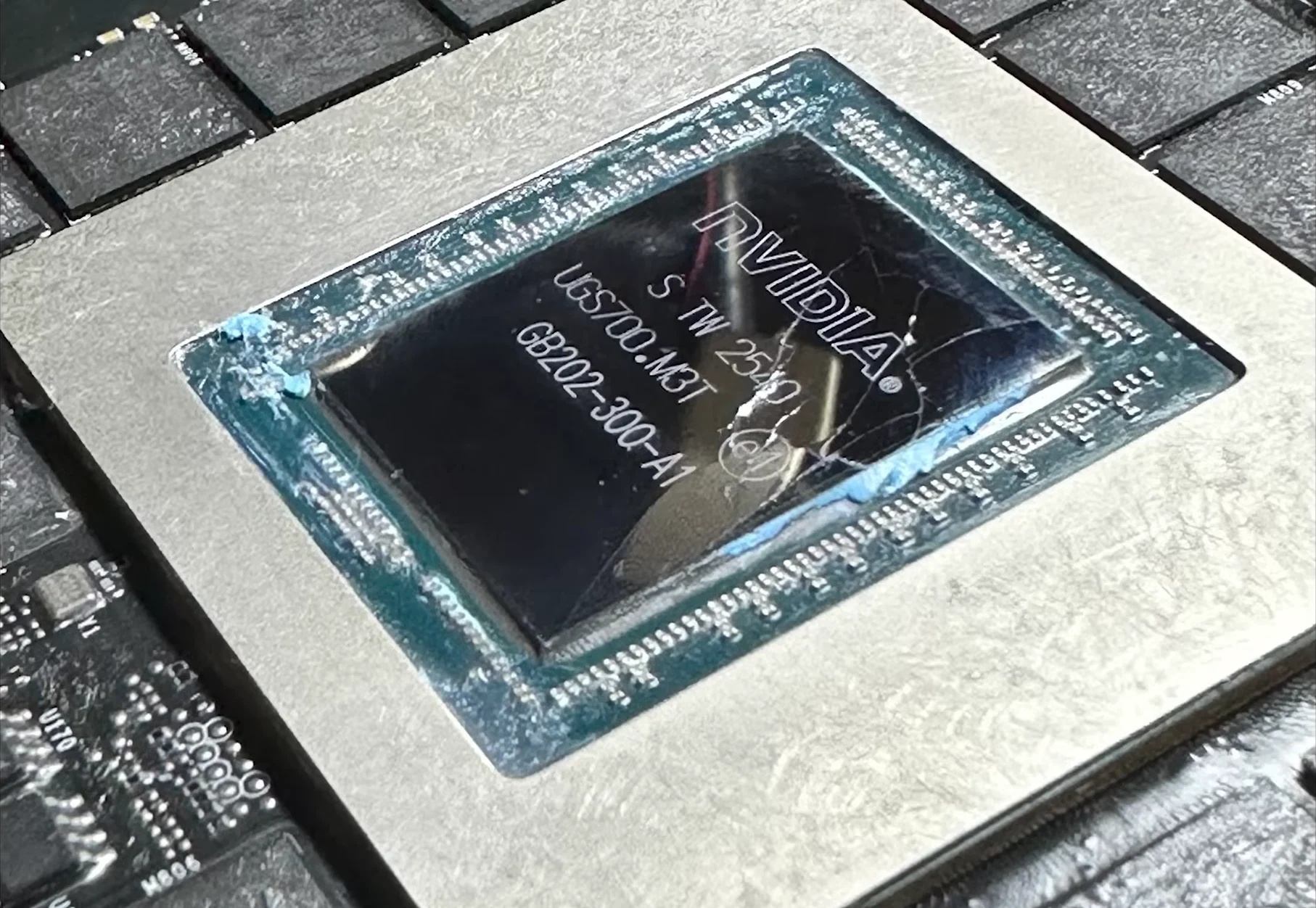
MSI’s GeForce RTX 5090 Lightning Z is not made for the average gamer. Priced at a whopping $5,090, this graphics card is designed for either serious collectors or, more realistically, extreme overclockers aiming for benchmark highs. In the hands of YouTuber Alva Jonathan, it performed as expected until an aggressive BIOS, combined with sudden thermal issues, caused a crack in the GPU core, leading to the demise of one sample during testing.
Early Involvement in Development
Jonathan was involved with the RTX 5090 Lightning Z from the beginning. MSI Taiwan reached out to him in August 2025 to assist with the card’s creation, initially sending him two early PCB samples without coolers, later followed by three retail versions. For the first tests, he created a custom cooling solution before switching to liquid nitrogen (LN2) as the testing progressed.
Unique Features and Initial Testing
This graphics card is distinct from regular RTX 5090 models, both in terms of cost and design. It is clearly built for high-level overclocking. Some of its key specifications include:
Jonathan started with what might be seen as a modest overclock for such powerful hardware: 3.25 GHz at 1.05V. Even at this point, the card was consuming over 700W.
With a power limit of 800W in 3DMark Port Royal, the Lightning Z scored 43,112 points. For comparison, MSI’s RTX 5090 Suprim Liquid had previously reached the 40,000–41,000 range, while a standard RTX 5090 usually scores around 36,000–37,000 points. During this run, the GPU peaked at 772W, with power evenly shared across both 16-pin connectors.
Transition to Liquid Nitrogen Cooling
To push performance even further, Jonathan collaborated with ARX (arxidmedia) and moved to LN2 cooling. Even with liquid nitrogen, maintaining a stable temperature for the GPU was a challenge. The heatsink in contact with the core was at -40°C, but the GPU itself warmed up, reaching as high as 9°C under load. At 1.12V and 3.42 GHz, power usage soared past 1,000W.
When using LN2, the safe operating temperature range appeared to be quite limited — around 0°C to 15°C. In one instance, temperatures hit 21°C, leading to an immediate system crash.
Benchmark Success and Record-Breaking Performance
Some benchmarks were easier to manage. In GPUPI, Jonathan briefly achieved 3.6 GHz at nearly 0°C. Ultimately, the team settled on 3.5 GHz as a stable operating frequency and set a new HWBot world record for GPU compute performance in Geekbench 5, achieving a score of 683,433, which still stands today.
The critical moment occurred when they switched to the 2,500W XOC BIOS. Previously, they were using an older version thought to apply excessive voltage too quickly.
At just 1.2V — which is manageable under LN2 but risky in ambient temperatures around 25°C — one GPU experienced catastrophic failure. The core visibly cracked, likely due to thermal shock, as one section of the die remained very cold while another heated up, creating an imbalance that the silicon couldn’t tolerate.
Financial Impact and Future Plans
In an instant, around $5,000 was lost. The other components on the board are still intact, so there is a possibility that the card could be revived with a replacement core.
Although Jonathan achieved the Geekbench 5 world record, he was unable to meet other goals, including breaking the 3DMark Solar Bay Extreme record. He still possesses four additional samples for ongoing testing and intends to enhance the cooler mounting. He also hinted at the possibility of reverting to a more stable retail BIOS for future attempts.