

Tag: MacBook Neo comparison

  • Microsoft launches cheaper Surface Laptop later this year

    Microsoft launches cheaper Surface Laptop later this year

    Key Takeaway

    – Three new Surface PCs based on Intel Panther Lake: Surface Laptop 8 (optional Core Ultra X7 368H with Arc B390), Surface Pro 12 (up to Core Ultra 7 366H), and updated Surface Laptop 13-inch (Core Ultra 5 325; starts at $1,499 with 16 GB RAM; up to 24 GB RAM; 25% brighter display vs. predecessor).
    – A cheaper Surface Laptop variant is coming to the 13-inch model, with 8 GB RAM, launching later this year at $1,299 (not a standalone Surface Laptop SE).


    Microsoft released three new Surface PCs today. All based around Intel’s Panther Lake platform, the Surface Laptop 8 is the most powerful of the three thanks to its optional Core Ultra X7 368H processor and its Arc B390 graphics.

    In this paragraph the writer shifts tone and uses a more casual cadence, aiming to describe the lineup with a focus on performance hardware. The Surface Laptop 8 purportedly leads the trio, boasting an optional Core Ultra X7 368H chip paired with Arc B390 graphics. While the prose tries to capture excitement, it also sweeps in a few specs that readers may glance over quickly, like the Panther Lake branding and the idea of being the top spec option, leaving other models slightly in the background.

    Next up is the Surface Pro 12, which Microsoft offers with up to the Core Ultra 7 366H.

    The next paragraph changes voice, leaning into a brisk, report-like delivery that highlights the Pro 12’s flexibility. It mentions the Core Ultra 7 366H as a maximum configuration, hinting at performance but not dwelling on the broader ecosystem. The writing keeps a practical edge, underscoring the product tier while keeping the prose grounded with a few nearly technical phrases that a general reader can skim.

    Additionally, Microsoft has updated the smaller Surface Laptop 13-inch with the Core Ultra 5 325. For the time being, the new Surface Laptop 13-inch starts at $1,499 with 16 GB of RAM.

    This paragraph switches to a more promotional style, delivering concrete price and memory figures to anchor expectations. The 13-inch model is pitched with a Core Ultra 5 325, a starting price of $1,499, and a 16 GB RAM baseline. The tone attempts to balance enthusiasm with clear numeric details, while the sentence structure wobbles slightly to keep the reader attentive across a longer thought, giving a sense of the pricing landscape without overloading the reader with too many numbers at once.

    Considerably more expensive than its predecessor, the new Surface Laptop also distinguishes itself from its Snapdragon-based sibling with a 25% brighter display and up to 24 GB of RAM.

    In this paragraph, the style veers toward evaluative commentary, contrasting the new Laptop with its predecessor and with a Snapdragon sibling. It asserts a brighter display by about 25% and RAM capacity up to 24 GB. The sentence construction attempts to weave in comparative metrics while preserving a narrative flow that helps readers gauge the upgrade without becoming a hard spec list, though it still relies on specific figures to anchor the claim.

    In a blog post, Microsoft clarifies that a cheaper Surface Laptop is coming too. However, this will not be a dedicated device like the Surface Laptop SE before it. Instead, Microsoft will be updating the Surface Laptop 13-inch with a cheaper variant.

    The structure here adopts an explanatory voice, explaining that a more affordable option is on the horizon but clarifying it won’t be a standalone device. The paragraph uses careful qualifiers to describe how the cheaper variant will come as an update to the existing 13-inch model, maintaining a balanced, informative tone that seeks to temper expectations while delivering the essential plan.

    Specifically, the company plans to start selling a configuration with a mere 8 GB of RAM. While this follows in the footsteps of the MacBook Neo, its pricing does not.

    The writing shifts to a slightly contrarian angle, noting the 8 GB RAM SKU and drawing a comparison to a rival model. It hints that the pricing diverges from the implied affordability path, suggesting tension between capacity and price. The sentence structure emphasizes the anomaly, nudging readers to question whether the strategy makes sense in the current market context.

    Inexplicably, Microsoft will sell this 8 GB model for $1,299, making it over 100% more expensive than the MacBook Neo (curr. $589 on Amazon). Microsoft will begin selling the Surface Laptop 13-inch ‘later this year’ with 8 GB of RAM. Please see our launch article for more details.

    Here the tone becomes skeptical and slightly incredulous, presenting a stark price delta versus a rival model. The paragraph weaves in a quip about the timing and references an external launch article for more context, while keeping the core price figure intact and the necessary timeline hint confined to a forecast rather than a confirmed date.

    Microsoft

    Concluding in a concise, almost minimal fashion, this paragraph presents a simple sign-off style that lightly trails off. The single word acts as a closing tag, leaving the reader with a crisp reminder of the brand and the topic, while avoiding any overly final statements, thereby inviting readers to seek more information elsewhere if they wish.

    Sources

  • Lenovo Wildcat Lake Laptops: New MacBook Neo Alternatives

    Lenovo Wildcat Lake Laptops: New MacBook Neo Alternatives

    Key Takeaway

    – Three Lecoo-branded laptops (Air 13, Air 14, Air 15) powered by Intel Wildcat Lake; top model is Core i5-320.
    – Air 13: 13.3″ 2560×1600, 120Hz, anti-glare 400 nits, 16GB/512GB, 14.3mm thick, ~24W.
    – Air 15: 15.3″ 1920×1200, ~15.6mm thick, ~27W, similar core specs to Air 13.
    – Air 14: Core i5-315, 12GB RAM, 12.95mm thick, 1kg, 60Hz, 300 nits, ~15W; weakest of the trio.
    – Pre-orders in China start May 26, 2026; global debut likely under IdeaPad branding, pricing not yet announced.

    Lenovo Unveils Lecoo Laptops in China Aiming at Affordability

    Lenovo has introduced three new Lecoo-branded laptops in China, and they are expected to rival the MacBook Neo in terms of affordability. This brand-new laptop line is powered by the Intel Wildcat Lake processors, with the top-end option being the Core 5 320. The announcement signals Lenovo’s push into a market segment seeking balance between price and performance, though precise pricing remains undisclosed for now and may vary by region.

    Air 13: A Compact, Matte Display Powerhouse

    While all three come with slim and lightweight designs, the Air 13 is the smallest of the bunch. It comes with a 13.3-inch display with a resolution of 2560×1600 pixels and a 120Hz refresh rate. Lenovo says that it’s an anti-glare matte screen with 100% sRGB coverage and a brightness rating of 400 nits, which is the only disadvantage that the panel has against the Liquid Retina display of the MacBook Neo (available on Amazon).

    Air 13 Specs and Performance

    The Lecoo Air 13 features the Intel Core 5 320, a mid-range option from the Wildcat Lake lineup. It’s paired with 16GB of RAM and 512GB of PCIe 4.0 storage. Lenovo didn’t share whether other specifications of the laptop will be available. It measures 14.3mm thick and is said to offer stable performance with around 24W power consumption.

    Air 15: Bigger Screen, Similar Core

    Among the other two, the Air 15 shares a similar set of specs, but its display measures 15.3 inches and has a resolution of 1920×1200 pixels. It also has a slightly larger form factor, measuring 15.6mm thick, and this system is said to offer stable performance with around 27W of power consumption.

    Air 14: The Entry-level Option

    As for the Air 14, it’s the weakest of the three. It’s powered by the Core 5 315, a slightly less capable processor than the one powering the other two. Lenovo has paired it with 12GB of RAM, which is still higher than the 8GB of RAM the MacBook Neo maxes out at.

    Display and Portability Notes

    This middle-of-the-line laptop has a slower screen, maxing out at a 60Hz refresh rate, and is dimmer, having a brightness rating of 300 nits. On the bright side, it’s the slimmest of them all. Lenovo says that it measures 12.95mm and weighs 1kg (about 2.2lbs). It can offer a stable performance at lower power consumption, which is highlighted at 15W.

    Launch Details and Potential Branding

    Sources
  • Asus Unveils Intel Wildcat Lake Laptop with Better Display than MacBook Neo

    Asus Unveils Intel Wildcat Lake Laptop with Better Display than MacBook Neo

    Key Takeaway

    – The 2026 Vivobook 16SE offers two 16-inch IPS display options: 1920×1200 at 144Hz and 2560×1600 at 144Hz with variable refresh rate and 400 nits brightness, the latter being superior to the MacBook Neo’s Liquid Retina in brightness and detail.
    – Both devices use the same chassis and specs: Intel Core i5-320, 16GB RAM, 512GB PCIe 4.0 storage, 15.9mm thin, 1.29kg, and similar port layouts (two USB-C 3.2 with PD, two USB-A 3.2 Gen 1, 3.5mm jack, HDMI 2.1).
    – Battery is 52.5Wh, with potential runtime advantages over the MacBook Neo depending on efficiency, but actual life depends on workload and CPU efficiency.
    – Pricing starts at CNY 4,599 (~$675) for the base models, with the higher-end 16SE display option at CNY 4,999 (~$734); global launch details to be announced.

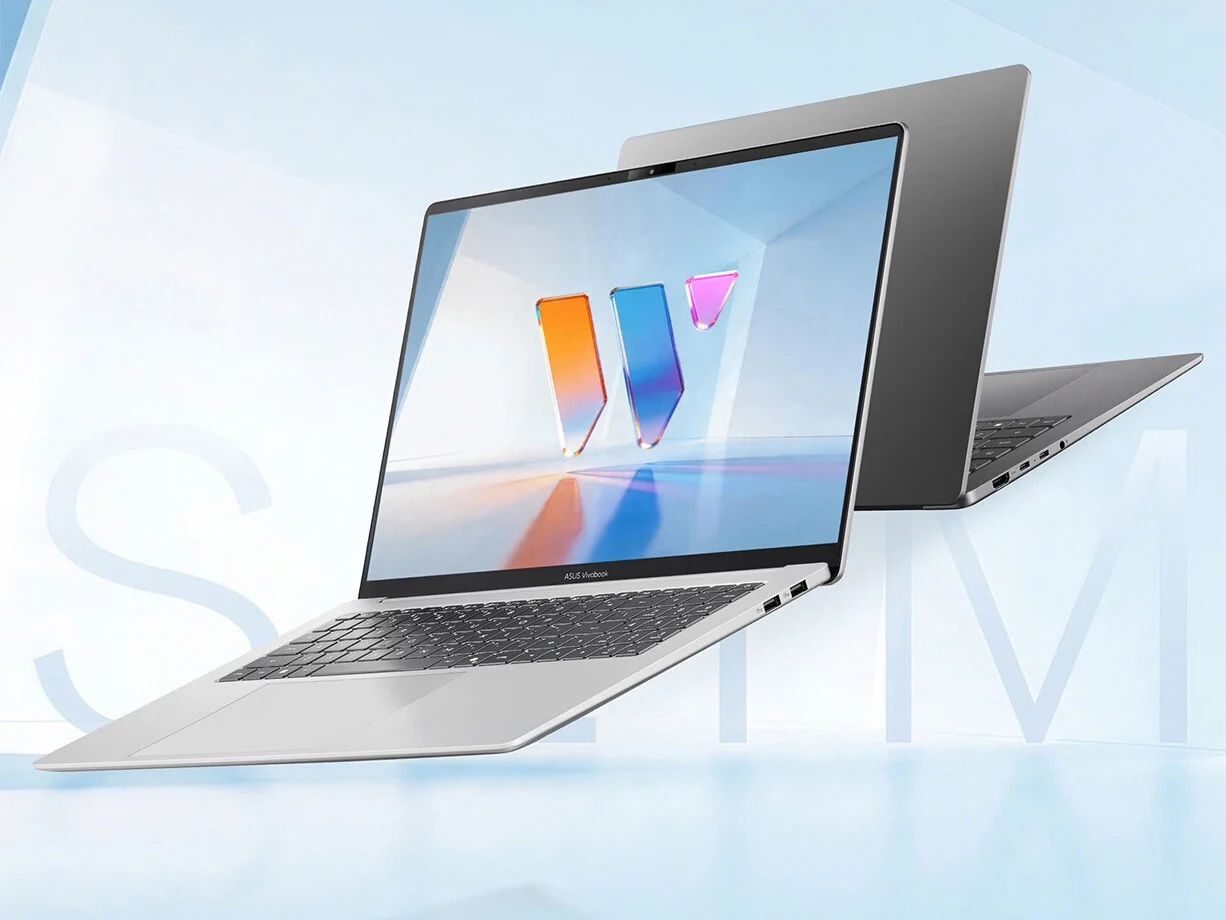
    Asus unveils two new Intel Wildcat Lake laptops in China

    Asus has rolled out two fresh machines, the 2026 Vivobook 14SE and 16SE, powered by Intel Wildcat Lake chips. They share a lot of core specs, yet the 16SE stands out more because it comes with a superior display compared to the MacBook Neo. The announcement pinpoints display choices that matter for folks chasing crisper visuals and smoother motion, with both models aiming to balance performance and portability.

    Display options and how they compare

    Specifically, Asus is offering two display options for the 2026 Vivobook 16SE. Both are 16-inch IPS panels, but one has a resolution of 1920×1200 pixels, while the other bumps it up to 2560×1600. Both have a 144Hz refresh rate, but the latter screen has a variable refresh rate, and it has a brightness rating of 400 nits. This upper-end option is presented as a notably better screen than the Liquid Retina panel on the MacBook Neo, though the Apple device isn’t considered bad for its price range, according to early reviews.

    Core specs and chassis details

    Moving beyond the screen, both laptops are powered by the Intel Core 5 320, a mid-range option from the Wildcat Lake lineup. It’s paired with 16GB of RAM and 512GB of PCIe 4.0 storage. Both laptops share an identical chassis, which measures as thin as 15.9mm and weighs 1.29kg. The port setup mirrors each other as well, featuring two USB-C 3.2 with PD (3.3-feet Baseus 100W PD cable curr. $6.39 on Amazon), two USB-A 3.2 Gen 1, one 3.5mm audio jack, and one HDMI 2.1.

    Battery life and practical use

    There’s a 52.5Wh battery inside the two laptop models, which could translate into longer runtimes than the MacBook Neo in some scenarios. Yet, actual longevity will hinge on system efficiency and how heavily the Wildcat Lake processor is taxed in real-world tasks. Energy use varies with brightness levels, display mode, and workload, so everyday performance can differ from canonical numbers.

    Pricing and availability

    As for pricing, the Vivobook 14SE and 16SE both start at CNY 4,599, about $675. The 2026 16SE with the higher-end display option runs at CNY 4,999, around $734. Asus is expected to share details on global launch and availability soon, with more markets likely to be included after initial China release.


    Sources