
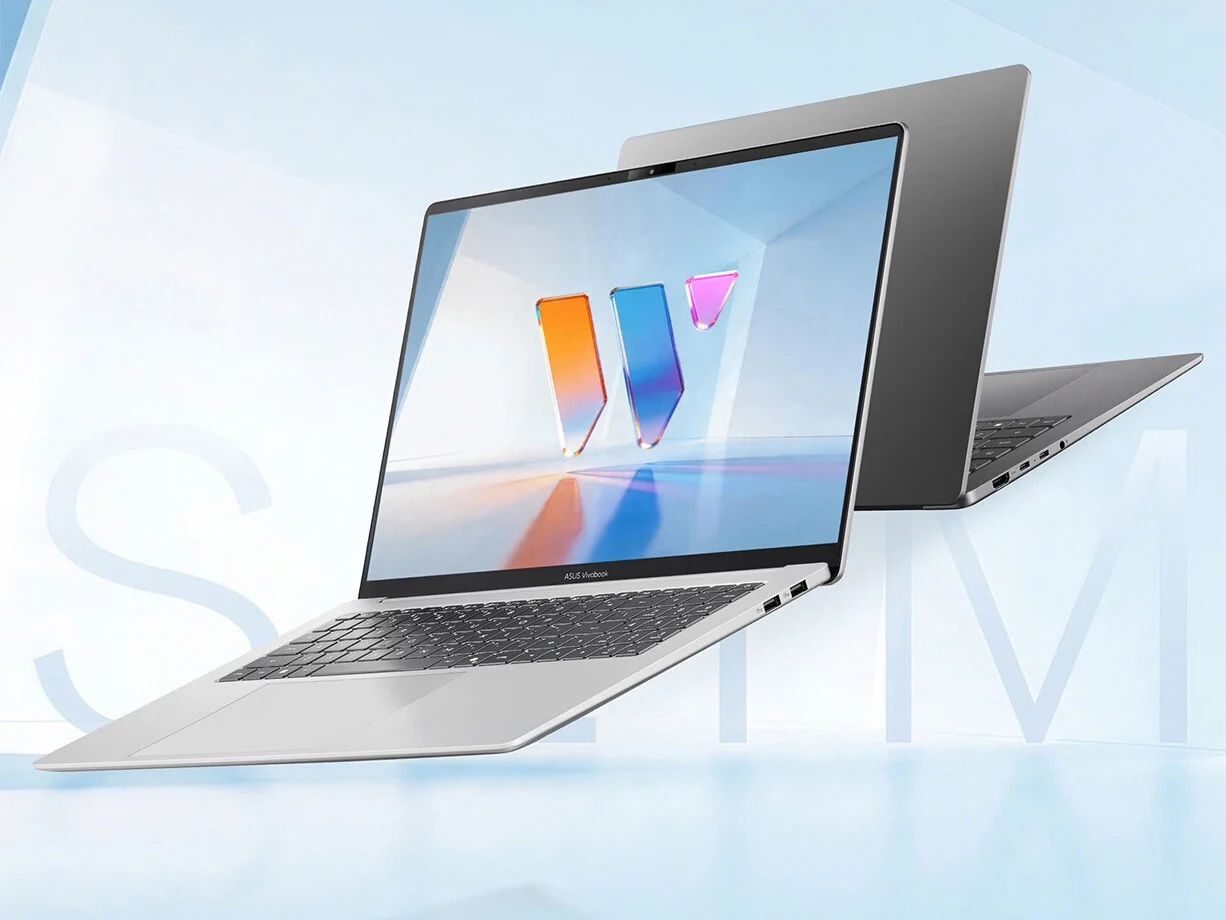
– The 2026 Vivobook 16SE offers two 16-inch IPS display options: 1920×1200 at 144Hz and 2560×1600 at 144Hz with variable refresh rate and 400 nits brightness, the latter being superior to the MacBook Neo’s Liquid Retina in brightness and detail.
– Both devices use the same chassis and specs: Intel Core i5-320, 16GB RAM, 512GB PCIe 4.0 storage, 15.9mm thin, 1.29kg, and similar port layouts (two USB-C 3.2 with PD, two USB-A 3.2 Gen 1, 3.5mm jack, HDMI 2.1).
– Battery is 52.5Wh, with potential runtime advantages over the MacBook Neo depending on efficiency, but actual life depends on workload and CPU efficiency.
– Pricing starts at CNY 4,599 (~$675) for the base models, with the higher-end 16SE display option at CNY 4,999 (~$734); global launch details to be announced.
Asus unveils two new Intel Wildcat Lake laptops in China
Asus has rolled out two fresh machines, the 2026 Vivobook 14SE and 16SE, powered by Intel Wildcat Lake chips. They share a lot of core specs, yet the 16SE stands out more because it comes with a superior display compared to the MacBook Neo. The announcement pinpoints display choices that matter for folks chasing crisper visuals and smoother motion, with both models aiming to balance performance and portability.
Display options and how they compare
Specifically, Asus is offering two display options for the 2026 Vivobook 16SE. Both are 16-inch IPS panels, but one has a resolution of 1920×1200 pixels, while the other bumps it up to 2560×1600. Both have a 144Hz refresh rate, but the latter screen has a variable refresh rate, and it has a brightness rating of 400 nits. This upper-end option is presented as a notably better screen than the Liquid Retina panel on the MacBook Neo, though the Apple device isn’t considered bad for its price range, according to early reviews.
Core specs and chassis details
Moving beyond the screen, both laptops are powered by the Intel Core 5 320, a mid-range option from the Wildcat Lake lineup. It’s paired with 16GB of RAM and 512GB of PCIe 4.0 storage. Both laptops share an identical chassis, which measures as thin as 15.9mm and weighs 1.29kg. The port setup mirrors each other as well, featuring two USB-C 3.2 with PD (3.3-feet Baseus 100W PD cable curr. $6.39 on Amazon), two USB-A 3.2 Gen 1, one 3.5mm audio jack, and one HDMI 2.1.
Battery life and practical use
There’s a 52.5Wh battery inside the two laptop models, which could translate into longer runtimes than the MacBook Neo in some scenarios. Yet, actual longevity will hinge on system efficiency and how heavily the Wildcat Lake processor is taxed in real-world tasks. Energy use varies with brightness levels, display mode, and workload, so everyday performance can differ from canonical numbers.
Pricing and availability
As for pricing, the Vivobook 14SE and 16SE both start at CNY 4,599, about $675. The 2026 16SE with the higher-end display option runs at CNY 4,999, around $734. Asus is expected to share details on global launch and availability soon, with more markets likely to be included after initial China release.