Tag: Android 15

  • Nothing Phone 3a vs 3a Pro: Similarities in Specs Revealed

    Nothing Phone 3a vs 3a Pro: Similarities in Specs Revealed

    Key Takeaways

    1. Both Nothing Phone (3a) models feature a 6.77” FHD+ display with a 120Hz refresh rate and peak brightness of 3,000 nits, protected by Panda Glass.
    2. They will run on a Qualcomm Snapdragon 7s Gen 3 chip, with the Pro variant offering 12GB RAM and 256GB storage, while the standard model has options for 8GB or 12GB RAM and 128GB or 256GB storage.
    3. Both phones have a triple camera system with a 50MP primary camera; the (3a) includes a 2x telephoto lens, while the Pro has a 3x lens and a 50MP front camera compared to the 32MP on the standard model.
    4. Neither device includes a microSD card slot or a traditional audio jack, but they support dual SIM cards and have a 5,000mAh battery with 50W wired charging.
    5. Both phones run on Nothing OS 3.1 based on Android 15 and have an IP64 rating for dust and water resistance.


    The Nothing Phone (3a) series is just weeks away from its debut, and aside from pricing and availability details, almost everything has been leaked. Recently, we got our hands on the complete specifications for both the Nothing Phone (3a) and the Nothing Phone (3a) Pro, revealing that these devices are more similar than different.

    Display and Build

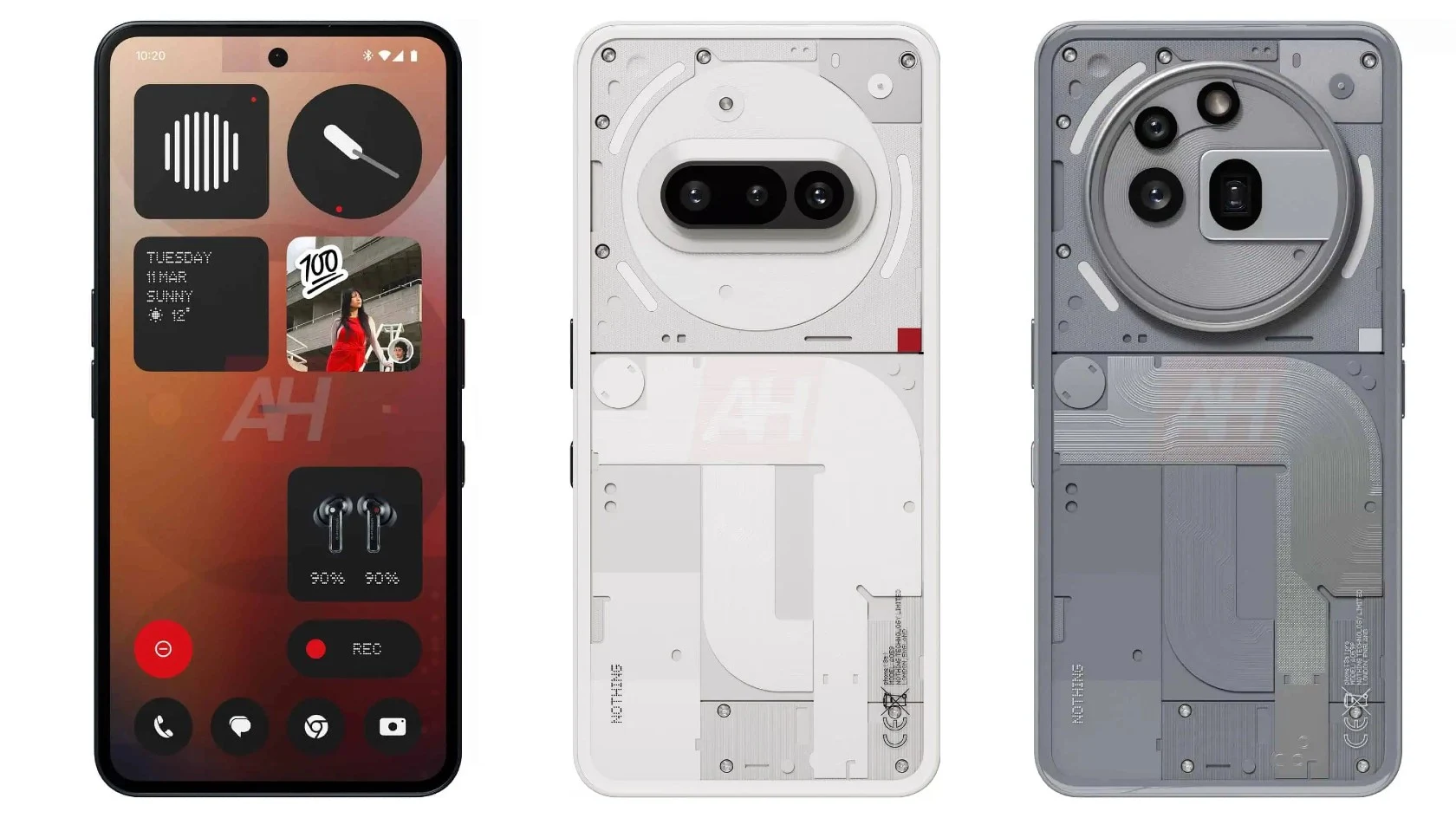
    According to reports from Android Headlines, both Nothing Phone (3a) models will feature a 6.77” FHD+ display, boasting a refresh rate of 120Hz. They will also come with a high brightness mode of 1,300 nits and peak brightness reaching 3,000 nits. Leaked images show that both phones will have a punch hole design for the front-facing camera. Additionally, they will be safeguarded by Panda Glass, which serves as an alternative to the more common Corning’s Gorilla Glass.

    Performance Specs

    As mentioned in earlier reports, the new Nothing devices will run on a Qualcomm Snapdragon 7s Gen 3 chip. However, the RAM and storage options will vary between the two. The Pro variant will only come in one configuration with 12GB of RAM and 256GB of onboard storage. In contrast, the standard model will offer choices of 8GB or 12GB of RAM, with storage options of 128GB or 256GB.

    Camera Features

    Both phones will sport a triple camera system, featuring a 50MP primary camera equipped with OIS, an 8MP ultrawide angle camera, and another 50MP telephoto camera with OIS. The key difference is that the Phone (3a) will include a 2x telephoto lens, while the Phone (3a) Pro will upgrade this to a 3x telephoto lens. Moreover, the Pro model will have a 50MP front camera, whereas the standard version will come with a 32MP selfie shooter.

    Like previous models from Nothing, except for the CMF Phone 1, neither device will include a microSD card slot. They also lack a traditional audio jack but will support dual SIM cards. Other shared features include a robust 5,000mAh battery, 50W wired charging capabilities, Nothing OS 3.1 built on Android 15, and an IP64 rating for dust and water resistance.

    Source:
    Link

  • Google Pixel 9a Launching at Lower Price with 7 Years of Updates

    Google Pixel 9a Launching at Lower Price with 7 Years of Updates

    Key Takeaways

    1. The Google Pixel 9a is set to launch on March 19, with new pricing at €499 for the 128 GB model and €599 for the 256 GB model.
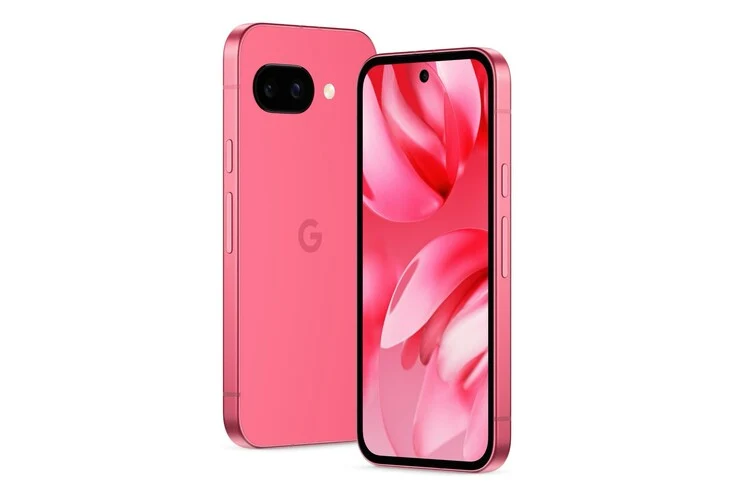
    2. It will be available in four color options: Obsidian (black), Porcelain (white), Peony (pink), and Iris (purple).
    3. The Pixel 9a will run on Android 15 and receive operating system updates for seven years.
    4. Key specifications include the Google Tensor G4 chip, a 6.3-inch OLED display (1,080p+, 120 Hz), 8 GB of RAM, and a 5,100 mAh battery with wireless charging.
    5. Camera features will include a 48 MP main camera, a 13 MP ultra-wide camera, and a 13 MP front-facing camera.


    Owing to many leaks in the past weeks, nearly all details about the Google Pixel 9a are known, including the specs, launch date on March 19, and euro prices. Although earlier rumors suggested that the Pixel 9a with 128 GB of storage would cost €549, and the 256 GB version would come in at €649, Roland Quandt from Winfuture claims that the mid-range smartphone might actually be priced a bit lower.

    Updated Pricing Information

    The entry-level model is now expected to have a price of €499, while the 256 GB variant will likely be priced at €599. The €50 difference might be related to varying prices across different EU countries, as the earlier leak specifically mentioned France. It’s still unknown if there will be additional launch perks besides potential trial subscriptions for Google services and cloud storage.

    Color Choices and Software Support

    The Pixel 9a is set to be available in several color options: Obsidian (black), Porcelain (white), Peony (pink), and Iris (purple). This smartphone will reportedly operate on Android 15 and, similar to the pricier Pixel 9, will receive operating system updates for a period of seven years. Other than that, Winfuture’s report largely reaffirms earlier leaks regarding the features of the Pixel 9a.

    Key Features and Specifications

    To summarize, the Pixel 9a is anticipated to include the Google Tensor G4 ARM chip and feature a 6.3-inch OLED display with a resolution of 1,080p+, a refresh rate of 120 Hz, and a maximum HDR brightness of 2,700 nits. Additional expected features consist of a water-resistant design, 8 GB of RAM, an in-display fingerprint sensor, and a 5,100 mAh battery with wireless charging capabilities. In terms of photography, the mid-range smartphone is reported to have a 13 MP front-facing camera, a 48 MP main camera with a 1/2 inch sensor, along with a 13 MP ultra-wide camera.

    Source:
    Link


  • Motorola Phones Unusable After Android 15 Update Issues

    Motorola Phones Unusable After Android 15 Update Issues

    Key Takeaways

    1. Users report frequent crashes with the Moto launcher after upgrading to Android 15, making devices nearly unusable.
    2. Problems persist even with custom launchers, as some users experience the stock launcher overriding their chosen custom launcher.
    3. Motorola has begun rolling out updates to fix launcher issues, but these updates can introduce new problems on different devices.
    4. Some users have resolved launcher crashes on one device only to encounter new issues on another Motorola device.
    5. Motorola has not issued an official statement regarding the issues linked to the Android 15 update, prompting users to consider waiting before upgrading.


    Motorola has been sending out the Android 15 update to its compatible phones for some time now, and while this is a positive change given the company’s past reputation for poor software support, not everyone is having a great time with the new OS version.

    User Complaints About Launcher

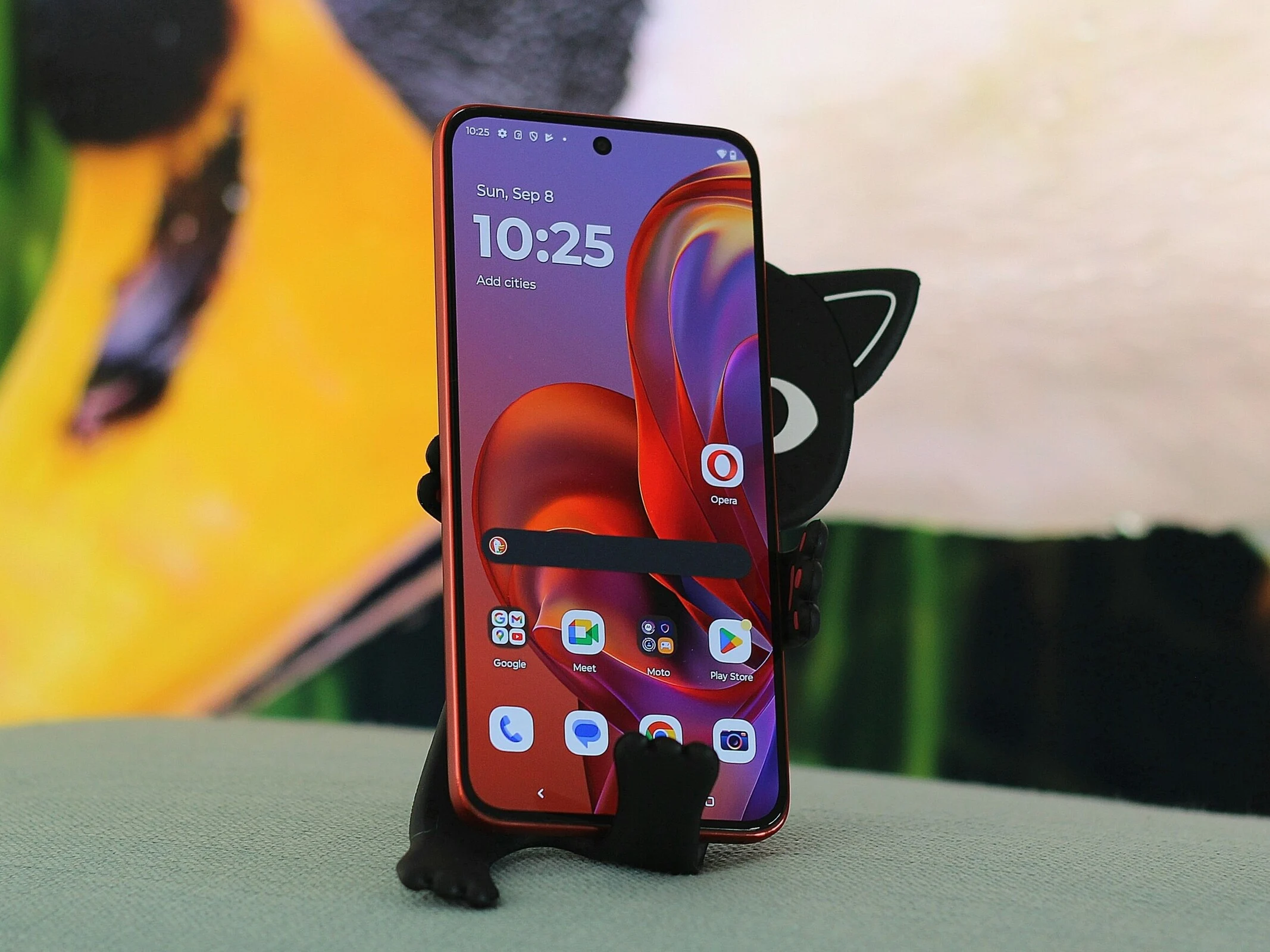
    Numerous users who have updated to Android 15 are reporting that the launcher crashes frequently. This is a major problem because the launcher is responsible for the home screen and app drawer, which makes the device almost unusable when it fails.

    A Reddit user mentioned that their Motorola Edge 50 Fusion experiences constant crashes with the Moto launcher, happening every few seconds. Even after they tried clearing the cache and restarting in safe mode, the problem didn’t go away. Interestingly, they noted that everything works fine while using apps or a different launcher.

    Issues with Custom Launchers

    As per a report from Android Authority, some users are having trouble even with custom launchers. A person on the Lenovo forum complained that the stock launcher on their Motorola Edge 50 Neo keeps taking over their custom launcher.

    The report also indicated that while Motorola has started to roll out updates aimed at fixing this problem, the solutions are bringing new issues for certain devices. For example, one writer shared that the fix worked for their Motorola ThinkPhone 25, stopping the launcher crashes, but then their Razr+ 2023 (currently priced at $400 on Amazon) started having crashes on the cover screen instead of the main screen.

    No Official Statement from Motorola

    So far, Motorola has not commented publicly on the problems linked to the Android 15 update, but it is suggested that users might want to wait before upgrading their phones until these issues are addressed.

    Source:
    Link

  • Asus Zenfone 12 Ultra: Design Refresh and Strong Specs, But Lacks Software Support

    Asus Zenfone 12 Ultra: Design Refresh and Strong Specs, But Lacks Software Support

    Asus has two main smartphone series: the ROG gaming line and the Zenfone series. Last November, the company revealed new devices for the ROG line with the introduction of the ROG Phone 9 and ROG Phone 9 Pro. Now, it’s time to focus on the Zenfone series. The latest addition is the Zenfone 12 Ultra, and similar to last year’s Zenfone 11 Ultra, there is no standard model available.

    Design Changes

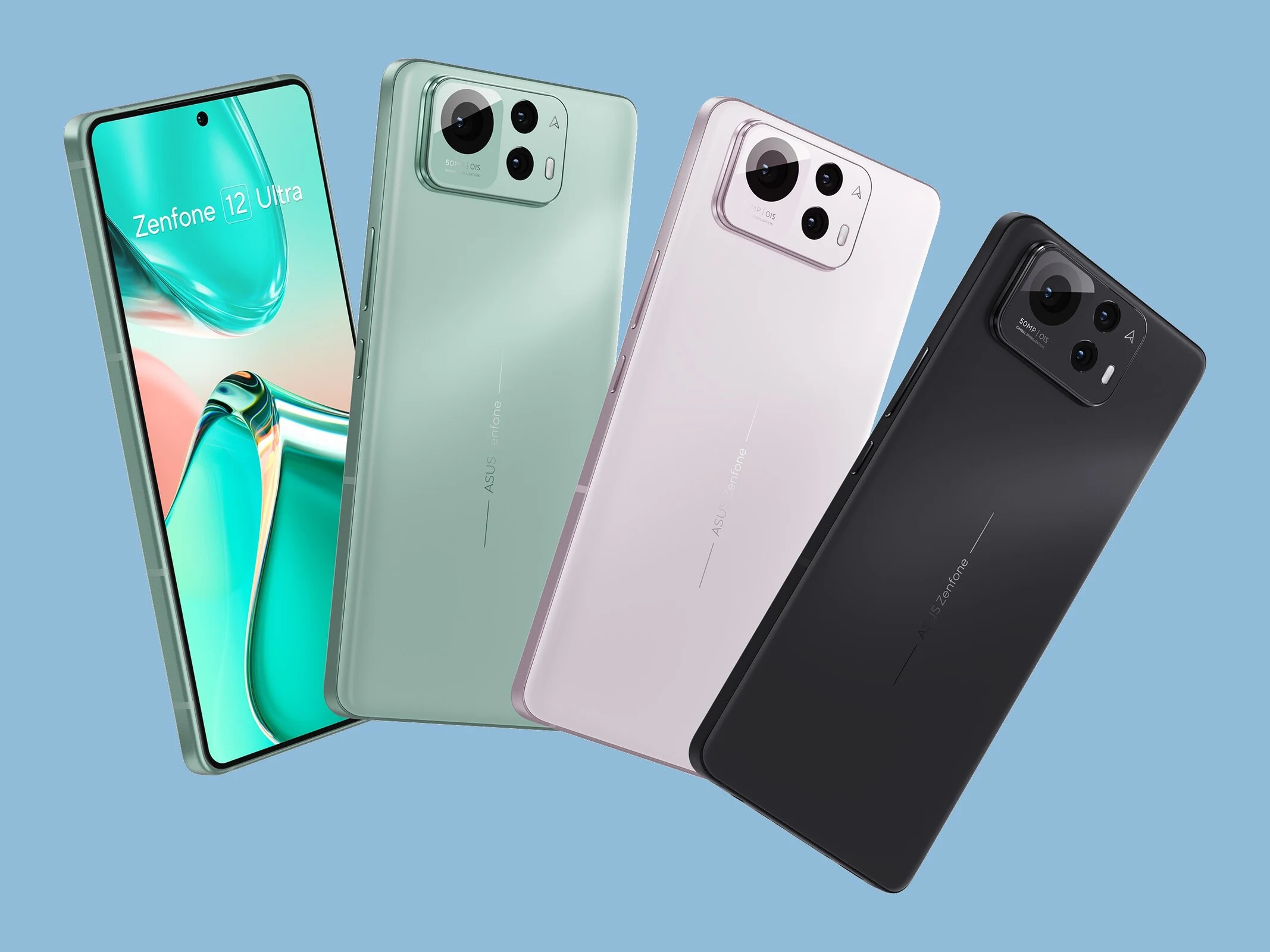
    In terms of design, the Zenfone 12 Ultra features some modifications, particularly on the backside. This new phone sports a smaller camera island and has removed the geometric design found on its predecessor. The rear is crafted from glass and boasts a smooth matte finish. Asus mentions that the frame is made from 100% recycled aluminum, while the display is composed of 22% recycled glass. The device maintains an IP68 rating, ensuring dust and water resistance.

    Color Options and Display

    The Zenfone 12 Ultra will come in Sage Green, Ebony Black, and Sakura White. It has a 6.78” FHD+ display, utilizing a Samsung AMOLED LTPO panel with a refresh rate of 120Hz. Asus claims it can reach up to 144Hz during gaming sessions and offers a peak brightness of 2,500 nits. Like many recent flagship Android phones, the Zenfone 12 Ultra is equipped with the Snapdragon 8 Elite processor, 16GB of LPDDR5X RAM, and 512GB of UFS 4.0 storage.

    Camera Features and Software

    When it comes to photography, the Zenfone 12 Ultra has a 50MP Sony Lytia 700 camera paired with Asus’s version 4.0 of its 6-axis hybrid gimbal system. It also features a 13MP ultrawide camera with a 120° field of view and a 32MP telephoto lens with optical image stabilization and 3x optical zoom. For selfies and video calls, it includes a 32MP RGBW front camera.

    Included with the phone is Android 15, which introduces various AI capabilities. According to Asus, it’s the first smartphone globally to incorporate the Meta Llama 3 8B language model. The company asserts that all AI functionalities can run locally on the device, ensuring data security. However, Asus sticks to its previous pattern of offering only two operating system upgrades for the Zenfone 12 Ultra. Nonetheless, the phone will receive security updates until 2030.

    Battery Life and Pricing

    The Zenfone 12 Ultra houses a 5,500mAh battery that supports 65W fast wired charging as well as Qi 1.3 wireless charging. Asus hasn’t confirmed if a charger is included in the package, but since the Zenfone 11 Ultra didn’t come with one, it’s likely the new model follows suit. The device is equipped with an audio jack, stereo speakers, dual nano-SIM slots, and Wi-Fi 7.

    Starting today, the Zenfone 12 Ultra is available for purchase at €1,099 in Europe. Asus is also offering a €100 discount promotion for early buyers until February 28th.

  • Nubia V70 Max Launching February 15: Everything We Know

    Nubia V70 Max Launching February 15: Everything We Know

    This article is aimed at those looking for a budget-friendly Android 15 device in 2025. Nubia Philippines is teasing the upcoming nubia V70 Max, which is set to launch in the country on February 15. The full details about this phone have been disclosed by two online shopping sites: Shopee and Lazada. The device comes with a bigger battery, increased RAM, and more storage compared to the nubia V70 Design that was released in November last year.

    Nubia V70 Max Specs

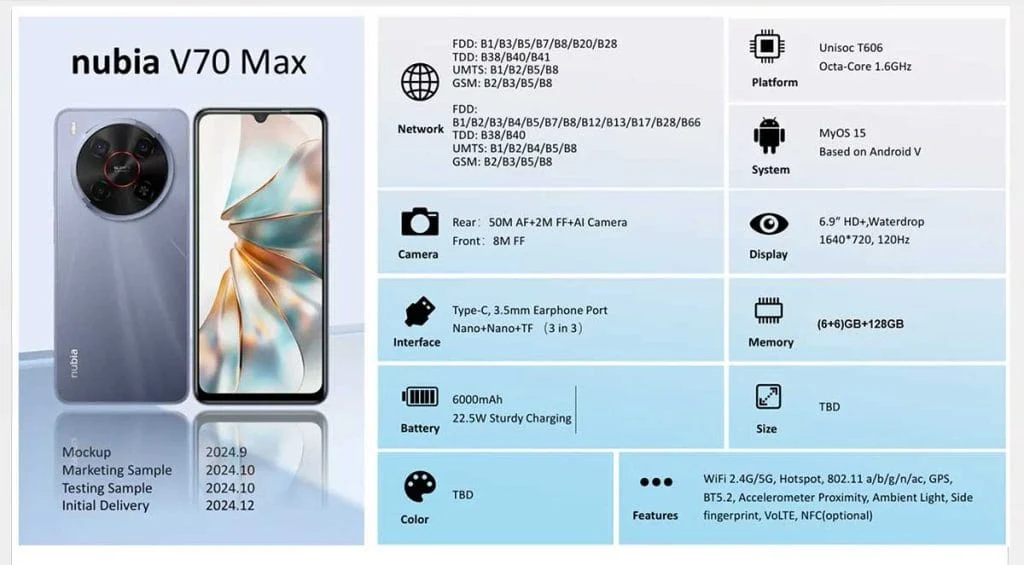
    The new phone boasts a generous 6.9-inch LCD display with HD+ resolution and can handle a refresh rate of up to 120Hz. Underneath, the phone runs on the Unisoc T606 4G processor, which is made using a 12nm process technology. While it won’t offer flagship performance, it should suffice for daily use. Additionally, it features 6GB of RAM (an upgrade from the 4GB in the V70 Design) and a storage capacity of 128GB, providing ample space for apps, photos, and your collection of memes. There is also a possibility of a 256GB storage variant, similar to the previous model.

    Camera and Battery Features

    In terms of photography, the V70 Max is equipped with three cameras: a 50MP primary sensor, a 2MP secondary lens, and an 8MP front-facing camera for selfies. What’s really exciting is the V70 Max’s impressive 6,000mAh battery, an upgrade from the 5,000mAh found in the V70 Design. When the battery does run low, the 22.5W wired charging will quickly get you back to full power. Security-wise, it includes a side-mounted fingerprint scanner, which is standard since IPS screens are not clear enough for under-display fingerprint technology.

    Operating System and Colors

    This device operates on MyOS 15, which is based on Android 15, and will be available in three color options: gray, pink, and green.

    Pricing Details

    Nubia has not yet announced the price for this affordable Android phone. For context, the nubia V70 Design, which shared similar specs, was launched at P5,299 (approximately $91 or Rs. 7,900).

    Source:
    Link

  • Vivo V50 Launch in India: Design and Key Specs Revealed

    Vivo V50 Launch in India: Design and Key Specs Revealed

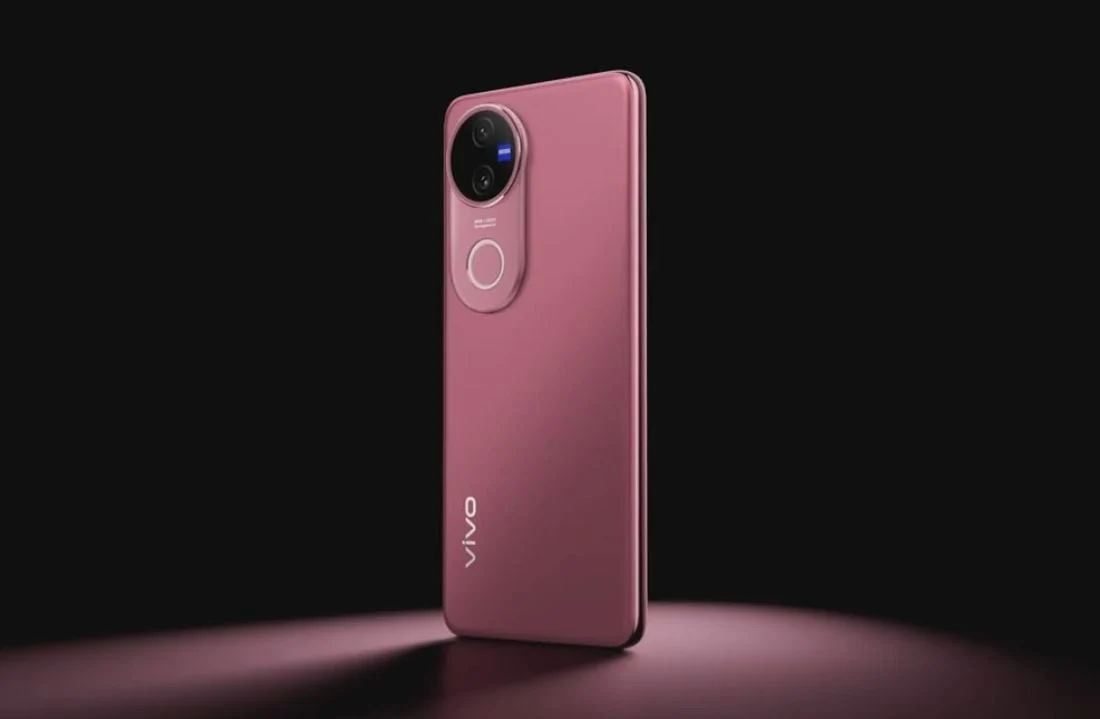
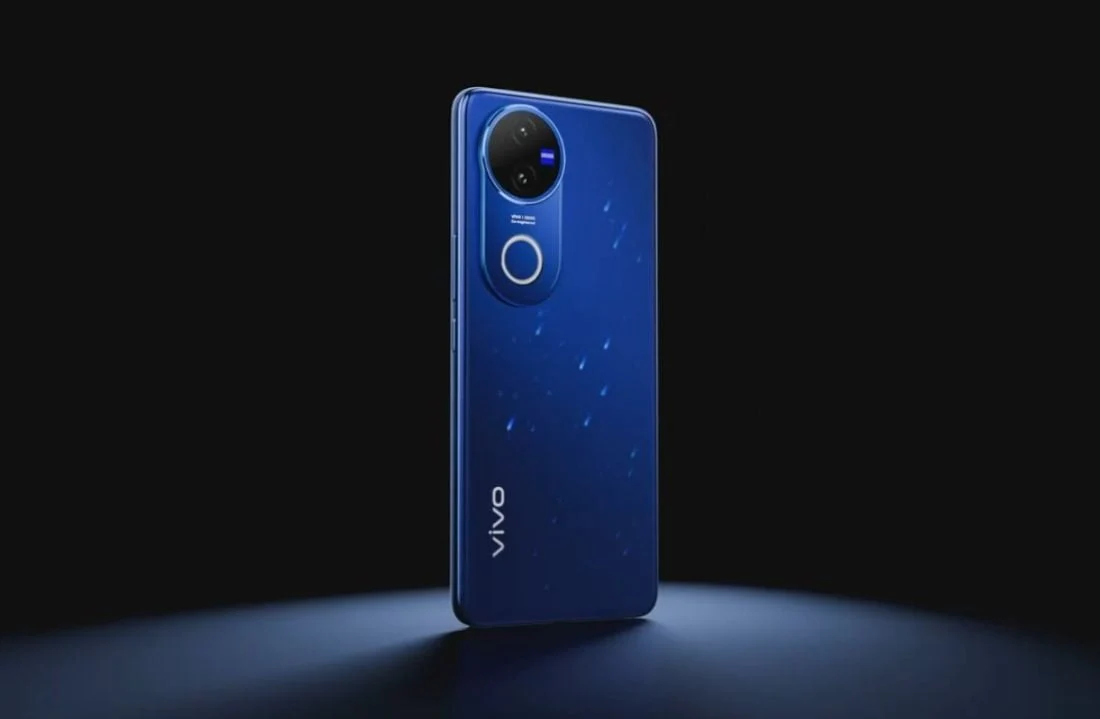
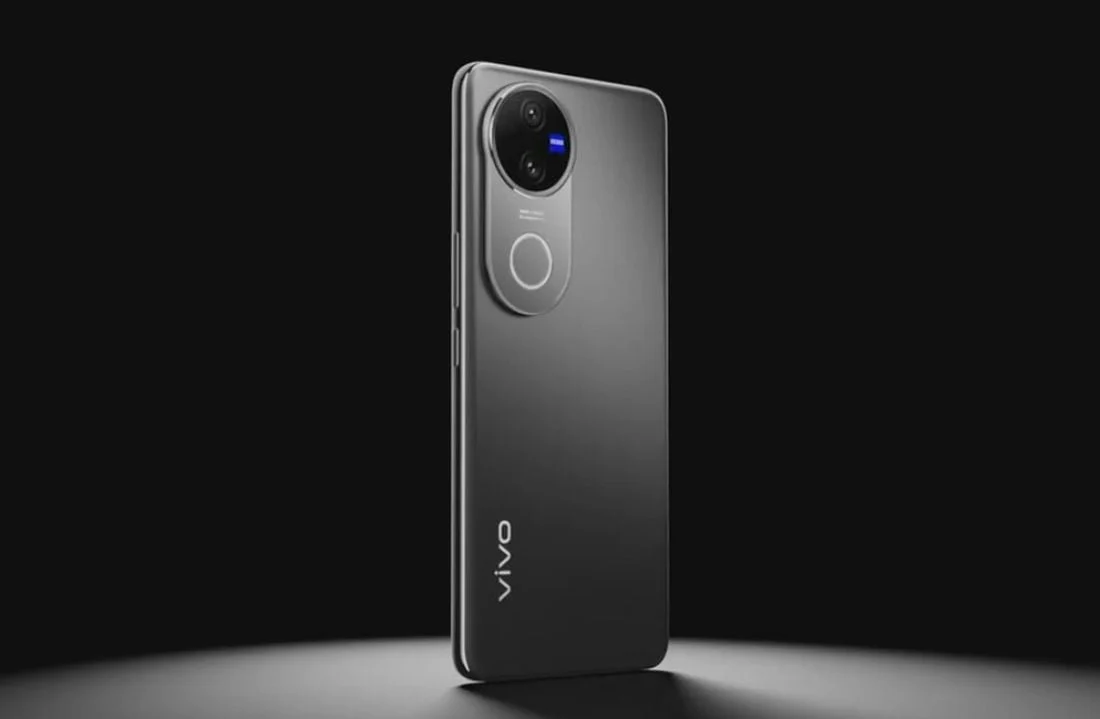
    The Vivo V50 is on the verge of its launch, with its landing page now active on Vivo India’s site. It is rumored that the phone will be unveiled in the third week of this month, likely on February 18th, in India. Below are the official details shared through the V50’s microsite.

    Stylish Color Options

    The Vivo V50 will come in three eye-catching colors: Rose Red, Starry Blue, and Titanium Grey. The Starry Blue option has a unique starry design, while the Rose Red version is inspired by Indian weddings, bringing a sense of sophistication.

    The front of the Vivo V50 showcases a quad-curved display with ultra-slim bezels of just 1.86 mm, providing a captivating viewing experience. Its screen is safeguarded by Schott’s enhanced Diamond Shield Glass for added durability. Moreover, the device is IP68/69 rated, which means it can resist dust and water effectively.

    Impressive Camera Features

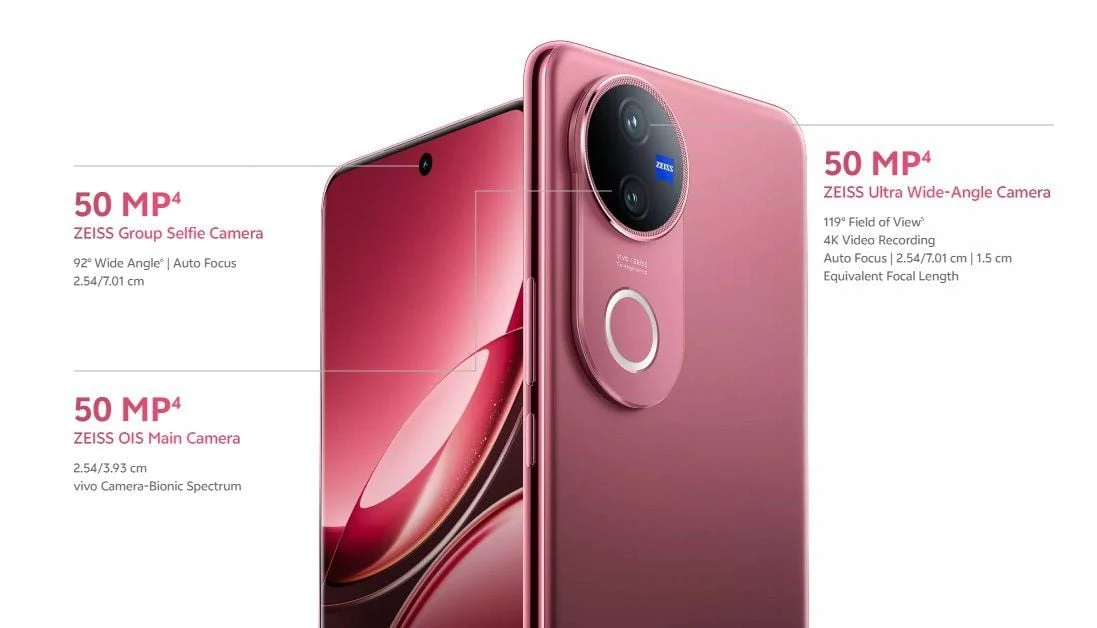
    Vivo has confirmed that the V50 will feature a 50-megapixel selfie camera equipped with autofocus and a 92-degree field of view. On the rear, the phone includes a ZEISS co-engineered camera configuration that consists of a 50-megapixel main camera with optical image stabilization, a 50-megapixel ultra-wide lens with autofocus, and AuraLight LED flash.

    Despite housing a robust 6,000mAh battery, the V50 maintains a slim profile at only 7.39mm thick. The smartphone will operate on Funtouch OS 15, which is based on Android 15, and will include features driven by Gemini AI, such as AI Transcript Assist and AI Live Call Translation.

    Performance and Pricing

    Additionally, reports suggest the Vivo V50 will sport a 6.78-inch AMOLED 1.5K 120Hz display and will be powered by the Snapdragon 7 Gen 3 processor. The anticipated price for the phone is expected to be under Rs 40,000.


  • Google Pixel 9a Appears on EMVCo Site Before March Launch

    Google Pixel 9a Appears on EMVCo Site Before March Launch

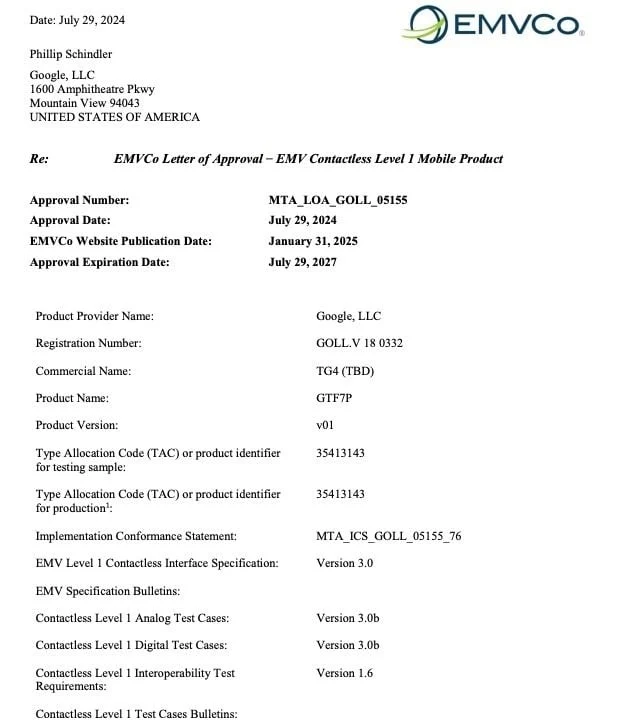
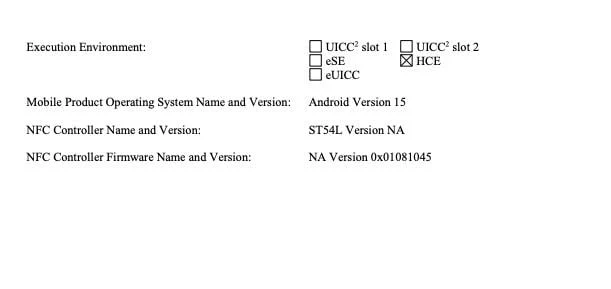
    The release of the Google Pixel 9a is looking very close after receiving EMVCo certification. The listing reveals the device’s model number as GTF7P, which has the codename TG4. As expected, the Pixel 9a will come with Android 15 already installed, following the Android 14 launch on the Pixel 9 series last August.

    Possible Launch Timing

    Recent information indicates a launch sooner than anticipated, possibly in March, with the device available by the end of that month. The expected starting price for the 128GB storage version is $499, staying in line with its predecessor.

    Expected Specifications

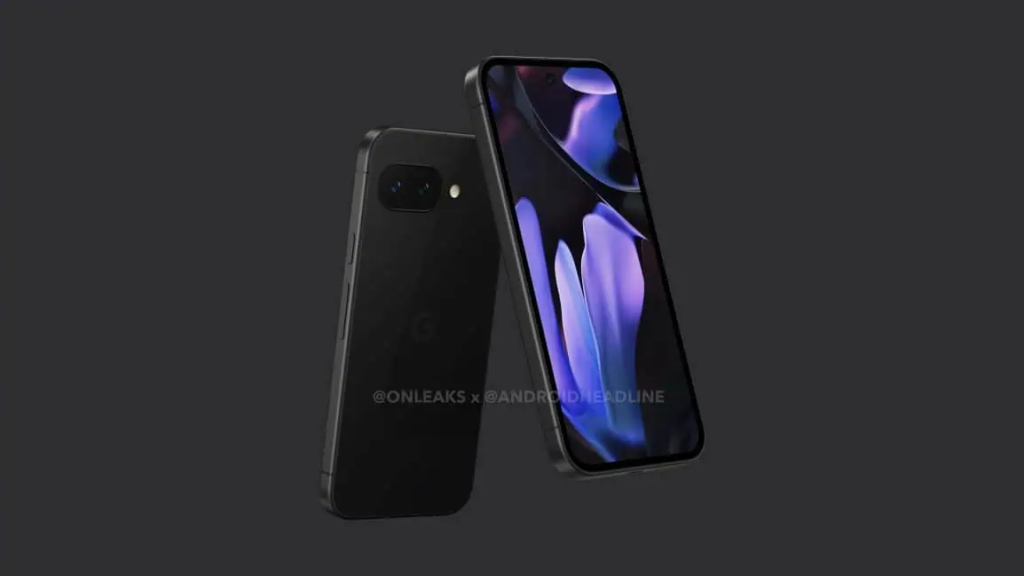
    Rumored specs include a 6.285-inch FHD+ OLED display with a peak brightness of up to 2,700 nits. The camera configuration is anticipated to have a 48-megapixel main lens featuring OIS and a 13-megapixel ultra-wide lens. A 13-megapixel Sony IMX712 camera for selfies is also expected.

    Performance and Features

    The Pixel 9a is rumored to be powered by the Tensor G4 chip, alongside LPDDR5x RAM and UFS 3.1 storage. A 5,100mAh battery is likely to support 23W wired and 7.5W wireless charging. Additional possible features include a Titan M2 security chip, an in-screen fingerprint reader, and an IP68 rating for protection against water and dust.


  • Sony Begins Final Android Update Rollout for Xperia 10 V

    Sony Begins Final Android Update Rollout for Xperia 10 V

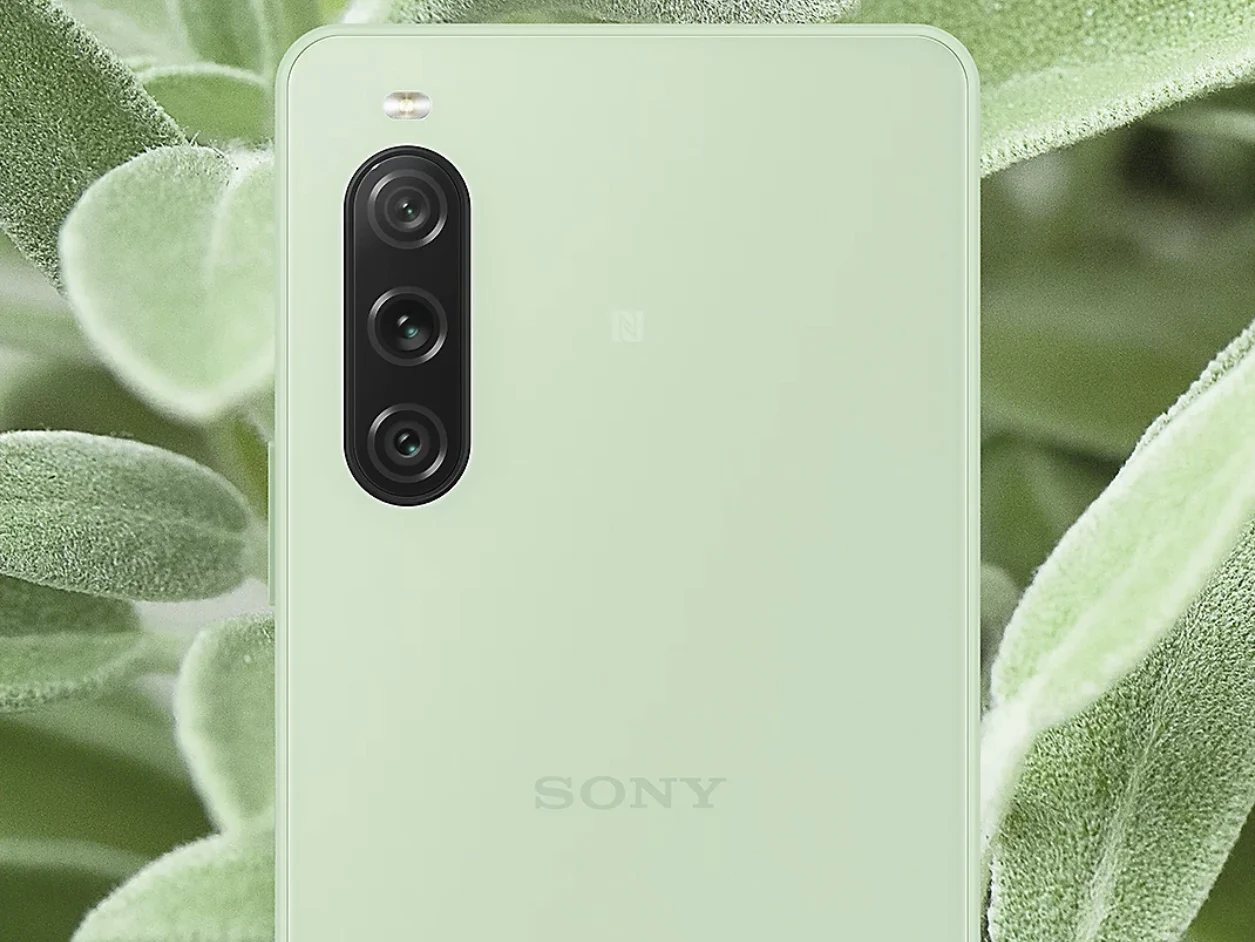
    In the past, Sony has had a reputation for being one of the slowest Android manufacturers to roll out significant Android updates for its smartphones. However, this seems to have changed with their fifth-generation devices, which are now beginning to receive Android 15 globally in various forms.

    Update Timeline

    To summarize, Sony started the rollout of Android 15 for the Xperia 1 V about two weeks ago, with the build number 67.2.A.2.41. Shortly after, an equivalent version was released for the Xperia 5 V, which should have reached most units around the world. Recent reports indicate that Android 15 has also landed on the Xperia 10 V, identified by the build number 68.2.A.2.38A.

    Regional Availability

    According to XperiCheck, Sony has currently provided this update only for carrier-locked models in Europe and the UK, specifically the XQ-DC54. This means it may take some time before Android 15 is available for other models, such as the XQ-CQ54. Sadly, Android 15 marks the final update for the Xperia 10 V, which originally launched with Android 13. In comparison, the Xperia 10 VI from last year (currently priced at $359 on Amazon) is expected to continue receiving major Android updates until Android 17.

    Conclusion

    In summary, while Sony’s update pace has improved, it still exhibits some limitations, especially for certain models and regions. Users should keep an eye on their devices for further updates, as the rollout continues.

    Source:
    Link


  • HyperOS 2.1 Launching Worldwide in February 2025

    HyperOS 2.1 Launching Worldwide in February 2025

    Xiaomi has rebranded its Android interface to HyperOS, moving away from the familiar MIUI name, which has been used since the company’s entry into the smartphone industry. The latest version, HyperOS 2.1, is available in China. Initially, it was believed that this version would be limited to that region, but a blog named Xiaomitime has reportedly found the “Global” version of the firmware, labeled OS2.0.100.0.VNAMIXM.

    Features of HyperOS 2.1

    The new HyperOS 2.1 for international models is said to bring “Super Xiao Ai” to compatible devices, enhancing the AI experience. Additionally, it appears to introduce a feature similar to BeaconLink, which is a short-range communication tool that works without Wi-Fi or SIM, similar to what OnePlus smartphones offer.

    Moreover, this update is expected to enhance gaming, improve camera functionalities, and refine the home screen user experience. HyperOS 2.1 is reportedly built on Android 15 and updates the security patch level to January 2025.

    Update Timeline

    The global version of the Xiaomi 14 Ultra is anticipated to be the first device to receive this update, which makes sense since it is currently Xiaomi’s top-tier device priced at $1,059.50 on Amazon in many regions. The rollout for all eligible devices could take place by the end of February 2025.

    If this new information is correct, HyperOS 2.1 may also be the pre-installed software on upcoming devices like the Poco F7, F7 Pro, and/or Ultra.

    Source:
    Link

  • ASUS Zenfone 12 Ultra Launch Teaser: Front Design Unveiled

    ASUS Zenfone 12 Ultra Launch Teaser: Front Design Unveiled

    Earlier this month, ASUS announced the release date for the Zenfone 12 Ultra. This premium smartphone is scheduled to launch on 6th February 2025. Ahead of its unveiling, the company also shared a teaser, giving us a sneak peek at the device’s front design. Let’s take a closer look.

    Teaser Reveals Zenfone 12 Ultra Design

    In a tweet from the official ASUS account, they mentioned that the Zenfone 12 Ultra has undergone a “makeover” that fuses style with technology. However, since we can only see the front view, it’s difficult to observe these design changes. From the front, the Zenfone 12 Ultra seems to resemble the Zenfone 11 Ultra, featuring thin bezels surrounding the display and a centrally placed punch hole for the selfie camera.

    Performance and Specifications

    Recently, the ASUS Zenfone 12 Ultra was detected on GeekBench, confirming that it will have the Qualcomm Snapdragon 8 Elite chipset. This means you can expect top-notch performance from this device. The initial teaser also pointed towards new AI features. This processor comes with 16GB of RAM, and the phone is likely to run on Android 15 OS right out of the box.

    Potential Comparisons with Previous Models

    Given that the Zenfone 11 Ultra was essentially a rebranded version of the ROG Phone 8, it’s reasonable to think that the Zenfone 12 Ultra could be a rebranded ROG Phone 9. Therefore, we can look forward to a tall 6.78-inch LTPO AMOLED screen with FHD+ resolution, a 185Hz refresh rate, HDR10 support, and a peak brightness of 2500 nits. This device is powered by a substantial 5,800mAh battery that supports 65W wired fast charging and 15W wireless fast charging. Other key features include a triple camera setup with 50MP on the back, a 32MP front camera, stereo speakers, and an IP68 rating for water and dust resistance.