
Key Takeaways
1. Bezel and Design Differences: The bezel has a satin finish rather than a shiny one, with color variations in the models that differ from promotional images.
2. Bracelet Quality and Construction: The bracelet features a multi-link design with alternating polished and brushed surfaces, enhancing its complexity and flexibility.
3. Display and Functionality: The upgraded quartz movement provides sharper contrast on the display, with improved backlighting and clearer typography compared to earlier models.
4. Tactile Interaction and Features: The rotating bezel maintains distinct clicking feedback, preserving the tactile experience of the original 1980s Rotocall.
5. Model Availability: The new Seiko Rotocall reissues (SMGG17P1, SMGG19P1, SMGG21P1) are currently available for sale but are out of stock.
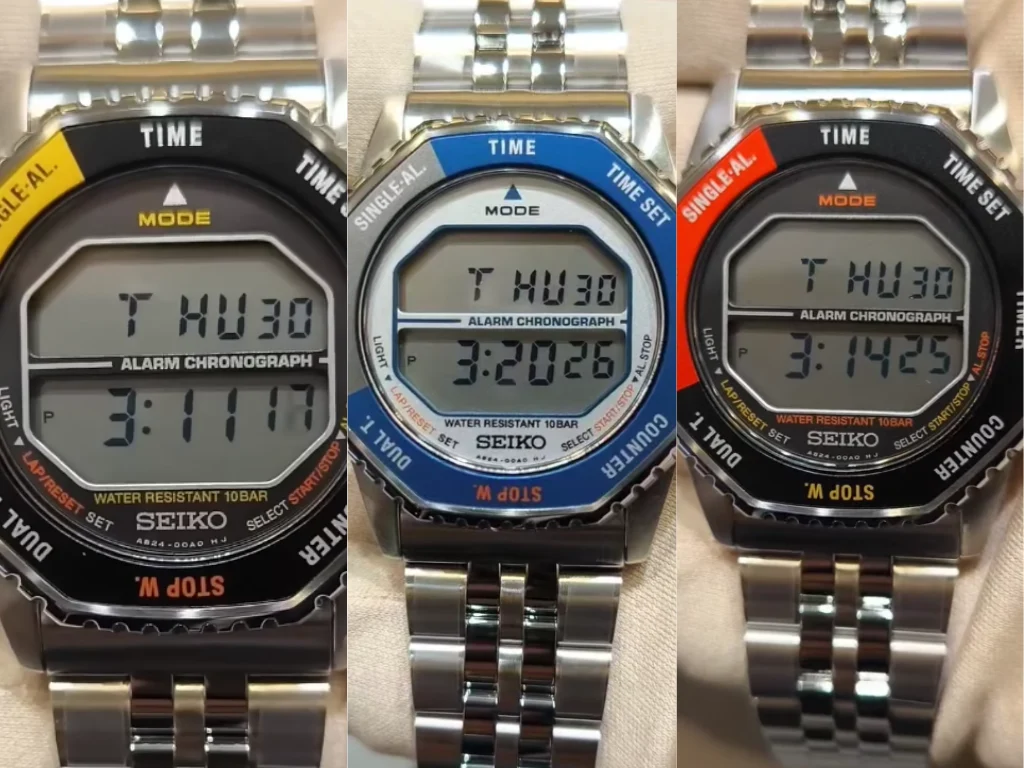
SeikoLeaks shared some hands-on videos of the recently launched Seiko Rotocall reissues on YouTube earlier this month, on November 1. These clips offer a better view of the three models: SMGG17P1, SMGG19P1, and SMGG21P1, which are now available for sale, though they are currently out of stock. The footage reveals several real-life aspects that are not entirely clear in Seiko’s promotional images.
Bezel and Design Differences
One notable feature is the bezel finish. While Seiko’s official photos presented the colors as distinctly separated, the hands-on videos show that the bezel inserts have a slightly satin finish instead of a shiny one. The SMGG17P1 (yellow-black) remains the truest to the original Rotocall design, whereas the SMGG19P1 (red-black) appears with much deeper shades than shown in the marketing images—the red seems more muted in actual light, closer to burnt orange than bright red. In contrast, the SMGG21P1 (blue-silver) variant boasts the sharpest contrast, with the blue ring showing a subtle metallic shine when tilted.
Bracelet Quality and Construction
The videos also reveal that the bracelet is not just a basic folded-link type. It looks more like a multi-link design, featuring alternating polished and brushed surfaces, adding a layer of complexity that’s surprising for a digital watch at this price point. The clasp appears to be the typical Seiko style, but the bracelet’s flexibility seems to be an improvement over many older Rotocall models.
Display and Functionality
On the display front, the alignment of the digits and the contrast seem to be sharper than what earlier press images indicated. Seiko mentioned an upgraded quartz movement in the launch specifications, and the hands-on clips confirm that the screens have excellent contrast, particularly in indoor lighting. The dual-display format—where the upper part shows the mode/time and the lower part shows the chronograph/countdown—looks unchanged from the original model, but the updated backlight and clearer typography give the reissue a more contemporary feel.
Tactile Interaction and Features
Another interesting point is that the rotating bezel clicks distinctly and cleanly in the videos. This was a key feature of the 1980s Rotocall, as the bezel served as a physical mode selector. The new models appear to maintain that same tactile feedback, which should appeal to fans of hands-on controls rather than complicated multi-button systems. Given its unique digital background with NASA ties, the real-world footage confirms that Seiko has preserved the charm of the original rather than altering it unnecessarily.
Source:
Link
Leave a Reply