
Key Takeaways
1. Nvidia emphasizes the importance of cybersecurity and denies claims that its products allow remote access or control.
2. China’s concerns arise from a draft U.S. law requiring disclosure of advanced chip locations to prevent exports to embargoed countries.
3. The H20 chip, designed for the Chinese market, lacks a hardware tracking module found in restricted components.
4. Experts have mixed opinions on China’s approach to Nvidia, with some seeing hardware as leverage and others viewing pressure as mostly symbolic.
5. Despite regulatory challenges, demand for Nvidia products in China remains strong, with ongoing imports and investments in domestic alternatives.
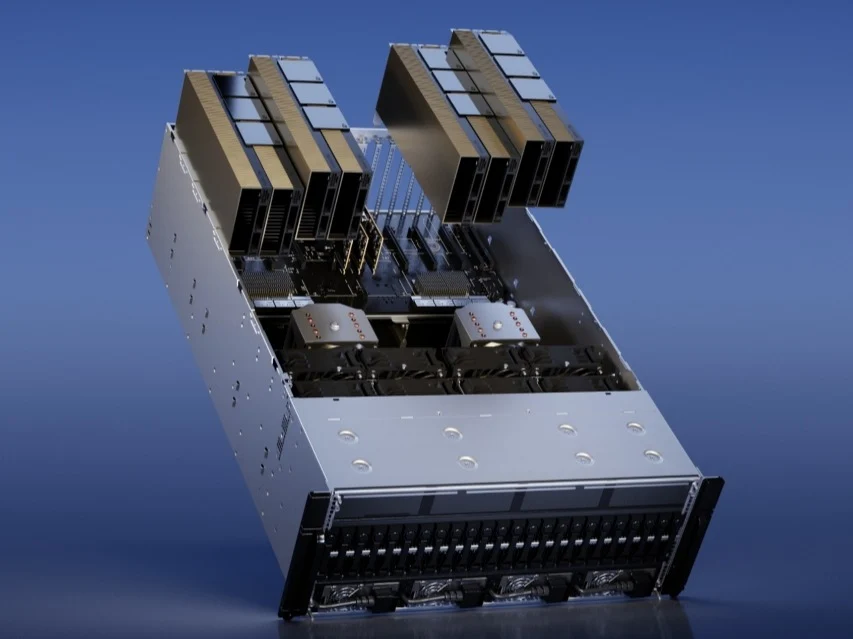
Nvidia has stated that “cybersecurity is very important” and denied claims that any of its products allow remote access or control. This statement came after the Cyberspace Administration of China (CAC) called the company to talk about possible risks to user data related to the H20 artificial-intelligence GPU.
Beijing’s Response
China’s worries are partly in reaction to a draft U.S. law that would require advanced chips sold internationally to disclose their location. This law aims to stop these chips from being sent to countries under embargo. This situation comes shortly after the U.S. lifted an April ban on H20 exports, which had already been adjusted to meet the 2023 performance limits.
H20 Specifications
The H20 chip is a simplified version of the H100 and does not include a hardware tracking module, unlike fully restricted components. Reports from the industry suggest that this chip was specifically designed for the Chinese market after tighter U.S. controls were put in place.
Varying Opinions on China’s Strategy
Experts have different views on how aggressively China will pursue this issue. Tilly Zhang from Gavekal Dragonomics believes that the government now views Nvidia hardware as leverage due to the rise of stronger domestic alternatives. On the other hand, Charlie Chai from 86Research thinks that the pressure will mainly be symbolic, since many Chinese developers are still heavily reliant on Nvidia’s CUDA software.
Despite facing regulatory challenges—including an ongoing antitrust probe—demand for Nvidia accelerators in China remains strong. Reuters has reported a recent order for about 300,000 H20 units from TSMC. Other U.S. suppliers like Micron have also gone through similar security assessments, highlighting Beijing’s strategy of using these investigations while local semiconductor capabilities develop.
Future Outlook
Currently, the CAC has not provided specific counter-measures. Without a strong large-scale alternative, analysts predict that China will continue to import Nvidia GPUs, but with increased scrutiny, while also boosting investments in domestically produced accelerators from companies like Huawei, Biren, and Cambricon.
Source:
Link

Leave a Reply