
Key Takeaways
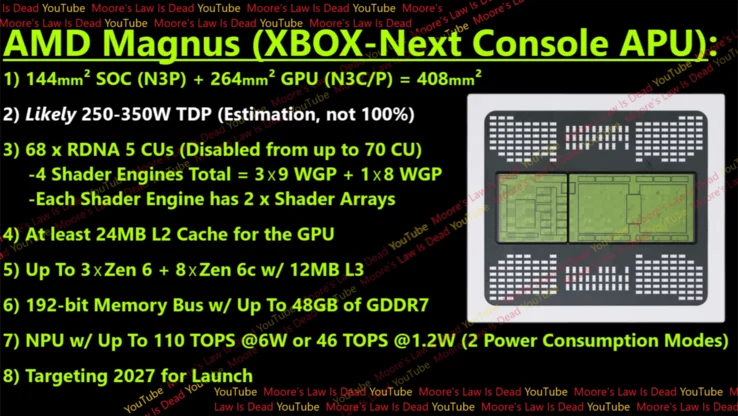
1. The Xbox Magnus SoC will feature 68 Compute Units (CUs) and a 192-bit memory bus, potentially supporting up to 48 GB of GDDR7 VRAM.
2. It will be manufactured using TSMC’s N3P or N3C node and will have an 11-core CPU setup, including three Zen 6 cores and eight Zen 6c cores, with some cores potentially disabled.
3. The die size of the Xbox Magnus is rumored to be 408 mm², making it one of the largest chips in mainstream consoles, but smaller than Nvidia’s top-tier products.
4. The SoC may consume up to 350 Watts of power, significantly higher than the Xbox Series X’s 200 Watts.
5. The inclusion of a neural processing unit (NPU) indicates a focus on artificial intelligence tasks, suggesting the Xbox Magnus will operate like a high-performance gaming PC.
An earlier leak from YouTuber Moore’s Law is Dead gave some insights into the Magnus SoC that is expected to power the upcoming Xbox. It highlighted some impressive specifications, including 68 Compute Units (CUs) and an unknown amount of memory that operates on a 192-bit bus. Tom’s latest video now reveals more about what Xbox Magnus has in store.
Manufacturing Details
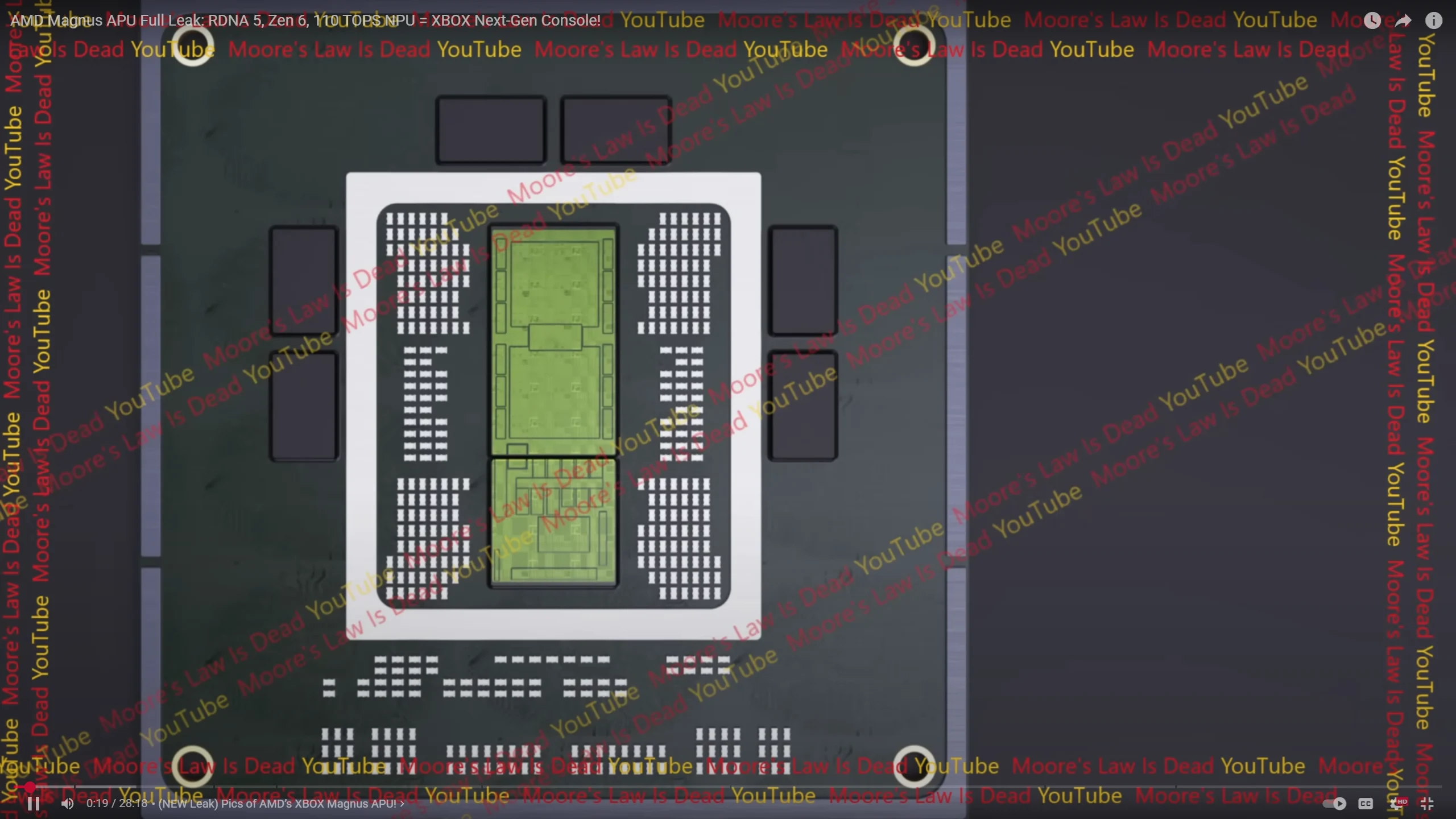
The GPU will be produced using TSMC’s N3P or N3C node, while the SoC will also be built on TSMC N3P. On the CPU side, it will feature an 11-core setup, which includes three Zen 6 cores and eight Zen 6c cores. Tom mentions that this number is not final, and some cores might be disabled. Additionally, Xbox Magnus will have an NPU to handle artificial intelligence tasks right on the device.
Memory Specifications
Now, let’s talk about the most interesting part. The previously mentioned 192-bit bus could support up to 48 GB of GDDR7 VRAM. This amount is almost excessive for a gaming console, but considering that the next Xbox with Magnus is expected to launch in 2027, this may be essential for staying competitive during an eight-year release cycle. Still, a more reasonable figure, like 24 GB, seems likely.
All this processing capability will need quite a bit of silicon space. With a rumored die size of 408 mm², the Xbox Magnus might turn out to be one of the largest chips found in mainstream consoles. However, this is still significantly smaller compared to Nvidia’s top-tier products, such as the RTX 5090’s GB202 die, which measures 761 mm². Lastly, the Magnus could consume as much as 350 Watts of power under maximum load, which is considerably higher than the Xbox Series X’s 200 Watts.
Power Requirements
If earlier speculation about the Xbox acting like a high-performance gaming PC holds true, Microsoft will require all the power it can muster to operate a full Windows operating system. The addition of third-party launchers like Steam and Battle.net will further increase the demand for additional computational resources.
Moore’s Law is Dead on YouTube.
Source:
N/A)
Leave a Reply