

Key Takeaways
1. Fortescue’s Infinity Train completed a journey of 1,100 kilometers from Perth to the Pilbara mines without using fossil fuels.
2. The train uses regenerative braking to generate electricity from downhill slopes, potentially allowing it to run indefinitely without grid power.
3. The locomotive was developed through a partnership with Williams Advanced Engineering and is part of Fortescue’s plan for “Real Zero” emissions by 2030.
4. Transitioning to Infinity Trains could save Fortescue 82 million liters of diesel and reduce CO₂ emissions by about 235,000 tons annually.
5. The initial development phase of the Infinity Train cost around $50 million USD, with anticipated operational savings of about $80 million USD per year.
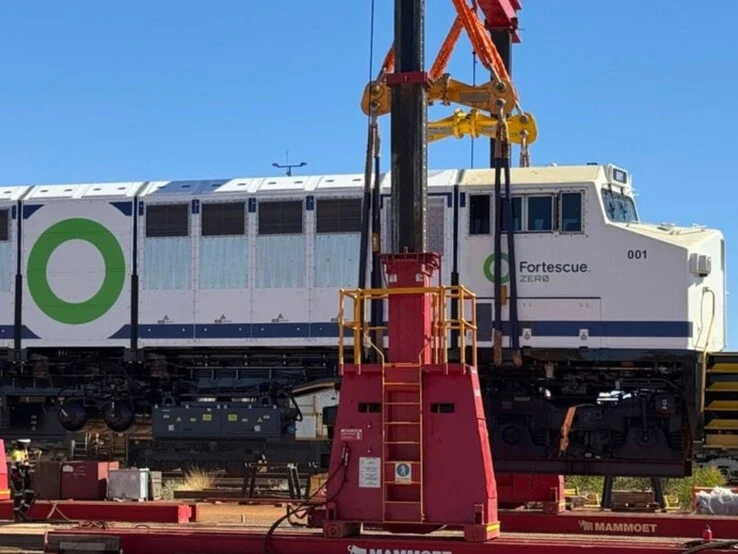
Australian mining firm Fortescue has successfully sent its battery-operated “Infinity Train” on a complete journey of 1,100 kilometers (roughly 684 miles) from Perth to the Pilbara mines, all without using fossil fuels. Although it is not confirmed if the train finished the trip without needing a recharge, this is the company’s aim for the future. The Infinity Train takes advantage of the natural landscape of the iron ore railway and employs regenerative braking to harness energy from downhill sections, helping to recharge its batteries.
Energy Recovery
When the train is loaded, it utilizes the downward slope as a source of energy. Its regenerative braking system generates enough electricity to allow the empty train to return uphill to the open-pit mine without needing outside charging sources. After reaching the top, it can recharge again while being filled with ore, getting ready to start the cycle over. Ideally, the Infinity Train might run indefinitely without drawing power from the grid.
Collaboration and Development
The locomotive was created by Fortescue Zero in partnership with Williams Advanced Engineering (WAE), which Fortescue bought in 2022. The company celebrated the arrival of the prototype with several posts on LinkedIn. CEO Ellie Coates referred to it as “an important milestone on the road to Real Zero.” Following this transfer run, a testing program lasting several months will take place before the Infinity Train is put into regular service along the 385-mile heavy-duty route in the Pilbara area. “These tests are crucial for scaling the system to meet the unique demands of the area,” Coates elaborated.
Commitment to Emission Goals
The Infinity Train initiative is a significant part of Fortescue’s plan to achieve “Real Zero” emissions by 2030. Currently, the company operates 54 diesel-powered locomotives within its Pilbara rail network. By moving entirely to Infinity Trains, Fortescue anticipates saving 82 million liters (21.7 million U.S. gallons) of diesel and lowering CO₂ emissions by approximately 235,000 tons each year, while also cutting operational costs by about $80 million USD annually. The estimated cost for the initial development phase over the first two years was around $50 million USD.
Source:
Link
Leave a Reply