Tag: Fortescue

  • Infinity Train: The Electric Train That Never Needs Recharging

    Infinity Train: The Electric Train That Never Needs Recharging

    Key Takeaways

    1. Fortescue’s Infinity Train completed a journey of 1,100 kilometers from Perth to the Pilbara mines without using fossil fuels.
    2. The train uses regenerative braking to generate electricity from downhill slopes, potentially allowing it to run indefinitely without grid power.
    3. The locomotive was developed through a partnership with Williams Advanced Engineering and is part of Fortescue’s plan for “Real Zero” emissions by 2030.
    4. Transitioning to Infinity Trains could save Fortescue 82 million liters of diesel and reduce CO₂ emissions by about 235,000 tons annually.
    5. The initial development phase of the Infinity Train cost around $50 million USD, with anticipated operational savings of about $80 million USD per year.


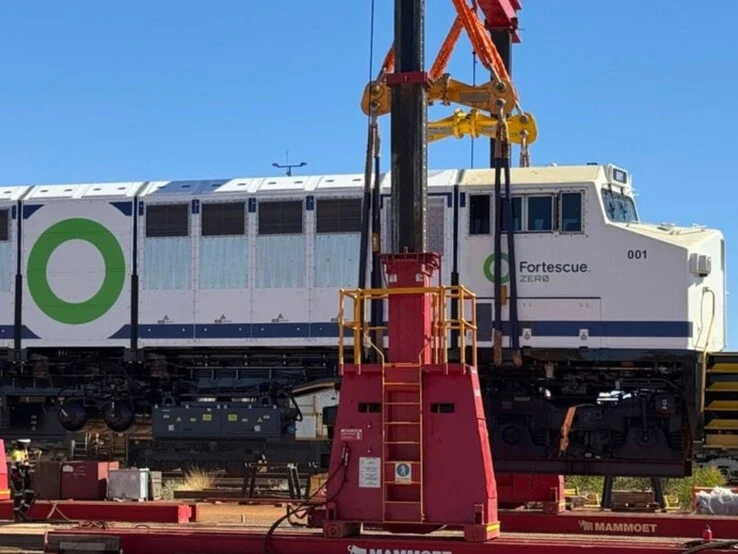
    Australian mining firm Fortescue has successfully sent its battery-operated “Infinity Train” on a complete journey of 1,100 kilometers (roughly 684 miles) from Perth to the Pilbara mines, all without using fossil fuels. Although it is not confirmed if the train finished the trip without needing a recharge, this is the company’s aim for the future. The Infinity Train takes advantage of the natural landscape of the iron ore railway and employs regenerative braking to harness energy from downhill sections, helping to recharge its batteries.

    Energy Recovery

    When the train is loaded, it utilizes the downward slope as a source of energy. Its regenerative braking system generates enough electricity to allow the empty train to return uphill to the open-pit mine without needing outside charging sources. After reaching the top, it can recharge again while being filled with ore, getting ready to start the cycle over. Ideally, the Infinity Train might run indefinitely without drawing power from the grid.

    Collaboration and Development

    The locomotive was created by Fortescue Zero in partnership with Williams Advanced Engineering (WAE), which Fortescue bought in 2022. The company celebrated the arrival of the prototype with several posts on LinkedIn. CEO Ellie Coates referred to it as “an important milestone on the road to Real Zero.” Following this transfer run, a testing program lasting several months will take place before the Infinity Train is put into regular service along the 385-mile heavy-duty route in the Pilbara area. “These tests are crucial for scaling the system to meet the unique demands of the area,” Coates elaborated.

    Commitment to Emission Goals

    The Infinity Train initiative is a significant part of Fortescue’s plan to achieve “Real Zero” emissions by 2030. Currently, the company operates 54 diesel-powered locomotives within its Pilbara rail network. By moving entirely to Infinity Trains, Fortescue anticipates saving 82 million liters (21.7 million U.S. gallons) of diesel and lowering CO₂ emissions by approximately 235,000 tons each year, while also cutting operational costs by about $80 million USD annually. The estimated cost for the initial development phase over the first two years was around $50 million USD.

    Source:
    Link

  • New 2.1 GW Onshore Wind Farm to Power Australian Mine

    New 2.1 GW Onshore Wind Farm to Power Australian Mine

    Key Takeaways

    1. Fortescue is pursuing a strategy to reduce its environmental impact by developing a wind farm that will generate 2.1 GW, the largest in Australia.
    2. The planned wind farm will include up to 200 turbines, potentially reducing emissions by 1.5 million tonnes, or nearly 70%, helping the company aim for zero emissions by 2030.
    3. Fortescue currently uses green energy for its operations, including 60 MW and an upcoming 190 MW solar farm, and is transitioning to electric machinery in a $4 billion deal.
    4. Wind energy was chosen over solar due to land requirements and the ability to generate power at night and in cloudy conditions.
    5. The project is expected to receive approval in late 2026, with commissioning planned for 2029, utilizing Nabrawind’s self-erecting towers.


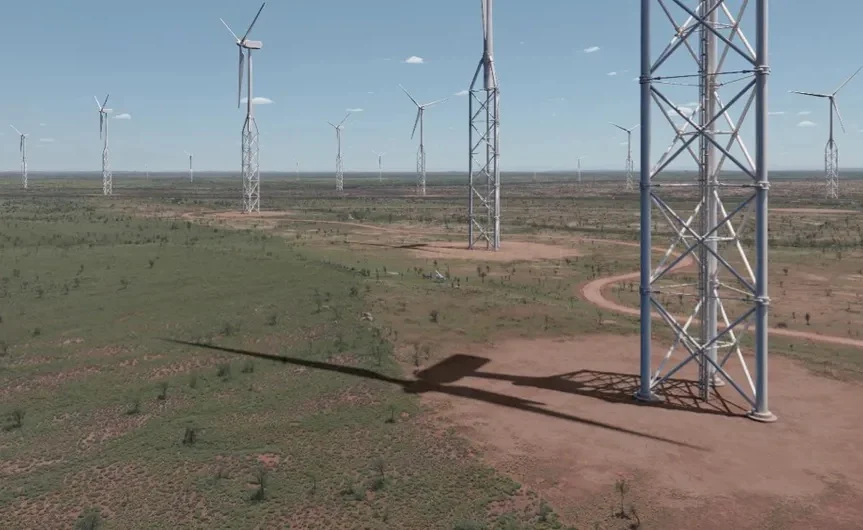
    Australian miner Fortescue has initiated a strategy to further lessen the environmental footprint of its operations. The company has sought permission for a wind farm that will produce 2.1 GW, marking it as the largest of its type in Australia.

    Major Emission Reductions

    Fortescue plans to erect as many as 200 wind turbines, which could lead to a reduction in emissions by 1.5 million tonnes, equating to nearly 70 percent. This effort brings the company closer to its target of achieving zero emissions by 2030. The wind farm will span 2,318 hectares and will be located near its Iron Bridge mine close to Marble Bar in Western Australia.

    Renewable Energy Investments

    Currently, Fortescue already powers its mining operations with green energy. It draws energy from 60 MW solar farms situated in Chichester and is set to connect to an additional 190 MW solar farm in Cloudbreak soon. The company is also making strides in sustainability by replacing diesel-operated machinery like bulldozers, excavators, and hauling trucks with electric alternatives, in a deal valued at $4 billion.

    Wind Over Solar

    Wind energy was selected as the preferred option since solar would necessitate a larger land area. The firm also noted that wind turbines can generate energy at night and during cloudy weather. The capacity of the farm might increase, depending on how efficient the turbines turn out to be.

    Fortescue is likely to employ Nabrawind’s Nabralift self-erecting towers for the setup; interestingly, the mining company has invested in Nabrawind. The approval for the project is anticipated to be given in late 2026, with the commissioning scheduled for 2029.

    Source:
    Link

  • 6 MW Fast EV Charger for Diesel Mining Truck Battery Upgrades

    6 MW Fast EV Charger for Diesel Mining Truck Battery Upgrades

    The fastest electric vehicle charger in the world has been revealed, capable of charging an enormous 1.9 MWh battery found in electrified mining trucks in just 30 minutes.

    Charger Specifications

    This charger produces an impressive 6 megawatts (MW) of power and has been created by Fortescue, a major player in the mining sector, as part of its Real Zero Climate Transition Plan. Fortescue has allocated $2.8 billion to transition its dozers, excavators, and large haul trucks from diesel fuel to electric power.

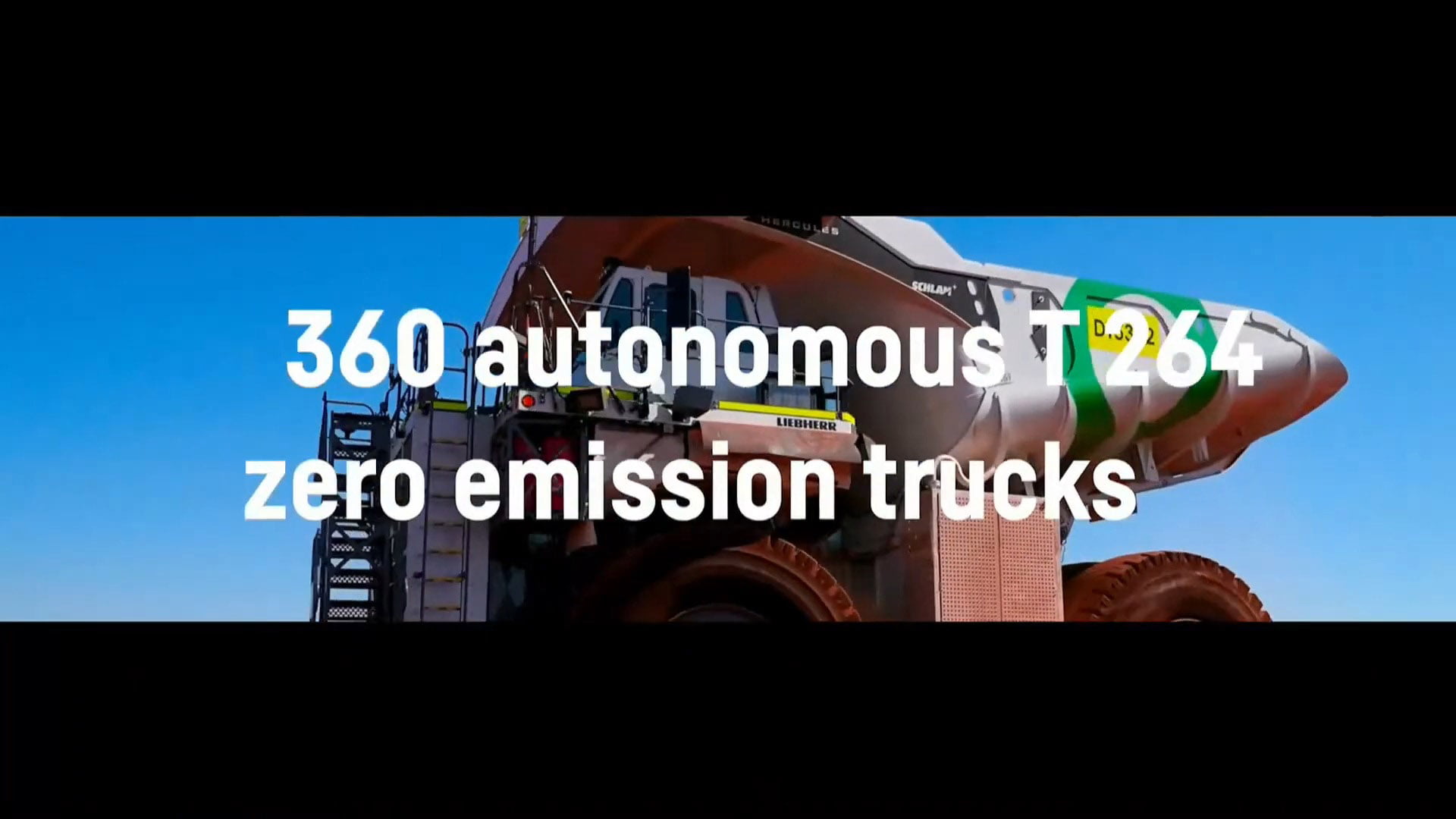
    Fortescue is converting its fleet of 240-ton Liebherr T 264 haul trucks to autonomous battery-electric versions by replacing their Cummins QSK 60 engines with massive 1.9 MWh battery packs. According to Andrew Forrest, the Executive Chairman of Fortescue, "Fortescue Zero developed this battery technology and jointly developed the Automated Haulage Solution, leading the way to provide green innovative solutions to eliminate emissions from heavy industry."

    Environmental Impact

    Currently, diesel-powered mining trucks produce around 192 million tonnes of carbon dioxide annually. The mining industry is a key target for electrification to achieve climate targets and meet regulatory standards. So far, the most powerful commercial EV chargers have reached a maximum output of 3.75 MW, in line with the newly introduced Megawatt Charging System (MCS) standard for commercial vehicles.

    Fortescue’s 6 MW solution is essential for the autonomous electric T 264 haul trucks, which weigh 240 tons and use 1.9 MWh batteries, as conventional chargers would not suffice. The new charging technology is expected to be operational by 2026.

    Comparison with Other Chargers

    In comparison, the Tesla Semi Megachargers deployed by Pepsi provide 750 kW of power, while Tesla’s North American Charging Standard (NACS) supports up to 1 MW. For passenger electric vehicles, the fastest announced charger to date is XPeng’s 800 kW S5 piles, which can deliver 187 miles of range in just 5 minutes. It remains uncertain how Fortescue’s 6 MW chargers will be designed and how they will manage cooling to achieve this unprecedented output.