
Key Takeaways
1. Hyundai is developing the Ioniq 2 to enter the affordable compact EV market, competing with models like Renault 5 and VW ID.2.
2. The Ioniq 2 will be built on a budget-friendly front-wheel-drive version of the E-GMP platform, offering battery options from 58 kWh to 81 kWh, with starting prices around £25,000.
3. The vehicle features a modern design with a coupé-like roof and a high stance, along with a revamped interior that includes an upgraded dashboard and infotainment system.
4. The Ioniq 2 will be one of the first to use Hyundai’s new Pleos software platform, providing integrated vehicle operating systems, over-the-air updates, and enhanced connectivity.
5. Production will take place in Europe, aimed at positioning the Ioniq 2 between the Inster and Kona Electric, with a launch expected at the IAA Mobility 2025.
Hyundai is working on the Ioniq 2 to bridge a gap in its electric vehicle lineup and establish a presence in the affordable compact EV market. As reported by InsideEVs, the Ioniq 2 is set to be revealed at the IAA Mobility 2025, with sales in Europe anticipated about a year later. Hyundai is specifically looking to compete with models like the Renault 5, the Peugeot e-208, and the soon-to-be-released VW ID.2.
Platform and Battery Options
InsideEVs also mentions that the Hyundai Ioniq 2 will be built on the more budget-friendly, front-wheel-drive version of the E-GMP (Electric-Global Modular Platform). This platform provides a range of battery selections, varying from 58 kWh to around 81 kWh, similar to the slightly larger Kia EV3. There will be a smaller battery version featuring LFP technology, with approximate starting prices around £25,000 (about $33,800/€30,000).
Design Features and Interior
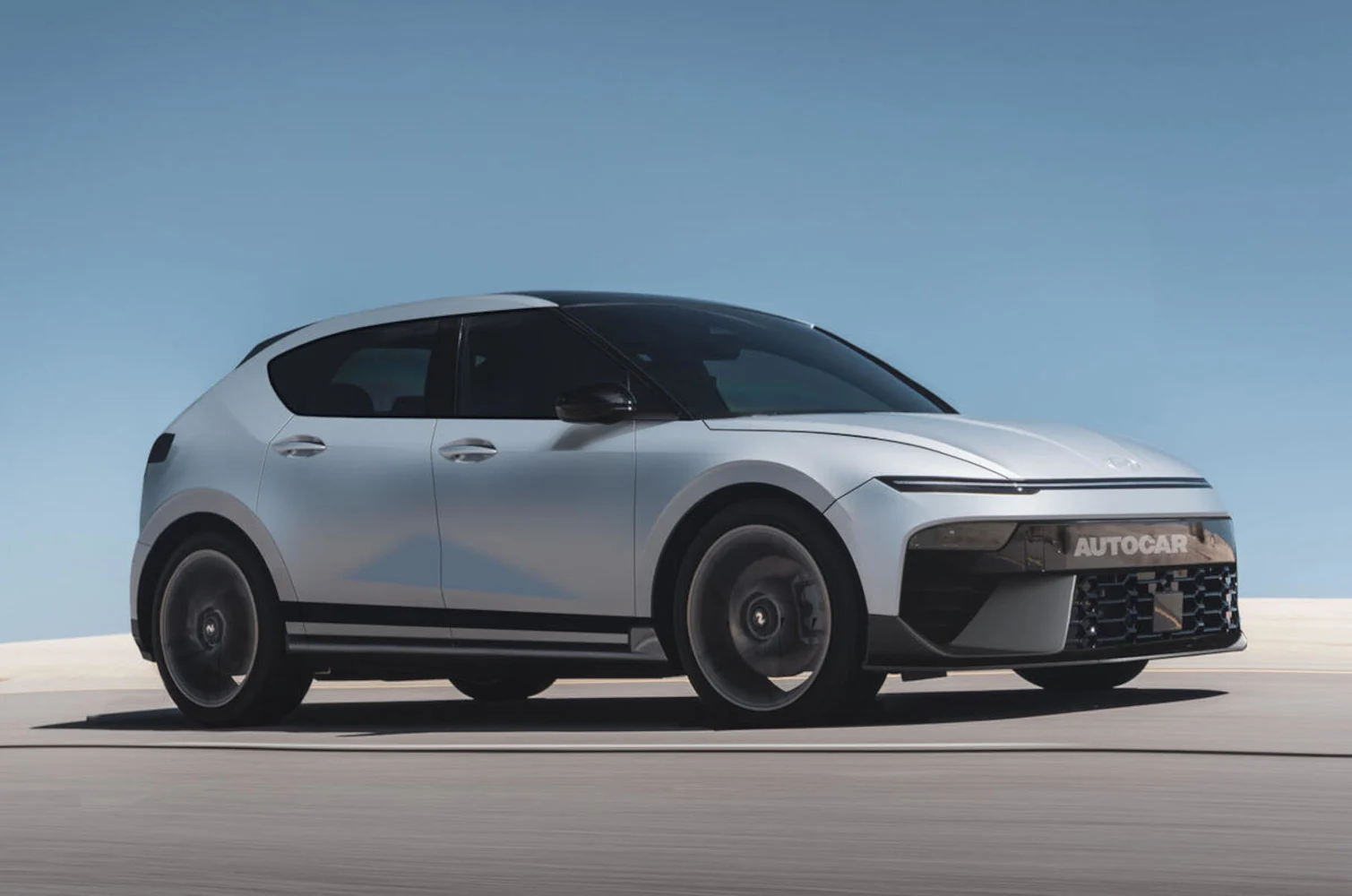
Autocar has shared spy images of the vehicle showcasing a coupé-like roof design with a higher stance reminiscent of an SUV, similar to the Bayon. The front section is likely to include either an LED light strip or slim LED headlights inspired by the Ioniq 6. Inside the Ioniq 2, there will be a significant upgrade in the user experience, featuring a dashboard instrument cluster for both instruments and infotainment, indicating a fresh, modern cabin. The provided image illustrates a possible look of the vehicle based on the spy shots of the covered model.
Advanced Technology Integration
The Ioniq 2 is expected to be among the first vehicles to implement Hyundai’s new Pleos software platform, which integrates the operating system (Vehicle OS), infotainment, cloud connectivity, and applications into a single system. This platform is based on Android Automotive OS and will offer over-the-air updates along with improved connectivity.
Autocar’s report suggests that Hyundai is using the Ioniq 2 to fill a niche in its lineup between the Inster (A-segment) and the Kona Electric (B/C-segment). The aim is to draw in new customers from the expanding compact EV market. Competing models in this segment include the Renault 4, VW ID.2X, Skoda Epiq, and the Bayon. Production will occur in Europe, aligning with Hyundai’s strategy of local manufacturing to be closer to the market.
Conclusion and Future Prospects
The Ioniq 2 may emerge as an appealing entry-level EV due to its favorable price-performance ratio (below £25,000), modern software, and local design. However, there are challenges regarding its exact market placement against established rivals and the final technical details. The launch at IAA Mobility 2025 (scheduled for September 9–[XX], 2025) is anticipated to unveil more specifics.
Source:
Link
Leave a Reply