
Key Takeaways
1. Hera was launched on October 7, 2024, to survey the Didymos binary asteroid system, following NASA’s successful DART mission that tested asteroid deflection.
2. The spacecraft is expected to arrive at the Didymos system in late 2026 to assess the impact effects on Dimorphos.
3. Hera’s Asteroid Framing Camera successfully captured images of the rare A-type asteroid Otero from three million kilometers away.
4. The imaging system demonstrated quick response capabilities by capturing another asteroid, Kellyday, just two months after Otero.
5. The mission showcases collaboration between NASA and ESA to improve planetary defense strategies against potential asteroid threats.
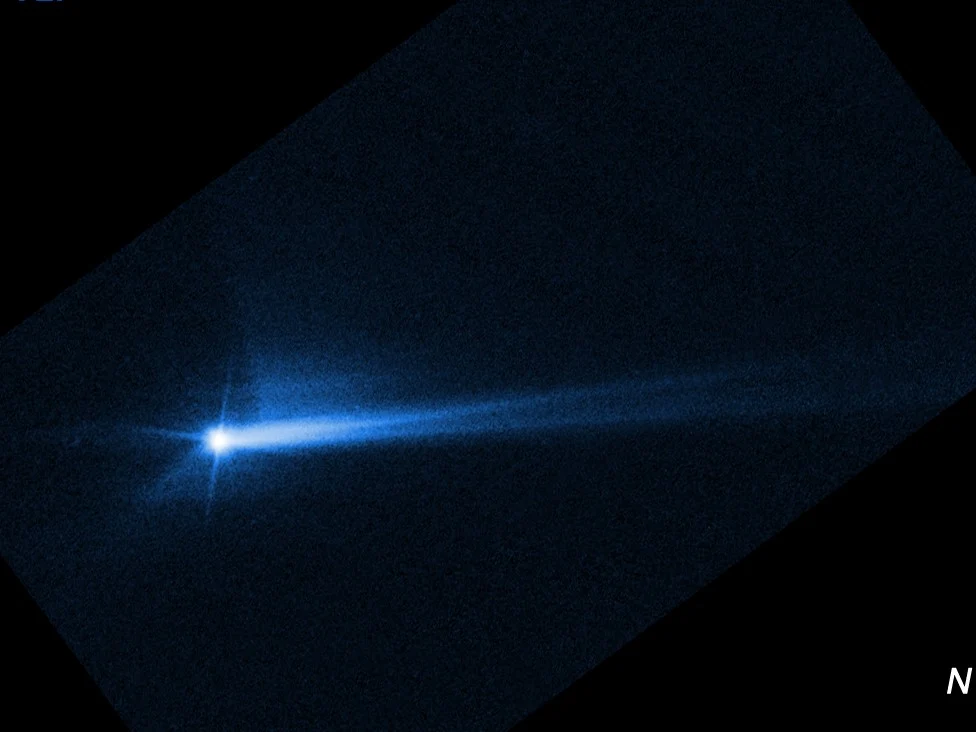
Hera, which was launched on October 7, 2024, is headed towards the Didymos binary asteroid system. This system includes two asteroids: Dimorphos, the smaller one, orbits Didymos, the larger. NASA’s DART (Double Asteroid Redirection Test) was launched in 2022 to test asteroid deflection by crashing into Dimorphos. The mission was a success, changing Dimorphos’ orbit due to the impact.
Arrival and Purpose
Hera is expected to reach the Didymos binary system in late 2026, where it will conduct a survey of Dimorphos after the impact. This will aid scientists in understanding how well asteroid deflection methods work for protecting our planet. However, ESA needed to test the spacecraft’s camera in conditions that would be similar to when it first sees Didymos.
Impressive Imaging
Using its Asteroid Framing Camera, Hera captured Otero, a rare A-type asteroid, from a distance of three million kilometers. The camera observed Otero for three hours, taking pictures every six minutes. The resulting time-lapse showed the asteroid’s movement, making it clear that it was not a star.
After spotting Otero in May 2025, Hera’s imaging system was used again just two months later. On July 19, the spacecraft captured Kellyday, which was around 40 times dimmer than Otero. Giacomo Moresco, a Flight Dynamics Engineer at ESA’s European Space Operations Centre (ESOC) in Darmstadt, Germany, referred to the rapid response observation results as “very encouraging.” Hera is demonstrating its readiness for the upcoming mission at Didymos.
Source:
Link
Leave a Reply