
Key Takeaways
1. Adafruit released a beginner-friendly guide to create a dual-camera thermal vision imager using a Raspberry Pi 4 Model B and several Adafruit components.
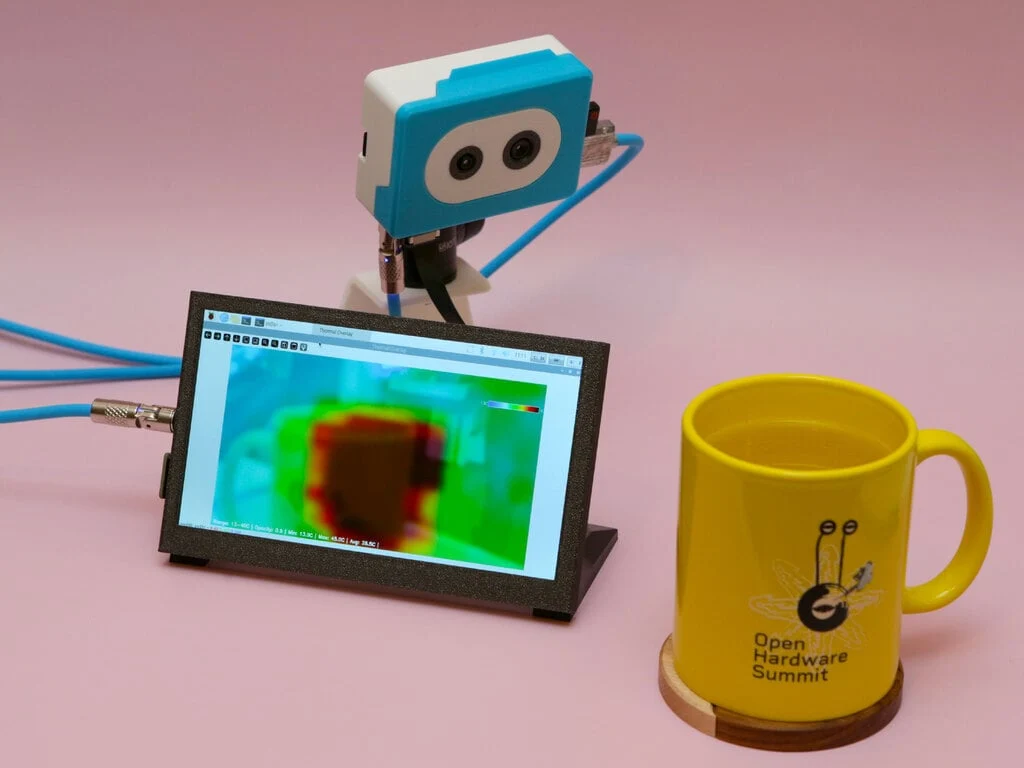
2. The project combines the Raspberry Pi camera module 3 with a thermal feed from the Adafruit MLX90640, producing a real-time heatmap while maintaining visible light image quality.
3. The guide includes CAD files for a custom case, making assembly easy for users.
4. Setting up the thermal camera’s GUI involves a user-friendly Python library (Blinka) and an automatic script for installing dependencies.
5. The total cost of components is under $200, making this project an affordable option compared to other entry-level thermal cameras.
Adafruit has unveiled a new guide designed for beginners that utilizes several Adafruit components along with a Raspberry Pi 4 Model B to create a dual-camera thermal vision imager. This project draws inspiration from the “PitFusion” thermal camera concept, integrating the Raspberry Pi camera module 3 with a thermal feed sourced from the Adafruit MLX90640. The result is a real-time heatmap of the subject being observed, while still preserving the image quality of the visible light camera. Additionally, the guide provides CAD files for a custom case that easily snaps together, making assembly simple. It’s important to note that while hardware is essential, the software component is equally user-friendly.
Software Setup Made Easy
To operate the thermal camera’s GUI, users need to first set up the Pi’s custom Python library, named Blinka. A script is included to help automatically install all the required dependencies. Once that’s done, users can install the software bundle for the project, which configures the cameras for the GUI. This setup enables users to access numerous features, such as modifying the minimum and maximum temperature ranges for detection and changing the opacity of the thermal overlay. Moreover, users can easily save images captured by the camera system.
Affordable and Versatile
Although it may not offer the highest resolution among thermal cameras, this project opens the door to new possibilities for the Raspberry Pi. With all necessary components costing under $200, this build is competitively priced compared to other entry-level thermal cameras. Interested individuals can find additional details regarding the Raspberry Pi thermal camera project linked below.
Source:
Link
Leave a Reply