
Key Takeaways
1. Two well-preserved fossils of Edmontosaurus annectens show signs of hoof-like features for the first time in a land vertebrate.
2. The fossils were found in the “Mummy Zone” of the Lance Formation in Wyoming, known for its exceptional dinosaur remains.
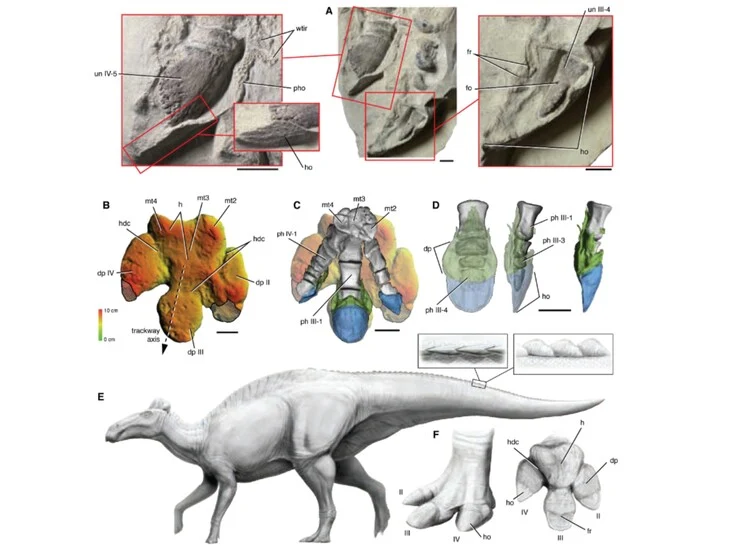
3. The back feet of E. annectens had keratinized hoof sheaths with flat bottoms enclosing spade-shaped bones.
4. Additional soft-tissue characteristics included a tall fleshy crest, spines along the tail, and polygonal scales, preserved by unique fossilization conditions.
5. This discovery marks E. annectens as the earliest known land vertebrate with true hooves, indicating that hoof evolution began in hadrosaur species during the Early Cretaceous.
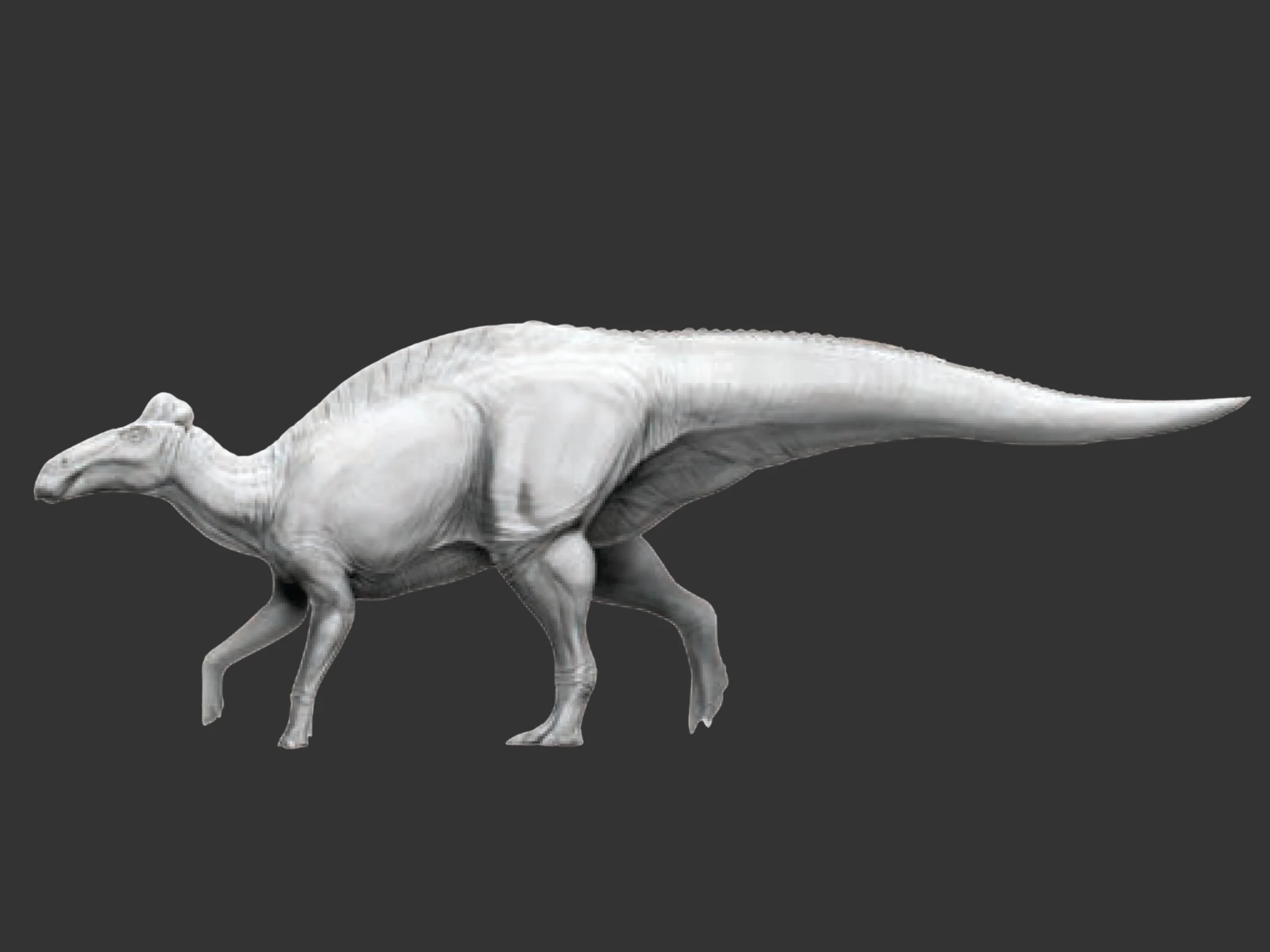
Today, it’s commonly thought that many dinosaurs were feathered. However, the concept of prehistoric reptiles having hooves is not as well-known, mainly because no fossils have been previously found to support this idea. This situation has changed with a new study in Science. Researchers have recently uncovered two incredibly well-preserved fossils of the duck-billed dinosaur Edmontosaurus annectens, which seem to show clear signs of hoof-like features. These fossils were discovered in the “Mummy Zone” of the Lance Formation in Wyoming, which is a six-mile-wide area famous for its well-preserved dinosaur remains.
Discovering the Hoof Structures
The research indicates that toes II to IV on the back feet of E. annectens had keratinized hoof sheaths with flat bottoms that enclosed spade-shaped bones. Similar hoof-like structures were found on the front feet, although they were arranged differently. Such hooves have not been recorded in any other land vertebrate before. Interestingly, the hoof sheaths on the middle toes were about 15 centimeters long – which is nearly twice the length of the bones inside.
Other Fascinating Features
In addition to this astonishing anatomical finding, the fossils provided more soft-tissue characteristics: there was a fleshy crest along the back that would have reached around 28 centimeters (about 11 inches) tall in an adult, a series of spines along the tail, and polygonal scales that varied from one to nine millimeters in size. These details were observable thanks to the remarkable preservation state, which was made possible by the special conditions at the site of the discovery.
The remains first dried out during a drought, then were quickly buried under river sediment during a flood and packed with sand. A thin layer of clay—less than a millimeter thick—settled on the skin’s surface, preserving its outer shape like a “clay template.” This kind of fossilization had only been observed in low-oxygen marine areas before, marking this as the first known instance in a land river system.
Importance of the Findings
This discovery is extremely important for paleontology: Edmontosaurus annectens has now been identified as the earliest known land vertebrate with true hooves, making it the first example of hoofed movement in evolutionary history. The results imply that hoofs began to appear in early hadrosaur species as far back as the Early Cretaceous, long before they showed up in mammals.
Leave a Reply