

Key Takeaways
1. NGC 2835 is a small spiral galaxy located in the constellation Hydra, resembling an eye due to its spiral arms.
2. The Hubble Space Telescope used H-alpha wavelength to capture bright nebulae within NGC 2835, highlighting areas rich in hydrogen.
3. The latest image from Hubble displays clusters of young blue stars and a supermassive black hole at the galaxy’s center.
4. The image features dark dust strands along the spiral arms, adding to the galaxy’s unique appearance.
5. NGC 2835 has been featured twice in Hubble’s Picture of the Week due to its captivating characteristics.
Researchers have been utilizing the Hubble Space Telescope to investigate nebulae, which are regions of star formation made up of gas and dust. This time, the attention was directed towards NGC 2835, a spiral galaxy found in the constellation Hydra, also known as The Water Snake.
The Characteristics of NGC 2835
NGC 2835 is considered a relatively small galaxy, measuring approximately half the width of the Milky Way. The swirling design of its spiral arms gives NGC 2835 a notable likeness to an eye. This unique shape, along with its location near the head of the Hydra constellation, has led to it being affectionately called the Eye of the Serpent.
Hubble’s Captivating Image
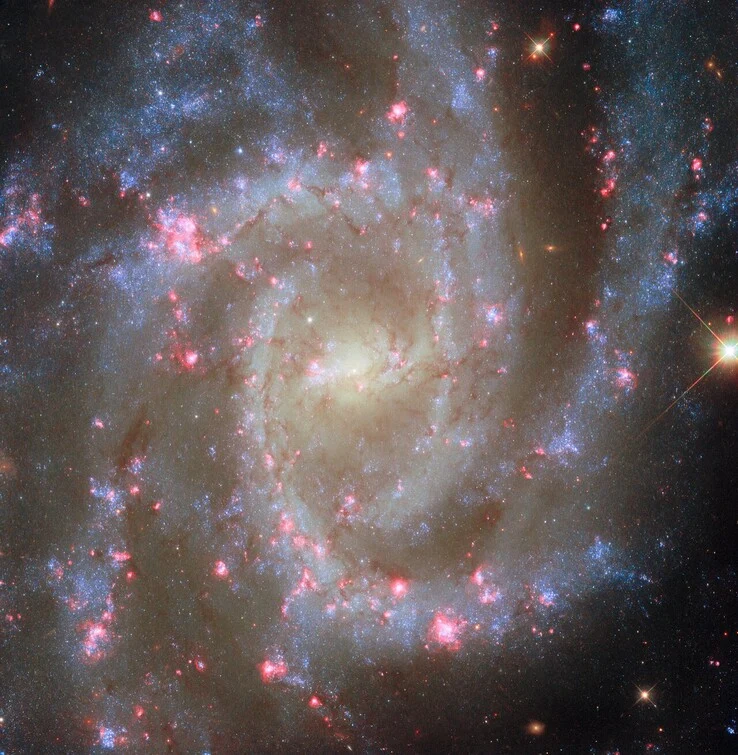
By employing the H-alpha wavelength, the latest image from Hubble revealed multiple bright nebulae within NGC 2835. H-alpha represents a specific wavelength of red light produced by hydrogen. Since many nebulae are rich in hydrogen, they emit light at this wavelength, making them more easily observable.
The recent photograph taken by Hubble shows a direct view of the galaxy, showcasing clusters of young, luminous blue stars scattered throughout its spiral arms. The center, known to contain a supermassive black hole that is millions of times heavier than our sun, emits a yellow glow. Additionally, the image highlights dark strands of dust tracing along the spiral arms. This galaxy has been a focal point in various observations and has now appeared twice in the Hubble Space Telescope’s Picture of the Week.
Source:
Link
Leave a Reply