
Key Takeaways
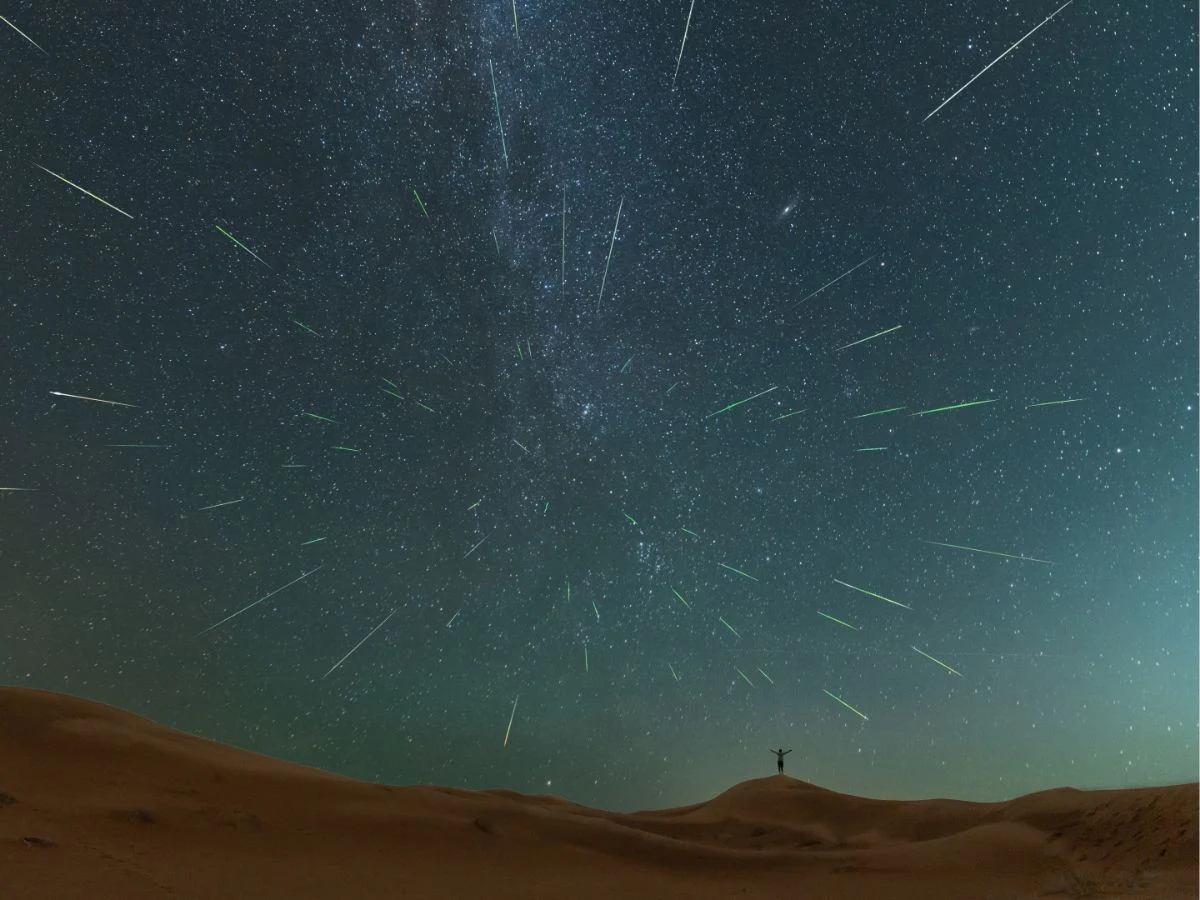
1. Three meteor showers will occur this summer: Alpha Capricornids, Delta Aquariids, and Perseids.
2. The Alpha Capricornids peak from July 29 to 30, with over five meteors per hour.
3. The Delta Aquariids peak on July 28-29, with around 25 meteors per hour, best viewed in the early morning.
4. The Perseids, peaking on August 12-13, can produce over 100 meteors per hour but may be affected by a bright full moon.
5. Weather conditions, such as cloud cover, can impact visibility for all meteor showers.
Every summer, the nighttime sky always presents a stunning array of sights. This year is no different, as three meteor showers are set to dazzle us.
Celestial Wonders Await
This means that plenty of celestial bodies are floating in space. Sometimes, they leave their impressions in our skies, reminiscent of a nova that appeared 600 years ago. So, this summer, if you gaze upward at specific moments, you’ll catch sight of numerous meteors blazing through our atmosphere. The first meteor shower will occur from July 29 to 30, peaking during this time.
Alpha Capricornids Meteor Shower
Known as the Alpha Capricornids and originating from comet 169P/NEAT, the American Meteor Society (AMS) states that over five meteors per hour can be seen at its peak. While this may not seem like a lot, the experience is truly mesmerizing, as fiery balls can occasionally light up the dark sky.
The second meteor shower, the Delta Aquariids, is more likely to be spotted in the southern hemisphere. Though it might be harder to see, experts predict around 25 meteors per hour at its peak. NASA suggests that the best time for watching this shower is early morning when the sky is darkest and your viewing area is elevated above the horizon. This meteor shower is caused by comet 96P/Machholz, which orbits the Sun every 5.2 years, leaving behind a trail of debris that Earth moves through. The peak activity for this event is expected between July 28 and July 29.
The Spectacular Perseids
Finally, we have the most famous of the showers, the Perseids. Occurring with a peak between August 12 and 13, it’s possible to see more than 100 meteors per hour. However, there is a catch: a full moon may hinder visibility.
The AMS notes it could be around 84% full, and its brightness might decrease visibility by as much as 75%. Even though you can still look up during this time, you’ll mainly spot the largest and brightest meteors. Additionally, you must keep an eye on the weather; if clouds cover the sky, your chances of seeing these wonders could be ruined.
Source:
Link
Leave a Reply