Category: Wearables

  • Casio May 2025: Premium Oceanus, G-Shocks & Affordable Edifice

    Casio May 2025: Premium Oceanus, G-Shocks & Affordable Edifice

    Key Takeaways

    1. Casio launched nearly 20 new models in May, including premium and budget-friendly options.
    2. The MTG-B4000 series features a slim design, Bluetooth connectivity, and solar charging, priced between ¥165,000 and ¥176,000.
    3. New surf watches in the G-Lide series focus on tide data and workout tracking, priced at ¥28,600.
    4. The “Black and Bold Red” series includes five models with matte black cases, priced between ¥14,300 and ¥24,750.
    5. Unique collaborations include a Crocs watch with glow-in-the-dark features and a limited-edition model with the Surfrider Foundation Japan.


    After a hectic April filled with leaks, we are now nearing the end of May, which has also been bustling for the Japanese watch brand. Almost 20 new models were introduced into Casio’s collection, with many still up for grabs (though a few have already sold out). From luxurious titanium chronographs to budget-friendly solar-powered hybrids, here’s a complete overview of each model that officially debuted this month.

    New Releases in the MTG Series

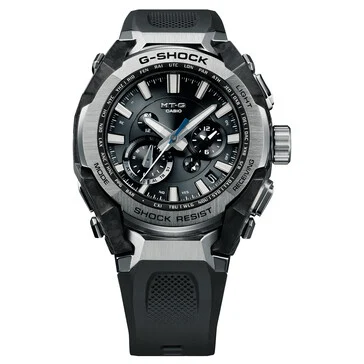
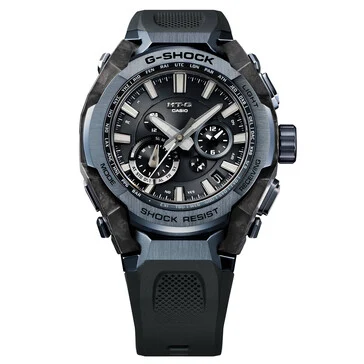
    The eagerly anticipated MTG-B4000 series has finally launched, featuring two models: MTG-B4000B-1A2JF and MTG-B4000-1AJF. As previously mentioned during the leak period, both timepieces showcase a carbon and stainless steel Dual Core Guard design, boast a new slim profile of 14.4 mm, and offer premium features like Bluetooth connectivity, solar charging, and sapphire crystal. The prices are set at ¥176,000 (~$1,121) for the B-1A2JF and ¥165,000 (~$1,051) for the standard model.

    Surf Watches and Collaborations

    On the surf watch front, the GBX-100S-1JF and GBX-100S-2JF from the G-Lide series have hit the market in Japan. These new additions use skeleton-style resin cases and stainless-steel bezels, focusing extensively on tide data, lap tracking, and workout logs via the Casio app. The price for these models is ¥28,600 (~$182).

    Another collaboration has made its way to the shelves with the limited-edition GW-M5610U, created in partnership with Japanese artist Tamio Okuda. This model features unique text on its display, a striking red-and-black color scheme, and is set to ship in August for ¥35,000 (~$223).

    The Black and Bold Red Lineup

    Casio also released five new models in the highly sought-after “Black and Bold Red” series: DW-5600BBR-1JF, GD-010BBR-1JF, GX-56BBR-1JF, GA-700BBR-1AJF, and GA-B2100BBR-1AJF. Each model showcases matte black cases with dark red highlights and is priced between ¥14,300 (~$91) and ¥24,750 (~$158).

    The Oceanus Manta collection welcomed two new groups of watches. Early in May, Casio introduced the OCW-S400A-5AJF and OCW-S40-2AJF (both three-hand models), along with OCW-S7000E-2AJF and OCW-S7000E-2AJF (chronographs). All these watches feature titanium constructions, sapphire crystals, solar-powered quartz movements, and Bluetooth connectivity.

    Towards the end of the month, Casio launched the OCW-S6000PB-7AJF. This limited model of just 600 units features a bezel with 72 facets cut from sapphire and has a stunning silver-blue dial. It is scheduled for release in June with a price tag of ¥385,000 (~$2,700).

    Affordable Options and G-Shock Collaborations

    The Edifice EFV-610 series made its debut in Japan, offering four models: EFV-610DE-2A, EFV-610ECL-1A, EFV-610DE-3A, and EFV-610EL-5A. These are classic quartz chronographs with a water resistance of 100 m, a 1/10-second stopwatch, and stainless steel cases. Two of the models come with steel bracelets, while the others feature leather straps.

    In the more budget-friendly category, Casio introduced new AE1000W color variants in the US: AE1000W-5AV and AE1000W-8AV. These models maintain the classic cockpit instrument-style design, offering world time for four zones, a stopwatch, countdown timer, and a battery life of 10 years. The price is $29.95.

    Also available in the US are three models from the AQS820W series: AQS820W-1AV, AQS820W-3BV, and AQS820W-5AV. These hybrid analog-digital watches come with Tough Solar technology, a water resistance of 100 m, and can last up to 10 months on a solar charge. They retail for $55.95.

    The MTP-B185 series quietly launched worldwide, featuring six stainless steel color options, including gold and black ion-plated versions. All models have a 40 x 32.5 mm case, 50 m water resistance, and an SR920SW battery. Notable models include MTP-B185B-7AV, MTP-B185D-1AV, and MTP-B185G-9AV, among others.

    G-Shock has been busy with collaborations this May. The Offspring x DW-5600 “Cement Edition” was introduced, but this model is limited to a Friends & Family raffle only.

    Unique Collaborations and More

    Casio also unveiled a collaboration with Crocs, launching the GA2100CROCS25-7, which features a glow-in-the-dark resin case and a strap that integrates with Crocs’ footwear rivets.

    The G-5600SFJ-9, a collaboration with Surfrider Foundation Japan, was officially announced. This watch comes with a bright yellow bio-resin construction, 200 m water resistance, and solar charging capabilities. It is expected to launch in June at a price of ¥20,900.

    Another collaboration features the DW-6900 x Montedio Yamagata, priced at ¥19,800. This model maintains the original DW-6900U design while adding a red reverse LCD, team crest, and an all-black matte finish.

  • Rogbid SR10 Smart Ring: 50% Off with Vibration & Touch Features

    Rogbid SR10 Smart Ring: 50% Off with Vibration & Touch Features

    Key Takeaways

    1. The Rogbid SR10 smart ring is available for direct purchase in eight sizes and three colors: Aura Gold, Lunar Silver, and Cosmic Black.

    2. The launch price of the SR10 is $99.99, representing a 50% discount from its usual price.

    3. Key features include a vibration function, touch-sensitive surface, and compatibility with Bluetooth devices for controlling cameras and music.

    4. The smart ring tracks health metrics such as heart rate, blood oxygen saturation, body temperature, sleep patterns, and menstrual cycles.

    5. The SR10 includes an SOS feature for emergencies, is water-resistant up to 5 ATM, and has a battery life of up to seven days on a single charge.


    Rogbid has launched a new smart ring, the SR10, which is now available for direct purchase from the company. This latest addition to their lineup comes in eight different sizes and three color choices: Aura Gold, Lunar Silver, and Cosmic Black.

    Discounted Launch Price

    At its release, the SR10 is priced at a significant discount of $99.99, which is $100 less than its usual listed price, marking a 50% reduction. However, it’s important to take such suggested retail prices with a grain of salt.

    Key Features

    The SR10 boasts a vibration feature and a touch-sensitive surface, which are among its standout characteristics. Though Rogbid calls it a “touchscreen,” the surface does not function like a traditional display. Its sleek black design contrasts nicely with the titanium alloy body of the ring. This surface can be used for controlling other Bluetooth devices, like a smartphone camera or managing music.

    In addition, the smart ring provides haptic feedback for several uses, such as notifying users of incoming messages through short vibrations. Besides this feature, the Rogbid SR10 is fitted with sensors designed to monitor heart rate, blood oxygen saturation, body temperature, sleep patterns, and menstrual cycles.

    Emergency Features and Durability

    The Rogbid SR10 is equipped with an SOS feature that allows wearers to alert selected contacts during emergencies. As per the official specifications, the ring is rated 5 ATM for water resistance and can last up to seven days on a single charge.

    Please note that all details and pricing are subject to change. While the offer was current at the time of writing, it may be limited either by time or by stock availability.

    Source:
    Link

  • TCL RayNeo X3 Pro: Next-Gen MicroLED AR Glasses Launch

    TCL RayNeo X3 Pro: Next-Gen MicroLED AR Glasses Launch

    Key Takeaways

    1. The TCL X3 Pro features advanced microLED technology for a high-quality AR experience, comparable to the Apple Vision Pro.

    2. Weighing only 76 grams and offering peak brightness of 6,000 nits, these lightweight glasses are designed for daily use and quick charging.

    3. Powered by Qualcomm’s Snapdragon AR1 platform, the X3 Pro includes dual cameras and multiple microphones and speakers for enhanced AI functionalities.

    4. The device operates on Android, ensuring compatibility with popular apps like Douyin and Bilibili, addressing AR software fragmentation.

    5. Currently available only in China, the X3 Pro retails for approximately $1,250, with potential subsidies lowering the price to about $1,063.


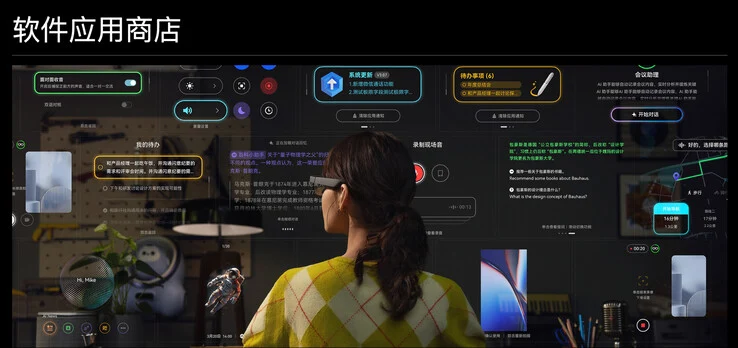
    The newest member of TCL’s RayNeo series, also referred to as ‘Thunderbird’ in China, is being promoted as the epitome of high-end smart glasses.

    Advanced Technology

    This device features lenses built on cutting-edge microLED tech that TCL created in-house, aiming to offer a “full-color” AR experience that rivals the quality, immersion, and usability seen in the Apple Vision Pro. The display visible through the glasses is designed to replicate the feel of using a real monitor as closely as possible through TCL’s innovative waveguide.

    Bright and Lightweight

    The X3 Pro is said to deliver a peak brightness of 6,000 nits, with an average of 3,500 nits. With a weight of only 76 grams, these IP52-rated glasses are made for daily wear, and they come with a 245mAh battery that charges fully in just 40 minutes. The glasses provide a 30° field of view and feature 3 degrees-of-freedom (3DOF) head-tracking, contrasting to the 6DOF found in certain other devices.

    Powerful Features

    Equipped with Qualcomm’s Snapdragon AR1 platform, the X3 Pro includes dual cameras using sensors from Sony and OmniVision, which are essential for various AI functionalities like virtual assistance, real-time translation, and object identification. Additionally, they boast triple microphones and dual speakers, enhancing these capabilities. The device aims to tackle the issue of AR software fragmentation by operating on Android, making it compatible with popular apps like Douyin and Bilibili.

    However, one significant limitation of the X3 Pro is that it is currently only available for consumers in China.

    Their suggested retail price is 8,999 yuan (about $1,250), but it drops to 7,649 yuan (~$1,063) when considering available subsidies.

    There hasn’t been any announcement regarding a global version of the X3 Pro yet; however, the RayNeo Air 2s OLED glasses are available bundled with a JoyDock Nintendo Switch adapter for $417 on Amazon at this moment.

    Digital Chat Station via Weibo.

    Source:
    Link


  • Casio Launches G-Shock MTG-B4000: Carbon and Stainless Steel Frames

    Casio Launches G-Shock MTG-B4000: Carbon and Stainless Steel Frames

    Key Takeaways

    1. The new MTG-B4000 series features a significant redesign influenced by AI-assisted structural simulations, resulting in lighter and thinner watches while maintaining strength.
    2. Two models are available: the MTG-B4000B-1A2JF priced at ¥176,000 (~$1,220) and the MTG-B4000-1AJF priced at ¥165,000 (~$1,144), both weighing 112g and measuring 14.4mm in thickness.
    3. The watches incorporate a new layered carbon frame and MIM (metal injection molding) parts for enhanced durability, with a shock-resistant “Dual Core Guard” design.
    4. Additional features include Bluetooth connectivity, solar charging, radio-controlled timekeeping (MultiBand 6), high-brightness LED lights, and sapphire crystal with anti-reflective coating.
    5. The MTG-B4000 series aims to refresh the rugged-premium segment with improved ergonomics and design technology, available initially on Casio Japan’s online store.


    After much waiting and some earlier leaks we reported on, Casio has finally unveiled the new MTG-B4000 series in Japan, featuring two models: the MTG-B4000B-1A2JF and the MTG-B4000-1AJF. Both models are now available on Casio’s website, complete with all the specifications, and they are expected to hit the shelves in Japan this June.

    Exciting New Design

    The MTG-B4000 series is noted for its significant redesign, which is influenced by AI-assisted structural simulations—a move that might not please everyone. The updated watches are lighter and thinner compared to their predecessors, while still maintaining strength, according to the manufacturer. Casio has introduced a new blend of carbon and stainless steel as part of its well-known “Dual Core Guard” design, ensuring that the watch is shock-resistant and can withstand water up to 200 meters.

    Specifications and Pricing

    Both models feature a fresh layered carbon frame construction and utilize MIM (metal injection molding) parts for improved durability. The B4000B-1A2JF is priced at ¥176,000 (~$1,220) and boasts a blue-gray IP finish, while the more understated B4000-1AJF is available for ¥165,000 (~$1,144). Each watch weighs just 112g and has a thickness of 14.4mm, making them noticeably slimmer than earlier MT-G versions.

    Additional Features

    Some other important features include Bluetooth connectivity, solar charging capabilities, radio-controlled timekeeping (MultiBand 6), high-brightness LED lights, and a sapphire crystal with an anti-reflective coating. These watches can connect to the Casio Watches app and come with essential G-Shock functions like world time, stopwatch, and triple G resist.

    In comparison to the earlier MTG-B3000, this new line seems to be aiming to refresh the rugged-premium segment with improved ergonomics and the latest design technology. For those in the market for a high-end analog G-Shock that isn’t too bulky, this update could be a significant option to think about. Both models are currently limited to the online store for Casio Japan, but broader availability should be coming soon.

    If you’re looking for something a little more affordable, consider the Casio MTG-B1000D-1AJF, which is priced at $775 on Amazon.

    Source:
    Link


  • Casio EFK-100 Mechanical Watch: Latest Price and Specs Update

    Casio EFK-100 Mechanical Watch: Latest Price and Specs Update

    Key Takeaways

    1. Model Numbers: The new Casio EFK-100 watches include model numbers EFK-100D-2A (blue), EFK-100D-3A (green), EFK-100D-7A (white), EFK-100CD-1A (black), and EFK-100XPB-1A (all-black Full Carbon).

    2. Specifications: The watches have a case diameter of 39 mm, a transparent mineral glass case back, Sapphire glass in the front, and will use Module 5755 with Seiko NH35 caliber.

    3. Water Resistance: The EFK-100 watches will offer water resistance up to 10 bar.

    4. Release Date: The expected launch date has shifted from June 2025 to August 2025.

    5. Pricing: The estimated prices are €449 (about $509) for the EFK-100XPB-1A, €299 (approximately $339) for the EFK-100CD-1A, and €279 ($317) for the standard dial versions.


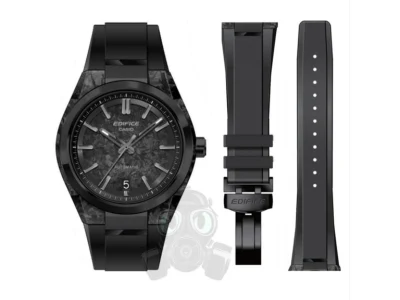
    More details regarding the Casio EFK-100 watches have come to light. These five devices were leaked a few weeks ago and are poised to be the brand’s very first mechanical watchs. Previous renders have shown the design of these Casio Edifice EFK-100 timepieces.

    Model Numbers Revealed

    We already knew three of the five model numbers: the EFK-100D-2A (blue), the EFK-100D-3A (green), and the EFK-100D-7A (white). A recent Instagram post from a trusted source geesgshock (shown below) suggests that these models will be accompanied by the black EFK-100CD-1A Carbon Dial. Additionally, there will be a top-tier all-black EFK-100XPB-1A Full Carbon version featuring a carbon casing and dial.

    Specifications and Features

    More new info from geesgshock regarding the future mechanical EFK-100 watches includes the case diameter, which is 39 mm (about 1.5 inches). Also, it is likely to have a transparent mineral glass case back, with Sapphire glass in the front. Previous reports have mentioned that these watches will utilize a Module 5755 along with a Seiko NH35 caliber, and they will provide water resistance up to 10 bar.

    Expected Release Date and Pricing

    At first, these watches were anticipated to be released in June 2025. However, the latest gossip indicates an August 2025 launch instead. There’s also fresh pricing info: the EFK-100XPB-1A Full Carbon watch could be priced at €449 (around $509), while the EFK-100CD-1A Carbon Dial watch might be around €299 (approximately $339). The standard dial versions may be available for €279 ($317). Casio has not yet released any official information regarding these new mechanical watches.

    Source:
    Link

  • Whoop MG Fitness Tracker: ECG, Blood Pressure, and Major Issues

    Whoop MG Fitness Tracker: ECG, Blood Pressure, and Major Issues

    Key Takeaways

    1. The Whoop MG is primarily a fitness tracker, not a fully functional smartwatch, but has faced significant reliability issues.
    2. Many users report the device failing quickly, becoming unresponsive, and losing connection to the smartphone app.
    3. Whoop is replacing faulty trackers and offering affected customers free subscriptions during the replacement period.
    4. The extent of defective devices is unclear, as dissatisfied users tend to be more vocal than satisfied ones.
    5. The Whoop MG includes features like heart rate monitoring, ECG, and estimated blood pressure readings, with a basic subscription costing $199 annually.


    The Whoop MG has recently entered the market. It is a device meant to track multiple health metrics and is more of a fitness tracker than a fully functional smartwatch. Many users have reported serious issues with this new gadget. Specifically, the trackers are said to be failing quickly, becoming unresponsive after only a brief usage period. The LEDs are completely off, and users can no longer connect the Whoop MG to the accompanying smartphone app. Common troubleshooting methods, like resetting or recharging the device, reportedly do not resolve the problems.

    Whoop’s Response to the Issues

    There hasn’t been a lot of backlash concerning Whoop’s handling of this dilemma since they are replacing the faulty trackers. The company issued a statement on Tech-Issues Today, stating that customers affected by this issue won’t have to pay for their subscription while waiting for the replacement. Whoop further argues that these complaints do not represent the majority of users, which is a reasonable point.

    Uncertainty Around Faulty Devices

    Nonetheless, it remains uncertain how many of these fitness trackers are defective, as those experiencing problems are typically more vocal than satisfied users. However, it is quite strange that an increasing number of users are reporting the same issue. The Whoop MG can monitor heart rates and also includes an ECG feature, along with providing estimated blood pressure readings. There are different subscription plans available, with the basic Whoop One subscription priced at $199 annually.

    Source:
    Link

  • New Casio G-Shock GMW-BZ5000 Leak: Case Redesign & MiP Display

    New Casio G-Shock GMW-BZ5000 Leak: Case Redesign & MiP Display

    Key Takeaways

    1. The GMW-BZ5000 series will feature a refreshed modular case design, allowing for potential customization and easier repairs.
    2. All models maintain a stainless steel build but introduce new side modules, reminiscent of the GCW-B5000UN.
    3. The major upgrade is the MiP (Memory in Pixel) display, offering better visibility compared to standard LCDs, especially in low light.
    4. Pricing is expected to be around €599 for the stainless steel version and €649 for the ion-plated models.
    5. A release is anticipated in late 2025, though no specific launch date has been confirmed yet.


    Casio is set to refresh its full-metal square watch range with an exciting new update. Recent leaks unveil the upcoming GMW-BZ5000 series, showcasing a revamped modular case design, innovative MiP displays, and three distinct color options.

    Versions of the GMW-BZ5000

    The leaked information indicates that the GMW-BZ5000 will be available in three different models:

    All models will maintain the well-known stainless steel build but will incorporate a newly designed case with side modules that may be detachable or at least newly crafted. This modular design is similar to the GCW-B5000UN model, hinting that more customizable or easier-to-repair full-metal options could be on the horizon.

    Key Features of the New Models

    In terms of appearance, the GMW-BZ5000 watches retain the classic 5000-series silhouette, while the MiP (Memory in Pixel) display stands out as the major upgrade. Unlike standard LCDs, MiP displays provide significantly improved visibility, particularly in dim conditions or when glanced at quickly, which is a feature that fans have eagerly anticipated in the metal line. The black and gold models come with negative displays, whereas the silver variant opts for a clearer positive layout.

    Pricing and Release Information

    Regarding pricing, the leaked details suggest a cost of €599 for the stainless steel version and €649 for the ion-plated colored models. While these prices are not officially confirmed, they would position the BZ5000 series as slightly pricier than the existing B5000 series models.

    As for the launch date, no specific date has been disclosed yet, but according to the source (@geesgshock on Instagram), a release is expected in the latter part of 2025. If these leaked images are indeed the final production designs, it seems that Casio may be preparing for an official reveal very soon.

    Source:
    Link

  • New Casio G-Shock Nano DWN-5600 Ring Watch Series Rumors

    New Casio G-Shock Nano DWN-5600 Ring Watch Series Rumors

    Key Takeaways

    1. Casio plans to launch a new series of ring watches, the DWN-5600 models, in late 2025.
    2. The anticipated models include three color options: black (DWN-5600-1), red (DWN-5600-4), and yellow (DWN-5600-9).
    3. The design is similar to the DW-5600 series, featuring a resin body, strap, and an octagonal bezel around a digital display.
    4. Key features of the DWN-5600 series are still unconfirmed, but may include functionalities akin to the CRW-001, such as dual time and a stopwatch.
    5. The expected retail price for the new ring watches is €99.90 (about $114), with no confirmed release details for markets like the US.


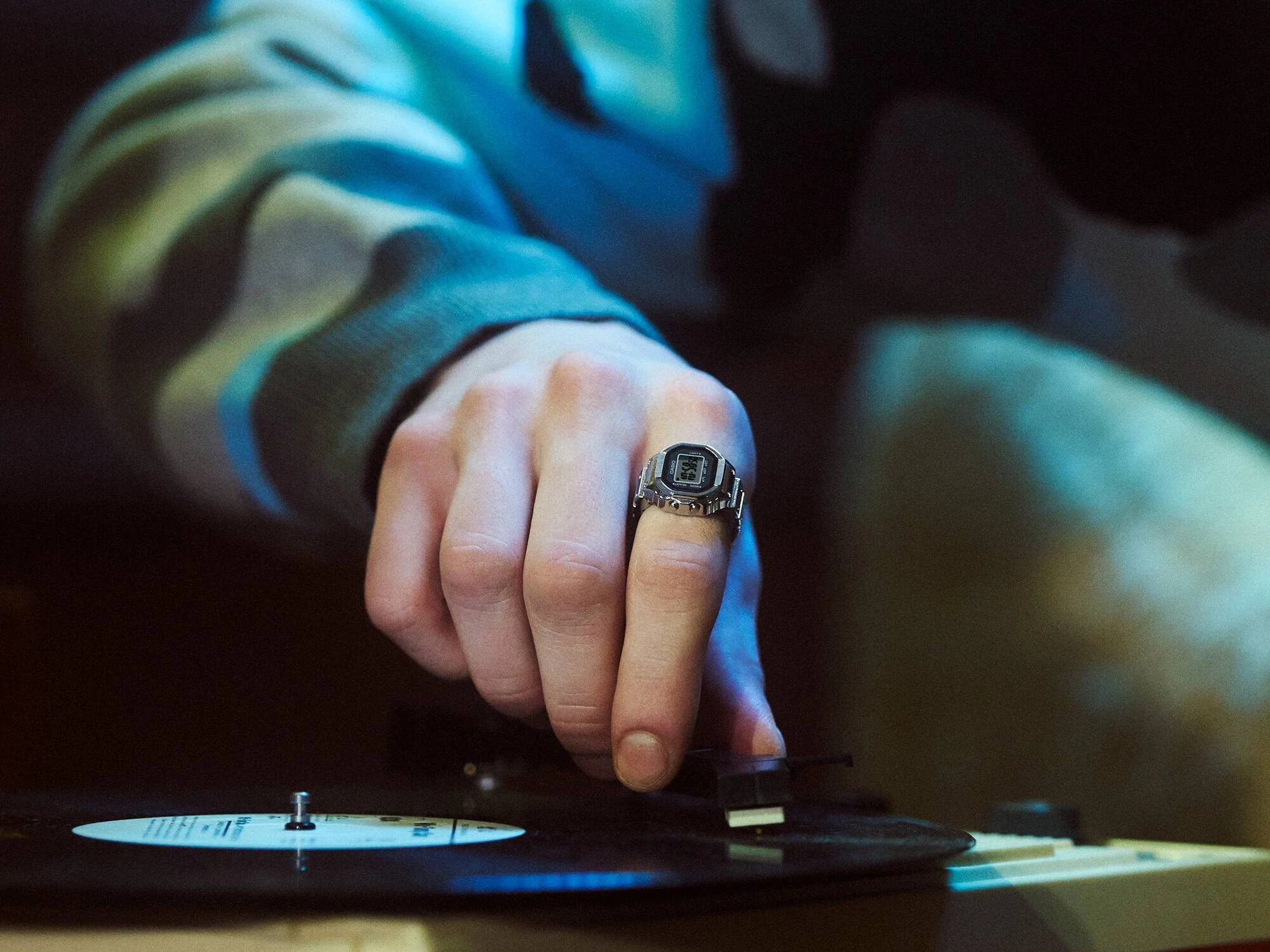
    Casio is possibly set to introduce a new series of ring watches in late 2025. The anticipated DWN-5600 models are expected to follow the Casio CRW-001, which debuted at the end of 2024, marking the company’s 50th anniversary.

    Possible Models and Colors

    A recent Instagram post by geesgshock suggests that the G-Shock Nano range could feature three different ring styles: the DWN-5600-1 (black), the DWN-5600-4 (red), and the DWN-5600-9 (yellow). Alleged leaked images depict a design reminiscent of the DW-5600 series watches, including the DW5600UE-1, which is currently priced at $55.96 on Amazon. These new ring watches seem to have a resin body and strap, along with an octagonal bezel framing a digital display.

    Features Yet to Be Confirmed

    The complete capabilities of the upcoming DWN-5600 series ring watches are still unknown. For context, the CRW-001 offers features like dual time, an automatic calendar, and options for 12 or 24-hour time formats. Additionally, it includes a stopwatch that measures in 1/100th seconds, Time Flash, and an LED backlight.

    Expected Release and Pricing

    It has been indicated that the Casio G-Shock Nano Ring Watches may hit the market toward the end of 2025, with a suggested retail price of €99.90 (approximately $114). So far, there are no price or release speculations for markets such as the US. Moreover, Casio has not yet officially confirmed the existence of this product.

    Source:
    Link

  • Infrared Vision Contact Lenses Enhance Color Perception

    Infrared Vision Contact Lenses Enhance Color Perception

    Key Takeaways

    1. A research team led by Yuqian Ma created soft contact lenses that allow users to see near-infrared (NIR) light by converting NIR photons into visible light.

    2. The lenses are made with upconversion nanoparticles in a flexible poly-HEMA matrix, achieving over 85% transparency in the visible spectrum and showing no harm to corneal cells or retinal health in safety tests.

    3. Electroretinography tests demonstrated normal visible light responses and distinct reactions to NIR in mice, indicating effective NIR detection even with eyelids sutured.

    4. Human trials confirmed that participants could see NIR flashes in various lighting conditions and accurately interpret Morse code using the lenses, achieving a high spatial resolution for NIR images.

    5. By using a trichromatic design in the nanoparticles, the lenses enabled users to perceive colors in NIR, allowing recreation of the complete NTSC color spectrum and differentiation of multi-colored objects.


    Humans typically perceive light within the spectrum of 400 nm to 700 nm. However, a research group led by Yuqian Ma has broadened this spectrum by creating soft contact lenses that transform near-infrared (NIR) photons into visible light. This innovative development allows users to see in NIR without the need for surgical procedures.

    Innovative Lens Design

    The lenses incorporate upconversion nanoparticles embedded in a poly-HEMA matrix. By aligning the refractive index of the polymer with that of the nanoparticles and keeping the nanoparticle content at seven percent by mass, the researchers achieved over 85 percent transparency throughout the visible spectrum. Mechanical testing indicated that the lenses are as flexible and durable as standard commercial options, and six-hour safety assessments in mice showed no increase in corneal cell death or retinal inflammation.

    Experimental Results

    Electroretinography demonstrated normal responses to visible light, as well as distinct responses to NIR when the lenses were worn. Mice using these lenses had constricted pupils under 980 nm light, avoided areas illuminated by NIR, and successfully utilized NIR flicker to evade discomfort. These reactions remained consistent even with their eyelids sutured, indicating an eyelid transmittance of 23 percent at 980 nm compared to just 0.4 percent at 535 nm.

    Human Trials

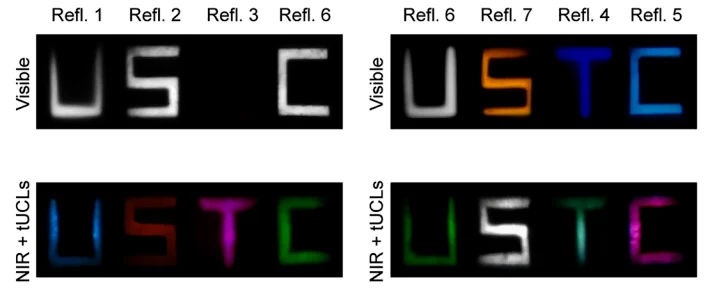
    In trials with human participants, similar findings were observed. Those wearing the lenses were able to see NIR flashes in total darkness and under 300 lux of ambient light. Closing their eyes minimally affected their NIR sensitivity but significantly reduced their ability to detect visible light. Their flicker-fusion threshold for NIR matched the visible light standard, and they accurately interpreted Morse code sequences just as well as with visible light. An external module with three lenses projected NIR images through a flat up-conversion film, achieving a spatial resolution limit near 65 cycles per degree, which allowed for the identification of simple NIR patterns, letters, and shapes.

    Enhanced Color Perception

    By substituting traditional nanoparticles with a trichromatic design that is excited orthogonally, the researchers introduced color capabilities. Distinct excitations at 808 nm, 980 nm, and 1532 nm generated separate green, blue, and red emissions. Color-matching tests revealed that users could combine these three “primary” NIR channels to recreate the complete NTSC-sized color spectrum and differentiate between multi-colored symbols, phrases encoded with combined color and temporal cues, as well as reflective objects whose colors in NIR differed from their visible counterparts.


  • Gabe Newell’s Starfish BCI Chip Set to Launch in Late 2025

    Gabe Newell’s Starfish BCI Chip Set to Launch in Late 2025

    Key Takeaways

    1. Starfish Neuroscience has developed a compact, 2 x 4 mm brain-computer interface (BCI) chip that is wireless and battery-free, aimed at reducing implant size and power consumption.
    2. The chip operates at a low power consumption of 1.1 milliwatts, significantly lower than competitors, and includes advanced features like 32 electrode sites and 16 simultaneous recording channels.
    3. The device enables access to multiple brain areas, moving away from traditional single-location implants, and facilitates circuit-level treatments.
    4. Starfish employs digital preprocessing to minimize bandwidth needs, allowing for a simplified wireless connection to external microcontrollers and supporting inductive power transfer.
    5. The first silicon units are anticipated in late 2025, and the company seeks partners for wireless power and communication solutions while exploring broader applications beyond medical uses.


    Starfish Neuroscience has revealed initial details about a brain-computer interface (BCI) chip that aims to reduce the size of implants while significantly lowering power usage. The device measures 2 x 4 mm and is built on TSMC’s 55 nm technology node. It is designed for completely wireless and battery-free functionality, and it will be at the core of a new generation of minimally invasive, distributed neural interfaces.

    Shift in Clinical and Research Focus

    There is a growing interest in circuit-level treatments that require access to multiple areas of the brain at once. Traditional implants tend to focus on just one location and depend on milliwatt-level power consumption, bulky hermetic designs, and wired power supplies. Starfish contends that this bulkiness, along with limited bandwidth and surgical challenges, hinder broader therapeutic applications.

    Innovative Solutions to Power and Size Constraints

    The chip developed by Starfish tackles these limitations in two ways. The total power consumption during standard recording is just 1.1 milliwatts, which is approximately one-sixth of what Neuralink’s N1 consumes. Furthermore, its design features a 0.3 mm-pitch BGA that fits into a compact area of 8 mm². Despite these constraints, the device accommodates 32 electrode sites, offers 16 simultaneous recording channels at 18.75 kHz, includes onboard spike detection, impedance checks, and has a current driver for biphasic stimulation pulses.

    With digital preprocessing within the chip, only low-bandwidth wireless connections are required to transmit important data, simplifying connections with external microcontrollers and assisting Starfish in developing a battery-free, inductively powered system. The company is also creating low-power telemetry electronics to transfer energy and data through tissue. imec, recognized for its small neural hardware, has partnered in the silicon design, emphasizing the project’s commitment to size and efficiency.

    Future Plans and Collaborations

    The first silicon units are expected to be sent out in late 2025, and Starfish is on the lookout for partners involved in wireless power delivery, communication methods, or tailored implant designs. Co-founder Gabe Newell has a long-held fascination with BCIs, suggesting potential future applications in human-computer interaction beyond just medical uses, although the immediate focus is still on clinical research.

    Source:
    Link