Category: Phones

Stay updated with the latest phone news, reviews, and trends. Discover cutting-edge smartphones, features, and innovations in our Phones category at GizNewsDaily

  • The Samsung Galaxy A13 4G Receives Long-Awaited One UI 6 Update, Now Powered by Android 14

    The Samsung Galaxy A13 4G Receives Long-Awaited One UI 6 Update, Now Powered by Android 14

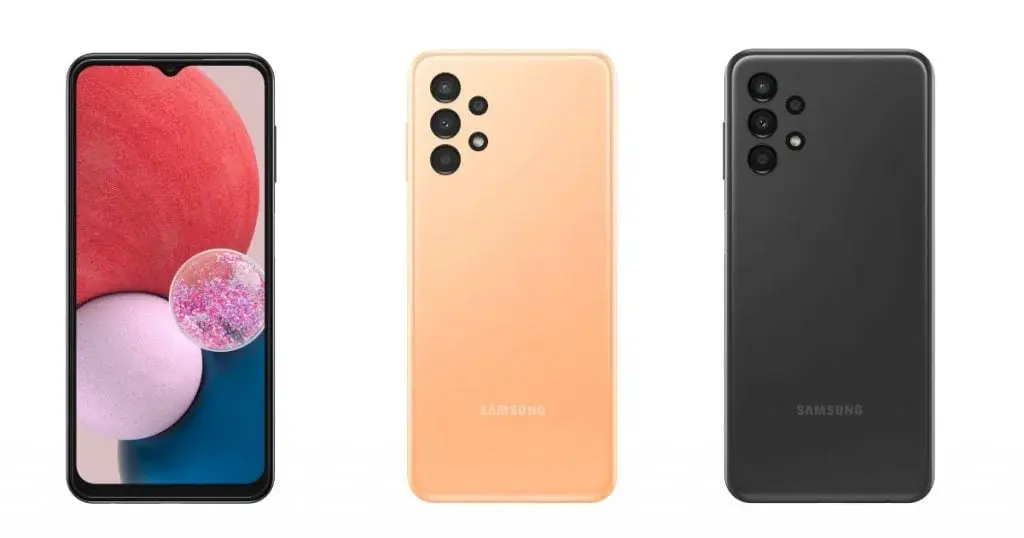
    The budget-friendly Galaxy A13 4G is finally joining the Android 14 party, three weeks after its 5G sibling. The rollout appears to have begun in Korea, with wider availability expected in the coming weeks.

    Android 14 Update for Galaxy A13 4G

    Samsung’s Galaxy A13 4G is now eligible for the Android 14 update. While Samsung’s current flagship line like the Galaxy S24 enjoys up to seven years of updates, the A13 is only eligible for two major OS upgrades, making Android 14 its last. However, it may still receive the One UI 6.1 update before feature updates cease.

    Rollout in Korea and Wider Availability

    Korean users can find the update as firmware version A135NKSU5DWL5 through their phone’s Settings > Software update menu. Users in other regions should keep an eye out for the update notification soon.

    Improvements with the Update

    The Android 14 update brings several improvements to the Galaxy A13 4G. The Quick Panel is now easier to use, providing quick access to your most-used settings. The emoji library has been updated, making your messages more fun and expressive. Additionally, there is a new, clearer default font. The media player widget has a cool new look with dynamic waveforms, and the lock screen clock widget’s size, style, and placement can now be customized.

    Enhancements to Samsung Apps

    Samsung’s apps like Gallery, Internet, Messages, Phone, and Reminders have a new, cleaner look. Some apps have even dropped the “Samsung” name for a simpler style. The photo editor is more user-friendly, making it easier to edit your pictures. Moreover, there’s a new video editor called “Studio” for all your video editing needs.

    Specifications of Galaxy A13 4G

    As a reminder, the Galaxy A13 4G features a 6.6-inch Full HD+ display, an 8MP front camera, a quad-camera rear setup with a 50MP main sensor, an Exynos 850 processor, 4GB or 6GB of RAM, 64GB or 128GB of storage, and a 5,000mAh battery with 25W fast charging support (though the included charger is only 15W).

    With the Android 14 update, the Galaxy A13 4G is set to provide an improved user experience with its new features and enhancements. Stay tuned for the wider availability of the update in the coming weeks.
  • OnePlus 12 and Beyond: Anticipated Smartphones Surfacing Soon

    OnePlus 12 and Beyond: Anticipated Smartphones Surfacing Soon

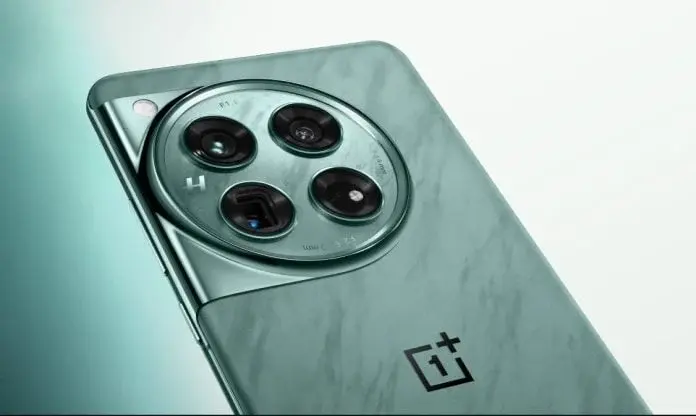
    OnePlus Flagship and Flagship Killer to be Unveiled Next Week

    We have seen a flurry of smartphone releases in the past few weeks, and it seems like the trend is not slowing down anytime soon. However, amidst all the new launches, OnePlus has emerged as the only brand that has confirmed its plans to announce new handsets in the coming days. The company is all set to unveil a flagship and a flagship killer for global markets.

    Phones Already Official in China

    Both these phones have already been officially launched in China and will now be announced for international markets on January 23. The launch event will take place in New Delhi, India, and will commence at 7:30 PM IST. OnePlus fans from around the world can catch the live-stream of the event on YouTube.

    Sneak Peek into the Upcoming Devices

    Now, let's delve into the details of these upcoming smartphones:

    1. OnePlus Flagship: The flagship device from OnePlus is expected to come with top-of-the-line specifications and features. While the exact details are yet to be revealed, rumors suggest that it will boast a powerful processor, a high-resolution display, and a high-capacity battery. OnePlus has always been known for its sleek and premium designs, so we can expect the same from this flagship device.

    2. OnePlus Flagship Killer: As the name suggests, the flagship killer is expected to offer similar performance and features as the flagship device, but at a more affordable price point. OnePlus has been successful in providing flagship-level experience at a lower cost with its previous devices, and it looks like they will continue this trend with the upcoming flagship killer.

    Excitement Builds Up for the Launch

    With the launch just a few days away, OnePlus fans and tech enthusiasts alike are eagerly awaiting the unveiling of these new smartphones. The company has built a strong reputation for delivering high-quality devices that offer great value for money. As such, the expectations are high for both the flagship and the flagship killer.

    Conclusion

    The smartphone market is abuzz with new releases, but OnePlus stands out as the brand that is set to announce two highly anticipated devices next week. The launch event will take place in New Delhi and will be live-streamed on YouTube for global viewers. Stay tuned for more updates on the specifications and pricing details of these upcoming OnePlus smartphones.

  • First Glimpse at HMD Global’s Branded Smartphone Revealed in Leaked Renders

    First Glimpse at HMD Global’s Branded Smartphone Revealed in Leaked Renders

    HMD Global's First Own-Branded Phone Leaked in Renders

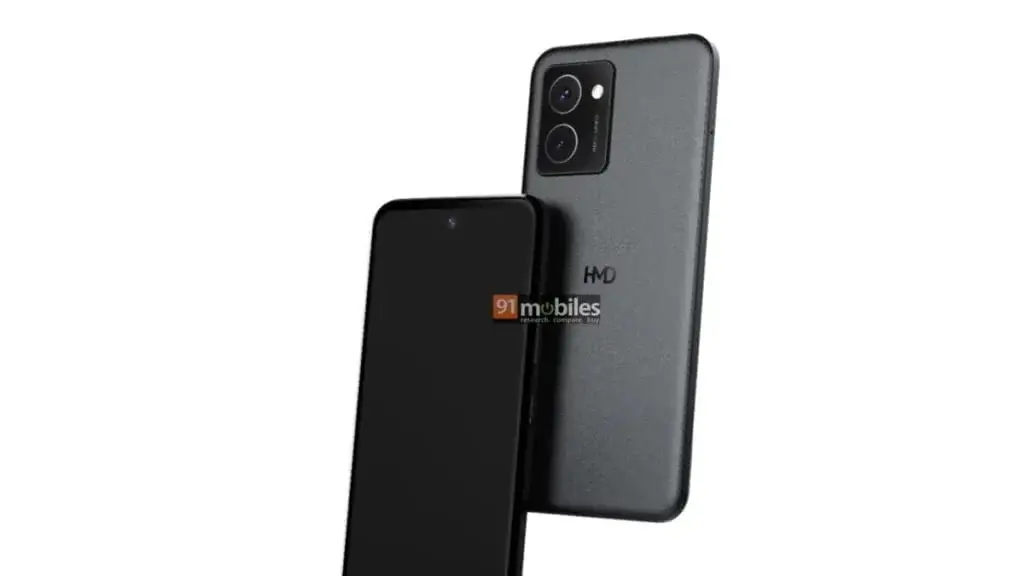
    HMD Global, the owner of the Nokia brand for smartphones, is set to launch its own-branded devices as their contract with Nokia expires in 2025. Recent reports suggest that the company is going through significant changes, and now, the first phone from HMD Global has surfaced in leaked renders, giving us a glimpse of its design and features.

    Budget-Friendly Design

    Based on the leaked render, the HMD Global-branded phone appears to be a budget smartphone. It showcases a simple design with a rectangular camera module on the back panel. The module houses two sensors and an LED flash unit. Additionally, the rear panel features the HMD branding at the center. The device comes with a slightly flat frame, with power and volume rocker buttons located on the right edge, and the SIM tray placed on the left side.

    Center-Aligned Punch-Hole Display

    Moving to the front, the HMD Global-branded phone sports a center-aligned punch-hole cutout display. The leaked render showcases the device in a Black color option with a matte finish. Unfortunately, no further details about the smartphone have been revealed in the report.

    Speculation on Key Specifications

    Last November, two HMD Global phones with model numbers N159V and TA-1585 were spotted on the IMEI database. It is possible that one of these devices is the phone seen in the leaked render. However, the key specifications of these phones still remain a mystery. Rumors suggest that HMD Global is planning to launch its own branded phones in India as early as April, so more details are expected to surface in the coming months.

    As HMD Global ventures into launching its own-branded smartphones, it will be interesting to see how the company positions itself in the competitive market and what unique features it brings to the table.

  • Huawei Unveils Enhanced HarmonyOS, Exhibiting Remarkable Confidence

    Huawei Unveils Enhanced HarmonyOS, Exhibiting Remarkable Confidence

    Huawei Aims to Challenge Android and iOS Dominance with HarmonyOS Next

    Huawei, the Chinese tech giant, is gearing up for a comeback with the introduction of its own mobile operating system, HarmonyOS Next. This move marks a bold pivot away from Android as Huawei aims to make a significant impact on the mobile tech landscape and challenge the dominance of Google’s Android and Apple’s iOS in China.

    HarmonyOS Next, which is currently in its developer version, was recently unveiled, signaling Huawei’s commitment to nurturing its platform. The commercial launch of HarmonyOS Next is scheduled for the fourth quarter of this year, marking a new chapter in Huawei’s story. What sets HarmonyOS Next apart is the deliberate decision to stop supporting Android-based apps, clearly indicating that Huawei is ready to forge its own path.

    Building an Entire Ecosystem

    Huawei is not only focusing on the software aspect but also on building an entire ecosystem. The company is rallying support from over 200 industry partners, with ambitions to bring on board 5,000 partners by the end of 2024. Big names like Meituan have already joined the fray, creating apps specifically for HarmonyOS. This initiative goes beyond just introducing a new operating system; it aims to create a whole new tech community.

    Investing in Innovation

    Huawei is heavily investing in this venture, dedicating 7 billion yuan to fuel innovation in various areas, including native apps and development tools. This investment is not just financial; it also signifies Huawei’s commitment to the future of technology. The company aims to cultivate a new generation of developers through collaborations with over 300 educational institutions.

    Overcoming Challenges

    The journey has not been easy for Huawei, as its inclusion on the US government’s Entity List has posed significant hurdles. This list limits access to US-origin technologies. However, instead of being deterred, Huawei has used this challenge as motivation to innovate and push boundaries.

    Ambitious Projections

    Huawei’s ambitions for HarmonyOS are high, with projections suggesting that it could overtake Apple’s iOS in China by 2024. This is not just a mere tech update; it represents a tech revolution. HarmonyOS Next is not just another player in the smartphone operating system game; it is a statement of intent from Huawei. The company is showing that it is not just adapting to challenges but is also setting out to redefine the rules of the game.

    In conclusion, Huawei’s introduction of HarmonyOS Next marks a significant move in the mobile tech landscape. With its own mobile operating system, Huawei aims to challenge the dominance of Android and iOS in China. The company’s commitment to nurturing its platform, building an ecosystem, and investing in innovation showcases its determination to redefine the rules of the game. Only time will tell if HarmonyOS Next will be able to achieve its ambitious projections and become a true tech revolution.

  • Realme debuts Note 50 as its maiden Note-labeled smartphone, explore features, pricing particulars

    Realme debuts Note 50 as its maiden Note-labeled smartphone, explore features, pricing particulars

    Realme Note 50: A New Entry-Level Smartphone with Impressive Features

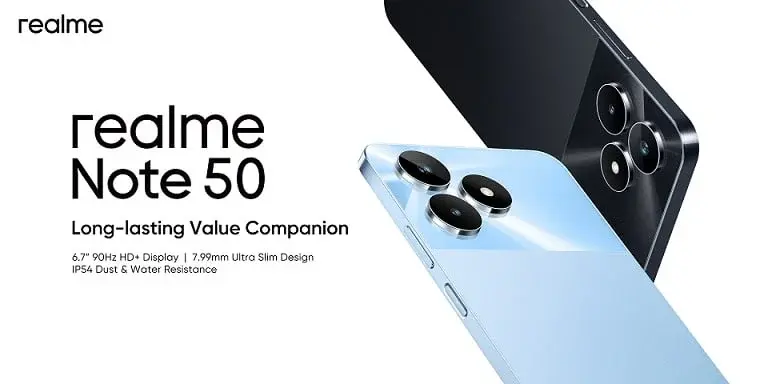
    Realme has recently introduced the Realme Note 50, their first-ever Note-branded smartphone, in the Philippines. This new entry-level device comes packed with exciting features, including a 90Hz display, a powerful Unisoc chip, a long-lasting battery, and a sleek design. Let's take a closer look at what the Realme Note 50 has to offer to its potential buyers.

    Realme Note 50 Specifications and Features

    The Realme Note 50 boasts a 6.74-inch IPS LCD panel with an HD+ resolution of 1600 x 720 pixels. The display also supports a high refresh rate of up to 90Hz, a touch sampling rate of 180Hz, and a pixel density of 260ppi. Its IP54-rated dustproof and water-resistant chassis measures just 7.99mm in thickness and weighs a mere 186 grams.

    In terms of security, the Note 50 features a convenient side-facing fingerprint scanner and face unlock. It runs on Realme UI T-based Android 13 Go, ensuring a smooth and user-friendly experience.

    Under the hood, the Note 50 is powered by the efficient Unisoc T612 chip. It is equipped with 4 GB of RAM, 64 GB of internal storage, and a robust 5,000mAh battery that supports 10W charging via a USB-C port. Additionally, the device offers a microSD card slot for expandable storage.

    When it comes to photography, the Realme Note 50 doesn't disappoint. It sports a 5-megapixel front camera for stunning selfies, while its rear panel houses a 13-megapixel main camera, a monochrome sensor, and an LED flash. The device also includes dual SIM support, Wi-Fi 802.11ac, Bluetooth 5.0, GPS, a USB-C port, and a 3.5mm audio jack for a seamless connectivity experience.

    Overall, the Realme Note 50 is essentially a modified version of the Realme C51, with upgraded camera capabilities. The remaining specifications seem to be identical on both devices.

    Pricing and Availability

    The Realme Note 50 is priced at PHP 3,599 (~$65) in the Philippines, making it an affordable option for budget-conscious consumers. It is available in two attractive shades: Midnight Black and Sky Blue.

    With its impressive features and competitive pricing, the Realme Note 50 presents itself as a solid choice for those in search of a reliable entry-level smartphone. Whether you prioritize a smooth display, powerful performance, or excellent camera capabilities, the Note 50 has got you covered.

  • Huawei P70 Possibly Set for March 2024 Release

    Huawei P70 Possibly Set for March 2024 Release

    Huawei P70 Series: Previewing its Debut in the First Half of 2024

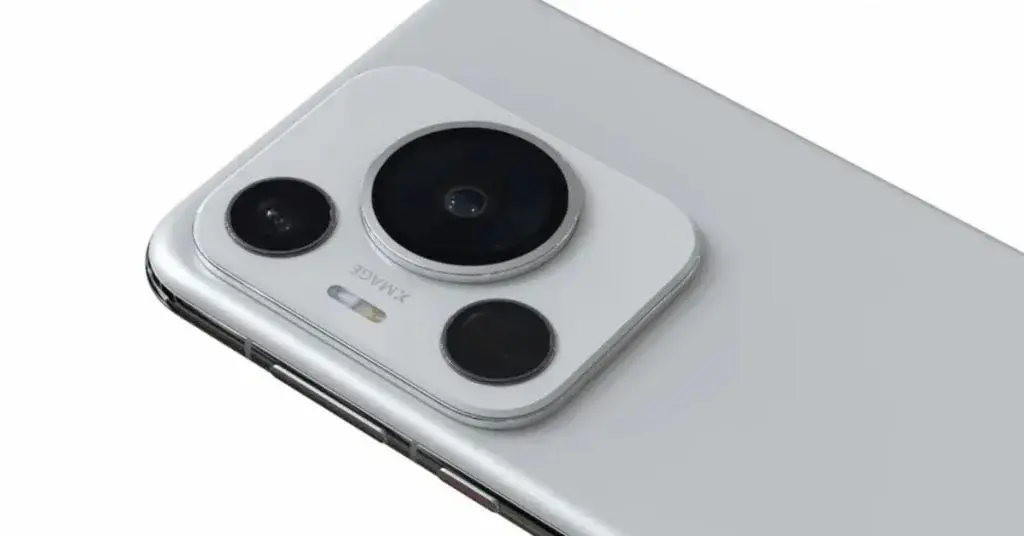
    Huawei is reportedly gearing up to unveil its fresh lineup of flagship smartphones, the P70 series, in the first six months of 2024. Reliable sources from within the industry have shared an anticipated timeline for the release of these premium mobile devices, hinting at a potential debut window stretching between late March and early April. Nevertheless, it is crucial to acknowledge that while this information is not yet officially confirmed, it is advisable to approach it with a degree of skepticism.

    Forecasted Launch Schedule

    Insider insights from Weibo point towards Huawei’s intentions to introduce the P70 series within the previously mentioned timeframe. Although the reliability of this schedule is purported to be strong, it is recommended to regard this information as provisional until an official declaration is made.

    Screen Specifications and Clarity

    Anticipations for the Huawei P70 series indicate the adoption of Chinese OLED panels sourced from BOE, COST, Visionax, and Tianma. In contrast to many top-tier offerings boasting a 2K resolution, these smartphones are expected to showcase a 1.5K resolution. Despite appearing lower in resolution compared to certain rivals, it is essential to recognize that Huawei’s P series places a premium on photographic capabilities over display resolution.

    Processor Prowess and Operational Efficiency

    Speculations point towards the P70 being fueled by the Kirin 9000S chipset, the same processing unit gracing the Mate 60 lineup. Renowned for its elevated performance and efficiency, this chipset promises a fluid and seamless user interaction. Huawei’s history of delivering robust processors in its flagship products sets high expectations for the P70’s performance standards.

    Photography Features and Aesthetics

    Recent insider revelations have hinted at the design cues of the P70. Rumors swirl around the inclusion of a 1-inch Sony IMX989 primary camera at the rear, in conjunction with a fresh OmniVision OV50H sensor. Noteworthy is the employment of the IMX989 sensor in devices like the Oppo Find X6 Pro, suggesting Huawei’s aspiration to provide superior camera functionalities within the P70 series.

    Wrapping Up

    These are the existing details surrounding the imminent release of the Huawei P70 series. As we eagerly await further disclosures, it is imperative to recognize that the disclosed specifications and attributes have not yet received official validation. Thus, exercising prudence until Huawei issues an official proclamation is advised. Stay tuned for further insights into this much-anticipated smartphone series.

  • Infinix Note 40 and Note 40 Pro with Helio G99 & 8GB RAM Spotted on Google Play Console

    Infinix Note 40 and Note 40 Pro with Helio G99 & 8GB RAM Spotted on Google Play Console

    Infinix Note 40 and Note 40 Pro: Specifications and Details

    Infinix, a popular smartphone manufacturer, is said to be working on the latest additions to its Note series lineup. The Infinix Note 40 and Note 40 Pro models were recently spotted on a certification sighting, revealing some of their key specifications. Let's take a closer look at what these devices have to offer.

    Certification Sightings Confirm Specifications

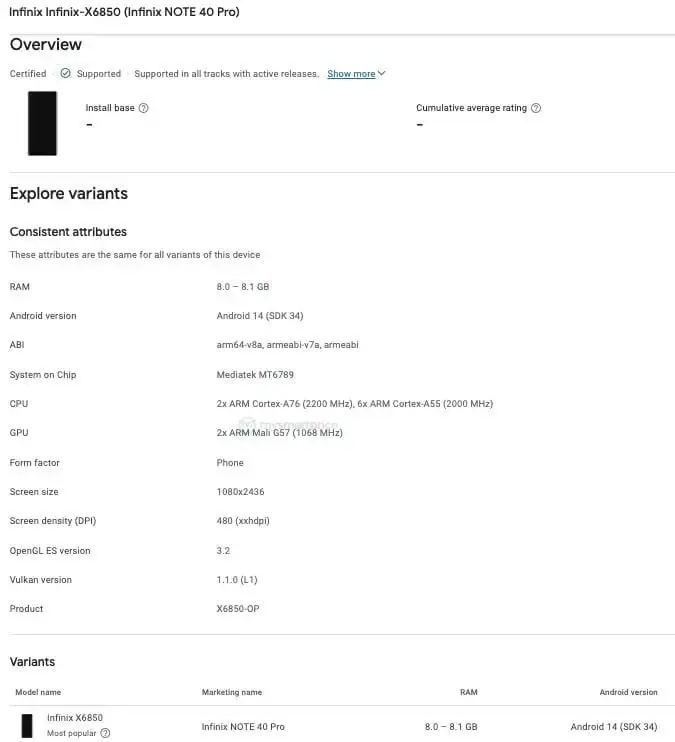
    The Infinix Note 40 Pro model had previously cleared the NBTC and Bluetooth SIG certification, confirming its X6850 model number and Bluetooth 5.3 support. Now, the base Note 40 model has also been certified with the X6853 model number. These sightings indicate that both devices will come with the Android 14 operating system out of the box.

    Powerful Performance and Display

    Both the Infinix Note 40 and Note 40 Pro will be equipped with the MediaTek Helio G99 SoC, ensuring powerful performance. This chipset, fabricated on the 6nm process, supports 4G connectivity. The devices will also feature at least one variant with 8GB of RAM, providing smooth multitasking capabilities.

    In terms of display, the Infinix Note 40 series is confirmed to offer a high-resolution experience with its 2436 x 1080 pixel resolution and 480 PPI pixel density. Renders shared on the Google Play Console reveal a center-aligned punch-hole cutout for the selfie camera, ensuring an immersive viewing experience.

    Impressive Camera Setup and Charging Capabilities

    The Infinix Note 40 series will sport a triple camera setup on the back, providing users with versatile photography options. Volume rockers and a power button can be found on the right side of the device, ensuring easy accessibility.

    Additionally, the vanilla variant of the Note 40 was spotted on the FCC, confirming support for 5W wireless charging. The FCC documents also revealed the U450XSB model number, which indicates 45W wired fast charging capabilities. With these charging options, users can quickly power up their devices and stay connected throughout the day.

    Slim and Stylish Design

    According to the FCC documents, the Infinix Note 40 boasts a thin 8mm body, making it sleek and stylish. The slim design enhances portability and ensures a comfortable grip for users.

    Conclusion

    The upcoming Infinix Note 40 and Note 40 Pro smartphones are expected to offer impressive specifications and features. With a powerful MediaTek Helio G99 SoC, high-resolution display, and versatile camera setup, these devices are set to deliver a premium user experience. Additionally, the support for wireless and wired fast charging adds convenience to the mix. Stay tuned for more updates on the release and pricing of the Infinix Note 40 series.

  • Introducing Vivo G2: First G-Series Phone with 90Hz Display, Dimensity 6020, 5,000mAh Battery.

    Introducing Vivo G2: First G-Series Phone with 90Hz Display, Dimensity 6020, 5,000mAh Battery.

    Introducing the Vivo G2: A Fresh Entrant in Vivo’s G-Series Family

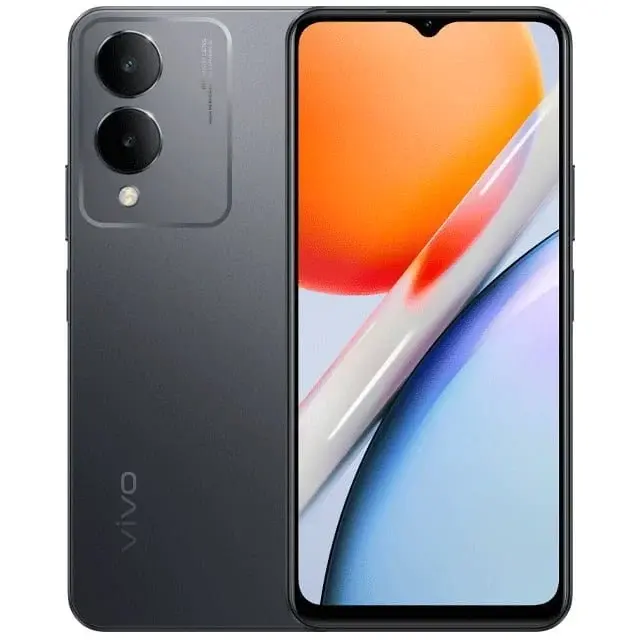
    Vivo, a renowned player in the smartphone industry, has discreetly presented its inaugural G-series smartphone in the Chinese market. The Vivo G2 emerged into the limelight recently, initially surfacing on the Google Play Console database. Subsequently, the device has been formally showcased on Vivo China’s website, granting a comprehensive insight into its specs, functionalities, and pricing details.

    Detailed Specifications and Noteworthy Features

    The Vivo G2 flaunts a 6.56-inch LCD screen characterized by a teardrop notch design. This display showcases an HD+ resolution of 1612 x 720 pixels and features a silky smooth 90Hz refresh rate, promising an unparalleled user interface. Operating on the Origin OS 3-based Android 13 platform, the device boasts a 5-megapixel front camera dedicated to capturing striking selfies. Positioned at the rear is a 13-megapixel primary camera backed by an LED flash.

    Beneath the surface, the Vivo G2 is fueled by the potent Dimensity 6020 chipset and is configurable with a maximum of 8 GB of LPDDR4x RAM. Storage-wise, the device offers a cap of 256 GB of UFS 2.2 storage while also catering to expandable storage needs through a microSD card slot.

    Battery Life and Additional Enhancements

    A standout feature of the Vivo G2 is its hefty 5,000mAh battery, ensuring prolonged device operation. Supporting 15W charging via a USB-C port, users can swiftly recharge their devices with ease. Connectivity options include dual SIM functionality, 5G support, 5GHz Wi-Fi connectivity, Bluetooth 5.1, GPS guidance, a 3.5mm audio jack, and a side-mounted fingerprint sensor for enhanced security.

    The Vivo Y36i in a New Avatar

    Upon scrutinizing the specifications and design of the Vivo G2, it becomes apparent that this device is essentially a revamped version of the Vivo Y36i. The Y36i had debuted in the Chinese market way back in December 2023. It appears that the G2 has been strategically crafted to cater to the offline retail segment in China, targeting consumers who prefer in-store smartphone purchases.

    Pricing Structure and Market Availability

    The Vivo G2 is up for grabs in four distinct configurations: 4GB + 128GB, 6GB + 128GB, 8GB + 128GB, and 8GB + 256GB. Priced at 1,199 Yuan ($167), 1,499 Yuan ($210), 1,599 Yuan ($225), and 1,899 Yuan ($265) correspondingly, these variants are currently solely available in the Deep Sea Black color option.

    In summary, the Vivo G2 ushers in a fresh addition to Vivo’s G-series repertoire, delivering notable specifications, a capacious battery, and an array of storage selections. With its competitive price points, the device endeavors to captivate consumers in China’s offline retail sector.

  • Corning Unveils Gorilla Armor on Galaxy S24 Ultra, Promising Remarkable Reduction in Reflections and Scratches

    Corning Unveils Gorilla Armor on Galaxy S24 Ultra, Promising Remarkable Reduction in Reflections and Scratches

    Samsung’s Latest Flagship, the Galaxy S24 Series, Introduces Gorilla Glass Armor

    Samsung unveiled its highly anticipated Galaxy S24 series last night, showcasing a range of upgrades and innovative features. One standout feature is the integration of Gorilla Glass Armor, a new smartphone cover material developed by Corning. This marks the first time the Gorilla Armor is being used, and the Samsung Galaxy S24 Ultra is the lucky device to debut this technology.

    Corning and Samsung’s Longstanding Partnership

    Corning and Samsung have been industry partners for over 50 years, with Corning’s Gorilla Glass being a popular choice among smartphone manufacturers. However, with the introduction of Gorilla Glass Armor, Corning is moving away from the traditional glass material. This new iteration succeeds the previous Gorilla Glass Victus 2 and offers enhanced durability and visual clarity.

    The Advantages of Gorilla Glass Armor

    According to Corning, the Gorilla Glass Armor is a unique smartphone cover material that sets itself apart from standard glass. It is made up of 25 percent pre-consumer recycled content, making it an environmentally friendly option. Samsung claims that the Gorilla Glass Armor on the Galaxy S24 Ultra provides a combination of durability and visual clarity, offering an improved user experience.

    One notable advantage of the Gorilla Glass Armor is its ability to reduce reflections by up to 75 percent. This feature enhances readability and minimizes screen reflections, ensuring optimal visibility in various environments. Whether you’re using your phone outdoors or in brightly lit spaces, the Gorilla Glass Armor aims to provide an immersive and glare-free viewing experience.

    Superior Durability and Scratch Resistance

    In durability tests conducted by Corning, the Gorilla Glass Armor outperformed aluminosilicate cover glasses. Corning also developed a new Scratch Bot lab test to monitor micro scratches caused by daily wear. The Gorilla Glass Armor offers up to four times better resistance to scratches compared to previous iterations, ensuring the device remains pristine even with regular use.

    The combination of the titanium frame and Gorilla Glass Armor on the Samsung Galaxy S24 Ultra provides a robust level of durability. While awaiting official durability tests, including the highly anticipated JerryRigEverything’s torture test, it is expected that the Galaxy S24 Ultra will live up to Corning’s claims of enhanced protection.

    As the Samsung Galaxy S24 series hits the market, consumers can look forward to experiencing the benefits of Gorilla Glass Armor firsthand. With its improved durability, scratch resistance, and reduced reflections, the Gorilla Glass Armor is set to elevate the smartphone user experience to new heights.

  • Galaxy S24 Benchmark: Snapdragon 8 Gen 3 Outperforms Exynos 2400

    Galaxy S24 Benchmark: Snapdragon 8 Gen 3 Outperforms Exynos 2400

    Exynos 2400’s Performance Test Results Fall Behind Snapdragon 8 Gen 3

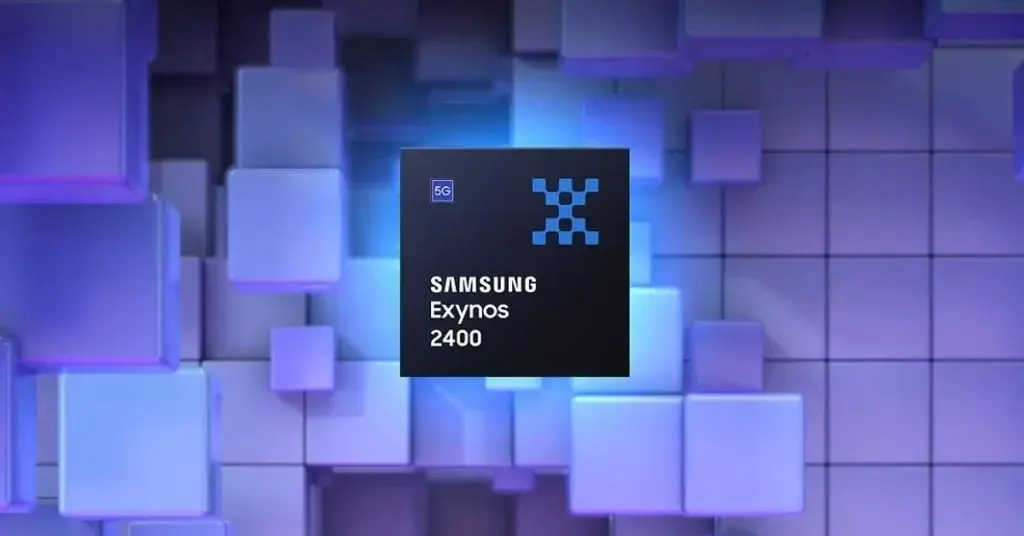
    Samsung has at last introduced its newest flagship processor, the Exynos 2400, a highly anticipated release among tech aficionados. Initially thought to be a contender against Qualcomm’s Snapdragon 8 Gen 3, initial Geekbench assessments hinted at the potential for the Exynos chip to outshine its rival in specific areas.

    However, recent evaluations reveal that the Snapdragon still maintains the lead when it comes to overall performance.

    Comparison Breakdown: Exynos 2400 vs Snapdragon 8 Gen 3

    Utilizing AnTuTu, a Vietnamese YouTuber conducted an extensive examination, pitting the Exynos 2400-powered Galaxy S24 against the Snapdragon 8 Gen 3-fueled Galaxy S24 Ultra.

    The Galaxy S24, armed with the Exynos chipset, garnered a total of 1.7 million points on AnTuTu. In contrast, the Snapdragon-driven Galaxy S24 Ultra achieved a slightly higher score of 1.8 million points, showcasing a modest performance disparity of around 7% between the two devices.

    AnTuTu Performance Scores for Samsung Galaxy S24 and S24 Ultra

    • Samsung Galaxy S24: 1.7 million points
    • Samsung Galaxy S24 Ultra: 1.8 million points

    Nevertheless, it is crucial to consider that these scores may not wholly represent the potential of these processors. Previous test results have shown that the Snapdragon 8 Gen 3 has reached scores surpassing 2 million points. The lower scores garnered in the recent evaluation could be attributed to the testing being performed on unstable software running on pre-production hardware, potentially constraining the chips’ performance capabilities.

    The YouTuber also speculated that the larger Galaxy S24+ may deliver even stronger performance compared to the Snapdragon 8 Gen 3.

    While the Exynos 2400 chip showcases its prowess and comes close to matching the Snapdragon’s performance, it has not yet surpassed it. The extent to which the Exynos 2400 can enhance with forthcoming firmware updates remains to be seen. Furthermore, with the emergence of the Dimensity 9300 chip, Samsung now faces rigorous competition from two leading processors in the Android domain.