Category: Phones

Stay updated with the latest phone news, reviews, and trends. Discover cutting-edge smartphones, features, and innovations in our Phones category at GizNewsDaily

  • Vivo X200T Launching Soon: Key Specs Revealed Early

    Vivo X200T Launching Soon: Key Specs Revealed Early

    Key Takeaways

    1. Vivo is releasing the X200T, a larger and more upscale model in the X200 series, after the X300 and X300 Pro.
    2. The X200T features a powerful Dimensity 9400 Plus chipset, a 6.67-inch AMOLED display, and a 120 Hz refresh rate.
    3. The phone is equipped with three 50 MP cameras and a strong 6,200 mAh battery with 40 W wireless and 90 W wired charging.
    4. The expected launch date for the Vivo X200T in India is January 27, with a starting price of INR 59,999 (about $659).
    5. It is currently unclear if the Vivo X200T will have a full global release.


    Vivo is not done with the X200 series yet, even after the release of the X300 and X300 Pro last year. They are set to revisit their previous flagship line with the upcoming X200T. This model has been talked about since November and is expected to be a larger and more upscale option compared to the X200 FE, while also aiming to outdo the original X200.

    Powerful Performance

    To achieve this, Vivo has outfitted the X200T with the Dimensity 9400 Plus chipset. This advanced 3 nm processor features Cortex-X92, Cortex-X4, and Cortex-A720 CPU cores, and it can also be found in other sub-flagship models like the X200s, Ace 5 Ultra, and the Xiaomi 15T Pro which is currently priced at $844.50 on Amazon. Additionally, the device sports a 6.67-inch AMOLED display that offers a 120 Hz refresh rate and an impressive peak brightness of 5,000 nits.

    Impressive Camera and Battery Life

    Furthermore, the Vivo X200T is equipped with a trio of 50 MP cameras including a primary, tele-macro, and ultra-wide-angle lens. The device also boasts a robust 6,200 mAh battery that supports 40 W wireless charging and 90 W charging through a wired connection. According to leaks from sources like Abhishek Yadav, the Vivo X200T is expected to launch in India on January 27 at 12:00 PM local time (06:30 UTC) with a starting price of INR 59,999 (about $659). However, it remains uncertain if the Vivo X200T will receive a full release worldwide.

    Source:
    Link



  • New Samsung Smartphone Leak: Slim Design Under 7mm

    New Samsung Smartphone Leak: Slim Design Under 7mm

    Key Takeaways

    1. The Galaxy A57 is set to replace the Galaxy A56, currently priced at $369.99 on Amazon.
    2. It features a 6.6-inch display with a 1080p resolution and dimensions of 161.5 x 76.8 x 6.9 mm, weighing 182 g.
    3. The camera setup includes a 50 MP main camera, a 12 MP ultra-wide lens, a 12 MP front camera, and a 5 MP macro lens.
    4. The Galaxy A57 will offer 256 GB of storage with options for 8 GB or 12 GB RAM, potentially using the new Exynos 1680 chipset.
    5. The expected launch date for the Galaxy A57 is February, alongside other budget-friendly Galaxy A series models.


    The Galaxy A57 is getting closer to taking over the Galaxy A56, which is currently priced at $369.99 on Amazon, after being rumored for nearly a year. Recently, this upcoming mid-range phone was seen on the TENAA website in China. While the design still remains unclear, TENAA has provided some hints about its specifications.

    Display and Dimensions

    According to the regulatory body, the Galaxy A57 will come with a 6.6-inch display featuring a resolution of 1080p. The dimensions of the device are estimated to be 161.5 x 76.8 x 6.9 mm. It is also noted that the phone will weigh in at 182 g, making the Galaxy A57 thinner, lighter, narrower, and shorter compared to its predecessor. However, with a battery rated at 4,905 mAh, it seems that Samsung will stick with a 5,000 mAh battery in practice.

    Camera Features and Storage

    The camera setup appears to be similar, featuring a 50 MP main camera, a 12 MP ultra-wide lens, a 12 MP front camera, and a 5 MP macro lens. Furthermore, the TENAA hints that the Galaxy A57 will be available only with 256 GB of storage and options for either 8 GB or 12 GB RAM. Recent leaks indicate that Samsung may introduce the new Exynos 1680 chipset to support these memory options, although this has not yet been officially announced.

    Release Expectations

    Samsung is anticipated to launch the Galaxy A57 in February, alongside other budget-friendly models in the Galaxy A series.

  • Oppo Find X9 Ultra Leaked with New Teleconverter Features

    Oppo Find X9 Ultra Leaked with New Teleconverter Features

    Key Takeaways

    1. Oppo has not officially announced the Find X9 Ultra’s release date in China, and a wait is expected.
    2. The smartphone is rumored to have a 200 MP primary camera with a 1/1.12-inch sensor, a notable upgrade from competitors.
    3. It will also include a 200 MP telephoto camera with a 1/1.28-inch sensor.
    4. The Find X9 Ultra is set to use a 50 MP ISOCELL JN5 for ultra-wide-angle and 10x telephoto capabilities.
    5. A new teleconverter accessory for the Find X9 Ultra features extra zoom rings and a sturdier lens compared to the previous model.


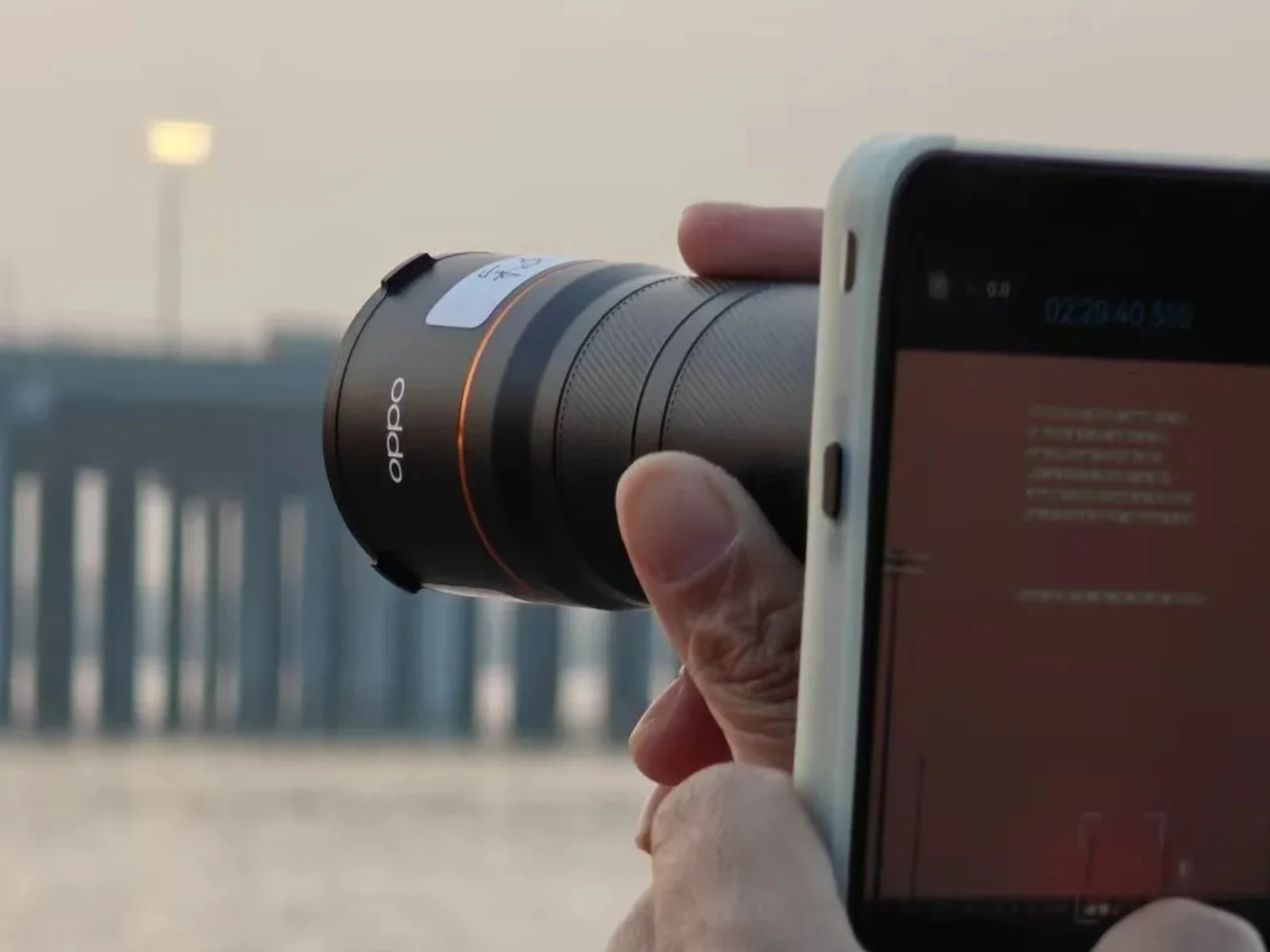
    Oppo has not yet announced the Find X9 Ultra for release in China, and it appears that we may need to wait a bit longer. However, a new leak has revealed both the still-unreleased smartphone and its official teleconverter accessory.

    Details on the Camera

    Reports suggest that the Find X9 Ultra will feature a remarkable 200 MP primary camera with a 1/1.12-inch sensor size. This is a significant upgrade compared to the 1/1.3-inch sensor in the Galaxy S25 Ultra, which is currently priced at $1,041 on Amazon, and is also expected to be part of the Galaxy S26 Ultra. Additionally, the primary camera is anticipated to work alongside a 200 MP telephoto camera that has a 1/1.28-inch sensor.

    Additional Camera Specs

    Recent leaks reveal that the Find X9 Ultra will utilize a 50 MP ISOCELL JN5 for its ultra-wide-angle and 10x telephoto functions. Despite this, the ISOCELL JN5 is relatively compact at 1/2.76-inches. This is likely where Oppo’s teleconverter accessory plays a crucial role.

    Insights on the Teleconverter

    The images showcasing the accessory indicate that it is more sophisticated than the one offered for the Find X9 Pro. Specifically, it appears that Oppo has added extra zoom rings. Furthermore, the teleconverter for the Find X9 Ultra seems to have a sturdier lens compared to its counterpart for the Find X9 Pro. Currently, it is expected that Oppo will unveil the Find X9 Ultra within this quarter, with an international launch set for later in the year.

    Source:
    Link


  • Vivo X300 Pro Named Best Camera Phone of 2025 in Blind Test

    Vivo X300 Pro Named Best Camera Phone of 2025 in Blind Test

    Key Takeaways

    1. The blind camera test featured 12 top smartphones, including the iPhone 17 Pro Max and Galaxy S25 Ultra, with voting for daytime and low-light photography.
    2. The iPhone 17 Pro Max and Pixel 10 Pro XL both achieved 67% of the votes in their initial matchups, while the Nothing Phone (3) surprisingly eliminated the Huawei Pura 80 Ultra.
    3. In the second round, the Pixel 10 Pro XL advanced by defeating the iPhone, and the Nothing Phone (3) shocked many by eliminating the Galaxy S25 Ultra with 86% of the votes.
    4. The final round saw the Vivo X300 Pro narrowly win against the Pixel 10 Pro XL, with 47% of the votes compared to the Pixel’s 45%.
    5. The Vivo X300 Pro was ultimately declared the best camera phone of 2025, based on the results of the blind test conducted by the Versus community.


    Versus has released the results of its blind camera test for the end of the year, featuring 12 top-tier smartphones: iPhone 17 Pro Max, Galaxy S25 Ultra, Pixel 10 Pro XL, Sony Xperia 1 VII, OnePlus 15, Xiaomi 17 Pro Max, Asus Zenfone 12 Ultra, Oppo Find X9 Pro, Vivo X300 Pro, Motorola Edge 70, Huawei Pura 80 Ultra, and the Nothing Phone (3).

    The Test Format

    The blind test was conducted by pairing the phones into six matchups, allowing fans to vote on which device should move forward. Voting was divided into two photography categories: daytime shots and low-light photography.

    Matchups and Surprises

    In the first pairing, the iPhone 17 Pro Max triumphed over the Xiaomi 17 Pro Max, garnering 67% of the votes. Following Apple’s trend, the Pixel 10 Pro XL also achieved 67% of the votes, while the OnePlus 15 only managed a lowly 33%. A big shocker happened during the fourth test, where the Nothing Phone (3) eliminated the cutting-edge Pura 80 Ultra.

    Advancing Rounds

    In the opening test of the second round, the Pixel secured 65% of the votes, eliminating the iPhone from the contest. In another surprise, the Nothing Phone (3) took down the Galaxy, receiving 86% of the votes. The final match of this round had the X300 Pro (currently priced at $1,099 on Amazon) sending the Asus flagship packing.

    The Final Clash

    During the final round, the impressive run of the Nothing Phone (3) came to an abrupt halt, as it only captured 8% of the votes. The Vivo X300 Pro emerged victorious in a close finish, claiming 47% of the votes, while the Pixel had to settle for 45%. After extensive reviews, we also declared the Vivo X300 Pro as the top camera phone of 2025.

    Please note that these blind tests were conducted with input from the Versus community and not by professional photographers. Additionally, they were quite limited, focusing solely on the primary camera.

  • RedMagic Unveils New Powerful Gaming Smartphone Release

    RedMagic Unveils New Powerful Gaming Smartphone Release

    Key Takeaways

    1. The RedMagic 11 Air is a more affordable alternative to the RedMagic 11 Pro, featuring the Qualcomm Snapdragon 8 Elite chipset.
    2. It has a sleek design with a 50 MP main camera, an 8 MP ultra-wide camera, and a hidden 16 MP front camera using under-panel technology.
    3. The device includes a 6.85-inch AMOLED display with a resolution of 2,688 x 1,216 pixels and a 144 Hz refresh rate, along with minimal bezels.
    4. Equipped with a 7,000 mAh battery, the phone supports fast charging at 120 W for efficient power management.
    5. Pricing starts at CNY 3,499 (around $503) for the 12 GB RAM model, while the 16 GB RAM version is priced at CNY 4,199 (approximately $603).


    RedMagic has launched the RedMagic 11 Air in China. This device is aimed at being a more affordable option compared to the RedMagic 11 Pro. It uses the Qualcomm Snapdragon 8 Elite chipset, which is also found in premium devices like the Xiaomi 15 Ultra, OnePlus 13, and Galaxy S25 Ultra (currently priced at $1,041 on Amazon).

    Design and Cameras

    Unlike the bulkier designs of those flagship phones, the RedMagic 11 Air has a sleeker look. It features a 50 MP main camera (1/1.55-inch) and an 8 MP ultra-wide camera, both housed in individual lenses that stick out just a bit from the back of the phone.

    Interestingly, the 16 MP front-facing camera is cleverly hidden using under-panel technology, providing a cleaner view on the 6.85-inch display. This AMOLED screen boasts a resolution of 2,688 x 1,216 pixels, a 144 Hz refresh rate, and has bezels that are only 1.25 mm thick. Additionally, RedMagic has equipped the phone with a turbo fan that spins at 24000 RPM, in conjunction with a vapor chamber cooling system to reduce overheating during heavy usage.

    Performance and Pricing

    The RedMagic 11 Air is expected to offer good battery performance, thanks to its sizable 7,000 mAh capacity, which can be charged at a speedy 120 W. The starting price for this latest gaming smartphone is CNY 3,499 (around $503) for the version with 12 GB of RAM and 256 GB of storage. For those wanting more memory, the model with 16 GB of RAM and the same storage will cost CNY 4,199 (approximately $603). However, RedMagic has not yet provided any information regarding international availability.

    Source:
    Link


  • Motorola Unveils New Smartphone with Huge Battery and AMOLED Display

    Motorola Unveils New Smartphone with Huge Battery and AMOLED Display

    Key Takeaways

    1. The Motorola Edge 70 series will include the Edge 70 and the Edge 70 Ultra (branded as Motorola Signature).
    2. The Edge 70 Fusion is anticipated to feature a large 7,000 mAh battery and use the Snapdragon 7s Gen 3 chipset.
    3. The Edge 70 Fusion will offer options for 8 GB or 12 GB of RAM and 256 GB of internal storage.
    4. It is expected to have a 6.78-inch AMOLED display with 1.5K resolution, 144 Hz refresh rate, and up to 5,200 nits brightness.
    5. The device will include a 50 MP main camera and a 32 MP front camera, with a design inspired by nylon and linen, but will receive only 3 OS updates.


    A dependable source has recently provided some early details about the upcoming Motorola Edge 70 series smartphone. Currently, Motorola has only released the Edge 70, while the anticipated Edge 70 Ultra will be branded as the Motorola Signature. However, it looks like the Edge 70 will soon be joined by a successor to last year’s Edge 60 Fusion, which is priced at $379 on Amazon.

    A Shift in Direction

    As per Evan Blass, Motorola plans to take a different approach with the Edge 70 compared to its goal of making the slimmest smartphone. Although Blass hasn’t disclosed the exact dimensions yet, he claims that the Edge 70 Fusion will come with a massive 7,000 mAh battery. This would be too large for a housing of about 6 mm, even with advanced silicon-carbon battery tech. The Edge 70 Fusion is expected to use the older Snapdragon 7s Gen 3 chipset, which Motorola will pair with either 8 GB or 12 GB of RAM and 256 GB of internal storage.

    Impressive Display and Cameras

    Blass also anticipates that Motorola will equip its new mid-range device with a 6.78-inch AMOLED screen that supports a resolution of 1.5K, refreshes at 144 Hz, and can reach brightness levels of up to 5,200 nits, all while being shielded by Corning Gorilla Glass 7i. In addition, the Edge 70 Fusion is rumored to include a 50 MP primary camera alongside a 32 MP front-facing camera, all housed in a quad-curved design that features ‘nylon and linen-inspired’ back panels. While an official release date has not been revealed yet, Blass mentions that Motorola will restrict the Edge 70 Fusion to just 3 OS updates.

    Evan Blass’

    Source:
    Link


  • OnePlus Updates Introduce Samsung-Style ARB and Brick Risk

    OnePlus Updates Introduce Samsung-Style ARB and Brick Risk

    Key Takeaways

    1. OnePlus has introduced Anti-Rollback Protection (ARB) in recent ColorOS updates for OnePlus 15 and 13 models.
    2. ARB operates at the hardware level, making it impossible to fix issues through software updates or unbricking techniques.
    3. Triggering ARB can permanently brick the device, requiring mainboard replacement for recovery.
    4. Affected devices include OnePlus 15, 13, 13T, Ace 5, and Ace 5 Pro, with specific ColorOS versions implementing ARB.
    5. Users of custom ROMs should avoid recent updates until they verify the changes to prevent complications.


    OnePlus has allegedly made a significant adjustment in its latest ColorOS software updates for the OnePlus 15 and OnePlus 13 models. This adjustment introduces restrictions on rolling back updates, installing custom ROMs, and could potentially lead to permanently disabling the phone.

    New Protection Features

    According to Droidwin, OnePlus has discreetly implemented Anti-Rollback Protection (ARB) in three of the most recent ColorOS software updates. These updates, which are built on Android 16, introduce a hardware-level modification to certain devices.

    This protective measure functions in a way that is akin to Samsung’s Knox security system, and similar features are also found in devices from Xiaomi and Google. Since it operates at the hardware level, any issues that arise cannot be fixed through software updates. This means that well-known unbricking techniques will not be effective.

    Implications of ARB

    DroidWin outlines that when ARB is triggered, it activates an e-fuse on the device’s motherboard, resulting in a permanent bricking of the phone. If this occurs, the only possible solution to recover the phone is to replace the mainboard.

    The devices impacted include the OnePlus 15 (with 12/256 GB, currently priced at $636.63 on TrandingShenzhen), along with the OnePlus 13, 13T, Ace 5, and Ace 5 Pro. The ARB feature is said to be present in ColorOS versions 16.0.3.500, 16.0.3.501, and 16.0.3.503. While this implementation is currently limited to the Chinese variants of the phones, it’s important to note that OxygenOS and ColorOS utilize the same codebase. Thus, this change may soon be seen in international models as well.

    User Considerations

    While this update may not be a concern for average users, it poses challenges for those who are utilizing custom ROMs on the affected OnePlus devices. For these users, it would be advisable to refrain from installing any of the recent OxygenOS or ColorOS updates without first confirming the specifics of the changes.

    Source:
    Link


  • Infinix Note Edge Launch: Slim Design, Dimensity 7100, 3D Display

    Infinix Note Edge Launch: Slim Design, Dimensity 7100, 3D Display

    Key Takeaways

    1. The Infinix Note Edge features a 6.78-inch 3D curved AMOLED display with 1.5K resolution and a 120 Hz refresh rate.
    2. It is powered by MediaTek’s Dimensity 7100 processor and comes with up to 8 GB of RAM, running on Android 16-based XOS 16.
    3. The smartphone includes a 50 MP primary camera and promises three major Android updates and five years of security updates until 2031.
    4. It has a 6,500 mAh battery with 45 W wired charging but lacks wireless and reverse charging options.
    5. Priced at $200, the Note Edge will be available in four color options, each featuring unique textures and finishes.


    Infinix has introduced the sleek new Note Edge smartphone to the global market, adding it to their lineup along with the Infinix Hot 60 Pro+. To jog your memory, the Hot 60 Pro+ is the company’s thinnest 3D-curved device, measuring just 5.8 mm (0.23 inch) thick, which was released last October. In terms of size, the new Note Edge is slightly thicker at 7.2 mm (0.28 inch) and weighs roughly 185 grams (0.40 lbs).

    Display Features

    The Note Edge boasts a 6.78-inch 3D curved AMOLED display that offers a 1.5K resolution paired with a 120 Hz refresh rate, reaching a peak brightness of 4,500 nits. Additionally, it features symmetrical narrow bezels that are just 1.87 mm wide, along with Corning Gorilla Glass 7i for protection against accidental drops and scratches.

    Performance and Software

    Regarding the chipset, the phone is equipped with MediaTek’s newly launched Dimensity 7100 processor, combined with up to 8 GB of RAM. On the software side, it operates on Android 16-based XOS 16 right out of the box. Infinix has committed to providing three major Android updates (versions 17, 18, and 19) and five years of security updates, extending until 2031. For photography enthusiasts, the device includes a 50 MP primary camera that utilizes a 1/2-inch sensor, accompanied by an additional sensor whose specifications remain unspecified.

    Battery and Additional Features

    Despite its slender profile, Infinix has successfully integrated a substantial 6,500 mAh battery into the Note Edge, supporting 45 W wired charging. However, it lacks wireless and reverse wired charging options. Other notable features consist of dual JBL stereo speakers, support for up to 16 GB dynamic RAM, bypass charging, and a customizable button that can instantly activate the Folax AI assistant.

    In terms of cost, the Infinix Note Edge is priced starting at $200, though there is currently no information regarding its availability. What is known is that it will be offered in four color options. The green model features a polyurethane water-weave brushed texture, inspired by silk to create a leather-like feel with a smooth surface. The other three colors use high-strength composite materials infused with cat’s eye gemstone effects, producing layered premium matte finishes, according to the company’s official announcement.


  • Xiaomi XRing O2 Chipset Will Not Use 2nm Process Technology

    Xiaomi XRing O2 Chipset Will Not Use 2nm Process Technology

    Key Takeaways

    1. Xiaomi launched the XRing O1 chipset last year to compete with Apple’s A18 and Qualcomm’s Snapdragon 8 Elite.
    2. The upcoming XRing O2 chipset may be manufactured using TSMC’s 3nm N3P process, an upgrade from the previous year’s N3E process.
    3. The XRing O2 will not utilize the anticipated 2nm process, which may disappoint some users compared to competitors like Exynos 2600.
    4. The XRing O2 chipset is expected to be integrated into a wider range of Xiaomi products, beyond just smartphones and tablets.
    5. Xiaomi aims to strengthen its flagship SoC offerings with the XRing O2 to compete more effectively in the market.


    Xiaomi launched the XRing O1 chipset last year, aiming to create a strong flagship SoC that can compete with Apple’s A18 and Qualcomm’s Snapdragon 8 Elite. The company is now developing its successor, likely named the XRing O2, and recent reports have shed light on what we can look forward to.

    New Specifications

    According to insights from Chinese news outlet Cailian Press, the XRing O2 may be manufactured using a 3nm process, rather than the anticipated 2nm. Specifically, this new chipset is rumored to be constructed using TSMC’s N3P process. In contrast, the previous year’s SoC was made using TSMC’s N3E process, so this represents an upgrade and would put it on par with the Snapdragon 8 Elite Gen 5 and A19 Pro in terms of technology.

    Market Comparisons

    Some users might feel let down by this, especially since the Exynos 2600 is set to be released soon and is built on a 2nm process. However, due to the timelines of development, it seems that the XRing O2 will not be able to utilize the 2nm process from TSMC that is expected to be featured in future flagship chipsets from Qualcomm and Apple.

    Broader Applications

    Moreover, the source indicates that Xiaomi intends to broaden the usage of the chipset. The XRing O1 was only featured in the Xiaomi 15S Pro, Xiaomi Pad 7 Ultra, and Xiaomi Pad 7S Pro. In contrast, the upcoming chipset’s successor is anticipated to be integrated across a wider range of Xiaomi’s products, including vehicles and computers.

    Source:
    Link


  • Realme Neo 8 Launching Soon: Snapdragon 8 Gen 5 & Big Battery

    Realme Neo 8 Launching Soon: Snapdragon 8 Gen 5 & Big Battery

    Key Takeaways

    1. The Realme Neo 8 will be officially revealed on January 22 and will come in three colors: white, purple, and black, featuring a transparent design on the back panel.
    2. It includes a square camera bump with three lenses and claims a 120x zoom capability, along with an IP68 and IP69 rating for waterproofing.
    3. The smartphone is equipped with an impressive 8,000mAh battery despite its slim profile, powered by the Qualcomm Snapdragon 8 Gen 5 processor.
    4. It features a 165Hz AMOLED display, an X-axis vibration motor, stereo speakers, and an infrared transmitter for remote functionality.
    5. The ultrasonic fingerprint sensor is built into the display, allowing for easy unlocking even with wet fingers.


    The Realme Neo 8 is set to be officially revealed on Thursday, January 22. Realme has shared this news through a series of teaser images on the Chinese social media platform Weibo. The smartphone will come in three colors: white, purple, and black. The top third of the back panel appears to have a transparent design.

    Design and Features

    While Realme has not disclosed any details about the internal components, it has given a hint about the NFC chipset’s placement for contactless payments. The Realme Neo 8 sports a square camera bump that houses three lenses. The promotional material claims a 120x zoom capability, which likely combines both optical and digital zoom. Regardless, the phone boasts an IP68 and IP69 rating, making it waterproof.

    Battery and Performance

    One standout feature is undoubtedly the battery. Despite the smartphone looking quite slim in the images, Honor has managed to fit in a considerable 8,000mAh battery. With the Qualcomm Snapdragon 8 Gen 5 processor onboard, it promises performance close to that of flagship devices. Coupled with a 165Hz AMOLED display, this smartphone could attract gaming fans.

    For gamers, Realme has included an X-axis vibration motor and stereo speakers. Additionally, the phone has an infrared transmitter on its back, allowing it to function as a remote for compatible devices. The ultrasonic fingerprint sensor is seamlessly built into the display, ensuring easy unlocking even if the user’s fingers are wet. More specifics about the specifications will be unveiled during the launch event on January 22.

    Source:
    Link