Tag: Xiaomi 15S Pro

  • Xiaomi New Snapdragon Alternative Leaks with Better Performance and Architecture

    Xiaomi New Snapdragon Alternative Leaks with Better Performance and Architecture

    Key Takeaway

    1. Xiaomi has developed its first in-house ARM chip, signaling a move toward competing with Qualcomm and MediaTek, with plans for a second version in 2026.
    2. The upcoming Xiaomi foldable, potentially called Mix Fold 5 or Xiaomi 17 Fold, is expected to feature a promising spec lineup based on leaked HyperOS code.
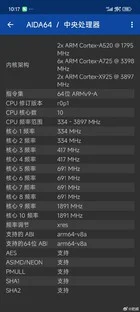
    3. The new Snapdragon alternative may utilize a new ARM architecture, skipping “big cores” in favor of a Prime core at 4.05 GHz and upgraded “little cores” at 3 GHz, along with a significantly faster GPU.

    Introduction to Xiaomi 15S Pro and Its Unique Features

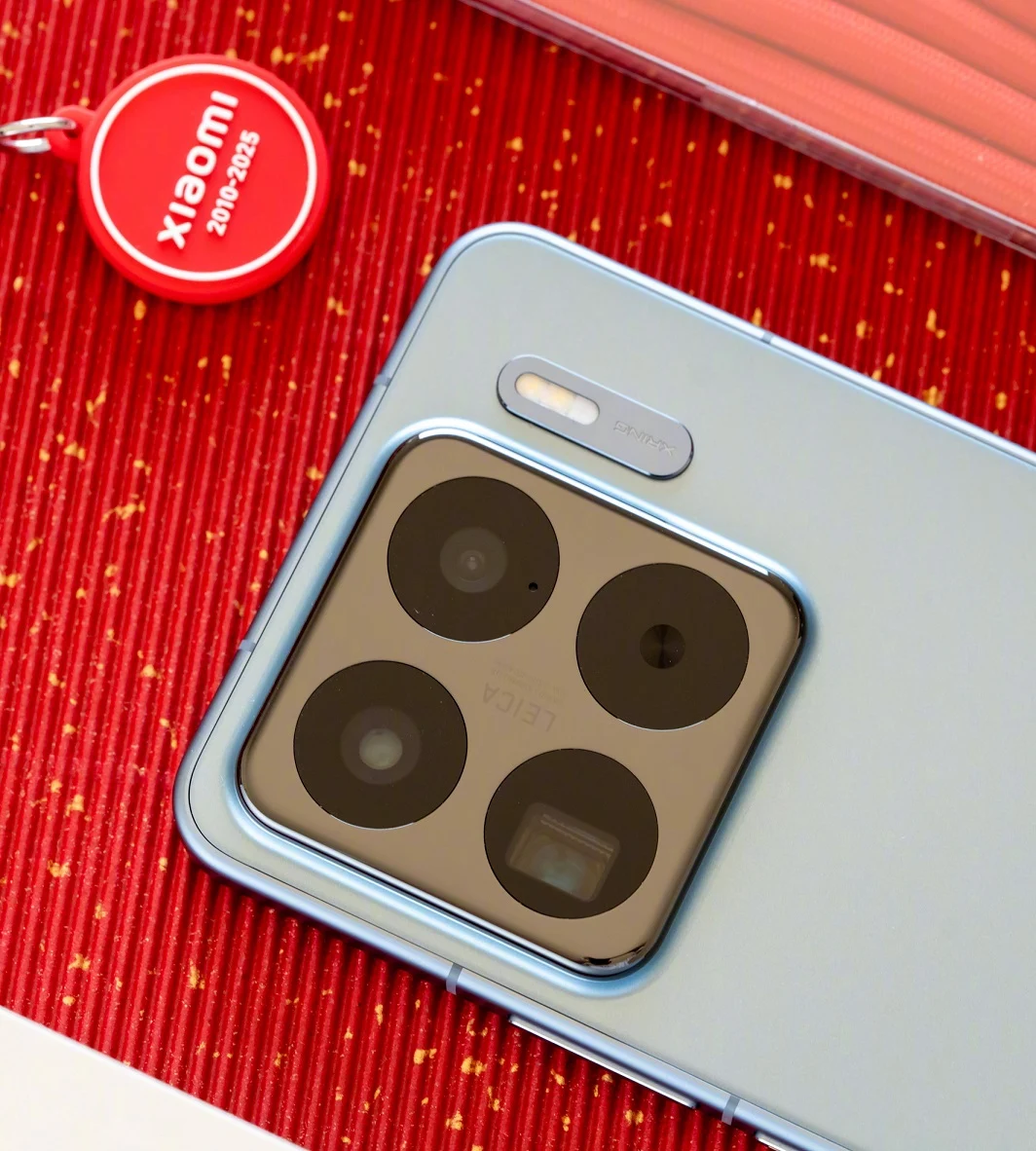
    The Xiaomi 15S Pro was recently tested in laboratory settings but strangely, it did not make it to the European markets. It is a notable device mainly because it features Xiaomi’s very first domestically-produced ARM chip. This move has alot of tech enthusiasts talking because it signifies Xiaomi’s entry into direct competition with industry giants like Qualcomm and MediaTek. In a way, this also signals a strategic shift akin to what Apple has been doing with its custom chips. Nonetheless, it’s important to remember that most Xiaomi devices still rely on Snapdragon processors. The company appears to be experimenting, not abandoning, and whispers suggest that a new version of this SoC might be launched around 2026, tentatively named Xring O3, replacing the previous Xring O2.

    Potential Uses and Concerns

    This chip is expected to power upcoming devices, stemming from strong industry indications. Most notably, speculations point towards its integration in Xiaomi’s next foldable smartphone. The device in question likely bears the name Mix Fold 5, yet some sources argue it could be titled Xiaomi 17 Fold. Regardless of the final branding, this foldable phone is expected to compete directly with Samsung’s Galaxy Z Fold 8. Based on leaked HyperOS code, early technical specifications look promising, suggesting a significant upgrade in performance metrics and hardware features.

    Speculation on the Hardware and Performance

    Details about the chip architecture are still uncertain. However, the current code leaks hint at a possible use of Lumex generation cores, such as C1 Ultra and C1 Pro. What’s interesting is that Xiaomi might skip the conventional “big cores” setup. Observers predict a Prime core running at 4.05 GHz, marking a 4% improvement over previous models. Additionally, a “Titanium Core” at nearly the same frequency of 3.42 GHz might be included. The most notable upgrade appears to be in the “little cores,” which could now operate at 3 GHz, up from 1.79 GHz. The GPU is also expected to see a substantial bump, potentially running at 1.49 GHz instead of 1.2 GHz, which would mean almost a 25% speed increase—if these leaks prove correct.
    Sources

  • Xiaomi XRing O2 Chipset Will Not Use 2nm Process Technology

    Xiaomi XRing O2 Chipset Will Not Use 2nm Process Technology

    Key Takeaways

    1. Xiaomi launched the XRing O1 chipset last year to compete with Apple’s A18 and Qualcomm’s Snapdragon 8 Elite.
    2. The upcoming XRing O2 chipset may be manufactured using TSMC’s 3nm N3P process, an upgrade from the previous year’s N3E process.
    3. The XRing O2 will not utilize the anticipated 2nm process, which may disappoint some users compared to competitors like Exynos 2600.
    4. The XRing O2 chipset is expected to be integrated into a wider range of Xiaomi products, beyond just smartphones and tablets.
    5. Xiaomi aims to strengthen its flagship SoC offerings with the XRing O2 to compete more effectively in the market.


    Xiaomi launched the XRing O1 chipset last year, aiming to create a strong flagship SoC that can compete with Apple’s A18 and Qualcomm’s Snapdragon 8 Elite. The company is now developing its successor, likely named the XRing O2, and recent reports have shed light on what we can look forward to.

    New Specifications

    According to insights from Chinese news outlet Cailian Press, the XRing O2 may be manufactured using a 3nm process, rather than the anticipated 2nm. Specifically, this new chipset is rumored to be constructed using TSMC’s N3P process. In contrast, the previous year’s SoC was made using TSMC’s N3E process, so this represents an upgrade and would put it on par with the Snapdragon 8 Elite Gen 5 and A19 Pro in terms of technology.

    Market Comparisons

    Some users might feel let down by this, especially since the Exynos 2600 is set to be released soon and is built on a 2nm process. However, due to the timelines of development, it seems that the XRing O2 will not be able to utilize the 2nm process from TSMC that is expected to be featured in future flagship chipsets from Qualcomm and Apple.

    Broader Applications

    Moreover, the source indicates that Xiaomi intends to broaden the usage of the chipset. The XRing O1 was only featured in the Xiaomi 15S Pro, Xiaomi Pad 7 Ultra, and Xiaomi Pad 7S Pro. In contrast, the upcoming chipset’s successor is anticipated to be integrated across a wider range of Xiaomi’s products, including vehicles and computers.

    Source:
    Link


  • Xiaomi 17S Series Set for 2026 Release: What to Expect

    Xiaomi 17S Series Set for 2026 Release: What to Expect

    Key Takeaways

    1. Xiaomi launched the 15S Pro earlier this year with the XRing O1 chip, marking a mid-cycle upgrade.
    2. A new generation S-series, likely named Xiaomi 17S, is in development as the direct successor to the 15S Pro.
    3. The Xiaomi 17S series is expected to feature the second-generation XRing O2 processor, which is still in development.
    4. The Xiaomi 17S series may not be available outside of China, similar to the 15S Pro.
    5. The Xiaomi 17 Ultra is anticipated to be the main flagship model for the global market.


    Xiaomi launched the Xiaomi 15S Pro earlier this year as a mid-cycle upgrade to the Xiaomi 15 Pro, featuring its own XRing O1 chip instead of the usual Qualcomm processors. Recently, a leak indicates that the company is already working on a direct successor.

    New Developments in the S-Series

    According to the leaker known as Smart Pikachu, Xiaomi is developing a new generation S-series to follow the Xiaomi 15S Pro. This upcoming series will likely be named the Xiaomi 17S, aligning with the Xiaomi 17 series.

    The Xiaomi 15S Pro wasn’t particularly remarkable aside from its XRing O1 chipset. It’s still uncertain if its successor will be released in 2026 with the new XRing O2 chip. The source mentions that the baseband for the XRing O2 is still being developed, suggesting that the future Xiaomi 17S series will indeed feature a second-generation XRing processor.

    Market Availability Concerns

    Similar to the Xiaomi 15S Pro, it’s probably unlikely that the Xiaomi 17S series will be available outside of China, as Xiaomi appears to prefer keeping its proprietary chipsets within the Chinese market. Therefore, the upcoming Xiaomi 17 Ultra is anticipated to be the company’s main flagship model for the global market.

    Source:
    Link


  • Xiaomi 15S Pro Benchmark: XRing O1 CPU & GPU Performance Test

    Xiaomi 15S Pro Benchmark: XRing O1 CPU & GPU Performance Test

    Key Takeaways

    1. Xiaomi launched its first in-house flagship chipset, XRing O1, featured in the Xiaomi 15S Pro and Xiaomi Pad 7 Ultra.
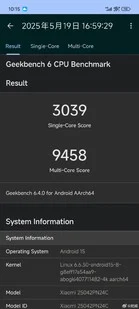
    2. The XRing O1 demonstrates strong CPU performance, scoring 3,039 in single-core and 9,458 in multi-core tests on Geekbench 6.
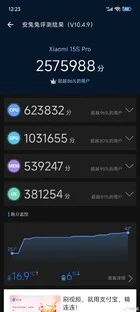
    3. In AnTuTu benchmarks, the XRing O1 scores 632,832, competing closely with Snapdragon 8 Elite and Dimensity 9400.
    4. The GPU performance of the XRing O1, featuring Immortalis-G925 MC12, lags behind competitors, scoring 1,031,655 on AnTuTu.
    5. The XRing O1 is likely limited to the Chinese market, with no plans for a global launch of the Xiaomi 15S Pro or Xiaomi Pad 7 Ultra.


    Xiaomi has unveiled its first flagship in-house chipset, named XRing O1, just last month. This chipset made its first appearance in the Xiaomi 15S Pro and Xiaomi Pad 7 Ultra in China. Currently, Fat Wei is conducting various hands-on benchmark tests for the Xiaomi 15S Pro, sharing the results on Weibo.

    Impressive CPU Performance

    When it comes to CPU performance, the Xiaomi 15S Pro paired with the XRing O1 achieves impressive scores of 3,039 in single-core and 9,458 in multi-core tests on Geekbench 6. Additionally, in AnTuTu benchmarks, the duo scores 632,832. These figures indicate that Xiaomi’s XRing O1 competes closely with the Dimensity 9400 and Snapdragon 8 Elite in terms of CPU capabilities and even exceeds the average performance of both chipsets.

    GPU Performance Lags Behind

    On the GPU side, however, the XRing O1 doesn’t perform quite as well. The Xiaomi 15S Pro features the Immortalis-G925 MC12 GPU, which scores 2,456 in 3DMark’s Steel Nomad Light and a GPU score of 1,031,655 on AnTuTu. These results fall short of the Snapdragon 8 Elite and Dimensity 9400. For instance, the Snapdragon 8 Elite achieves around 1,150,000 in AnTuTu’s GPU test and can reach a score of 2,584 in the Steel Nomad Light test, as demonstrated by the Oppo Find X8 Ultra.

    Limited Global Availability

    Clearly, the XRing O1 is a true flagship chipset—it competes well with the Snapdragon 8 Elite and Dimensity 9400 without being significantly outperformed. Sadly, it seems that the XRing O1 will probably not be available outside of China. If someone wants to experience this chipset, their best option would be to import the Xiaomi 15S Pro or Xiaomi Pad 7 Ultra, as neither device is currently planned for a global launch.

    Source:
    Link


  • Xiaomi 15S Pro Outperforms iPhone 16 Pro Max in Multi-Core Speed

    Xiaomi 15S Pro Outperforms iPhone 16 Pro Max in Multi-Core Speed

    Key Takeaways

    1. Xiaomi officially launched the Xring O1, featured in the Xiaomi 15S Pro and Xiaomi Pad 7 Ultra, claiming impressive performance figures over 3 million on Antutu.
    2. Performance tests show the Xring O1 scored 2,766 in Single-Core and 8,843 in Multi-Core on Geekbench 6, which is lower than the Snapdragon 8 Elite.
    3. The Xring O1 outperforms the Apple A18 Pro in Multi-Core tests by 7% but is 18% slower in Single-Core tests.
    4. The Xring O1 is Xiaomi’s first in-house System on Chip (SoC), with potential implications for the company’s future reliance on MediaTek and Qualcomm.
    5. The Xiaomi 15S Pro is not yet available in global markets, limiting extensive reviews from Western outlets.


    After making a big impression with its remarkable performance leaks, Xiaomi has officially launched the Xring O1 last week, included in the Xiaomi 15S Pro and the Xiaomi Pad 7 Ultra. The company boasts some significant performance figures for the Xring O1, claiming it can achieve over 3 million on Antutu. However, we can’t completely trust these first-party statistics for obvious reasons.

    Testing the Performance

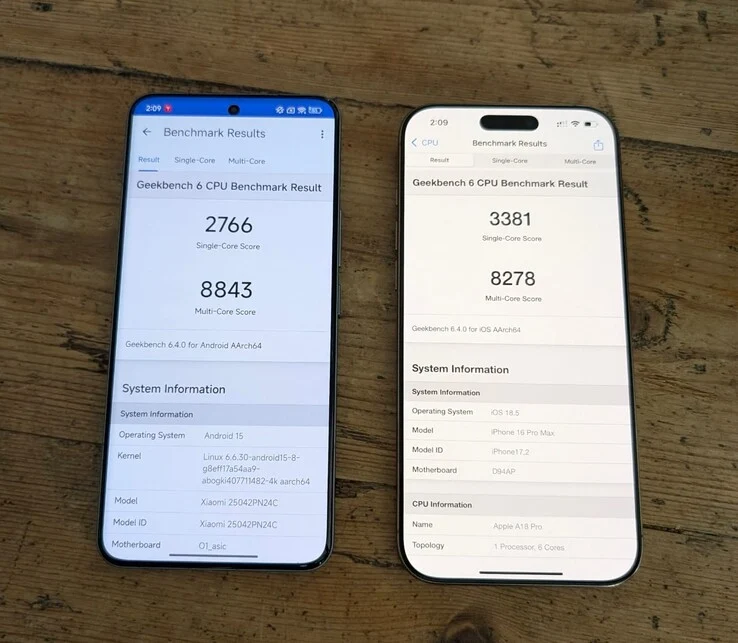
    Fortunately, Max Weinbach tested the Xiaomi 15S Pro equipped with the Xring O1 using Geekbench 6 and compared the results against the Apple iPhone 16 Pro Max. This comparison gives us a clearer view of what the Xiaomi Xring O1 can do.

    The performance results indicate that the Xring O1 in the Xiaomi 15S Pro scored 2,766 in Single-Core and 8,843 in Multi-Core tests on Geekbench 6. According to our records, these scores fall short of the Snapdragon 8 Elite, which averages about 9% and 4% faster than the Xring O1 in Single-Core and Multi-Core benchmarks, respectively.

    A Favorable Comparison

    When comparing it to the Apple A18 Pro, the Xring O1 performs better. The side-by-side Geekbench 6 results from Max Weinbach show that the Xiaomi 15S Pro is actually 7% quicker in the Multi-Core test. This is not surprising since the Xring O1 has a 10-core CPU, while the A18 Pro has only 6 cores. However, in the Single-Core test, the Xring O1 is 18% slower than the A18 Pro.

    All things considered, this is a strong performance for Xiaomi, as the Xring O1 marks the company’s first in-house System on Chip (SoC). If the chip also delivers on efficiency, as Xiaomi claims, it could lead to the company completely moving away from MediaTek and Qualcomm SoCs in their high-end products.

    Availability Issues

    Unfortunately, the Xiaomi 15S Pro is not yet accessible in global markets, which means extensive reviews from various Western outlets are unlikely to surface anytime soon. We are eager to test the Xring O1 thoroughly as soon as we can get our hands on the Xiaomi 15S Pro or the Pad 7 Ultra.

    Source:
    Link


  • Xiaomi 15S Pro with Xring O1 Processor Launches Globally

    Xiaomi 15S Pro with Xring O1 Processor Launches Globally

    Key Takeaways

    1. Xiaomi has launched its Xring O1, the company’s most advanced flagship SoC, competing strongly with the Snapdragon 8 Elite.

    2. The flagship smartphone will not be available in global markets at this time, but importing is possible through Giztop.

    3. The starting model with 16 GB RAM and 512 GB storage is priced at $949, while the same model launched in China for about $764.

    4. Another configuration with 16 GB RAM and 1 TB storage is available for $1,049, compared to about $832 in China.

    5. Important considerations for importing include the pre-installed Chinese version of HyperOS, potential compatibility issues with global features, and differences in warranty policies.


    Xiaomi has revealed its Xring O1, marking a significant step for the company with its most advanced flagship SoC yet. Performance-wise, it stands strong against the Snapdragon 8 Elite, based on benchmark tests. Nevertheless, the company has stated that they do not have plans to release this flagship smartphone in global markets at this time.

    Importing the Device

    For those keen on getting the phone, importing it through Giztop is now an option. The starting model, which comes with 16 GB of RAM and 512 GB of storage, is priced at $949. In comparison, this configuration was initially launched in China for CNY 5,499, equating to roughly $764.

    Additional Configurations Available

    Giztop is also selling another configuration of the Xiaomi 15S Pro, which has the same RAM but offers 1 TB of storage. This variant is priced at $1,049. In China, the same setup was introduced for CNY 5,999, which is about $832.

    Important Considerations

    While the import pricing looks decent, there are important details to think about before buying a phone that’s exclusive to China. For instance, the Xiaomi 15S Pro will come pre-installed with the Chinese version of HyperOS, which might include apps tailored for the Chinese market.

    Additionally, some functionalities that are available on global phones, like Android Auto, could be incompatible with imported models. Warranty issues are also a consideration; although Giztop seems to offer a reasonable warranty policy, it is not identical to the official one.

    Features of the Xiaomi 15S Pro

    In terms of specifications, aside from the Xring O1, the Xiaomi 15S Pro is equipped with a premium camera system that features Leica tuning. It also boasts a brilliant 2K display and a robust 6,100 mAh battery that supports 90 W fast charging (100 W Anker Prime currently priced at $49.99 on Amazon). More details about the device can be found in our coverage of the launch.

  • Xiaomi 15S Pro Launch: Features Xring O1 and Carbon Fiber Design

    Xiaomi 15S Pro Launch: Features Xring O1 and Carbon Fiber Design

    Key Takeaways

    1. The Xiaomi 15S Pro features the new Xring O1 chipset, a 3 nm processor developed by Xiaomi to compete with Snapdragon 8 Elite.
    2. It retains key hardware from the Xiaomi 15 Pro, including a 6,100 mAh battery with 50 W wireless and 90 W wired charging.
    3. The smartphone boasts a 6.73-inch AMOLED display with a resolution of 3,200 x 1,440 pixels, a 120 Hz refresh rate, and a peak brightness of 3,200 nits.
    4. Camera setup and design remain similar to the previous model, maintaining a robust photography capability.
    5. The Xiaomi 15S Pro is currently available in China with two RAM and storage options, priced between CNY 5,499 and CNY 5,999, but no global release date has been announced yet.


    Xiaomi has updated its top smartphone lineup with the release of the Xiaomi 15S Pro, coming in just under three months after the introduction of the Xiaomi 15 Ultra. To provide some background, the Xiaomi 15 series kicked off in late October with the Xiaomi 15 (curr. $1,069.99 on Amazon) and the Xiaomi 15 Pro. Unlike earlier ‘S’ models like the Xiaomi 12S Pro, the Xiaomi 15S Pro does not replace the Xiaomi 15 Pro.

    New Chipset and Specifications

    The Xiaomi 15S Pro is designed to highlight the Xring O1, a new 3 nm chipset developed internally that aims to compete with the Snapdragon 8 Elite in terms of speed. Additionally, Xiaomi pairs the Xring O1 with LPDDR5T RAM and UFS 4.1 flash storage, no matter which model you choose. For more information about Xiaomi’s first in-house smartphone SoC, check out our detailed article on the Xring O1.

    Similar Hardware Features

    In many ways, the Xiaomi 15S Pro retains much of the hardware from last year’s Xiaomi 15 Pro. For example, a 6,100 mAh battery is included again, offering support for 50 W wireless and 90 W wired charging. Moreover, it features a 6.73-inch AMOLED display that has a resolution of 3,200 x 1,440 pixels, a 120 Hz refresh rate, and an impressive 3,200 nits peak brightness. The camera setup also continues to be robust, featuring the same design as its predecessor.

    The Xiaomi 15S Pro is now available in China, offering options between Dragonscale Fibre and Sky Blue finishes. As of now, Xiaomi lists both variants with 16 GB of RAM and storage choices of 512 GB or 1 TB priced at CNY 5,499 (~$763) and CNY 5,999 (~$834), respectively. However, there is currently no information regarding when it will be available in other countries.

    Source:
    Link


  • Xiaomi Xring O1: AnTuTu Scores Over 3 Million! Details Inside

    Key Takeaways

    1. Xiaomi launched the Xiaomi 15S Pro smartphone and Xiaomi Pad 7 Ultra tablet.
    2. Both devices feature the Xring O1 chipset, Xiaomi’s first internally developed processor.
    3. The Xring O1 scores 3,004,137 on AnTuTu V10, competing closely with Snapdragon 8 Elite and MediaTek’s Dimensity 9400.
    4. The chipset includes a 10-core CPU and a 16-core Immortalis-G925 GPU for enhanced performance.
    5. Xiaomi claims the Xring O1 manages heat better during gaming and charging compared to competitors.


    Xiaomi has unveiled a range of gadgets today, which includes the Xiaomi 15S Pro smartphone and the Xiaomi Pad 7 Ultra tablet. Both devices are powered by the Xring O1, the company’s first internally developed chipset, which aims to compete with the Snapdragon 8 Elite and Apple A18 Pro that are used in the iPhone 16 Pro and iPhone 16 Pro Max (currently priced at $979 – refurbished on Amazon).

    Performance Insights

    According to official sources, the Xring O1 reportedly scores 3,004,137 on AnTuTu V10. While it’s wise to question official benchmark scores, a figure just over 3 million positions the Xring O1 just behind the Snapdragon 8 Elite Leading Version found in the RedMagic 10S Pro+. Additionally, this score places Xiaomi’s chipset alongside the standard Snapdragon 8 Elite and MediaTek’s Dimensity 9400 series chipsets.

    Technical Specifications

    To achieve this performance, Xiaomi has designed the Xring O1 with a 10-core CPU that consists of the following cores:

    Furthermore, the Xring O1 includes the Immortalis-G925, a 16-core GPU that Xiaomi claims provides exceptional performance on its own. Moreover, the company asserts that the Xring O1 manages heat better than its competitors during gaming sessions and while charging. For more information, please refer to the images below.

    Source:
    Link

  • Xiaomi 15S Pro Xring O1 Beats Snapdragon 8 Elite on AnTuTu

    Xiaomi 15S Pro Xring O1 Beats Snapdragon 8 Elite on AnTuTu

    Key Takeaways

    1. Xiaomi’s Xring O1 SoC outperforms Snapdragon 8 Elite in early AnTuTu tests with a score of 2,535,163.
    2. The official launch of the Xring O1 and Xiaomi 15S Pro is set for May 22, 2025.
    3. The Xring O1 features a powerful 10-core CPU and Mali-G925 Immortalis GPU, delivering strong benchmark scores.
    4. Concerns about efficiency and thermal management persist, which are crucial for practical usage.
    5. The Xiaomi 15S Pro is positioned as a high-end competitor with features like 16GB RAM and a 6,500mAh battery.


    Xiaomi is making waves with its new Xring O1 SoC, which is set to debut in the Xiaomi 15S Pro. This chip has just outperformed the Snapdragon 8 Elite in early AnTuTu tests, scoring 2,535,163 compared to 2,515,259. The official launch is scheduled for May 22, marking Xiaomi’s brave entry into the competitive flagship chipset market.

    Impressive First-Gen Performance

    The achievement of surpassing the Snapdragon 8 Elite is quite remarkable, especially for a first-generation chip. Xiaomi is all set to showcase its self-developed SoC, the Xring O1, during an event in China on May 22, 2025. Alongside the Xiaomi Pad 7 Ultra, the Xiaomi YU7 SUV will also be revealed. A leaked video from Chinese content creator 阿文鉴机, which was later taken down, disclosed the Xring O1’s performance on AnTuTu, showing it outperforming the Snapdragon 8 Elite in the Xiaomi 15 Pro.

    Powerful Specifications

    The Xring O1 features a 10-core CPU which includes 2 Cortex-X925 cores clocked at 3.9GHz, 4 Cortex-A725 cores at 3.4GHz, 2 Cortex-A725 cores at 1.89GHz, and 2 Cortex-A520 cores at 1.8GHz. The Mali-G925 Immortalis GPU supports this setup with strong performance, achieving Geekbench scores of 3,119 in single-core and 9,673 in multi-core tests, which is slightly behind the Snapdragon 8 Elite’s scores of 3,089 and 9,405. However, the Snapdragon 8 Elite performs exceptionally well in some models, like the RedMagic 10S Pro+, scoring over 3.15 million on AnTuTu.

    Questions About Efficiency

    Despite the Xring O1’s impressive benchmarks matching Qualcomm’s flagship, concerns remain about its efficiency and thermal management, which are vital for everyday usage. The Xiaomi 15S Pro is expected to offer 16GB of RAM, a potential 6.7-inch 2K OLED display, a 6,500mAh battery, and 90W charging, positioning it as a high-end competitor. The big question is whether Xiaomi’s chip can effectively challenge Qualcomm’s stronghold in the market, or if thermal issues will hinder its performance. We’re excited to see what happens!

    Source:
    Link

  • Xiaomi Pad 7 Ultra Surpasses Galaxy Tab S10 Ultra on Geekbench

    Xiaomi Pad 7 Ultra Surpasses Galaxy Tab S10 Ultra on Geekbench

    Key Takeaways

    1. The Xiaomi Pad 7 Ultra will be unveiled in China on May 22, alongside the Xiaomi 15S Pro and other gadgets.
    2. It scored 2,715 in single-core and 8,849 in multi-core on Geekbench 6, showing solid performance for a tablet.
    3. The tablet’s main cores operate at 3.70 GHz, resulting in approximately 15% lower performance compared to the Xiaomi 15S Pro.
    4. It outperforms older models like the Samsung Galaxy Tab S10 Ultra, despite having a less powerful chipset.
    5. Key features include 16 GB of RAM, a 14-inch OLED display, and a large 12,000 mAh battery for extended use.


    Xiaomi is set to unveil the Xiaomi Pad 7 Ultra in China on May 22, along with the Xiaomi 15S Pro and other exciting new gadgets. Before the official launch, the flagship tablet has already made an appearance on Geekbench, showcasing some notable performance results.

    Performance Metrics

    The Xiaomi Pad 7 Ultra, identified by the model number “25032RP42C,” achieved a single-core score of 2,715 and a multi-core score of 8,849 on Geekbench 6. Although these figures are not as high as those from its sibling, the Xiaomi 15S Pro powered by XRing O1, this is mainly due to the tested version of the tablet running a slower variant of the Xiaomi chipset.

    Core Specifications

    In terms of core specifications, the two main cores in the Xiaomi Pad 7 Ultra operate at 3.70 GHz, compared to 3.90 GHz found in the 15S Pro. Additionally, the four-core cluster is clocked at 3.04 GHz, which is lower than the 3.40 GHz frequency in the smartphone. This results in approximately a 15% reduction in performance when compared to the Xiaomi 15S Pro.

    Competitive Edge

    Nevertheless, even with a less powerful chipset, the Xiaomi Pad 7 Ultra still shows impressive capabilities. It may not compete with tablets powered by Snapdragon 8 Elite, but it significantly outperforms older models like the Samsung Galaxy Tab S10 Ultra (available on Amazon). That particular tablet, which comes with a MediaTek Dimensity 9300+, achieved scores of 2,192 and 7,327 on Geekbench 6 during our evaluations.

    In addition to its robust chipset, the Xiaomi Pad 7 Ultra is equipped with 16 GB of RAM. It also boasts a 14-inch OLED display and a massive 12,000 mAh battery, ensuring long-lasting performance.

    Source:
    Link