Category: Phones

Stay updated with the latest phone news, reviews, and trends. Discover cutting-edge smartphones, features, and innovations in our Phones category at GizNewsDaily

  • Samsung’s Tri-Fold Phone Price Exceeds $3,000 with Limited Stock

    Samsung’s Tri-Fold Phone Price Exceeds $3,000 with Limited Stock

    Key Takeaways

    1. Samsung is developing a tri-fold smartphone called the Galaxy G Fold, expected to launch in late 2025.
    2. The anticipated price of the Galaxy G Fold is projected to be between $3,000 and $3,500, making it Samsung’s most expensive phone.
    3. The device will initially be available only in China and South Korea upon launch.
    4. The Galaxy G Fold is set to be revealed in the third quarter of 2025, likely between July and September.
    5. This smartphone will be Samsung’s first tri-fold device, entering a market that currently includes high-priced competitors like the Huawei Mate XT Ultimate Design.


    It is widely recognized that Samsung is working on a tri-fold smartphone, and it is expected to be quite pricey. Recently, a leak has surfaced that reveals how costly and exclusive this anticipated device might be. Unofficially referred to as the Galaxy G Fold, this smartphone is rumored to retail for more than $3,000 and will be available in just two markets, at least when it first launches. According to the latest information, it is anticipated to be revealed later this year.

    Samsung’s Announcement

    During a recent Galaxy Unpacked event, Samsung acknowledged the development of a tri-fold (or bi-fold, depending on how you count the folds) smartphone to enhance its foldable product range for the latter part of 2025. This device is being called the Galaxy G Fold, although Samsung has not officially named it yet. At launch, it is believed to be exclusively available in China and South Korea, which is the company’s home market.

    Pricing Insights

    A recent leak from well-known tipster Yogesh Brar on X indicates that this will be Samsung’s priciest phone ever, with a price tag ranging from $3,000 to $3,500. For comparison, the Galaxy Z Fold6 (Buy on Amazon) starts at around $1,600 in South Korea (when converted from Korean Won) and can go up to about $1,950 for the 1 TB variant. This means the Galaxy G Fold could be priced at nearly double the starting amount of the Galaxy Z Fold6. Given this steep cost, it’s not surprising that Samsung will only produce a limited number of units for this model.

    Launch Timeline

    On the topic of availability, Brar suggests that the phone will be launched in the third quarter of this year, which includes the months of July through September. This aligns with Samsung’s planned timeline for the second half of 2025.

    Even though the Galaxy G Fold will be Samsung’s first tri-fold device, it won’t be the first of its kind to hit the market. The Huawei Mate XT Ultimate Design made its global debut earlier this February, following its initial release in China priced at CNY 19,999 (approximately $2,760). However, the European price was even steeper at €3,499 (around $3,948), as smartphones tend to be pricier in Europe compared to the United States. Nevertheless, this initial generation of tri-fold phones is turning out to be extremely costly and aimed at a niche audience.

    Yogesh Brar shared this information on X, and Samsung’s Korean store has also hinted at these developments.

    Source:
    Link

  • OnePlus 15 Leak: 7000mAh Battery, 100W Charging, Flat Display

    OnePlus 15 Leak: 7000mAh Battery, 100W Charging, Flat Display

    Key Takeaways

    1. OnePlus skipped the OnePlus 4 name due to cultural beliefs and will release the OnePlus 15 as a successor to the OnePlus 13.
    2. The OnePlus 15 is expected to feature a flat display with a 1.5K resolution and narrow bezels using LIPO packaging technology.
    3. It may include a large 7,000mAh battery with 100W wired and wireless charging, while maintaining a slim design.
    4. The device will have enhanced haptic feedback, a single-point ultrasonic fingerprint scanner, and an IP68/IP69 rating for water and dust resistance.
    5. The OnePlus 15 is undergoing testing for a triple 50-megapixel camera setup and is anticipated to launch in China in October 2025, with a global release in January 2026.


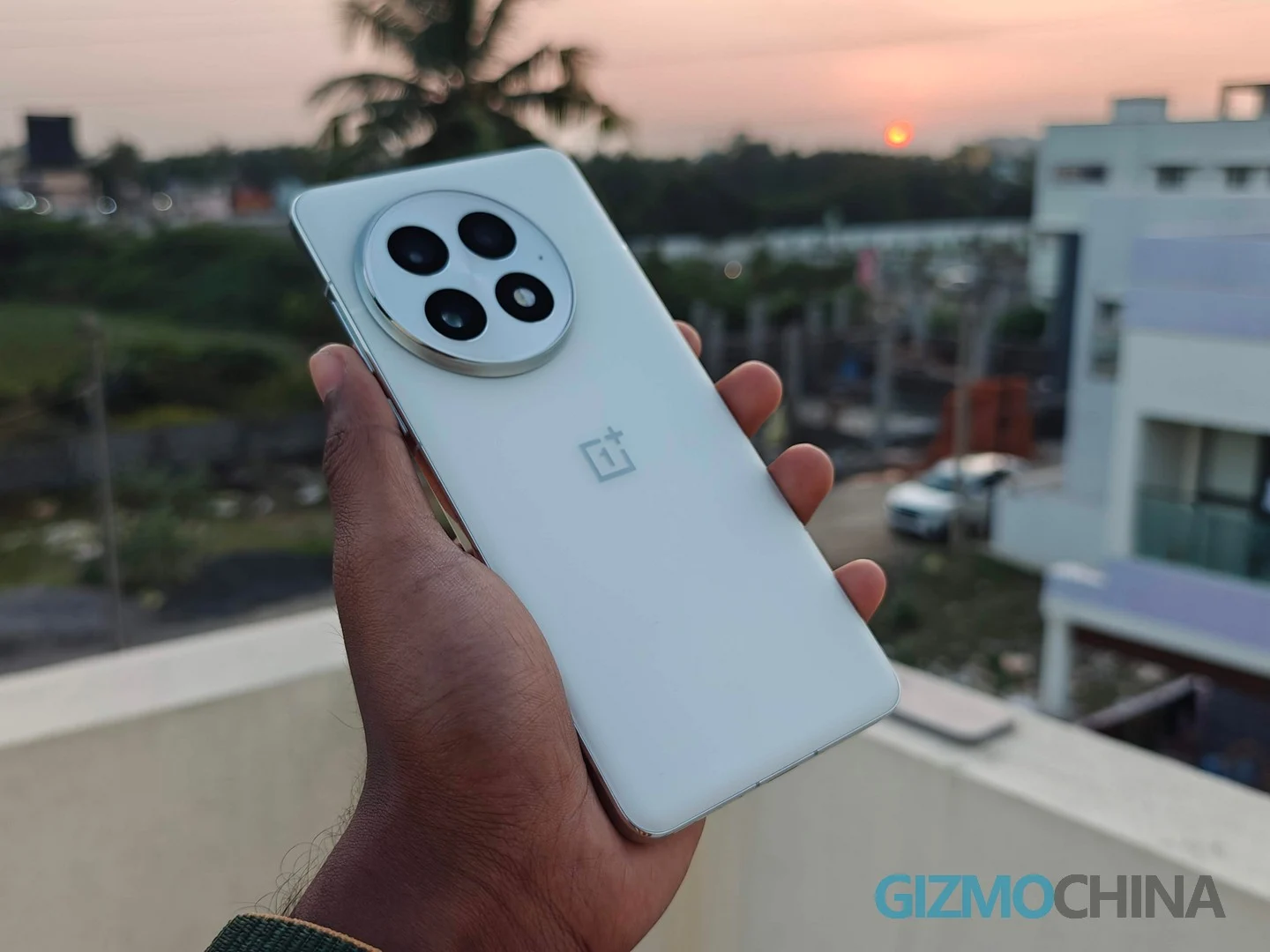
    In the past, OnePlus decided not to use the OnePlus 4 name and instead went straight from the OnePlus 3 series to the OnePlus 5 series. The reason for this skip is that the number 4 is seen as unlucky in some Asian cultures. Consequently, the OnePlus 13 from last year is anticipated to be succeeded by the OnePlus 15 this year. Already, rumors are surfacing with important details about the OP15, including a recent report that suggests a significant update could be a flat display boasting a 1.5K resolution. Recently, a post on Weibo from tipster Digital Chat Station has shared critical specifications of the OP15.

    Battery and Charging Information

    According to Digital Chat Station, the OnePlus 15 prototype is powered by the SM8850 chip (tentatively named Snapdragon 8 Elite 2) and is aimed at being a performance-focused flagship. A key design feature is its large flat display with very narrow bezels, made possible thanks to LIPO packaging tech. This design choice is said to create a tidy and balanced look upfront.

    The phone is expected to come with a battery that starts with a “7,” indicating a capacity around 7,000mAh. It may allow for both 100W wired and wireless charging. Despite the bigger battery and high-end parts, the company is reportedly trying to keep the body slim and not too heavy.

    Additional Features and Durability

    Digital Chat Station also revealed that the device will include a 0916 vibration motor for enhanced haptic feedback, a single-point ultrasonic fingerprint scanner, and a fiberglass rear. In terms of durability, the OP15 is expected to have an IP68/IP69 rating for water and dust resistance.

    The same source also indicated in an earlier leak that the OnePlus 15 could sport a flat 6.78-inch LTPO display with 1.5K resolution, marking a significant change from the curved-edge 2K screens the brand has utilized since the OnePlus 7 Pro.

    Camera and Launch Timeline

    Currently, the OnePlus 15 is undergoing A/B testing for a triple 50-megapixel camera layout. This setup includes a main sensor (with two variations being tested: standard and ultra-large), an ultra-wide lens, and a periscope telephoto camera that will offer roughly 3x zoom. The periscope options being considered involve both small and medium sensor types.


  • Samsung S26, Z Fold 8, Flip 8 Chip Strategy Leaks with Surprise

    Samsung S26, Z Fold 8, Flip 8 Chip Strategy Leaks with Surprise

    Key Takeaways

    1. Samsung will implement a dual-chip strategy for the Galaxy S26 series, using Exynos 2600 for S26 and S26+ and Snapdragon 8 Elite 2 for S26 Ultra globally.
    2. The Exynos 2600 is built on Samsung’s 2nm SF2 node, while the Snapdragon 8 Elite 2 is manufactured on TSMC’s 3nm N3P node.
    3. The Snapdragon 8 Elite 2 for Galaxy will be produced using Samsung’s 2nm process, marking a return to collaboration with Qualcomm.
    4. This strategy mirrors the previous S24 series, where different chips were used for various models based on the region.
    5. Performance comparisons suggest that while the Exynos 2600 and Snapdragon 8 Elite 2 have potential due to their manufacturing processes, TSMC’s chips historically outperform Samsung’s.


    Samsung is planning to use a similar chip strategy for its Galaxy S26 series, which is expected to launch in early 2026. The company will use the Exynos 2600 for the global variants of the S26 and S26+, while the Snapdragon 8 Elite 2 will be utilized in the S26 Ultra across the globe, including all models sold in the US, Japan, South Korea, and China. The eighth generation of foldables will also feature the 8 Elite 2, but there is a twist to this setup.

    Chip Strategy Insights

    Samsung’s approach for the Galaxy S26 series brings back the dual-chip strategy after the previous Snapdragon-only S25 series, which faced yield challenges with the Exynos 2500. A recent report from South Korea mentions that the Exynos 2600, crafted on Samsung’s 2nm SF2 node with GAA FET architecture, will drive the S26 and S26+ (or S26 Edge) in areas like Europe and Asia. Meanwhile, the Snapdragon 8 Elite 2, built on TSMC’s 3nm N3P node, will support the S26 Ultra worldwide and all models in key markets. This setup is similar to what was seen with the S24, where the S24 Ultra was powered by the Snapdragon 8 Gen 3 globally, while the S24 and S24+ had the Exynos 2400 in most regions.

    Manufacturing Details

    Interestingly, the Snapdragon 8 Elite 2 “For Galaxy” will be produced using Samsung’s 2nm manufacturing process, unlike TSMC’s. Qualcomm previously collaborated with Samsung Foundry for the Snapdragon 888 and 8 Gen 1, but then shifted back to TSMC, mainly due to performance and efficiency needs, despite the higher costs. It raises the question: will the 8th generation foldables experience similar challenges as those earlier flagships? Only time will reveal this.

    Performance Comparison

    The theoretical advantage of the Exynos 2600 and the 8 Elite 2 For Galaxy lies in the 2nm process, but historically, TSMC’s N3P has shown better performance than Samsung’s nodes. Qualcomm’s strategy of dual-sourcing is mainly focused on reducing costs since TSMC’s 3nm wafers were reportedly around $18,000 each last year.

    Source:
    Link

  • Motorola Razr 60 Launch in India: Next-Gen Flip Phone Arrives Soon

    Motorola Razr 60 Launch in India: Next-Gen Flip Phone Arrives Soon

    Key Takeaways

    1. The Motorola Razr 60 will launch on May 28, 2025, at 12 PM IST.
    2. It features India’s first Pearl Acetate Finish and a Fabric finish on the back, available in multiple color variants.
    3. The phone includes the world’s first video gestures capability and a 100% accurate color camera.
    4. It has a 6.96-inch FHD+ pOLED LTPO display with a 120Hz refresh rate and a 3.63-inch cover screen with a 90Hz refresh rate.
    5. The device is powered by the Dimensity 7400X SoC, 8GB of RAM, 256GB storage, and has a 4,500mAh battery with fast charging capabilities.


    Motorola has announced the launch date for its latest flip phone, the Razr 60. Just a few days ago, the company introduced the flagship Razr 60 Ultra in India, and now, the standard Razr 60 is ready to make its entrance next week.

    Launch Date Details

    The official launch date for the Razr 60 has been confirmed for May 28, 2025, at 12 PM IST. The promotional poster gives us a sneak peek into its color choices, design features, and some camera capabilities. The Razr 60 will showcase India’s very first Pearl Acetate Finish and a Fabric finish on the back. The fabric texture is found on the Pantone Gibraltar Sea (Blue) model, while the Pearl Acetate finish can be seen on the Pantone Lightest Sky variant. Additionally, a green Pantone Spring Bud version will also be available.

    Features of Motorola Razr 60

    The Moto Razr 60 boasts the world’s first video gestures capability on a smartphone, along with a 100 percent accurate color camera. From the prior global launch, we learn that this upcoming flip phone features a 6.96-inch FHD+ pOLED LTPO display with a 120Hz refresh rate, DCI-P3 color range, and a peak brightness of up to 3000 nits. In contrast, the cover screen is a 3.63-inch pOLED display with a 90Hz refresh rate.

    Underneath, the device is powered by the Dimensity 7400X SoC, combined with 8GB of RAM and 256GB of internal storage. The rear camera system consists of a 50MP main lens and a 13MP ultra-wide angle lens, whereas the front features a 32MP camera for selfies. This device is sustained by a 4,500mAh battery that supports 30W wired fast charging and 15W wireless charging. Other significant features include an IP48 rating for resistance to water and dust, a side-mounted fingerprint scanner, Bluetooth 5.3, WiFi 6E, and it runs on Android 15 OS right out of the box.

  • Samsung Galaxy S26 Camera Leak Disappoints Fans

    Samsung Galaxy S26 Camera Leak Disappoints Fans

    Key Takeaways

    1. The Galaxy S26 is expected to feature a 50 MP Sony camera, similar to the ISOCELL GN3 in previous models.
    2. The Galaxy S26 Edge will also use the same 50 MP sensor, which may be a downgrade from the 200 MP camera in the Galaxy S25 Edge.
    3. The Galaxy S26 Ultra is likely to keep the 200 MP ISOCELL HP2 sensor from the Galaxy S25 Ultra.
    4. The leak does not mention the Galaxy S26+, suggesting Samsung might phase it out in favor of the Edge model.
    5. Samsung is reportedly evaluating the performance of the new Galaxy S25 Edge before making final decisions on the Plus model.


    The Samsung Galaxy S26 series is still quite a while away from its release, yet a recent leak has surfaced, providing details about the camera specifications of these flagship devices. According to the leaker Jukanlosreve, the standard Galaxy S26 is set to receive a new main camera, but the news isn’t entirely positive.

    Camera Specifications Revealed

    The Galaxy S26 is expected to feature a 50 MP Sony camera. This particular sensor is reported to have a pixel size of 1μm, which is the same as the ISOCELL GN3 found in the Galaxy S25 and earlier models dating back to the Galaxy S22 series. Since it shares the same MP count as the GN3, it suggests that the new Sony sensor could also be a 1/1.56-inch one. Thus, this new sensor might merely be a technical side-grade.

    Changes for the Edge Model

    In an interesting turn of events, the Galaxy S26 Edge is rumored to also include the same 50 MP sensor as the standard Galaxy S26—this might be seen as a downgrade from the 200 MP camera present on the Galaxy S25 Edge (available on Amazon). Meanwhile, the Galaxy S26 Ultra is anticipated to maintain the same sensor as its predecessor, the Galaxy S25 Ultra, which is the 200 MP ISOCELL HP2 that is also utilized in the Galaxy S23 Ultra and Galaxy S24 Ultra.

    Future of the Plus Model

    Notably, the leak does not mention the Galaxy S26+, which might support claims that Samsung is phasing out the Plus variant in favor of the new Edge model. However, leaker Max Jambor suggests that no final decision has been made regarding this, as Samsung is reportedly waiting to evaluate the performance of the new Galaxy S25 Edge first.

    Source:
    Link

  • New Leak Offers Hope for Galaxy S26 Ultra Buyers

    New Leak Offers Hope for Galaxy S26 Ultra Buyers

    Key Takeaways

    1. The Exynos 2600 will power the Galaxy S26 and S26+ models, while the Galaxy S26 Ultra will use the Snapdragon 8 Elite 2.
    2. The Snapdragon 8 Elite 2 for Galaxy is produced by Samsung, while the standard version is made by TSMC.
    3. Samsung’s chip production strategy will feature three different chip types across its upcoming devices.
    4. Cost factors influence Qualcomm’s decision to use different foundries for chip production.
    5. The Exynos 2600 and Snapdragon 8 Elite 2 for Galaxy may have a performance advantage due to their advanced GAA FET architecture.


    As always, confusion surrounding the division between Samsung’s Exynos and Snapdragon chips is a hot topic. Although the Exynos 2500 won’t be part of the Galaxy S25 series, sources suggest that the Exynos 2600 is set to return with the upcoming Galaxy S26 series. A South Korean news outlet has added an interesting twist to the story.

    Global Launch Plans

    It seems that the worldwide versions of the Galaxy S26 and Galaxy S26+ (or Galaxy S26 Edge) will be equipped with the Exynos 2600. Meanwhile, the Galaxy S26 Ultra will feature a Snapdragon 8 Elite 2, available in markets like the US, Japan, South Korea, and China. This approach closely mirrors Samsung’s strategy from 2024, but this time they will utilize a standard Snapdragon chip rather than a ‘For Galaxy’ edition.

    Differences in Chip Production

    Previous reports suggested that the Snapdragon 8 Elite 2 for Galaxy would be produced using Samsung’s SF2 node. On the other hand, the standard Snapdragon 8 Elite 2 is crafted at TSMC’s N3P facility. The SoC from Samsung’s Foundry won’t be ready until the second half of 2026, and it’s expected to power the Galaxy Z Fold 8 and Galaxy Z Flip 8. If this is accurate, it would mark the first lineup featuring three different chip types.

    While the Snapdragon 8 Elite 2 and the Snapdragon 8 Elite 2 are essentially the same, their production occurs at two separate foundries. Those familiar with the industry may recall the Apple A9 SoC controversy (iPhone 6s), which led to the well-known Chipgate issue. Interestingly, Apple also sourced its chips from both TSMC and Samsung, with the TSMC version outperforming the other.

    Cost Considerations

    Qualcomm’s choice to repeat this scenario might appear strange initially, but it becomes clear when viewed from a cost perspective. Last year, TSMC’s 3 nm wafers were reported to cost around $18,000 each, a figure that is likely to increase as Samsung prepares to release the Galaxy S26. The Exynos 2600 and Snapdragon 8 Elite 2 for Galaxy, produced on SF2, hold a theoretical edge over the standard Snapdragon 8 Elite 2 due to their GAA FET architecture.

    Source:
    Link

  • Xiaomi 15S Pro Xring O1 Beats Snapdragon 8 Elite on AnTuTu

    Xiaomi 15S Pro Xring O1 Beats Snapdragon 8 Elite on AnTuTu

    Key Takeaways

    1. Xiaomi’s Xring O1 SoC outperforms Snapdragon 8 Elite in early AnTuTu tests with a score of 2,535,163.
    2. The official launch of the Xring O1 and Xiaomi 15S Pro is set for May 22, 2025.
    3. The Xring O1 features a powerful 10-core CPU and Mali-G925 Immortalis GPU, delivering strong benchmark scores.
    4. Concerns about efficiency and thermal management persist, which are crucial for practical usage.
    5. The Xiaomi 15S Pro is positioned as a high-end competitor with features like 16GB RAM and a 6,500mAh battery.


    Xiaomi is making waves with its new Xring O1 SoC, which is set to debut in the Xiaomi 15S Pro. This chip has just outperformed the Snapdragon 8 Elite in early AnTuTu tests, scoring 2,535,163 compared to 2,515,259. The official launch is scheduled for May 22, marking Xiaomi’s brave entry into the competitive flagship chipset market.

    Impressive First-Gen Performance

    The achievement of surpassing the Snapdragon 8 Elite is quite remarkable, especially for a first-generation chip. Xiaomi is all set to showcase its self-developed SoC, the Xring O1, during an event in China on May 22, 2025. Alongside the Xiaomi Pad 7 Ultra, the Xiaomi YU7 SUV will also be revealed. A leaked video from Chinese content creator 阿文鉴机, which was later taken down, disclosed the Xring O1’s performance on AnTuTu, showing it outperforming the Snapdragon 8 Elite in the Xiaomi 15 Pro.

    Powerful Specifications

    The Xring O1 features a 10-core CPU which includes 2 Cortex-X925 cores clocked at 3.9GHz, 4 Cortex-A725 cores at 3.4GHz, 2 Cortex-A725 cores at 1.89GHz, and 2 Cortex-A520 cores at 1.8GHz. The Mali-G925 Immortalis GPU supports this setup with strong performance, achieving Geekbench scores of 3,119 in single-core and 9,673 in multi-core tests, which is slightly behind the Snapdragon 8 Elite’s scores of 3,089 and 9,405. However, the Snapdragon 8 Elite performs exceptionally well in some models, like the RedMagic 10S Pro+, scoring over 3.15 million on AnTuTu.

    Questions About Efficiency

    Despite the Xring O1’s impressive benchmarks matching Qualcomm’s flagship, concerns remain about its efficiency and thermal management, which are vital for everyday usage. The Xiaomi 15S Pro is expected to offer 16GB of RAM, a potential 6.7-inch 2K OLED display, a 6,500mAh battery, and 90W charging, positioning it as a high-end competitor. The big question is whether Xiaomi’s chip can effectively challenge Qualcomm’s stronghold in the market, or if thermal issues will hinder its performance. We’re excited to see what happens!

    Source:
    Link

  • Galaxy S26 New Main Sensor: What to Expect and What to Know

    Galaxy S26 New Main Sensor: What to Expect and What to Know

    Key Takeaways

    1. The Galaxy S26 series may feature an improved telephoto system with options for a mix of 3.5x and 8x lenses or a single 200MP telephoto lens using digital cropping for zoom.
    2. The base model is rumored to include a new 50MP ISOCELL GN series sensor, the first refresh in three years, promising sharper images and better low-light performance.
    3. Caution is advised as recent ISOCELL GN series sensors have not significantly changed in size, raising doubts about the potential for larger pixels in the new sensor.
    4. The S26 Edge is expected to replace the S26 Plus model, possibly featuring the same 200MP sensor as its predecessor.
    5. The Galaxy S26 will be powered by either the Exynos 2600 or Snapdragon 8 Elite 2 chipset and will run on One UI 8 based on Android 16, aiming for competitive pricing and gradual upgrades.


    The Galaxy S26 series has been rumored to come with an improved telephoto system, featuring either a mix of 3.5x and 8x lenses or a single 200MP telephoto lens that utilizes digital cropping for longer zoom capabilities due to its high resolution. Recent information also hints at an upgrade for the main sensor of the base model, introducing a new 50MP sensor. But hold your horses before getting too thrilled!

    New Sensor Details

    The Galaxy S26 is set to bring in a new ISOCELL GN series sensor, which will be the first refresh of the sensor in three years. Although precise details about this sensor are not fully clear yet, it’s anticipated to feature larger pixels, resulting in sharper images and improved performance in low-light conditions.

    Caution is Advised

    However, it’s worth noting that the sensor sizes in the ISOCELL GN series haven’t changed significantly over recent years. In fact, the GN3 and GN5 are smaller than the GN1 and GN2, which makes it hard to believe that a new GN sensor will actually come with larger pixels. Here’s a quick look at the sensor sizes:

    – GN1: 1/1.31″
    – GN2: 1/1.12″
    – GN3: 1/1.57″
    – GN5: 1/1.57″
    – GNK: 1/1.3″
    – GNJ: 1/1.56″
    (Source: Samsung Semiconductor)

    Interestingly, the source did not mention a Plus model, which aligns with previous rumors suggesting that the S26 Edge (likely to include a 200MP sensor like its predecessor) will take the place of the S26 Plus in Samsung’s future offerings.

    What to Expect

    Equipped with either an Exynos 2600 or Snapdragon 8 Elite 2 chipset along with One UI 8 on Android 16, the S26 seems to aim for a balance between gradual upgrades and competitive pricing. Will this new sensor enhance the S26’s photography capabilities to compete with Chinese flagship phones? More leaks are expected in the upcoming months to shed light on its potential.

  • Alcatel V3 Series: India’s First 4-in-1 NXTPAPER Display Specs

    Alcatel V3 Series: India’s First 4-in-1 NXTPAPER Display Specs

    Key Takeaways

    1. Alcatel is returning to the Indian smartphone market with the launch of the V3 Ultra, V3 Pro, and V3 Classic on May 27, all priced below Rs 30,000.
    2. The new smartphones feature Alcatel’s exclusive 4-in-1 NXTPAPER display technology, offering modes for different viewing experiences.
    3. The V3 Ultra has a 6.8-inch FHD+ display, Dimensity 6300 chipset, 8GB RAM, and a triple camera system with a 108MP main camera.
    4. The V3 Pro has a 6.7-inch display, 8GB RAM, 10GB virtual RAM, and a 50MP rear camera, along with a 5,200mAh battery.
    5. The V3 Classic includes similar specs to the V3 Pro, with 128GB storage, microSD support, NFC, and a 50MP camera.


    On May 27, Alcatel will make its comeback in the Indian smartphone scene with the unveiling of the Alcatel V3 Ultra, V3 Pro, and V3 Classic. Each of these devices is priced below Rs 30,000 and will be the first in India to incorporate Alcatel’s exclusive 4-in-1 NXTPAPER display technology. Listings on Flipkart are already available for all models, providing an early glimpse into their specs and design before the official launch.

    NXTPAPER Display Technology Unveiled

    Alcatel’s NXTPAPER display is a fresh innovation that merges a paper-like viewing experience with brilliant colors, making it ideal for daytime and nighttime use. The screen features four different modes: Regular Mode for everyday tasks, Max Ink Mode that allows up to 168 hours of display time, Ink Paper Mode for reading, and a standard viewing mode. A specific NXTPAPER Key enables users to switch easily among these modes.

    Key Specifications of Alcatel V3 Series

    The Alcatel V3 Ultra boasts a 6.8-inch FHD+ LCD display with a 120Hz refresh rate, powered by a Dimensity 6300 chipset, along with 8GB RAM and 8GB of virtual RAM. It offers 128GB of storage and has a triple camera system on the back (108-megapixel + 8-megapixel + 2-megapixel), an 8-megapixel front-facing camera, dual speakers featuring DTS X Sound, stylus support, and a robust 5,010mAh battery with 33W charging. Color options include blue, purple, and champagne.

    Features of V3 Pro and V3 Classic

    The V3 Pro includes a slightly smaller 6.7-inch 120Hz display, 8GB of RAM with an impressive 10GB of virtual RAM, and a 50-megapixel rear camera. It comes equipped with a 5,200mAh battery that supports 18W charging and features a built-in Gemini AI assistant. Meanwhile, the V3 Classic shares the same chipset and battery, offers 128GB of storage with microSD expansion, NFC capabilities, and a 50-megapixel main camera. All three models come with a case, a charging adapter, and a USB-A to USB-C cable in the package.


  • Realme Neo 7 Turbo Teased: Unique Semi-Transparent Gray Design

    Realme Neo 7 Turbo Teased: Unique Semi-Transparent Gray Design

    Key Takeaways

    1. The Realme Neo 7 Turbo features a Transparent Gray design that showcases its internal components through a clear rear panel.
    2. It is expected to have a 1.5K flat display, a 7,000mAh battery with 100W wired charging, and will be powered by MediaTek’s Dimensity 9400e chipset.
    3. The device may come with up to 16GB of LPDDR5X RAM and 1TB of UFS 4.0 storage, running on Realme UI 6 based on Android 15.
    4. The camera setup is rumored to include a 50MP Sony IMX882 sensor, an 8MP ultra-wide camera, and another 50MP telephoto lens.
    5. The Neo 7 Turbo will compete with devices like the OnePlus Ace 5 Racing Edition and iQOO Z10 Turbo Pro, with a price range between 2,500 and 3,000 Yuan (approximately $340 to $415).


    After weeks of anticipation, Realme has officially unveiled the design of the Neo 7 Turbo today. The company shared an image showcasing the Transparent Gray variant of the device on its Weibo account, giving us a first look at its appearance. The launch is set for May 29 in China.

    Neo 7 Turbo’s Design

    The Transparent Gray edition of the Neo 7 Turbo boasts a nearly perfect resemblance of the phone’s internal design, which is visible through its clear rear panel. Realme has utilized laser engraving along with multi-texture techniques to mimic the layout of the internal coils and structural parts, creating a unique high-tech look. For extra visual appeal, the NFC coil has been highlighted, while a green area near the camera suggests a possible charging indicator.

    Expected Specifications

    Speculations indicate that the Realme Neo 7 Turbo will come with a 1.5K flat display and a substantial 7,000mAh battery, capable of 100W wired charging. The device is said to be powered by MediaTek’s Dimensity 9400e chipset.

    Moreover, it’s expected to include LPDDR5X RAM and UFS 4.0 storage, offering configurations of up to 16GB of RAM and 1TB of storage. The phone will run on Realme UI 6 based on Android 15.

    Camera Setup and Competition

    The camera system is rumored to feature a 50-megapixel Sony IMX882 sensor with optical image stabilization, an 8-megapixel ultra-wide camera, and another 50-megapixel telephoto lens. There are also whispers that this device might serve as the global variant of the upcoming Realme GT 7.

    In the competitive landscape, the Neo 7 Turbo will go up against devices like the OnePlus Ace 5 Racing Edition (featuring Dimensity 9400e), iQOO Z10 Turbo Pro (Snapdragon 8s Gen 4), and Redmi Turbo 4 Pro (Snapdragon 8s Gen 4) in the Chinese market. Its price range is expected to be between 2,500 Yuan (around $340) and 3,000 Yuan (about $415).