Category: Gaming

  • Moon Studios Goes Indie: Exciting Updates Ahead for Gamers

    Moon Studios Goes Indie: Exciting Updates Ahead for Gamers

    Key Takeaways

    1. The Breach expansion doubles the game’s world size with new areas and enemy types, along with new weapon options like gauntlets and wands.
    2. A new infection-cleansing mechanic increases difficulty and enhances replayability, leading to intense boss fights and rewards like Masterwork gear.
    3. Improvements to housing, storage, and fast travel systems enhance the overall player experience.
    4. The update includes a hardcore permadeath mode, updated consumable mechanics, and over 11,000 performance enhancements.
    5. Future plans prioritize implementing co-op play and expanding the game’s long-term vision.


    Moon Studios is ready to release The Breach on April 30th, which is their most ambitious update to date. This large expansion will double the size of the game world by adding new areas, along with introducing new enemy types and weapon options like gauntlets and wands. These new weapons will allow players to perform exciting attacks such as drop-kicks and explosive spells. Moreover, existing biomes will be enhanced, bringing fresh content to the areas players already know.

    New Features and Enhancements

    The replayability of the game is significantly improved with a new infection-cleansing mechanic, which raises the difficulty of enemies and leads to intense boss fights. Players will be rewarded with powerful new items, including Masterwork gear and expanded enchantments that enhance character customization options. Also, improvements have been made to housing, storage, and fast travel systems to enhance the overall experience.

    Hardcore Mode and Future Plans

    In addition to all these new features, The Breach will feature a hardcore permadeath mode, updated consumable mechanics, and over 11,000 performance enhancements. The update also includes a new soundtrack by Gareth Coker, the composer for Ori and the Blind Forest, setting the stage for even more exciting developments. One major goal for the team is to implement co-op play, which they now consider a top priority. Moon Studios is committed to their fans and promises that The Breach is just the start of their long-term vision for No Rest for the Wicked.

    Source:
    N/A)



  • Ayaneo Pocket Ace: Exciting Updates on Powerful Retro Handheld

    Ayaneo Pocket Ace: Exciting Updates on Powerful Retro Handheld

    Key Takeaways

    1. Ayaneo has teased a new device, the Pocket Ace, but the Pocket S2 announcement has overshadowed it.
    2. The Pocket S2 will feature Qualcomm’s Snapdragon G3 Gen 3 chipset and is more powerful than the Pocket S and Pocket Evo.
    3. The Pocket Ace will have a horizontal screen size between 4 to 6 inches and a battery capacity over 5,000 mAh.
    4. Specific details about the Pocket Ace, including battery watt-hour capacity and design, remain undisclosed.
    5. The Pocket Ace reportedly scores over 1.5 million on AnTuTu V10, indicating the potential presence of a high-end chipset.


    Little over a week has gone by since Ayaneo started teasing a new device in its Pocket gaming handheld line. However, the reveal of the Pocket Ace was quickly eclipsed by the Pocket S2, which is likely to be one of the first devices to feature Qualcomm’s Snapdragon G3 Gen 3 chipset.

    Technical Details of Pocket S2

    Up to now, Ayaneo has disclosed many important technical specifications regarding the Pocket S2, making it more potent than the current Pocket S and Pocket Evo (currently $540 on Amazon). In contrast, the company is being much more secretive about the Pocket Ace, which seems to be a smaller and more nostalgic option compared to the Pocket S2.

    Features of the Pocket Ace

    For instance, Ayaneo has suggested that the Pocket Ace will come with a horizontal screen that ranges from 4 to 6 inches diagonally. They have also confirmed that the device will have a battery with a capacity exceeding 5,000 mAh. Sadly, we are still unable to determine the battery’s watt-hour capacity, which is usually more common to reference than its milliamp-hour (mAh) counterpart.

    Remaining Mysteries

    Very little else is known about the Pocket Ace at this moment. Reportedly, the device scores over 1.5 million on AnTuTu V10 and 3,800 on 3DMark, hinting at the presence of a top-tier chipset like the Snapdragon 8 Gen 2 or an older variant. The design of the Pocket Ace is still a riddle as well, along with when Ayaneo plans to launch its new Android gaming handheld.

    Source:
    Link

  • Existential Crisis Game with Intense Storyline Now 60% Off on Steam

    Existential Crisis Game with Intense Storyline Now 60% Off on Steam

    Key Takeaways

    1. Rare Gem: NieR:Automata is a unique game that stands out in its generation, offering an experience unlike any other despite some PC flaws.

    2. Memorable Characters: The game features many unforgettable characters, including the well-known 2B, and combines different gameplay styles like hack-and-slash and bullet hell.

    3. Unique Storyline: Set in a dystopian Earth, players control an Android fighting against robots, with a storyline that includes 26 different endings crafted by director Yoko Taro.

    4. Haunting Soundtrack: The game’s eerie soundtrack enhances the overall experience and is a key element of its appeal.

    5. Discount and DLC: NieR:Automata is currently available on Steam at a 60% discount, including its only DLC, “3C3C1D119440927,” which adds new content and challenges.


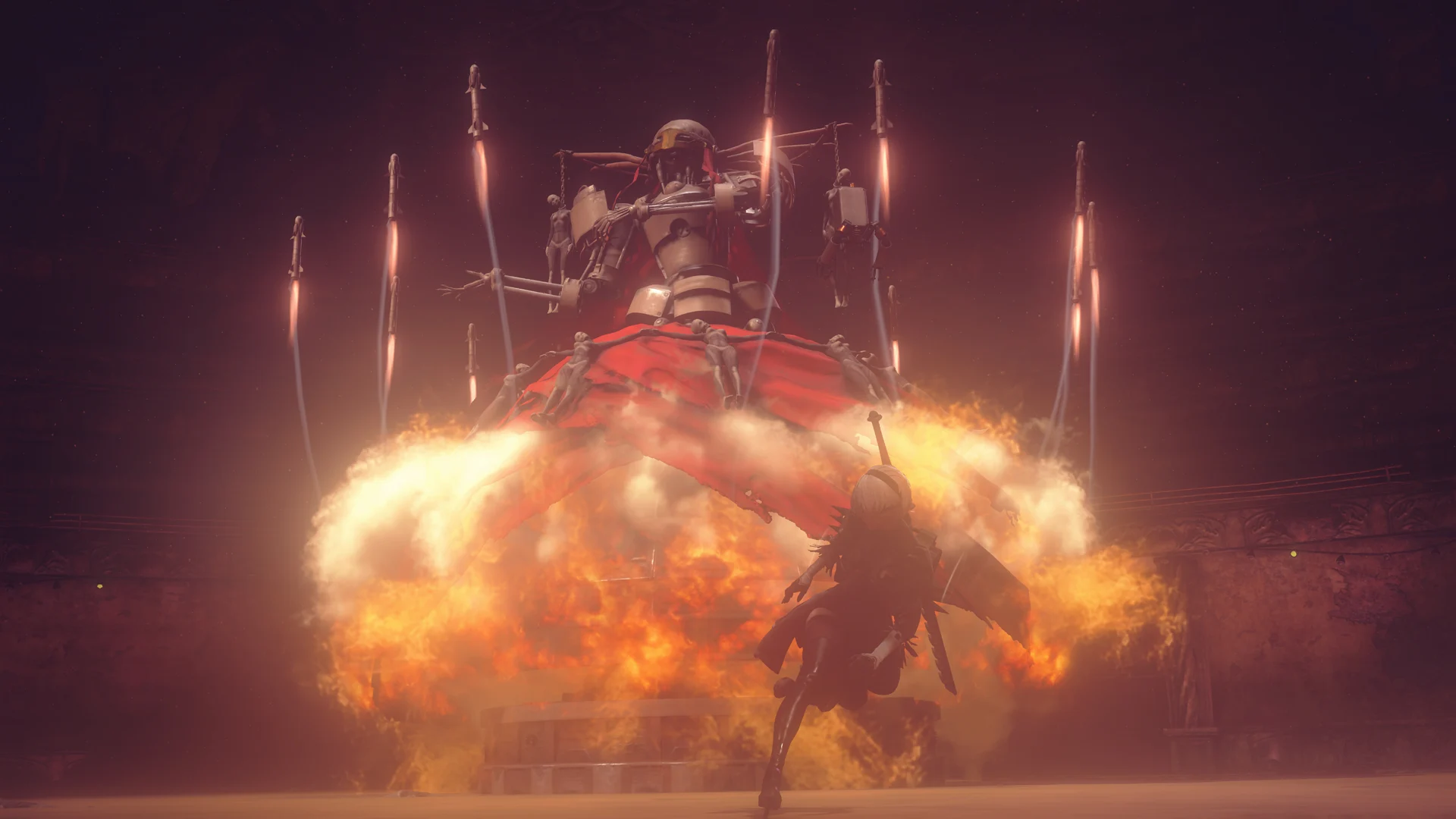
    Games like NieR:Automata are rare gems that appear only once every generation. While its PC version has some flaws, the rest of the game offers an experience unlike any other. If you haven’t checked out NieR:Automata yet, it’s available on Steam at a 60% discount right now!

    Memorable Characters

    You may have spotted 2B, the main character of NieR:Automata, in various games such as Fortnite, Genshin Impact, and most recently, Stellar Blade. But 2B is just a small part of the whole experience, as the game is packed with many unforgettable characters. Generally, NieR:Automata is a hack-and-slash title, but it frequently shifts to bullet hell and 2D gameplay as well.

    A Unique Storyline

    In NieR:Automata, you find yourself in a dystopian Earth where humanity has been gone for thousands of years. Nature has taken over most urban areas, and you, playing as an Android, must defeat robots, which serve as the main enemies in the game. The story, crafted by the unique game director Yoko Taro, is unlike anything you’ve encountered, featuring 26 different endings to explore.

    Haunting Soundtrack and DLC

    Coupled with its eerie soundtrack, NieR:Automata is truly a game you shouldn’t miss. The previously mentioned discount also applies to the game’s only DLC titled “3C3C1D119440927”. This DLC offers new cosmetics, additional side content, and even the chance to battle the CEOs of Square Enix and Platinum Games.

    Source:
    Link

  • AAA Racing Game with 100K Reviews Now Just $3.50 from $70

    AAA Racing Game with 100K Reviews Now Just $3.50 from $70

    Key Takeaways

    1. Setting and Gameplay: Need for Speed Heat is set in the fictional city of Palm City, featuring both legal daytime events and illegal nighttime street races, where players can earn cash and “REP” respectively.

    2. Customization and Variety: The game allows extensive car customization with 127 unlockable vehicles, enhancing the gameplay experience through upgrades and unique designs.

    3. Visuals and Soundtrack: Built on EA’s Frostbite engine, the game showcases impressive visuals, particularly at night, complemented by an exciting soundtrack of electronic and hip-hop music.

    4. Mixed Reviews: While receiving a score of 75 from GameStar and positive feedback on Steam, the game faced criticism for its slow start, forgettable story, and occasional AI issues, reflected in lower scores on Metacritic.

    5. Pricing and Availability: Currently, Need for Speed Heat is on sale for $3.50 (95% off) for the Deluxe Edition, which includes exclusive vehicles and outfits, with a regular price of around $70.


    Need for Speed Heat, created by Ghost Games and published by Electronic Arts in November 2019, serves as the immediate precursor to Need for Speed Unbound, which is the newest addition to the beloved arcade racing franchise. The game takes place in the fictional city of Palm City, featuring a unique racing system that offers both legal circuit events during the day and adrenaline-pumping street races after dark. During daytime, players can earn cash by participating in official competitions, while nighttime brings the chance to gain “REP,” representing respect in the underground racing scene, all while facing high-stakes police pursuits. As players increase their Heat Level, police become more aggressive in their attempts to stop them.

    Explore Palm City

    The open-world environment of Palm City is brimming with challenges, including hidden jumps, collectibles, and thrilling street races. Staying true to the Need for Speed tradition, players can extensively customize their cars, making upgrades to engines, tuning exhausts, and applying unique paints and decals. There are a total of 127 vehicles that players can unlock. The game also features an online mode, allowing competition against up to 15 other players, and SteamDB reports that the arcade racer maintains over 5,000 concurrent players regularly. Built on EA’s Frostbite engine, Heat shines visually, especially at night when neon lights illuminate the streets. The game’s soundtrack, a blend of electronic and hip-hop music, keeps the excitement alive.

    Review Insights

    In a review from the German gaming publication GameStar, Need for Speed Heat received praise for its impressive presentation, noting realistic lighting, weather conditions, and smoke effects. The combination of structured races and exhilarating police chases was highlighted as both diverse and engaging. GameStar also appreciated the expansive open world and the online racing options, which provide good long-term engagement. However, the game’s slow beginning faced criticism, with early progression and a limited selection of cars feeling somewhat sluggish. Additionally, the story was considered largely forgettable, with dialogue that at times felt repetitive and cringe-worthy. The behavior of AI opponents was pointed out as occasionally awkward, adding to the critique.

    Reception and Pricing

    Despite its shortcomings, GameStar awarded Need for Speed Heat a respectable score of 75. The game has been positively received on Steam, accumulating over 100,000 reviews since its release, with 84% of them being favorable. However, on Metacritic, the scores are lower, with a Metascore of 72 and a User Score of 6.3.

    On Steam, Need for Speed Heat is available only in the Deluxe Edition, which comes with a special starter car (K.S Edition Mitsubishi Lancer Evolution X), three additional unlockable K.S vehicles, four exclusive outfits, and a 5% boost to REP and in-game currency. Regularly priced around $70, the arcade racer is currently on sale for just $3.50 due to a significant 95% discount, a deal that runs until March 27.

    Source:
    Link

  • Pi Tin: Compact Raspberry Pi Retro Handheld in Mint Tin

    Pi Tin: Compact Raspberry Pi Retro Handheld in Mint Tin

    Key Takeaways

    1. The Pi Tin is an open-source handheld gaming device that uses the Raspberry Pi, created by enthusiasts jacks01 and soaporsalad.
    2. It requires advanced assembly skills, with options to build it in a 3D-printed shell or an Altoids mint tin.
    3. Users must source their own components, although an SD card image for the device is available for download.
    4. It features a Raspberry Pi Zero 2 W, allowing for the emulation of classic retro games, though with limited performance.
    5. The device includes a 2.8-inch screen, custom-designed PCBs, four action buttons, and a D-pad, with soldering required for assembly.


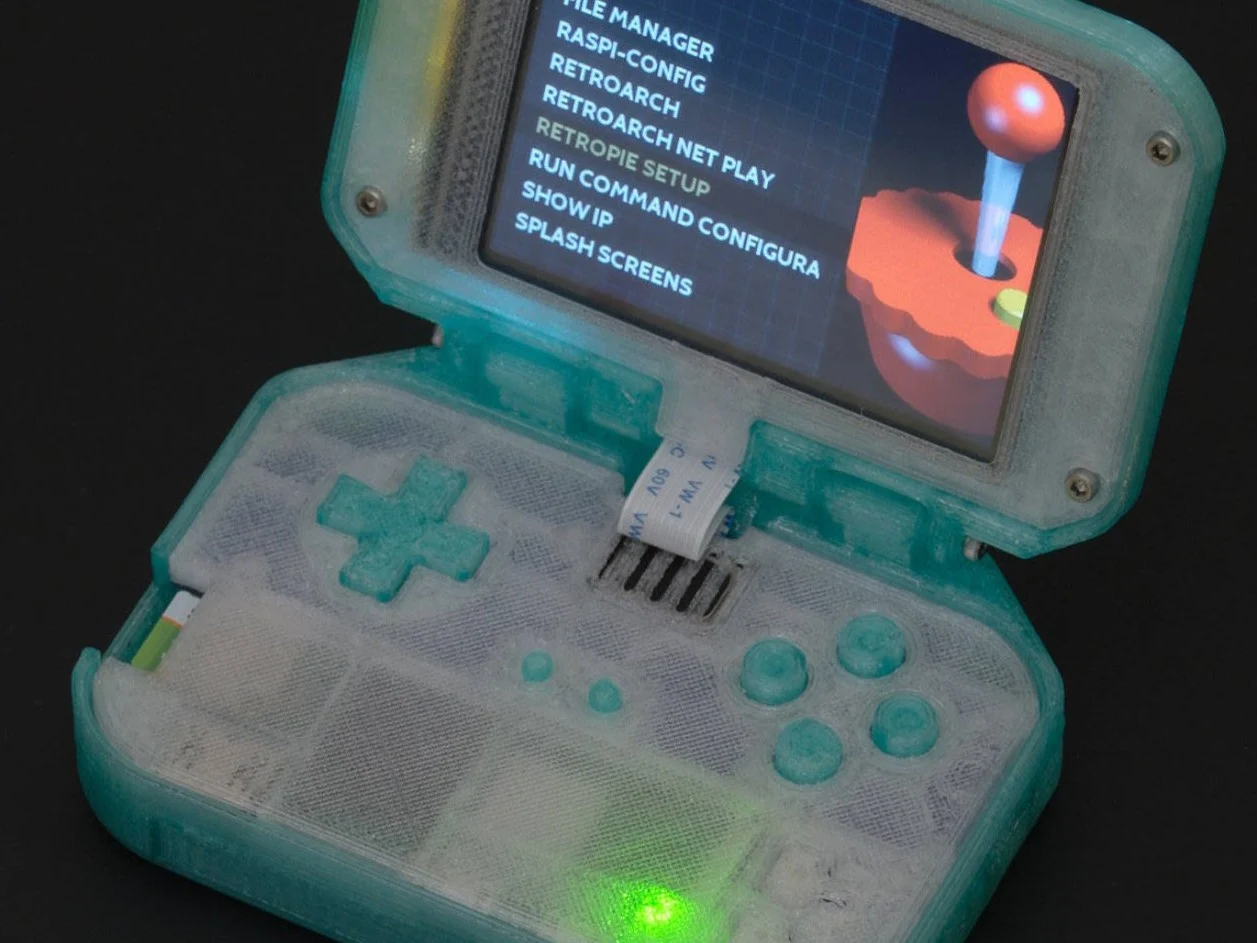
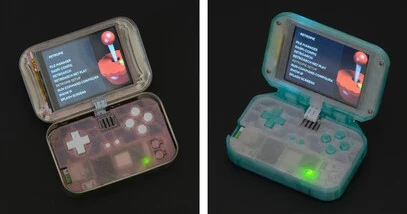
    Gaming handhelds today come in a variety of forms and sizes, some of which are made by enthusiasts rather than large corporations. The Pi Tin is a project by creators jacks01 and soaporsalad, which is an open-source handheld device that utilizes the Raspberry Pi, enabling virtually anyone to construct their own unit. Currently, kits for this portable console are still being worked on, meaning that those who want to join in must source the necessary components by themselves. However, there is an SD card image ready for download for the handheld device.

    Advanced Assembly Needed

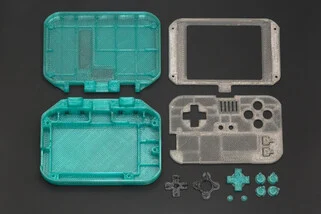
    As stated by its creators, the Pi Tin is aimed at users who have some experience, as putting it together requires a certain amount of skill. There are two main assembly options for the Pi Tin, which differ mainly in terms of the casing: You can make it fit inside a 3D-printed shell or, as the name suggests, you can use an Altoids mint tin. The components needed for the two different versions have some considerable differences.

    Key Features and Specifications

    At the heart of the Pi Tin is a Raspberry Pi Zero 2 W (check it out here on Amazon), allowing the handheld to emulate classic retro games, even though its performance isn’t top-notch. Moreover, the device comes with a 2.8-inch screen and custom-designed PCBs that are specifically made for this project, which need to be ordered from a PCB manufacturer on their own. Assembly also requires soldering. For controls, the retro handheld has four action buttons alongside a D-pad.

    Source:
    Link


  • Azahar 3DS Emulator Launches with Performance Boosts and Fixes

    Azahar 3DS Emulator Launches with Performance Boosts and Fixes

    Key Takeaways

    1. Azahar 2120 is the first official stable version of the 3DS emulator, available for Windows, Linux, and Android.
    2. The emulator introduces a feature to disable “right eye rendering,” potentially improving performance by up to 50%.
    3. Azahar now uses .cci file extensions for game ROMs, moving away from .3ds files to avoid piracy associations.
    4. New updates include Nintendo 3DS eShop integration and fixes for visual glitches and gameplay bugs.
    5. Rising prices of 3DS consoles are boosting interest in 3DS emulation, especially with improved smartphone gaming capabilities.


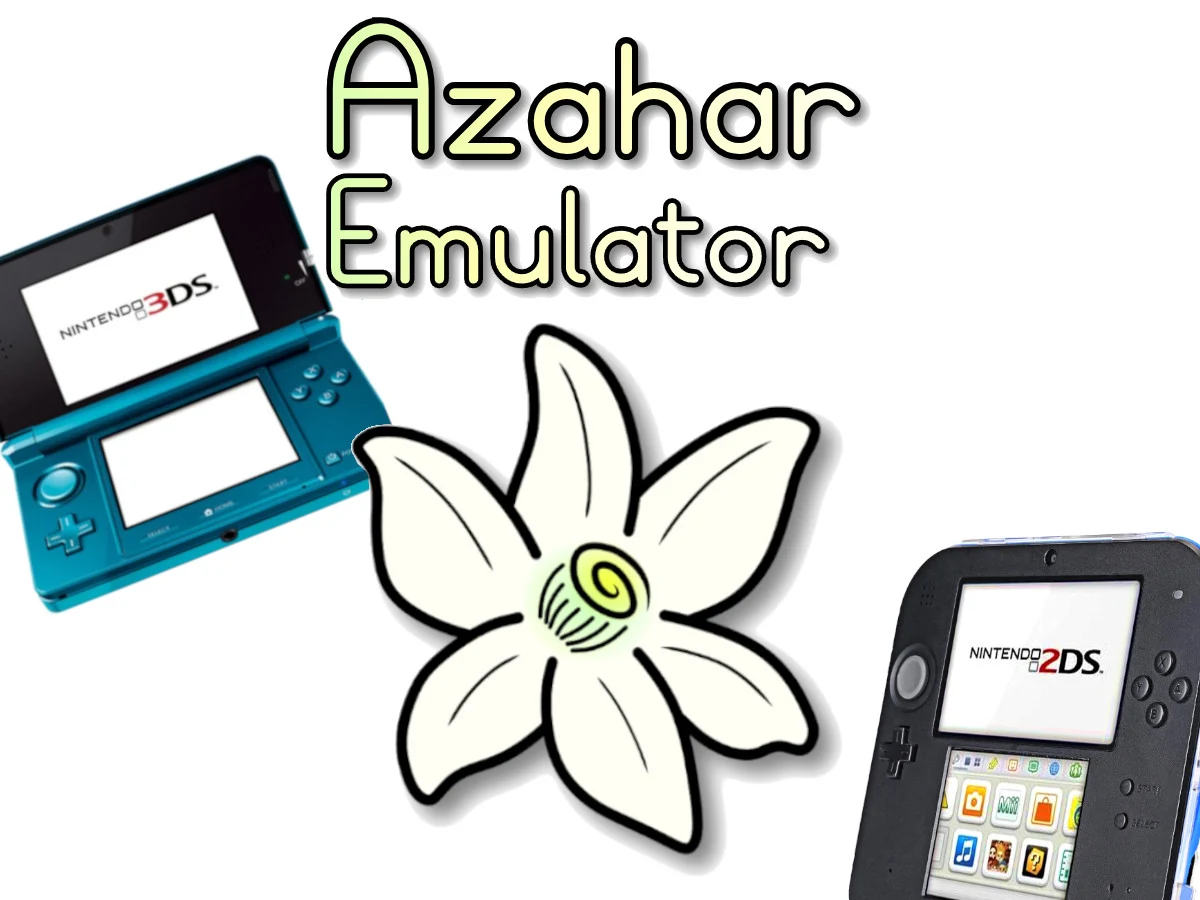
    3DS emulation went into a bit of a slump after the downfall of Citra, which was an emulator that suffered alongside YuZu. However, things are looking up for 3DS emulation with the emergence of new emulators like Lime3DS and the latest one, Azahar.

    New Release of Azahar

    Azahar 2120 has just been launched on GitHub, representing the first official version of this 3DS emulator. While there have been earlier versions of Azahar, they were only release candidates. This marks the first “stable” version available for Windows, Linux, and Android. According to the developers, this release is based on a “merge of PabloMK7’s fork [of Citra] and Lime3DS.”

    Improvements and Features

    The latest release comes packed with numerous enhancements and bug fixes. One of the most notable features (which we talked about last week) is the ability to turn off “right eye rendering.” This option allows the emulator to display games in monoscopic mode. The Nintendo 3DS originally creates a 3D image through stereoscopic rendering, which displays the same frame twice from slightly different angles to create a 3D effect, similar to many 3D films. By turning off this rendering method, Azahar claims it can boost performance by as much as 50%.

    In addition to this, the emulator no longer supports .3ds files. Instead, it utilizes game ROMs with the .cci file extension. Converting existing .3ds files to .cci is simple; you just need to rename the file with a .cci extension. The developers chose the .cci format to “distance from piracy terminology as much as possible [sic].”

    Additional Changes and Popularity

    Other updates include Nintendo 3DS eShop integration for downloading purchased games, fixing visual glitches on Linux systems that use Wayland, and correcting a bug that caused Starfox 64 3D to render upside down during gameplay.

    With the increasing prices of 3DS consoles (like this renewed Flame Red 3DS on Amazon, curr. $214.34), 3DS emulation is becoming more popular. Given how well smartphones handle gaming and emulation now, it’s no wonder that interest in 3DS emulation is surging.

    Source:
    Link

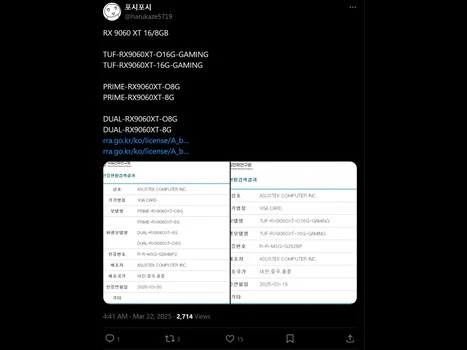
  • Asus Radeon RX 9060 XT RDNA 4 GPUs: 8GB & 16GB Options Revealed

    Asus Radeon RX 9060 XT RDNA 4 GPUs: 8GB & 16GB Options Revealed

    Key Takeaways

    1. The AMD Radeon RX 9060 XT is expected to launch in the second quarter, possibly as soon as April.
    2. Asus is preparing multiple models of the RX 9060 XT with options for 8GB or 16GB of VRAM, but pricing and full specifications are still unknown.
    3. The RX 9060 XT will likely feature an RDNA 4 GPU, 128-bit bus, and an 8-pin power connector, requiring a minimum of 500 watts.
    4. There are concerns regarding the adequacy of 8GB VRAM for newer games, making 16GB models potentially more appealing.
    5. Pricing predictions suggest a wide range for the RX 9060 XT, with higher costs for overclocked versions and TUF 16GB models.


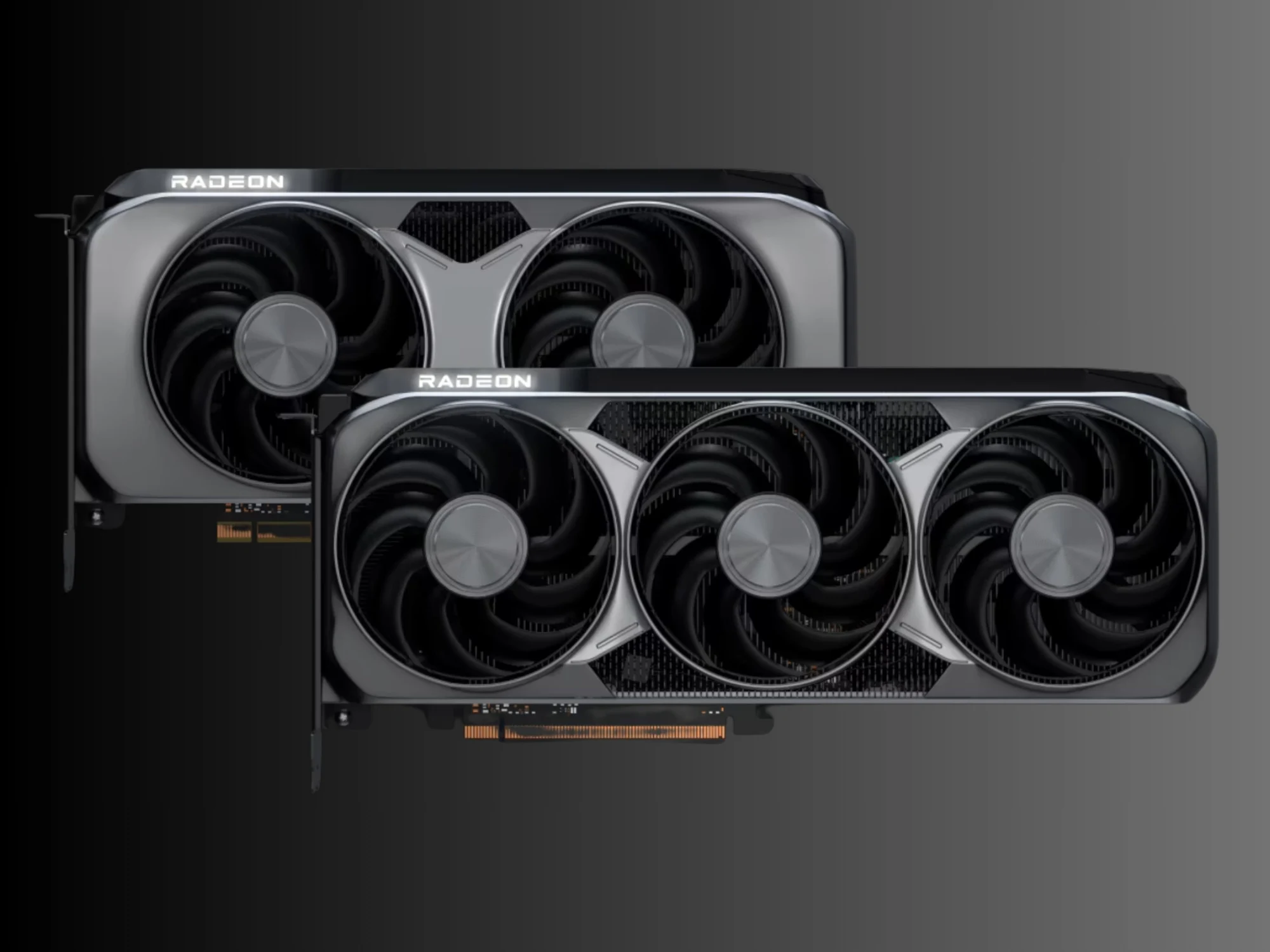
    There are increasing indications that manufacturers are gearing up to launch the AMD Radeon RX 9060 XT in the second quarter. Asus has shared details with the South Korean Radio Agency regarding their Prime, Dual, and TUF models, which will feature either 8GB or 16GB of VRAM. Sadly, there is still no information available about pricing or the complete specifications for the RX 9060 XT. Nevertheless, this news links up with recent mentions of Acer GPUs in filings from the European Economic Community (EEC).

    Anticipated Release Timeline

    Many industry insiders are predicting that the RX 9060 XT could be released as soon as April. AMD might roll out its newest RDNA 4 graphics card at the same time or even ahead of Nvidia’s launch of the RTX 5060 Ti and RTX 5060. Recent updates have revealed that the Blackwell GPUs have faced delays, so the RTX 5060 Ti might not be available until mid-April. To date, consumers haven’t seen any signs of the RX 9060 as AMD aims to compete against the RTX 5060 Ti with the RX 9060 XT.

    Expected Specifications

    The most reliable specifications for the RX 9060 XT indicate it will come with 8GB or 16GB of DDR6 memory, utilizing a 128-bit bus. Gamers can also look forward to the RDNA 4 GPU, which will likely be based on the more compact Navi 44 chip. Additional leaks hint that the RX 9060 XT will feature an 8-pin power connector and require a minimum of 500 watts to operate.

    Some consumers are doubtful about the value of the 8GB RX 9060 XT models. Newer games are increasingly demanding more VRAM, and for a mid-range GPU, 8GB might not be sufficient. Unless there is a significant price gap, cards with larger memory capacities are expected to be more appealing.

    Pricing Predictions

    Another concern is how many RX 9060 XT cards will actually be available at the manufacturer’s suggested retail price (MSRP). While the RX 9070 XT was priced competitively, many manufacturers chose to list overclocked versions at prices well above $599. There will probably be a broad spectrum of prices for the new Asus RDNA 4 GPUs, with the TUF 16GB SKUs likely being the most expensive. Notably, the company is bringing back a dual-fan option, which was not offered with the RX 9070 and RX 9070 XT.

    Source:
    Link


  • New God of War Game: Greek Side Story Instead of Remaster?

    New God of War Game: Greek Side Story Instead of Remaster?

    Key Takeaways

    1. Fans were disappointed by the lack of an announcement for a remastered version of the Greek era God of War games at the 20th Anniversary event.
    2. Journalist Jeff Grubb suggests a new God of War game may explore Greece, with a potential side story connecting to previous Norse mythology titles.
    3. PS5 players currently can only play older God of War titles through cloud streaming with a PlayStation Plus Premium Subscription.
    4. Speculation is growing among fans about the next game’s setting, with Egypt being a strong contender based on past rumors about casting.
    5. During the 20th Anniversary, Santa Monica Studio released an update for God of War Ragnarok featuring items inspired by Greek mythology.


    The God of War 20th Anniversary event has left some fans of Kratos feeling let down. Many enthusiasts were looking forward to an announcement regarding a remastered version of the games from the Greek era. Journalist Jeff Grubb, who is known for providing reliable information about the franchise, has now indicated that a new God of War game may be taking place in Greece. Although details are scarce, Grubb anticipates that this project will delve deeper into the captivating saga with an additional side story.

    Anticipation Among PS5 Players

    Gamers on the PS5 have been looking for fresh ways to enjoy God of War, God of War 2, and God of War Ascension. Currently, the only option available to play these titles is through cloud streaming, which necessitates a PlayStation Plus Premium Subscription. In a post on BlueSky, Grubb shared that his sources did not mention anything about a remaster for God of War. Instead, the developers at Santa Monica Studio are aiming to introduce a new twist to the series before the year concludes.

    Speculations Arise

    Naturally, Grubb’s recent comments have ignited speculation among fans. A popular theory circulating on Reddit suggests that the side story could connect the latest Norse mythology games to a new gameplay storyline. Egypt appears to be the most probable setting for the next God of War installment. In fact, rumors from January hinted at Sony seeking Middle Eastern actors for a major new title. In his update, Grubb tempered expectations, suggesting that the next chapter of the God of War saga might not arrive for a year or two.

    Celebrating the Anniversary

    Santa Monica Studio has not left fans empty-handed during the 20th Anniversary celebrations. An update for God of War Ragnarok introduced in-game items inspired by earlier titles based in Greek mythology. These recent rumors indicate that the developers will likely continue to explore fresh narratives within this universe.

    Source:
    Link


  • Powkiddy RGB50: New 3:2 Retro Gaming Handheld Unveiled

    Powkiddy RGB50: New 3:2 Retro Gaming Handheld Unveiled

    Key Takeaways

    1. The Powkiddy V90 V2 is set to compete with the Anbernic RG35XX SP and Miyoo Flip, five years after the original V90’s launch.
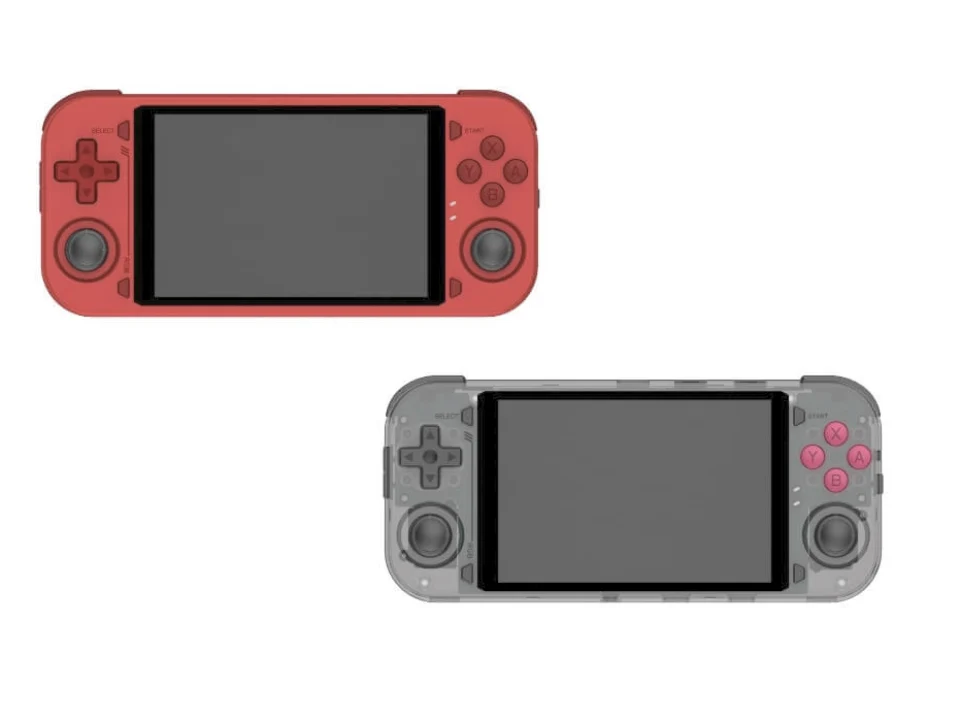
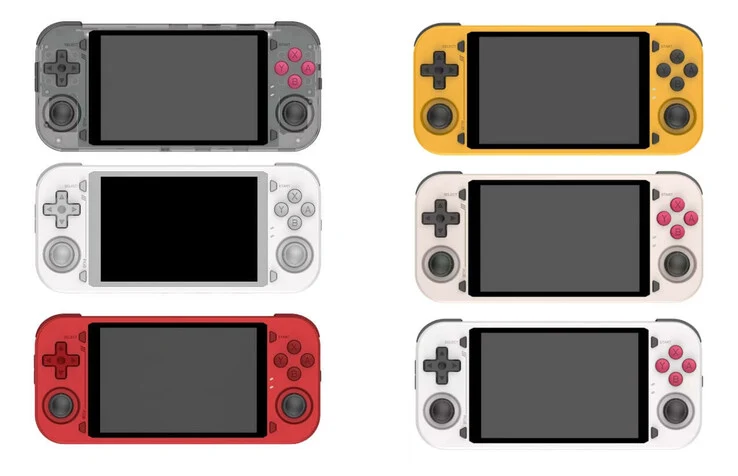
    2. The new Powkiddy RGB50 is a successor to the RGB30, featuring a 4.5-inch screen with a 3:2 aspect ratio and Wi-Fi connectivity for retro gaming.
    3. The RGB50 aims to excel in PSP emulation and is expected to handle most PS1 and N64 games.
    4. The specific chipset for the RGB50 is not disclosed, but it is expected to perform similarly to the Unisoc Tiger T618.
    5. The RGB50 is likely to run on both Android and Linux and might include a touchscreen feature, although this is not yet confirmed.


    Less than a fortnight ago, James Dewitz shared some insights about the Powkiddy V90 V2. To summarize, this device is set to compete with the Anbernic RG35XX SP and the Miyoo Flip, coming five years after the original V90 was launched. However, there’s still a lot that remains unclear about the V90 V2.

    New Handheld Revealed

    In the meantime, Dewitz has introduced a different Powkiddy gaming handheld named the RGB50. It seems to be a successor to the RGB30, which currently retails for $95 on Amazon. The RGB50 is reported to come with a 4.5-inch screen that has a 3:2 aspect ratio, along with a new system-on-chip (SoC) that allows for Wi-Fi connectivity in the retro gaming market. Dewitz also mentioned that Powkiddy aims for the RGB50 to excel in PSP emulation, suggesting it should be able to handle nearly all PS1 and N64 games too.

    Speculation on Chipset

    Dewitz hasn’t disclosed which chipset will be used yet. Instead, he teased that it isn’t made by Qualcomm and that the RGB50 would essentially be like a “plastic RG405M.” This implies that the unnamed chipset is expected to deliver similar performance to the Unisoc Tiger T618, which powers the RG405M and several other handheld devices.

    Operating Systems and Display

    The RGB50 is expected to operate on both Android and Linux, similar to the Anbernic RG552. It’s likely that with Android support, the RGB50 will also come with a touchscreen feature; however, this has not been confirmed as of yet. Retro Handhelds speculates that the RGB50 might utilize a display from the KT-R1, which provides 1080p resolution and 60 Hz refresh rate visuals.

    Source:
    Link


  • Valve Deckard Specs Leaked: Next-Gen Valve Index Details Inside

    Valve Deckard Specs Leaked: Next-Gen Valve Index Details Inside

    Key Takeaways

    1. Valve’s upcoming VR headset, Deckard, is seen as the successor to the Valve Index and may launch at a price of $1,200, up from the Index’s $999.

    2. Deckard is being developed on an ARM codebase, featuring a Snapdragon 8 Gen 3 chipset, which could improve performance and efficiency by 25% compared to the Snapdragon XR Gen 2.

    3. The prototype includes JDI-derived LCD screens with a refresh rate of 120 Hz and a resolution of 2,160 x 2,160 pixels per eye.

    4. Deckard reportedly supports tracking for controllers, the headset, and facial movements, but specifications are not finalized and may change in later prototypes.

    5. Valve is expected to unveil Deckard by the end of this year, with the current prototype being the final proof-of-concept before moving to engineering validation testing.


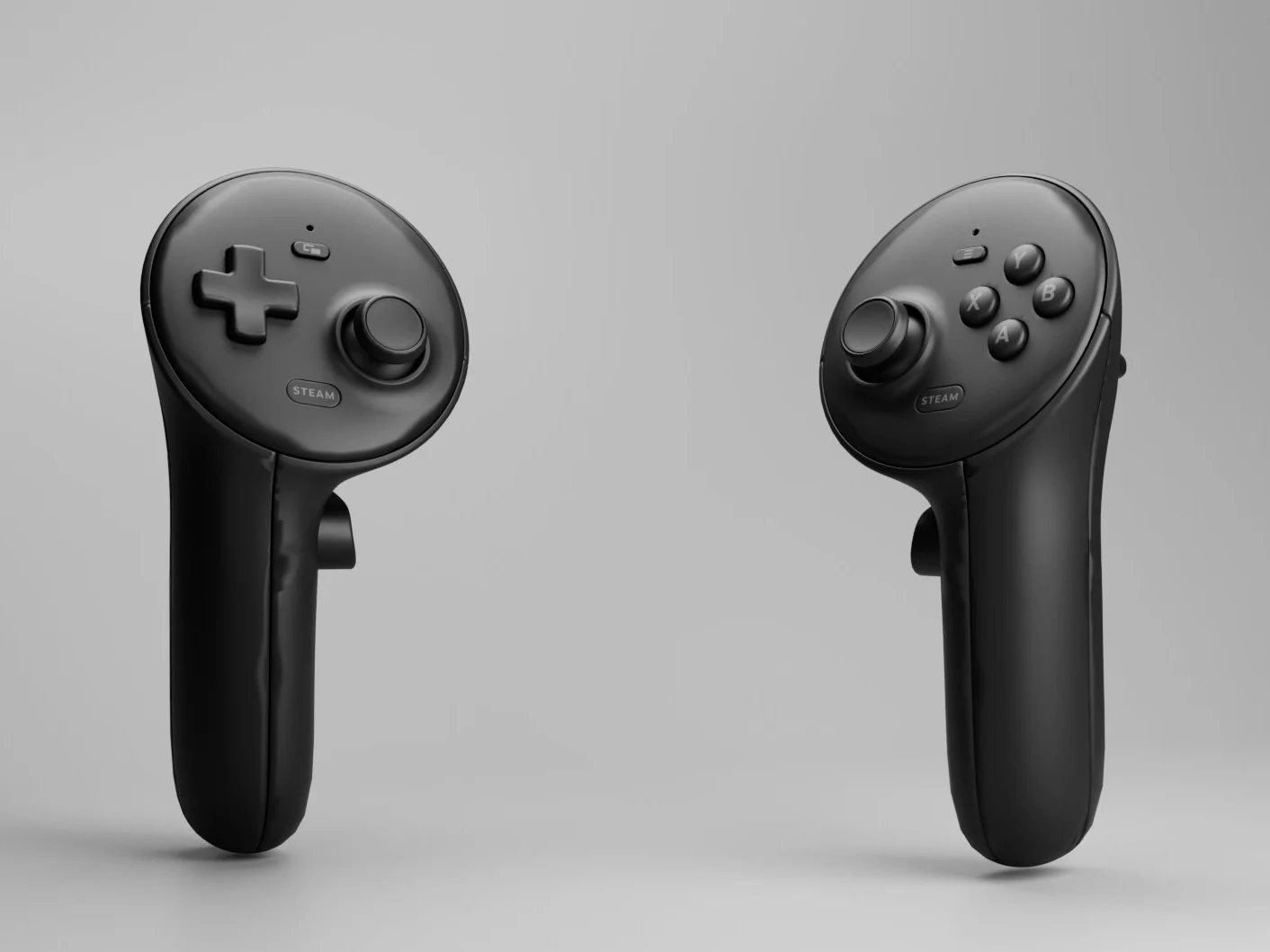
    Brad Lynch has uncovered some new info about the ongoing progress of Valve’s upcoming virtual reality (VR) headset. Up until now, Deckard has been seen as the long-anticipated follow-up to the Valve Index, which launched almost six months ago. A recent speculation suggested that Valve is aiming for a launch price of $1,200, which is an increase from the Index’s initial $999 MSRP.

    Development Insights

    Recent changes in the code indicate that Valve is building Deckard on an ARM codebase. In particular, a proof-of-concept (POC-F) prototype features a Snapdragon 8 Gen 3 (SM8650) chipset that is found in the latest flagship smartphones, such as the OnePlus 12, Xperia 1 VI, and Galaxy S24 Ultra. As noted by UploadVR, the Adreno 750 within the Snapdragon 8 Gen 3 could potentially give this Deckard prototype about 25% improved performance and efficiency compared to the Snapdragon XR Gen 2, which powers the Pico 4 Ultra, Quest 3, and Quest 3S (currently priced at $299 on Amazon).

    Technical Specifications

    This prototype is reported to utilize JDI-derived LCD screens that offer a refresh rate of 120 Hz and a resolution of 2,160 x 2,160 pixels for each eye over a 2.8-inch display. Additionally, it seems to support tracking for controllers, the headset, and facial movements. Lynch emphasizes that the specifications linked to POC-F are not final.

    As a result, later prototypes and retail versions are likely to feature newer or more advanced components. That said, POC-F appears to have been the final proof-of-concept before Valve transitioned to engineering validation testing (EVT). If this holds true, it wouldn’t surprise us if future prototypes eventually come with similar hardware features instead of a leap to a much more powerful chipset or entirely different lenses that would necessitate a complete redesign. At present, Valve is anticipated to unveil Deckard by the end of this year.

    Source:
    Link