Category: Gaming

  • ASUS ROG Zephyrus M16 Air 2025: RTX 5080, Core Ultra 9-285H

    ASUS ROG Zephyrus M16 Air 2025: RTX 5080, Core Ultra 9-285H

    Key Takeaways

    1. Price and Availability: The ASUS ROG Zephyrus M16 Air 2025 is priced at ¥23,999 and preorders begin on March 31, with a wider international release expected later.

    2. Lightweight Design: The laptop weighs 1.95kg and is only 1.49cm thick, making it ideal for users seeking high performance in a portable form.

    3. High-Quality Display: It features a 16-inch OLED Nebula Display with 2.5K resolution, 240Hz refresh rate, 0.2ms response time, and supports Dolby Vision.

    4. Powerful Performance: Equipped with an Intel Core Ultra 9-285H processor, NVIDIA RTX 5080 GPU, 32GB RAM, and a 1TB SSD, the laptop is designed for demanding gaming and productivity tasks.

    5. Advanced Cooling and Connectivity: It includes the Glacier Cooling 3.0 system for effective heat management, along with multiple connectivity options like Thunderbolt 4, HDMI 2.1, and a six-speaker Dolby Atmos audio system.


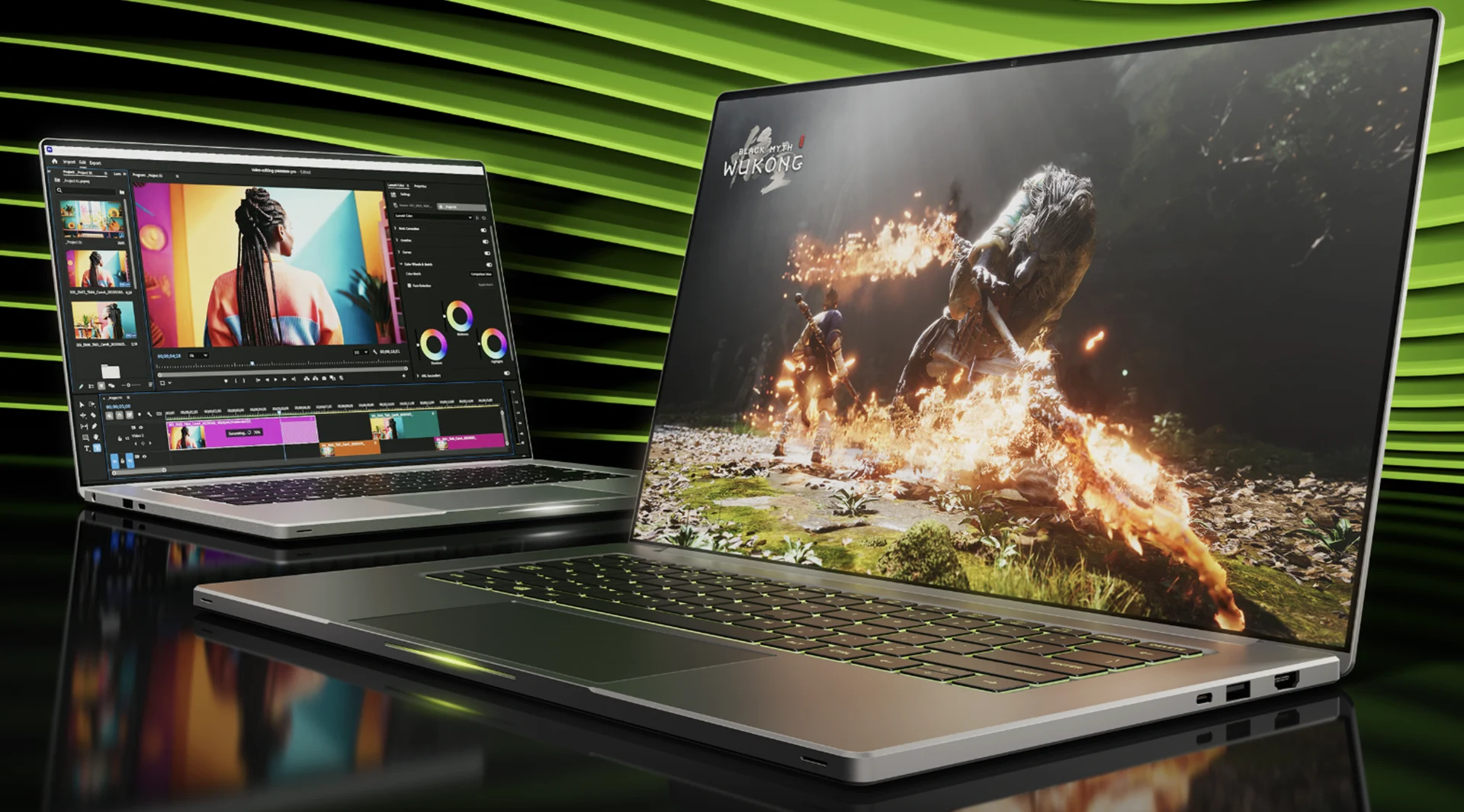
    ASUS has put the ROG Zephyrus M16 Air 2025 gaming laptop on JD.com for a price of ¥23,999. Preorders will begin on March 31. This laptop is designed for those who want top-tier performance in a lightweight package, as it weighs 1.95kg and is only 1.49cm thick.

    Design and Display

    The laptop is available in Eclipse Gray and Platinum White, crafted from CNC-machined aircraft-grade aluminum. The lid has a customizable “Space-Time Rift” LED matrix that features seven RGB zones and 15 different lighting themes. Its 16-inch OLED Nebula Display boasts a 2.5K resolution with a 240Hz refresh rate, a 0.2ms response time, and a brightness of 500 nits. It supports Dolby Vision and covers 100% of the DCI-P3 color space. ASUS also provides a two-year burn-in warranty for the screen.

    Performance and Cooling

    Inside, the M16 Air houses Intel’s Core Ultra 9-285H processor (16-core) and NVIDIA’s RTX 5080 GPU with a 130W TGP. It is equipped with 32GB of LPDDR5X RAM and a 1TB PCIe 4.0 SSD, with options for storage upgrades through dual M.2 slots. The cooling solution is the Glacier Cooling 3.0 system, which features liquid metal thermal paste, dual Arc Flow fans, and vapor chambers.

    Connectivity and Extra Features

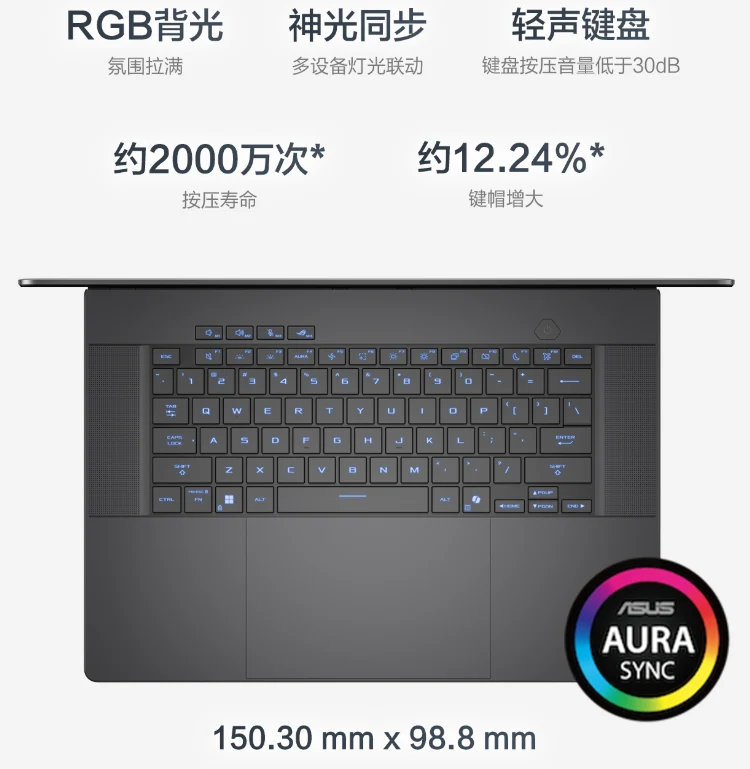
    The laptop is fitted with two Thunderbolt 4 ports (40Gbps, 100W PD), HDMI 2.1 (8K@60Hz), two USB-A ports (10Gbps), a UHS-II SD card reader, and WiFi 6E. There’s also a dedicated square power port that monitors temperature to help manage heat effectively. Additionally, it comes with a six-speaker Dolby Atmos audio system, an RGB backlit keyboard with 1.7mm key travel, and a 90Wh battery that supports 100W fast charging via USB-C.

    Release Information

    The ROG Zephyrus M16 Air 2025 will launch in China on March 31, with a wider international release anticipated in the months that follow. The laptop is priced at ¥23,999 (approximately US$3,307) on both the ASUS China website and JD.com.

    Source:
    Link


  • HP Omen MAX 2025 Gaming Laptop Launches in China with RTX 5080

    HP Omen MAX 2025 Gaming Laptop Launches in China with RTX 5080

    Key Takeaways

    1. Launch Details: The HP Omen MAX gaming laptop will be released in China on March 31 at 9 PM, priced at ¥18,999 ($2,618), with a discount to ¥16,999 (~$2,350).

    2. High-Performance Specs: It features an Intel 24-core Ultra 9-275HX processor, NVIDIA RTX 5080 GPU, 32GB of DDR5 RAM, and a 1TB PCIe 5.0 SSD, with a total power consumption exceeding 250W.

    3. Advanced Cooling System: The laptop includes a dual-fan cooling system with heat pipes and a vapor chamber, enhancing heat transfer compared to standard thermal paste.

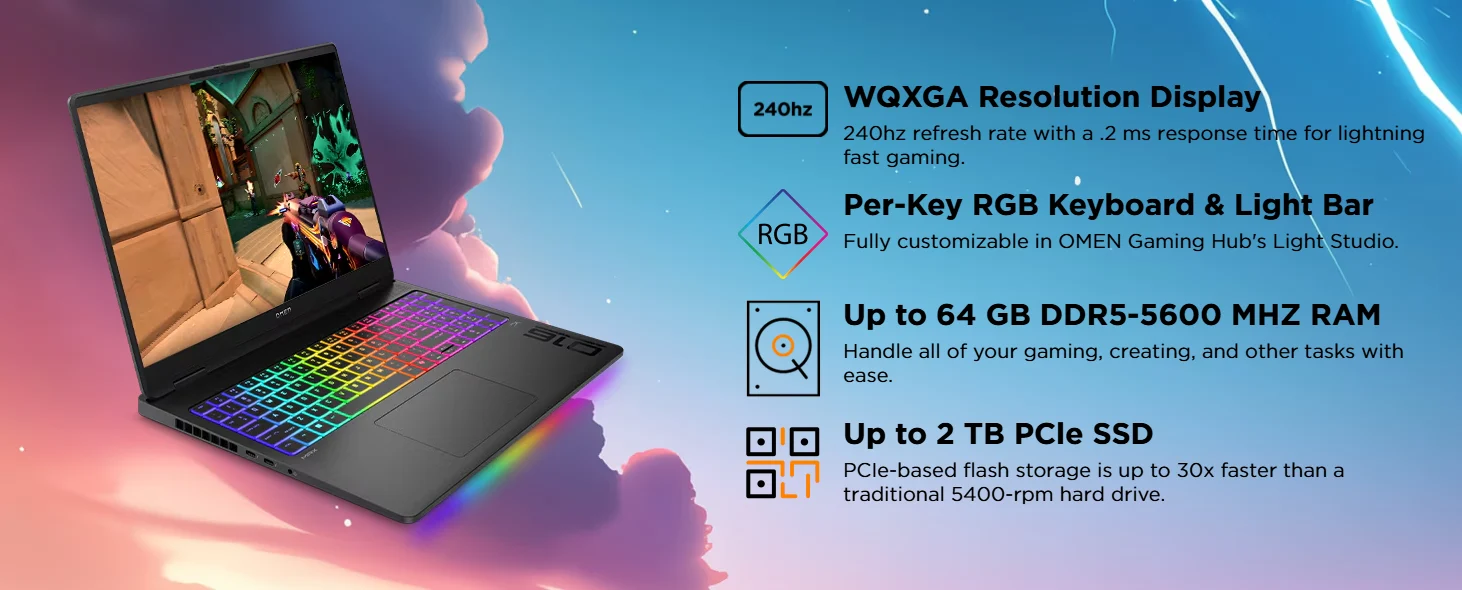
    4. Display and Connectivity: It has a 16-inch 2560×1600 IPS display with a 240Hz refresh rate, peak brightness of 500 nits, and multiple connectivity options, including Thunderbolt 4 and HDMI 2.1.

    5. Security Features and Design: The Omen MAX includes a Full HD IR camera for Windows Hello login, a physical privacy shutter, and a minimalistic black design focused on performance.


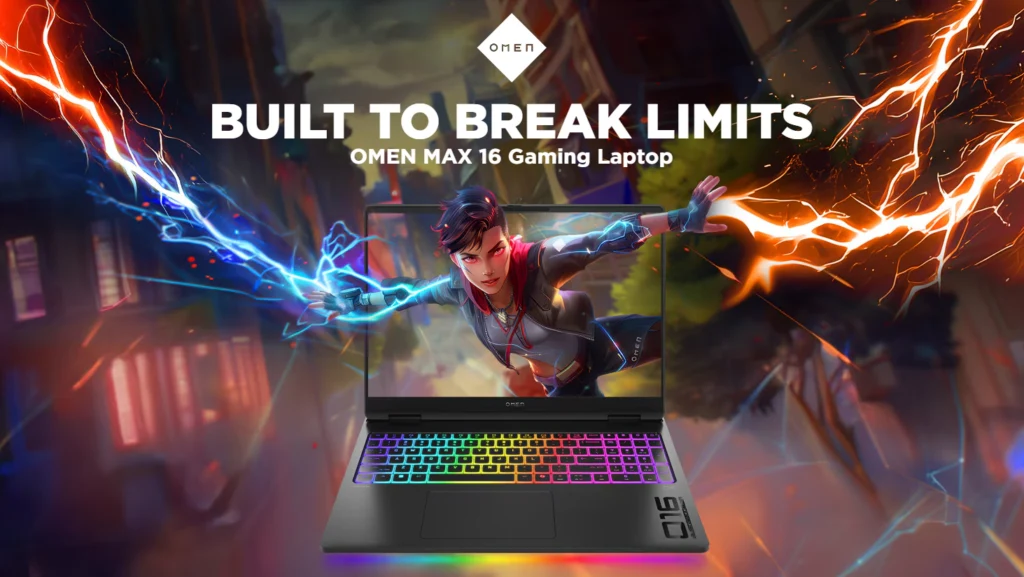
    HP is set to launch the Omen MAX gaming laptop in China on March 31 at 9 PM. The laptop is priced at ¥18,999 ($2,618), but there’s a discount that lowers the price to ¥16,999 (~$2,350). This device is designed for gamers and content creators, featuring top-notch components packed into a 16-inch size.

    Powerful Specs

    The Omen MAX is equipped with Intel’s 24-core Ultra 9-275HX processor and NVIDIA’s RTX 5080 GPU that can reach a maximum power of 175W. It also includes 32GB of DDR5 RAM (5600MT/s) and a 1TB PCIe 5.0 SSD. HP claims the combined power consumption of both the CPU and GPU exceeds 250W (75W for the CPU and 175W for the GPU), which is managed by an advanced dual-fan cooling system. This thermal management system features heat pipes, a vapor chamber that covers 61% of the motherboard, and a hybrid liquid metal compound, which enhances heat transfer performance compared to standard thermal paste.

    Impressive Display and Connectivity

    The laptop showcases a 16-inch 2560×1600 IPS screen with a refresh rate of 240Hz and a peak brightness of 500 nits, offering full sRGB coverage. It also supports variable refresh rate (VRR) to reduce screen tearing while gaming. For connectivity, there are two Thunderbolt 4 ports (40Gbps, 100W PD), two USB-A 10Gbps ports, an HDMI 2.1 port (capable of 8K at 60Hz), a 2.5G Ethernet port, and compatibility with Wi-Fi 7 and Bluetooth 5.4.

    Security and Design

    For security features, the laptop comes with a Full HD IR camera for Windows Hello login and a physical privacy shutter. The overall design is minimalistic, primarily black, focusing on performance over style. HP has yet to reveal information about the laptop’s weight or thickness.

    Additionally, the laptop is available for pre-order in other regions outside of China, with starting prices at US$1,899.99.


  • Steam Releases More Free Games Before March 2025 Deadline

    Steam Releases More Free Games Before March 2025 Deadline

    Key Takeaways

    1. Steam has added new free games for users to claim and keep in their libraries.
    2. The process to claim these $0 games is simple and allows users to explore various genres.
    3. There is a sense of urgency to claim these games, as they are available for a limited time.
    4. Community reactions have been positive, with players excited about the new titles.
    5. Engaging with the community can lead to discovering more about these games and future free releases.


    Steam has expanded its collection of free games for users. Just before the conclusion of March 2025, the platform introduced several titles priced at $0 that players can claim and retain in their libraries. Below are some of the fresh entries that have been recently uncovered by the X account @SteamGamesPC:

    New Titles Available

    According to @SteamGamesPC on X, there are exciting new games to explore. This update provides a chance for gamers to enrich their collections without spending any money. Claiming these titles is a straightforward process, allowing users to enjoy them anytime.

    Claim and Keep

    The new $0 games are an excellent opportunity for fans to try out different genres. Whether you’re into action, adventure, or puzzle games, there’s something for everyone. Users should act quickly to add these games to their libraries before they miss out on this limited-time offer.

    Community Reactions

    The response to these additions has been positive, with many players expressing their excitement on social media. Engaging with the community can enhance the gaming experience, and sharing thoughts on these new titles can lead to discovering hidden gems. Keep an eye on updates to stay informed about any future free releases!

    Source:
    Link

  • Sony Reveals New Details on Ghost of Yotei Before PS5 Launch

    Sony Reveals New Details on Ghost of Yotei Before PS5 Launch

    Key Takeaways

    1. The sequel to Ghost of Tsushima is titled Ghost of Yotei, focusing on a new character named Atsu.
    2. The game is set in 1603, three hundred years after the original, in the area around Mount Yotei (Hokkaido, Japan).
    3. Atsu’s mission involves seeking revenge for her family’s murder and includes activities like bounty hunting.
    4. Players will use various weapons, including an ōdachi, kusarigama, and dual katanas.
    5. Ghost of Yotei is being developed by Sucker Punch Productions and is set for a 2025 release, exclusively for PlayStation 5.


    Last year, Sony’s PlayStation Studios shared exciting news about a sequel to the beloved video game Ghost of Tsushima. The new game is called Ghost of Yotei, and along with the announcement, a trailer was released showcasing a new main character and some other intriguing information. Recently, the game’s official website has been refreshed with additional updates.

    Setting and Storyline

    It has been confirmed that Ghost of Yotei will take place in the year 1603, which is three hundred years after the storyline of Ghost of Tsushima. The narrative will focus on a female hero named Atsu, and the setting will be in the areas around Mount Yotei, known today as Hokkaido in Japan.

    Character and Gameplay

    The dedicated page for the game reveals that Atsu is on a mission to find the people who murdered her family. Throughout her journey, she will engage in various tasks, including bounty hunting to fund her travels. The page also highlights that Atsu will wield different weapons, such as an ōdachi, kusarigama, and dual katanas, some of which were showcased in the initial trailer.

    Development and Release

    Ghost of Yotei is being developed by Sucker Punch Productions, a part of PlayStation Studios, and is scheduled for release in 2025, though the precise date is still not known. This title will be exclusive to PlayStation 5, which is currently available on Amazon for $449, and it promises enhanced performance and visuals on the PlayStation 5 Pro. More information is anticipated to come out as the release date approaches.

    Source:
    Link

  • Nintendo Announces Zelda Live-Action Movie Release Date for 2027

    Nintendo Announces Zelda Live-Action Movie Release Date for 2027

    Key Takeaways

    1. A live-action movie based on The Legend of Zelda will be released globally on March 26, 2027.
    2. The film may be the start of a trilogy, with filming scheduled in New Zealand from November 2025 to April 2026.
    3. The storyline will follow Link’s quest to protect Hyrule from Ganon and will feature elements like monsters, dungeons, and puzzles.
    4. Wes Ball, director of the Maze Runner trilogy, will direct the film, with Shigeru Miyamoto and Avi Arad as producers.
    5. This Zelda movie is Nintendo’s third major film adaptation, following Detective Pikachu and the Super Mario Bros. Movie.


    On Friday, a message on the newly-launched Nintendo Today app disclosed that a live-action movie based on Zelda is set to debut on March 26, 2027. The brief video, lasting just 21 seconds, solely indicated that the film related to The Legend of Zelda will be available globally on the stated date. No additional information regarding the movie was shared in that announcement.

    Potential Trilogy Plans

    Recent industry insights suggest that this film could be the beginning of a trilogy. According to Production List, a service that tracks film and television projects, filming is scheduled to occur in New Zealand from November 2025 until April 2026.

    Storyline Overview

    The site also presents a short synopsis indicating that the plot will center around Link, a young hero on a mission to protect Hyrule from Ganon, a warlord who aims to seize the powerful Triforce. Expect to see fearsome monsters, perilous dungeons, and intricate puzzles – all elements we’ve come to love from the cherished video games.

    Creative Team

    Wes Ball, known for directing the Maze Runner trilogy and the Kingdom of the Planet of the Apes, will helm the project. Additionally, the film is being produced by Shigeru Miyamoto from Nintendo and Avi Arad, a veteran from Marvel.

    With the new Zelda movie, Nintendo is embarking on its third major film adaptation, following Detective Pikachu and the successful Super Mario Bros. Movie. With a set release date, chosen filming location, and ambitious plans for a trilogy, The Legend of Zelda is shaping up to be one of Nintendo’s most daring cinematic endeavors to date.

    Source:
    Link

  • Backbone One Xbox Edition Launches with Cloud Gaming Access

    Backbone One Xbox Edition Launches with Cloud Gaming Access

    Key Takeaways

    1. Product Launch: The Backbone One: Xbox Edition was launched on March 27, 2025, priced at $109.99.
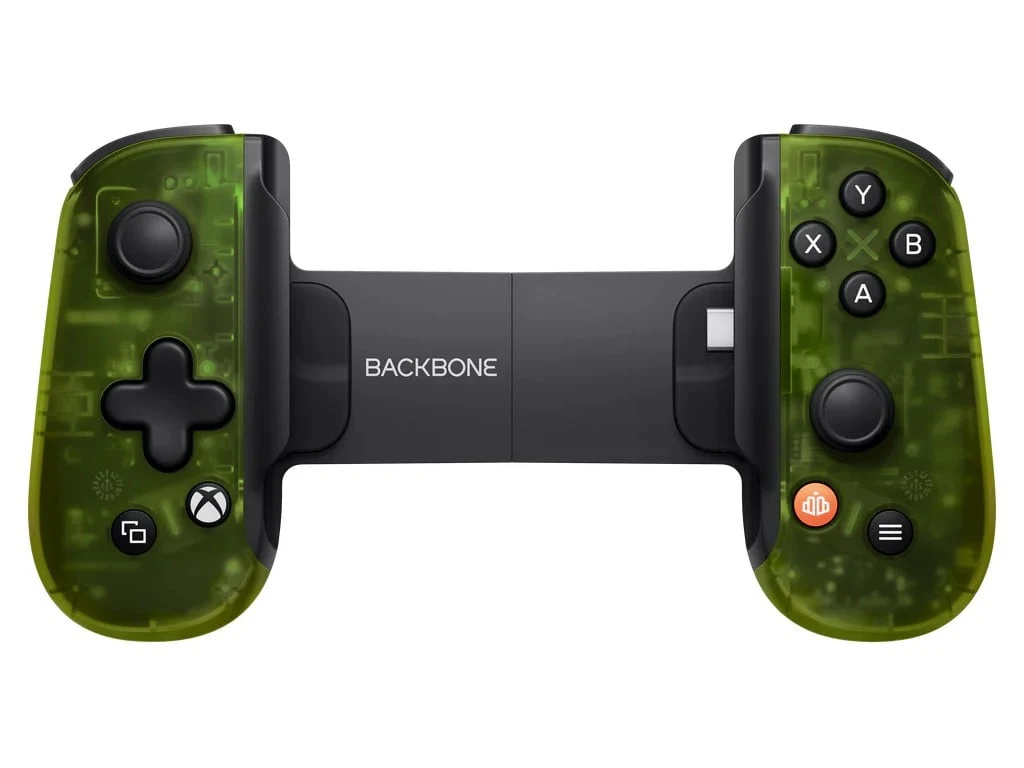
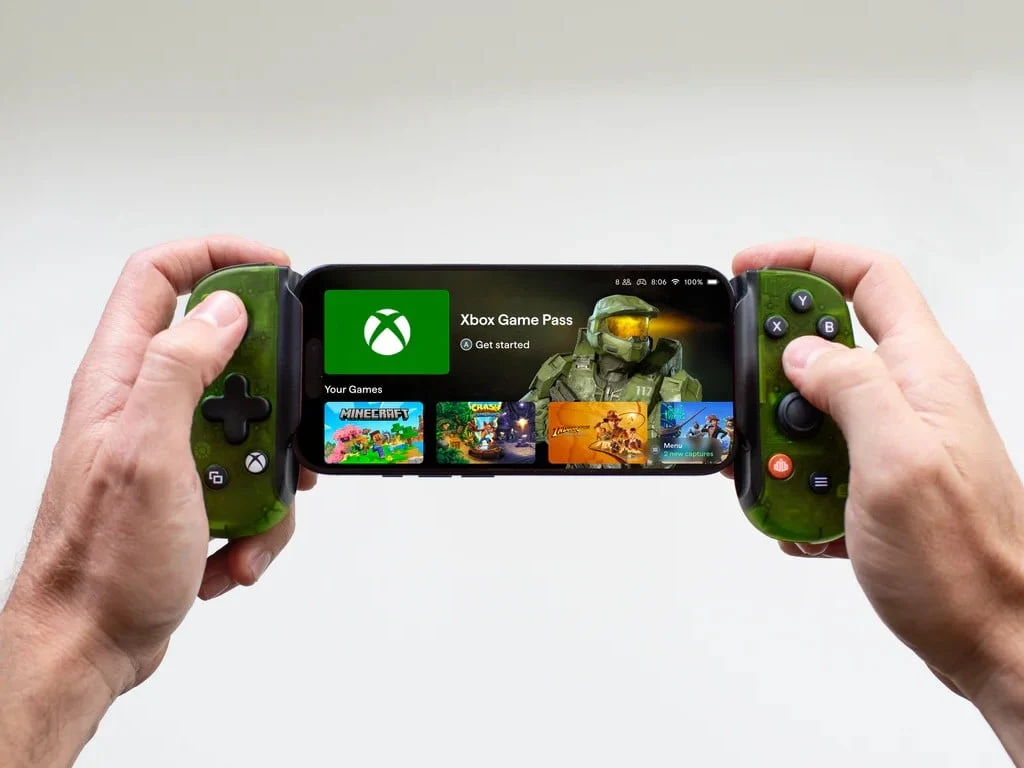
    2. Design and Features: The controller features a classic Xbox translucent green design, comfortable grips, accurate thumbsticks, and a special Xbox button for various in-game functions.
    3. Game Access: It includes a one-month trial of Xbox Game Pass Ultimate for new users, allowing access to popular games via Xbox Cloud Gaming and enabling Xbox Remote Play.
    4. Compatibility: The Backbone App supports Apple Arcade, Steam Link, and other mobile games compatible with controllers, expanding game options across platforms.
    5. Availability: The controller is available for purchase at Backbone.com and Best Buy, with limited stock and global shipping options.


    Backbone, working together with Xbox, has introduced the Backbone One: Xbox Edition. This mobile controller is made to transform smartphones into portable Xbox gaming systems. It was launched on March 27, 2025, and is sold for $109.99. You can only buy it at Backbone.com (which offers global shipping) and at Best Buy. Supplies are limited. This Xbox version costs $10 more than both the standard and PlayStation versions, specifically targeting Xbox fans who desire console-like gaming on the go.

    Features of the Backbone One: Xbox Edition

    This controller sports Xbox’s classic translucent green look, featuring comfortable grips, accurate thumbsticks, and responsive buttons. It has a special Xbox button: pressing it once opens the Xbox guide or library, double-pressing it records gameplay, and holding it down activates other in-game actions.

    The package includes a one-month trial of Xbox Game Pass Ultimate for new users, allowing access to games like Halo Infinite and Forza Horizon 5 via Xbox Cloud Gaming. It also enables Xbox Remote Play, so players can stream directly from their console. Setting it up is easy—just connect the controller, launch the Xbox app, and choose your console.

    Expanded Game Access

    The Backbone App is also compatible with Apple Arcade, Steam Link, and various other mobile games that work with controllers, broadening the selection of games available across different platforms. The Game Pass trial lasts until March 31, 2028, and is only for new subscribers. After the trial period, regular subscription fees will apply unless you decide to cancel. Be aware that regional game and streaming restrictions may limit access.

    Costs and Availability

    The Backbone One: Xbox Edition is available for $109.99, but keep in mind its limited stock.

    Source:
    Link


  • GeForce RTX 5090 Laptops 50% Slower Than Desktop Version

    GeForce RTX 5090 Laptops 50% Slower Than Desktop Version

    Key Takeaways

    1. The first laptops with GeForce RTX 5090 graphics are expected by the end of March, including models like the Razer Blade 16 and Asus Strix Scar 18 G835LX.
    2. The mobile RTX 5090 shows a 15 to 30 percent performance increase over the mobile RTX 4080 without DLSS; this gap widens with DLSS features.
    3. The relatively small performance boost raises concerns, suggesting Nvidia relies heavily on DLSS and new technologies to differentiate the RTX 50 series.
    4. The mobile RTX 5090 can be up to 50 percent slower than its desktop counterpart, indicating a significant performance disparity.
    5. Power limitations in laptops, capped around 150 W, hinder the performance of mobile GPUs compared to their desktop versions.


    The first laptops featuring GeForce RTX 5090 graphics are expected to be delivered by the end of March, and as of now, we have tested two models: the 2025 Razer Blade 16 and the Asus Strix Scar 18 G835LX, both boasting graphics with a TGP greater than 150 W. The performance results can vary widely based on what you might expect.

    Positive Outlook

    Looking at the bright side, the mobile RTX 5090 shows a performance increase of about 15 to 30 percent over the mobile RTX 4080 when DLSS features are not considered. Once DLSS is in play, the performance gap widens even more, as multi-frame generation is only officially available on the RTX 50 series.

    Cautious Considerations

    On the flip side, this 15 to 30 percent performance boost might seem quite small for a GPU generation that has taken three years to develop. This indicates that Nvidia is strongly depending on DLSS features and the new transformer model to distinguish the new mobile RTX 50 series from the previous mobile RTX 40 series. Additionally, gamers using laptops should adjust their expectations, as our benchmarks reveal that the mobile RTX 5090 can be up to 50 percent slower than its desktop version.

    The Power Limitation

    The significant difference in performance between the mobile RTX 5090 and the desktop RTX 5090, along with the somewhat underwhelming improvement over the outgoing mobile RTX 4080, can mainly be linked to TGP. While desktop GPUs have been increasingly demanding more power, laptop GPUs have remained relatively stable at around 150 W maximum, even after all these years. The restrictive power limits in laptops are arguably becoming a notable barrier for gaming enthusiasts.

  • PS5 Pro and Games Face VRR Stutters Unlike Xbox Versions

    PS5 Pro and Games Face VRR Stutters Unlike Xbox Versions

    Key Takeaways

    1. Variable Refresh Rate (VRR) is intended to reduce screen tearing but some PS5 players are experiencing stuttering issues.
    2. Locked frame rates (30 or 60 fps) make framerate changes more noticeable, and VRR aims to provide smooth gameplay even at 120Hz.
    3. Digital Foundry found that stuttering occurs in some PS5 games after about 20 minutes of play, with spikes reaching 120Hz.
    4. The stuttering issue is not linked to specific TVs and affects certain PS5 games like Diablo 4 and Hogwarts Legacy, while others like Immortals of Aveum and Gran Turismo 7 are unaffected.
    5. The Xbox Series X shows no VRR problems in similar tests, leading to questions about whether the issue affects only certain PS5 systems or if players are not noticing the changes.


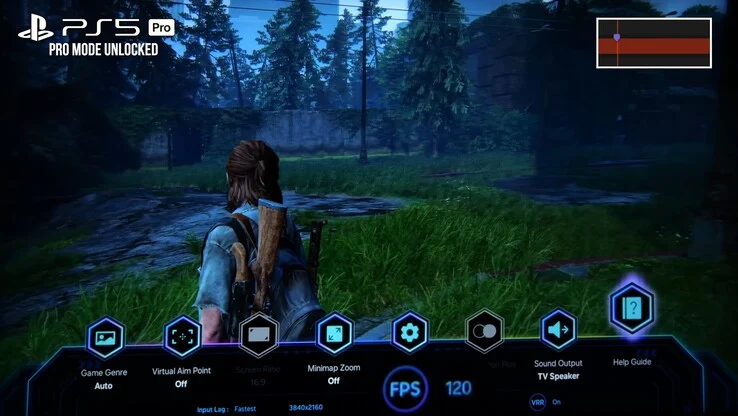
    One of the perks of the latest gaming consoles is their use of Variable Refresh Rate (VRR). The Xbox Series X, PS5, and PS5 Pro all utilize this feature to reduce screen tearing. Lately, some PlayStation players have started to notice stuttering that VRR is supposed to fix. To investigate the issue, Digital Foundry conducted a study testing various PS5 games and displays.

    Locked Frame Rates

    When games are locked at 30 or 60 fps, any changes in the framerate can be quite noticeable to players. VRR helps maintain smooth gameplay across a range of framerates, even at settings of 120Hz. Sadly, Digital Foundry found that some PS5 games experienced choppiness after around 20 minutes of play. Their analysis, using a refresh rate monitor, detected spikes reaching up to 120Hz. Once the stuttering started, it occurred roughly every eight seconds.

    Gamer Confusion

    Players have reported this issue while playing different games on a variety of TVs, leading to more confusion. Digital Foundry concluded that the likely cause is the PlayStation consoles and how they implement VRR. The stuttering doesn’t seem to be tied to specific displays. However, not every PS5 game is impacted. While Diablo 4 and Hogwarts Legacy showed stutters, Immortals of Aveum and Gran Turismo 7 did not.

    Xbox Comparison

    In tests with the same multi-platform games and setups, the Xbox Series X appears unaffected by the VRR problems. However, some PlayStation users argue that there isn’t a problem at all. This raises the question of whether VRR issues only affect certain PS5 or PS5 Pro systems, or if players are simply unable to notice the sudden changes in refresh rates.

    Currently, the only way to fix the stuttering is to turn off VRR or restart the game. Nonetheless, this thorough analysis should help Sony with their troubleshooting efforts.

    Source:
    Link


  • Pimax Crystal: Order the High-Res VR Headset with Foveated Rendering

    Pimax Crystal: Order the High-Res VR Headset with Foveated Rendering

    Key Takeaways

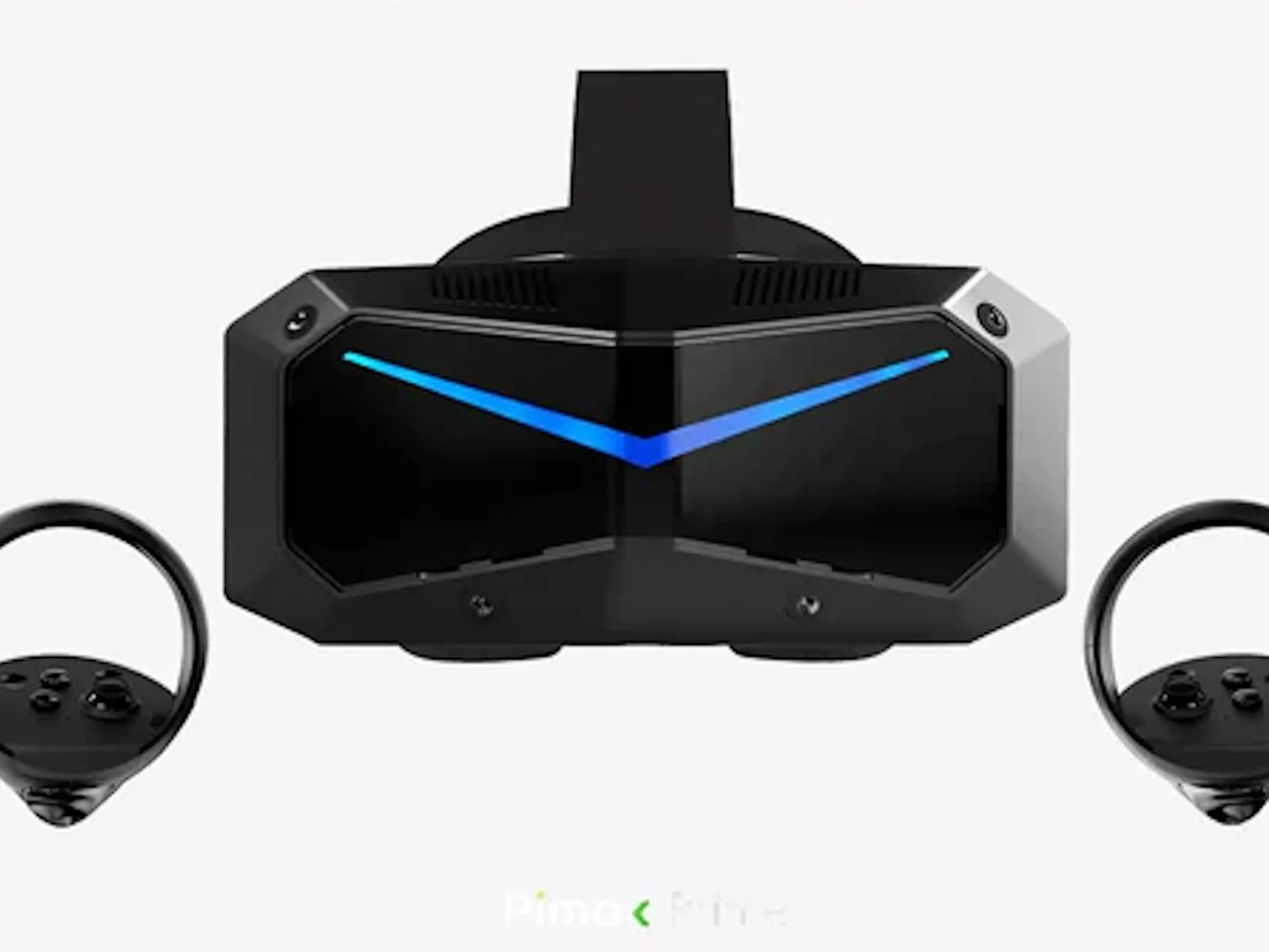
    1. The Pimax Crystal Super is available for preorder in two versions: one with a 120-degree field of view and another with a 135-degree field of view, both offering a resolution of 3840 x 3840 pixels per eye.

    2. The 135-degree model is expected to ship on April 7th, while the 120-degree model is set for delivery in the second quarter of 2025.

    3. The price for the headset is $1,791, which can be paid with an initial payment of $999 plus a monthly subscription of $32.99 for two years, or as a single payment with no subscription afterward.

    4. Key specifications include a variable refresh rate of 72 and 90Hz, automatic adjustment for interpupillary distance (58 to 72 mm), and support for foveated rendering.

    5. The headset features QLED displays with mini-LED backlighting, comes with two controllers, requires an external device for operation, and does not support wireless image connections or local rendering.


    The Pimax Crystal Super is now ready for preorder in two distinct versions. One model features a 120-degree field of view, while the other offers a 135-degree horizontal field of view. Both models come with a resolution of 3840 x 3840 pixels for each eye. The version with the larger field of view is expected to start shipping on April 7th, whereas the 120-degree model is planned for delivery in the second quarter of 2025.

    Pricing Details

    The total cost for this latest VR headset is $1,791. This includes an initial payment of $999 along with a Pimax Prime subscription that costs $32.99 each month for two years. Alternatively, customers can pay off the remaining balance in a single payment. Once that’s done, the Crystal Super can be used without the need for any subscription.

    Specifications Overview

    When it comes to specifications, the headset features a variable refresh rate of 72 and 90Hz, ensuring smooth visuals consistently. It automatically adjusts to interpupillary distances ranging from 58 to 72 millimeters. Additionally, it supports foveated rendering, enabling the headset to track the user’s eyes accurately, which minimizes the workload by rendering only the parts of the image that the eyes are focused on in full resolution.

    Pimax has chosen QLED displays with mini-LED backlighting and local dimming, allowing for precise brightness control and improved contrast. The package includes two controllers for navigation within 3D environments. However, it’s worth noting that the Crystal Super is a VR headset that requires a connection to an external device and does not permit local rendering. Wireless image connections are also not supported. For VR enthusiasts looking for a standalone headset with local rendering capabilities, the Pico 4 Ultra may be a better option to consider.

    Source:
    Link

  • Xiaomi Poco F7 Ultra Mod Turns It Into a Cool Gaming Handheld

    Xiaomi Poco F7 Ultra Mod Turns It Into a Cool Gaming Handheld

    Key Takeaways

    1. Recent Android gaming handhelds are shifting to more powerful chipsets, like the Snapdragon 865 and Snapdragon 8 Gen 2.
    2. Many handhelds still use older chipsets, while specialized gaming chipsets like Snapdragon G3x Gen 2 may not match smartphone chip performance.
    3. The demand for portable smartphone controller solutions is growing, driven by companies like 8BitDo and Backbone.
    4. A modder successfully transformed a Redmi K80 Pro into a gaming handheld, showcasing the Snapdragon 8 Elite chipset’s capabilities.
    5. The modded device features a 3D-printed case, modern controller buttons, and an integrated battery, though no guides for replication are available yet.


    The recent surge in Android gaming handhelds is quite remarkable. In the past, many makers have chosen to use less powerful chipsets from Allwinner and Unisoc. However, companies like Ayaneo, Ayn, and Retroid have recently shifted their focus to more powerful chipsets. For instance, the Pocket 5 features a Snapdragon 865, while the Odin2 is powered by the Snapdragon 8 Gen 2, currently priced at $449 on Amazon.

    Chipset Choices and Optimization

    Despite the move to stronger chipsets, many still lag behind by at least a generation. On the other hand, specialized gaming chipsets such as the Snapdragon G3x Gen 2 do not perform as efficiently as those designed for smartphones and tablets. At the same time, the demand for portable smartphone controller solutions is increasing, thanks to brands like 8BitDo and Backbone.

    Merging Worlds of Gaming

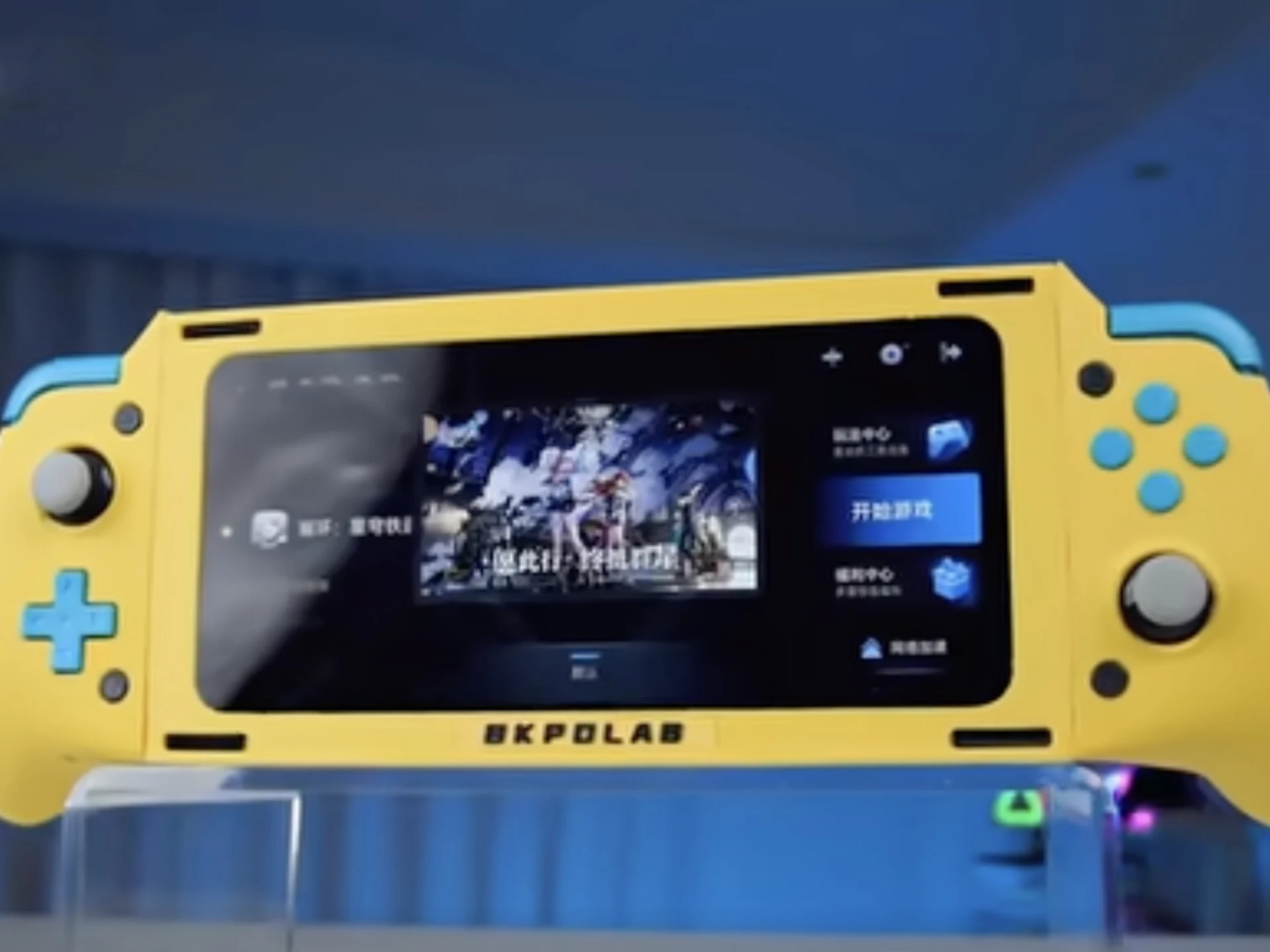
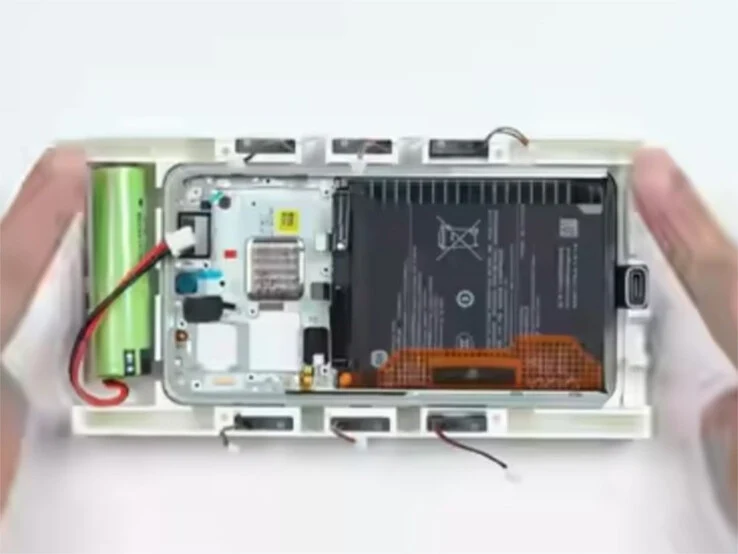
    In an interesting twist, a modder has combined these two realms by transforming a Redmi K80 Pro into a dedicated gaming handheld. Based on the Poco F7 Ultra that was launched earlier this week, both the Redmi K80 Pro and its Poco counterpart offer some of the most affordable options to access Qualcomm’s Snapdragon 8 Elite chipset. Xiaomi claims that the Poco F7 Ultra even surpasses the Xiaomi 15 Ultra in performance benchmarks. The modder’s choice to incorporate small fans should enable the Snapdragon 8 Elite to perform at a higher level than what a standard Redmi K80 Pro or Poco F7 Ultra could achieve.

    Project Details and Considerations

    The accompanying video illustrates how the project utilizes a 3D-printed case and includes all the necessary buttons found on modern controllers, such as dual joysticks and shoulder buttons. Additionally, an 18650 battery has been integrated to enhance gaming longevity. It’s important to note that we advise viewing this project as a proof of concept for the time being; regrettably, the modder hasn’t provided any 3D print files or a guide for those interested in replicating the project.

    Source:
    Link