Category: Gaming

  • Samsung Unveils 27-Inch Odyssey Gaming Monitor with 350Hz Refresh Rate

    Samsung Unveils 27-Inch Odyssey Gaming Monitor with 350Hz Refresh Rate

    Key Takeaways

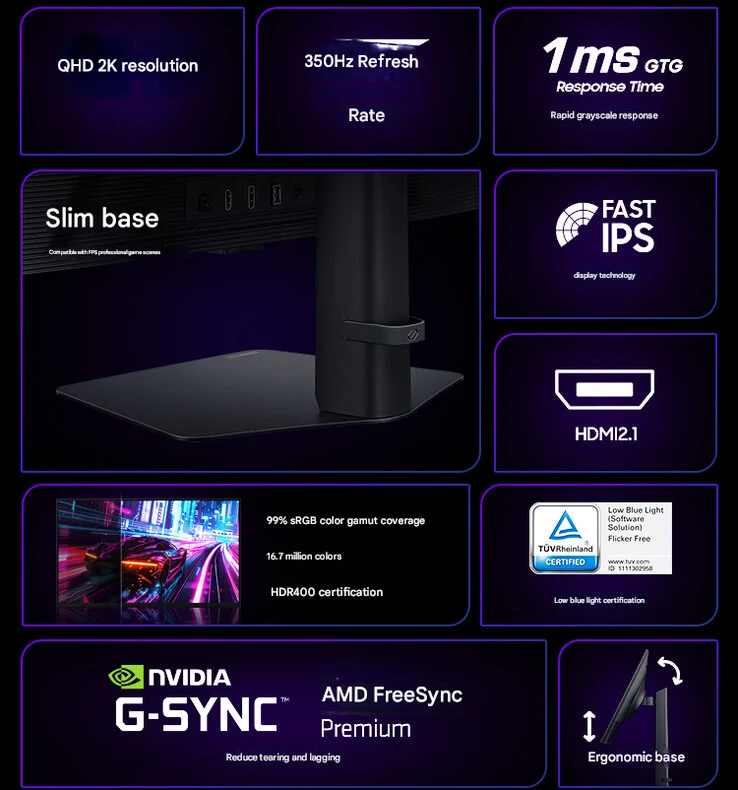
    1. Samsung has launched the budget-friendly Odyssey G60F gaming monitor in China, featuring a Fast IPS panel.
    2. The monitor has a QHD resolution and a lower refresh rate of 350 Hz compared to the 500 Hz of the OLED G60SF.
    3. It offers a 1 ms (GTG) response time and supports AMD FreeSync Premium and Nvidia G-Sync for a smooth gaming experience.
    4. The Odyssey G60F boasts 99% sRGB color coverage and HDR400 certification, making it suitable for both gaming and professional tasks.
    5. Priced at CNY 2,299 (approximately $322), the monitor features a gamer-friendly stand with multiple adjustment options, though global availability is yet to be announced.


    Samsung has unveiled a new budget-friendly gaming monitor in China, named the Odyssey G60F. This model features a Fast IPS panel, setting it apart from the OLED G60SF, which was recently released worldwide. The refresh rate on this latest version is lower compared to its predecessor, sitting at 350 Hz instead of 500 Hz.

    Specifications and Performance

    The Odyssey G60F maintains the QHD resolution seen in the G60SF. Samsung claims it boasts a 1 ms (GTG) response time. With compatibility for AMD FreeSync Premium and Nvidia G-Sync, this monitor is poised to deliver a fluid and responsive gaming experience for users.

    Color Accuracy and Usability

    One of the standout features of this budget gaming monitor is its 99% sRGB color coverage. Samsung also highlights that the Odyssey G60F has HDR400 certification. These attributes not only provide bright and vivid colors, but they also make it suitable for professional tasks.

    Design and Pricing

    The stand that comes with the monitor is designed with first-person shooter (FPS) gamers in mind. Its compact structure allows gamers to position their keyboard and mouse close to the screen, which is a common setup in esports. The stand also has multiple adjustment options, including the ability to position the monitor vertically (like the Huanuo dual monitor stand currently priced at $59.99 on Amazon).

    In terms of pricing, the Samsung Odyssey G60F has launched in China at CNY 2,299, which is approximately $322. While the company has not disclosed any plans for a global release yet, it is anticipated that the gaming monitor will be available internationally soon.

    Source:
    Link


  • Pocket AIR Mini: Ayaneo’s New Rival to Anbernic RG406H

    Pocket AIR Mini: Ayaneo’s New Rival to Anbernic RG406H

    Key Takeaways

    1. Ayaneo recently launched the AM01S mini-PC and the Pocket DS gaming handheld.
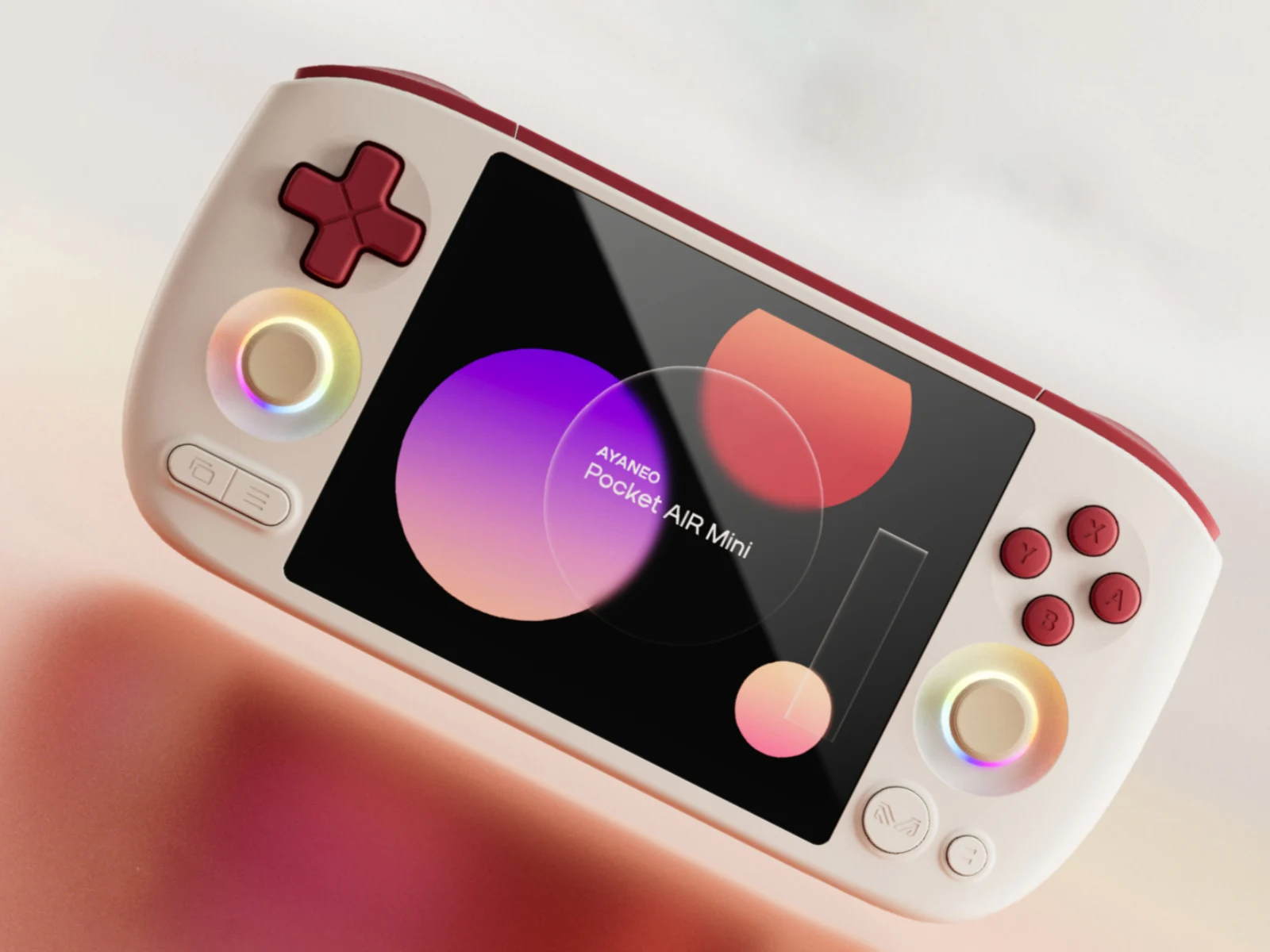
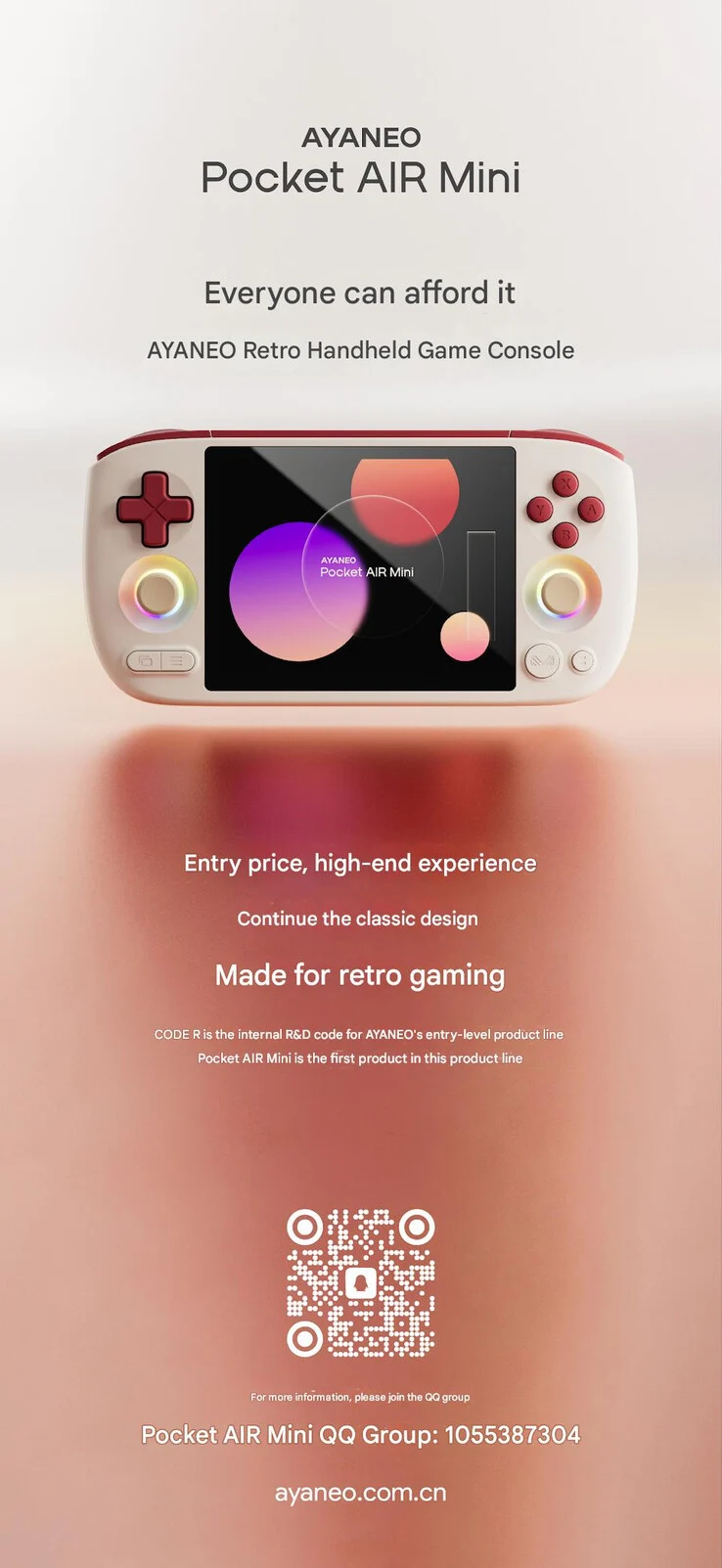
    2. The previously named Code R and Code-R1 will not be used; the new device will be called Pocket AIR Mini.
    3. The Pocket AIR Mini will feature a 4:3 display and redesigned joystick placement.
    4. It is positioned as a competitor to the Anbernic RG406H, priced at $199.
    5. Full specifications of the Pocket AIR Mini are still unknown, creating anticipation among fans.


    Ayaneo has been quite active recently. To give some background, the company introduced its highly anticipated AM01S mini-PC last week, and prior to that, it launched the Pocket DS gaming handheld just a few weeks ago. Now, Ayaneo has provided an update regarding its Code R or Code-R1 project, which it had previously hinted would come with a 4:3 display.

    Misleading Names

    It seems that the terms Code R and Code-R1 were not accurate. While the gaming handheld was referred to by these names during the summer, it will not be released under either of them or its new Konkr sub-brand. Instead, Ayaneo has opted to grow its Pocket division with the announcement of the first Pocket Air in nearly two years. Currently, the official teaser has only been shared on Chinese social media, confirming that what was once called Code R will now be known as the Pocket AIR Mini.

    New Features

    Ayaneo has already disclosed that the Pocket AIR Mini will feature a 4:3 display. It has been revealed that this new model will have joysticks located below its d-pad and ABXY buttons, which is a change from the previous Pocket Air model. Essentially, the Pocket AIR Mini appears to be Ayaneo’s response to the Anbernic RG406H, which is currently priced at $199 on Amazon. As of now, details about the specifications of Ayaneo’s upcoming portable gaming handheld are still under wraps.

    Awaiting More Information

    For now, Ayaneo’s new offering remains shrouded in mystery regarding its full specifications. Fans and potential buyers are eager to learn more as the company continues to make strides in the gaming handheld market. The excitement surrounding Ayaneo’s products shows no signs of waning as they prepare to launch the Pocket AIR Mini.

    Source:
    Link


  • Fate Trigger First Impressions: Room for Improvement and Growth

    Fate Trigger First Impressions: Room for Improvement and Growth

    Key Takeaways

    1. Closed Beta and Early Access: Fate Trigger is currently in closed beta, with early access scheduled for early 2026. Players can only experience the game through invites, and updates are being released to address bugs.

    2. Gameplay Mechanics: Players choose an “Awakener” with distinct roles (Assaulter, Support, Defender) and abilities. The gameplay features team-based mechanics, a shrinking map, and a unique “knocked out” state instead of instant death.

    3. System Requirements and Performance: The game has low system requirements and supports various AI-driven upscalers. However, it caps FPS at 60 by default, requiring manual unlocking for high-refresh-rate monitors.

    4. Customization and Monetization: Players can customize their Awakeners with skins earned through a battle pass or real money. Some characters need to be unlocked through in-game tasks, a mechanic that feels outdated for PC.

    5. Connectivity Issues: Many players face login problems and high latency, needing VPNs to connect. While server expansions are planned, latency issues are expected to persist until more servers are in place.


    Fate Trigger is a fresh player in the expanding world of battle royals that are similar to Fortnite. Right now, the only way to experience it is through an invite to its closed beta. Registrations have now ended, and the game is set to enter early access in early 2026. As a beta, it isn’t really in peak form at the moment, but the developers are consistently releasing updates to fix the various bugs. You can think of Fate Trigger as a mix of Fortnite, Apex Legends, Valorant, and Overwatch, featuring anime characters. Before each match, you choose your Awakener, which falls into three broad categories: Assaulter, Support, and Defender. Each Awakener comes with three abilities—one passive, one regular (that can be used often), and an ultimate ability that has a cooldown. It’s not as intricate as the other games mentioned, but that could change with future updates.

    System Requirements

    Fate Trigger, powered by Unreal Engine 5, has surprisingly low system requirements for PC. It supports various AI-driven upscalers, including DLSS, FSR, and XeSS, though not their newest versions. While enabling Frame Generation might help boost performance a bit, it’s best to keep it off unless you really need it. With all upscaling turned off and visual settings maxed out, I managed to achieve an average of 60-70 FPS on my setup, which includes an AMD Ryzen 7 5800X3D, GeForce RTX 3080 Ti, and 48 GB of RAM. The game caps the FPS at 60 by default, so if you have a monitor with a high refresh rate and suitable hardware, you’ll need to unlock it manually.

    Customization Options

    Like many live service games, you can customize your Awakener with a wide array of in-game skins. Some can be earned by progressing through the battle pass, while others require actual money. Currently, the game doesn’t allow payments, and players receive a limited amount of ‘Premium’ currency to try things out. Unfortunately, you can’t access all Awakeners from the start; some must be unlocked by completing specific in-game tasks, including daily logins. This design feels like an outdated mechanic from mobile games that really doesn’t have a place on PC, but here we are.

    Login Issues

    Daily logins wouldn’t be a hassle if I could actually get into the game. I found it impossible to log into Fate Trigger without using a VPN, as the client wouldn’t connect to the server; this issue is shared by many players on Discord. A company rep has mentioned that a fix is forthcoming, but didn’t specify when it would arrive. I had to rely on my VPN to log in each time, which isn’t ideal for always-online titles that require low latency. While I could disable the VPN once I reached the main menu, it didn’t help much with latency. A “high latency” warning constantly appeared on my screen, and though the gameplay itself wasn’t laggy, some of my hits took longer to register. This should improve once more servers are set up globally outside the US and EU.

    Fate Trigger’s primary gameplay loop is quite straightforward. You and four teammates can drop anywhere on the map. Periodically, parts of the map are sealed off by Pale Blight, which is similar to Fortnite’s storm. Moving around is facilitated by portals, ziplines, and vehicles with special abilities. Overall, it still feels quite basic, but more features are expected to come with updates. Instead of instantly dying, you enter a ‘knocked out’ state for a few minutes, giving your teammates a chance to revive you. However, enemies can also use this moment to eliminate you completely. Fate Trigger allows you to cheat death once or even multiple times, depending on the Awakener you have in your squad. The last team standing wins, and you receive in-game currency for your efforts.

    Weapon Variety

    Weapons are distributed throughout the arena, along with various attachments like extended magazines, scopes, and suppressors. The selection of weapons is decent considering it’s still in pre-launch, offering a variety of SMGs, assault rifles, shotguns, LMGs, and sniper rifles. Each weapon can be customized with unique skins, which can be earned through the battle pass or by spending real money. You can easily find weapons, armor, backpacks, and shields in the arena, and loot can be salvaged from defeated enemies. However, the shooting mechanics need further refinement. Some hits don’t register at all, likely due to the aforementioned high latency. Consequently, enemies can feel like they take many bullets to take down.

    The game has added more servers, but latency issues will persist until additional servers are deployed.

    Final Thoughts

    Overall, Fate Trigger doesn’t seem to aim for a revolutionary take on the Battle Royale genre. It combines elements from successful games in the field. While the anime aesthetic may attract some players, the gameplay innovation is lacking. The closed beta allows players to try out new modes like Team Deathmatch, Rapid Trial, and ranked matches for limited times. Team Deathmatch is genuinely enjoyable, offering a refreshing change of pace, even if it lacks the flair of classic arena shooters. In conclusion, the game needs more time to develop, and it’s uncertain if it will set new standards in the genre upon release. It has been in development for just under a year. A 2026 PC launch seems likely, with a console version expected to follow soon after. A mobile port is also in the works, as is typical these days.

    Source:
    Link



  • Gamers Over 30: Unique Experiences Younger Players Miss Out On

    Gamers Over 30: Unique Experiences Younger Players Miss Out On

    Key Takeaways

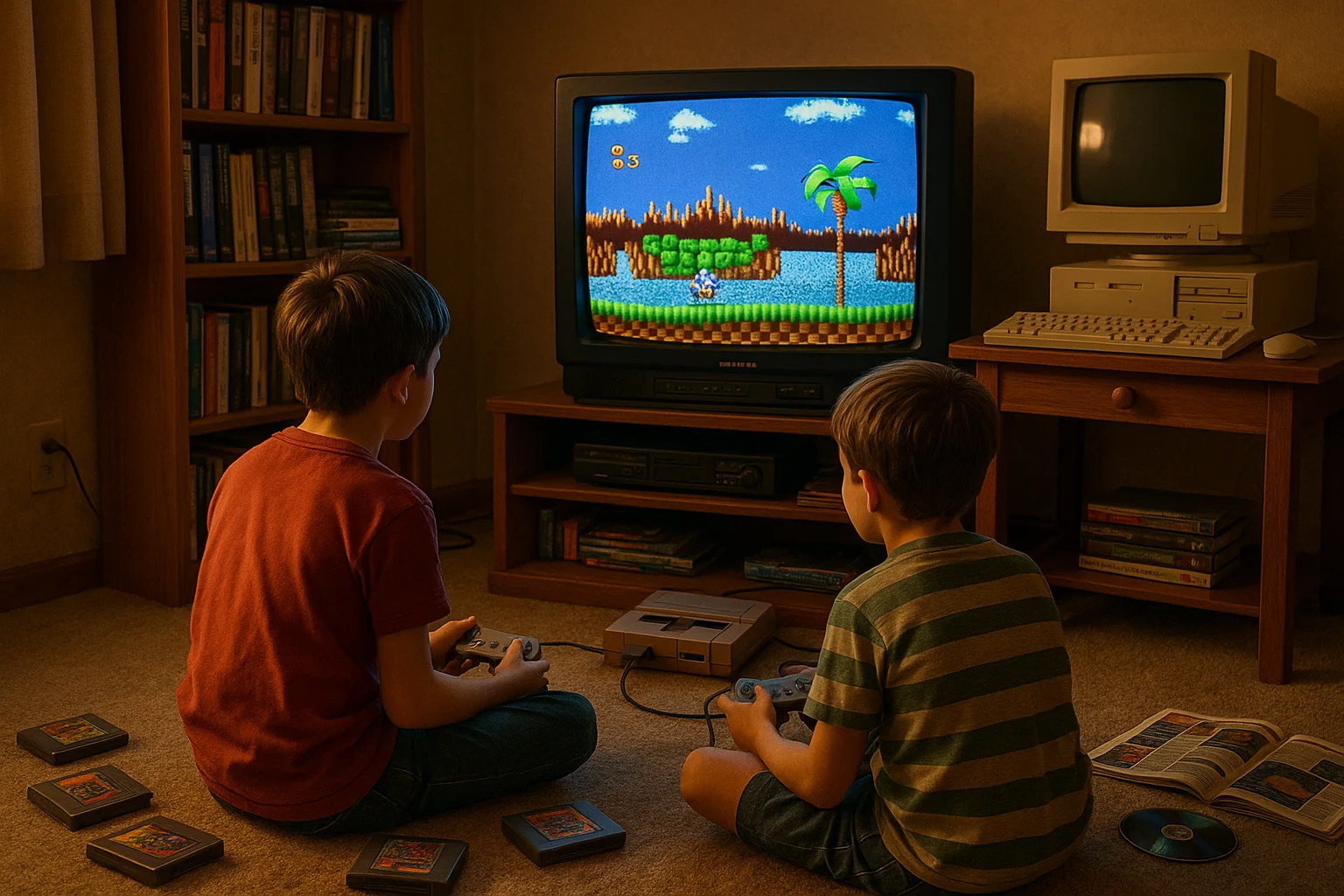
    1. Nostalgic memories of purchasing games based on cover art, unlike today’s easy access to reviews and gameplay footage.
    2. The popularity of demo disks found in gaming magazines, which provided gamers with previews of upcoming titles.
    3. A shift from simple enjoyment of games to aggressive monetization tactics, such as battle passes and overpriced skins.
    4. The emphasis on cheat codes and hidden secrets that added mystery and intrigue to gaming experiences.
    5. A sense of loss regarding community connection and shared experiences in gaming, contrasting with the benefits of modern online gaming.


    A nostalgic thread has become popular on Reddit, encouraging gamers over 30 to reminisce about their past experiences. The post, titled “For gamers over 30: What’s an experience from your youth that younger gamers don’t know?”, was created by u/Common_Caramel_4078 and has received over 9,200 comments since August 30. This highlights how much the gaming culture has transformed over the years.

    Memories of Game Purchasing

    The original poster reminisces about purchasing games based solely on their cover art, a practice that seems almost impossible today with reviews and gameplay footage easily accessible online. The top comment, from u/WhenRomansSpokeGreek, reflects on the demo disks that were often found in gaming magazines. Back then, you could find these at nearly any bookstore or newsstand. For many gamers, these little extras provided a first look at upcoming titles, but with the fall of physical media, they have long disappeared from the scene.

    Monetization and Gameplay

    What’s particularly interesting is how many comments emphasize the lack of today’s aggressive monetization tactics. There were no battle passes or overpriced skins; the emphasis was purely on enjoyment. Games were frequently made better with cheat codes and hidden secrets that actually felt like real secrets. Other nostalgic thoughts shared include:

    The overall atmosphere of the thread is filled with nostalgia, often funny, yet carrying a slight sense of sadness. User u/FrogLickr captures this sentiment well: “Back in the day, there was so much mystery and intrigue, and I miss that. The community felt so connected in a way that just isn’t possible anymore.” Today’s gaming culture, of course, has its perks—like online gaming, global communities, and streaming services that link players in innovative ways. Nonetheless, it prompts the question: what memories will today’s 20-something gamers reflect on in a decade? It’s likely that those memories will come across just as odd and distant to future generations as floppy disks, LAN parties, or sharing tips on the playground do today.

    Source:
    Link


  • New FCC Leak: Pulsar X3 CrazyLight Left-Handed and Color Options

    New FCC Leak: Pulsar X3 CrazyLight Left-Handed and Color Options

    Key Takeaways

    1. Pulsar is set to launch the X3 CrazyLight ergonomic gaming mouse with both left-handed and right-handed models.
    2. The mouse will come in two sizes and offer 10 color choices, an increase from the five options of the regular X3.
    3. The X3 CrazyLight is expected to maintain the same internal components as the standard X3, including an 8 kHz polling rate and 30,000 DPI.
    4. The weight of the X3 CrazyLight is anticipated to be around 37 grams, making it significantly lighter than comparable models.
    5. Pricing for the X3 CrazyLight will likely exceed the current $99.95 price of the standard X3, similar to the pricing trend seen with the X2 CrazyLight.


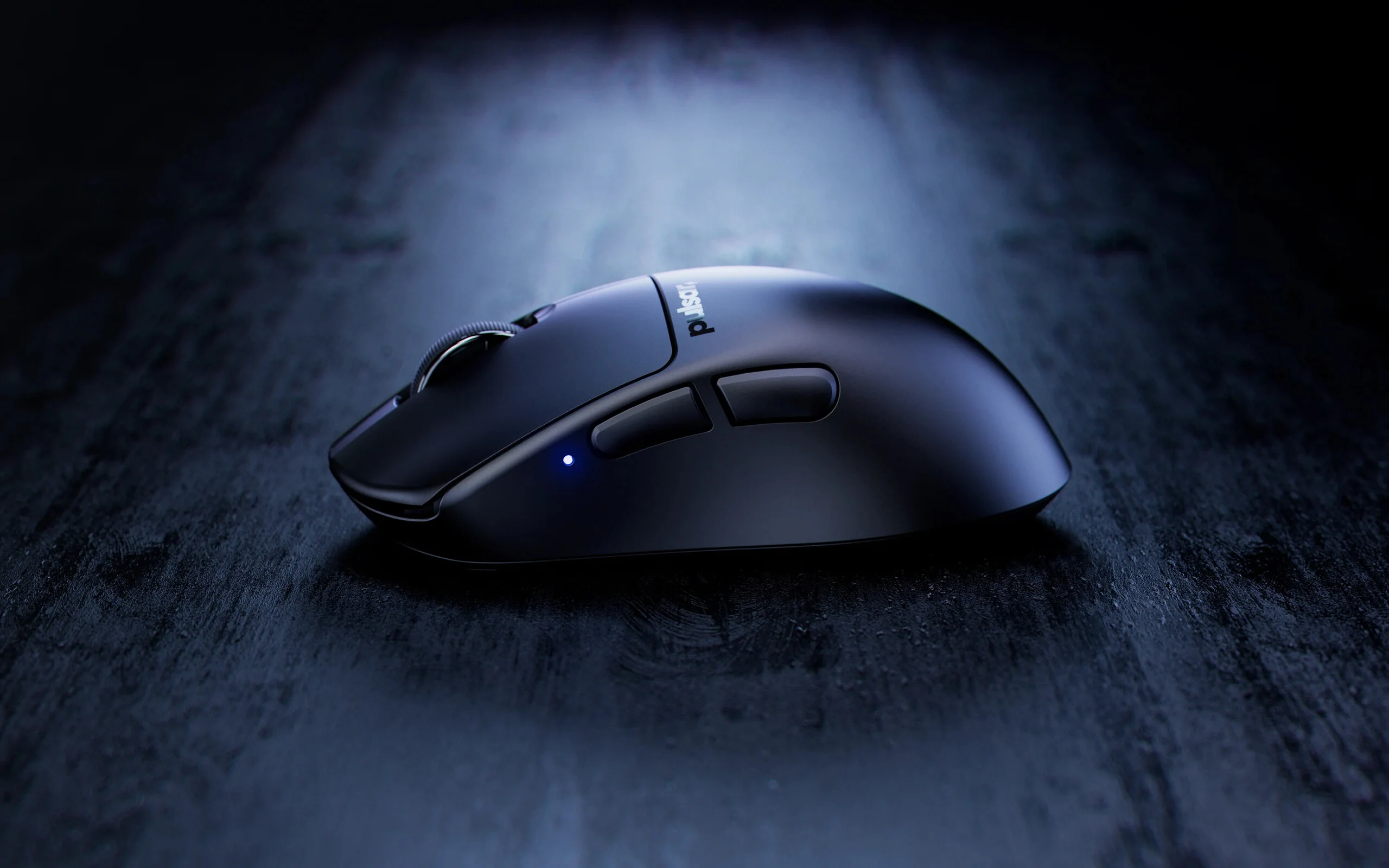
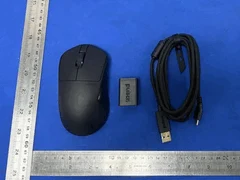
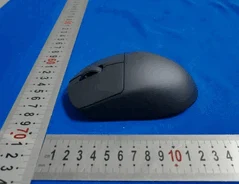
    Hot on the heels of the new Hall effect gaming keyboard, Pulsar seems to be ready to launch a CrazyLight version of its well-known ergonomic gaming mouse, the X3. A recent leak from the FCC, shared by Reddit user u/manphalanges, reveals what is believed to be the Pulsar X3 CrazyLight, confirming that this ultra-light ergonomic mouse will come in both left-handed and right-handed models.

    Details Leaked

    The FCC certification leak doesn’t provide much information, but a few things are clear. Firstly, it hints that Pulsar might aim for a launch within the next few months or by early 2026. Secondly, the new ultra-light gaming mouse is expected to come in various models, although the specifics of these models remain unclear. The FCC documentation lists the X3 LHD CrazyLight with model numbers ranging from PX3CL101–PX3LCL120 and PX3LCL201–PX3LCL220, indicating that all models share the same circuitry and antenna, making the model numbers the only difference.

    Two Sizes and More Colors

    Since this is the X3 CrazyLight LHD, it appears that Pulsar plans to release this ergonomic mouse in two different sizes along with a variety of color choices represented by different model numbers. The standard X3 gaming mouse is currently available in both mini and regular sizes, with the mini labelled as “size 1” and the regular as “size 2.” However, the X3 Mini does not have a left-handed version, so the introduction of two LHD models for the X3 CrazyLight will likely be a delightful surprise for left-handed users in search of a lightweight ergonomic option.

    With this setup, there will be an impressive 10 color choices for each version of the X3 CrazyLight, which is an upgrade from the five options available with the regular X3 CrazyLight. It’s also possible that the special edition colorways from influencer and esports collaborations that appeared in the X2 lineup could be available for the X3 CrazyLight.

    Expected Features and Pricing

    The X3 CrazyLight is expected to have the same internal components as the standard X3, which means it should include an 8 kHz polling rate, 30,000 DPI, Kailh optical switches, a Pulsar Blue encoder, and the XS-1 sensor. In comparison to the standard X2 v3, the X2 CrazyLight reduces weight by about 17 grams, or roughly 33%. If the same reduction applies to the X3 CrazyLight, we can anticipate a weight of around 37 grams, making it considerably light, especially when compared to mice like the Keychron M7 8K that was reviewed recently. The price of the X3 CrazyLight will probably be higher than the regular X3, which is currently priced at $99.95 on Amazon, given that the X2 CrazyLight is priced at $129.95 — $30 more than its standard counterpart.

    Source:
    Link


  • ROG Xbox Ally X Review: UI Issues and Console Interface Lacks Polish

    ROG Xbox Ally X Review: UI Issues and Console Interface Lacks Polish

    Key Takeaways

    1. The user interface (UI) of the Asus ROG Xbox Ally X needs significant improvement for a better gaming experience.
    2. Reports of bugs and crashes, including issues with unresponsive analog sticks and game crashes, highlight performance concerns.
    3. The handheld struggles with managing Windows resources, leading to sluggishness when switching between games.
    4. Mixed reviews suggest that the UI is more unstable than expected, raising doubts about improvements before the release date.
    5. Despite the challenges, the device offers the advantage of combining multiple marketplaces into a single display, but may frustrate gamers seeking a console-like experience.


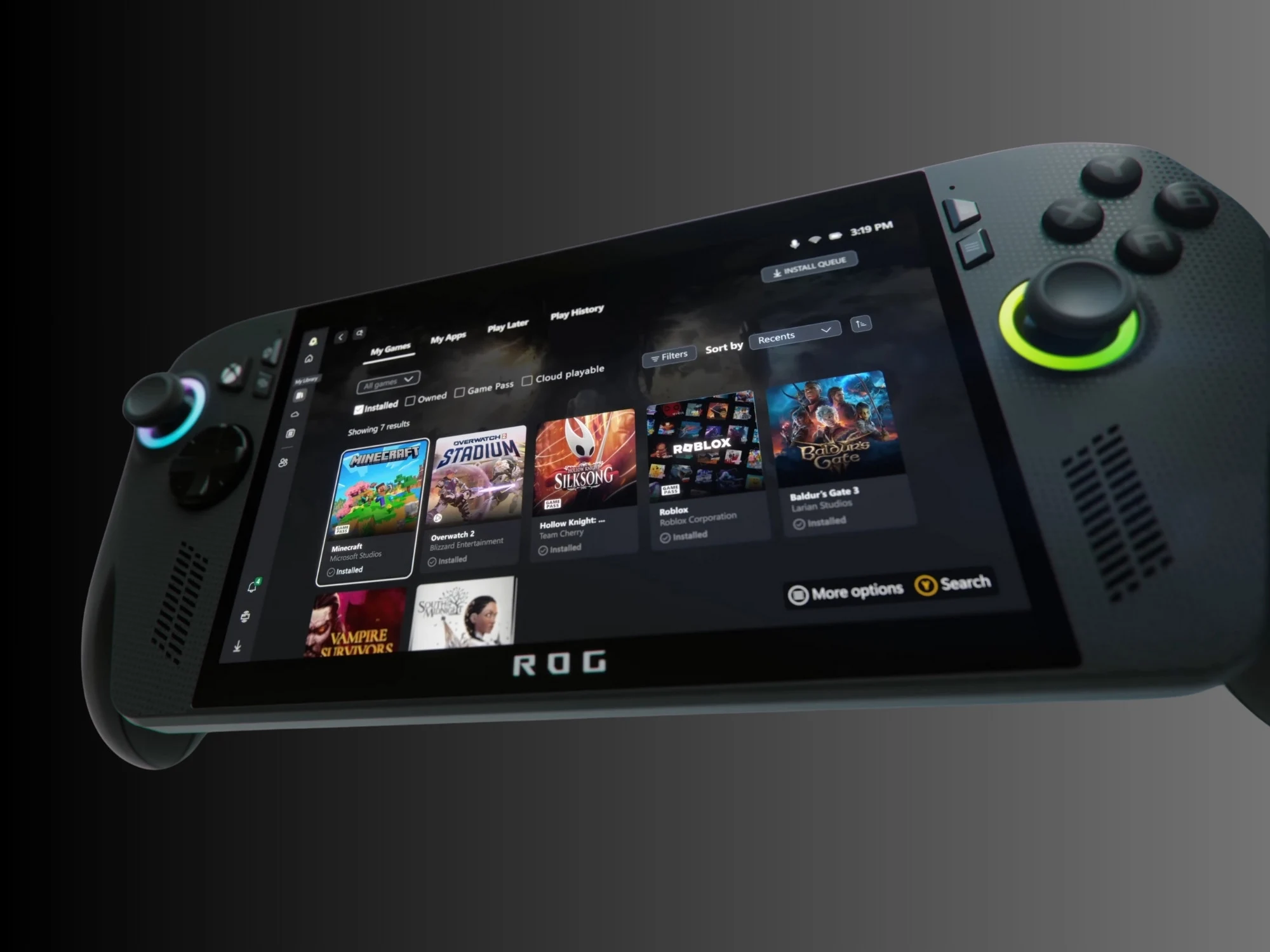
    One challenge that Microsoft faces with the Asus ROG Xbox Ally X is making the Windows interface better suited for gaming. Impressions from the recent Gamescom event indicate that the user interface (UI) has significant room for enhancement. A member from Digital Foundry reported encountering various bugs and even some crashes. Although tech podcasters see some promise, the ROG Xbox Ally X currently lacks the intuitiveness that gamers are accustomed to with Xbox consoles.

    Concerns About User Interface

    Richard Leadbetter expressed the most troubling thoughts regarding the handheld’s UI. The Xbox Ally X aims to simplify the process of finding and loading games on a portable Windows device. However, at one point, the analog sticks used for navigating menus completely stopped responding. Additionally, Doom: The Dark Ages crashed, which hindered gameplay navigation.

    Performance Issues Under Testing

    The ROG Xbox Ally and Xbox Ally X are designed to manage Windows resources to enhance gaming performance. Nevertheless, during Digital Foundry’s testing, this approach led to some unexpected issues. After playing Gears of War: Reloaded and switching over to Doom: The Dark Ages, the handheld gaming PC failed to properly close Gears of War. Consequently, the device became sluggish when trying to run two games simultaneously.

    Mixed Reviews Ahead of Launch

    From other previews, it’s not shocking that the latest handhelds don’t provide a flawless console interface. These devices operate on a conventional Windows OS, which is built for a variety of tasks beyond gaming. Still, Digital Foundry discovered that the UI is in a more unstable condition than many gamers might have anticipated. It raises doubts about whether Microsoft can resolve these issues by the release date of the ROG Xbox Ally X on October 16th.

    In spite of the negative feedback, Digital Foundry believes that the ROG Xbox Ally handhelds also demonstrate some strengths. They combine multiple marketplaces into a single display, which is a limitation found in current handheld gaming PCs. However, other elements of the UI seem more disjointed. Gamers who are looking for a smoother Xbox console-like experience may quickly find themselves feeling frustrated.

    Source:
    Link


  • Lenovo Legion Go 2 Images Show Display, Controllers, Accessories

    Lenovo Legion Go 2 Images Show Display, Controllers, Accessories

    Key Takeaways

    1. Display Features: The Legion Go 2 will have an 8.8-inch OLED display with a 16:10 aspect ratio, 1200p resolution, 97% DCI-P3 color accuracy, 500 nits brightness, and a variable refresh rate of 144Hz.

    2. Battery and Charging: It will feature a 74Wh battery with two cells, a 65W AC adapter, and support for higher-wattage chargers for faster charging.

    3. Design Changes: The design includes relocated MicroSD card slot and audio jack, revamped Truestrike Controllers for better comfort, and a new USB-C port for independent controller charging.

    4. Cooling and Other Features: The device will utilize Legion Coldfront cooling technology with a larger fan, manual fan control, a fingerprint scanner in the power button, and support for up to a 2TB MicroSD card.

    5. Processor Options: Users can choose between a Ryzen Z2 or Ryzen Z2 Extreme processor, and Lenovo is expected to offer accessories, including a padded carrying bag for protection.


    After its first showing at CES 2025 in January, Lenovo is getting ready to unveil the Legion Go 2 at IFA 2025. This new handheld gaming PC will be the successor to the Legion Go that was launched in November 2023 (check out our review). Well-known leaker, Evan Blass, has disclosed some information about the Legion Go 2 before its debut at IFA. He has also shared several new images of the device that reveal additional details.

    Display Features

    According to one image, the Legion Go 2 will sport an 8.8-inch display, featuring a 16:10 aspect ratio, a resolution of 1200p, and a 97% DCI-P3 color accuracy. The OLED panel will support 10-point touch and can reach a brightness of 500 nits. It meets VESA’s DisplayHDR True Black 1000 standard and features a variable refresh rate of 144Hz.

    Battery and Charging

    As noted back in January, the Legion Go 2 will come equipped with a 74Wh battery, which has been divided into two cells, as seen in a hands-on video released in July. It will include a 65W AC adapter, but similar to the original Legion Go, it should be able to draw more power when plugged into a higher-wattage charger, like the Anker 140W 4-port wall charger (currently listed on Amazon for $79.99).

    Design Changes

    Though the Legion Go 2 keeps much of the original’s design, including its detachable controllers, there are notable modifications that set them apart. For instance, Lenovo has relocated the MicroSD card slot and audio jack from the top of the Legion Go to the bottom of the second version.

    Additionally, the Truestrike Controllers have been revamped for better comfort, and they will be backward compatible with the first-generation Legion Go. A new feature highlighted in one of the images from Evan Blass appears to be a USB-C port. If this is accurate, users will be able to charge the controllers independently of the Legion Go 2.

    Cooling and Other Features

    The Legion Go 2 will use Lenovo’s Legion Coldfront cooling technology and will be outfitted with a larger fan for improved airflow. The images reveal that the device has larger vents for air intake and exhaust. Users will also have the option to manually control the cooling fan.

    Other confirmed features visible in the images include a fingerprint scanner integrated into the power button, support for up to a 2TB MicroSD card, dual USB 4.0 Type-C ports, and the choice of either a Ryzen Z2 or a Ryzen Z2 Extreme processor. There will only be one color choice available.

    Similar to the first Legion Go, Lenovo is likely to offer accessories for this handheld. Evan Blass has also shown an image of a carrying bag for the device. The bag appears to be made from canvas and is padded for some level of protection for the Legion Go 2. It remains unclear if this will be the included accessory or if a hard case, like the one for the first-gen Legion Go, will be offered.

    Source:
    Link


  • New Cooperative Shooter from Left 4 Dead Creator Available to Try

    New Cooperative Shooter from Left 4 Dead Creator Available to Try

    Key Takeaways

    1. Mike Booth, creator of Left 4 Dead, is developing a new 4-player co-op shooter called Project Tacoma.
    2. The new game aims to build on the unique features that made Left 4 Dead successful.
    3. Booth has invited the community to participate as playtesters, although spots are limited.
    4. Details about the game’s setting and features are still scarce, with a post-apocalyptic world being a likely option.
    5. Fans are excited about the announcement but will have to wait for more information.


    The Left 4 Dead franchise has found great success with players, thanks to its unique post-apocalyptic world and diverse gameplay features. Currently, its creator, Mike Booth, is developing a new game that remains shrouded in mystery.

    Exciting News for Fans

    In a recent post on the Left 4 Dead 2 Reddit forum, Booth surprised fans by announcing, “I’m Mike Booth (the creator of Left 4 Dead), and I’m thrilled to say that I’m working on a brand new project —a 4-player co-op shooter that builds on what made L4D so special.” He went on to mention that if players enjoyed his past creations, they might find interest in his upcoming game, Project Tacoma. This new title embodies the cooperative gameplay he has always wished to explore. Although the game is still in its early development phase and details remain scarce, he has invited the community to get involved:

    Join the Adventure

    “If you’re keen on joining us for this next adventure and want to help shape the game early on, we’d be delighted to have you participate.” This means players have the chance to become playtesters, but spots are limited, so not everyone may be chosen.

    Despite the community expressing excitement over this announcement, we still need to wait for more information about what this new co-op game entails and the universe it will inhabit. Although the post-apocalyptic setting seems the most likely, nothing is confirmed yet.

    Source:
    Link


  • Star Wars Outlaws Performs Well on Switch 2, Leaked Gameplay Revealed

    Star Wars Outlaws Performs Well on Switch 2, Leaked Gameplay Revealed

    Key Takeaways

    1. Star Wars Outlaws is set to release on September 4 for the Switch 2, generating mixed opinions from gamers.
    2. The game requires an RTX 3060 Ti for optimal performance at 60 FPS and 1080p, but needs optimization for the Switch 2.
    3. Leaked gameplay footage shows the game running at around 30 FPS below 1080p on the Switch 2 in docked mode, with some frame drops.
    4. The GVG YouTube channel reported poor performance during their hands-on experience at PAX West, with inconsistent frame rates below 30 FPS.
    5. The true performance of Star Wars Outlaws on the Switch 2, especially in handheld versus docked mode, will be revealed soon after the release.


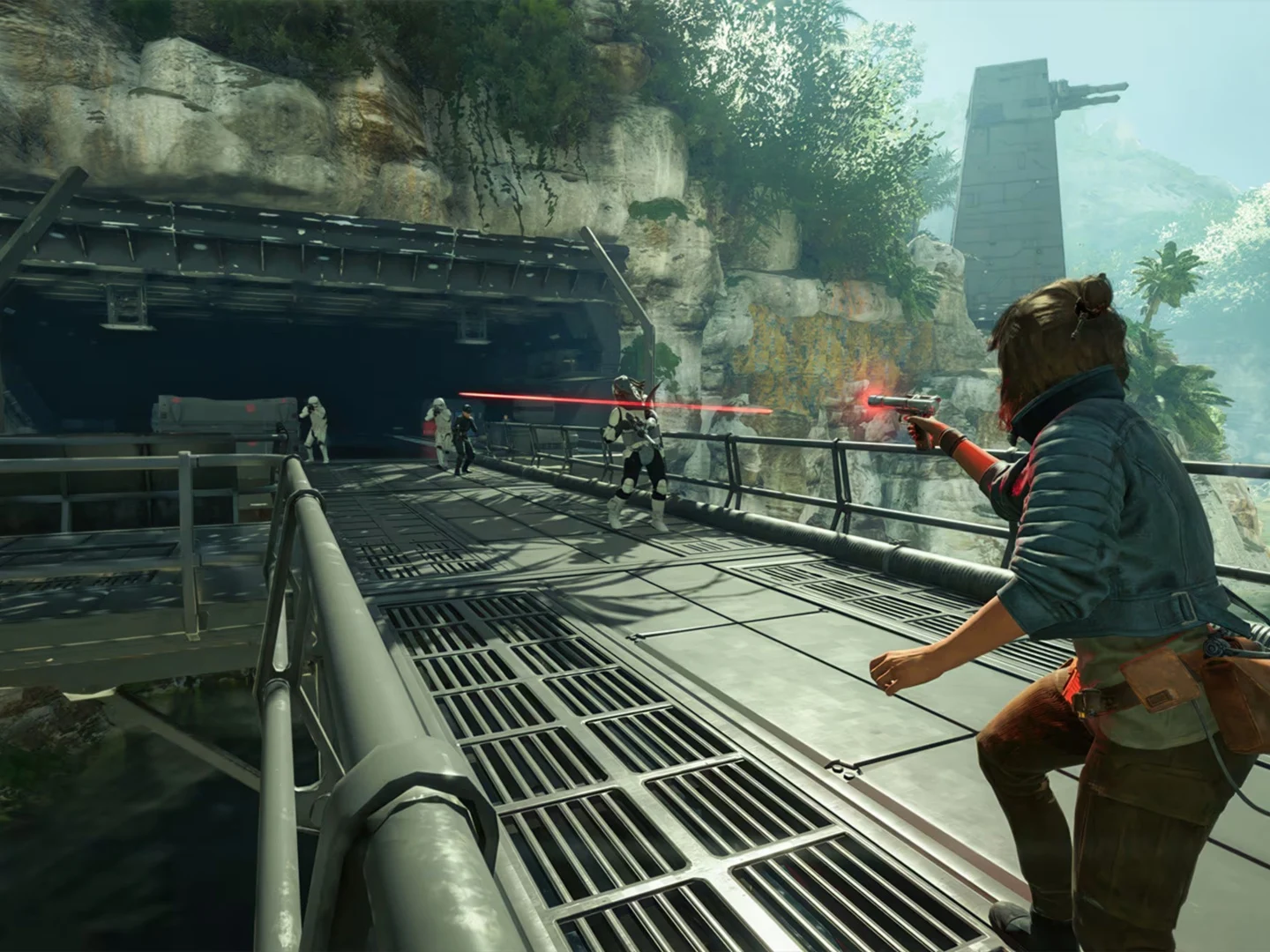
    The highly anticipated upcoming third-party release for the Switch 2, Star Wars Outlaws, is set to launch on September 4. This game has received a mix of opinions from PC and console gamers, and it isn’t particularly demanding, suggesting a minimum requirement of an RTX 3060 Ti for achieving 60 FPS at 1080p. However, it does require a significant amount of optimization to perform well on the Nintendo Switch 2. Luckily, recently leaked gameplay footage indicates that the game is running quite smoothly and reliably on the handheld device when docked.

    Gameplay Footage Leak

    A user by the name of mataleao has posted about 40 minutes of gameplay from Star Wars Outlaws (linked below) on the Switch 2 in docked mode prior to its official release. It remains uncertain how they gained early access to the game, but their gameplay showcases them continuing from a previously saved game. As for the game’s resolution and frame rate, it appears to be running below 1080p at approximately 30 FPS, although this is difficult to verify.

    Frame Rates and Performance

    The gameplay mostly consisted of indoor scenes, with some open-world exploration towards the end. While there were occasional frame drops and stutters, the overall performance was generally stable. Experiencing frequent drops in frame rates can ruin the gaming experience more than having a consistently lower FPS, which seems to be the situation with Star Wars Outlaws on the Switch 2. It appears that DLSS is functioning, at least in docked mode.

    Contrasting Views from PAX West

    In contrast, the team from the GVG YouTube channel had a hands-on experience with the game at PAX West and reported that it runs “really poorly” on the Switch 2. The section they played took place on a Star Destroyer, with plenty of action sequences and space battles. Specifically, the Star Destroyer segment felt unstable, exhibiting inconsistent frame rates. They noted frame rate drops below 30 FPS, indicating that some moments might have reached 40 to 45 FPS or more, which is puzzling when compared to the leaked footage.

    In short, we won’t have to wait long to find out how the game truly performs on the Switch 2, especially in terms of handheld mode versus docked.

    Source:
    Link


  • MSI Crosshair 18 HX Lacks Key Feature for Enhanced Appeal

    MSI Crosshair 18 HX Lacks Key Feature for Enhanced Appeal

    Key Takeaways

    1. The MSI Crosshair 18 HX is an affordable 18-inch gaming laptop but makes notable compromises.
    2. It is limited to the RTX 5070 graphics card and cannot be upgraded to the more powerful RTX 5070 Ti.
    3. The performance gap between the RTX 5070 and RTX 5070 Ti can reach up to 50%, affecting gaming experience.
    4. MSI may have omitted the RTX 5070 Ti to differentiate the Crosshair 18 from its premium models.
    5. While capable for 1080p and 1440p gaming, the RTX 5070 may struggle with demanding games on high settings.


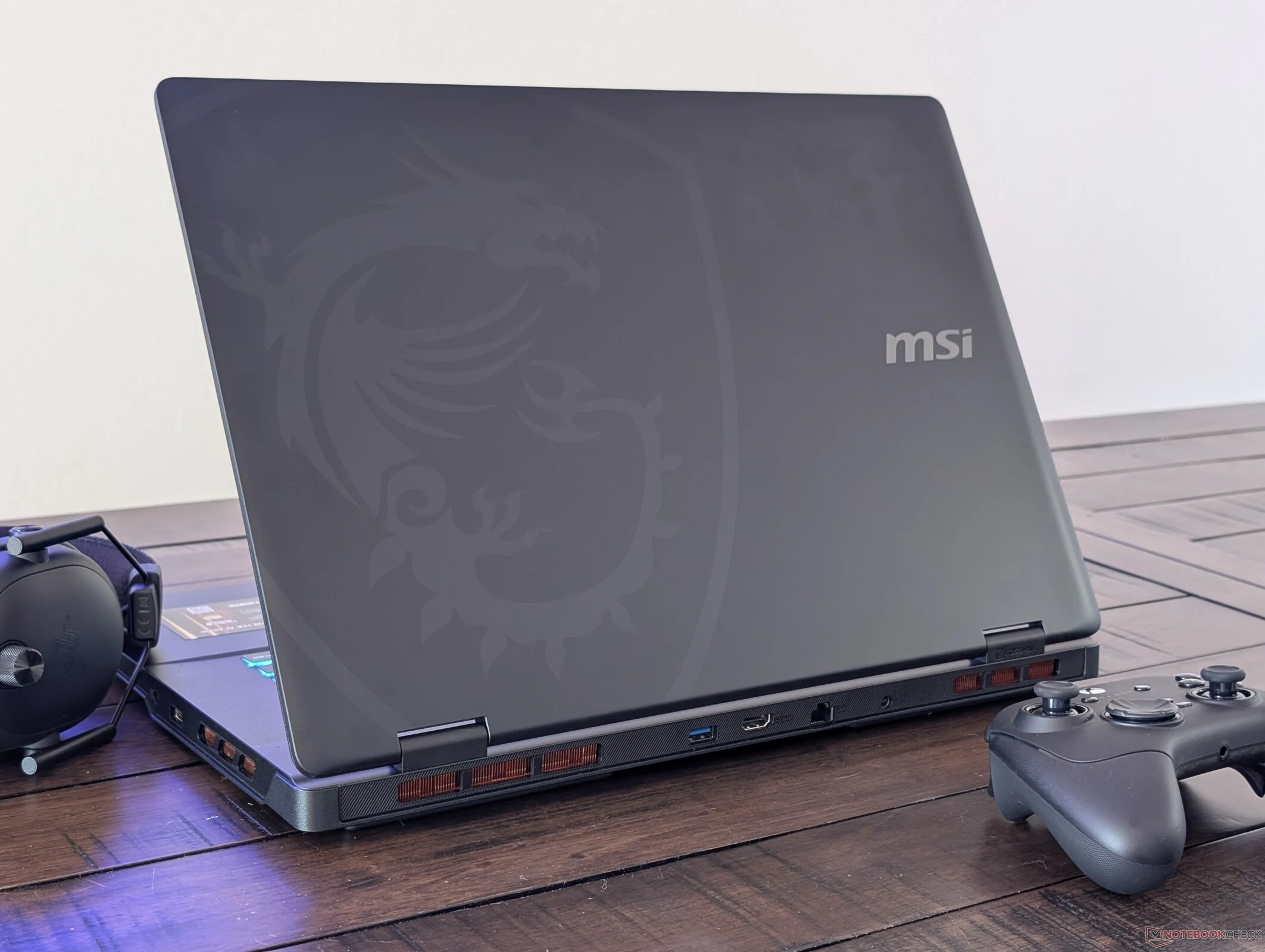
    The MSI Crosshair 18 HX stands out as one of the more budget-friendly 18-inch laptops available today, according to our review of this model. To achieve its lower price point, it makes several compromises, many of which are justifiable, like the unique RGB LEDs or the mini-LED display technology that some gamers might find unnecessary. However, one missing feature is particularly disappointing for even casual gamers.

    Graphics Card Limitations

    A major downside of the Crosshair 18 HX is that it cannot be upgraded to include the GeForce RTX 5070 Ti or any higher models; it maxes out with the RTX 5070. We’ve previously noted that the RTX 5070 Ti offers a considerable performance improvement over the RTX 5070, largely due to its substantial increase in VRAM. In fact, the performance gap between these two can reach up to 50 percent, as illustrated in our comparison charts below.

    Reasons for the Omission

    There are a few potential reasons why MSI chose not to include the RTX 5070 Ti option. Being a midrange gaming laptop, MSI probably aims to distinguish the Crosshair 18 from its more premium models like the Raider 18, Stealth 18, or Vector 18. The higher-end alternatives can be equipped with the RTX 5070 Ti, but they come with much steeper starting prices.

    Performance Overview

    Despite its limitations, the Crosshair 18 HX remains a solid choice for gaming at 1080p or 1440p resolutions. Nevertheless, its RTX 5070 may struggle with more resource-intensive games, such as Black Myth: Wukong, especially when played on high settings.

    Source:
    Link