Category: EV vehicles

  • The Revealed BYD YangWang U7 EV Boasting an 800km Range and a Remarkable 135.5kWh Battery

    The Revealed BYD YangWang U7 EV Boasting an 800km Range and a Remarkable 135.5kWh Battery

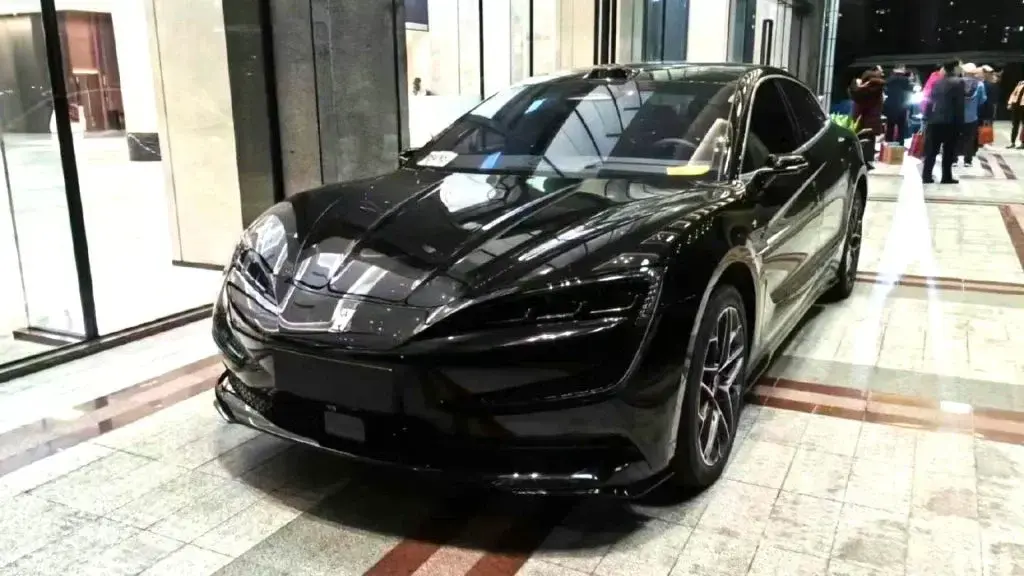
    Prolific Chinese EV manufacturer BYD is working on the YangWang U7, a sedan packing a 135.5kWh battery that delivers up to 800km of range. The new BYD EV will offer two CLTC cruising ranges – 720km and 800km. The new detail was culled from the latest catalog of NEVs exempted from vehicle purchase tax. The catalog was released by the Chinese Ministry of Industry and Information Technology. Recall that the company recently announced the YangWang U8.

    Preparing for Market Launch

    The U7 is being prepared for its market launch in China, having earlier applied for the sales license last month. BYD is the world’s biggest new energy vehicle maker and the YangWang brand is a luxury unit of the carmaker. YangWang currently sells the UB EREV offroader and the U7 will expand the YangWang portfolio. YangWang is also reportedly working on two other models apart from the U7. These are the U9 sports car and a fastback crossover whose name has not been revealed.

    Battery Details and Performance

    The Ministry’s catalog indicates that the YangWang U7 has an LFP battery manufactured by BYD’s FinDreams with a capacity of 135.5kWh. The battery weighs 903kg which translates to about a third of the electric sedan’s full weight of 3095kg. The substantial weight of the battery is due to its chemistry and configuration. There are several other batteries with higher capacity and less weight than the U7. The difference in the CLTC cruise ranges is due to the drag coefficient, as the curb weight and combined power output are similar. The U7 comes with four electric motors with a total power output of 960kW and a top speed of 270km/h.

    Design and Features

    The YangWang U7 will come with optional side-view cameras in place of traditional mirrors. It will also feature aerodynamic wheel covers and optional bumpers. With its full complement of aerodynamic elements in place, the U7 can achieve a drag coefficient of 0.195 Cd. It runs on the e4 platform (also called the YiSiFang) and implements the brand’s three-screen layout. The interior offers either four or five seats and the dimensions of the U7 are 5265 x 1998 x 1517 mm with a wheelbase of 3160mm.

    Pricing & Availability

    The YangWang U7 is expected to debut in China later this year but the release specifics and pricing details are lacking at this time.

    The Revealed BYD YangWang U7 EV Boasting an 800km Range and a Remarkable 135.5kWh Battery
    BYD YangWang U7
  • Rivian Sets March 7 as Official Reveal Date for New R2 Electric SUV

    Rivian Sets March 7 as Official Reveal Date for New R2 Electric SUV

    March 7 will mark a key day for Rivian, the electric vehicle innovator based out of California, as it pulls the curtain back on its latest endeavor, the R2 electric SUV. This reveal comes over two years after the debut of its initial offerings, the R1T pickup and the R1S SUV, setting the stage for Rivian’s ambition to solidify its reach in the electric vehicle sector.

    The R2 is rumoured to be priced lower than the R1T and R1S

    Rivian’s journey began with the R1T and R1S, vehicles that combined uniqueness with a fun driving experience but carried a price tag starting at over $73,000, making them a dream beyond the reach of many. In contrast, the R2 series aims to be a game-changer by targeting a more expansive audience with a more palatable price point envisioned between $45,000 and $50,000.

    The upcoming R2 takes aim at the electric SUV market

    The upcoming R2, a mid-size SUV or crossover, will look to challenge the likes of the Tesla Model Y, Hyundai Ioniq 5, and Kia EV6. Rivian’s strategy is clear: tap into America’s crossover craze to compete in a segment where the Model Y has seen significant success. The R2’s potential to disrupt this market will hinge on several factors, including its price, range, fast charging capabilities, and Rivian’s capacity to meet demand.

    Rivian’s commitment to accessibility and expansion

    Rivian’s commitment to making electric vehicles more accessible is evident in its plans to produce the R2 series at a new $5 billion facility in Georgia, supplementing its production capabilities beyond its original plant in Normal, Illinois. Moreover, embracing Tesla’s NACS charging connector for the R2 models underscores Rivian’s forward-thinking approach, ensuring compatibility with an extensive network of charging stations. Will the R2 carve out a niche in the competitive electric SUV market? Only time will tell, but the anticipation is undeniably high.

  • China’s Plug-in Sales Soar by 46% in 2023, Driving Electric Car Market Growth

    China’s Plug-in Sales Soar by 46% in 2023, Driving Electric Car Market Growth

    China has once again proven itself as the global powerhouse in the electric vehicle (EV) sector, with a whopping 8 million new plug-in electric cars hitting the roads in 2023. This achievement not only sets a new benchmark for the country but also underscores the rapidly growing appetite for greener transportation options among Chinese consumers.

    Electric cars now account for 37% of all car sales in China

    The latest data reveals a significant 46% surge in plug-in car sales compared to the previous year, highlighting the unrelenting momentum of China’s EV market. This surge is fueled by a remarkable blend of all-electric cars (BEVs) and plug-in hybrids (PHEVs), both registering record highs in sales. BEVs, leading the charge, witnessed about a 31% increase, while PHEVs, with their growing popularity due to larger battery capacities, saw an astounding 80% jump in registrations.

    BYD is the leading Chinese EV maker

    The electric revolution in China isn’t just about numbers; it’s a clear sign of the country’s commitment to reducing carbon emissions and making electric mobility mainstream. With electric cars now accounting for 37% of all new car sales in China, the country is setting the pace for the global transition to sustainable transportation.

    The dominance of domestic brands like BYD, which has captured a significant share of the market, alongside international players like Tesla, showcases a competitive and vibrant EV ecosystem. Models such as the BYD Song Plus and Tesla Model Y have become consumer favorites, topping the sales charts and driving the market forward.

    Continued growth and a greener future

    As we look ahead, expectations are high for continued growth, albeit at a more measured pace. The industry is optimistic about reaching a new milestone of 10 million sales in 2024, reflecting confidence in the enduring appeal and potential of electric vehicles. With each passing year, China is driving closer to a greener, more sustainable future on the roads, demonstrating what’s possible with innovation, investment, and a shared vision for a cleaner planet.

  • Nio’s exploration of range diversity in the face of arduous market conditions

    Nio’s exploration of range diversity in the face of arduous market conditions

    Nio Gears Up for Update, Introduces New Variants with Shorter Ranges

    Nio, the Chinese electric vehicle (EV) manufacturer, is preparing for a significant update next month. In an effort to tackle headwinds in the competitive market, the company is introducing new variants with shorter ranges for its existing models. This move comes after China’s Ministry of Industry and Information Technology (MIIT) included Nio’s eight on-sale models in a regulatory catalog, making them eligible for vehicle purchase tax reductions.

    New Options with Lower Ranges

    While the available battery packs for Nio’s models will maintain their capacities, ranging from 70-kWh to 150-kWh, the introduction of new options with significantly lower ranges is noteworthy. The standard range options will include the 70-kWh and 75-kWh packs, which utilize Li-ion ternary battery technology. On the other hand, the 100-kWh pack will cater to long-range capabilities. It’s important to note that the 150-kWh pack, a semi-solid-state battery, is not yet integrated into the battery swap system.

    Strategic Move to Lower Range and Price

    The adjustment in the minimum Chinese Long-Term Cruising (CLTC) range for various models indicates a strategic move by Nio to potentially lower both the range and price of their vehicles. There have been reports suggesting that Nio might offer battery packs with a 50-kWh capacity, referred to as “city-class range.” These packs would be derived from the standard range battery packs. This strategic decision aims to reduce the barrier to purchase, allowing for increased sales without causing significant dissatisfaction among existing customers.

    Challenges in the Chinese EV Market

    Nio faced a challenging January, with its stock declining by 38%. Despite this, the company managed to deliver over 10,000 vehicles, reflecting an 18.21% increase compared to the previous year. The decline in stock prices can be attributed to intense competition in the Chinese EV market, with larger players like Tesla and BYD initiating price wars that impact the pricing power of smaller players.

    Record Deliveries and Market Conditions

    In December 2023, Nio, along with XPeng and Li Auto, reported record deliveries of nearly 88,500 units. This marked a third consecutive monthly record. However, the positive delivery results did not prevent a decline in stock prices, as investors chose to sell the news. The current market conditions, characterized by a slowdown in China’s economic recovery, have affected consumer spending on expensive electric cars.

    Future Outlook for Nio

    Nio’s challenges and opportunities in the evolving Chinese EV market are crucial for its long-term success. The company has seen a positive trend in weekly registrations, indicating efforts to sell inventories before the anticipated business hiatus during the upcoming Lunar New Year holiday. This strategic move aims to capitalize on the current market conditions and maintain a steady sales momentum.

    Nio’s upcoming update, featuring new variants with shorter ranges, showcases the company’s determination to adapt to the competitive landscape and cater to a wider range of customers. By introducing more affordable options, Nio aims to attract a larger consumer base and solidify its position in the Chinese EV market.

  • Appotronics strengthens international footprint in electric vehicle sector, partnering with BYD and Huawei

    Appotronics strengthens international footprint in electric vehicle sector, partnering with BYD and Huawei

    Shenzhen-based laser display technology innovator, Appotronics, is set to make a significant impact in the electric vehicle (EV) industry through its strategic partnerships with BYD, BMW, and Huawei Technologies. As a leading player in the market, Appotronics is expanding its production capabilities to meet the growing demand for intelligent EVs.

    Strategic Partnerships

    Appotronics has formed key alliances with BYD, BMW, and Huawei Technologies, which will help drive its success in the EV market. These partnerships bring together Appotronics’ laser display technology expertise with the automotive and technology prowess of these industry giants.

    Expanding Production Capacities

    To meet the increasing demand for intelligent EVs, Appotronics is strategically expanding its production capabilities. This move will enable the company to manufacture a larger volume of EV components and contribute to the growth of the EV industry.

    Appotronics on China’s Nasdaq-style Star Market

    Appotronics is listed on China’s Nasdaq-style Star Market, which provides a platform for high-growth technology companies. This listing further enhances Appotronics’ credibility and visibility in the market, attracting more investors and opportunities for growth.

    Overall, Appotronics’ strategic partnerships and expansion plans position the company as a key player in the EV industry. With its innovative laser display technology and strong market presence, Appotronics is well-equipped to contribute to the advancement of intelligent EVs.

  • Tesla Resolves Waste Management Issues with $1.5 Million Settlement

    Tesla Resolves Waste Management Issues with $1.5 Million Settlement

    Tesla has agreed to pay $1.5 million to settle claims that it didn’t handle hazardous waste correctly at its California sites, including the main Fremont factory. This case sheds light on the environmental challenges faced by companies aiming to be eco-friendly.

    Tesla plans to check its waste more carefully in the future

    The legal action brought by 25 counties in California accused Tesla of not following rules for hazardous waste, like sending materials that could harm the environment, such as old batteries and paint, to places that weren’t set up to deal with them properly. This situation has sparked a conversation about how companies that make technology to help the planet must also make sure their own operations don’t harm it.

    Tesla hires outside company to monitor waste management practices

    Tesla has decided to make changes without admitting it did anything wrong. It’s planning to check its waste more carefully and has hired an outside company to watch over its waste management practices for the next five years. This move shows Tesla’s willingness to improve how it deals with environmental issues.

    Environmental challenges in the pursuit of green technologies

    This isn’t the first time Tesla has been in hot water over environmental matters in California. In 2021, it had to settle for $1 million because of issues with air pollution at its Fremont paint shop. These incidents highlight the difficulties in making and maintaining green technologies without causing other environmental problems. A statement from San Francisco’s District Attorney pointed out that even though electric cars are better for the planet, making and taking care of them still produces a lot of waste that needs to be handled properly.

  • Introducing BYD Seal 06: An Innovative Addition to the Plug-In Hybrid Car Range

    Introducing BYD Seal 06: An Innovative Addition to the Plug-In Hybrid Car Range

    The Ministry of Industry and Information Technology has unveiled BYD’s latest addition to its lineup through the “Announcement of Road Motor Vehicle Manufacturers and Products” (Batch 380). Alongside the previously reported Qin L, BYD introduces the Seal 06, a new plug-in hybrid model. Positioned as a vehicle under the existing Seal EV and Seal DM-i models, the Seal 06 stands out with a noticeably shorter body, suggesting a lower positioning in BYD’s product range.

    The Seal 06 is shorter than the existing Seal EV, Seal DM-i models

    The Seal 06, a plug-in hybrid car, exhibits dimensions of 4830mm in length, 1875mm in width, and 1495mm in height, with a wheelbase of 2790mm. Comparing these figures with the previously reported Qin L (4830/1900/1495mm, wheelbase 2790mm) indicates a potential interaction between the two models, suggesting a “sister model” relationship, similar to the dynamic between Qin PLUS and Destroyer 05 in BYD’s lineup.

    Continuing BYD’s commitment to “marine aesthetics” in design

    The Seal 06 boasts soft and smooth lines, continuing BYD’s commitment to “marine aesthetics” in design. The front grille, resembling a big grinning mouth, adds a unique touch to the vehicle’s appearance. Petal-style wheels contribute to the overall aesthetics, and buyers have the option to include a sunroof, panoramic sunroof, or small sunroof, providing customization choices for a personalized driving experience.

    Equipped with a 1498ml engine delivering 74kW of power

    Under the hood, the Seal 06 is equipped with a 1498ml engine delivering 74kW of power, enabling a top speed of 180km/h. This car is anticipated to be part of BYD’s fifth-generation DM-i hybrid system, sharing the core technology with the Qin L but differentiating itself through distinctive exterior and interior design elements.

    A notewo#rthy addition catering to environmentally conscious consumers

    As automakers increasingly embrace hybrid technology, BYD’s Seal 06 enters the scene as a noteworthy addition, catering to consumers looking for a more environmentally friendly yet versatile driving experience. The strategic placement of the Seal 06 within BYD’s product hierarchy suggests a commitment to providing a diverse range of options for consumers seeking plug-in hybrid vehicles.

  • In 2026, the BMW iX3 Electric SUV will incorporate advanced battery technology and boast an extended range of 800 kilometers.

    In 2026, the BMW iX3 Electric SUV will incorporate advanced battery technology and boast an extended range of 800 kilometers.

    BMW’s highly anticipated iX3 is set to be the first model in the Neue Klasse series, which will be at the forefront of BMW’s lineup for the next decade. The success of the iX3 is crucial to BMW’s ambitious plans for electrification. Production is scheduled to begin in 18 months, with the 2026 iX3 joining BMW’s product lineup alongside updated versions of its current fuel-powered X3 models. This marks a significant milestone in BMW’s journey towards electric vehicles (EVs).

    Spy Shots Reveal BMW iX3 Prototype

    New spy shots have recently emerged, showcasing the BMW iX3 prototype. The design of the iX3 incorporates traditional BMW elements, such as the iconic Hofmeister corner on the rear window. It also features design cues inspired by BMW’s latest concept cars, such as the Vision Circular and Vision Neue Klasse. Notably, the wide, closed front end of the iX3 showcases the influence of these concept cars.

    A Glimpse into the Interior

    Interior spy photos of the iX3 suggest a departure from the traditional instrument display found in BMW’s current models. Instead, the iX3 is expected to feature a head-up display projected onto the front windshield, resembling the futuristic design of the Vision Neue Klasse. This innovative approach to the instrument display adds to the overall modern and forward-thinking interior of the iX3.

    Check out the spy shots of the BMW iX3 prototype below:

  • Electric Vehicle Innovation Ignites with Opening of FAW-BYD Battery Plant

    Electric Vehicle Innovation Ignites with Opening of FAW-BYD Battery Plant

    A groundbreaking venture has made its mark in Changchun, Jilin Province, as the first phase of the FAW Fudi New Energy Power Battery Project rolls into action. This project, born from the collaboration between China FAW Group Co., Ltd. and BYD Co., Ltd., signifies a bold step into the future of new energy vehicles, setting the stage in the Changchun Automobile Economic and Technological Development Zone. What makes this venture stand out is not just its location—it’s the pioneering spirit that underpins the first strategic base for new energy vehicle power batteries in Northeast China.

    First Phase of FAW Fudi New Energy Power Battery Project

    The project has a huge budget of 18 billion yuan

    Established in early 2022, FAW Fudi New Energy Technology Co., Ltd. sprawls over 370,000 square meters, boasting a construction space that nearly matches its vast area. With an ambitious budget of 18 billion yuan, the project’s sights are set high, aiming for a staggering 45GWh production capacity across three phases. Each phase is designed to contribute 15GWh, powering the drive towards innovation and sustainability.

    BYD’s Cutting-Edge Blade Battery Technology

    The initial products emerging from this powerhouse are set to electrify the market, equipped with BYD’s cutting-edge blade battery technology. This innovation promises a triple threat of safety, endurance, and longevity, tackling the common challenges faced by power batteries head-on. The design philosophy here is clear: efficiency and integration without compromising on module flexibility.

    Impressive Sales Figures and Future Products

    January’s figures speak volumes about the momentum behind this initiative, with FAW Hongqi’s sales skyrocketing by 82.9% year-on-year. The spotlight shines brightly on Hongqi’s new electric jewels, the EH7 sedan, and EHS7 SUV, both poised to redefine medium and large electric vehicles. Despite sourcing batteries from CATL and FAW for these models, the venture’s future products promise to bring something fresh to the table.

  • In January 2024, NIO achieves milestone deliveries and expands urban road coverage.

    In January 2024, NIO achieves milestone deliveries and expands urban road coverage.

    NIO Doubles Coverage of Advanced Driver Assistance System on Urban Roads in China

    Chinese electric vehicle (EV) manufacturer NIO has achieved a significant milestone in its Advanced Driver Assistance System (ADAS) capabilities on urban roads in China. NIO's Navigate on Pilot Plus (NOP+) urban road coverage has doubled, reaching an impressive 651,640 kilometers by the end of January. This marks a remarkable growth of 103.75% from the previous month.

    Impressive Coverage Expansion

    The NOP+ coverage expansion is particularly noteworthy, with a gain of 331,819 kilometers achieved in January alone. When considering highways and urban expressways, the total coverage extends to over 1 million kilometers. NIO has achieved impressive city-specific coverage as well, with NOP+ covering 99.2% of Shanghai's main roads and 93% of the entire road network. Other cities with high NIO vehicle ownership, including Beijing, Zhengzhou, Chengdu, and Suzhou, showcase ultra-high-density coverage.

    Rapid Geographic Expansion

    NIO's NOP+ has significantly expanded its geographic reach, covering a greater number of cities. In just one month, the number of cities covered by NOP+ increased from 208 to an impressive 606 by the end of January. Notably, NOP+ now encompasses all cities in China's 34 first-tier administrative regions, excluding Hong Kong, Macau, and Taiwan.

    Vehicle Deliveries and Market Performance

    In January 2024, NIO delivered 10,055 electric vehicles, marking an 18.2% increase compared to the previous year. However, when compared month-on-month, there was a 44% decline, which aligns with market expectations. The cumulative deliveries reached an impressive 459,649 as of January 31, 2024. It is important to note that the impact of the Chinese New Year falling on February 10 created a temporary anomaly in year-on-year comparisons.

    Breaking down the deliveries, 6,307 SUVs and 3,748 sedans were included in January's figures. The Nio ES6 SUV contributed 40% of sales, while the ET5 and its station wagon variant, ET5 Touring, accounted for nearly 30% of sales. NIO's battery swap alliance continues to expand, with notable members including Geely, Changan, JAC, and Chery.

    Future Plans

    Looking ahead, NIO has revealed its plans for 2024. While no new model launches are expected, annual updates for the existing lineup are anticipated. The highly anticipated executive sedan ET9 is set to launch in early 2025. Additionally, the entry-level Alps sub-brand is expected to be unveiled in March or April 2024, with deliveries scheduled for later in the year. NIO also aims to launch its second sub-brand, Firefly, focusing on small electric cars in 2025.

    Market Response

    NIO's expanding sales team and the anticipated launch of the Alps sub-brand are expected to stimulate growth for the company. The pre-market trading reflects the positive market response, with NIO shares up by 2.67%.

    Source: nio.com