Category: Audio

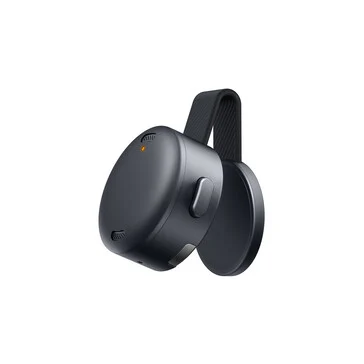
  • DJI Mic 3 Pro Expected to Launch in November 2023

    DJI Mic 3 Pro Expected to Launch in November 2023

    Key Takeaways

    1. DJI is set to launch a Pro version of its Mic 3 in November 2025, just three months after the original release.
    2. Expected features for the Pro version may include lavalier inputs, safety audio channel, better gain, and improved weatherproofing.
    3. The Mic 3 Pro will compete with the Rode Wireless Pro series, targeting professional users while maintaining the Mic 3’s consumer market.
    4. The anticipated price range for the Mic 3 Pro is between $350 and $450, positioning it above the standard Mic 3 but below the Rode Wireless Pro.
    5. An official announcement from DJI is expected next month, likely to coincide with holiday sales and professional purchasing trends.


    DJI is set to unveil a Pro version of its Mic 3 just three months after the original was launched in August 2025. Many anticipate that an official announcement will occur next month, possibly aimed at Q4 business purchases and holiday sales. As of now, DJI has not disclosed any information regarding the new model.

    Expected Features

    Possible improvements for the Pro version may include lavalier inputs, a safety audio channel, enhanced gain, a better signal-to-noise ratio, advanced timecode, expanded storage, XLR connectivity, and superior weatherproofing. These potential features are based on user feedback and the competitive standards set by products like the Rode Wireless Pro Gen 3.

    Competitive Positioning

    This upcoming version is expected to directly compete with the Rode Wireless Pro series, aiming to fill the space between the consumer Mic 3 and the requirements of professionals. It provides users with a chance to upgrade within the DJI ecosystem, allowing for more choices without negatively impacting Mic 3 sales. For those seeking advanced functionalities, the Mic 3 Pro is presumably DJI’s response to the increasing appeal of the Rode Wireless Pro Gen 3 among content creators.

    Pricing Outlook

    The pricing for the Mic 3 Pro has yet to be established. With the existing Mic 3 priced at $219 for a single transmitter/receiver and $329 for the complete kit, the Pro model is anticipated to be priced between $350 and $450 to stay competitive with the $400 Rode Wireless Pro. This pricing approach places the Pro above the standard Mic 3, preventing overlap in the product lineup.

    If DJI reveals the new model in November 2025, it would align nicely with professional purchasing patterns and holiday sales, likely generating increased interest. Historically, DJI has released teasers about a week prior to a launch, so it’s wise to keep an eye on their official channels for updates. Remember, none of this is confirmed yet.

    Source:
    Link


  • SoundUp Upgrades Old Speakers with Bluetooth, 40-Hour Battery, USB-C

    SoundUp Upgrades Old Speakers with Bluetooth, 40-Hour Battery, USB-C

    Key Takeaways

    1. SoundUp is a mono amplifier with 100 watts of power, suitable for most analog speakers and operates at 3 to 8 ohms.
    2. It features an internal battery lasting up to 40 hours, allowing for portable use without a power source.
    3. The device charges via USB-C and can also charge a smartphone from its battery.
    4. SoundUp supports music playback through AUX or Bluetooth 5.1, but lacks WiFi and Apple AirPlay.
    5. Currently crowdfunding on Kickstarter, a single unit costs around €135, and two units for stereo sound cost €229, with delivery expected in March 2026.


    SoundUp is a small mono amplifier that packs a punch with 100 watts of power at 3 to 8 ohms, making it suitable for most analog speakers. Unlike pricier alternatives such as the Bluesound Powernode Edge, which starts at $749 on Amazon, SoundUp lacks features like WiFi, Apple AirPlay, or stereo output. On the bright side, you can connect two SoundUp units together for stereo sound, and it utilizes a Class D amplifier for efficient performance.

    Key Features

    The standout characteristic of SoundUp is its internal battery, which can last up to 40 hours. This allows users to enjoy analog speakers without needing to be near a power source. The device charges through USB-C, and there’s an extra USB-C port to charge a smartphone using the amplifier’s battery when necessary. Additionally, music can be played through an AUX cable or wirelessly using Bluetooth 5.1. The dimensions of SoundUp are 5.1 x 4.3 x 3 inches, and it weighs approximately 2.2 lbs.

    Crowdfunding Details

    Right now, SoundUp is in the crowdfunding stage on Kickstarter. The price for a single amplifier is about €135, but if you want to set up stereo speakers, you’ll need two units, which will cost €229. Keep in mind that shipping and import taxes are not included in these amounts. The anticipated delivery date is set for March 2026. This marks the 11th Kickstarter campaign from LastObject, a company based in Denmark, but as with any Kickstarter project, there is always a chance of delays or quality concerns.

    Source:
    Link


  • Corsair Launches Void v2 Max Wireless Headsets for Gaming

    Corsair Launches Void v2 Max Wireless Headsets for Gaming

    Key Takeaways

    1. Dolby Atmos Spatial Audio: Both headsets feature Dolby Atmos for an immersive audio experience, priced at $149.99.

    2. Comfort Features: Equipped with 50 mm drivers and memory foam ear pads covered in microfiber for a comfortable fit.

    3. Advanced Microphone: Includes a flip-to-mute boom microphone with clear audio capture and noise reduction capabilities using Nvidia Broadcast.

    4. Versatile Connectivity: Compatible with multiple platforms (PC, Mac, PS4/5, Xbox) and supports simultaneous 2.4 GHz and Bluetooth connections.

    5. Long Battery Life: Offers up to 70 hours on 2.4 GHz and up to 130 hours on Bluetooth, with a quick charge feature providing 6 extra hours in just 15 minutes.


    Corsair has unveiled the Corsair Void V2 Max Wireless and the Corsair Void V2 Max Wireless for Xbox gaming headsets, both featuring Dolby Atmos Spatial Audio, priced at an MSRP of $149.99.

    Features and Comfort

    These headsets are equipped with 50 mm drivers and offer a frequency response range from 20 Hz to 20 kHz. They also come with memory foam ear pads enveloped in microfiber fabric, ensuring a comfy fit. Users on computer can download the Soundworks SoundID app to adjust the audio settings to their liking or tweak the EQ and lighting through the Corsair iCue app.

    Microphone and Noise Reduction

    They include a flip-to-mute boom microphone which has a frequency response from 100 Hz to 8 kHz, capturing clear voice audio. Gamers using compatible Nvidia RTX graphics cards can activate Nvidia Broadcast to minimize background noise with advanced AI technology.

    Connectivity and Battery Life

    The Void V2 Max Wireless headset is compatible with PC, Mac, PS4/5, and smartphones, while the Void V2 Max Wireless for Xbox is designed for PC, PS4/5, Xbox One/X/S, and smartphones. Both models allow for simultaneous 2.4 GHz and Bluetooth wireless connections, and a 2.4 GHz USB dongle is provided for computer use.

    According to Corsair, the headsets can last up to 70 hours when using 2.4 GHz connections, and up to 130 hours on Bluetooth. A quick charge of just 15 minutes can add an extra 6 hours of usage. The Void V2 Max Wireless headsets have a weight of 0.303 kg (0.67 lbs.).

    Source:
    Link


  • Sony WF-1000XM6 Leaked Ahead of Global Release

    Sony WF-1000XM6 Leaked Ahead of Global Release

    Key Takeaways

    1. Sony has released a major firmware update (version 6.0.0) for the WF-1000XM5, possibly the last before the WF-1000XM6 launch.
    2. The WH-1000XM6 is currently priced at $448 on Amazon and received a similar firmware update.
    3. Certification hints suggest that the WF-1000XM6 may not be released until next year, despite early FCC filings.
    4. The WF-1000XM6 is expected to include a MediaTek chipset, potentially the MT2885, which may not support Qualcomm aptX codecs.
    5. It remains uncertain whether the WF-1000XM6 will be available before the holiday shopping season.


    Sony has rolled out a significant firmware update for the WF-1000XM5. We have shared full details in a separate piece. This update coincides with a similar one for the WH-1000XM6, which is currently priced at $448 on Amazon. Version 6.0.0 for Sony’s premium wireless earbuds might be the final update before the transition to the WF-1000XM6 model.

    Anticipation for the WF-1000XM6

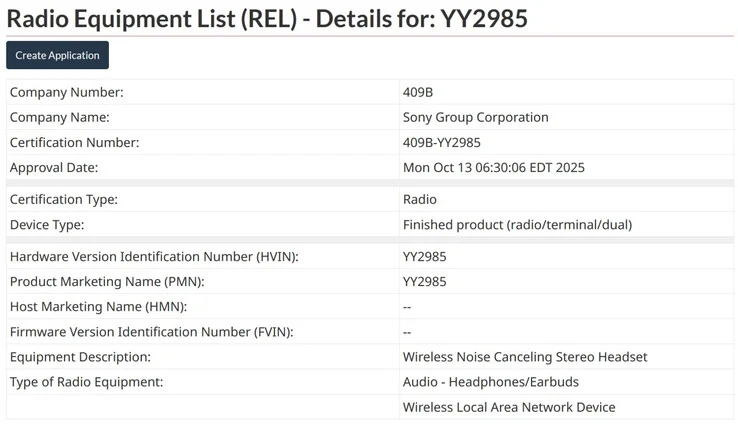
    Recent certification hints that the WF-1000XM5’s replacement may not arrive until next year begins. The WF-1000XM6 has recently appeared in filings with the Federal Communications Commission (FCC), earlier than what The Walkman Blog had predicted. However, the design details of Sony’s upcoming wireless earbuds are still unknown at this time.

    Specifications and Features

    According to the FCC, the WF-1000XM6 is equipped with antennas made by Goertek and a battery rated at 3.85 V. The initial documents from the regulatory agency also indicate that a MediaTek chipset is part of the package. The Walkman Blog has speculated that this chipset could be the MT2885, which is also found in Sony’s LinkBuds. If true, the use of a MediaTek chipset means that the WF-1000XM6 likely won’t support Qualcomm aptX codecs. As of now, it’s uncertain if Sony will manage to release the WF-1000XM6 before the holiday shopping rush.

    FCC via The Walkman Blog

    Source:
    Link


  • iFixit Rates AirPods Pro 3 as Irrepairable with 0/10 Score

    iFixit Rates AirPods Pro 3 as Irrepairable with 0/10 Score

    Key Takeaways

    1. Repairability Score: The AirPods Pro 3 received a score of 0 out of 10 for repairability from iFixit, indicating severe challenges in fixing them.

    2. Battery Replacement Difficulty: The process of removing and replacing the battery is extremely challenging, often resulting in the destruction of the earbuds during attempts.

    3. Charging Case Issues: The charging case also faced irreparability, primarily due to Apple’s use of glue to secure the batteries, making them difficult to access.

    4. Consistent Trend: This poor repairability rating is consistent across all of Apple’s wireless earbuds, with previous models also receiving a 0/10 score.

    5. Limited Repair Options: Once the batteries fail, users have few choices other than to discard the device and buy a new one, as repairs are risky and complicated.


    The new AirPods Pro 3 might have great sound quality, but they miss the mark in a significant aspect for users.

    Repairability Issues

    This is the view of well-known repair site iFixit, which gave Apple’s new TWS earbuds a score of 0 out of 10 for repairability. The main issue is the extremely challenging process of removing and replacing the battery. During their last teardown of the AirPods Pro 3, iFixit completely destroyed the earbuds while trying to access the battery, causing major damage to the device.

    Charging Case Challenges

    The charging case didn’t perform any better, facing a similar fate that made it irreparable. The main reason for the difficulty in replacing the battery is Apple’s method of securing the batteries in both the earbuds and the case with glue, which makes removal nearly impossible.

    As noted by iFixit, this trend has been consistent with Apple’s wireless earbuds. The original AirPods received a 0/10 rating as well, along with every other base model or Pro version since then. Consequently, once the batteries in the earbuds or the charging case fail, consumers are left with few options other than to throw them away and purchase a new pair.

    Not Completely Unrepairable

    It should be mentioned that while the AirPods Pro 3 are not entirely beyond repair, it’s akin to saying you’re technically never safe from a lightning strike; the repair process is so complicated that even skilled technicians risk causing permanent damage during a teardown (which is why they got the 0/10 score).

    Source:
    Link


  • Google Home Speaker Launches with Gemini: Subscription Needed for Full Features

    Google Home Speaker Launches with Gemini: Subscription Needed for Full Features

    Key Takeaways

    1. The Google Home Speaker features a new design with a nearly spherical shape, 39% recycled materials, and comes in multiple colors.
    2. It provides 360° audio and can be paired with other speakers for enhanced sound experiences; compatibility with older Home and Nest speakers is also included.
    3. The new AI assistant, Gemini, allows for more natural conversations, enabling users to interrupt the speaker and ask follow-up questions without repeating the wake word.
    4. Subscription plans for advanced features include a standard plan at $10/month and an advanced plan at $40/month, offering various home automation and sound detection capabilities.
    5. The Google Home Speaker is set to launch next spring at $99.99, with a complimentary six-month subscription to Google Home Standard included.


    After a series of leaks, Google has officially unveiled its latest smart speaker, named the Google Home Speaker. This speaker is the first to come equipped with Gemini for Home, the new AI assistant that takes over from the Google Assistant.

    Design and Features

    The design of the Google Home Speaker is a major departure from Google’s earlier smart speakers. It features a nearly spherical shape with a flat top and bottom. The wired speaker includes a ring light at the base that lights up when it is listening or speaking. Additionally, there’s a microphone mute button located at the bottom.

    Google states that the speaker is constructed from 39% recycled materials and is covered in a specially designed yarn. This yarn is made through a unique 3D knitting technique that greatly minimizes fabric waste. The Google Home Speaker comes in colors like Jade, Berry, Porcelain, and Hazel.

    Audio and Compatibility

    Thanks to its shape, the speaker provides 360° audio, and Google mentions that users can connect two speakers for a stereo sound experience. Furthermore, it can be paired with the Google Home Streamer for a cinema-like experience featuring spatial surround-sound audio. It’s also compatible with older Home and Nest speakers.

    Similar to past Google smart speakers, the Google Home Speaker can answer questions, stream audiobooks, playlists, and podcasts, along with broadcasting messages throughout the home. However, to access more advanced features like Gemini Live, a Google Home Premium subscription (either standard or advanced) is required.

    Subscription Plans

    Gemini Live allows users to engage in conversations with the Google Home Speaker as if chatting with a friend. Like previous models, the wake word is ‘Hey Google’, but users don’t need to repeat it for every command or inquiry. It’s even possible to interrupt the speaker while it’s talking, change the subject, and ask follow-up questions.

    The standard subscription costs $10 a month or $100 yearly and includes home automation and sound detection features, such as alerts for smoke/carbon monoxide or glass breaking, along with Gemini Live. Meanwhile, the advanced subscription priced at $40 a month or $200 annually, adds the functionality for daily summaries of activity when not at home and the ability to search camera history just by asking the speaker.

    The Google Home Speaker is set to launch next spring with a price tag of $99.99 and will be available in various regions including the US, Canada, the UK, Ireland, France, Germany, Austria, Japan, Australia, and New Zealand. It will also include a complimentary six-month subscription to Google Home Standard.

    Source:
    Link


  • Spotify Lossless on Windows: Not Truly Lossless, Fix Coming Soon

    Spotify Lossless on Windows: Not Truly Lossless, Fix Coming Soon

    Key Takeaways

    1. Spotify Lossless audio is not truly lossless, as revealed by The Headphone Show’s investigation.
    2. Tidal and Qobuz provide bit-perfect output, while Spotify fails to deliver the same unaltered file quality.
    3. Spotify’s audio quality may be compromised on Windows due to lack of direct DAC access, routing audio through the operating system.
    4. Spotify is developing support for WASAPI Exclusive Mode playback to improve audio output quality.
    5. Until improvements are made, users can use third-party tools like FlexASIO and VB-CABLE as temporary solutions.


    Spotify Lossless has been finally revealed after many years of delays, rumors, and speculation. However, a YouTuber known as The Headphone Show conducted a thorough investigation into the service and discovered that it is not as lossless as it claims to be. The testing involved a FLAC track sourced from a credible platform, which was compared against Tidal, Qobuz, and Spotify’s lossless audio.

    Testing Equipment

    On the technical side, the setup featured an APx555B Series Audio Analyser to evaluate the inputs, which were connected through a Holo Audio Red DAC and analyzed for accuracy using DeltaWave. Tidal and Qobuz delivered bit-perfect output, meaning they streamed the lossless file exactly as it is, without compression. In contrast, Spotify Lossless failed to provide the same exact file in its unaltered state.

    Potential Issues with Spotify

    However, it’s possible that the issue isn’t solely Spotify’s responsibility. On Windows systems, Spotify lacks a direct link to a DAC, resulting in all audio passing through the operating system, which might lead to loss of signal quality. Unlike Spotify, Tidal and Qobuz can send audio straight to a DAC, but Spotify currently does not have this capability, at least officially.

    In a previous Reddit AMA, a manager from the Spotify community mentioned that they are developing support for WASAPI (Windows Audio Session API) Exclusive Mode playback. This feature would allow apps like Spotify to have direct access to audio output devices, such as a DAC.

    Future Improvements

    While there’s no specific timeline for when this feature will become available, it’s reassuring to know that work is underway. One can only wish it arrives more quickly than lossless audio itself. For the time being, third-party tools like FlexASIO and VB-CABLE Virtual Audio Device can serve as temporary solutions until Spotify improves its capabilities.

    Source:
    Link


  • SteelSeries Arctis Nova Elite: First Hi-Res Wireless Gaming Headset

    SteelSeries Arctis Nova Elite: First Hi-Res Wireless Gaming Headset

    Key Takeaways

    1. The Arctis Nova Elite is the first-ever Hi-Res wireless audio certified gaming headset, enhancing audio quality for gamers.
    2. It features a two-part design with 40 mm Carbon Fiber drivers and a wide frequency response of 10 Hz to 40,000 Hz.
    3. The headset offers improved battery life of 30 hours per battery, with fast charging capabilities.
    4. Connectivity options include 2.4 GHz and Bluetooth 5.3, allowing simultaneous connections to four devices.
    5. It includes advanced features like active noise cancellation, a retractable AI noise-rejecting microphone, and is available in two color schemes for $600.


    Building on the features and adaptability of the Arctis Nova Pro Wireless gaming headset, SteelSeries has introduced what it claims to be the first-ever Hi-Res wireless audio certified gaming headset, the Arctis Nova Elite. This new model also includes enhancements like the ability to connect simultaneously to PC, PlayStation, and Xbox through the GameHub dock.

    Design and Specifications

    The Nova Elite showcases a two-part design for its 40 mm Carbon Fiber drivers, boasting a frequency response that spans from 10 Hz to 40,000 Hz. This range surpasses that of typical headsets, although it matches the Nova Pro Wireless when used in wired mode. The Nova Elite features an impedance of 38 Ohm and a sensitivity of 101 dBSPL, which is slightly greater than that of the Nova Pro Wireless. Additionally, it has a transparency mode and active noise cancelation, claiming to reduce background noise by 89%.

    Wireless Certification and Battery Life

    SteelSeries asserts that the Nova Elite is the first gaming headset to receive Hi-Res Wireless certification. While the Nova Pro Wireless also supported Hi-Res audio, it did not have the wireless certification.

    The battery life has seen enhancements too, boasting an advertised 30 hours for one battery. It keeps the hot swap capability and includes a total of two batteries. With USB fast charging, you can achieve four hours of use with just a 15-minute charge. Each battery has a capacity of 700 mAh and takes approximately three hours to charge fully.

    Connectivity Options

    Regarding connectivity options, it offers 2.4 GHz and Bluetooth 5.3, supporting LC3, SBC, and LC3+ codecs. The Nova Elite can connect to four devices at once via two USB ports, Bluetooth, and a 3.5 mm audio jack. Alternatively, it can connect using three USB ports and Bluetooth. The microphone is a ClearCast Gen 2.X retractable boom mic that features AI noise rejection.

    The Nova Elite is available in Obsidian and a Sage & Gold color scheme. The Obsidian version is entirely black, including the GameHub, while the Sage & Gold option is predominantly Sage with gold accents. It carries a price tag of $600 and can be purchased through the official website, Amazon, and various global retailers.

    Conclusion

    SteelSeries’ new flagship Arctis Nova Elite provides audiophile-quality sound for wireless gaming headsets. It represents a culmination of detailed design, engineering, and craftsmanship aimed at delivering the first Hi-Res Wireless Certified immersive audio experience across platforms like PlayStation, Xbox, Nintendo, and PC, as well as for music, entertainment, and work.

    Custom Carbon Fiber Drivers, OmniPlay functionality allowing connection and mixing of up to four sources on PC, console, and Bluetooth simultaneously, along with AI noise-rejecting microphones, combine to create an exceptional gaming headset. SteelSeries has indeed carved out a new “Hi-Res Wireless” category within the gaming headset market.

    Source:
    Link


  • Amazon Launches Echo Dot Max and Echo Studio with A3Z Processor

    Amazon Launches Echo Dot Max and Echo Studio with A3Z Processor

    Key Takeaways

    1. The new Echo Dot features a round design with three front buttons for easy microphone muting and volume control, along with an LED ring for visual cues.
    2. The updated Echo Dot offers improved sound quality, with three times more powerful bass compared to the previous model.
    3. The Echo Dot Max, available for $99.99, enhances Alexa’s capabilities for subscribers and can manage multiple smart home devices more effectively.
    4. The Echo Studio has been upgraded for the first time in six years, providing superior sound quality with three full-range drivers and Dolby Atmos support.
    5. Both the Echo Dot Max and Echo Studio will be available for pre-order soon, with shipping starting on October 29.


    Amazon has revealed the new version of the Echo Dot, following the 2022 model. This updated speaker now features a round design with three buttons on the front, allowing users to mute the microphones and adjust the volume easily. An LED ring surrounding these buttons lights up to give users visual cues when the voice assistant is active.

    Enhanced Audio Experience

    Even though the new device comes at a higher price than the previous one, it promises a noticeable improvement in sound quality. Amazon states that it has three times more powerful bass than before. Those who subscribe to Amazon Alexa Plus will benefit from the enhanced Alexa AI voice assistant through the Echo Dot Max. This version can engage in more natural conversations and manage multiple smart home gadgets simultaneously.

    A New Era for Echo Studio

    After six years, the Echo Studio is also receiving an upgrade, which resembles a larger Echo Dot Max. Amazon claims this new Echo Studio offers the finest sound quality of any Echo speaker so far, thanks to three full-range drivers and a specially designed woofer. It also supports surround sound through Dolby Atmos technology. The new model is powered by the A3Z Pro AI accelerator, created by Amazon itself. This chip is intended to improve the recognition of Alexa voice commands and speed up processing.

    The Amazon Echo Dot Max will be available for pre-order soon from Amazon at a price of $99.99, while the Echo Studio will be up for pre-order at $219.99. Both of these speakers are anticipated to start shipping on October 29.


  • OnePlus Buds 3V: Affordable Wireless Earbuds with 54-Hour Battery

    OnePlus Buds 3V: Affordable Wireless Earbuds with 54-Hour Battery

    Key Takeaways

    1. OnePlus launched the Buds 3V in China, rebranding the Buds 3R from India with identical specifications, including 54 hours of battery life.
    2. The earbuds offer up to 12 hours of playback time at 50% volume and feature AI Call Noise Cancellation, despite lacking active noise cancellation.
    3. Equipped with 12.4 mm “tatanized drivers,” the Buds 3V provide balanced sound quality and a gaming mode with low latency of 47 ms.
    4. Additional features include 3D Spatial Audio, Bluetooth 5.4 for stable connectivity, IP55 dust and water resistance, and responsive touch controls.
    5. Priced at CNY 119 (approximately $28) in China, the Buds 3V are more expensive than their Indian counterpart (₹1,599), with no current plans for global availability.


    OnePlus has launched a new set of wireless earbuds in China, called the Buds 3V. These earbuds are basically a rebranding of the Buds 3R, which the company unveiled in India at the end of August 2025. Both models share the same specifications, including a remarkable battery life rating of 54 hours.

    Playback and Features

    When used alone, these earbuds can provide up to 12 hours of playback time with the volume set at 50%. Although they lack active noise cancellation, OnePlus claims that their new budget-friendly wireless earbuds include a dual-microphone setup along with AI Call Noise Cancellation technology.

    Sound Quality and Modes

    Regarding sound quality, the OnePlus Buds 3V come equipped with 12.4 mm “tatanized drivers.” These drivers are said to produce balanced bass, clear details, and high sound clarity. There’s also a special gaming mode that promises accurate audio and a super-low latency transmission of 47 ms.

    Additional Features and Pricing

    The company emphasizes the inclusion of 3D Spatial Audio, which is designed to provide a 360-degree sound experience. Furthermore, OnePlus mentions that these wireless earbuds ensure stable and dependable connectivity thanks to Bluetooth 5.4.

    Other notable features include an IP55 rating for dust and water resistance, Aqua Touch technology for responsive touch controls, Google Fast Pair support, and multipoint connectivity. In China, the OnePlus Buds 3V are priced at CNY 119, which is approximately $28, making them a bit pricier in the Chinese market compared to India (where they cost curr. ₹1,599 on Amazon.in). As of now, OnePlus has not announced any plans to make these budget wireless earbuds available globally.

    Source:
    Link