Category: Audio

  • DIY Engineer 3D-Prints Open-Source Musical Instrument

    DIY Engineer 3D-Prints Open-Source Musical Instrument

    Key Takeaways

    1. Brady Y. Lin has created a new open-source instrument called Stradex, building on his previous work with the 8-bit Arduino Violin.
    2. The instrument uses a Raspberry Pi Pico 2 microcontroller and a 16-bit ADS1115 ADC for analog input sampling.
    3. It features a linear potentiometer with over 32,000 discrete values for pitch control and four pressure-sensitive buttons for volume modulation.
    4. The Stradex instrument operates on MIDI, offering a wide range of sound options.
    5. All parts were 3D-printed at home, and resources for the project are available on his GitHub page.


    Brady Y. Lin, a music YouTuber, has revealed his latest creation to the public, and it’s open source this time. This new instrument is a step up from the “8-bit Arduino Violin” he crafted four years ago when he had less experience with electronics.

    Technical Details

    For this new instrument, he utilized the Raspberry Pi Pico 2 as the preferred microcontroller. Alongside it, he incorporated a 16-bit ADS1115 ADC for sampling the analog inputs. The neck of the instrument features a linear potentiometer with over 32,000 discrete values, enabling a seamless pitch control.

    Unique Features

    Additionally, he included four pressure-sensitive buttons, corresponding to the four strings of a violin, on the bout. This design allows him to modulate the volume by simply adjusting the pressure applied. The instrument operates on MIDI (Musical Instrument Digital Interface), which opens up a variety of sound options.

    Creation Process

    All parts of the body were 3D-printed at home, and he has named the instrument Stradex, with the first version labeled as Stradex1. As previously noted, the project is open source, and you can find the necessary resources on his GitHub page.

    Before starting this venture, he had already created several other projects, such as a harp-playing robot, a MIDI-driven drum, the 8-bit Arduino violin, a PC gaming controller, and more.

    Source:
    Link


  • Samsung Galaxy Buds 4 Leak Reveals Softer, Rounder Design

    Samsung Galaxy Buds 4 Leak Reveals Softer, Rounder Design

    Key Takeaways

    1. Samsung is set to launch the Galaxy Buds 4 next year, with design leaks already emerging.
    2. The new design will feature softer, more rounded shapes for improved comfort, moving away from sharp angles.
    3. The earbuds will maintain a familiar stem-like style, retaining some characteristics from previous models.
    4. In-ear tips are expected to enhance fit and comfort for extended use.
    5. Two versions are anticipated: Galaxy Buds 4 and Galaxy Buds 4 Pro, likely launching alongside the Galaxy S26 series.


    Samsung is getting ready to launch its latest wireless earbuds, the Galaxy Buds 4, which is expected to happen next year. Recently, a leak from Android Authority provided us with an early glimpse of the design. This leak came from an icon found in the newest One UI 8.5 firmware, which gives us a decent idea of what an individual earbud might look like.

    A Shift in Design

    If you thought the Galaxy Buds 3 were too sharp in their design, this new version might be just what you’re looking for. The company seems to be focusing on improving its design approach after making significant changes previously.

    Familiar Yet Different

    The icon indicates that Samsung is maintaining the familiar stem-like style, so the general shape will be recognizable. However, there’s a big change as the company is moving away from the sharp angles seen in earlier models. Instead, the new design appears to be softer and more rounded, which suggests a focus on both comfort and a sleeker appearance. The icon also shows in-ear tips, which are likely to provide a better fit and enhanced comfort, especially for extended use. While this isn’t a real image of the product, it does give a good idea of the new design language for the Galaxy Buds 4.

    Upcoming Models

    Two versions are anticipated: the Galaxy Buds 4 and the Galaxy Buds 4 Pro. Although Samsung hasn’t made any official statements about the new earbuds, several reports hint that they could be launched alongside the Galaxy S26 series early next year. As we get closer to the release date, we can expect more leaks that will offer additional sneak peeks at this new audio technology.

    Source:
    Link


  • Anker Soundcore Developing New LDAC ANC Semi-In-Ear Wireless Earbuds

    Anker Soundcore Developing New LDAC ANC Semi-In-Ear Wireless Earbuds

    Key Takeaways

    1. Anker is set to launch new wireless earbuds named Soundcore D1200, featuring a semi-in-ear design.
    2. The earbuds will have 11-millimeter drivers, LDAC support, and four microphones for enhanced audio quality and noise cancellation.
    3. They will support spatial audio mode and have features like Google Fast Pair and dual device connectivity.
    4. Battery life is estimated at seven hours without ANC and six hours with ANC, with total usage potentially reaching 30 hours with quick charging.
    5. The expected price for the D1200 earbuds is around $100, with availability in the US later this year.


    Anker is gearing up to introduce a new set of wireless earbuds under its Soundcore label, named the D1200. While the launch isn’t officially announced yet, AnkerInsider has shared detailed and trustworthy information regarding these upcoming products. These earbuds are designed as semi-in-ear headphones, meaning they fit into the ear canal instead of being fully inserted; their stability will likely depend on how well they fit individual ears.

    Impressive Audio Features

    The earbuds are said to come equipped with 11-millimeter drivers, which are capable of producing sounds in the frequency range of 20 to 40 kHz. With LDAC support, audio quality is expected to remain high during data transfer. They will feature four microphones that not only assist with noise cancellation for calls, enhancing the experience for the person on the other end, but also provide active noise cancellation (ANC) for blocking out background sounds while listening to music. Additionally, there will be a transparency mode, allowing users to hear their surroundings when necessary.

    Advanced Technology Integration

    Reportedly, the D1200 will support spatial audio mode, offering an immersive listening experience that simulates three-dimensional sound. Other noteworthy features include Google Fast Pair for easy connectivity, the ability to connect to two devices at once, and an app that provides live translation in up to 100 languages. Battery life is said to reach seven hours without ANC and six hours with it. With quick charging options, total battery life could extend up to 30 hours.

    The earbuds are anticipated to be available for purchase in the US later this year, priced at around $100.

    AnkerInsider has also hinted at various additional specifications to look forward to.

    Source:
    Link


  • Final Launches ZE500: 3D Wireless Earbuds for ASMR Fans

    Final Launches ZE500: 3D Wireless Earbuds for ASMR Fans

    Key Takeaways

    1. Final’s ZE500 earbuds are designed for ASMR and 3D audio fans, enhancing the experience of binaural recordings.
    2. Binaural audio uses two microphones to create a realistic sound environment, best experienced with stereo headphones.
    3. ASMR recordings trigger tingling sensations and use various audio formats, featuring sounds like whispers and tapping.
    4. The earbuds have features like precise volume control, pressure relief ports, and a compact design for comfortable sleep, with up to 18 hours of total playtime.
    5. Priced at 9,480 yen, the ZE500 earbuds are available on Amazon Japan and have an IPX4 water resistance rating.


    Final has introduced the ZE500 earbuds designed specifically for fans of ASMR and 3D audio experiences. These earbuds cater to those who appreciate the soothing effects of autonomous sensory meridian response (ASMR) and binaural recordings.

    What is Binaural Audio?

    Binaural audio recordings utilize two microphones placed to mimic the position of human ears on a head. When played back, these recordings create a realistic feeling of being present in the sound environment. You can listen to a binaural recording here (it’s best to use stereo headphones for this).

    Understanding ASMR Recordings

    ASMR recordings aim to trigger a tingling sensation that runs from the scalp down the spine for listeners who respond to these sounds. These recordings can be created using various audio formats, including mono, stereo, binaural, or even 360-degree spatial audio. Common sounds featured in ASMR recordings are whispers, breaths, tapping, and scratching. You can check out an ASMR recording here (stereo headphones work best).

    Features and Specifications

    According to the company, the earbuds come with precise volume control, ear canal pressure relief ports, and a compact design that makes them suitable for comfortable sleep. They reproduce sounds in a way that makes the listener feel as though they are in the original location of the recording, creating a strong immersive experience with clear sound localization.

    The earbuds offer up to 4.5 hours of playtime, which can be extended to 18 hours using the charging case, as stated by Final. Charging the earbuds takes 1.5 hours, while the case requires two hours. You can also quickly charge them to gain an additional hour of use in just 10 minutes. They have an IPX4 rating, making them resistant to water splashes.

    The Final ZE500 for ASMR 3D earbuds are priced at 9,480 yen and can be found on Amazon Japan in grey color.

    For those outside Japan, if you’re seeking a comfortable way to enjoy music while sleeping, you might want to check out this sleep headband with built-in speakers available on Amazon.

    Source:
    Link


  • Aurvana Ace 3 Earbuds Launch: Solid-State Dual Drivers & Enhanced ANC

    Aurvana Ace 3 Earbuds Launch: Solid-State Dual Drivers & Enhanced ANC

    Key Takeaways

    1. First Solid-State Driver Earbuds: The Aurvana Ace 3 features a solid-state (MEMS-based) audio driver alongside a dynamic driver for enhanced audio performance.

    2. Enhanced Noise Cancellation: The new model includes hybrid adaptive Active Noise Cancellation (ANC) with two microphones, improving its effectiveness over previous models.

    3. Advanced Bluetooth and Audio Support: Equipped with Snapdragon Sound, it supports AptX Adaptive, AptX Lossless, and LDAC formats, and utilizes Bluetooth 5.4 for improved connectivity.

    4. Personalized Sound Profiles: The earbuds include Mimi sound personalization technology, allowing users to create custom audio profiles based on individual hearing tests.

    5. Improved Battery Life and Features: The Aurvana Ace 3 offers 7 hours of battery life on its own, totaling 26 hours with the charging case, and introduces wear-detection to pause music when removed.


    In 2023, Creative introduced the Aurvana Ace, marking it as the first commercially sold earbuds to incorporate a solid-state (or MEMS-based) audio driver, along with a traditional dynamic driver for lower frequencies. Over the past two years, several other options have been added to the Aurvana series. Now, Creative has unveiled the Aurvana Ace 3, which brings together various enhancements from previous models to truly stand out as the top model in the series.

    Dual-Driver Configuration

    The dual-driver setup of the Ace 3 has not changed, but it’s important to mention it briefly for those who may not know. The xMEMS solid-state driver is special because it is a semiconductor element printed similarly to a regular microchip, rather than being assembled like a dynamic coil-based driver. This technology not only makes it strong, compact, and energy-efficient but, as many praises from the Aurvana Ace 2 have shown, it excels in reproducing mid to high frequencies with great accuracy.

    New Features

    Turning to the latest model, it comes equipped with Snapdragon Sound, enabling support for AptX Adaptive, AptX Lossless, and LDAC formats. With Bluetooth 5.4, it can also utilize LE Audio with Auracast, while the hybrid adaptive ANC is a step up from the previous adaptive ANC, improving its noise cancellation with two microphones.

    The battery life has been enhanced to 7 hours from the earbuds alone, totaling 26 hours with the charging case. Wear-detection is a feature often seen in this market, but it’s a fresh addition to the Aurvana Ace 3, allowing the music to pause when the earbud is removed from the ear.

    Personalization and Audio Technology

    Creative has included its Mimi sound personalization technology, conducting an audio test to create unique profiles for each user, customizing the sound to fit their hearing. The Ace 3 also integrates SXFI, Creative’s own spatial audio technology. However, it does not come with head-tracking, which some may find in competitors like the Apple AirPods Pro 3 or the Technics Reference Class Hi-Fi wireless earbuds.

    Nevertheless, those alternatives struggle to match the price of the Creative Aurvana Ace 3, which is currently priced at $149 on Creative’s website. Other stores, such as Amazon, are expected to list this model shortly.

    Source:
    Link


  • Edifier Cyber Speakers Show CPU Load on 2.8-Inch Display

    Edifier Cyber Speakers Show CPU Load on 2.8-Inch Display

    Key Takeaways

    1. Unique Design: The Edifier New Cyber speaker resembles a small gaming computer with a transparent top and components designed to mimic a graphics card and RAM.

    2. Interactive Touchscreen: It features a 2.8-inch touchscreen that displays graphics, animations, and real-time system load information, enhancing the gaming aesthetic.

    3. Versatile Connectivity: The speaker includes USB-C and USB-A ports for charging devices, as well as options for connecting to PCs and smartphones via USB, AUX, or Bluetooth 6.0.

    4. Powerful Audio Setup: Equipped with two 52mm full-range drivers, a 100mm woofer, two passive radiators, and a 60-watt amplifier, it aims to deliver high-quality sound.

    5. Pricing and Availability: The speaker is priced at 1,499 yuan (about $211) in China, with no current information on international availability.


    At first look, the Edifier New Cyber speaker might be confused with a small gaming computer. To achieve this design, Edifier has designed the top section of the case to be transparent and has packed the power supply along with the electronics into two modules that resemble a graphics card. The RAM and two fans are represented by a series of LEDs.

    Design Features

    The thick, woven speaker wires remind one of the pipes seen in a liquid cooling setup, while the 2.8-inch touchscreen acts like the CPU cooler. This screen is capable of showcasing graphics and animations, and it can even display the current load on the CPU and GPU, as well as RAM usage from a connected computer, making the illusion even more convincing. On the rear side of the speaker, there’s a USB-C and a USB-A port, each able to charge connected devices at up to 35 watts.

    Audio Components

    In the bottom part of the speaker, there are two 52mm full-range drivers, a 100mm woofer, and two passive radiators that boost the bass. Edifier has also included a 60-watt amplifier. The speaker can connect to a PC or smartphone using a USB cable, AUX input, or Bluetooth 6.0.

    Availability and Pricing

    The Edifier Huazai New Cyber speaker is priced at 1,499 yuan (about $211) in China. Edifier has not yet announced whether or when the speaker will be sold internationally, however, Edifier products are often available for direct import.

    Source:
    Link


  • Sennheiser HDB 630 Wireless Headphones with aptX Adaptive Transmitter

    Sennheiser HDB 630 Wireless Headphones with aptX Adaptive Transmitter

    Key Takeaways

    1. Design and Comfort: HDB 630 headphones feature 42 mm drivers and ear cushions made from Japanese protein leatherette, inspired by Momentum 4 design.

    2. Sound Customization: Users can use the Smart Control Plus app for sound adjustments, including a parametric equalizer and active noise cancellation.

    3. Connectivity Options: The headphones connect via wired 3.5 mm, USB-C, and wireless Bluetooth 5.2, with a BDT 700 USB Type-C transmitter for compatibility.

    4. Battery Life: HDB 630 offers an impressive 60-hour battery life, with 7 hours of playtime from just 10 minutes of quick charging.

    5. Pricing and Availability: Priced at $499.95/€499.90, the headphones can be pre-ordered starting October 8, with shipping expected on October 21, 2025.


    Sennheiser has introduced the HDB 630 over-ear headphones, specifically crafted for those who love high-resolution music.

    Design and Comfort

    The HDB 630 features 42 mm drivers and boasts ear cushions made from Japanese protein leatherette, all structured within a frame inspired by the company’s Momentum 4 headphones.

    Sound Customization and Features

    Using the Smart Control Plus app, users can adjust sound playback with a parametric equalizer, fine-tune left and right speaker blending, and even share their settings with others. The adaptive active noise cancellation effectively blocks out external sounds, while a transparency mode is available for conversations.

    Connectivity and Battery Life

    The HDB 630 connects to audio devices via wired 3.5 mm and USB-C cables, in addition to wireless Bluetooth 5.2. It comes with a BDT 700 USB Type-C transmitter dongle that supports the aptX Adaptive audio codec, making it compatible with phones lacking this feature. According to the company, these headphones offer a remarkable 60-hour battery life and can provide an additional 7 hours of playtime with just ten minutes of quick charging.

    Audio Quality and Pricing

    The wireless audio codec allows for dynamic modifications to sound latency and quality, achieving latencies as low as 80 msec and audio fidelity up to 24-bit, 96 kHz at 420 kbps. However, there has been no confirmation on whether the headphones support the LDAC codec, which is favored by modern Android devices.

    The Sennheiser HDB 630 headphones are priced at $499.95/€499.90. They will be open for pre-order starting October 8, with shipping expected to begin on October 21, 2025. Interested buyers can find them on the Sennheiser store on Amazon.

    Source:
    Link


  • Upgrade Your Weak MSI Cubi NUC 2MG Speakers for Better Sound

    Upgrade Your Weak MSI Cubi NUC 2MG Speakers for Better Sound

    Key Takeaways

    1. The MSI Cubi 2MG features a Co-Pilot button, corded Power button, digital microphone, and monaural speaker, making it suitable for retail and office use.
    2. The built-in speaker has a maximum volume of 70 dB(A), which is lower than competitors like Beelink SER9 Pro and HP Z2 Mini.
    3. The speaker’s limited volume makes it inadequate for filling small to medium-sized conference rooms.
    4. The MSI Cubi 2MG is an improvement over the previous Cubi 1M model, which did not include any speakers.
    5. There is hope for future models to feature larger and more powerful speakers for better audio performance.


    As a NUC focused on business, the MSI Cubi 2MG comes with a few features that could be handy for retail or office settings. It includes a Co-Pilot button, a corded Power button, a digital microphone, and a monaural speaker. While we don’t anticipate the built-in speaker to deliver rich bass for fantastic media experiences, its limited maximum volume is rather unsatisfactory.

    Speaker Performance Compared

    In our evaluation of the MSI Cubi 2MG, along with the pink noise chart provided below, we noted that the speaker can only reach a peak volume of 70 dB(A). This is lower than the 78 dB(A), 81 dB(A), and 76 dB(A) output of other mini PCs like the Beelink SER9 Pro, Bosgame M2, and HP Z2 Mini, respectively. Although the volume differences may seem minor, they can be quite noticeable. In practice, the speaker on the MSI isn’t sufficient to fill a small to medium-sized conference room, despite being designed for such professional setups. Most speakers in mid-tier to premium laptops can achieve levels of around 80 dB(A).

    Improvement Over Previous Models

    However, when you look at the 2024 Cubi 1M that the 2025 Cubi 2MG replaces, it’s clear that the new model is an upgrade since the Cubi 1M didn’t even come with any speakers. We’re optimistic that a future third-generation model might include larger and more powerful speakers.


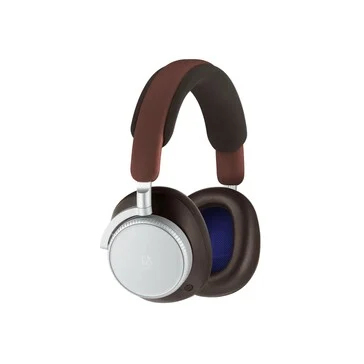
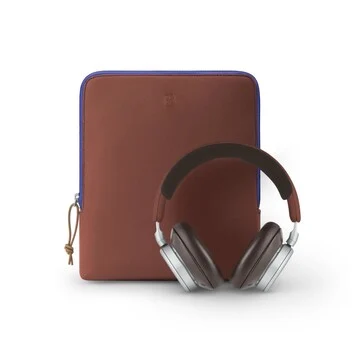
  • Beoplay H100: $2K Over-Ear Headphones with Basic Bluetooth Support

    Beoplay H100: $2K Over-Ear Headphones with Basic Bluetooth Support

    Key Takeaways

    1. The Beoplay H100 headphones are among the most expensive over-ear wireless headphones, priced at €1,499, £1,299, and $1,549 at launch.
    2. By 2025, Bang & Olufsen increased the prices of the Beoplay H100 to €1,700, £1,450, and $2,200, with a prior US price hike to $1,850.
    3. Bang & Olufsen has withdrawn the promise to support high-res Bluetooth codecs like LDAC for the Beoplay H100.
    4. The Beoplay H100 lacks Qualcomm aptX Adaptive support, offering only AAC and SBC Bluetooth codecs.
    5. The company has also removed the commitment to add 3-device multipoint connectivity through a software update.


    The Beoplay H100 still stands out as one of the priciest over-ear wireless headphones, even more than a year since they came out. They were initially sold for €1,499 in Europe, £1,299 in the UK, and $1,549 in the US. This made the Beoplay H100 a lot more costly than the Beoplay H95 that they replaced, which is currently available for $1,068 on Amazon.

    Price Increase in 2025

    Jump to 2025, and Bang & Olufsen has increased the price for the Beoplay H100 throughout Europe, the UK, and the US to €1,700, £1,450, and $2,200, respectively. It looks like this price hike happened around early June, with the US price going up to $1,850 a month prior. If that wasn’t enough to frustrate buyers, Bang & Olufsen has also started to withdraw the promise of adding support for wireless hi-res Bluetooth codecs.

    Changes in Codec Support

    According to a post on Reddit, Bang & Olufsen no longer states that it will add LDAC or any high-quality Bluetooth audio codecs through a software update. The absence of Qualcomm aptX Adaptive support, which was present in the older Beoplay H95, means the Beoplay H100 only has AAC and SBC Bluetooth codecs available. Consequently, it’s uncertain if or when Bang & Olufsen will introduce LDAC support in the future.

    Additional Updates

    Similarly, the company has revised its Product Sheet to remove the assurance of adding 3-device multipoint connectivity through a software update this year. Therefore, it wouldn’t come as a shock if Bang & Olufsen discreetly dropped this commitment soon without providing more details.

    Source:
    Link


  • Bose 2nd Gen QuietComfort Ultra Headphones Now Available

    Bose 2nd Gen QuietComfort Ultra Headphones Now Available

    Key Takeaways

    1. The Bose QuietComfort Ultra 2nd-gen headphones are priced at $449 and available on Amazon and Bose’s official website.
    2. They feature a design with plastic earcups and leather cushions, and now include spatial audio and surround sound for an enhanced listening experience.
    3. Connectivity is supported by Bluetooth 5.4 with a range of 30 feet, and lossless audio can be achieved via USB-C.
    4. The headphones have improved Active Noise Cancellation with ActiveSense technology and boast a battery life of up to 30 hours.
    5. A quick 15-minute charge provides 2½ hours of playback, while a full charge takes up to three hours.


    Bose has just unveiled its new 2nd-gen QuietComfort Ultra headphones, which are available for purchase at $449. You can find them on both Amazon and Bose’s official website. The headphones come in five vibrant colors: black, white, driftwood, desert gold, and midnight violet.

    Design and Features

    The design of these headphones features plastic earcups and leather cushions, very much like the previous model. The Bose QC Ultra 2nd gen headphones now offer spatial audio and surround sound, enhancing your experience whether you’re listening to audiobooks, podcasts, or watching videos.

    Connectivity and Battery Life

    These headphones are equipped with Bluetooth 5.4, providing a range of 30 feet. They also ensure lossless audio via USB-C. The Active Noise Cancellation (ANC) has seen improvements with the new ActiveSense technology, especially in Quiet Mode. According to Bose, the battery lasts up to 30 hours, a boost from the 23 hours of the first generation when enjoying immersive audio. A quick 15-minute charge is said to give you 2½ hours of playback, while a full charge with the included USB-C cable can take as long as three hours.

    Availability

    You can grab the Bose QuietComfort Ultra (2nd gen) headphones for $449 on Amazon, offered in black, white, or midnight violet.

    Source:
    Link