Category: Artificial intelligence

  • Apple Uses Google Tech for Apple Intelligence Development

    Apple Uses Google Tech for Apple Intelligence Development

    The rivalry between Apple and Google is intensifying. While the competition between Android and iOS is commonly known, this contest is broadening into new areas with the advancement of technology. The latest battleground is artificial intelligence, a relatively fresh field.

    Interestingly, this rivalry doesn’t prevent them from leveraging each other’s strengths. A newly published AI research paper by Apple reveals that Apple is utilizing Google hardware to lay the groundwork for Apple Intelligence. Here are the details…

    Apple Utilizes Google’s TPU Clusters for AI Training

    Apple and Google are typically seen as competitors in the tech industry, but it’s intriguing to note that Apple is employing Google hardware in its AI research. It has come to light that Apple is developing its AI models using Google’s v4 and v5p Cloud TPU clusters.

    This information was made public in a recently released research paper by Apple. The study, titled “Apple Intelligence Foundation Language Models,” outlines the data sources and developmental processes behind Apple’s new AI technology.

    The paper elaborates on the data sources Apple used for training its AI models and the methodologies applied during this process. The most eye-catching detail is that Apple initially relied on Google’s v4 and v5p Cloud TPU clusters.

    For those unfamiliar, Google’s Cloud TPU clusters are built to handle high-performance computing tasks, making them perfect for intensive activities like training large language models.

    The Reason Behind Apple’s Move

    The likely motivation for Apple’s decision is “speed.” Many may not recall, but the AI frenzy that began with the release of ChatGPT is less than two years old.

    This implies that companies need time to develop their technologies. Some may move faster in this domain, but Apple might have aimed to save time by using its rival’s technologies.

    Despite this being a temporary measure, Apple plans to invest over $5 billion in AI development over the next two years. This investment is viewed as part of Apple’s strategy to catch up with industry frontrunners like Microsoft and Meta.

    Whether they will achieve this goal remains uncertain.

  • China Unveils Breakthrough in Seismic Wave Modeling

    China Unveils Breakthrough in Seismic Wave Modeling

    China has made notable advancements in earthquake research by developing the “Listen” seismic wave large model. This innovative AI model is a result of collaboration between the National Supercomputing Chengdu Center, the Institute of Geophysics of the China Seismological Bureau, and Tsinghua University. It represents a significant leap forward in the nation’s earthquake monitoring capabilities.

    Potential Applications

    The model, which features 100 million parameters, showcases improved accuracy and speed in identifying seismic signals. Its uses range from early earthquake warnings to predicting aftershocks. Beyond these, the model is also valuable for mineral exploration, shale gas mining, and detecting urban underground structures.

    Development and Future Impact

    The creation of the “Listen” dataset, the largest ever for seismology, has been crucial in training this large model. As it continues to develop, it is anticipated to transform earthquake research and play a vital role in modernizing earthquake prevention and mitigation strategies.

    This achievement highlights China’s dedication to leveraging AI for societal benefits and its leading position in seismological research.

  • JPMorgan Chase Launches AI Tool to Enhance Productivity

    JPMorgan Chase Launches AI Tool to Enhance Productivity

    JPMorgan Chase has discreetly launched LLM Suite, an in-house generative AI tool aimed at supporting employees, especially in asset and wealth management. This ChatGPT-like system can write, brainstorm ideas, and condense documents.

    Widespread Use in Finance

    LLM Suite is considered one of the largest deployments of large language models in finance. The tool has been made available to around 50,000 employees, accounting for roughly 15% of the bank’s staff. Although the company has not shared detailed information, LLM Suite is believed to be among the most extensive uses of large language models within the financial sector.

    Industry-Wide Trend

    This initiative aligns with broader trends in the banking industry. For instance, Citigroup has previously estimated that AI could automate as much as 54% of jobs in banking. As AI technology progresses, financial firms are increasingly investigating how to harness its capabilities to boost efficiency and productivity.

  • How AI is Shaping the Lives of Gen Alpha Kids Born After 2010

    How AI is Shaping the Lives of Gen Alpha Kids Born After 2010

    A recent survey by Hosting Advice has highlighted the impact of artificial intelligence (AI) on Generation Alpha, the cohort born between 2010 and 2025. The study surveyed parents of children aged 7-14 to gauge their observations on their children’s engagement with AI and its perceived effects on their development.

    Almost half of the surveyed parents noted that their Generation Alpha children are already immersed in AI tools. Specifically, 49% of parents reported their kids utilizing AI. A gender disparity was observed in AI adoption; 54% of parents noted their sons use AI tools compared to 45% for daughters.

    As children from Gen Alpha transition into their early teens (13-14), AI usage appears to increase markedly, with 60% of parents acknowledging such use. The survey additionally delves into AI’s role in homework completion. While 20% of parents mentioned their children use AI for homework help, 40% opposed this practice, fearing it might lead to cheating.

    Parental Support for AI Usage

    Despite these reservations, a majority (54%) of parents surveyed endorse their children’s use of AI tools. They view these tools as advantageous for personalized education (30%), social skills enhancement (18%), creativity stimulation (29%), and future readiness (21%). Interestingly, the survey also found a gender gap in parental support, with fathers showing a higher level of support for AI tool usage (66%) compared to mothers (47%).

    Key Takeaways

    • AI in Education: 30% of parents see AI as beneficial for personalized learning.
    • Social Skills Development: 18% believe AI aids in social skills.
    • Creativity Boost: 29% think AI fosters creativity.
    • Future Preparation: 21% feel AI prepares their children for the future.
  • Meta Launches Llama 3.1: Open-source Model with 128K Token Context

    Meta Launches Llama 3.1: Open-source Model with 128K Token Context

    Meta introduced its latest open-source language model, Llama 3.1, on July 23rd. This version features numerous advancements, such as improved inference capabilities, expanded multilingual support, and an increased context length of 128K tokens.

    Comparable to Leading Models

    The highlight is the flagship 405B parameter Llama 3.1-405B. Meta claims this robust model matches the performance of top closed-source models in tasks like common-sense reasoning, guidance, mathematics, tool usage, and multilingual translation. Its capabilities are compared to GPT-4, GPT-4o, and Claude 3.5 Sonnet.

    Versatile Model Options

    Enhancements are not limited to the top-tier model. The 8B and 70B parameter versions of Llama 3.1 are also noted to be very competitive with other open-source and closed-source models of similar sizes.

    Availability and Support

    For those keen to explore, Llama 3.1 can now be downloaded from Meta’s official website and Hugging Face. Furthermore, over 25 major partners, including cloud services like AWS, Azure, and Google Cloud, as well as hardware manufacturers such as Nvidia and Dell, are confirmed to support the new model.

  • SenseTime and China Unicom Partner to Enhance AI Infrastructure

    SenseTime and China Unicom Partner to Enhance AI Infrastructure

    SenseTime revealed today that it had entered into a strategic cooperation agreement with China Unicom during the 2024 China Unicom Partner Conference, which took place on July 19-20. The collaboration will span across areas such as digital communications, industrial digital transformation, AI infrastructure, computing service systems, and global computing supply, aiming to establish a robust foundation for the AI industry’s growth.

    Focus on AI Infrastructure

    Per the agreement, the companies will engage in various collaborative efforts within the realm of large language models (LLMs) to enhance their AI infrastructure and make it available as a service to the industry.

    The partnership leverages both companies' resources to co-develop LLMs. Yang Fan, co-founder of SenseTime and president of the Large Device Business Group, stated that the computing power and data would be utilized to bolster their AI infrastructure. This initiative aims to lower the cost and barriers for implementing AI in different products. According to a report, this should enable more individuals to carry out AI research and innovation effectively, fostering the sustainable development of the AI industry.

    Combining Strengths for Better Results

    Discussing the synergy between operators and AI firms, Yang Fan highlighted that AI companies excel in technical platforms and software capabilities, whereas operators have the advantage of extensive scenario coverage. The collaboration between these entities is expected to significantly enhance the development of LLMs.

    Last month, SenseTime announced its intention to issue Class B shares, raising HK$2.008 billion. This funding has seen participation from multiple investors and leading international companies, with existing shareholders also increasing their stakes. The capital is reportedly earmarked for AI research and the creation of software products that benefit from such research.

  • Affordable GPT-4o Mini: OpenAI Democratizes Powerful AI

    Affordable GPT-4o Mini: OpenAI Democratizes Powerful AI

    OpenAI is advancing its mission to make cutting-edge AI more accessible by unveiling GPT-4o mini. This new model is described as “the most powerful and cost-effective small model at present,” aimed at enhancing the capabilities of OpenAI’s chatbots for a broader audience.

    The GPT-4o: A Budget-Friendly Option

    In addition to being budget-friendly, GPT-4o mini marks a leap towards OpenAI’s vision of “multimodal” AI. This future concept anticipates a single tool that can generate various media types, including text, images, audio, and video. GPT-4o mini sets the stage by providing a foundation that could integrate these extra functionalities down the line.

    OpenAI positions GPT-4o mini as an economical solution, potentially making sophisticated AI features more accessible to developers and businesses. The rollout strategy underscores this objective. Free users of ChatGPT will get immediate access to GPT-4o mini, whereas Plus and Team users can start using it today. Enterprise users will have access next week, indicating a tiered system where basic functionality is free, and more advanced features are available via paid subscriptions.

    Derived from GPT-4o

    It’s crucial to note that GPT-4o mini is developed from the recently launched GPT-4o, OpenAI’s current flagship model. The “o” in the name represents its “omnidirectional” capabilities, including advancements in audio, video, and text functionalities across 50 languages, alongside improved speed and quality.

    The introduction of GPT-4o mini highlights OpenAI’s dedication to democratizing access to its powerful AI models. This initiative could pave the way for a more versatile and user-friendly future in artificial intelligence.

  • Transform Your Selfie into a 3D Character with Tencent’s AI App

    Transform Your Selfie into a 3D Character with Tencent’s AI App

    Tencent Yuanbao, an application developed by Tencent, has rolled out a revolutionary feature known as the "3D Avatar Dream Factory," which is set to redefine the field of 3D character creation.

    This innovative feature enables users to easily create personalized 3D characters from just a single front-facing image, marking it as the first universal app to achieve such high-quality 3D generation.

    Tencent’s AI-Driven App

    Utilizing cutting-edge AI technology and 3D applications, the "3D Avatar Dream Factory" streamlines the previously intricate process of 3D character creation. Users can now quickly customize their avatars by selecting from a variety of templates, with the added capability of 3D printing their designs.

    Tencent Yuanbao incorporates technologies such as 3D head swapping, geometric sculpting, and PBR (Physically Based Rendering) material texture mapping to produce realistic and highly detailed character models. This involves optimizing head models and textures, enhancing geometric precision, and improving material textures for a more lifelike result.

    Diverse Character Styles and Customization

    Initially, the feature offers 10 unique character styles, with plans for further expansion through updates and innovative gameplay options. The application is powered by Tencent’s Yuanbao large model, which features multimodal interaction capabilities and has a track record of early adoption in 3D asset generation.

    The created models can be viewed in a comprehensive 360-degree view, facilitating easy sharing, modification, and even offline 3D printing, thus bridging the gap between virtual and physical worlds.

    Accessibility and Future Prospects

    Users can explore the "3D Character Dream Factory" either on the Tencent Yuanbao app or via the WeChat mini-program.

    As the appetite for personalized and immersive digital experiences continues to grow, Tencent Yuanbao is well-positioned to lead the market by providing users with intuitive and robust tools for 3D creation.


    Transform Your Selfie into a 3D Character with Tencent's AI App
  • Oppo Aims to Integrate AI in 50 Million Devices by End of 2024

    Oppo Aims to Integrate AI in 50 Million Devices by End of 2024

    Oppo aims to extend its AI capabilities to 50 million devices by the conclusion of 2024. India is identified as a crucial market for the company’s latest AI expansion strategy.

    Launch of Over 100 AI Features This Year

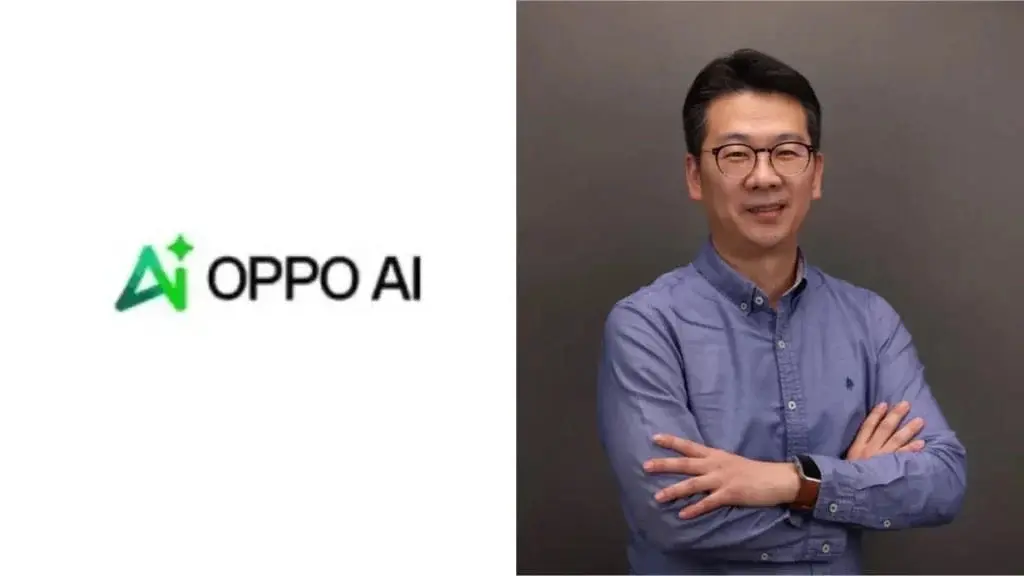
    Oppo plans to introduce more than 100 AI features this year, positioning itself as a leader in the platform transition driven by new technology. Peter Dohyung, Oppo’s head of product strategy, has already disclosed the company’s plan for AI integration in its devices.

    One significant step in this roadmap is the incorporation of generative AI features. An official from the company mentioned in an interview that Oppo anticipates all its phones to possess GenAI capabilities soon. The goal is to roll out these generative AI features to 50 million devices by 2024.

    Enhancements in Camera System

    The integration of AI technology is expected to enhance the camera system. A company official stated that Oppo will “continue to integrate AI to enhance the imaging experience.” However, details on how this will specifically improve the camera system remain unclear. Additionally, a summary feature utilizing generative AI is also in the works.

    Data Privacy Measures

    The AI features will be deployed with stringent data privacy protocols. This is crucial, as similar AI features from other brands often involve server-side implementations where user data is processed off-device.

    Oppo is dedicated to enhancing the user experience through generative AI. The company is making notable efforts in the research and development of this technology, focusing on improving data centers and creating Large Language Models that support AI features.


    Oppo Aims to Integrate AI in 50 Million Devices by End of 2024

  • YouTube’s New Rule: Remove AI Videos with Your Voice

    YouTube’s New Rule: Remove AI Videos with Your Voice

    YouTube has introduced new policies to combat the issue of AI-generated content that mimics real people. Users now have the option to request the removal of such videos that use AI to replicate their appearance and voice.

    YouTube will evaluate removal requests on various factors before making a decision

    This policy aims to protect individuals’ privacy rights rather than addressing the technology’s potential for misleading information. YouTube will assess removal requests considering several factors, such as whether the content is labeled as AI-generated, its level of realism, and the potential harm to the person depicted.

    48-Hour Window for Content Creators

    Content creators will have a 48-hour period to address complaints before YouTube takes further action. Options include blurring the individual’s face within the video, but merely setting the video to private status will not be deemed sufficient for removal.

    Rising Questions with AI Advancements

    As AI technology progresses, issues related to intellectual property, consent, and authenticity will become increasingly significant. Determining the ownership and copyright of AI-generated content, especially when it closely resembles real people, will necessitate careful consideration and potentially new legal frameworks.