Category: Artificial intelligence

  • Apple’s New AI Tool Removes Objects in Developer Betas

    Apple’s New AI Tool Removes Objects in Developer Betas

    Apple's latest AI advancements were unveiled at the Worldwide Developers Conference (WWDC) in June. While the exact date for a public rollout is still unknown, various AI features are anticipated to arrive next year on iPhones, iPads, and Macs. Beta versions have been made available by the Cupertino tech firm. The Developer Beta 3 for iOS and iPadOS 18.1, along with macOS 15.1 Sequoia, introduces an AI-driven 'Clean Up' tool within the Photos app, aiming to rival Google's Magic Eraser and Samsung's Object Eraser.

    Apple's 'Clean Up' AI Feature Competes with Magic and Object Eraser

    Before diving into the specifics, it's important to note that the beta version is unstable and not advisable for installation on primary devices. The feature is available exclusively on devices that support Apple Intelligence, which includes the iPhone 15 Pro models and Macs and iPads powered by M-series chips.

    The Clean Up tool, as its name implies, can identify and eliminate distracting objects and strangers from photos. It also offers functionalities such as healing blemishes and pixelating people's faces to protect their privacy. While it automatically detects and removes undesired elements, users can choose to tap, brush, or circle objects they prefer not to include in the image. Additionally, you can zoom in to adjust finer details. The tool is also adept at removing unwanted shadows and reflections.

    Editing Photos with the Clean Up Tool

    You can access the Clean Up feature while editing a photo in the Photos app. It is represented by an eraser-style icon located in the bottom toolbar. Edited images will have a 'Modified with Clean Up' label and this information will be added to the EXIF data. The tool is compatible with all images, regardless of whether they were taken with another phone or a DSLR.

    Despite its capabilities, the AI-powered Clean Up feature isn't entirely perfect. It is expected to undergo refinements before the release of a stable version.


  • Realme 13 Pro & Pro+ Add AI-Powered Photo Sharpening Feature

    Realme 13 Pro & Pro+ Add AI-Powered Photo Sharpening Feature

    Realme has recently launched a cutting-edge feature called ‘AI Ultra-clear’ for its Realme 13 Pro and Realme 13 Pro+ models. This AI-driven function enhances the clarity and detail of blurred images, effectively refining photos that cannot be captured again.

    AI Technology and Competitors

    While Realme’s innovation is noteworthy, it’s not entirely new in the tech world. Google has already introduced a similar feature called Photo Unblur. Initially released with the Pixel 8 series, this feature is now also available in the latest Pixel 9 series. However, it’s crucial to highlight that Google’s Pixel devices are flagship models, which come with a higher price tag. Realme’s addition of this feature to its more budget-friendly models is a welcome development. The company has not clarified whether the image processing occurs on the device or through a cloud server. In contrast, Google’s flagship devices reportedly manage the processing internally.

    Camera Specifications

    Focusing on the camera capabilities, both the Realme 13 Pro and Realme 13 Pro+ are equipped with a 50 MP main camera and an 8 MP ultrawide lens. The Pro+ variant further includes a 50 MP 3x periscope telephoto lens with a sensor size of 1/1.95″. The main camera on the Pro+ model features a larger 1/1.56″ sensor compared to the 1/1.95″ sensor on the standard model, while the ultrawide camera remains consistent across both models.

    Performance and Battery

    Regarding performance, the two phones are powered by the 4nm-based Snapdragon 7s Gen 2 chipset coupled with a 5200 mAh battery. The base model supports 45W charging, whereas the Realme 13 Pro+ comes with an 80W charging brick included in the package.


    Realme 13 Pro & Pro+ Add AI-Powered Photo Sharpening Feature
  • Samsung to Release 10 AI Washing Machines in India Soon

    Samsung to Release 10 AI Washing Machines in India Soon

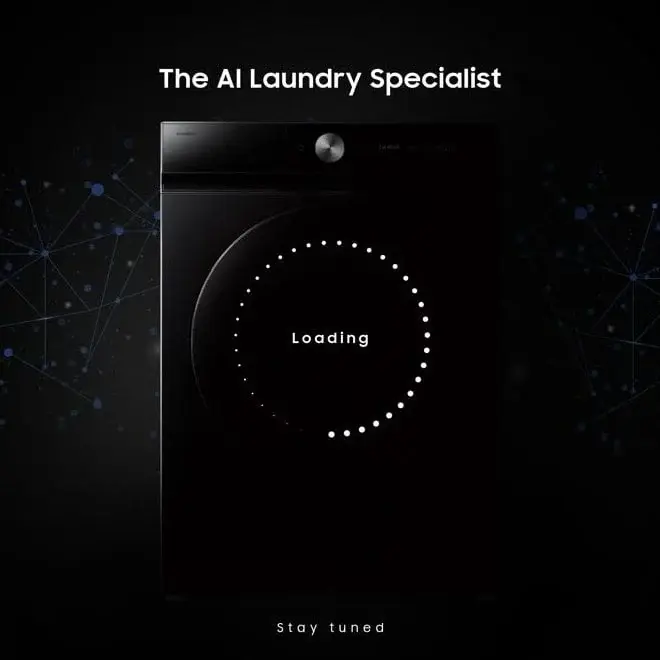
    Samsung is preparing to introduce ten new washing machines in India just in time for the upcoming festive season. Among these offerings is a front-load washing machine powered by AI, expected to hit the market by the end of this month. This fresh lineup is part of Samsung’s high-end Bespoke AI series.

    A Focus on AI-Driven Innovation

    The new washing machines will feature a host of AI-driven functionalities aimed at simplifying laundry chores. These cutting-edge innovations promise to significantly lessen the effort involved in everyday laundry tasks, making them more efficient and environmentally friendly. With the incorporation of advanced AI technologies, Samsung seeks to develop a smarter home environment that aligns with the needs and preferences of its users.

    These new models are set to broaden Samsung’s current range of washing machines available in India, providing consumers with more choices in the premium category. The company has highlighted that these washing machines prioritize convenience, aiming to revolutionize how users engage with their household appliances. The AI features integrated into these machines are anticipated to enhance users’ lifestyles by delivering smarter, more intuitive solutions that improve daily routines.

    Expanding the Smart Home Ecosystem

    Earlier this year, Samsung launched its 2024 Bespoke AI home appliances in India, which include refrigerators equipped with AI Vision Inside and AI Energy Saving capabilities. These appliances signify a leap forward in the company’s mission to establish a hyper-connected home ecosystem. Through features like habit learning and sensing, these devices are engineered to make household chores more manageable, ultimately freeing up more leisure time for consumers.

    For instance, Samsung’s AI-powered refrigerators are capable of monitoring the expiration dates of food items and providing personalized recipe ideas through the Samsung Food feature. The AI Energy Saving function in SmartThings helps users track and reduce energy consumption, fostering a more sustainable lifestyle. Additionally, the Smart Forward feature guarantees that devices receive regular updates, while Samsung Knox ensures the security of users’ personal data.

  • India’s First AI Chips Launched by a Ride-Hailing Company

    India’s First AI Chips Launched by a Ride-Hailing Company

    Ola Electric, a company renowned in India for its electric scooters and ride-hailing services, has taken the industry by surprise with its announcement to venture into AI hardware. The company revealed its strategy to create a series of AI chips, marking a significant step towards India’s goals in the expanding field of artificial intelligence.

    AI Chip Models and Features

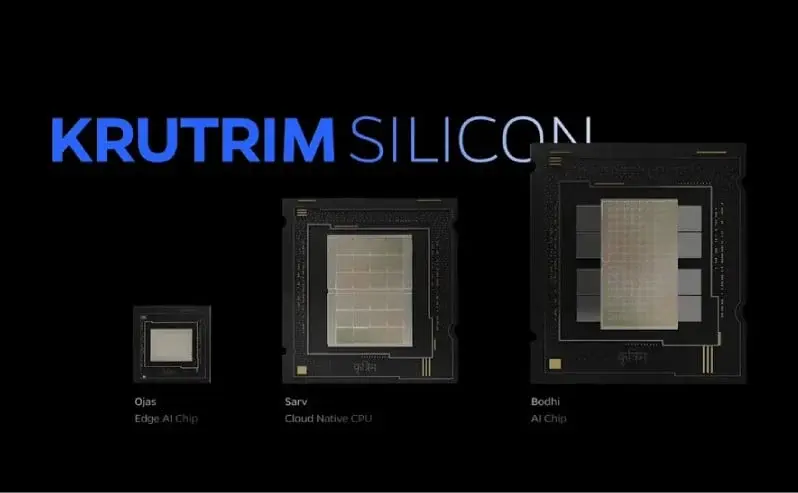
    The initial lineup of chips, set to be released in 2026, consists of three models: Bodhi 1, Ojas, and Sarv 1. Bodhi 1, recognized as the first AI chip to be designed and manufactured in India, focuses on AI inferencing. It is poised to be a formidable option for large language models (LLMs) and applications that need high-performance vision processing. Ola asserts that Bodhi 1 stands out in power efficiency, an essential attribute as AI systems increasingly demand more power.

    Ojas, the second chip, is tailored to meet the rising demand for edge AI solutions. It is versatile enough for a range of applications in the automotive, mobile, and IoT sectors. Ola intends to incorporate Ojas into its future electric vehicles, potentially enhancing capabilities like charging optimization and advanced driver assistance systems (ADAS).

    Sarv 1 and Market Challenges

    The third chip, Sarv 1, is a general-purpose server CPU utilizing the Arm instruction set, crafted to address the growing AI computational requirements of the data center industry.

    During Ola’s presentation, the company showcased impressive performance and power efficiency metrics for their prototype chips, making comparisons with Nvidia GPUs. However, some important details were omitted, such as the specific Nvidia GPU model used as a benchmark and the location where these chips will be manufactured.

    India’s Position in the Global AI Market

    This development highlights India’s aspiration to join the global AI competition, which is currently dominated by the US and China. With a large pool of tech talent, India is well-positioned to advance in AI. Furthermore, the ongoing restrictions on the sale of advanced technology to China by companies like Nvidia and ASML may make India an appealing alternative market for these firms.

    Nonetheless, Ola is confronted with substantial obstacles to make its bold AI chip initiative a reality. The AI hardware sector is currently ruled by well-established companies, and Ola must prove that its chips can hold their own in terms of performance, power efficiency, and cost. Additionally, the company needs to build a robust manufacturing infrastructure to produce these sophisticated silicon components.

  • OnePlus Launches 3 New AI Features for Select Devices

    OnePlus Launches 3 New AI Features for Select Devices

    OnePlus made headlines earlier this year with the introduction of its AI Eraser feature. More recently, the company discreetly unveiled three additional AI features in a community post. These new capabilities allow users to listen to articles, generate summaries, and create text. Unfortunately, these latest AI features are currently restricted to just two Nord devices and are only available in select regions. While there are plans to extend these features to other OnePlus phones eventually, the current limitation is somewhat disheartening.

    OnePlus AI Features Limited to Nord Devices

    The newly introduced OnePlus AI features include AI Speak, AI Summary, and AI Writer. As the names suggest, these features have distinct functionalities. AI Speak is designed to read articles from browsers and apps such as Google News. It offers options to adjust playback speed, switch between sentences, use a replay function, and select male or female voice options. The AI Summary tool allows users to create summaries of extensive web content, with results that can be copied, shared, and saved to Notes. Additionally, selected text can be stored in the File Dock. The AI Writer feature assists users in drafting text for various purposes like emails, social media posts, and reviews, and it will be suggested within relevant applications.

    Both the AI Summary and AI Writer results can be regenerated if users are not satisfied with the initial output. All three features are bundled within the AI Toolkit, which is integrated into the sidebar. To access these features, OnePlus advises enabling screen recognition found under Settings > Accessibility & Convenience.

    Availability and Future Rollout

    Currently, the newly announced AI features are available on the OnePlus Nord 4 in regions including India, Asia-Pacific, Europe, the Middle East and Africa, South Asia, Russia, and Latin America. The features are also available on the Nord CE4 Lite 5G, but exclusively in India. Unfortunately, flagship OnePlus phone owners have not received these new AI tools yet. It seems that OnePlus may be testing these features first on mid-range Nord devices, with a broader release likely in the near future.


    OnePlus Launches 3 New AI Features for Select Devices
  • Google Might Have to Sell Android, Chrome, and AdWords

    Google Might Have to Sell Android, Chrome, and AdWords

    In a significant development that could alter the technology sector, reports suggest that the US Department of Justice (DoJ) is contemplating a major disbandment of Google. As per Bloomberg, the tech behemoth has been accused of unlawfully monopolizing the online search market, prompting the government to consider measures to revive competition.

    Google May Undergo Division and Sale of Major Divisions

    Following a pivotal court decision against Google, the DoJ is assessing various potential solutions, including the most radical: breaking the company into smaller parts. This would represent one of the most consequential antitrust actions since the Microsoft case over twenty years ago.

    Although a breakup is an option, there are also less severe measures under review. These include mandating Google to share more data with rivals, restricting its AI development, and prohibiting exclusive agreements that have bolstered its market power.

    Focus on Google’s Business Practices

    The case revolves around Google’s dealings with Android, Chrome, and AdWords, where exclusive contracts with device makers have raised regulatory alarms. The DoJ is particularly concerned about how Google’s control over search could influence competition in the fast-developing AI field.

    If a breakup ensues, there could be a sale of Android, Chrome, or AdWords. Such a step would have significant consequences for both the technology industry and consumers.

    While Google intends to contest the court decision, the company faces a tough journey ahead. The prospect of Google’s breakup underscores the heightened scrutiny of large tech firms and the government’s resolve to ensure equitable competition.

  • Google Pixel 9 Series: AI Features and Android 14 Included

    Google Pixel 9 Series: AI Features and Android 14 Included

    Google has unveiled the eagerly awaited Pixel 9 series, featuring new AI capabilities, a redesigned appearance, and fresh color options. The phone is slated to hit the market on August 22. Unlike its predecessors, the Pixel 9 series doesn’t include the newest version of Android straight out of the box.

    AI Features Adapted to Android 14

    Traditionally, Pixel phones have been the prime platform for demonstrating the latest Android system features. This time around, users won’t have immediate access to the newest Android features. Fortunately, Google has adapted some of the features from Android 15 for Android 14. For instance, the Pixel 9’s screenshot interface incorporates the updated design from Android 15, placing the preview window above a new pill-shaped tray with rounded icons. Additionally, there’s a dedicated app for managing screenshots that can assist users in retrieving information from their stored screenshots and can function as a reminder.

    However, the new Pixel series currently lacks support for “Private Space,” a feature that necessitates an Android 15-based system.

    Notable AI Innovations

    Among the AI enhancements in the Pixel 9 series are Gemini Live and the Pixel Studio image generator. This tool allows users to create images directly on the device within seconds using text prompts. Another camera feature, “Add me,” simplifies group photo capturing by merging two separate images containing different individuals in the frames. Google developed these features using Android 14.

    Hardware and Performance

    On the hardware front, the Pixel 9 series is equipped with the Tensor G4 chip, which the company claims is more capable, energy-efficient, and enhances the phone’s ability to run AI features effectively. Additional details about the Pixel 9, Pixel 9 Pro, 9 Pro XL, and Pixel 9 Pro Fold are available for those interested in learning more about these models.

  • Galaxy A Series May Get Galaxy AI with One UI 6.1.1 Update

    Galaxy A Series May Get Galaxy AI with One UI 6.1.1 Update

    Samsung has recently introduced several AI features to its new S series flagships. Additionally, the company has extended some of these features to older S and Z series devices. The latest development reveals that Samsung is planning to bring Galaxy AI to its more budget-friendly A series devices.

    Galaxy A55 and A35 to Receive Galaxy AI with One UI 6.1.1

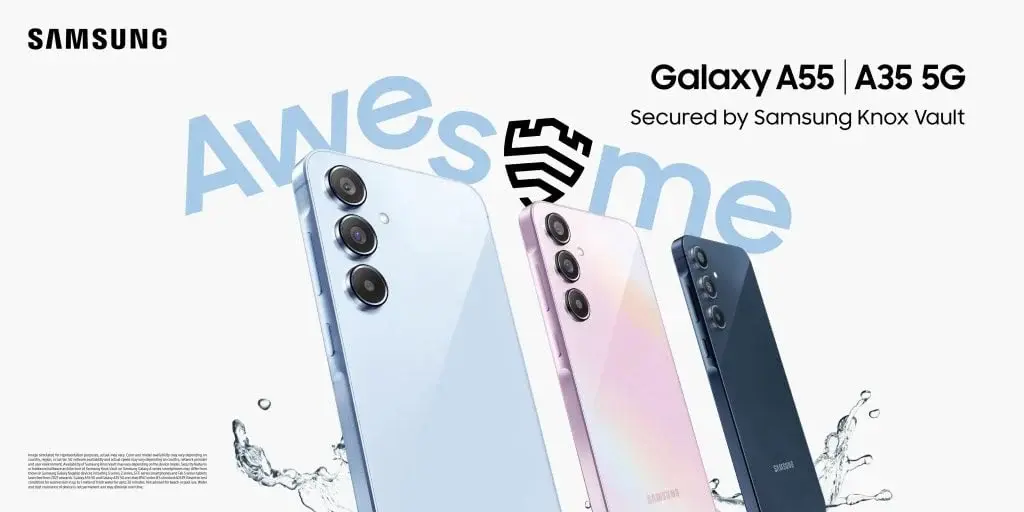
    As per a report from SamMobile, Galaxy AI might be added to the A series, beginning with select 2024 models. The report suggests that Samsung will roll out certain AI features to devices already released this year, such as the Galaxy A55 and Galaxy A35. However, users should not expect to receive all the features that Galaxy AI offers.

    Due to hardware limitations, some features might not be compatible with the Galaxy A series devices. Therefore, it’s challenging to implement these features in the same manner as on the flagship models.

    Release Timeline and Compatibility

    There is no specific release date available yet, but it is anticipated that the features will be rolled out with the One UI 6.1.1 update. Reportedly, Samsung has postponed the One UI 7 beta to focus on the One UI 6.1.1 update. The company has already introduced new AI features to the sixth-generation foldables with One UI 6.1.1. It is now believed that the focus has shifted to rolling out some of these features to other models, including the Galaxy A55 and A35.

    Final Thoughts

    Currently, there’s no detailed information about which specific features will be compatible with the A series devices. In theory, server-side features could be implemented on these devices. However, the final decision on how to shape the A series for future models rests with Samsung.

  • GPT-4 Voice Model Now Available for ChatGPT Plus Subscribers

    GPT-4 Voice Model Now Available for ChatGPT Plus Subscribers

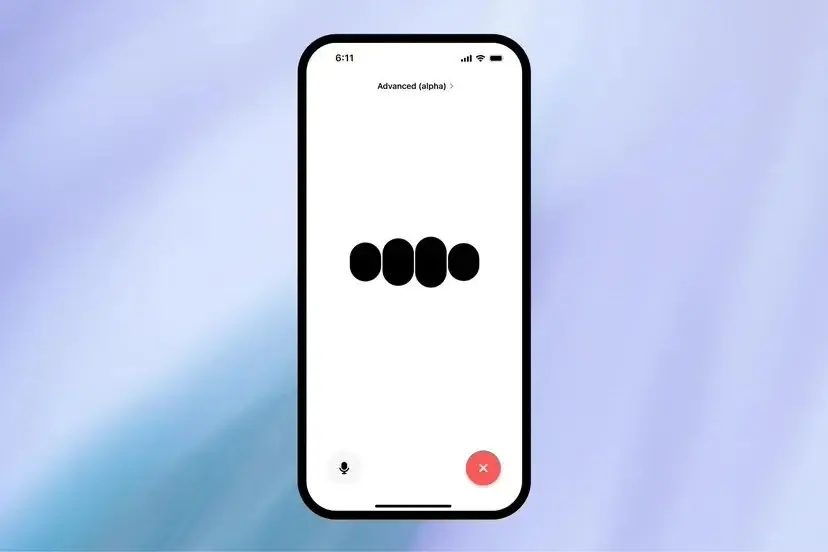
    OpenAI has initiated the gradual release of the GPT-4 voice model for ChatGPT Plus users. This innovative feature allows for more natural and immediate interactions with the AI.

    The GPT-4 model is designed to comprehend and answer voice inputs in a highly human-like manner. It marks a major leap in AI technology, offering human-like fluency and lower latency in voice responses. OpenAI has stressed its commitment to responsible AI development, ensuring the model can accurately detect and dismiss inappropriate content.

    Initial Availability

    Initially, this feature will be available to a limited number of users. However, the GPT-4 voice model is anticipated to be available to all ChatGPT Plus subscribers by the fall. This recent advancement highlights OpenAI’s ongoing efforts to expand AI capabilities and improve user interactions.

  • Apple Uses Google Tech for Apple Intelligence Development

    Apple Uses Google Tech for Apple Intelligence Development

    The rivalry between Apple and Google is intensifying. While the competition between Android and iOS is commonly known, this contest is broadening into new areas with the advancement of technology. The latest battleground is artificial intelligence, a relatively fresh field.

    Interestingly, this rivalry doesn’t prevent them from leveraging each other’s strengths. A newly published AI research paper by Apple reveals that Apple is utilizing Google hardware to lay the groundwork for Apple Intelligence. Here are the details…

    Apple Utilizes Google’s TPU Clusters for AI Training

    Apple and Google are typically seen as competitors in the tech industry, but it’s intriguing to note that Apple is employing Google hardware in its AI research. It has come to light that Apple is developing its AI models using Google’s v4 and v5p Cloud TPU clusters.

    This information was made public in a recently released research paper by Apple. The study, titled “Apple Intelligence Foundation Language Models,” outlines the data sources and developmental processes behind Apple’s new AI technology.

    The paper elaborates on the data sources Apple used for training its AI models and the methodologies applied during this process. The most eye-catching detail is that Apple initially relied on Google’s v4 and v5p Cloud TPU clusters.

    For those unfamiliar, Google’s Cloud TPU clusters are built to handle high-performance computing tasks, making them perfect for intensive activities like training large language models.

    The Reason Behind Apple’s Move

    The likely motivation for Apple’s decision is “speed.” Many may not recall, but the AI frenzy that began with the release of ChatGPT is less than two years old.

    This implies that companies need time to develop their technologies. Some may move faster in this domain, but Apple might have aimed to save time by using its rival’s technologies.

    Despite this being a temporary measure, Apple plans to invest over $5 billion in AI development over the next two years. This investment is viewed as part of Apple’s strategy to catch up with industry frontrunners like Microsoft and Meta.

    Whether they will achieve this goal remains uncertain.