Category: Artificial intelligence

  • Runway AI Launches New Image Generation Model: Frames

    Runway AI Launches New Image Generation Model: Frames

    Runway AI, an AI research and tech company based in New York, has launched a new image creation model called Frames, which signifies “a significant advancement in stylistic precision and visual quality.”

    Focus on Stylistic Consistency

    This model seems to focus on keeping a consistent style, meaning it can create similar images while adding or removing certain details. This is an area where many other image generation models have difficulty.

    Runway claims that with Frames, users can select a style for their project “and consistently produce variations that align with your aesthetic.”

    Showcasing Stylistic Choices

    Runway presented some examples showcasing stylistic consistency with Frames on an X thread. The styles, referred to as “Worlds,” include a range from 1980s special effects, 1970s album cover art, Japanese zines, realistic digital images, landscapes, and much more.

    The generated images appear striking at first sight and keep a uniform theme and vision. Runway mentioned that it will slowly provide access to Frames within the Gen-3 Alpha of its video creation suite and Runway API.

    Applications in Media

    Runway’s video generation tools have been used in movies like Everything Everywhere All At Once, and in music videos for artists such as Kanye West. They’ve also found their way into popular TV shows like Top Gear.

    Source: Link,Link

  • Nvidia Hopper and Blackwell Drive Strong Q3 Revenue Growth

    Nvidia Hopper and Blackwell Drive Strong Q3 Revenue Growth

    Nvidia is setting new financial records, as shown in its latest quarterly report, nearly doubling its revenue from the third quarter of last year (2024). The tech giant announced a remarkable performance for the three months that ended in October 2024, bringing in revenue of $35.1 billion—a 17% increase from the last quarter and an incredible 94% rise compared to the same time last year.

    Data Center Growth

    The report indicates that a large part of this growth came from Nvidia’s data center sector, which achieved record revenue of $30.8 billion. This marks a 17% increase from the previous quarter and a stunning 112% rise compared to the same quarter last year. A key factor in this success was the high demand for specific chips like the Hopper and Blackwell platforms, as customers are increasingly using Nvidia-powered systems for a variety of applications, from training large language models to supporting AI-driven cloud services.

    Cloud Partnerships

    Nvidia also pointed out the strengthening of its global cloud partnerships, with major players like Amazon Web Services (AWS), Microsoft Azure, and CoreWeave providing instances powered by the Hopper H200. The company feels that this collaboration has played a crucial role in maintaining its lead in the AI infrastructure market.

    Gaming and Professional Visualization

    Moreover, the report highlighted growth in Nvidia’s gaming and professional visualization sectors, although the increases were less significant. For Q3, the gaming revenue reached $3.3 billion, which is a 14% rise from the previous quarter. This growth is linked to the ongoing transition in gaming towards AI-enhanced graphics and immersive experiences. New AI-powered PCs and games, like Indiana Jones and the Great Circle, are pushing the limits of interactive entertainment.

    The revenue from the professional visualization segment saw a 17% increase year-over-year, as various industries are adopting Nvidias’s Omniverse platform to develop digital twins and optimize workflows in manufacturing, media, and design.

    Future Projections

    Looking forward, the company anticipates that the momentum will carry on into the fourth quarter, projecting a revenue of $37.5 billion, which reflects the continuing global demand for AI infrastructure and solutions.

    Source: Link

  • OpenAI Accused of Deleting Evidence in Copyright Lawsuit

    OpenAI Accused of Deleting Evidence in Copyright Lawsuit

    In recent legal documents submitted by The New York Times regarding its lawsuit against OpenAI, it has been claimed that the AI company unintentionally erased crucial evidence. This evidence was gathered by the newspaper’s legal team over a span of more than 150 hours.

    Data Recovery Issues

    The documents indicate that OpenAI was able to retrieve most of the data, however, the folder organization and file names were irretrievably lost. Consequently, the data that was recovered does not allow for an understanding of how the news articles from the plaintiffs were incorporated into the training sets for the AI model.

    OpenAI’s Response

    Jason Deutrom, a representative from OpenAI, communicated to Wired that the company does not agree with the claims made in the lawsuit. He mentioned that they will be providing a formal response shortly. The New York Times initiated the lawsuit against OpenAI and Microsoft in December of the previous year, claiming that the AI firm utilized its articles to enhance its AI models.

    Accusations of Copyright Infringement

    The lawsuit asserts that millions of articles from The New York Times were used to train automated chatbots, which now rival the news organization as a trusted source of information. It argues that both companies should be held liable for "billions of dollars" due to the "illegal copying and use of The Times’ uniquely valuable works."

    Source: Link,Link,Link,Link

  • Adobe SlimLM Offers Cloud-Free Mobile AI Solutions

    Adobe SlimLM Offers Cloud-Free Mobile AI Solutions

    Thanks to a groundbreaking small language model (SLM) created by a group of AI researchers at Adobe Inc. working with teams from Auburn University and Georgia Tech, new smartphone AI applications will now be able to handle documents directly on the device without needing to connect to the cloud. This model is named SlimLM, and all relevant information about it has been shared on arXiv.

    Efficient On-Device Processing

    “Through thorough experiments on a Samsung Galaxy S24, we pinpoint the best trade-offs between the model’s size (which varies from 125M to 7B parameters), context length, and inference time for effective processing on the device,” shared the research group. “SlimLM is pre-trained on SlimPajama-627B and fine-tuned on DocAssist, our specially created dataset for tasks like summarization, question answering, and suggestions. Our smallest model shows great performance on the S24, while the bigger versions provide enhanced features within the limits of mobile devices.”

    Future Availability

    SlimLM isn’t available to the public just yet, but that could change soon. With this innovative code, smartphones can harness AI’s power locally to process documents without needing internet access. While cloud-based AI solutions typically rely on less local computing power compared to apps that run directly on devices, the key benefit they provide is privacy. Major players in this space, like Google, Apple, and Meta, have already launched similar applications, but their status is largely experimental, and they haven’t reached widespread use. If the goals of these researchers are successful, SlimLM could potentially be the first widely adopted solution of its kind.

    Source: Link

  • Samsung Unveils Second-Generation AI Model Gauss2

    Samsung Unveils Second-Generation AI Model Gauss2

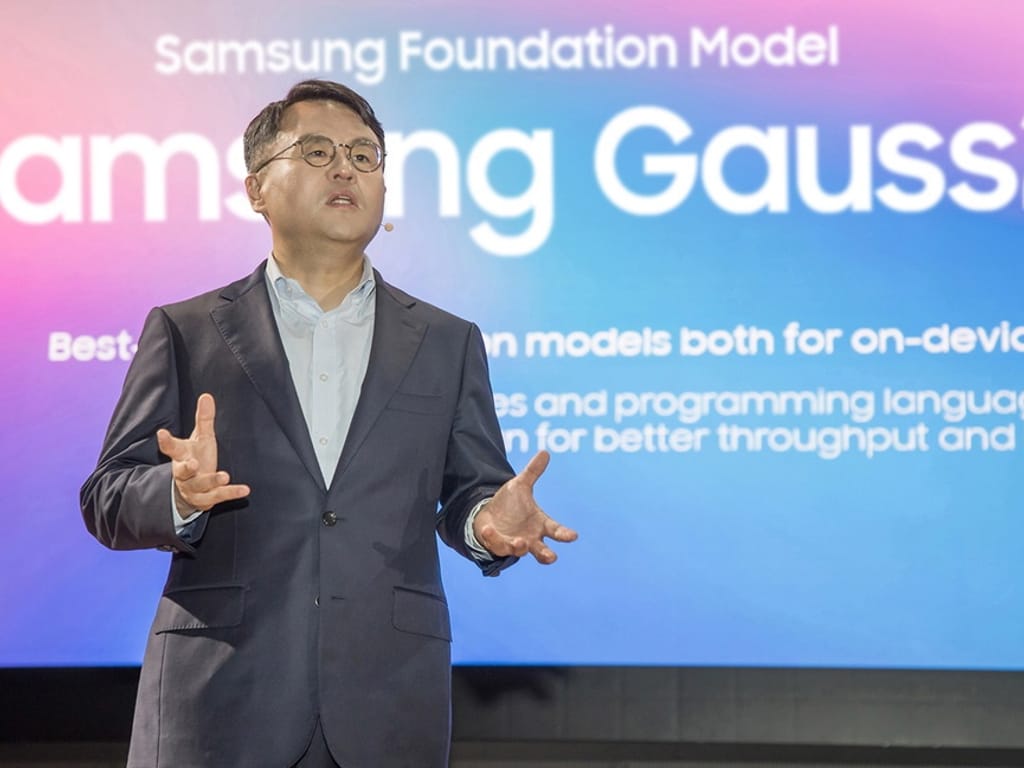
    Samsung presented the next version of its multimodal generative AI model, Gauss2, during the Samsung Developer Conference 2024. The model will come in three different sizes: Compact, Balanced, and Supreme.

    Compact Model Overview

    The Compact model is designed to be small, focusing on speed and efficiency, making it perfect for usage directly on devices by "maximizing the utilization of the device’s computing resources."

    Balanced and Supreme Models

    The Balanced model strikes a blend between performance and efficiency, tailored for various tasks that need consistency. On the other hand, the Supreme model is optimized for high performance, and Samsung claims it lowers "computational costs during training and inference processes while keeping both performance and efficiency at high levels."

    This model supports up to 14 languages, including a variety of programming languages. To enhance efficiency and performance, Samsung employs a "custom tokenizer" for the languages it supports. The company notes that the model’s processing speed "per hour is 1.5 to 3 times quicker," when compared to open-source generative AI models.

    In-House Coding Assistant

    According to Samsung, its internal coding assistant, ‘code.i,’ is currently being used by 60% of all software developers at the company.

    Samsung aims to leverage the Gauss2 model to boost productivity internally. The company "will keep extending the reach of its AI-based services throughout all product lines so users can enjoy a more convenient and pleasant daily life."

    Source: Link

  • Free AI Training Course for Teachers by OpenAI

    Free AI Training Course for Teachers by OpenAI

    OpenAI has joined forces with Common Sense Media to provide a complimentary course for educators, aiming to enhance their understanding of generative AI. Common Sense Media is a nonprofit that evaluates technology suitable for kids and families.

    Course Details

    According to a report by Reuters, the course named "ChatGPT Foundations for K-12 Educators" will explore effective practices for using AI and prompt engineering. This course is primarily focused on ChatGPT and will assist educators in learning the fundamentals of the chatbot, alongside showcasing methods for incorporating it into their teaching techniques within the classroom.

    Target Audience

    The course is designed for teachers who work with students from Kindergarten to 12th Grade and is expected to be completed in under an hour. It includes key topics such as the essentials of AI, responsible usage, data privacy, and practical suggestions for integrating AI into educational environments. OpenAI mentioned that the course was tested in around twelve school districts, where 98% of the educators reported gaining new insights for their teaching.

    Expert Insight

    Leah Belsky, who serves as the VP and General Manager of Education at OpenAI, shared with Reuters that the course aims to "put AI into the hands of every student and every teacher… and also equip them with the skills to learn how to do it responsibly and effectively." This initiative represents a significant step toward making AI tools more accessible for educational purposes.

    Source: Link,Link

  • Amazon Delays Alexa’s AI Update Due to Latency Issues

    Amazon Delays Alexa’s AI Update Due to Latency Issues

    Leaked internal documents obtained by Fortune reveal various technical issues related to the upcoming AI revamp for Alexa, Amazon’s voice assistant. A major issue is latency, which refers to the delay in how long it takes for the AI to answer a question.

    Testing Feedback and Concerns

    The latency concern is serious enough that several internal testers have rated the new assistant poorly. The average score given by testers was 4.5 out of 7, falling short of the target score of 5.5 out of 7. The team is worried that if this product is launched in its current condition, it could lead to user frustration.

    Key Issues Highlighted

    The memo states that “latency continues to be a major issue” that will need “notable improvements.” Another significant challenge is the possibility that some older Echo devices might not work with the new assistant.

    Amazon spokesperson Lauren Raemhild mentioned to Fortune, “Generative AI presents a significant opportunity to enhance Alexa for our customers.” She added, “We are diligently working to provide even more proactive and capable assistance on the more than half a billion Alexa-enabled devices already present in homes globally.”

    Challenges Faced by the Team

    The team is also encountering numerous technological and administrative challenges, such as insufficient data for training its AI model or resources being redirected to focus on Generative AI for Amazon’s cloud services. The memos indicate that the relaunch of Alexa has been postponed at least three times, with the latest date set for November 14, 2024.

    Source: Link

  • ISRO Unveils AI Model for Aircraft Tracking and Surveillance

    ISRO Unveils AI Model for Aircraft Tracking and Surveillance

    Researchers at the Space Applications Centre (SAC), part of the Indian Space Research Organisation (ISRO), have created an AI model that provides a full suite of features for monitoring airports and tracking aircraft, in addition to offering surveillance capabilities.

    Collaboration and Testing

    According to a report by The Times of India, this model was developed in partnership with an institute and has been tested in airports located in Ahmedabad, Mumbai, and Pune. The AI model makes use of the CosmiQ Works RarePlanes dataset, which is an open-source dataset for machine learning provided by CosmiQ and AI Reverie. This dataset includes both real-world and artificially created satellite images.

    Training Data Sources

    In addition to the RarePlanes dataset, the researchers trained the model using the Airbus Aircraft detection dataset and satellite imagery from Indian remote sensing.

    "A senior official mentioned to The Times of India that the deep learning models used were named YOLOv5 and YOLOv7, which are part of the You Only Look Once (YOLO) series, known for their applications in detecting aircraft within satellite images," the report stated.

    Accuracy and Future Enhancements

    The model achieved an accuracy of 94% for larger aircraft and 88% for smaller ones, with YOLOv7 proving to be the better performer in these evaluations. The research team is currently focused on enhancing the model’s features by integrating Synthetic Aperture Radar (SAR) satellite data, which can assist in detecting aircraft even during severe weather events.

    Source: Link

  • Nvidia Blackwell AI Chips Overheat in Server Racks Issues

    Nvidia Blackwell AI Chips Overheat in Server Racks Issues

    Nvidia’s Blackwell AI chips might be delayed again due to overheating issues in server racks that can hold up to 72 GPUs. According to The Information (via Reuters), Nvidia has asked its suppliers to modify the design of these high-capacity racks and is collaborating with them to enhance thermal efficiency.

    Collaboration with Partners

    A spokesperson from Nvidia stated to Reuters, "Nvidia is working with leading cloud service providers as an integral part of our engineering team and process. The engineering iterations are normal and expected." This highlights the company’s ongoing commitment to address the challenges faced during development.

    Previous Delays

    This isn’t the first instance of delays related to Blackwell. Back in August, Bloomberg shared that Nvidia had to adjust the chip design to ensure it would be more compatible with the Hopper H100 data centers. This history of modifications raises questions about the stability of the release timeline.

    Concerns from Major Companies

    In March, Nvidia had assured that the new chips would be on the market by the second quarter of the year, but those plans changed due to the recent setbacks. The Information reports that companies like Microsoft, Google, and Meta are now anxious about how these delays could impact their schedules for deploying the new chips in their data centers, which may also slow down the release of next versions of their AI-based products.

    As reported by Reuters and Bloomberg, the situation remains critical for Nvidia and its partners.

    Source: Link,Link


  • University of Tokyo Develops Optical Method for Blood Pressure and Glucose Measurement

    University of Tokyo Develops Optical Method for Blood Pressure and Glucose Measurement

    Researchers at the University of Tokyo in Japan have developed a prototype that uses an optical, non-contact technique to identify hypertension and diabetes. They utilized a multispectral camera aimed at the faces of trial participants to observe changes in blood flow, which was then processed by AI software.

    Advanced Imaging Technology

    While the human eye is unable to detect subtle changes in blood flow throughout the body, multispectral cameras excel in this area as they can see infrared and ultraviolet light. Their ability to perceive these slight variations is notably superior. However, identifying health issues using this technology is challenging without the support of AI, due to the significant thermal noise and other complicating factors that hinder image data analysis through conventional methods.

    AI Training and Accuracy

    The AI software was trained by correlating images with actual blood measurements taken simultaneously, enabling it to predict vital health indicators with considerable accuracy.

    Detecting diabetes is particularly crucial since it is a prevalent disease affecting more people globally. Often, it remains undiagnosed for many years, causing serious health complications. Therefore, early detection is essential for effective disease management. The AI could predict diabetes with an accuracy rate of 75.3%, focusing on key factors like blood glucose and A1C levels.

    Impact of Hypertension on Health

    As people age, blood pressure tends to increase, and a poor diet can contribute to heart issues that worsen this condition. Cardiovascular diseases are a leading cause of death in many developed countries, which is why early identification is vital. Such awareness can lead to effective management through medication, dietary changes, and physical activity. Impressively, the AI demonstrated an ability to predict hypertension with a high accuracy of 94.2%.

    The researchers still need to conduct further tests and validations before launching any commercial products. In the meantime, individuals can take proactive measures for their health by using a blood pressure monitor with EKG capabilities (like this one available on Amazon) and investing in a quality pair of running shoes (like these found on Amazon) to maintain fitness and wellbeing.


    Image 1
    Image 1
    Image 1