Category: Artificial intelligence

  • NVIDIA Targets Tesla with Thor Chip and 4D Driving Simulator

    NVIDIA Targets Tesla with Thor Chip and 4D Driving Simulator

    NVIDIA revealed a brand new automotive chip called Thor during its CES 2025 keynote presentation. This chip is built on the Blackwell platform and boasts 20 times more processing power compared to the current generation of automotive chips. It is designed to aid in virtual simulations for autonomous vehicles.

    New Approach to Autonomous Driving

    Rather than relying on logging millions of miles like Tesla does with its Full Self-Driving (FSD) feature, NVIDIA is investing in a synthetic world simulator named Cosmos. This innovative tool will complement the three chips that are essential for AI in autonomous vehicles.

    The Cosmos platform comprises cutting-edge generative world foundation models, tokenizers, guardrails, and a speedy video processing pipeline. These components aim to enhance the creation of physical AI systems, including autonomous vehicles and robots, according to NVIDIA.

    Upgraded AI Processing Power

    In addition to the new simulator, NVIDIA has upgraded its AI processing chips with the Thor automotive chip, which is the successor to the Orin line. The Thor chip features the Blackwell architecture, similar to the recently launched GeForce RTX 5070 gaming card, which NVIDIA claims can match the performance of an RTX 4090 at a price of $549.

    Thor provides 1,000 TFLOPS of powerful AI computing and offers roughly 20 times the AI capability of its predecessor. Its efficiency is crucial as it helps reduce the overall costs of System on Chip (SoC) in vehicles that integrate both autonomous driving and infotainment systems.

    Flexible Architecture for Car Manufacturers

    Automakers and developers of autonomous vehicle solutions can allocate the 1,000 TFLOPS of computing power between self-driving tasks and infotainment systems, making the architecture highly adaptable. According to ARM, “When used in level 3 or higher autonomous driving scenarios, a single Nvidia DRIVE AGX Thor can replicate the functionality of multiple advanced devices currently found in vehicles, leading to considerable advantages in performance for car manufacturers.”

    NVIDIA also highlighted multiple safety and security certifications for its new Thor-based Drive AGX platform, including recognition from the ANSI National Accreditation Board and TÜV Rheinland.

    Partnerships and Innovative Simulation Features

    NVIDIA has already partnered with various automakers and autonomous driving solution providers such as Mercedes and Nuro. They are utilizing NVIDIA’s self-driving chips and Cosmos simulation software, which includes features like OmniMap that combines mapping and satellite imagery to create 3D environments that are drivable. The Neural Reconstruction Engine generates high-fidelity 4D simulation environments from AV sensor data. Additionally, Edify 3DS can search for existing scenes or create 3D objects based on text or image prompts, transforming scenes in NVIDIA Omniverse that are grounded in 4D. Finally, Cosmos is capable of generating countless variations of driving scenarios using simple text prompts.

    However, it is yet to be determined if the Cosmos simulator will enable traditional automakers and electric vehicle startups to bridge the gap with Tesla’s FSD solution, which relies on extensive real-world driving data to enhance its AI algorithms.

    Source: Link
  • Lenovo AI Display at CES 2025: Alerts for Posture and Fatigue

    Lenovo AI Display at CES 2025: Alerts for Posture and Fatigue

    Whether we want to admit it or not, Artificial Intelligence (AI) has woven itself into the fabric of our daily lives, impacting nearly every facet of our technology-driven existence. This pervasive presence can frustrate many who prioritize privacy. However, while some AI innovations are genuinely helpful, others can be quite problematic. Lenovo’s recent venture into AI within consumer gadgets, especially displays, walks a fine line by presenting both exciting opportunities and potential privacy issues reminiscent of Microsoft’s past controversies.

    The Concept of the "AI Display"

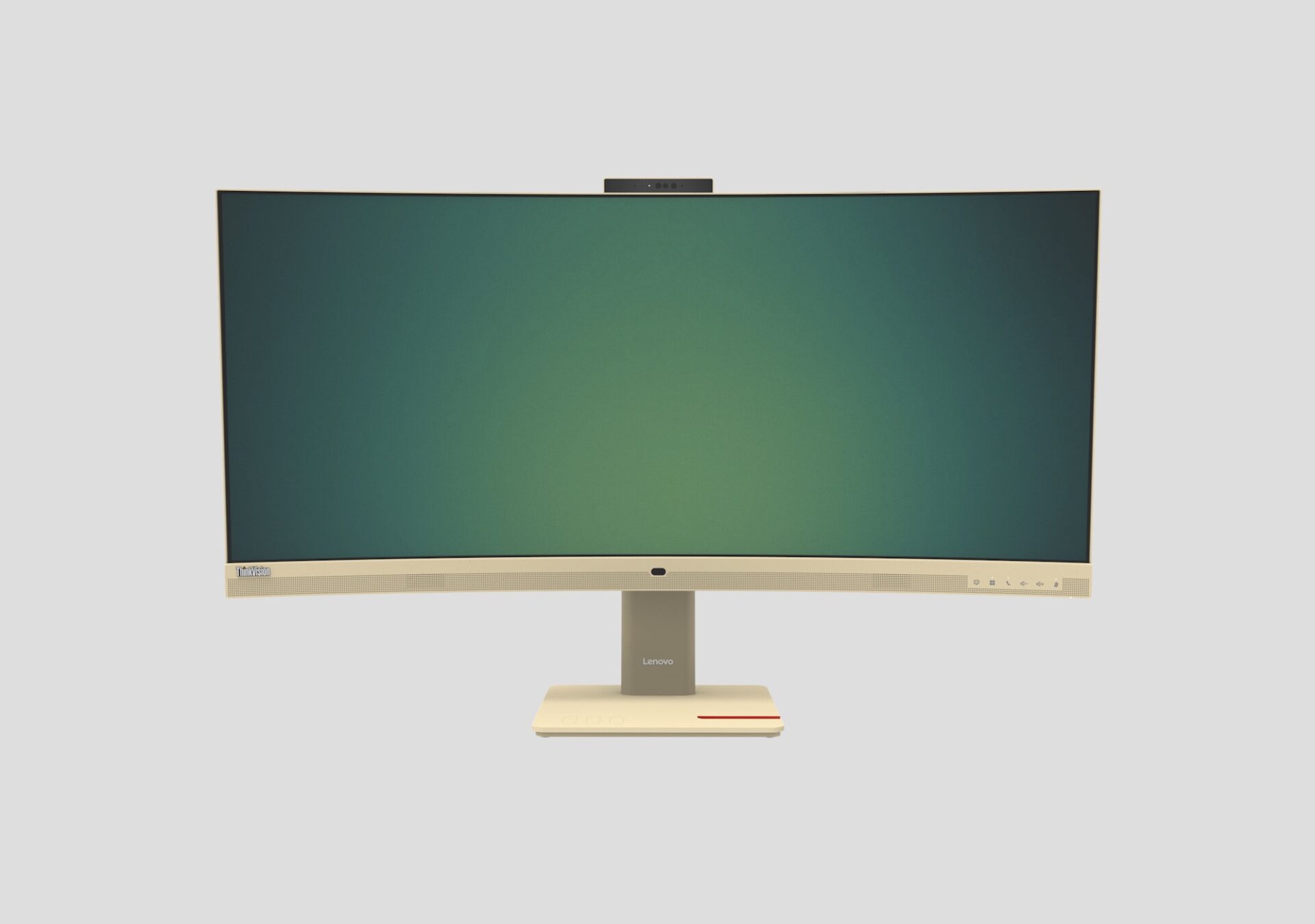
    Lenovo’s "AI Display" is still primarily in its experimental phase. The initiative intends to embed AI capabilities into monitors, allowing them to observe and assess user posture, movements, and additional insights. This information would be used to alert users about improper posture, and the monitor could autonomously tilt, swivel, or adjust its height to promote better ergonomics. Additionally, the monitor would be capable of recognizing signs of fatigue, like when a user yawns or shuts their eyes, and even blur the display when the user steps away. Sounds cool, doesn’t it? But wait a minute.

    Privacy Concerns and Challenges

    While this technology seems impressively advanced at first glance, winning users over to the idea of an AI-powered front camera that monitors their every action might prove to be a tough sell. It remains uncertain whether the data processing will occur on the device itself or in the cloud. If it’s the latter, it could lead to significant privacy concerns. Regardless, the specifics of how this product will work are still unclear. Only time will tell if the project will move beyond its current experimental stage.

  • Mammotion Launches Mini Robotic Mowers with UltraSense AI Vision

    Mammotion Launches Mini Robotic Mowers with UltraSense AI Vision

    Robotic mower maker Mammotion, known for its LUBA 2 AWD model that we reviewed last year (only in German), is at CES 2025 in Las Vegas to unveil some new and exciting products for the 2025 gardening season. Alongside the UltraSense AI Vision System, they are launching the LUBA mini AWD and YUKA mini models, plus upgraded versions of their popular LUBA 2 AWD and YUKA robotic mowers. The company has announced that pre-orders for their CES innovations have now begun.

    Advanced AI Technology

    The standout feature from Mammotion is the UltraSense AI Vision System. This system leverages cutting-edge AI technology to simplify lawn care and enables automatic mapping. Users no longer have to manually direct the mower, as the robotic lawnmower can autonomously explore areas up to 10,000 square meters and create virtual maps by utilizing smart edge detection.

    This innovation also ensures dependable performance, even in weak or no GPS signal scenarios. Mammotion claims that mowing can continue up to 300 meters (984 feet) away from the base. With the help of virtual fencing, users can set invisible boundaries, and edge trimming is more accurate due to improved visual positioning. According to Mammotion, mowers equipped with the UltraSense AI Vision System can detect over 120 types of obstacles, including toys and gardening tools. Our tests have shown that the LUBA 2 AWD excels in this area.

    New Mini Series Launch

    At CES 2025, Mammotion is also rolling out two new compact robotic mower lines. The first is the LUBA mini AWD series, which shares the all-wheel drive platform with the larger LUBA 2 AWD but is lighter, weighing in at 15 kg (33 lb). It’s tailored for gardens of up to around 1,500 m² (16,145 ft²) and can handle tough terrains thanks to its optimized 88 W cutting motor, OmniWheel design, and 20 cm cutting width.

    In addition, the new YUKA mini series weighs just 10.6 kg (23 lb) and is perfect for smaller gardens, covering areas up to about 800 m² (8,611 ft²). This model offers automatic lawn mapping (set up takes just a few minutes) and supports up to ten mowing zones.

    Upgrades for Existing Models

    Mammotion has also enhanced its established LUBA 2 AWD and YUKA models. For the 2025 season, the LUBA 2 AWD series will see an increase in motor power from 45 to 165 W for its dual mowing discs, along with longer battery life. It can now detect slopes of up to 38.6 degrees and identify obstacles as small as 3 inches (approximately 7.5 cm). One full battery charge allows mowing of up to 1,500 m² (16,145 ft²) over four hours.

    Alongside the UltraSense AI Vision, the YUKA model, which can collect leaves with an optional grass collector, features a strong five-blade double cutting system and can handle up to 30 customizable mowing zones.

    Source: http://www.notebookcheck.com/Mammotion-Luba-2-AWD-Test-Starker-Allrad-Maehroboter-ohne-Begrenzungskabel-im-Rennwagen-Design.870843.0.html

  • CES 2025: Garmin Unified Cabin with Snapdragon Cockpit Elite

    CES 2025: Garmin Unified Cabin with Snapdragon Cockpit Elite

    Garmin Automotive claims it can deliver next-generation voice assistance, customization, and entertainment options in vehicles with the 2025 update of its Unified Cabin. This system is said to provide scalable control over in-car tech through a single module, which uses Qualcomm’s newest automotive-specific solution.

    Innovative Technology

    The Snapdragon Cockpit Elite platform is a groundbreaking innovation that includes a Qualcomm Oryon CPU, similar to the ones found in the most advanced AI PCs and high-end Android smartphones available today, such as the X Elite and 8 Elite SoCs.

    Enhanced Features

    Additionally, the Cockpit Elite incorporates a Qualcomm Hexagon NPU and an Adreno GPU, enabling advanced smart features for vehicles. This technology is expected to power Desay SV’s Intelligent AI Cabin Platform (also known as G10PH), designed to improve the driving experience for both drivers and passengers in the next generation of software-defined cars.

    Available Product

    Also, the Garmin Dash Cam X310 with a 4K touchscreen is now listed for purchase on Amazon, offering drivers a high-quality recording solution.

    Qualcomm has issued a press release highlighting the collaboration between Garmin and Qualcomm, unveiling their next-generation digital cockpit solution driven by the Snapdragon Cockpit Elite.

  • Samsung Galaxy Phone to Get AI Weather Wallpaper Patent Update

    Samsung Galaxy Phone to Get AI Weather Wallpaper Patent Update

    Samsung may be developing an interesting feature for its Galaxy smartphones. A recent patent discovery indicates that the company could utilize artificial intelligence to create a new wallpaper that changes with the weather. Here’s what you need to know.

    AI-Powered Weather Wallpaper

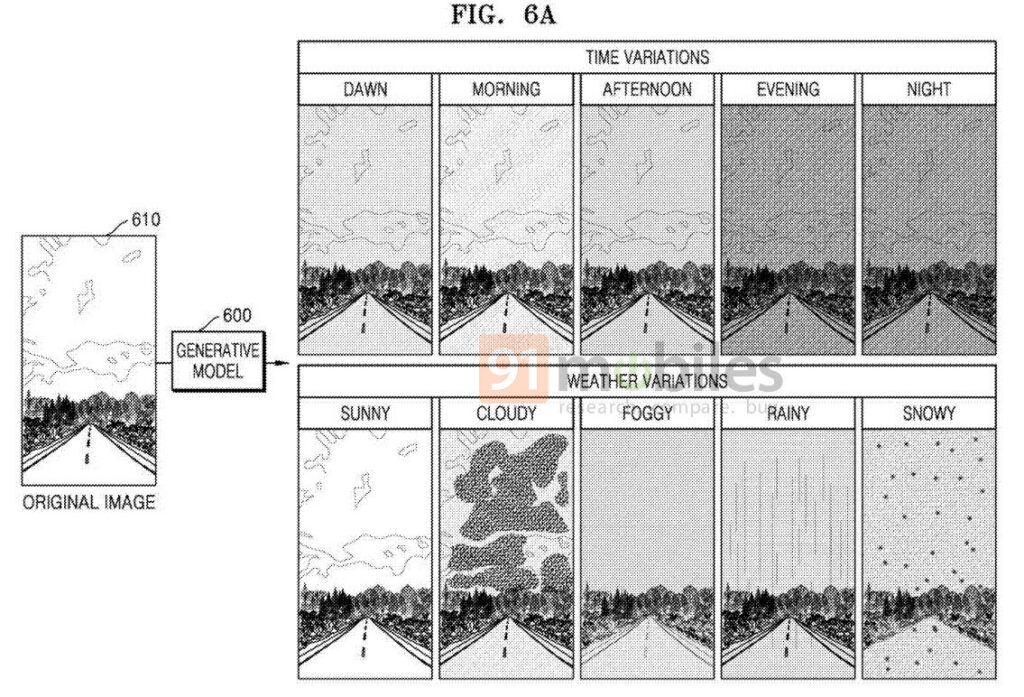
    The patent was discovered by 91Mobiles at the U.S. Patent Application Publication. The filing shows that Samsung has an innovative approach to wallpapers that merge aesthetics with functionality. This new wallpaper, powered by AI, is said to adapt its design based on the time of day and the weather conditions. There are even design sketches that illustrate how this idea could work in real life.

    Dynamic Changes Throughout the Day

    The wallpaper appears to automatically alter according to the time of day, transitioning through dawn, morning, afternoon, evening, and night. With the help of weather detection, it could switch between sunny, foggy, cloudy, rainy, or snowy backgrounds, depending on the current weather in the user’s location. It’s likely this feature will be linked with a weather tracking service. Additionally, the patent images suggest that it could send alerts nudging users to take an umbrella if rain is forecasted.

    Generative AI Enhancements

    On the AI side, Samsung plans to use Generative AI to analyze the wallpaper’s background, identifying the time, location, and weather conditions. It could then create updated images that reflect these changes, layered over the original background. This is a rather creative idea that might add a thoughtful touch to wallpapers. However, since it’s still in the patent stage, it’s uncertain whether the company will actually develop this feature.


    Image 1
    Image 1
  • AI-Powered Modular Motorhomes: LG’s Smart Living on Wheels

    AI-Powered Modular Motorhomes: LG’s Smart Living on Wheels

    LG is set to showcase its concept for an “AI home” integrated into mobility environments at CES 2025, which will be held from January 7 to 10 in Las Vegas. These innovative designs reimagine automobiles as highly advanced mobile living spaces. Central to this concept is the new Mobility Experience (MX) platform, which illustrates how the inside of vehicles could change beyond just being means of transport. With modular layouts and state-of-the-art AI technologies, LG seeks to convert cars into personalized habitats.

    A New Way to Experience Space

    This idea is grounded in the philosophy of “space-as-an-experience,” where the interiors of vehicles can adjust to various requirements through sophisticated technology and customizations. Depending on the individual’s desires, the cabin could function as a media lounge, a workspace, or a place to unwind. The concept is built around several essential attributes:

    Catering to Modern Lifestyles

    The platform mainly targets commuters and digital nomads, intending to erase the distinction between travel and living by transforming vehicles into parts of the smart home ecosystem. Nevertheless, worries about data privacy and power usage have not yet been addressed. Information regarding the market introduction is still pending, but more details might come to light during CES.

    Source: Link


    Image 1
  • Figure AI’s Humanoid Robot Delivers to First Customer

    Figure AI’s Humanoid Robot Delivers to First Customer

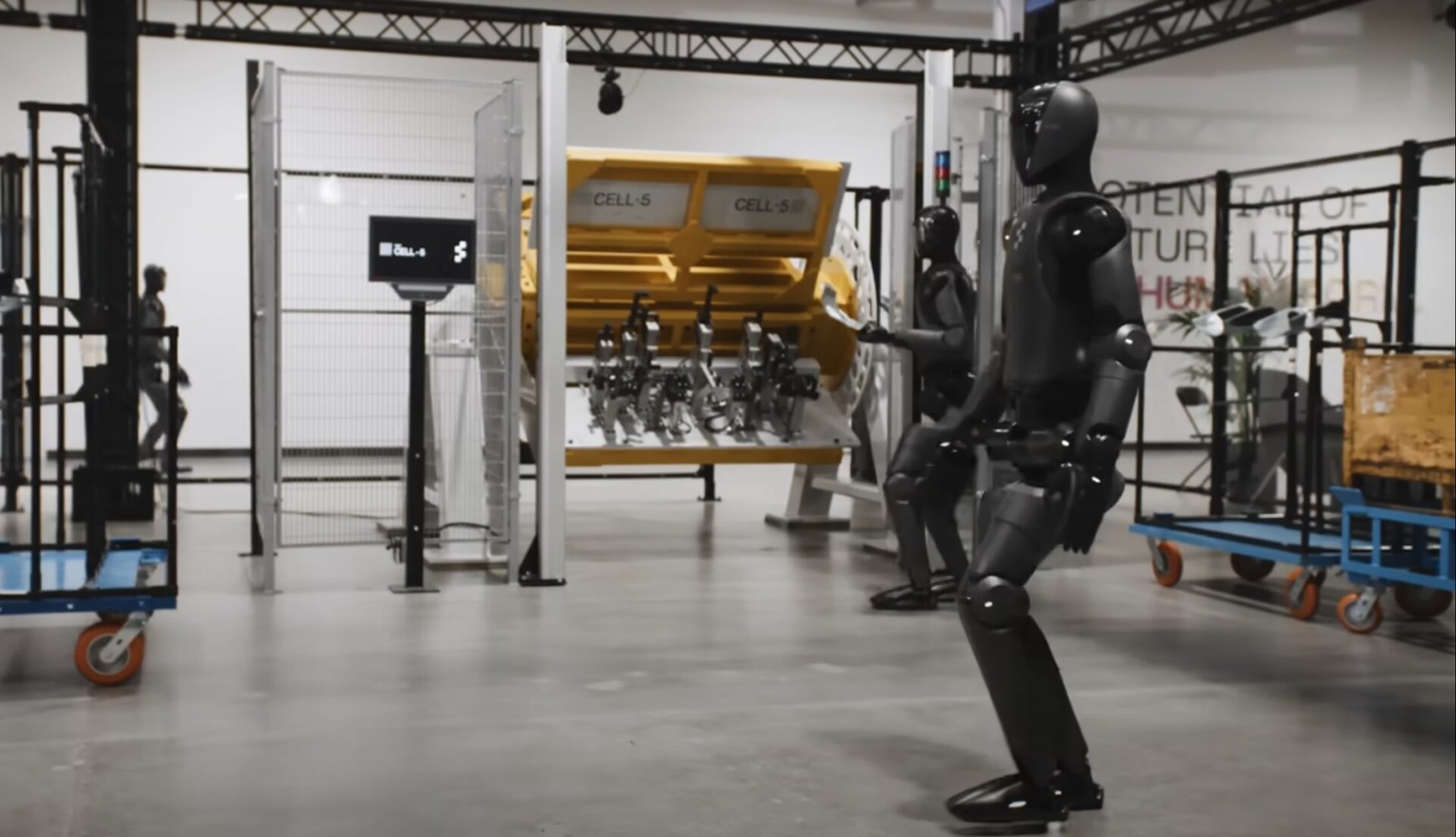
    Figure 02 is the newer model of Figure 01, which was launched in October 2023, and it was first shown to the public in August 2024. This humanoid robot, developed by the Californian start-up Figure AI, is outfitted with six RGB cameras, depth cameras, and infrared sensors, providing it with an impressive full 360-degree view of its surroundings. Its hands have 16 degrees of freedom, allowing it to replicate human-like precision and strength, making it ideal for detailed tasks that require both hands.

    Advanced Features

    Thanks to a partnership with OpenAI, the minds behind ChatGPT, Figure 02 can comprehend voice commands and make its own choices, enabling it to work as a “thinking” companion. During a trial at the BMW factory in Spartanburg, USA, the robot showed off its practical abilities. The accompanying video gives a sneak peek into how well it performed during these tests.

    Exciting Developments

    Brett Adcock, the founder and CEO of Figure AI, announced on LinkedIn that Figure 02 is already “hard at work”, hinting at its initial delivery to a customer. However, specifics about where it will be deployed and its price haven’t been shared yet. This achievement marks a key moment in the journey toward making humanoid robots more commercially available.

    Strong Backing

    Figure AI is supported by major investors such as Microsoft, OpenAI, Nvidia, and Jeff Bezos, which has led to a valuation of $2.6 billion, placing it among the best-funded startups in the industry. The first delivery is likely to bring the company nearer to Tesla, whose Optimus robot is still limited to usage within its factories. Notably, Figure AI has transitioned from its establishment in January 2022 to monetizing its product in only 31 months.

    Source: Link

  • AI Phishing Scams Target Corporate Executives

    AI Phishing Scams Target Corporate Executives

    According to the Financial Times, as reported by Gadgets360, there’s been a notable rise in phishing attacks that utilize AI technology to make them seem more human-like and slip past security measures.

    Targeting Corporate Executives

    These attacks primarily target high-level executives at companies such as eBay and the insurance provider Beazley. The fake emails are crafted with personal details about the employees, making them more appealing to open and click on.

    Understanding Phishing

    Phishing refers to deceptive emails or messages that aim to fool individuals into clicking on harmful links or downloading malware. A well-known instance of phishing is the Nigerian Prince scam, which claimed to offer a large financial reward in exchange for help.

    The Complexity of AI Attacks

    In contrast, these AI-driven phishing attempts appear more sophisticated. They seem to be built on extensive data regarding employees, which is gathered from social media and various other platforms, making them persuasive enough to bypass standard security systems.

    According to Check Point, Microsoft has been the most frequently impersonated brand in phishing activities, constituting 38% of all brand phishing attempts in the first quarter of 2024. Following Microsoft, Google and LinkedIn each accounted for 11% of the phishing attempts.

    Source: Link

  • Run:ai Joins Nvidia, Announces Open-Source Software Plans

    Run:ai Joins Nvidia, Announces Open-Source Software Plans

    AI chip giant Nvidia has finalized the purchase of Israeli AI start-up Run:ai, after getting the green light for the merger from the European Commission.

    Nvidia had initially shared its intentions to buy the start-up back in April, but the deal faced a review from the European Commission, which approved it just this month. The orchestration software firm stated that it "will keep assisting customers in maximizing their AI Infrastructure."

    Open-source Ambitions

    Run:ai has expressed its intention to make its software stack open-source "to support the community in building better AI, quicker." At present, Run:ai’s workflows are compatible only with Nvidia GPUs, but the firm is optimistic that this will evolve once the software is made available "to the whole AI ecosystem."

    Market Share and Scrutiny

    As per Nasdaq, Nvidia commands an 80% stake in the rapidly growing data center market for AI chips. However, the company is also facing intense scrutiny from lawmakers regarding potential monopoly issues.

    Earlier this month, China’s Administration for Market Regulation revealed it is conducting an investigation, and the US Commerce Department is also looking into how Nvidia’s chips made their way to China despite existing restrictions. Furthermore, the US Department of Justice is delving into the company following complaints from competitors.

    Reuters | Nvidia | Run:ai | Nasdaq

    Source: Link

  • OpenAI Faces Data Shortage in GPT-5 Development

    OpenAI Faces Data Shortage in GPT-5 Development

    The development of OpenAI’s eagerly awaited GPT-5 model has faced major challenges, causing delays in its release and stirring doubts about the future of advanced AI. Known as “Orion,” this model was anticipated to bring significant enhancements in reasoning, accuracy of facts, and reducing bias. However, OpenAI is now encountering intricate issues that may hinder its advancement.

    Unexpected Delays

    This setback has caught many off guard, especially considering the high hopes following the launch of GPT-4 in March 2023. Although GPT-5 is still being worked on, the complications in its training process and the financial pressures linked to it are becoming more evident.

    Key Challenges in Development

    As reported by The Wall Street Journal, one primary obstacle for GPT-5 is the lack of high-quality training data. OpenAI’s researchers found that the public internet no longer offers the varied datasets necessary for significant improvements. To tackle this, the company is generating synthetic data, recruiting specialists like software engineers, mathematicians, and physicists to produce unique content.

    The training for GPT-5 is also extremely demanding in terms of resources, with each training session costing around $500 million. Even with these massive investments, the advancements seen so far haven’t lived up to expectations. While some progress has been made in particular areas, it does not reach the groundbreaking levels that would warrant such high costs.

    Wider Implications for the AI Field

    The issues OpenAI is dealing with reflect broader trends in the artificial intelligence industry. As companies strive to extend the limits of AI, they increasingly face ethical, technical, and financial challenges. The postponement of GPT-5’s release illustrates the struggle to balance innovation with these limitations.

    Earlier predictions suggested that GPT-5 might launch by December 2024. However, these setbacks have created uncertainty around the launch date. OpenAI’s capacity to navigate these challenges will not only shape the future of GPT-5 but also impact its role as a frontrunner in the fast-changing AI field.