
Tag: AI Display

  • CrowPanel Advance 3.5: Affordable Smart Home Display with AI, Meshtastic & LVGL

    CrowPanel Advance 3.5: Affordable Smart Home Display with AI, Meshtastic & LVGL

    Key Takeaway

    1. Compact smart home display powered by ESP32-S3-WROOM-1-N16R8 with dual-core CPU and support for multiple wireless standards.
    2. Supports integration of Meshtastic, AI functions, speech recognition, and text-to-speech, enabling smart assistant features.
    3. Custom UI development is flexible with LVGL, Arduino IDE, or PlatformIO, allowing personalized smart home interfaces.
    4. Features a 3.5-inch IPS touchscreen with 480×320 resolution, capable of connecting external sensors, actuators, and a battery.

    Introduction to the CrowPanel Advance 3.5″-HMI (Meshtastic)

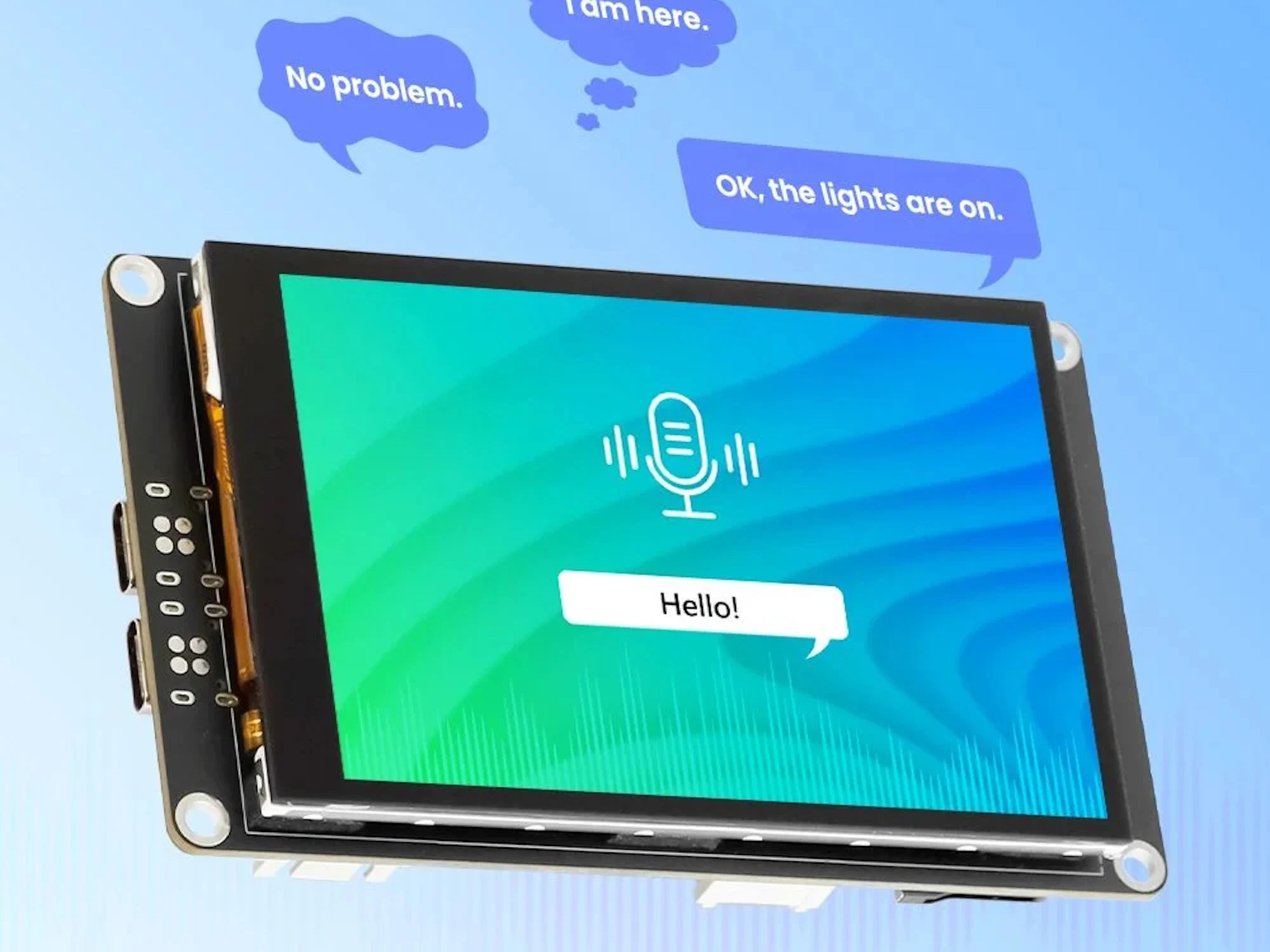
    The CrowPanel Advance 3.5″ HMI is an compact smart home display that tied based on the popular ESP32-S3-WROOM-1-N16R8 chip. It is quite popular amongst DIYers and makers because of its capabilities and size. The device sports a dual-core LX7 CPU working at up to 240MHz and already supports Wi-Fi 2.4GHz along with Bluetooth 5 LE, making it quite versatile. For additional wireless features like LoRa, ZigBee, Matter, Thread, or WiFi 6, you can easily add modules, offering a flexible connectivity options for various smart home projects.

    Features and Customization Options

    Bringing the crowpanel into your smart home setup is quite straightforward. Its support for Meshtastic with compatible modules makes network integration easier. You can program a custom interface, thanks to the support of LVGL, or choose other programming environments like the Arduino IDE or PlatformIO. This gives users a lot of flexibility in how they design their user experience. The display itself is a 3.5-inch IPS touchscreen with a resolution of 480 x 320 pixels, which is perfect for building simple control panels. External sensors, actuators, and even a battery can be connected, expanding its use cases.

    Smart Features and Price

    The device is not just a display but also comes with AI features including a built-in microphone and speaker that support speech recognition and text-to-speech functions. These features support seamless integration with smart assistants, making home automation easier. The unit’s price is set at $25 from the manufacturer, though it doesn’t include a case or additional nearby modules. Customers looking for instant options may find alternatives on Amazon. A notable fact is that this product is available directly from Elecrow, allowing for straightforward purchase and support.

    Sources

    • Lenovo Unveils AI Display Monitor with Built-in NPU at MWC 2025

      Lenovo Unveils AI Display Monitor with Built-in NPU at MWC 2025

      Key Takeaways

      1. Lenovo’s new curved display uses AI to track user movements and prompts for better posture and reduced tiredness.
      2. Integrated sensors and motors adjust the screen’s tilt and height in real-time for healthier computer usage.
      3. A discrete NPU ensures user data privacy by minimizing cloud processing and includes a feature that blurs the display when the user steps away.
      4. The AI Display is compatible with non-AI PCs, allowing them to utilize machine learning capabilities.
      5. Currently, the Lenovo AI display is a proof-of-concept device and not fully ready for the market.


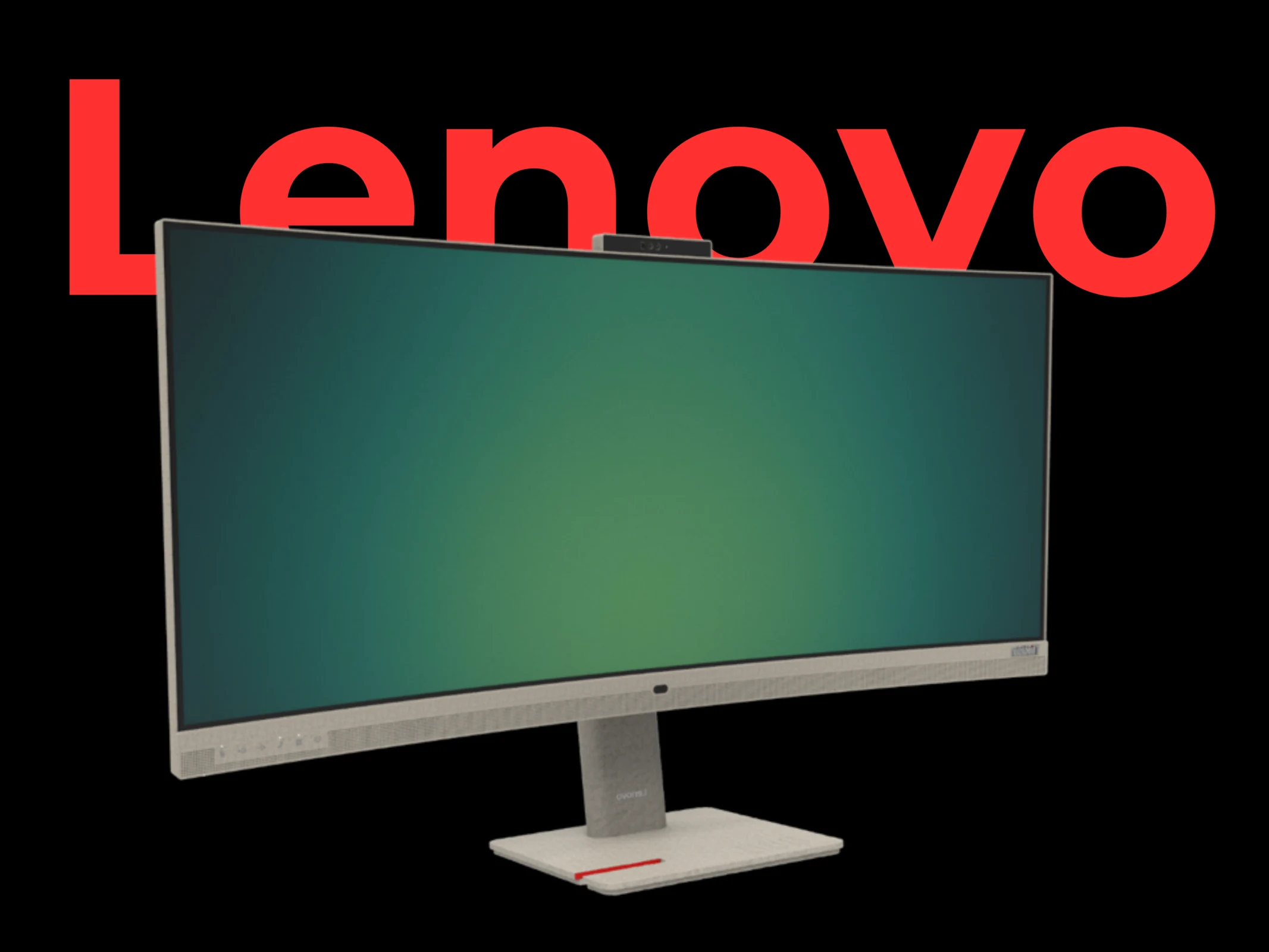
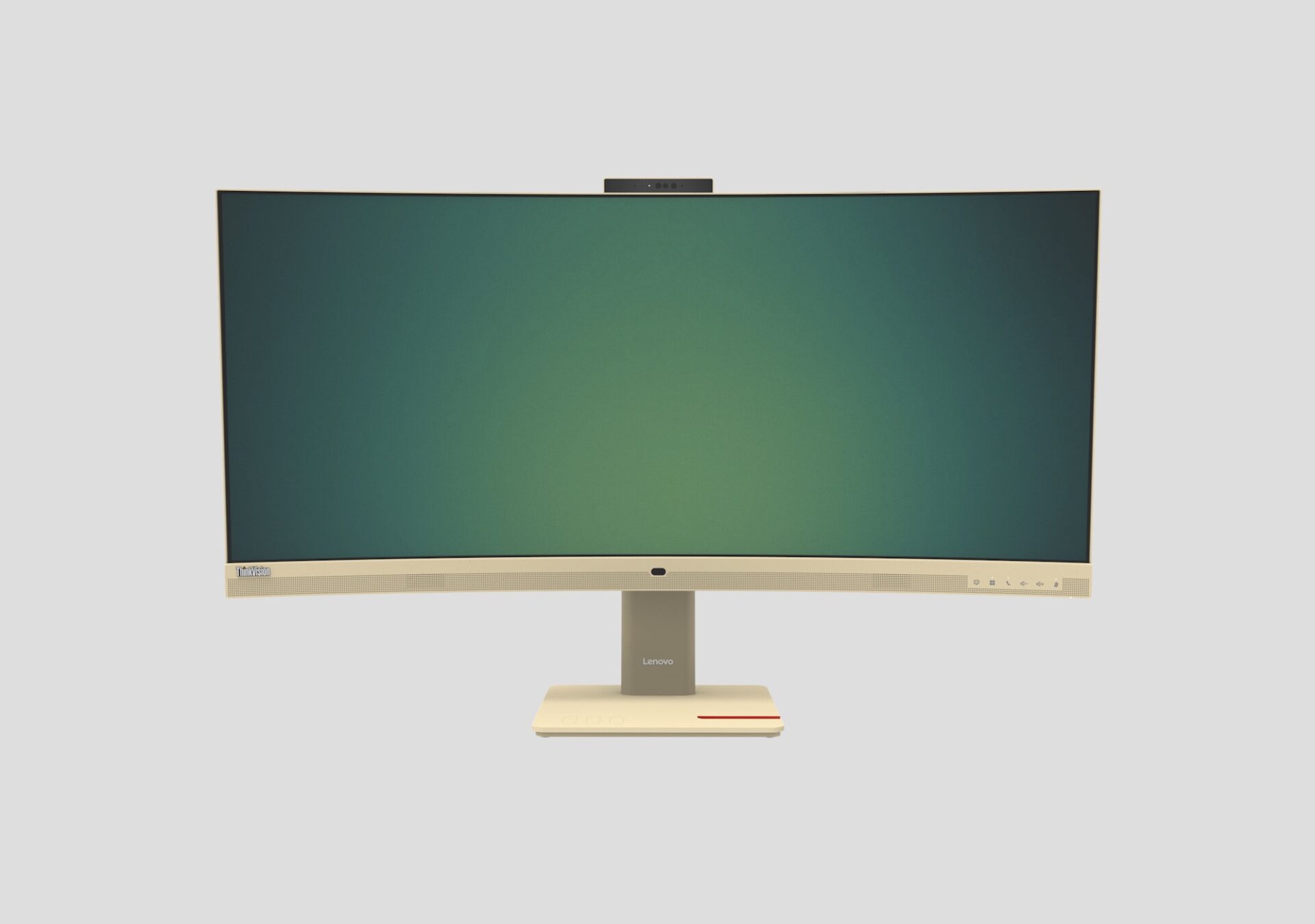
      At CES 2025, Lenovo unveiled a new curved display powered by AI that tracks users’ movements and gently prompts them when it senses bad posture or signs of tiredness.

      Innovative Features

      The integrated sensors monitor the user’s position, while motors automatically adjust the screen’s tilt and height to fit the user in real-time. This innovation is primarily designed to promote healthier computer usage habits, which in turn can boost productivity. However, recent major events like the Microsoft Recall and the unclear nature of how Lenovo is using AI have raised concerns within the consumer tech industry.

      Addressing Consumer Concerns

      Fortunately, Lenovo has addressed the concerns about privacy with a discrete NPU, or a specialized AI chip. This setup minimizes reliance on cloud processing, ensuring that user data remains safe on their PCs. Additionally, the monitor includes a privacy feature that blurs the display whenever the user steps away. While the presence of an NPU might make the idea of a camera constantly tracking physical activity behind the screen a tad more acceptable, it still feels a bit unsettling for 2025.

      Compatibility and Future Prospects

      To make the offering even more attractive, Lenovo’s AI Display can also work with non-AI PCs, allowing them to utilize LLMs and process machine learning requests from users. This might be enough to entice some users to overlook the discomfort that a product of this nature can bring. However, for the moment, the Lenovo AI display equipped with an NPU remains a proof-of-concept device, not fully ready for the current market.

    • Lenovo AI Display at CES 2025: Alerts for Posture and Fatigue

      Lenovo AI Display at CES 2025: Alerts for Posture and Fatigue

      Whether we want to admit it or not, Artificial Intelligence (AI) has woven itself into the fabric of our daily lives, impacting nearly every facet of our technology-driven existence. This pervasive presence can frustrate many who prioritize privacy. However, while some AI innovations are genuinely helpful, others can be quite problematic. Lenovo’s recent venture into AI within consumer gadgets, especially displays, walks a fine line by presenting both exciting opportunities and potential privacy issues reminiscent of Microsoft’s past controversies.

      The Concept of the "AI Display"

      Lenovo’s "AI Display" is still primarily in its experimental phase. The initiative intends to embed AI capabilities into monitors, allowing them to observe and assess user posture, movements, and additional insights. This information would be used to alert users about improper posture, and the monitor could autonomously tilt, swivel, or adjust its height to promote better ergonomics. Additionally, the monitor would be capable of recognizing signs of fatigue, like when a user yawns or shuts their eyes, and even blur the display when the user steps away. Sounds cool, doesn’t it? But wait a minute.

      Privacy Concerns and Challenges

      While this technology seems impressively advanced at first glance, winning users over to the idea of an AI-powered front camera that monitors their every action might prove to be a tough sell. It remains uncertain whether the data processing will occur on the device itself or in the cloud. If it’s the latter, it could lead to significant privacy concerns. Regardless, the specifics of how this product will work are still unclear. Only time will tell if the project will move beyond its current experimental stage.