Category: Artificial intelligence

  • India Adopts AI for Improved Weather Forecasting amidst Escalating Extreme Events

    India Adopts AI for Improved Weather Forecasting amidst Escalating Extreme Events

    India is taking a significant step forward in weather forecasting by integrating artificial intelligence (AI) into its methods. This decision comes as the country grapples with an increase in extreme weather events such as floods and droughts. The India Meteorological Department (IMD) is spearheading this integration to improve the accuracy of weather predictions, which is crucial for a nation with a large population and a significant agricultural sector.

    Rising fatalities due to extreme weather

    In recent years, India has experienced a surge in severe weather conditions, partly attributed to global warming. These events have not only disrupted lives but also resulted in a significant number of fatalities. According to the Centre for Science and Environment, an independent organization, nearly 3,000 people in India have lost their lives to extreme weather this year alone. Given these alarming statistics, the need for precise and timely weather forecasts has become more critical than ever.

    AI as a cost-effective and efficient solution

    The IMD currently relies on supercomputers and mathematical models for weather predictions. However, the department is now exploring the potential of AI as a cost-effective and efficient alternative. This move aligns with global trends, as other countries are also turning to AI for weather forecasting. For example, the Met Office in Britain has acknowledged the transformative potential of AI in this field. Notably, a Google-funded AI model has reportedly outperformed traditional forecasting methods.

    The transformative impact of AI in India

    The integration of AI into weather forecasting has the potential to be particularly transformative for India. With a population of 1.4 billion people and being a major producer of rice, wheat, and sugar, the country heavily relies on accurate weather forecasts for both human safety and agricultural planning. The IMD's initiative to incorporate AI could lead to more precise forecasts at a lower cost, which would be a significant advantage for a nation where many still live in poverty.

    Overall, India's decision to integrate AI into its weather forecasting methods is a promising development. By leveraging the power of AI, the IMD aims to enhance the accuracy and efficiency of weather predictions, ultimately benefiting the nation's population and agricultural sector. As extreme weather events continue to pose challenges, this technological advancement could prove to be a game-changer in mitigating their impact and ensuring the safety and well-being of the Indian population.
  • Google’s VideoPOET Achieves Innovative Coherent Video Generation

    Google’s VideoPOET Achieves Innovative Coherent Video Generation

    Google Unveils VideoPoet: Revolutionizing Video Generation

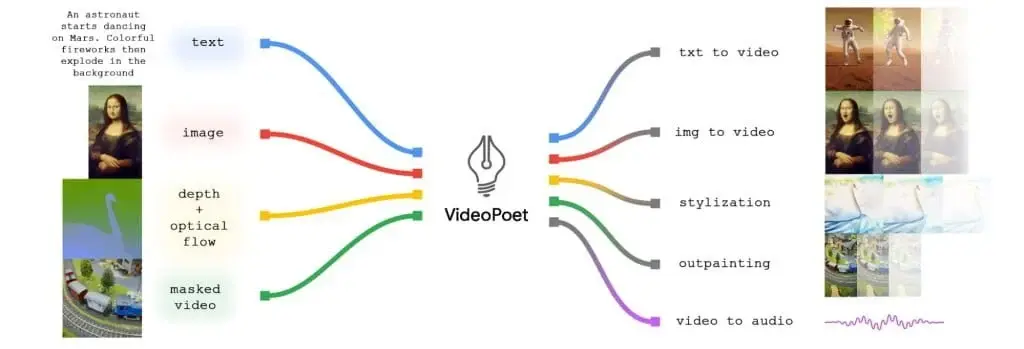
    Google has revealed VideoPoet, an innovative large language model (LLM) that is transforming the landscape of video generation. VideoPoet stands out by excelling in creating coherent large-motion videos with minimal artifacts, departing from its predecessors. This cutting-edge model is equipped to handle a variety of video generation tasks, encompassing text-to-video conversion, image-to-video transformation, video stylization, inpainting, and video-to-audio functionalities.

    Breakthroughs in Video Generation

    VideoPoet distinguishes itself by its ability to produce ten-second-long videos, surpassing its competitors like Gen-2. Notably, this model does not rely on specific data inputs for video creation, setting it apart from models that demand detailed information for optimal performance. With its diverse capabilities, VideoPoet leverages a multi-modal large model, positioning itself as a potential frontrunner in the realm of video generation.

    Leveraging the Potential of Large Language Models

    In a departure from prevalent trends in video generation models, Google’s VideoPoet shifts away from diffusion-based approaches. Instead, it harnesses the power of large language models (LLMs) to seamlessly integrate a range of video generation tasks within a singular model. This integration eliminates the necessity for separately trained components for each function, resulting in videos that showcase varying lengths, actions, and styles informed by the input text content.

    Adaptability and Future Prospects

    Apart from generating 10-second video clips from text prompts, VideoPoet demonstrates its adaptability by animating static images based on provided cues. This versatility across various inputs underscores VideoPoet’s potential in AI-powered video generation. With the introduction of VideoPoet marking a new era in this domain, it hints at the exciting opportunities that await in 2024.

  • ByteDance Surges Past Tencent with $110B Gain in 2023

    ByteDance Surges Past Tencent with $110B Gain in 2023

    2023: A Landmark Year for ByteDance

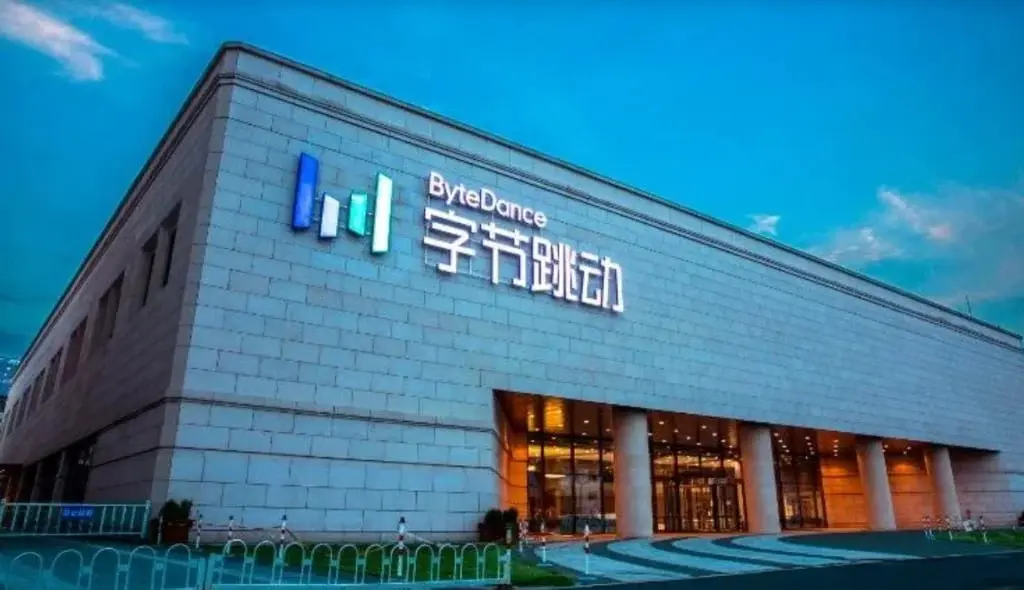
    In the year 2023, ByteDance, the corporate entity behind the widely-used TikTok app, achieved a significant milestone. The company’s revenue skyrocketed to an impressive $110 billion, solidifying its stature as a prominent player in the technology sector. This achievement not only underlines ByteDance’s remarkable expansion but also hints at a potential transformation in the industry landscape, potentially surpassing Tencent, a major Chinese internet powerhouse.

    Overcoming Obstacles and Fostering Innovation

    ByteDance’s triumph is further accentuated by the economic hurdles in China and the extensive scrutiny it encounters in crucial markets such as the United States and India. Despite these challenges, the company’s revenue growth mirrored its pace from 2022, escalating from over $80 billion. This serves as a testament to ByteDance’s flexibility and inventive strategies.

    Diversification Across Varied Industries

    ByteDance’s strategic vision extends beyond the confines of social media. Leveraging TikTok’s massive popularity, the company is venturing into e-commerce and other sectors. This diversification is crucial, especially in an era where relying solely on social media could pose risks. ByteDance’s exploration of e-commerce not only aims to broaden its business scope but also aims to redefine how social media platforms can drive economic advancement.

    Evolution in China and Global Expansion

    Internally in China, ByteDance is reshaping its Douyin platform into a comprehensive ecosystem. It now provides services like food delivery and accommodation bookings, directly competing with established giants like Alibaba and Meituan. Meanwhile, TikTok’s strategy in the United States and other global markets emphasizes blending entertainment with shopping, exemplified by its acquisition of Tokopedia’s e-commerce arm in Indonesia.

    Hurdles and Complications

    Nonetheless, ByteDance’s journey is not devoid of challenges. Its profitability, particularly as a private entity, remains uncertain. Furthermore, the company’s endeavors to address national security concerns in the U.S. underscore the intricate terrain that international tech enterprises navigate.

    Future Aspirations and Flexibility

    Looking forward, ByteDance’s aspirations go beyond being just a social media juggernaut. The company aims to delve into artificial intelligence and other technological domains. Despite setbacks in endeavors such as gaming, ByteDance’s readiness to experiment and adjust could be the linchpin to its forthcoming triumph.

    To sum up, 2023 stands out as a momentous year for ByteDance, characterized by striking revenue figures and a diversification plan that transcends the realm of social media. As ByteDance continues to confront challenges and pursue its ambitions, it stands on the brink of reshaping the tech sphere and redefining the frontiers of social media-induced economic advancement.

  • Chinese Startup Moore Threads’ AI Center Challenges US Sanctions

    Chinese Startup Moore Threads’ AI Center Challenges US Sanctions

    Moore Threads Introduces Cutting-Edge Computing Center in Beijing

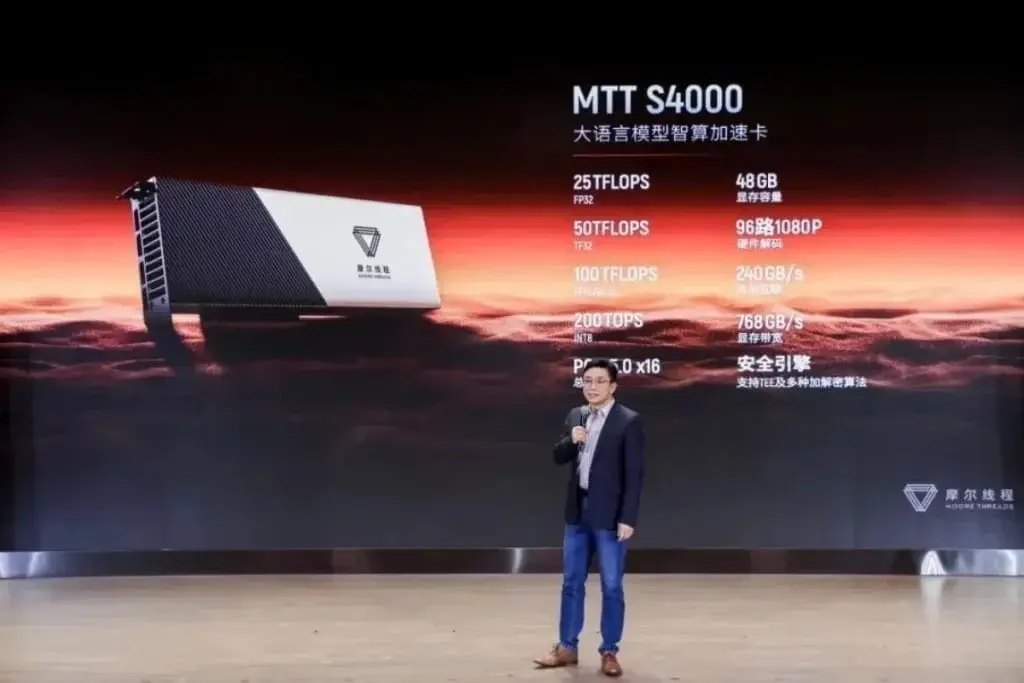
    Despite encountering obstacles related to US sanctions, Moore Threads Intelligent Technology, a startup based in Beijing known for its expertise in GPUs, has unveiled the KUAE Intelligent Computing Centre.

    Overcoming Adversities and Reallocating Assets

    The journey for Moore Threads has been marked by hurdles stemming from US sanctions, which have impeded their access to manufacturing and software resources. Nevertheless, the company has flexed its adaptability, undergoing layoffs to reassess its assets and concentrating on the advancement of GPUs.

    Contributing to China’s Autonomous Chip Production

    The introduction of the new GPU and computing facility plays a pivotal role in China’s pursuit of self-reliance in chip manufacturing, a critical objective against the backdrop of geopolitical strains. Moore Threads has successfully secured a noteworthy sum exceeding US$525 million in funding, signaling unwavering support from investors who share its forward-looking vision.

    Strategically Aligned with Nvidia’s CUDA Framework

    The operational foundation of the KUAE computing center seamlessly integrates with Nvidia’s CUDA platform, ensuring harmonious coexistence with prevailing technologies. This strategic alignment echoes Nvidia’s dominant foothold in the GPU market, thus mitigating the ramifications of US export restrictions.

    Navigating and Transforming the Corporate Landscape

    Enterprises such as Moore Threads are swiftly adjusting and reshaping the corporate terrain, showcasing their resilience in times of adversity. Their capacity to innovate amidst challenges reflects the overarching trend within the tech domain characterized by a blend of creativity and fortitude.

  • China’s Non-Technical Firms Look to Nvidia Amid Escalating US-China Technology Conflict

    China’s Non-Technical Firms Look to Nvidia Amid Escalating US-China Technology Conflict

    Chinese Firms Acquiring Nvidia GPUs Amid US-China Tech Conflict

    Several non-tech Chinese firms are turning to Nvidia graphics processing units (GPUs) to bolster their artificial intelligence (AI) capabilities amidst the intensifying tech war between Washington and Beijing. This trend highlights the wider impact of geopolitical tensions on the global technology landscape.

    L&A Design's Strategic Move

    Shenzhen-listed landscape designer L&A Design recently announced a significant investment of 435 million yuan (US$60.5 million) to acquire up to 128 units of Nvidia servers with high-performance GPUs through a subsidiary. The move aims to enhance the company's AI capabilities and navigate the complexities arising from the US-China tech conflict. The purchase will be completed in two phases, with 64 servers expected by 2023 and the remaining servers by the end of 2024, facilitated by Shenzhen Runxin Supply Chain.

    Market Response and Nvidia's Adaptations

    Following the announcement, L&A Design's stock price surged by the daily limit of 20%, indicating investor confidence in the strategic decision. In response to US sanctions, Nvidia has modified its chips, creating the A800 and H800 variants tailored for Chinese clients. However, subsequent controls in October restricted the sale of these modified chips to China, prompting companies like L&A Design to seek alternative sources for their AI development needs.

    Diversification Beyond Tech Firms

    L&A Design is following in the footsteps of Lotus Health, a powdered flavor maker, which previously disclosed a deal to purchase Nvidia H800 GPU-based servers from Chinese server maker H3C. This growing trend highlights the broader impact of the US-China tech conflict on industries beyond the traditional technology sector.

    Global Impact on Nvidia

    As US export restrictions affect Nvidia's lower computing power AI chip products designed for the Chinese market, the company anticipates a significant hit to its fourth-quarter earnings. With over 90% of China's $7 billion market for AI chips, Nvidia faces challenges from both established players and emerging Chinese chip designers.

    Chinese Chip Designers Challenge Nvidia's Dominance

    In response to the challenges faced by Nvidia, Chinese chip designers, including major players like Huawei and Tencent, are aggressively entering the AI chip market. Huawei's Ascend 910B chip and Tencent's Zixiao AI inference chip are positioned as alternatives, with Tencent actively promoting its offerings to attract Nvidia's clients.

    Market Opportunity Amid Restrictions

    Despite potential challenges in winning orders due to production capacity constraints, Chinese chip designers view the current situation as an opportunity. US export curbs inadvertently fuel China's self-development capability, with Chinese tech giants prioritizing sustainability over performance and building AI ecosystems without relying on US chips.

    In essence, the rush of non-tech Chinese firms towards Nvidia GPUs signals a broader reshaping of the global AI landscape, driven by geopolitical tensions and the pursuit of technological self-sufficiency.

  • Chinese semiconductor companies seek high-end chip assembly in Malaysia due to US sanctions

    Chinese semiconductor companies seek high-end chip assembly in Malaysia due to US sanctions

    To navigate potential US sanctions on China’s chip industry, Chinese semiconductor design companies are forging collaborations with Malaysian chip packaging firms for the assembly of high-end graphics processing units (GPUs). This shift in focus towards assembly aims to circumvent the mounting restrictions imposed by Washington on China’s access to advanced GPUs, impacting crucial sectors such as artificial intelligence, supercomputing, and military applications.

    Chinese Chip Firms Seek Alternatives in Malaysia

    Smaller Chinese semiconductor design firms have encountered challenges in securing advanced packaging services domestically, prompting them to seek alternatives. Malaysia, a significant player in the global semiconductor supply chain, has emerged as an appealing destination for Chinese chip firms. Unisem, majority-owned by China’s Huatian Technology, and other Malaysian chip packaging companies have reported increased business and inquiries from their Chinese counterparts.

    Chinese Interest in Malaysia

    The factors driving Chinese interest in Malaysia include the positive perception of Malaysia’s relationship with China, affordability, a skilled workforce, and access to sophisticated equipment. Unisem Chairman John Chia emphasized that the business dealings are legitimate and compliant, despite concerns over potential reactions from the US. Notably, Unisem’s customer base in Malaysia is predominantly from the United States.

    Malaysia’s Ambitions in the Global Market

    Malaysia currently contributes 13% to the global market for semiconductor packaging, assembly, and testing, with ambitions to increase this share to 15% by 2030. Chinese chip firms, including Xfusion and StarFive, are actively planning expansions in Malaysia, joining the ranks of global giants like Infineon and Intel, which have already made multibillion-dollar chip investments in the country.

    Alternative Manufacturing Services in Vietnam and India

    Amid the global semiconductor landscape’s evolving dynamics, other countries such as Vietnam and India are also positioning themselves as alternatives for chip manufacturing services. This trend reflects a broader industry shift where Chinese companies seek to assemble their chips outside China, mitigating geopolitical risks and gaining easier access to non-Chinese markets.

    The Pursuit of Strategic Partnerships

    As Malaysia continues to attract substantial investments in the chip industry, the collaboration between Chinese semiconductor design companies and Malaysian chip packaging firms underscores the industry’s adaptability and the pursuit of strategic partnerships in response to geopolitical uncertainties.

  • ByteDance Defends Utilization of OpenAI Technology Amidst Fierce AI Market Competition

    ByteDance Defends Utilization of OpenAI Technology Amidst Fierce AI Market Competition

    ByteDance, the parent company of TikTok, recently found itself at the center of controversy regarding its use of OpenAI's technology. This incident has sparked a discussion about the delicate balance between innovation and ethical practices in the rapidly evolving field of AI development.

    ByteDance clarified that only a small group of engineers had access to OpenAI's API and that their usage was in line with the service terms. They made it clear that the experimental model developed by these engineers was never intended for public release. Despite these clarifications, OpenAI decided to temporarily suspend ByteDance's access to its services while further investigation takes place.

    This situation highlights the blurred boundaries between collaboration and competition in the tech industry. ByteDance's statement emphasized their commitment to adhering to OpenAI's terms, particularly the clause that prohibits the use of outputs to develop rival models.

    The incident also sheds light on the competitive landscape of AI technology, particularly in China. Chinese companies, like ByteDance, have been striving to catch up with their global counterparts in the generative AI space. The emergence of OpenAI's advanced models, such as GPT-3.5 and GPT-4 Turbo, has intensified the race for AI supremacy.

    However, China's AI scene faces its own challenges. The country has seen a surge in the development of local large language models (LLMs), leading to concerns about resource wastage and the need for more originality in AI development. This situation calls for a thoughtful approach to innovation, where respecting intellectual property and fostering genuine advancement go hand in hand.

    ByteDance's case serves as a pivotal moment in the AI industry, underscoring the fine line between inspiration and imitation. It serves as a reminder that as technology advances, so must the ethical standards that guide its use. The incident with OpenAI has brought to the forefront the importance of transparency, collaboration, and responsible practices in the world of AI development.

    In conclusion, the scrutiny faced by ByteDance over its use of OpenAI's technology highlights the ongoing debate surrounding the ethical use of AI in the tech industry. This incident serves as a reminder that innovation must always be accompanied by a commitment to ethical standards, ensuring that technology is used responsibly and in line with established guidelines.

  • China’s AI Surge Could Revolutionize Several Industries

    China’s AI Surge Could Revolutionize Several Industries

    China’s Rapid Development in Artificial Intelligence

    We live in a world where technology evolves rapidly. China’s leap into artificial intelligence (AI) is just one other instance of rapid development. A recent report by a Beijing think tank affiliated with China’s industry ministry has highlighted an impressive forecast: by 2035, Chinese generative AI is expected to make up a whopping 30 trillion yuan (about US$4.2 trillion) of the global AI market’s value. This figure is a third of the industry’s expected global value of 90 trillion yuan.

    Rapid Adoption of AI in China

    This year alone, the value of China’s generative AI market is set to hit 10 trillion yuan, showcasing the country’s swift adoption of AI across various sectors. Generative AI, which includes advanced technologies like those in OpenAI’s ChatGPT, is rapidly being integrated into industries such as manufacturing, retail, telecommunications, and healthcare. With an adoption rate of around 15%, it’s clear that AI is no longer a futuristic concept but a present reality in China.

    AI Adoption Across Different Sectors

    The retail and telecom sectors are leading the AI adoption race with 13% and 10% respectively. Healthcare and manufacturing are not far behind, adopting these technologies at 7% and 5%. This diverse application demonstrates the flexibility and potential of AI in improving efficiency and innovation across different fields.

    Integration of AI in Major Tech Companies

    The success of AI technologies like ChatGPT has spurred a wave of similar innovations in China. Major tech companies such as Baidu, Tencent, ByteDance, SenseTime, and iFlyTek are not just exploring but actively integrating AI into their services. Tencent’s Hunyuan model, for example, is now used in over 180 services including Tencent Meeting, Tencent Docs, and their online advertising ventures.

    Image Credits: Marc Olivier

  • Google Report Indicates Upcoming Pixel 9 Series with Exclusive Pixie AI Assistant

    Google Report Indicates Upcoming Pixel 9 Series with Exclusive Pixie AI Assistant

    Google Pixie: A Unique AI Assistant Tailored for Pixel 9 Series

    The Google Pixel has garnered acclaim for delivering a premium Android experience on mobile devices. With its distinctive attributes and exceptional performance, it has earned a special place in the hearts of Android aficionados. Now, Google is poised to elevate this experience by unveiling a novel AI assistant known as Pixie, exclusively designed for the upcoming Pixel 9 series.

    Progress in AI Support

    Presently, Google Assistant serves as a proficient AI voice aide accessible on all Android smartphones and various gadgets. Nevertheless, fueled by recent developments in AI technology, Google is said to be developing a more sophisticated assistant. Rumored to be christened Pixie, this assistant is anticipated to bring forth a plethora of fresh features and capabilities.

    Reserved for Pixel Devices

    Insiders familiar with the situation suggest that Google’s endeavors concerning Pixie are already underway. Expected to be a Pixel-exclusive trait, this AI assistant is projected to make its debut alongside the Pixel 9 series in 2024. Although Pixie is expected to undertake tasks akin to those of Google Assistant, it is poised to introduce novel advancements enabling its adeptness in handling complex tasks.

    Augmented Functionality

    A standout feature of Pixie is its capacity to recommend nearby retail outlets where users can procure items they have captured in photos. While this might seem straightforward, the underlying process is intricate, yet Pixie is equipped to manage it seamlessly. Additionally, Pixie might extend offline functionality, empowering users to issue commands and execute tasks on their devices sans an internet connection—a notable departure from the capabilities of Google Assistant.

    Empowered by Gemini Nano

    Speculation suggests that Pixie will harness the power of Gemini Nano, further enhancing its capacities and performance. Nonetheless, it should be noted that "Pixie" currently serves as an internal codename, subject to potential modification before its official launch.

    To sum up, the advent of Pixie as an exclusive AI assistant tailored for the Pixel 9 series underscores Google’s dedication to furnishing a superlative Android encounter for its users. With cutting-edge features and enriched functionality, Pixie is poised to elevate the Pixel experience to unprecedented levels.

  • Samsung’s official disapproves of “AI Phone” designation for Galaxy S24 series, looks for alternative options

    Samsung’s official disapproves of “AI Phone” designation for Galaxy S24 series, looks for alternative options

    Samsung Official Expresses Disapproval of “AI Phone” Name for Galaxy S24 Series

    A Samsung official named Lu Taiwen has expressed disapproval of the name “AI Phone” for the upcoming Galaxy S24 series. Instead, Lu Taiwen has instructed employees to propose alternative names that can better capture the essence and AI capabilities of Samsung’s flagship phones. The Galaxy S24 series consists of three models – the Galaxy S24, Galaxy S24 Plus, and Galaxy S24 Ultra.

    Concerns About “AI Phone” Name

    There are two primary concerns about the name “AI Phone” that have led to Lu Taiwen’s disapproval. Firstly, it is believed that the term might not fully convey the technological advancements and user experience associated with the Galaxy S24 series. The name fails to capture the true essence of the AI capabilities that Samsung aims to highlight in its flagship phones. Secondly, there are concerns about the pronunciation of “AI Phone,” which bears a resemblance to “iPhone.” However, the exact reasons behind Lu Taiwen’s opposition to the name remain undisclosed.

    Samsung’s Emphasis on AI

    In November, it was reported that Samsung had filed trademark applications for names like “AI Phone” and “AI Smartphone” to emphasize its commitment to artificial intelligence. This aligns with Samsung’s broader strategy of prioritizing AI in its next-generation flagship smartphones. The Galaxy S24 has already been acknowledged as an AI-powered phone, with Samsung signaling its intent to integrate device-side AI models into its upcoming Galaxy phones.

    AI-Powered Features of Galaxy S24

    The upcoming Galaxy S24 series is expected to offer various AI-powered features. One of the anticipated features is the AI Live Translate Call, which provides personalized translation services for users. This feature eliminates the need for third-party translation apps by seamlessly providing real-time audio and text translations during phone calls. Samsung aims to enhance user experience and convenience with these AI capabilities.

    In conclusion, the name “AI Phone” for the Galaxy S24 series has faced disapproval from a Samsung official. The concerns mainly revolve around the name’s inability to fully depict the AI capabilities and technological advancements of the flagship phones. Samsung’s emphasis on AI is evident through its trademark applications and the integration of device-side AI models into the Galaxy S24 series. Users can expect AI-powered features like the AI Live Translate Call, which offers personalized translation services during phone calls.