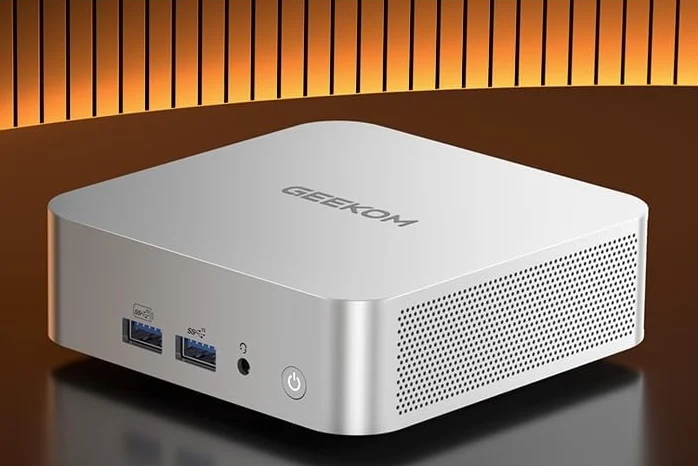
Author: GizNews

  • Geekom A7 Max and AMD Ryzen 9 Mini PCs on Sale at Amazon

    Geekom A7 Max and AMD Ryzen 9 Mini PCs on Sale at Amazon

    Key Takeaways

    1. Geekom is hosting a spring sale from March 25 to March 31, offering discounts on its mini PC range powered by AMD Ryzen processors.
    2. The Geekom A5 mini PC is available at reduced prices: $368 for the Ryzen 5 7430U model and $390 for the Ryzen 7 5825U model.
    3. The Geekom A6 and A8 mini PCs offer more power at discounted prices of $551 and $585, respectively.
    4. The Geekom A7 Max, featuring a Ryzen 9 7940HS processor, has the largest discount, now priced at $689, down from $949.
    5. These deals provide significant savings for buyers looking for compact desktops with modern AMD Ryzen processors.


    Geekom is currently hosting a spring sale on its well-liked mini PC range, providing limited-time price cuts for several devices powered by AMD Ryzen. This remarkable promotion is active from March 25 to March 31 and includes various models that are ideal for individuals seeking desktop-quality performance in a smaller package.

    Affordable Options

    For those keeping an eye on their budget, the Geekom A5 comes with an AMD Ryzen 5 7430U and has seen a price drop from $439 to $368 on Amazon. There’s also another configuration of the A5 featuring the Ryzen 7 5825U processor, which is now available at a reduced price of $390, down from $459, thanks to a 15% discount on Amazon. Both of these mini PCs offer expandable 16GB RAM and are designed to provide efficient performance in a compact chassis, making them suitable for home office and multimedia applications, even in tighter spaces.

    Upgrading the Power

    If you’re seeking a more powerful device, consider the Geekom A6 with an AMD Ryzen 7 6800H processor, which is currently priced at $551 on Amazon, down from $649, marking a 15% reduction. Alternatively, for those wanting a mini PC with a more recent chipset, the Geekom A8 featuring the AMD Ryzen 7 8745HS is available for $585 on Amazon, compared to its regular price of $689.

    Major Savings

    The biggest discount is on the high-performance Geekom A7 Max, equipped with an AMD Ryzen 9 7940HS processor. Normally retailing at $949, this computer can now be purchased for just $689 on Amazon, presenting a fantastic deal for a mini PC powered by Ryzen 9, along with 16GB DDR5 and a 1TB SSD.

    In summary, these mini PC bargains cater to a broad audience looking for a compact desktop with the latest AMD Ryzen processors. With these discounts, buyers across various budget ranges can enjoy significant savings, regardless of their performance needs. Be sure to check out the complete listing on Amazon to see all the deals available during Geekom’s Spring Sale.

    Source:
    Link



  • Affordable 35mm Full-Frame Lens: Fast and Lightweight Option

    Affordable 35mm Full-Frame Lens: Fast and Lightweight Option

    Key Takeaways

    1. Samyang is launching a 35 mm f/1.8 full-frame lens for Sony E cameras that is more affordable than the Sony SEL35F18F, priced at approximately $260.
    2. The new lens is 23% lighter than competitors, weighing only 216 grams, while still aiming for high image quality with a complex lens design.
    3. It features an STM II autofocus motor for quieter and faster focusing, along with a special slider for easy switching between autofocus and manual modes.
    4. The lens has a minimum focusing distance of 0.27 meters and includes a USB-C port for firmware updates, making it user-friendly.
    5. The lens is expected to be released by the end of March, with global availability and a competitive price point.


    Samyang is adding a new lens to its lineup: a 35 mm f/1.8 full-frame lens designed for Sony E cameras. While 35 mm f/1.8 lenses are fairly common, this latest release from Samyang stands out because it is much more affordable than the Sony SEL35F18F, which retails for $848 on Amazon. Additionally, it is 23 percent lighter, weighing in at just 216 grams.

    High Image Quality

    Even though the price is low and the weight is light, this lens aims to deliver top-notch image quality. Samyang has engineered it using a design that includes ten lenses arranged in eight groups. This setup features two aspherical lenses and two newly crafted XHR elements, which help minimize image distortions by enhancing manufacturing accuracy. The lens is also equipped with an STM II autofocus motor, which is claimed to be quieter and quicker than previous versions from Samyang.

    User-Friendly Features

    A special slider on the lens enables users to easily toggle between autofocus and manual focus modes. It has a minimum focusing distance of 0.27 meters and comes with a filter thread that measures 62 millimeters in diameter. Since Samyang cannot provide firmware updates directly through the camera, they’ve cleverly included a USB-C port on the mount for this purpose, allowing users to perform updates as needed.

    The LK Samyang AF 35mm F1.8 P FE full-frame lens is anticipated to be released by the end of March. It will be available worldwide, although the price for the U.S. market is still pending confirmation. In South Korea, this lens is priced at 399,000 KRW, which is approximately $260.

    Conclusion

    With its competitive pricing and lightweight design, the new Samyang lens promises to be an attractive option for photographers looking for quality and versatility. Keep an eye out for more details as the launch date approaches!

    Source:
    Link


  • Intel Arc Pro B70 vs Nvidia RTX 4000 Pro: Price, Speed, VRAM

    Intel Arc Pro B70 vs Nvidia RTX 4000 Pro: Price, Speed, VRAM

    Key Takeaways

    1. Intel unveiled the Arc Pro B65 and B70 GPUs, targeting AI training and inference, but did not provide specific performance metrics initially.
    2. The Arc B70 GPU features 32 GB of VRAM at a starting price of $949, compared to Nvidia’s RTX 4000 Pro with 24 GB of VRAM priced at $1,800.
    3. The B70 has a context window 2.2 times larger than the RTX 4000 Pro, supporting up to 93K tokens versus 42K tokens for Nvidia’s card.
    4. The B70 shows 85% greater token throughput and 6.2x faster response times in multi-agent flows, attributed to Intel’s oneAPI and software stack.
    5. Performance advantages for the B70 increase with multi-GPU configurations, achieving up to 2x tokens per dollar spent in various setups.


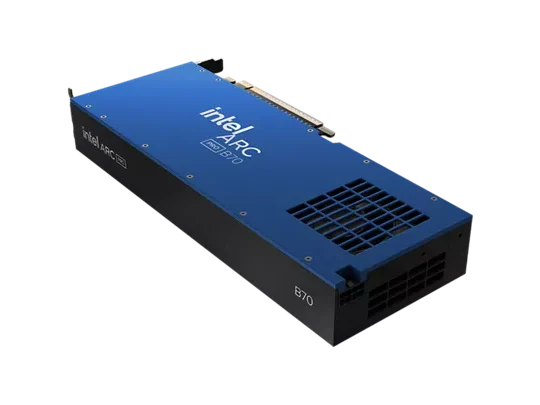
    Intel unveiled the Arc Pro B65 and B70 high-performance workstation GPUs yesterday, targeting AI LLM training and inference, but did not share specific performance details in their first press release. Shortly after, the company put out performance charts comparing the B70 against Nvidia’s older RTX 4000 Pro GPUs. Intel believes this comparison is relevant due to the B70’s price of less than $1,000, with Team Blue making bold claims about its overall performance.

    Impressive Specs

    Even without diving into the performance charts—which may or may not reflect reality in typical Intel fashion—the Arc B70 GPU stands out from Nvidia’s offerings because of its higher VRAM capacity (32 GB compared to 24 GB) and a starting price of $949 (compared to $1,800). Sure, the VRAM is only 19 Gbps GDDR6 with a 256-bit bus and a bandwidth of 608 GB/s, but the increased capacity is beneficial for training and inferring larger models.

    Context Window Advantage

    Thanks to its superior VRAM, the B70 has a context window that is 2.2 times larger than that of the RTX 4000 Pro card. Intel’s slide indicates that the B70 can handle context lengths up to 93K tokens, while the RTX 4000 Pro hits its memory limit at about 42K tokens when working with the Llama 3.1 8b BF16 model.

    Enhanced Performance

    Running parallel multi-agent flows on the Ministral Instruct 2410 8B (BF16) model results in 85% greater token throughput for multiple users or requests when using the B70 in a Linux OS environment. Moreover, the B70 can provide responses faster with a 6.2x quicker time to first token. Intel attributes these enhanced speeds to their refined oneAPI and proprietary software stack. The performance advantage over Nvidia also scales up with multi-GPU configurations, as Intel states that they can achieve up to 2x tokens for each dollar spent in single, dual, and quad GPU setups.

    Sadly, the presentation did not include any performance metrics or pricing for the B65 GPU. It would be fascinating to see if Intel permits AIB partners to create gaming-focused versions of the B65 and B70 GPUs with somewhat lower VRAM capacities. This would also necessitate Intel to update their graphics drivers.


    Source:
    Link


  • ChatGPT Now Converts Long Pastes to Attachments for Plus Users

    ChatGPT Now Converts Long Pastes to Attachments for Plus Users

    Key Takeaways

    1. Automatic Attachment for Long Text: Pasted text over 5,000 characters is now converted into an attachment for ChatGPT Plus, Pro, and Business users.

    2. Cleaner Interface: The update aims to keep the composer interface tidy and prevent large text from overcrowding the context window.

    3. Manual Text Transfer Option: Users can click “Show in text field” to move the attachment back into the main message body if desired.

    4. Limited User Scope: This feature currently applies only to paid subscribers; Free, Enterprise, and Education users are not included in this update.

    5. Workflow Adjustment: The change modifies how users input long content, impacting standard workflows for those who frequently paste lengthy text into ChatGPT.


    OpenAI has made a significant change to how ChatGPT deals with large amounts of pasted text for certain paid subscribers. In a recent update, the company announced that when users with ChatGPT Plus, Pro, and Business accounts paste more than 5,000 characters into the text field, the system will now automatically turn that content into an attachment instead of placing it directly in the main text area.

    Keeping It Tidy

    OpenAI explains that this adjustment aims to maintain a cleaner composer interface and reduce the risk of large pasted sections taking up the entire context window. Users still have the option to move the text back into the main message body by clicking on “Show in text field,” which will revert the attachment into a regular paste.

    Lack of Details

    Currently, OpenAI hasn’t provided information about a specific app version, build number, platform specifics, or any staged rollout percentage related to this update. It remains unclear whether this feature is exclusive to web users or if it will eventually be available on iOS and Android as well. Such specifics haven’t been disclosed.

    Focus on Paid Users

    The wording from OpenAI specifically links this change to ChatGPT Plus, Pro, and Business users. The general ChatGPT release notes do not mention Free, Enterprise, or Education users in the March 25 update. There is a separate section for Enterprise and Education release notes, but the entries from March refer to different updates, not the adjustment concerning pasted text.

    Users who frequently input long notes, transcripts, code snippets, or draft documents into ChatGPT will likely be the first to observe this change, as any pasted content exceeding 5,000 characters will automatically be treated as an attachment. This practical impact is derived from OpenAI’s official statement.

    A Workflow Shift

    While OpenAI has not positioned this update as a major product launch, it indeed alters one of the standard workflows for paid users. Instead of having a large block of text in the composer, ChatGPT will now convert that content into an attachment while still allowing users to transfer it back to the text field manually. For the time being, the scope of this update is limited: it affects pasted text over 5,000 characters starting from March 25, and is available only to Plus, Pro, and Business users.

    Source:
    Link


  • Edifier M90 Active Speakers: LDAC & HDMI eARC Support

    Edifier M90 Active Speakers: LDAC & HDMI eARC Support

    Key Takeaways

    1. No External Amplifier Needed: The Edifier M90 speakers operate with just a power source and an audio signal, simplifying setup.

    2. Multiple Input Options: They feature LDAC over Bluetooth, HDMI eARC, optical audio, AUX, and USB-C for versatile connectivity.

    3. Powerful Drivers: The speakers include two 35-watt mid-bass drivers and one 15-watt tweeter, providing a wide frequency response from 50 Hz to 40,000 Hz.

    4. Remote and App Control: Users can control the speakers with a remote and a companion app for detailed audio adjustments.

    5. Price and Availability: The Edifier M90 active speakers are available on Amazon for $370.


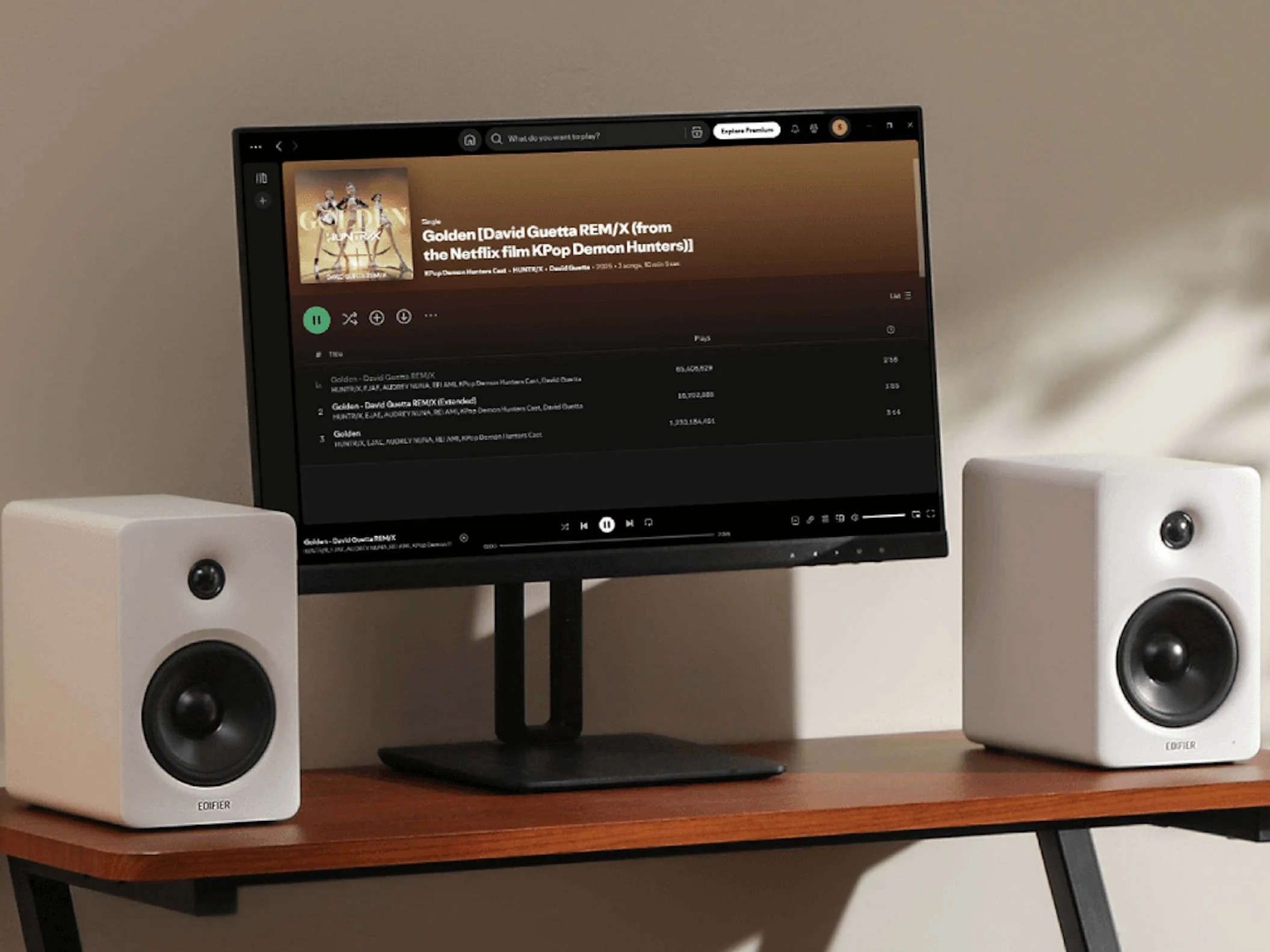
    Edifier has just come out with their new M90 active speakers, which are well-known for their impressive audio systems. These speakers are designed to work with just a power source and an audio signal, meaning you don’t need an external amplifier. They come equipped with various input options, such as LDAC over Bluetooth, allowing for high-quality wireless sound. Another notable feature is HDMI eARC support, which is not commonly seen in speakers of this type, making it easier to connect the M90 to your television. Additionally, you can connect via optical audio, AUX, and USB-C. There’s even a subwoofer output available, which is handy since the M90 does not have a built-in subwoofer.

    Specifications and Features

    When you take a look at the hardware, the M90 speakers use two mid-bass drivers, each rated at 35 watts and measuring four inches across, for their bass and midrange frequencies. On top of that, there is a one-inch tweeter in each speaker, with a power rating of 15 watts. The official specifications indicate that this combination provides a frequency response from 50 Hz to 40,000 Hz, along with a signal-to-noise ratio of ≥ 85 dB(A). Each speaker has dimensions of 133 × 255 × 212 mm (5.24 × 10.04 × 8.35 in). You can control the speakers using an included remote, and there’s also a companion app for more detailed audio adjustments. As of now, the Edifier M90 is available on Amazon for $370.

    Conclusion

    Overall, the Edifier M90 active speakers stand out for their versatility and performance. With a design that eliminates the need for an external amplifier, they offer multiple connection options to fit various setups. Their robust specifications, including powerful drivers and a wide frequency range, make them a strong choice for audio enthusiasts. Whether you’re listening to music or watching movies, these speakers aim to deliver a high-quality sound experience.

    Source:
    Link


  • DJI Launches Avata 360: New 360° Drone Competes with Antigravity A1

    DJI Launches Avata 360: New 360° Drone Competes with Antigravity A1

    Key Takeaways

    1. DJI has launched the Avata 360 drone, its first 360° drone, competing with the Antigravity A1.
    2. The Avata 360 features a 1-inch imaging system, capable of filming in 8K/60 fps, surpassing the A1’s 8K/30 fps.
    3. Flight time for the Avata 360 is up to 23 minutes, slightly less than the A1’s 24 minutes, with added safety features like omnidirectional obstacle sensing.
    4. It includes advanced features such as a 20 km transmission range, ActiveTrack 360°, and 42 GB of internal storage, higher than the A1’s 20 GB.
    5. Pricing for the Avata 360 starts at €459 for the standard bundle, with preorders available and shipping beginning on April 26.


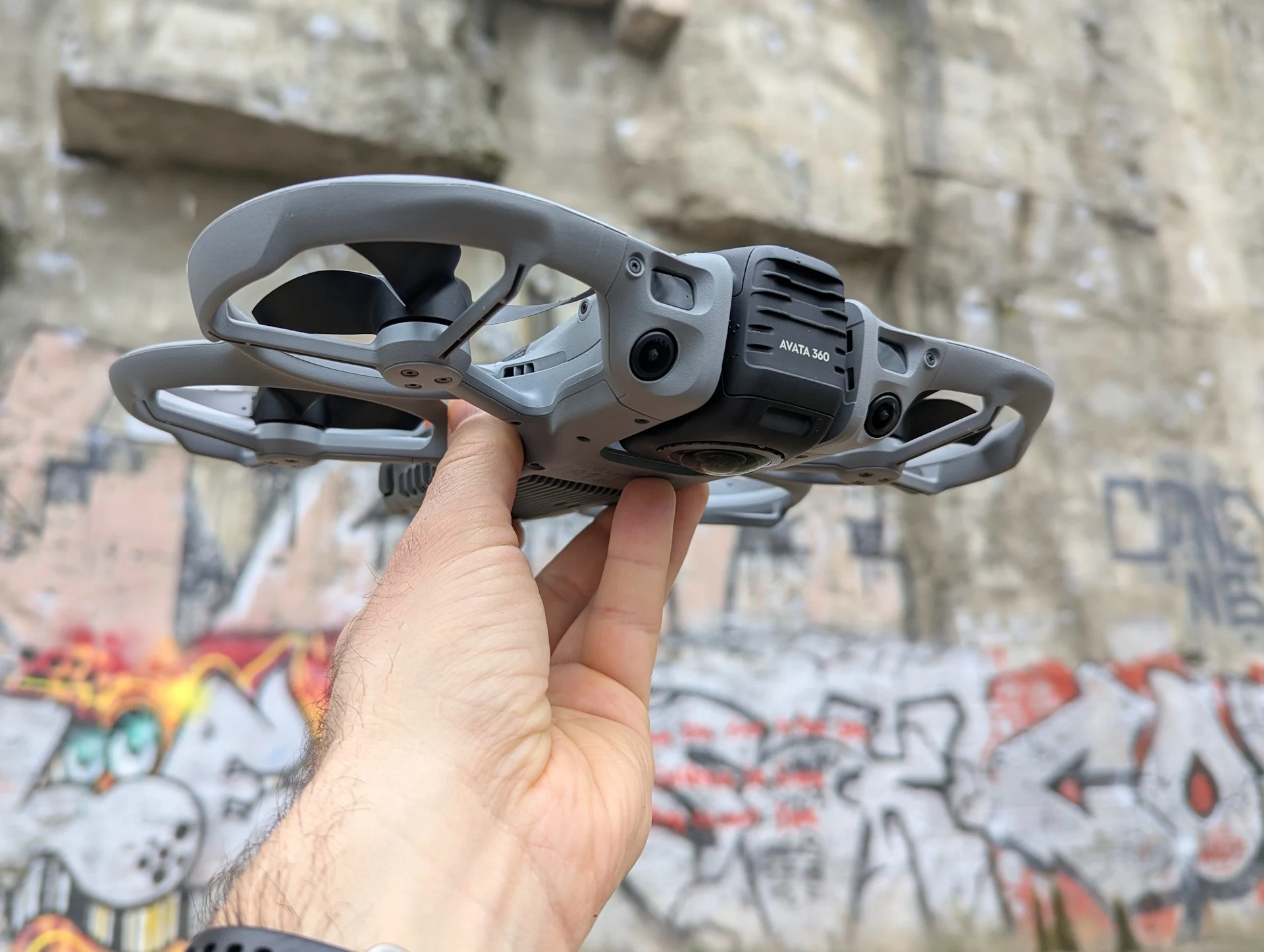
    DJI has stepped into the 360° drone world by introducing the brand-new Avata 360 drone. This marks the company’s first attempt at a 360° drone, directly competing with the Antigravity A1, which is currently selling for $1,279 on Amazon. The Avata 360 boasts DJI’s 1-inch imaging system, enabling users to film at an impressive resolution of 8K/60 fps, whereas the Antigravity A1 only manages 8K/30 fps.

    Weight and Features

    Details regarding the overall weight of the Avata 360 are not available at this point. Similar to the A1, the Avata 360 comes with DJI goggles and motion controllers that promise an engaging 360° flying experience for FPV enthusiasts. The drone is designed with two unique lenses that can be switched out easily. In addition to capturing high-quality HDR videos, it can also take stunning 120 MP photos.

    Flight Time and Safety

    DJI’s new 360° drone can fly for up to 23 minutes, which is a minute shorter than the A1, which offers 24 minutes of flight time. It includes omnidirectional obstacle sensing along with built-in propeller guards for added safety. Additionally, you can swap out the camera lens using the DJI Avata 360 replacement lens kit, although this kit needs to be purchased separately.

    Advanced Features

    The Avata 360 integrates DJI’s advanced O4+ video transmission system, promising a transmission range of up to 20 km (12.4 miles). Other features include ActiveTrack 360°, spotlight free, FPV mode, intelligent tracking, one-tap editing, and a virtual gimbal1 that allows for limitless pan and tilt movements for dynamic shots. Unlike the A1, which has only 20 GB of internal storage, the Avata 360 offers a generous 42 GB of internal space.

    In terms of pricing, the standard bundle of the DJI Avata 360 (drone only) is available from €459. The DJI Avata 360 (DJI RC 2), the Fly More combo (DJI RC 2), and the Fly More combo are priced at €719, €939, and €939, respectively. Those interested can preorder the Avata 360 from DJI’s official website and authorized retailers, with shipping set to start on April 26. For further information, visit DJI’s website.

  • New Apple iPad Launch: Major Performance Upgrade Over Previous Model

    New Apple iPad Launch: Major Performance Upgrade Over Previous Model

    Key Takeaways

    1. Apple has refreshed several product lines, including the Studio Display, MacBook Pro, iPad Air, and introduced new products like the Studio Display XDR and iPhone 17e.
    2. The new AirPods Max 2 were launched in five colors, priced at $529.99 on Amazon.
    3. A new entry-level iPad 12th Generation is anticipated, with ESR Tech advertising ‘paper-feel’ screen protectors for it.
    4. The design of the iPad 12th Gen is expected to remain the same, featuring an 11-inch display and a landscape-oriented front-facing camera.
    5. The iPad 12th Gen is likely to be powered by the A18 chipset, offering over 20% more power than its predecessor, the A16 Bionic, and will include 8 GB of RAM.


    Apple has refreshed several of its product lines this month as part of a larger launch plan. To summarize, the tech giant upgraded the Studio Display, MacBook Pro, and iPad Air while also unveiling the Studio Display XDR, iPhone 17e, and MacBook Neo. Last week, they surprisingly introduced the AirPods Max 2 in five different colors, currently priced at $529.99 on Amazon.

    New iPad on the Horizon

    ESR Tech suggests that a new entry-level iPad is on the way. Even though Apple hasn’t made any formal announcements, ESR Tech is promoting ‘paper-feel’ screen protectors specifically for the iPad 12th Generation. While the listing is still available online at the time of this writing, we’ve included images below in case ESR Tech removes its advertisement.

    Design and Features

    It appears that the design of the iPad will stay the same for its 12th Generation. The tablet will keep the flat 11-inch display with relatively thick, uniform bezels. ESR Tech anticipates that Apple will maintain a front-facing camera designed for landscape use as well.

    Performance Upgrades

    Furthermore, the iPad 12th Gen is expected to come equipped with Apple’s A18 chipset. Although the A18 has been succeeded by the A19 and A19 Pro, it should still provide over 20% more power compared to its predecessor, which was backed by the A16 Bionic. Single-core performance might see increases between 24% and 30%. This SoC upgrade is likely to ensure that the iPad 12th Gen includes 8 GB of RAM and support for Apple Intelligence too.

    ESR Tech via GSMArena

    Source:
    Link


  • Sony Reveals Pricing for Six New Bravia TVs

    Sony Reveals Pricing for Six New Bravia TVs

    Key Takeaways

    1. The Bravia 3 II series features six size options, from 43 inches to 100 inches, with 4K resolution and 120 Hz refresh rate.
    2. All models include four HDMI 2.1 ports supporting VRR and HDR technologies, possibly using the Pentonic 800 chipset.
    3. The TVs are equipped with XR Triluminos Pro color technology and support for DTS:X, Dolby Atmos, and Dolby Vision.
    4. Pricing starts at $599.99 for the 43-inch model, increasing by $100 for larger sizes, with significant price jumps for the 85-inch and 100-inch models.
    5. Pre-orders begin on April 6 in the U.S., with shipping expected to start a month later.


    Sony has broadened its entry-level Bravia Smart TV lineup with the release of the Bravia 3 II series. This new series comes less than a year after the Bravia 2 II models, which are currently priced at $399.99 on Amazon. The Bravia 3 II series offers six different sizes, ranging from 43 inches to a massive 100 inches. All models are equipped with direct-lit LED LCD screens that deliver 4K resolution at a refresh rate of 120 Hz.

    Connectivity and Technology

    Moreover, Sony has included four HDMI 2.1 ports across all models, each capable of supporting variable refresh rate (VRR) and high-dynamic range (HDR) technologies. Although Sony hasn’t officially confirmed it yet, Vincent Teoh from HDTVTest speculates that the Bravia 3 II series utilizes the Pentonic 800 chipset, which was revealed by MediaTek nearly two years ago.

    Audio and Smart Features

    The Bravia 3 II televisions come with Sony’s XR Triluminos Pro color technology, along with support for DTS:X, Dolby Atmos, and Dolby Vision. Each of the six Smart TV models operates on Google TV with Gemini right from the start. The pricing for the Bravia 3 II series begins at $599.99 for the 43-inch model, increasing by $100 for the 55-inch, 65-inch, and 75-inch sizes.

    Pricing and Availability

    Interestingly, the 85-inch model is priced at 60% more than the 75-inch version. In a similar vein, the 100-inch model is 93% more costly than the 85-inch Smart TV. Sony plans to start pre-orders in the United States on April 6, with shipping expected to begin a month later. The complete pricing for the Bravia 3 II series is as follows:

    Sony & Best Buy

    Source:
    Link


  • Chrome 147 Released Early for Select Windows and Mac Users

    Chrome 147 Released Early for Select Windows and Mac Users

    Key Takeaways

    1. Google has launched an early stable version of Chrome 147 (147.0.7727.24/.25) for a limited number of desktop users on Windows and Mac.
    2. The early stable release allows Google to monitor the build and identify issues before a broader rollout.
    3. No detailed features, security patches, or bug fixes were listed in the announcement, only a link to the Chromium change log.
    4. Chrome 147 was previously available in the Beta channel for Windows, Mac, and Linux, with general enhancements for performance and stability.
    5. The release strategy varies across platforms, with Chrome 147 rolling out for desktops while other channels and platforms receive different updates simultaneously.


    Google has begun to launch an initial stable version of Chrome 147 for desktops on Windows and Mac. In an announcement made on March 25, the Chrome team indicated that the Stable channel has been updated to version 147.0.7727.24/.25 for a limited number of users, marking it as an early stable release instead of a full standard rollout.

    Brief Confirmation of Updates

    The official post about Chrome Releases is quite short and only verifies the new desktop build numbers, notes the limited scope of the rollout, and mentions the existence of a complete change log. However, Google did not provide a detailed breakdown of features in this early stable note. Instead, it directed users to its early stable explanation and standard release documentation.

    Importance of Limited Rollout

    The limited rollout language is significant because Google’s early stable process aims to present a new Stable build to a smaller audience first. According to Google’s Chrome developer guidelines, early stable releases are shared with a tiny fraction of users prior to the more extensive scheduled Stable release, allowing the company to monitor the build and identify major problems before the broader rollout takes place.

    Details on the Release

    For this early stable desktop release, Google has only provided a link to the Chromium change log and has not specified any security patches, new user-facing features, or platform-specific bug fixes in the announcement itself.

    Nevertheless, there is a noteworthy reference: Chrome 147 had already been available in the Beta channel for Windows, Mac, and Linux earlier this month as version 147.0.7727.3. In the Beta announcement on March 11, Google mentioned that the build included usual enhancements for performance and stability and guided readers to Chromium blog resources for new features, but the March 25 early stable desktop announcement does not reiterate these details.

    Broader Release Context

    The same update cycle on March 25 also introduced Chrome 147 to other channels and platforms, which includes an early stable build for Android, a desktop Beta version, and a stable release for iOS. For desktop users on Windows and Mac, the key takeaway is straightforward: Chrome 147 is beginning to transition to the Stable channel, but only for a select group of users at this time.

    For Android users, the wider context shows that Google’s release strategy is currently divided across various channels and platforms: While Chrome Dev 148.0.7739.3 is already rolling out via Google Play as a test build for Android, desktop users on Windows and Mac are only starting to experience Chrome 147.0.7727.24/.25 in the early stable phase, highlighting how Google continues to introduce major browser updates differently based on platform and release track.

    Google Blog

    Source:
    Link


  • Samsung Display’s QuantumBlack Film Cuts QD-OLED Reflectivity by 20%

    Samsung Display’s QuantumBlack Film Cuts QD-OLED Reflectivity by 20%

    Key Takeaways

    1. Samsung Display has introduced a new low-reflection film called QuantumBlack, reducing light reflection by 20% compared to previous films.
    2. QuantumBlack improves surface hardness from 2H to 3H on the pencil hardness scale, enhancing scratch resistance.
    3. This new technology will be featured in all newly launched QD-OLED monitor products this year.
    4. QD-OLED panels can achieve true black by shutting off power to individual pixels, but reflections can affect contrast.
    5. Several monitor makers, including ASUS, Gigabyte, and MSI, are already using QuantumBlack in their products.


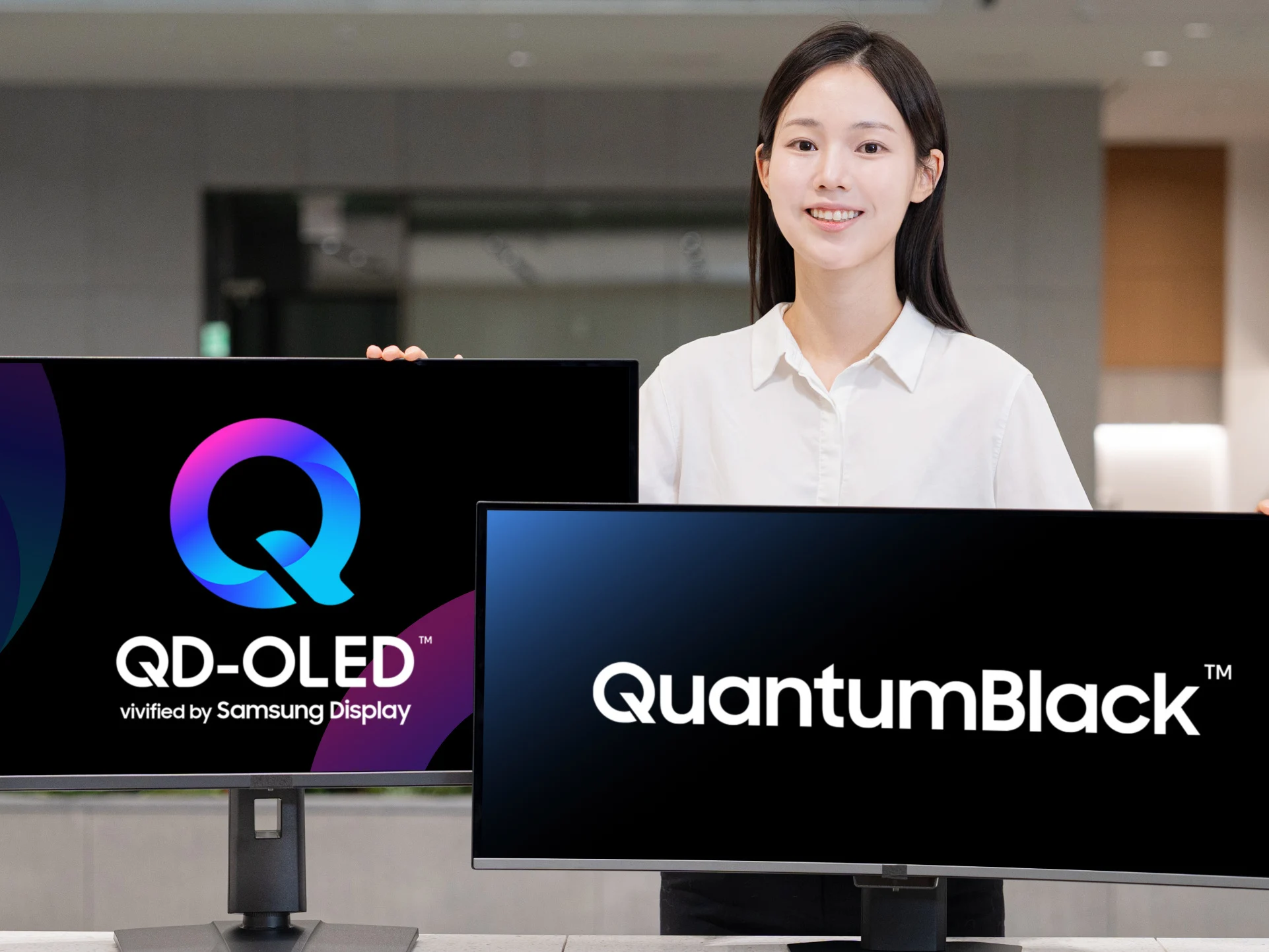
    Samsung Display has revealed a new low-reflection film called QuantumBlack, claiming it lowers light reflection by 20% compared to its prior film. Additionally, it has improved the surface hardness from 2H to 3H on the pencil hardness scale.

    New Advancements in QD-OLED Technology

    This technology is set to be featured in all newly launched QD-OLED monitor products this year, and Samsung Display has successfully registered the trademark for the name. QD-OLED panels can achieve true black by completely shutting off power to individual pixels. However, reflections from ambient light can lessen the contrast seen on the screen, which can affect the impressive black levels that make these panels stand out from regular LCD options.

    The Evolution of Low-Reflection Film

    Samsung Display has included low-reflection film in its QD-OLED monitor range since its inception. QuantumBlack is the most recent version of this technology. A surface with a 2H rating is more likely to get scratched during common handling tasks like moving or cleaning. In contrast, the 3H rating offered by QuantumBlack, based on internal tests by Samsung Display, shows good resistance against scratches, even from fingernail contact.

    Market Adoption of QuantumBlack

    On the commercial front, several monitor makers have already introduced products utilizing this new film. ASUS has launched its version called Black Shield, while Gigabyte has named its product Obsidian Shield, and MSI’s offering is titled Dark Armor.

    Source:
    Link