Author: GizNews

  • Citizen Debuts Mandalorian-Inspired Eco-Drive Watch

    Citizen Debuts Mandalorian-Inspired Eco-Drive Watch

    Key Takeaway

    – Launch and availability: Unveiled in March 2026; now sold in the US and UK at $450 (US) / £349 (UK).
    – Design highlights: Dark gray sunray dial with three subdials (Mando helmet and Mudhorn symbol on silver backgrounds) for 1/5th second stopwatch, Grogu-shaped 24-hour indicator, luminous markers, gold-green tachymeter bezel, dark brown rugged stitch leather strap.
    – Movement and durability: B612 Eco-Drive powered by any light; 100 m water resistance.
    – Thematic branding: Prominent Mandalorian nods and character imagery throughout the dial.

    Citizen has begun selling its Star Wars Mandalorian CA0857-09W watch in the US and the UK. This Star Wars-themed chronograph was unveiled in March 2026, and its design includes nods to many characters linked to The Mandalorian. The watch carries a dark gray dial with a sunray finish and hosts three subdials, hinting at a blend of sci fi flair and everyday utility. Two of these subdials sit on silver backgrounds, one bearing an image of Mando’s helmet while the other shows the Mudhorn symbol. The third subdial indicates the time in a 24-hour format and is shaped like Grogu. They are linked to the 1/5th second stopwatch function, while the entire layout feels both ready for action and surprisingly practical.

    Design Cues

    In addition, the CA0857-09W features luminous markers, three hands and a basic date display, all framed by a tachymeter bezel in a gold-green tone aluminum. The model comes with a dark brown leather strap featuring rugged stitching. Power comes from a B612 Eco-Drive movement, which can be charged using any light source, keeping the watch alive without batteries. Plus, it is water resistant to 100 m, making it suitable for swimming and everyday use alike. The overall dial layout is balanced, with a subtle blend of reflective surfaces and bold edges that nod to the Mandalorian vibe.

    Pricing & Availability

    In the United States, the Star Wars Mandalorian CA0857-09W watch is now available for $450 at the brand’s online store, while customers in the United Kingdom can buy the same model for £349 from the Citizen shop. The release marks an effort to blend fan appeal with Citizen reliability in a compact, corrosion resistant package that suits collectors and casual wearers alike. Availability and after sales support are expected to be steady as Citizen continues to push license-friendly, practical, and stylish timepieces in its catalog.



    Sources

  • Casio Edifice EQB-1300 Slim Watches Now Available in Europe

    Casio Edifice EQB-1300 Slim Watches Now Available in Europe

    Key Takeaway

    – Availability and pricing in Europe: EQB-1300D-2A (blue) and EQB-1300D-5A (brown) at €279; EQB-1300DC-3A (green, IP dark metallic gray) at €329; sold in NL, FR, ES; US release date not announced.
    – Design and build: 9.5 mm thick, 39.5 mm diameter; sapphire crystal; raised indexes; three hands; basic date; two subdials (24-hour time and day of week); H-link stainless steel bracelet.
    – Features and performance: 15 seconds per month accuracy; Bluetooth automatic time adjustment via Casio Watches app; Tough Solar; 100 m water resistance.

    The Casio Edifice EQB-1300D watches are now available in Europe. This new model was spotted in a certification database earlier in 2026, with the brand officially unveiling the new series several weeks later. In Europe, retailers and shops are listing the models with brisk interest from collectors and casual buyers alike as the watch enters the market. The official rollout hints at a wider regional strategy that might include more colorways and variants over the months ahead.

    Availability in Europe

    You can now buy the Casio Edifice EQB-1300D-2A (blue dial, silver case) and the EQB-1300D-5A (brown dial, silver case) for €279 in countries like the Netherlands, France and Spain. A third model, the EQB-1300DC-3A (green dial, ion-plated dark metallic gray casing), is more expensive at €329. Market listings also highlight regional availability and a warranty window, and watchers note the two-tone contrast between blue or brown dials against the light-reflective cases.

    Model lineup and pricing

    Casio’s Edifice EQB-1300 chronograph is slim, measuring 9.5 mm (~0.37 inches) in depth and 39.5 mm (~1.56 inches across). The watch’s dial features raised indexes, three hands, and a basic date display. Plus, two indicator dials show information like the time in a 24-hour format and the day of the week. The latter doubles as an indicator for the 1-second stopwatch function. Each dial is protected by a sapphire crystal and comes with an H-link stainless steel bracelet. The overall presentation looks balanced, and the texture on the bracelet links catches light as the wrist moves.

    Design and display

    The Edifice EQB-1300D watches offer 15 seconds of monthly accuracy, though Bluetooth connectivity brings automatic time adjustments via the Casio Watches smartphone app. The model is also water resistant to 100 m, and Tough Solar charging can extend the watch’s battery life. It is unclear when these watches could be released in the US. The watch remains a practical companion for daily timekeeping and light sports thanks to its solar charge and smart sync features.

    Timekeeping and features

    Casio continues to push the Edifice line forward by pairing a slim chassis with solar powered tech and a modern, sport oriented look that remains comfortable for all day wear. The EQB-1300D family demonstrates the brands ongoing focus on reliable timekeeping, practical features, and durable construction that appeals to urban commuters and enthusiasts alike, reinforcing Casio’s reputation in the European market. Casio

    Sources
  • Samsung Strike Could Cost Up to $66.7B

    Samsung Strike Could Cost Up to $66.7B

    Key Takeaway

    – DRAM crisis has driven record profits for memory makers, with Samsung’s memory division posting a 4,800% profit surge in Q1 2026.
    – Samsung restricts employee bonuses to 50% of regular annual income; union seeks a 15% operating-profit bonus pool and removal of the cap.
    – An 18-day strike (May 21–June 7) with >50,000 workers could cost Samsung production up to 3 trillion won per day, with total impact up to 100 trillion won due to pre-shutdown and delayed ramp-up.
    – The strike risks worsening the DRAM shortage by significantly reducing global DRAM and NAND production for several weeks.

    The DRAM crisis has unsurprisingly led to record profits for memory manufacturers such as Samsung Semiconductor. In the first quarter of 2026 alone, Samsung was able to increase profits in its memory division by 4,800 percent, a surge that has surprised many observers and investors alike. Yet the benefits of this extraordinary performance are not evenly shared within the company. Samsung restricts bonus payments to a maximum of 50 percent of regular annual income, a policy that has sparked discontent among rank-and-file employees who feel the windfall is skewed toward executives and shareholders rather than the workforce.

    Industry profits vs worker bonuses

    To address what it calls persistent inequities, the union is pressing Samsung to set aside 15 percent of operating profits to be paid out to employees as part of a bonus pool. It also demands that the current maximum limit on bonus payments be abolished altogether, arguing that workers deserve a fair share of the profits generated by the company’s recent success. In response, the union has announced plans for a prolonged strike, an 18-day strike from May 21 to June 7, with more than 50,000 employees expected to participate.

    Strike timeline and scale

    Analysts warn that this strike could be costly for Samsung, as downtime mounts and supply chains strain. Every day of production downtime is expected to result in a loss of up to 3 trillion won (approx. $2 billion). However, production will be interrupted for much longer than three weeks, as Samsung will have to shut down production almost a week in advance and it will take two to three weeks before production can be resumed at full capacity. For this reason, the total cost of this strike is estimated at up to 100 trillion won (approx. $66.7 billion). This strike could also further exacerbate the DRAM crisis, as global DRAM and NAND production will be significantly reduced for several weeks.

    Projected economic toll

    Beyond the immediate financial implications, the strike threatens to deepen the global DRAM shortages that have already unsettled manufacturers and customers alike. If production remains curtailed for weeks, suppliers may scramble for alternative memory sources, and prices could swing unpredictably. Stakeholders should watch how the company balances incentives for its workers with its long‑term strategy in a market still dominated by supply constraints and volatile demand.

  • Vivo iQOO 15T: 200 MP Camera, 8000mAh Battery

    Vivo iQOO 15T: 200 MP Camera, 8000mAh Battery

    Key Takeaway

    – 200 MP main camera with 4x digital zoom (no telephoto) and stabilized lens for longer exposures.
    – Rumored 50 MP ultra-wide and 16 MP selfie camera to accompany the 200 MP main cam.
    – 8000 mAh battery with 100W USB-C charging and Global Direct Drive Power Supply 2.0 to reduce temperature during charging and gaming.
    – 144 Hz AMOLED display and flagship processor, with official launch on May 20.

    Vivo already confirmed a few days ago that the iQOO 15T will be officially unveiled on Wednesday, May 20. Now the manufacturer has published two more teaser images that confirm two highlights of the smartphone. First and foremost, the iQOO 15T offers a 200 megapixel main camera, putting it in competition with expensive flagships such as the Samsung Galaxy S26 Ultra ($1,299 on Amazon).

    Teaser highlights and pricing

    This camera is said to support 4x digital zoom – a clear indication that the iQOO 15T does not offer a dedicated telephoto camera. Even with a 200 MP sensor, 4x digital zoom means that photos are only taken with a resolution of 12.5 megapixels on a section of the sensor that corresponds to just 6 percent of the sensor area – the quality of the zoom is therefore likely to suffer significantly from the lack of a telephoto camera. At least the main camera uses a stabilized lens, which should enable a 4.5 f-stop longer exposure time without photos looking blurred.

    Camera and battery details

    According to rumors, Vivo is adding a 50 MP ultra-wide-angle camera and a 16 MP selfie camera to the 200 MP main camera. The second teaser image confirms that the iQOO 15T is equipped with an 8,000 mAh battery that can be charged via USB-C with up to 100 watts. A feature called “Global Direct Drive Power Supply 2.0” is intended to change the charging behavior to reduce the temperature of the case when charging and gaming at the same time. The Vivo iQOO 15T is said to be equipped with a flagship processor and a 144 Hz AMOLED display; Vivo is expected to confirm all other details about the features at the latest at the launch on May 20.


    Sources

  • Osmo Pocket 4P: Dynamic Range Upgrade for DJI Vlogging Camera

    Osmo Pocket 4P: Dynamic Range Upgrade for DJI Vlogging Camera

    Key Takeaway

    – Osmo Pocket 4 replaces Osmo Pocket 3 (about $499) and is available in most markets outside the US, with upgrades over the previous model.
    – DJI is teasing the Osmo Pocket 4P (likely 4 Pro) with a Cannes appearance ahead of a full debut.
    – Dynamic range: Pocket 4 has 14 stops on its main lens, while the 4P is claimed to offer up to 17 stops, signaling cinema-quality potential.
    – Full specs and details remain unconfirmed, with teaser imagery and limited details circulating ahead of a broader announcement.

    Hardly any time has passed since DJI replaced the Osmo Pocket 3 (curr. $499 on Amazon) with the Osmo Pocket 4. Available in all but the US, the Osmo Pocket 4 contains various upgrades over its predecessor. Please see our launch article for more details about what is still DJI’s latest vlogging camera release, at least for now anyway. The swap signals a continued push toward compact, portable cinema capabilities that still fit in a pocket, even as enthusiasts probe its full potential.

    Osmo Pocket 4: A quick take

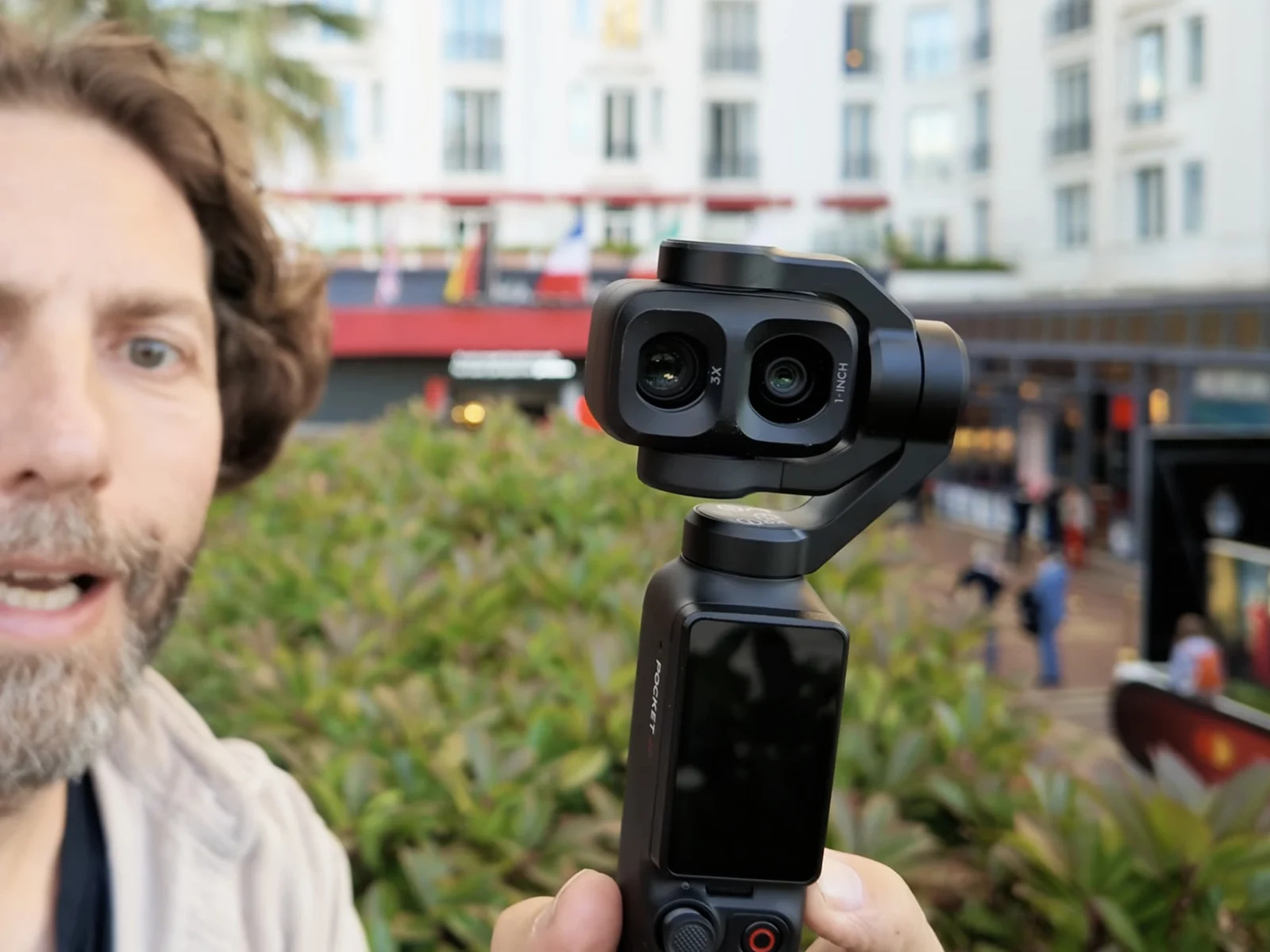
    DJI hasn’t kept the tease to themselves for long; the company is already in the throes of presenting the Osmo Pocket 4P, which many had speculated would be named the Osmo Pocket 4 Pro. For instance, DJI has now brought the Osmo Pocket 4P to the Cannes Film Festival ahead of its full debut, turning heads with a red carpet moment and the promise of a more capable model.

    Pro tease and festival appearance

    Initially, it seemed that the company would make a broader announcement on May 14, having teased the camera’s red carpet appearance on May 11. At the time of publication, the company has not been forthcoming with any additional details. Nonetheless, it appears to have shared imagery with some outlets, which we have embedded above. Additionally, Adam Juniper of Digital Camera World has confirmed a crucial hardware upgrade that will help distinguish the Osmo Pocket 4P from its sibling.

    Announcement timing and imagery

    Discussed in the video below, Juniper has confirmed that the new vlogging camera supports 17 stops of dynamic range across its 1-inch style primary lens. Although not acknowledged in the 71-second clip, the Osmo Pocket 4 musters 14 stops of dynamic range, which was already a major upgrade over the Osmo Pocket 3. While the full extent of camera hardware improvements remains unknown for now, Juniper has hinted that these extra steps of dynamic range help the Osmo Pocket 4P achieve cinematic video quality, achievable by some small camera rigs.

    Dynamic range and hardware hints

    Even with the hints and previews, the full range of improvements remains speculative until DJI releases comprehensive specs. For now, prospective buyers and vloggers should watch the official channels for confirmed details on the pocket-sized successor, as the trend toward higher dynamic range and smarter processing continues to shape the mini camera category.


    Sources

  • Bluetti Converts Power Stations to PV Storage with Balcony Solar

    Bluetti Converts Power Stations to PV Storage with Balcony Solar

    Key Takeaway

    – Bluetti launches Balco Series for balcony power plants: Balco 260, Balco 500 storage systems, and Balco Transfer Hub (grid-tied) to enable balcony storage and cross-brand compatibility with portable power stations.
    – Output to home grid and total power: Balco 260 up to 800 W to grid (2,300 W total with battery); Balco 500 up to 3,680 W total with battery+grid.
    – PV input capabilities: Balco 260 up to 2,400 W PV via four MPPTs; Balco 500 up to 4,300 W PV with high-voltage MPPT (70–470 V).
    – Safety and BMS: 5VA flame-retardant housing, redundant design, and predictive intelligent BMS.
    – Promotion/availability: Pricing and availability not disclosed; promotion page offers 20% discount and a €500 voucher.

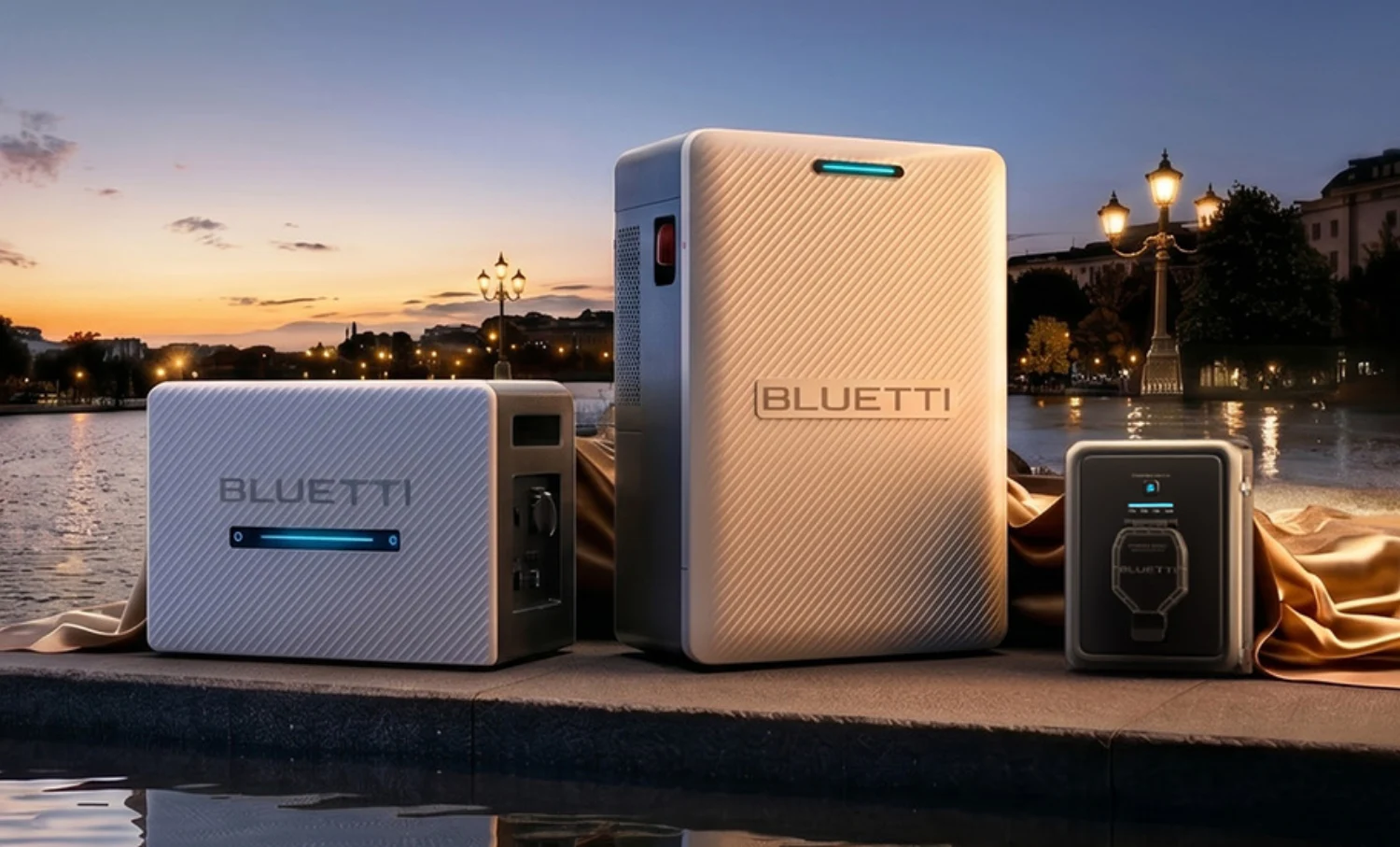
    On the same day as Anker Solix’s Solarbank 4 Pro launch, Bluetti is also bringing new balcony power plant solutions to the market. Unveiled at an event in Paris, the Bluetti Balco Series consists of three products: the Balco 260, the Balco 500, and the Balco Transfer Hub. These devices are pitched as smarter energy solutions for urban balconies, aiming to combine convenience with expandable power, reliability, and simplified management for homeowners.

    Balco Series overview

    The Balco 260 and Balco 500 are classic storage systems for balcony power plants, similar to those we have seen from various other manufacturers. They combine MPPT controllers, inverters, modularly expandable battery storage (up to 15 or 30 kWh), and safety technology into one smart system, offering predictable uptime, a tidy enclosure, and easy monitoring for residents dealing with fluctuating electricity prices.

    Storage capabilities and PV input

    In accordance with balcony power plant regulations, both systems feed up to 800 W into the home grid. Management can be handled via the “S Meter,” which magnetically attaches to the electricity meter. According to the manufacturer, a total output of up to 2,300 W is possible for the Balco 260 when combining battery storage and grid power, while the Balco 500 can reach up to 3,680 W.

    PV input and safety features

    On the input side, the Bluetti Balco 260 can accept up to 2,400 W of PV power via its four MPPTs. Thanks to its high-voltage MPPT design (70 to 470 V), the Balco 500 can even handle up to 4,300 W of PV power. For safety, Bluetti utilizes a 5VA flame-retardant housing, a redundant system design, and a predictive intelligent Battery Management System (BMS) designed to proactively minimize operational risks.

    Transfer Hub and interoperability

    Also new is the Bluetti Balco Transfer Hub. This is a grid-tied controller that allows traditional portable power stations from various manufacturers to be used as storage for a balcony power plant. According to Bluetti, this solution also offers scenario-based applications, AI optimization, and cross-platform interoperability, providing house and apartment owners with a simple and flexible way to reduce electricity costs using solar energy. Information regarding availability and pricing is not yet available. However, interested parties can register on this promotion page to secure a 20% discount and a €500 voucher Bluetti

    Sources
  • Microsoft MDASH AI Finds 16 Windows Flaws Before Exploitation

    Microsoft MDASH AI Finds 16 Windows Flaws Before Exploitation

    Key Takeaway

    – MDASH (Multi-model Agentic Scanning Harness) found 16 Windows vulnerabilities (4 critical RCEs) before attackers; all patched on May 12 Patch Tuesday; uses 100+ specialized agents and human verification.

    – The four critical flaws include CVE-2026-33827 (tcpip.sys, crafted IPv4) and CVE-2026-33824 (IKEEXT, pre-auth RCE over UDP 500); plus two 9.8 CVSS flaws in Netlogon and Windows DNS Client; most flaws were network-reachable without credentials.

    – MDASH is model-agnostic and goes beyond traditional scanners by multi-file, multi-path reasoning with verification steps before human review; demonstrated strong performance in CyberGym and private testing (0 false positives in StorageDrive; 96–100% recall on MSRC-related code).

    – It’s in limited private preview with enterprise customers, with broader availability expected in coming months, part of a broader AI-driven defense/offense race among major players.

    Microsoft has a new AI system that hunts for Windows vulnerabilities, and it just proved its worth. The system, codenamed MDASH, found 16 security flaws in Windows before any attacker could get to them, including four critical remote code execution bugs that could have handed unauthenticated attackers a straight line into enterprise networks. All 16 were patched in the May 12 Patch Tuesday. Satya Nadella posted about it on X the next day.

    MDASH’s modular, multi-model approach

    MDASH stands for Multi-model Agentic Scanning Harness. Microsoft’s Autonomous Code Security team built it, with several members coming from Team Atlanta, the group that won the $29.5 million DARPA AI Cyber Challenge. It does not work like a traditional scanner or a single AI model reviewing code. It runs more than 100 specialized agents across a mix of frontier and distilled models, each one assigned a specific job: some look for flaws, others challenge whether the finding is real, and a final stage tries to build inputs that prove the bug is actually exploitable. Only then does a human engineer see the result.

    The 16 vulnerabilities and critical flaws

    The 16 vulnerabilities are spread across the Windows TCP/IP stack, the IKEEXT IPsec service, and HTTP.sys, Netlogon, Windows DNS, and the Telnet client. Ten were kernel-mode. Most were reachable over the network without any credentials. Two of the four critical flaws stand out. CVE-2026-33827 lives in tcpip.sys and is triggered by crafted IPv4 packets. CVE-2026-33824 is a pre-authentication double-free in the IKEEXT service, reachable over UDP port 500 on machines running RRAS VPN, DirectAccess, or Always-On VPN. Both yield LocalSystem execution. Two more critical flaws in Netlogon and the Windows DNS Client each carried CVSS scores of 9.8.

    Microsoft says these were not bugs that a standard scanner would surface. The tcpip.sys flaw required reasoning across three concurrent code paths, all freeing the same object. The IKEEXT issue spanned six source files. That kind of multi-file, multi-path analysis is exactly where single-model approaches fall apart.

    Performance, testing and notable results

    MDASH scored 88.45% on CyberGym, a UC Berkeley benchmark built around 1,507 real-world vulnerability reproduction tasks. That put it at the top of the public leaderboard. Anthropic’s Mythos Preview model scored 83.1%. OpenAI’s GPT-5.5 scored 81.8%. In private testing against a Windows driver codebase called StorageDrive that had never been publicly released, MDASH found all 21 planted vulnerabilities with zero false positives. Against five years of confirmed MSRC cases in clfs.sys and tcpip.sys, it hit 96% and 100% recall.

    The system is model-agnostic. Microsoft can swap the underlying models as newer ones arrive without rebuilding the pipeline. MDASH is currently in limited private preview with a small group of enterprise customers. Broader availability is expected in the months ahead. The announcement follows Anthropic’s Project Glasswing and OpenAI’s Daybreak initiative, both running similar programs behind narrow access gates. All three are racing to find exploitable flaws before attackers do, and the gap between AI-powered defense and AI-powered offense is narrowing fast.

    Outlook and comparison

    The other side of that race is already underway. The broader landscape includes efforts like these programs from major AI labs, all aiming to find exploitable flaws before attackers do. MDASH is designed to adapt as newer models arrive, and its private-preview status suggests Microsoft intends to bring it to more enterprises soon. In the meantime, the field remains highly competitive, with performance metrics evolving as more vulnerabilities are discovered and reproduced across real-world targets.

  • Xiaomi Details Luxury Clip-On Earbuds With May Launch Confirmed

    Xiaomi Details Luxury Clip-On Earbuds With May Launch Confirmed

    Key Takeaway

    – Xiaomi teases a new clip-on open-ear earbuds, named Ear Clip-On Headphones, with China launch planned by the end of May (global availability not announced).
    – Design is clip-on open-ear style (similar to Anker Soundcore C50i and Sony LinkBuds Clip), weighing 5.5 g with multiple color options (two shown).
    – Key specs include LHDC 5.0 support, Hi-Res Audio certification, and a triple microphone array, plus reverse acoustic technology to reduce sound leakage.
    – Launch is expected to coincide with other Xiaomi devices (potentially the Xiaomi 17 Max and Smart Band 10 Pro), but official timing and global rollout remain unconfirmed.

    Earlier this week, Xiaomi teased the release of a new pair of earbuds on Chinese social media. At the time, the company only shared a cryptic image with the promise of bringing a ‘brand new form’ to market. As it turns out, that claim extends as far as Xiaomi’s ecosystem and no further. For now, it has clarified that its mysterious earbuds are a pair of clip-on open earbuds like the Anker Soundcore C50i and Sony LinkBuds Clip before them (curr. $228). Moreover, the company has confirmed that the so-called ‘Ear Clip-On Headphones’ will be launching in China before the end of May.

    Ear Clip-On Initiative

    Presumably, the earbuds will arrive alongside the Xiaomi 17 Max and Smart Band 10 Pro. However, Xiaomi has not confirmed as much yet. Instead, it has focused on features like LHDC 5.0 support, Hi-Res Audio certification and the inclusion of a triple microphone array. Apparently, the Ear Clip-On Headphones minimise sound leakage too via ‘reverse acoustic technology’.

    Specs and Market Position

    Each earbud also weighs a mere 5.5 g and will be available in multiple colour options. Currently, Xiaomi has showcased two, which we have embedded above and below. The company has not commented on global availability yet.

    Launch Timing

    Taken together, the moves show Xiaomi testing a new form factor with potential to shake up wellness and portable audio lines. The exact pricing and global release windows remain unconfirmed, but the China launch timeline is clear for the Ear Clip-On Headphones by May end. Xiaomi (1) (2) (3) (4) (5)


  • New Robot Vacuum for Hard-to-Reach Areas, €319 Savings

    New Robot Vacuum for Hard-to-Reach Areas, €319 Savings

    Key Takeaway

    – Availability and pricing: MSRP €1,399; limited-time €1,249 with €150 discount plus an €169 accessory kit and a 3-year warranty (total value €319).
    – MaxiReach: side brush extends up to 12 cm, mop up to 16 cm for deeper corner cleaning.
    – EcoCyclone station: first bagless dust system—remove, empty, and wash the dust container.
    – 100°C wash: station uses a heated “washboard” process to clean the mopping unit.
    – Performance: 40,000 Pa suction, StepMaster 2.0 handles up to 9 cm obstacles, anti-tangle brush system.

    Just a few weeks after its initial reveal, Mova has moved forward and the V70 Ultra Complete is officially available. It can be purchased immediately through the manufacturer’s website and other retailers, with an MSRP of €1,399. Those who decide to buy by May 22 can benefit from double savings, which makes the product more tempting for shoppers watching prices closely. The launch is pitched as a broad, ready-to-ship offering aimed at enthusiasts and newcomers alike.

    Availability and pricing snapshot

    First, Mova is offering a €150 discount, bringing the introductory price down to €1,249. Second, the manufacturer includes an additional accessory kit valued at €169 and a three-year warranty, which together creates a total price advantage of €319. This combination is presented as a limited time bundle, and the savings are highlighted prominently to encourage earlier orders.

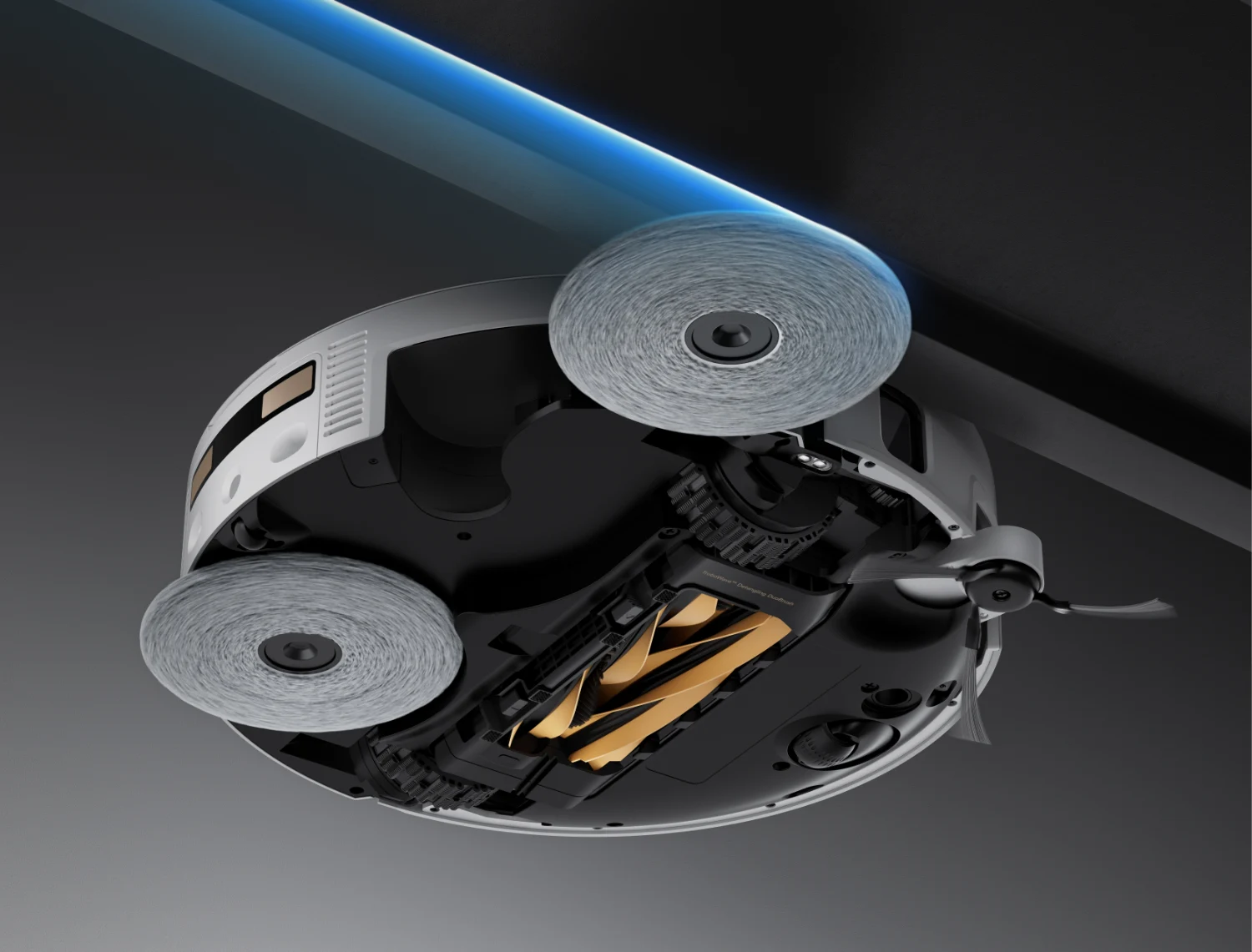
    Technically, the new V70 stands out primarily due to its MaxiReach system. This allows the side brush and mop to extend significantly from the housing, giving the unit more reach than typical models. The side brush can adaptively sweep up to 12 cm deep into corners, while the mop reaches up to 16 cm, ensuring a more thorough clean in hard-to-reach areas that often get missed.

    Technical and station innovations

    Another innovation lies in the V70 Ultra Complete’s station. With EcoCyclone, the maker introduces its first bagless system—a concept familiar from brands like Ecovacs, though ours is distinct. Instead of disposing of and regularly purchasing dust bags, the dust container can simply be removed, emptied, and washed, reducing ongoing consumable costs and creating less waste over the lifetime of the device.

    Additionally, the station cleans the mopping unit using a “washboard” cleaning process heated to 100°C. Other key features of the Mova V70 Ultra Complete include 40,000 Pa suction power, the ability to overcome obstacles up to 9 cm (two 4.5 cm steps) thanks to the StepMaster System 2.0, and an anti-tangle brush system designed to prevent hair from getting caught.


    Sources

  • Xiaomi upgrades luxury smartwatch with 21-day battery life

    Xiaomi upgrades luxury smartwatch with 21-day battery life

    Key Takeaway

    – Official confirmation of the Smart Band 10 Pro in China, unveiled with the Xiaomi 17 Max; pricing noted around $89 on Amazon.
    – 21-day battery life, unchanged from the Smart Band 9 Pro.
    – New dual-light PPD sensor with claimed 98.2% heart-rate accuracy.
    – Refined HRV-based sleep monitoring and Sleep Algorithm 2.0 improvements.
    – New cycling mode and enhanced vehicle integrations; China launch by end of May, global release expected later in 2026.

    Xiaomi finally confirmed the existence of the Smart Band 10 Pro earlier this week in China. Presented alongside the Xiaomi 17 Max, the Smart Band 10 Pro had quite a lot in common with the older Smart Band 9 Pro at first glance (curr. $89). Yet there are whispers of subtle tweaks that could change how people use it day to day, and the company was eager to share the news despite sparse detail.

    Battery life and sensor tweaks

    To that end, Xiaomi has confirmed that the Smart Band 10 Pro should deliver up to 21 days of battery life, too. While this is unchanged from the Smart Band 9 Pro, Xiaomi has added a new dual-light PPD sensor for its tenth-generation model. Allegedly, this change allows the Smart Band 10 Pro to monitor heart rates with 98.2% accuracy. Early users might find the daily readings more stable, and the long life battery could mean less recharging day by day.

    HRV, Sleep tracking and cycling

    Moreover, the new smartwatch boasts refined heart rate variability (HRV) monitoring when sleeping. Similarly, Xiaomi states that the Smart Band 10 Pro leverages its Sleep Algorithm 2.0 for sleep monitoring improvements, too. The new fitness tracker also features a new cycling exercise mode and superior Xiaomi vehicle integrations compared to older Smart Band wearables, offering a more rounded experience for athletes and commuters alike.

    Release timing and rollout

    A release date remains unknown for now. However, Xiaomi continues to claim that the Smart Band 10 Pro will arrive before the end of May in some capacity. Based on Xiaomi’s social media posts, this launch will likely only apply in China, though. A global release should occur later in 2026, though. Industry watchers caution that shipping windows may slip, yet official posts suggest a China-first rollout.

    Sources