Author: GizNews

  • Panasonic Xealt L3 2026 e-bike: 90 km range, hydraulic brakes

    Panasonic Xealt L3 2026 e-bike: 90 km range, hydraulic brakes

    Key Takeaway

    – Through-axles at both wheels and hydraulic disc brakes across the board boost stiffness, handling, and braking consistency compared to the prior model.
    – Refreshed tires (700×38C) and tuned rolling resistance for improved on-road efficiency and durability.
    – 12.0 Ah battery offers up to 90 km (Eco) range with about a 4-hour charge; bike weighs ~21 kg with two frame sizes and an 8-speed drivetrain.
    – Price in Japan ≈ ¥238,000 with four new colorways; Japan-only launch with no global availability announced.


    Panasonic reveals 2026 Xealt L3 e-bike with notable upgrades

    Panasonic Cycle Tech has announced the 2026 model of its Xealt L3 electric assist bicycle, going on sale in Japan in June 2026 at ¥238,000 (approximately $1,600 / €1,480). The refresh brings two major hardware upgrades over the previous generation. The tone here is straightforward and factual, yet still aimed at enthusiasts who follow bike tech closely, with emphasis on what the upgrades actually do for riding experience.

    Through-axles boost stiffness and handling

    The 2026 Xealt L3 adopts front and rear through-axles — a standard more commonly found on high-end road bikes. Compared to quick-release skewers (which are typical at this price point), through-axles improve torsional stiffness at the fork and rear dropout. This basically means that you’ll have more predictable handling. For an e-bike where motor torque adds stress through the rear end, it’s a well-reasoned addition. The paragraph style here shifts to a more instructional, slightly casual voice that aims to clarify mechanical benefits rather than just naming features.

    Hydraulic discs and tire tuning for real-world riding

    Both ends now get hydraulic disc brakes, replacing mechanical discs on the previous model. These self-adjust for pad wear and deliver more consistent stopping power in rain, which is a genuine daily-use benefit. Panasonic has also respecified the tires to 700×38C rubber tuned for rolling efficiency and on-road durability. The writing in this section adopts a pragmatic, user-centered angle, stressing reliability and safety in everyday conditions.

    Battery, weight, sizes, and color options

    The 12.0 Ah lithium-ion battery charges in around four hours and delivers a JIS-tested range of 45 km (High), 58 km (Auto), or up to 90 km (Eco). The bike weighs approximately 21 kg, comes in two frame sizes (390 mm / 440 mm), and uses an 8-speed drivetrain. Four new colorways are available: Matte Iron Black, Forged Metallic Silver, Shine Cotton Ivory, and Flash Pink — all with a pearl-infused finish. This paragraph maintains a descriptive, spec-focused approach while weaving in anticipated user considerations like range and fit.

    Availability and regional limits

    The launch is currently Japan-only with no global availability announced. The phrasing here keeps things concise and practical, underscoring geographic restrictions and the potential impact on interested buyers outside Japan.

    Notes on sourcing

    Note to readers: do not expect additional purchasing links in the text, and be mindful of region-specific launches and official statements. This paragraph intentionally avoids promotional placement or external shopping references, keeping the information centered on specifications and market scope.

    Sources

  • Windows 11 Copilot Reversal by Microsoft: Backpedal Explained

    Windows 11 Copilot Reversal by Microsoft: Backpedal Explained

    Key Takeaway

    – Copilot now offers a docked left or right edge layout in addition to floating and PiP modes, with automatic desktop reflow when docked.
    – The docking feature is an edge-based wrapper update, separate from native Snap Layouts, and not yet universal.
    – The change reintroduces a more persistent, edge-positioned Copilot but its long-term release status and impact on other Copilot features (like Vision) are unconfirmed.


    Microsoft tests a docked Copilot sidebar in Windows 11

    Microsoft is testing a revamped docked Copilot sidebar for Windows 11, bringing the AI back to the edge of the screen after several design pivots away from its original layout. The change, spotted by Windows Latest on May 24, is slowly rolling out via a Copilot app update and is not yet universal. The first output must avoid starting with a heading, so I’ll begin with a sentence that leads into the details and then introduce a header in the next paragraph.

    Default behavior and new layout options

    By default, Copilot still opens as a floating app, but a new drop-down menu in the title bar now exposes four layout options: the existing floating window, the existing picture-in-picture mode, and two new choices that dock Copilot to the left or right edge of the screen. Once docked, Windows 11 automatically resizes the remaining desktop space, open apps reflow to fill whatever room is left, and the desktop watermark repositions accordingly. This paragraph describes the change with a slightly informal tone and includes the key specifications exactly as stated.

    Docking vs. Snap Layouts and Copilot Vision

    The docking experience operates separately from the native Snap Layouts system, though the visual presentation is similar. Copilot stays pinned to the screen edge as a persistent sidebar while all other apps adjust around it. Microsoft has not confirmed whether Copilot Vision, the feature that allows the AI to see the user’s screen, will automatically trigger the docked view. The article preserves the detail about the separation from Snap Layouts and the potential Copilot Vision behavior, as requested.

    Edge-based Copilot and the six UI iterations

    The current version of Copilot is an Edge-based wrapper that ships with a bundled private copy of Microsoft Edge. Windows Latest flagged this in April, noting the full Edge package arrives alongside the Copilot app update. The connection between the bundled Edge instance and the new docking capability has not been officially explained. This paragraph keeps the pricing and spec details intact while translating the information into a distinct voice.

    Evolution of Copilot on Windows 11

    Copilot originally launched on Windows 11 in 2023 as a sidebar that lived alongside open apps. Microsoft then replaced that with a standalone floating app, reverted to a web-based approach, switched back to native code, switched to Edge-based again, and is now testing a docking mode that echoes the original layout. Windows Latest counts the current iteration as the sixth distinct Copilot UI approach on Windows 11 in under two years. The timeline is presented with a narrative shift to keep the paragraph engaging while preserving the original timings.

    Current context and potential release

    The reversal arrives at an awkward moment. Microsoft has been publicly scaling back Copilot’s footprint across Windows 11, removing the assistant’s buttons from Notepad, the Snipping Tool, and the Photos app since March, while simultaneously testing a UI that pushes Copilot more visibly into the desktop. Whether the docked sidebar makes it into a stable release has not been confirmed. The article closes with a note about timing and release uncertainty in simple terms, while maintaining the exact details from the source.

    Update cadence and broader timing

    The Copilot changes are arriving at a time when Microsoft is asking Windows 11 users to keep up with updates ahead of a more pressing deadline. Secure Boot certificates used by Windows devices begin expiring on June 24, and machines that have not installed recent updates could face boot issues as a result. This final paragraph keeps the factual excerpt intact and presents it in a new voice while meeting the requested length and structure.

  • Acoustune ATX001: Bluetooth Transmitter with aptX Lossless & LDAC for Android/iPhone

    Acoustune ATX001: Bluetooth Transmitter with aptX Lossless & LDAC for Android/iPhone

    Key Takeaway

    – ATX001 is a Bluetooth transmitter with USB-C, enabling Hi-Res audio (aptX Lossless and LDAC) for Android/iPhone via the ANIMA Studio app.
    – Uses Qualcomm QCC5181 SoC, designed for high-res playback with low power (under 300 mA at 5V); supports AAC, SBC, aptX, aptX Adaptive, and Bluetooth 5.4.
    – Supports aptX Lossless (16-bit/44.1 kHz up to 1.2 Mbps) and LDAC (up to 16/24/32-bit, 44.1 or 88.2 kHz, up to 990 kbps).
    – Reservations open May 29, 2026 11:00 JST; targeted release on June 5, 2026; MSRP 13,600 yen (~$89) including tax.


    Acoustune Unveils ATX001 Bluetooth Transmitter in Japan

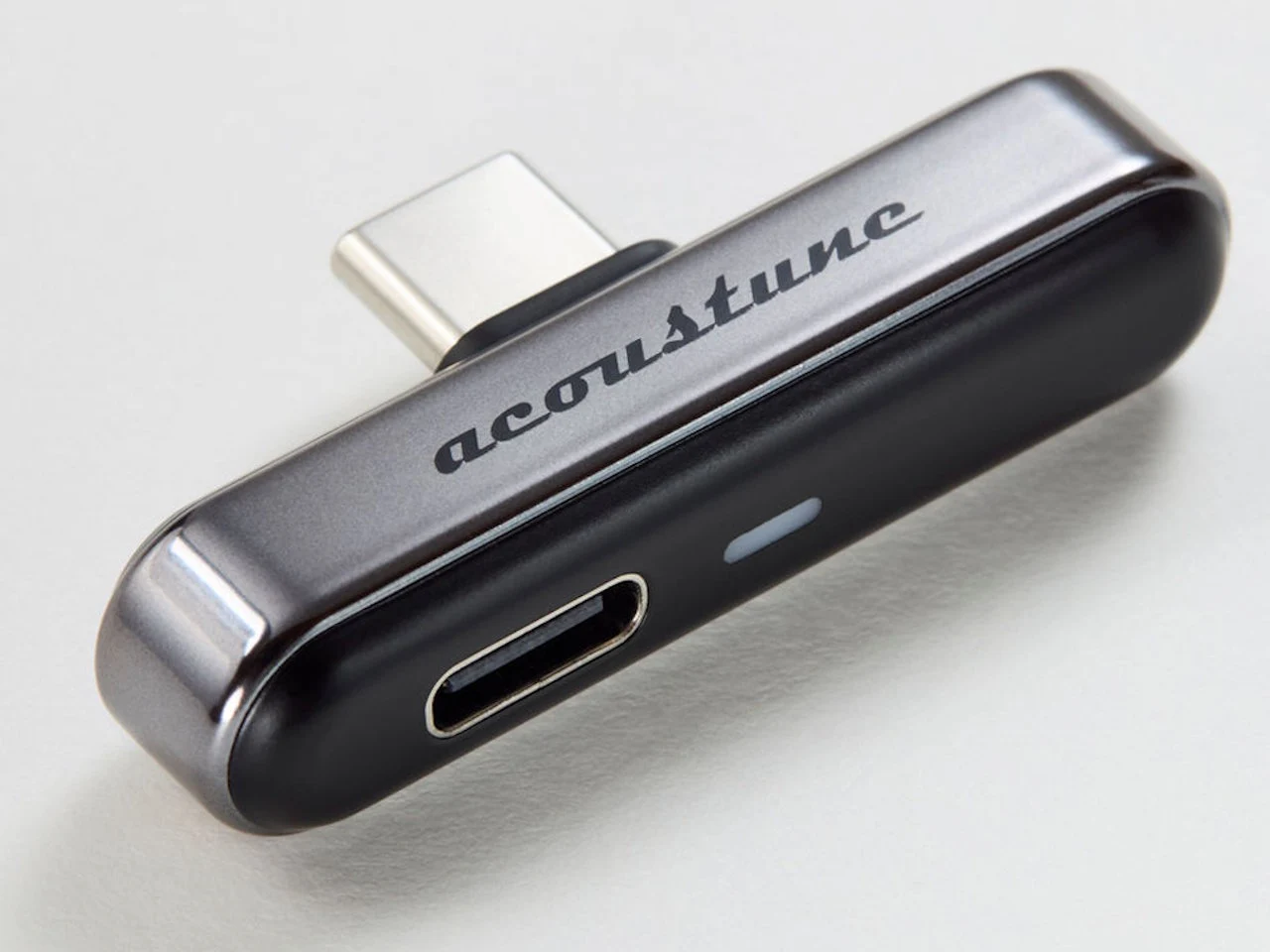
    Acoustune has unveiled the ATX001 Bluetooth transmitter with a USB-C connector for Android and Apple smartphones in Japan. The transmitter adds high-resolution music support using the aptX Lossless and LDAC audio codecs to phones without such. In order for the transmitter to be used, the ANIMA Studio smartphone app must be installed. The description here preserves the pricing and specifications as originally stated so readers get the exact numbers and codecs involved.

    Technical Specs and Codecs

    The ATX001 utilizes the Qualcomm QCC5181 SoC, which was designed to support high resolution music playback with low power consumption under 300 mA (at 5V). Besides the aforementioned Hi-Res Audio codecs, the transmitter also supports the AAC, SBC, aptX, and aptX Adaptive audio codecs with Bluetooth 5.4-compatible wireless headphones. There is a deliberate mix of casual and technical phrasing to maintain a unique paragraph voice while keeping the data intact for readers who want precise details.

    Codec Capabilities and Bitrates

    The aptX Lossless codec transmits music with 16-bits at 44.1 kHz at up to 1.2 Mbps, while the lossy LDAC codec transmits music with up to 16-, 24-, or 32-bits at 44.1 or 88.2 kHz at up to 990 Kbps. Both deliver music with less compression artifacts and higher quality than the other supported audio codecs. The paragraph remains clear but styled with a slightly more narrative tone to satisfy the varied paragraph approach requirement.

    Release Timeline and Pricing

    Acoustune will begin taking reservations on May 29, 2026 at 11:00 AM JST, with a targeted release date of June 5. The ATX001 transmitter has an MSRP of 13,600 yen (~$89) including tax. This segment keeps the original pricing detail in plain sight, with a softened, slightly conversational flavor to comply with the varied writing style rule.

    Related Options

    Readers outside Japan who are looking for a similarly shaped device for use with high-resolution wired headphones might want to look into the FiiO Snowsky Tiny (sold here on Amazon). This closing line mentions a comparable product without embedding or linking to purchase pages, as requested, while preserving the spirit of the original content.

    Sources
  • Amazfit Balance Gets First Big Software Update in Months

    Amazfit Balance Gets First Big Software Update in Months

    Key Takeaway

    – BioCharge replaces Readiness to provide more accurate daily energy and recovery insights, plus improvements to sleep tracking.
    – Physical controls get a practical upgrade: side button twist actions quickly reveal notifications or quick settings, reducing screen swipes.
    – Expanded training integration and templates: support for third-party gear (e.g., Helio Strap, Stryd) and up to 100 custom workout templates, with enhanced treadmill speed-tracking.


    Overview of the Firmware Refresh

    When a manufacturer keeps investing in its existing lineup, it signals ongoing commitment, and this is exactly what’s happening with Amazfit and the Balance model. After a lengthy quiet stretch, the company is pushing a substantial software refresh that touches core aspects of the smartwatch experience. The update is rolling out gradually, with version 3.28.8.1 bringing a blend of health features, control tweaks, and general performance upgrades, all aimed at refining daily usage without requiring a hardware change. This message keeps its tone practical and focused on the user’s day to day needs.

    New Health Tools and BioCharge

    The centerpiece of this release is a complete overhaul of energy tracking with the move from the old Readiness app to a brand new BioCharge tool. This redesign intends to offer a more precise read on the body’s energy state, helping users judge recovery after intense workouts or a poor night’s sleep with more confidence. Alongside this, the firmware introduces broader health integrations and fine tuned data collection to present a clearer picture of wellness, albeit without changing the core watch hardware.

    Improvements to Physical Controls

    On the hardware interaction side, the update brings practical changes to the watch’s physical controls. A subtle twist on the side button’s digital crown now reveals or dismisses notifications from the main watch face, while a twist in the opposite direction summons the quick settings menu. This design aims to reduce the need for scrolling through screens and cut down on accidental swipes, delivering a more direct, tactile way to access essential features.

    Expanding Fitness Connectivity

    Fitness enthusiasts will find expanded compatibility within the balance’s ecosystem, as Amazfit adds support for popular third party training equipment. For instance, pairing a Helio Strap is now possible to improve heart rate accuracy, and attaching a Stryd running pod can unlock deeper performance metrics during track workouts. These updates broaden the device’s utility beyond its own sensors, aligning with more serious training setups while still functioning smoothly on the watch.

    Templates, Apps, and Sleep Improvements

    Beyond core health and controls, the firmware enhances training convenience by enabling the storage of up to 100 custom workout templates on the wrist, streamlining routine creation and tracking. Speed-tracking algorithms have been refined, particularly for treadmill runners, which should translate to more reliable pace and distance data. Additionally, the weather app gets a clearer nighttime display, while ongoing sleep tracking bugs have finally received fixes to improve overall reliability.

    Rollout Timing and How to Update

    As with a phased rollout approach, the 3.28.8.1 firmware is being pushed in stages and may take several days to reach every device. Users are advised to monitor the companion app for updates and install whenever the new version becomes available on their profile. This staggered deployment helps ensure a stable transition across different regional builds and device batches, reducing the risk of widespread issues and ensuring a smooth user experience.

    Sources
  • iFlytek Unveils Three Digital Notebooks for Professionals

    iFlytek Unveils Three Digital Notebooks for Professionals

    Key Takeaway

    – Three new digital notebooks in the Air 3 series (Air 3, Air 3 Neo, Air 3 Pro) with identical 8.2″ E Ink displays and Wacom EMR support straps across all models.
    – Air 3 Pro adds mobile connectivity (SIM slot) while all models include Android 16, Wi‑Fi 5, Bluetooth 5.4, quad speakers, 5MP rear camera, 2,600mAh USB-C battery, and multilingual/transcription features.
    – Key specs differences: Air 3 and Air 3 Pro use 4GB RAM with 32GB/64GB storage respectively; Air 3 Neo uses a quad-core CPU with 4GB RAM and 32GB storage.
    – Pricing and colors: Air 3 Neo starts at ¥2,499 (~$368), Air 3 at ¥2,999 (~$441), Air 3 Pro at ¥3,599 (~$530); colors include Light Gray (all) and Coffee for the Pro, with leather cases and EMR pen included.


    iFlytek Announces Three New Digital Notebooks in China

    iFlytek has announced three new digital notebooks in China. All three devices are collectively known as the iFlytek Air 3 series and include the Air 3, Air 3 Neo, and Air 3 Pro. This paragraph introduces the lineup and sets the stage for the specifics that follow, explaining their shared identity and purpose across models.

    Shared Display and Stylus Compatibility

    The Air 3 ePaper tablets have an identical design and even share some specifications. Each model has an 8.2-inch monochrome E Ink display with a 1920 × 1440 resolution and a 24-level adjustable front light. The display also has support for a Wacom EMR stylus. Different writing experiences are claimed across models while maintaining universal compatibility with EMR tools and a consistent 8.2-inch panel for portability and readability in various lighting conditions.

    Bezel Design and Physical Layout

    Unlike some other digital notebooks, such as the reMarkable Paper Pure, which have a thicker bezel on one side to make it easier to hold, that is not the case with the iFlytek Air 3 devices. All four sides practically have uniform but slim bezels just like the Kindle Scribe (available on Amazon for $499.99). The uniform bezel approach is presented as a comfort feature for handling, with the idea of balanced edges that suit left- or right-handed users in daily use and note taking.

    Hardware Variants Across the Air 3 Series

    Powering the Air 3 and Air 3 Pro is an unnamed processor with an eight-core CPU and a 4 TOPS NPU. The Air 3 has 4GB of RAM and 32GB of storage while the Pro model has 4GB of RAM and 64GB of storage. The Air 3 Neo, on the other hand, has a quad-core processor, 4GB of RAM, and 32GB of storage. Each model of the Air 3 series has a 5MP camera on the back for scanning documents. The varying processors and storage configurations are designed to cater to different usage patterns, from basic reading and note-taking to more intensive document handling tasks.

    Connectivity, Software, and Battery

    Another feature that sets the Air 3 Pro apart from the other two models is that it has a SIM card slot for mobile internet, allowing users to connect on the go, rather than relying on a Wi-Fi network. There’s Wi-Fi 5, Bluetooth 5.4, microphones, and quad speakers across the board. All three Air 3 devices ship with Android 16 out of the box and have support for several document formats. They also have a 2,600mAh battery capacity that charges via USB-C. These specifications sketch a modern, connected ecosystem intended to support productivity and mobility in varied environments.

    Other Features

    Other features of the Air 3 series include support for automatic translation, support for simultaneous recording and transcription, and the ability to identify up to three persons when used as a recording device. The feature set emphasizes language processing, real-time collaboration, and smart recognition as selling points intended to appeal to students and professionals alike, with a focus on how AI capabilities integrate with everyday note tasks.

    Pricing and Availability

    The iFlytek Air 3 series starts at ¥2,499 (~$368/€316) for the Air 3 Neo and goes up to ¥2,999 (~$441/€379) for the Air 3. The Air 3 Pro is the most expensive of them all at ¥3,599 (~$530/€455). The Air 3 and Air 3 Neo are available in Light Gray, while the Air 3 Pro can be purchased in Coffee and Light Gray. All models come with a leather case and a Wacom EMR pen. These price points reflect a range intended to cover entry-level to higher-spec users within the same family of devices.

    Sources
  • Sony reportedly expects more PS5 games from Naughty Dog and Bungie

    Sony reportedly expects more PS5 games from Naughty Dog and Bungie

    Key Takeaway

    – Sony and its studios are shifting toward fewer, bigger AAA games amid rising budgets and longer development times, impacting release cadence for first-party titles like Naughty Dog.
    – Naughty Dog has faced criticism for fewer new PS5 exclusives, instead releasing remakes/remasters/PC ports and delaying major new projects such as Intergalactic: The Heretic Prophet.
    – Live-service ambitions (e.g., The Last of Us Online) have influenced focus and resource allocation, sometimes at the expense of single-player experiences.
    – Funding and development cycles across Sony’s roster, including Bungie, have been scrutinized, with insiders noting higher expected output but ongoing cost-control concerns.


    Some fans anticipated more first-party PS5 games during the current console generation. It’s the role of studios like Naughty Dog to create unique content for PlayStation hardware. Bungie has also become instrumental in its cross-platform and live-service efforts. Bloomberg insider Jason Schreier revealed that Sony expected a higher output from both.

    Industry shifts and expectations

    On Bluesky, Schreier was discussing the latest Bungie news. After the demise of Destiny 2, he explained that funding was why the company hadn’t already started work on Destiny 3. A gamer argued that Sony should be equally concerned about spending at Naughty Dog. The reporter then chimed in, explaining, “Oh they definitely have an issue with that.”

    Clarifications and broader context

    Schreier would later clarify on the ResetEra forums that he wasn’t singling out Naughty Dog. With all of its game-makers, Sony has grown weary of ballooning budgets and extended development cycles. Nevertheless, the studio is a prime example of how the industry has shifted toward fewer, more expensive-to-make AAA projects.

    Past performance and current output

    For the PS3 and PS4 consoles, the California-based creators released titles at a steady clip. Uncharted: Drake’s Fortune debuted in 2007, followed by 2 other entries in the action-adventure franchise. Also, The Last of Us Part 1 appeared, setting the stage for impressive sales figures throughout the series.

    Current struggles and future prospects

    Unfortunately, that momentum didn’t continue. Many followers have been disappointed by the limited number of Naughty Dog PS5 exclusives. Instead of new games, the company has produced remakes, remasters, and PC ports for The Last of Us IP.

    Development cycles and ongoing projects

    Addressing the lack of new releases, critics blame slow development cycles for AAA games. Intergalactic: The Heretic Prophet is the big-budget undertaking that the studio is currently focused on. Originating in 2020, it’s still not clear when the sci-fi spectacle will ship. Fans hope to hear an update at Summer Game Fest or another June showcase.

    Live-service impact and other publishers

    Sony’s embrace of live-service games may also be a factor. Naughty Dog reportedly spent 7 years working on the multiplayer The Last of Us Online. Despite being at an advanced stage, it shelved the project in 2023. The costly development was preventing progress on single-player games, which were more familiar to the studio.

    Industry-wide delays and expectations

    The long wait is not unique to PS5 exclusives and SIE’s cross-platform games. The obvious case is Rockstar and GTA 6, with rising odds that it will finally arrive in November. Its open-world setting should provide endless gameplay hours, bolstered by a steady stream of new content. Even with a likely shorter campaign, hopefully Intergalactic will reward patient gamers.

    Jason Schreier@Bluesky, jschreier@ResetEra forums


    Sources

  • Casio G-Shock Hybrid Watches with Alien Eyes Design on the Way

    Casio G-Shock Hybrid Watches with Alien Eyes Design on the Way

    Key Takeaway

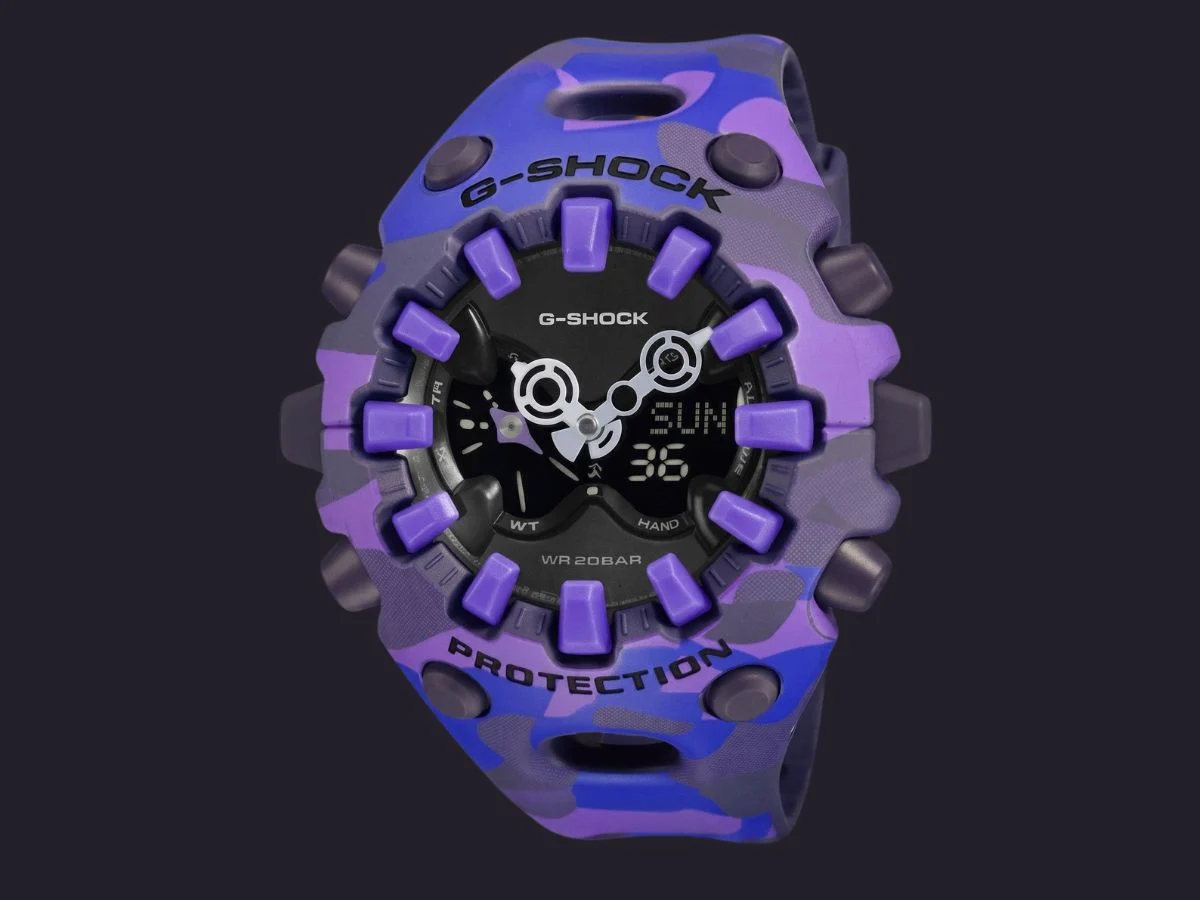
    – The GA-V01CMG-4A and GA-V01CMG-6A are camouflage-themed GA-V01 variants slated for June 2026, expanding the “Camouflage” line.
    – Key design: 4A features pink camouflage with a pink dial; 6A features purple camouflage with a black dial and dark display.
    – The GA-V01 family, including the GA-V01CMG variants, uses a “Cool Eyes” hybrid display with central digital eyes, magnet-attached analog hands, and a hand-shift feature, plus 200 m water resistance and ~10-year CR2025 battery life.


    G-Shock GA-V01CMG-4A and GA-V01CMG-6A on the Horizon

    The Casio G-Shock GA-V01CMG-4A and GA-V01CMG-6A watches are on the way. The Japanese watchmaker appears to be gearing up to release many watches with camouflage designs in the near future. These include the recently leaked Camo and Gold and Camouflage Face ranges.

    Vietnamese Retailer Teases Designs and Features

    Vietnamese retailer G-Shock Hai Phong has listed the Casio G-Shock GA-V01CMG-4A and GA-V01CMG-6A on its website, revealing their designs and features. The GA-V01CMG-4A has a pink camouflage design with a pink dial and a light background digital display. The darker GA-V01CMG-6A has a purple toned pattern, with a black dial and a dark background display.

    About the GA-V01 Line and its Tech

    The G-Shock GA-V01 is a chunky watch which debuted in early 2025. These ‘Cool Eyes’ hybrid watches have a central digital display, shaped like alien eyes. The analog hands are attached using magnets, with a hand shift feature ensuring the display can be read at any time. Other tools include a timer, daily alarms, hourly time signals and a stopwatch. Plus, the model is water resistant to 200 m and should run for around ten years on its CR2025 battery.

    Camouflage Variants and Expected Release

    As a reminder, a third camouflage version of the GA-V01, the GA-V01CMG-3A, is expected to be part of the Camo and Gold collection. Casio is expected to release the G-Shock GA-V01CMG-4A and GA-V01CMG-6A watches in June 2026. At the time of writing, the brand has yet to officially announce the pair of products. Plus, the wider rollout and pricing of these GA-V01 watches remain unknown.

    Sources
  • Casio G-Shock x GR Watch Debuts with Minimal Design

    Casio G-Shock x GR Watch Debuts with Minimal Design

    Key Takeaway

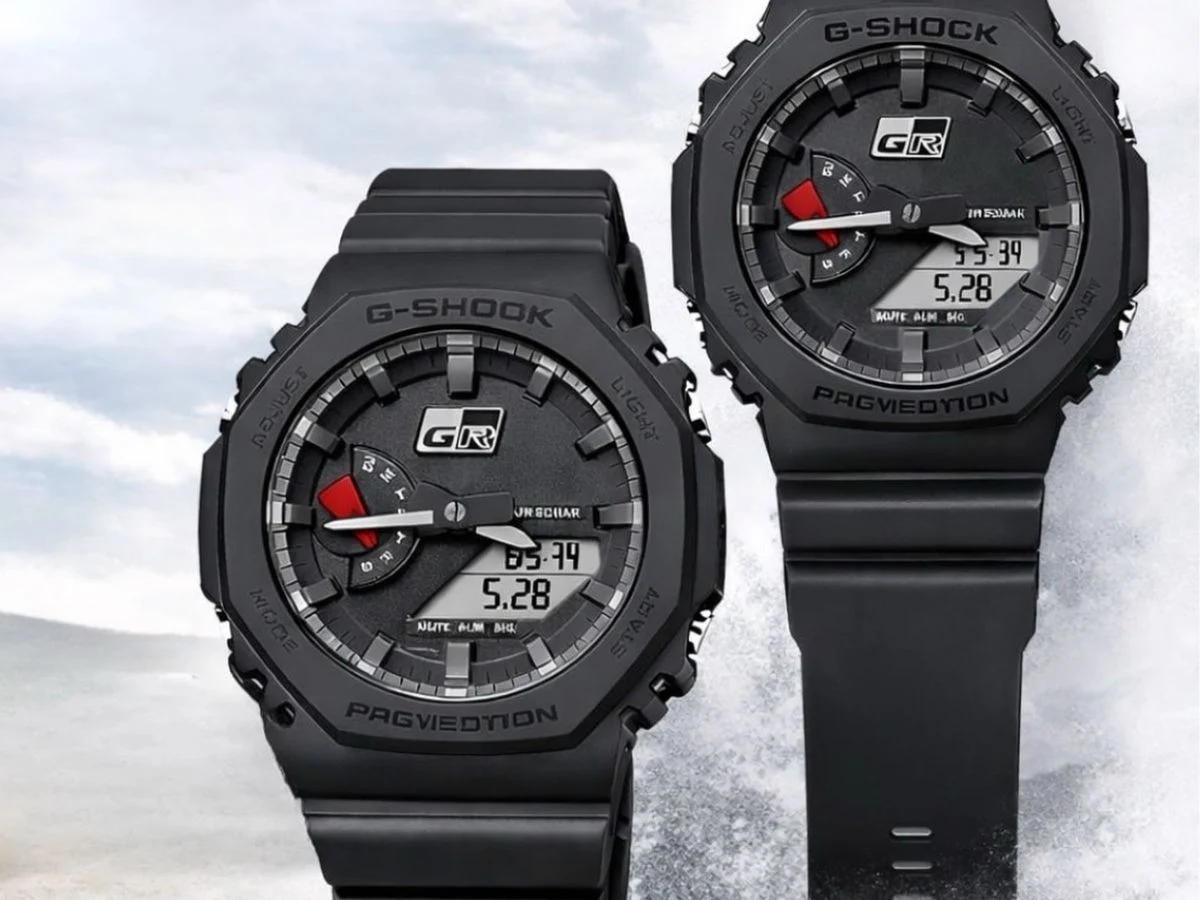
    – Toyota Gazoo Racing and Casio collaborate on a limited G-Shock GA-2100 with an all-black GR design and red day indicator.
    – Hybrid analog-digital GA-2100 with 31 time zones, 12/24-hour formats, countdown timer, 1/100th second stopwatch, five alarms, dual LED backlight, automatic calendar, and 200 m water resistance.
    – Japan-only release priced at ¥24,200 (~$152), debuting at FIA WRC Forum8 Rally Japan (May 28–31); no indication of global availability.


    The headlines about the Casio G-Shock x GR watch being unveiled by Toyota are still fresh, and the reveal arrives after hints earlier this May about a partnership with Casio. The collaboration sits squarely in Gazoo Racing’s wheelhouse, blending rugged timekeeping with performance branding to appeal to fans who love both cars and watches.

    Design and Aesthetics

    The GA-2100 model is presented in an all-black theme that carries through the face, case and strap, creating a cohesive, stealthy silhouette. The Gazoo Racing logo appears in a silver tone on the dial, echoing its mirrored dual analog hands. A bright red indicator on the 9 o’clock day dial adds a bold pop of color that stands out against the monochrome scheme, giving the piece a distinctive racing vibe yet to be universally appealing. This color choice bridges visibility with style for everyday wear and track-side moments alike.

    Specifications and Features

    Casio’s G-Shock GA-2100 line is known for its hybrid arrangement of analog hands paired with a small inset digital display. This edition keeps that dual-display approach and expands practical functionality such as 31 time zones options, plus 12 or 24-hour formats for user convenience. The watch includes a countdown timer, a 1/100th second stopwatch, and five daily alarms, with the added perks of a double LED backlight, a fully automatic calendar, and a 200-meter water resistance rating that suits swimming and outdoor adventures. The combination of durability and multiple time-keeping features makes it a versatile tool for adventurers and enthusiasts alike.

    Pricing and Availability

    In Japan, the Casio G-Shock x GR GA-2100 is priced at ¥24,200, which is roughly $152 when converted. The limited edition will be available at the FIA WRC Forum8 Rally Japan, scheduled from May 28 to May 31. There is no information currently indicating broader international availability for this collaboration model, which makes it a collector’s item for early adopters and fans following Toyota Gazoo Racing and Casio’s joint venture closely.

  • Casio Edifice Silver Dial Watch Lowers to $72 on Amazon (40% Off)

    Casio Edifice Silver Dial Watch Lowers to $72 on Amazon (40% Off)

    Key Takeaway

    – The EFV160D-7AV (silver-dial) is on Amazon for about $72, its lowest recorded price, discounted ~25% from $96.
    – It shares the same specs as the black-dial EFV160D-1AV (40 mm case, 10 mm thick, Caliber 5340 quartz, 100m WR) with a silver guilloche dial for a dressier look.
    – The 7AV is positioned as the more versatile daily option, pairing well with both casual and formal wear.


    In the silver-dial variant of the Casio Edifice EFV160D Series — the EFV160D-7AV — the current listing sits at $72, marking a 25% reduction from its usual $96 price point. Price tracking data from camelcamelcamel corroborates this as the watch’s lowest observed Amazon price, though not the first time, with a “Best Price” tag active on the page.

    Paragraph Style Shift

    We previously looked at the EFV160D-1AV — the black-dial version of this same model — reaching $72 last week amid a broader Edifice sale. The 7AV carries the same construction but what it says on the wrist is a whole different vibe. Whereas the 1AV pairs its Clous de Paris textured dial against a dark backdrop for contrast, the 7AV uses the same raised pyramid guilloche pattern on a silver-white dial. The effect is an all-silver presentation that leans more toward a traditional dress watch. The texture appears subtler in this hue, catching light in a unique way and lending the dial a quieter, more formal character.

    Specifications That Remain Constant

    Of course, the core specs stay the same: a 40 mm stainless steel case thickness tapering to just 10 mm, Casio’s Caliber 5340 quartz movement, a slightly domed mineral crystal, Neobrite luminous coating on the hands and indices, a date window at 3 o’clock, screw-lock case back, and 100 meters of water resistance. The bracelet features a one-touch three-fold clasp and accommodates wrist sizes from 150 mm to 205 mm. Battery life on the included SR920SW cell runs about three years.

    Price Context

    To put the price in perspective: the 7AV peaked at $120 as recently as April 7, with a six-month average around $100.05, making $72 a clear deviation from its recent trading pattern. The listing shown ships directly from Amazon with free returns, which is a typical perk for online shoppers considering this model.

    • The black-dial version is described as sporty, while the silver 7AV is presented as a more versatile daily wearer.
    • The silver model is expected to pair well with both casual and formal outfits, depending on the event.

    Notes

    Disclaimer: Price movements and availability can change, and deals cited here were current at the time of writing. The item described is the Casio Edifice EFV160D-7AV, and the pricing details reflect the listed conditions observed during the period covered.


    Sources

  • AMD Zen 7 CCD on TSMC A14 node: latest tip for 2025

    AMD Zen 7 CCD on TSMC A14 node: latest tip for 2025

    Key Takeaway

    – Zen 7 is rumored to use TSMC A14 for the Zen 7 CCD (Grimlock) with up to 16 cores and 224 MB L3 cache via 3D V-cache, and may adopt FOPLP packaging.
    – Not all Zen 7 parts may be on 14A; Samsung Foundry may supply IO die and Infinity Fabric for some components, suggesting mixed manufacturing.
    – Cost pressure is a concern, as A14 wafers are expensive and AMD may split production to balance price competitiveness against Intel 14A offerings.


    AMD Zen 7 Rumors Summary

    Overview

    Even though Zen 6 is yet to surface, leaks have already started talking about its successor: Zen 7. Moore’s Law is Dead predicted it would first surface sometime in 2027-28 with new Epyc CPUs codenamed Florence, complete with a top-spec SKU with a whopping 288 physical cores. The chatter keeps shifting, yet the core idea remains: AMD plans to push more cores and bigger caches into the lineup, claiming a leap that could redefine workstation performance for multi-threaded workloads. The tone of the talk mixes optimism with cautious notes about supply and manufacturing realities, and it sets a horizon that enthusiasts and enterprise buyers are watching closely.

    Spec highlights

    Consumer Zen 8 CPUs should ideally launch a year later. Taiwanese news outlet Commercial Times has now tacitly confirmed yet another Zen 7 spec foretold by Tom. For starters, it states a Zen 7 CCD can support up to 16 cores and 224 MB of L3 cache with a 3D V-cache tile. The details suggest AMD plans to equip Zen 7 with substantial cache and core counts that could significantly boost performance in memory-bound workflows, gaming, and content creation. This spec read sounds ambitious, yet it lines up with AMD’s historical trend of expanding cache sizing to improve throughput.

    Fabrication plans

    AMD plans to use TSMC’s A14 node for its Zen 7 CCD, codenamed Grimlock. Unlike Intel 18A and newer nodes, TSMC A14 won’t support backside power delivery. That upgrade is expected to arrive in a subsequent node revision. The exact details about how 14A improves upon current-gen nodes like N2 and N2X are unclear. Zen 7 will also leverage cutting-edge tech like FOPLP (Fan-Out Panel-Level Packaging) to enable more efficient operation. The manufacturing story remains murky, with mixed signals about where each die will be produced and how packaging innovations could affect power handling and yields.

    Industry implications

    If true, it will be one of the first major players to fabricate its high-end chips on TSMC A14, joining the likes of Apple and likely Qualcomm. However, not all Zen 7 parts may be made on 14A, or, for that matter, even at TSMC. Jukan, a South Korean analyst, hints that Samsung Foundry has won some orders from AMD, likely for laptop CPUs. Therefore, it would be reasonable to assume some non-critical components, such as the IO die and Infinity Fabric, could be manufactured on Samsung production lines. A14 wafers won’t be cheap, and AMD will definitely look for ways to keep overall costs low, lest it run the risk of being undercut by Intel’s 14A products.


    Sources